

Why Your Back Hurts After a Fender Bender — Even If You Feel Fine
Back pain after a crash is one of the most common — and most misunderstood — injuries people experience following a car accident. You might walk away from a collision feeling completely okay, only to wake up the next morning barely able to move.
Here’s a quick look at why this happens and what it usually means:
- Adrenaline masks pain immediately after impact, sometimes for hours or even days
- Spinal structures — including discs, muscles, ligaments, and facet joints — absorb enormous force during a collision
- Symptoms can be delayed, meaning a serious injury may not feel serious at first
- Even low-speed crashes can transfer enough force to damage soft tissue and spinal discs
- Ignoring early signs can turn a treatable injury into a chronic condition
I’m Dr. Adam Savage, and I’ve seen this pattern countless times. A patient is rear-ended at 25 mph. They decline an ambulance at the scene. Two days later, they can’t sit at a desk for more than 20 minutes without sharp pain shooting down their leg.
That delay isn’t unusual — it’s biology. Your body’s stress response is designed to keep you moving in a crisis. The problem is that it can also hide injuries that need immediate attention.
The research is clear: in the United States, vehicle crashes are the leading cause of spinal cord injuries, and lumbar strains alone are 10 times more common than any other lower back injury after a collision. In New York State alone, roughly 137,000 people are sent to the emergency room every year following accidents — many of them with back injuries they didn’t feel right away.
This guide breaks down exactly what’s happening in your spine after a crash, what symptoms to watch for, and what steps to take to protect both your health and your rights.
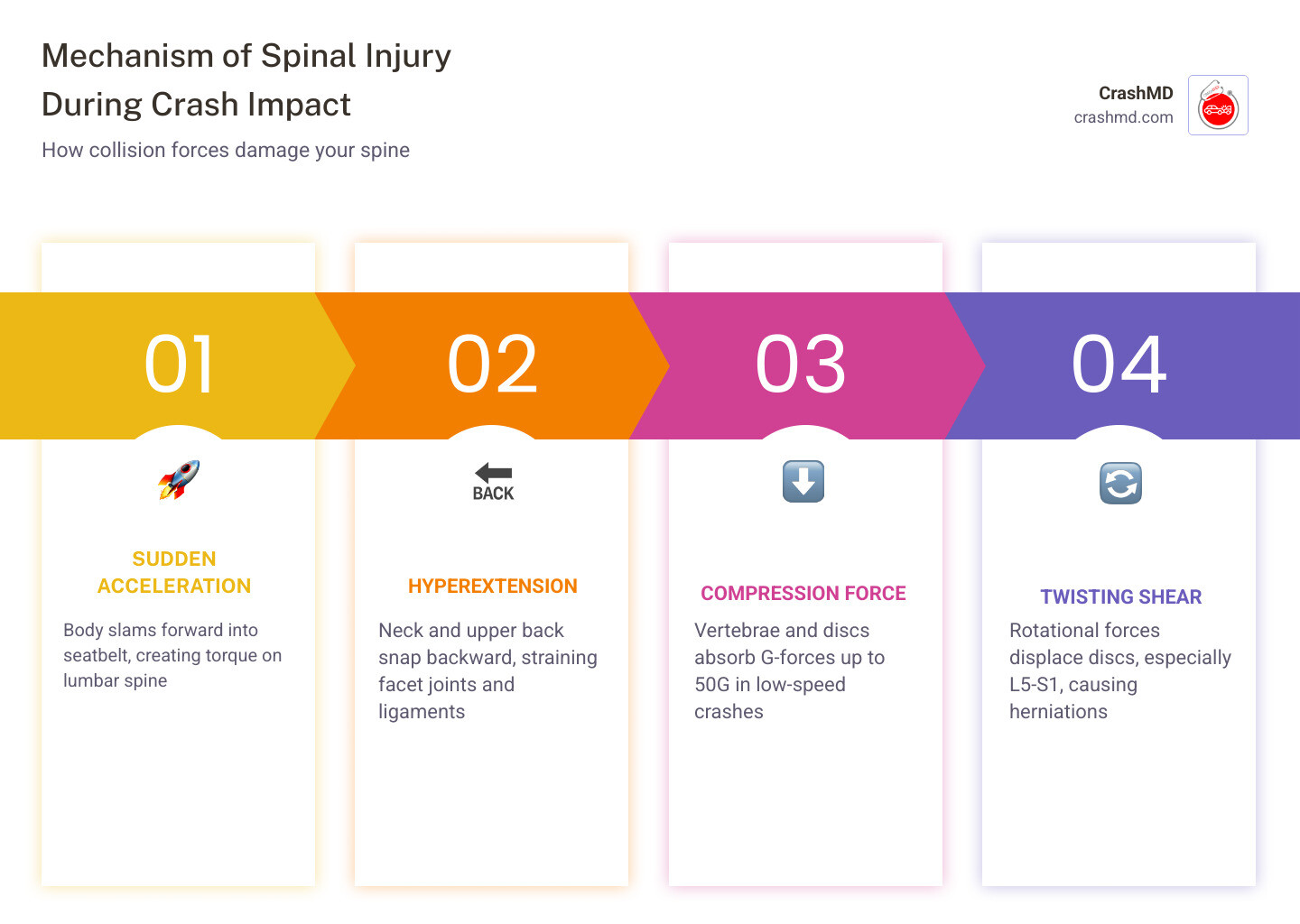
Common Causes of Back Pain After Crash
The human spine is an incredible feat of engineering, consisting of 33 vertebrae, 23 discs, and a complex network of 31 nerve roots. However, it wasn’t designed to withstand the violent, multi-directional forces of a car accident. Even at low speeds, the “G-force” exerted on your body can be significant.
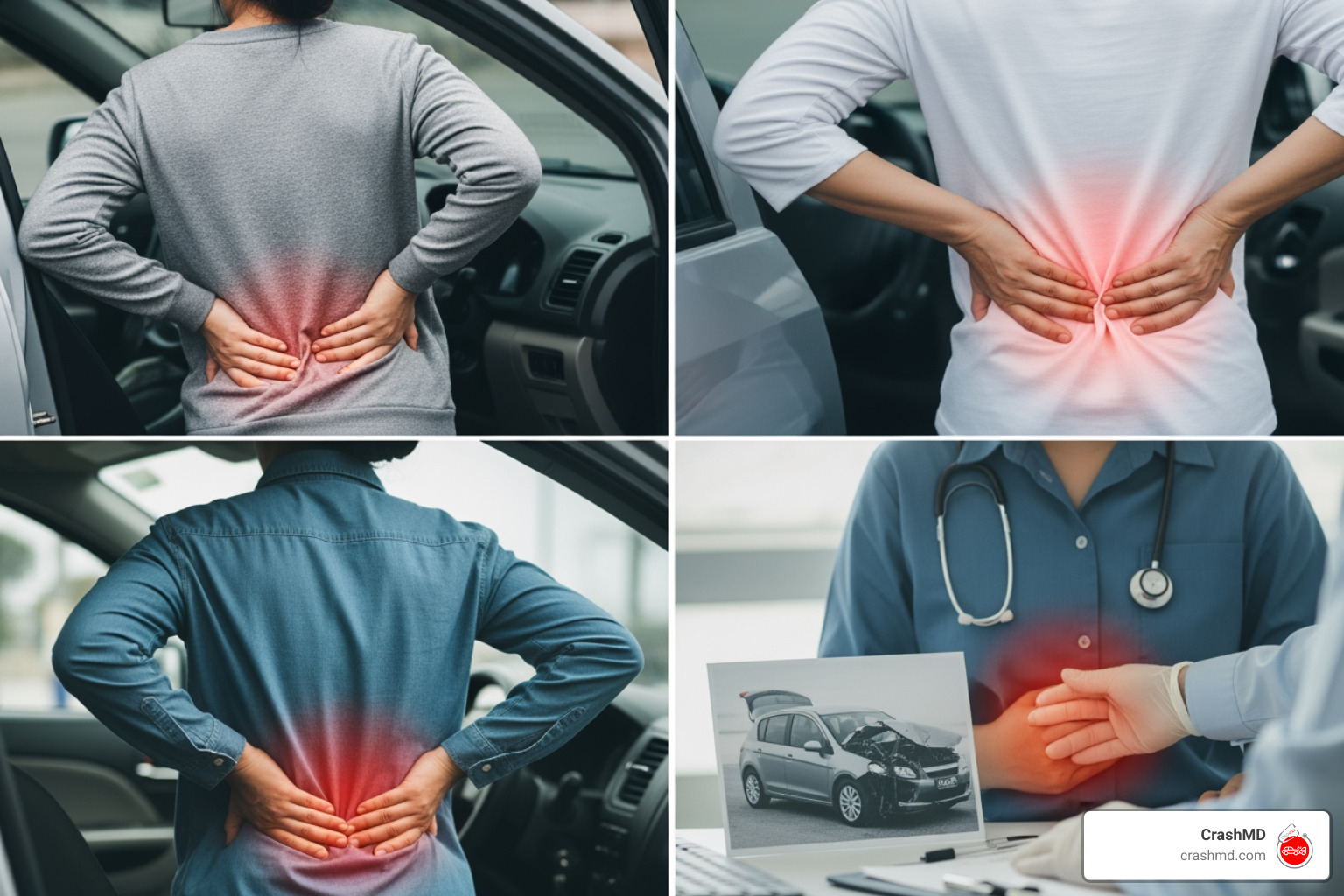
When we talk about back pain after crash scenarios, we are usually looking at a few specific “culprits”:
- Lumbar Strain and Sprain: This is the most common injury. A strain involves stretching or tearing muscles or tendons, while a sprain is damage to the ligaments (the tough tissue connecting bone to bone). Research from 2023 shows these are 10 times more frequent than other injuries.
- Herniated Discs: Often called a “slipped disc,” this happens when the soft inner core of a spinal disc leaks out through a tear in the tough outer shell. This “jelly” can then press on nearby nerves, causing intense pain.
- Facet Joint Injury: Facet joints are the small links between your vertebrae that allow you to twist and bend. A crash can knock these out of alignment or cause inflammation, making every movement feel like you’re being poked with a hot needle.
- Whiplash: While usually associated with the neck, the “whip-like” motion of a crash often extends into the upper and lower back, straining the entire spinal column.
- Spinal Fractures: In high-impact collisions, the vertebrae themselves can crack or compress. A specific type called a “Chance fracture” can occur when a seatbelt acts as a fulcrum, pulling the upper body forward while the lower body stays pinned.
For more detailed insights on how these injuries manifest, you can read about Auto Accident Back Pain: How To Treat Pain After A Car Crash.
Rear-End Collisions and the L5-S1 Disc
In states like Texas, Arizona, and California, rear-end collisions are incredibly frequent. In these accidents, the force typically loads the lumbar spine in a way that targets the L5-S1 disc—the very bottom of your spine where it meets your pelvis.
This area supports the most weight and absorbs the most impact. The seatbelt provides life-saving restraint, but it also creates a “torque” effect. Your hips are held back while your torso and head fly forward, often leading to disc displacement or severe lumbar sprains. For a deeper dive into these specific mechanics, check out our More info about back pain guide.
Why Symptoms Are Often Delayed
If you’ve ever wondered why you felt fine at the scene of the accident but felt like you’d been tackled by a professional linebacker 48 hours later, you can thank your “Fight or Flight” response.
During a traumatic event, your brain floods your system with adrenaline and endorphins. These chemicals are natural painkillers. They are designed to help you survive a crisis—like moving your car out of traffic or checking on your passengers—without being sidelined by pain.
However, once the adrenaline wears off, the reality of the injury sets in. This is often called the “documentation gap,” and it’s a favorite tool for insurance companies to deny claims. They might argue that if you didn’t hurt then, the accident didn’t cause the injury. But we know better: it’s just biology. For more on this, see this Delayed Pain After a Car Accident: Symptoms, Causes, and Your Legal Rights in California 2026 Guide.
The Science of Delayed Back Pain After Crash
The delay isn’t just about adrenaline; it’s also about inflammation. Soft tissue damage takes time to swell. As muscles go into protective spasms to “splint” the injured area, they tighten up, which can take 24 to 72 hours to reach peak discomfort. Furthermore, if a disc is bulging, it might take a few days of normal movement for it to finally press hard enough on a nerve to cause radiating pain. To understand how to protect yourself during this window, read More info about avoiding damage.
Diagnosis and Treatment Pathways
Getting an accurate diagnosis is the first step toward recovery. We use several tools to see what’s happening under the surface:
| Test Type | Best For Identifying… | Limitations |
|---|---|---|
| X-Ray | Bone fractures and spinal alignment | Cannot see soft tissue or discs |
| MRI | Herniated discs, nerve compression, soft tissue | More expensive/time-consuming |
| CT Scan | Detailed cross-sections of bone and tissue | Higher radiation exposure |
| EMG | Nerve damage and muscle response | Only tests nerve function |
Treatment usually begins with conservative care. We often recommend a multidisciplinary approach:
- Physical Therapy: To restore mobility and strengthen supporting muscles.
- Chiropractic Care: To address spinal misalignment.
- Corticosteroid Injections: To reduce intense inflammation so you can participate in therapy.
- Home Care: Using ice for the first 48 hours to reduce swelling, then switching to heat to relax muscle spasms.
For a step-by-step roadmap, visit our More info about navigating recovery.
When to Seek Help for Back Pain After Crash
While some soreness is expected, “red flag” symptoms require immediate medical attention. If you experience:
- Radiating pain (shooting down your legs or arms)
- Numbness or “pins and needles” in your extremities
- Significant muscle weakness
- Loss of bladder or bowel control (this is a medical emergency)
Don’t wait for the pain to become incapacitating. Early intervention is key to preventing long-term damage. Learn more at More info about what to do after an accident.
Recovery Timeline and Long-Term Outlook
Recovery from back pain after crash injuries generally follows three phases:
- Acute Phase (0–4 weeks): Focus is on reducing inflammation and pain. Most minor strains resolve here.
- Subacute Phase (4–12 weeks): Focus shifts to restoring range of motion and strength.
- Chronic Phase (12+ weeks): If pain persists beyond 3 months, it is considered chronic.
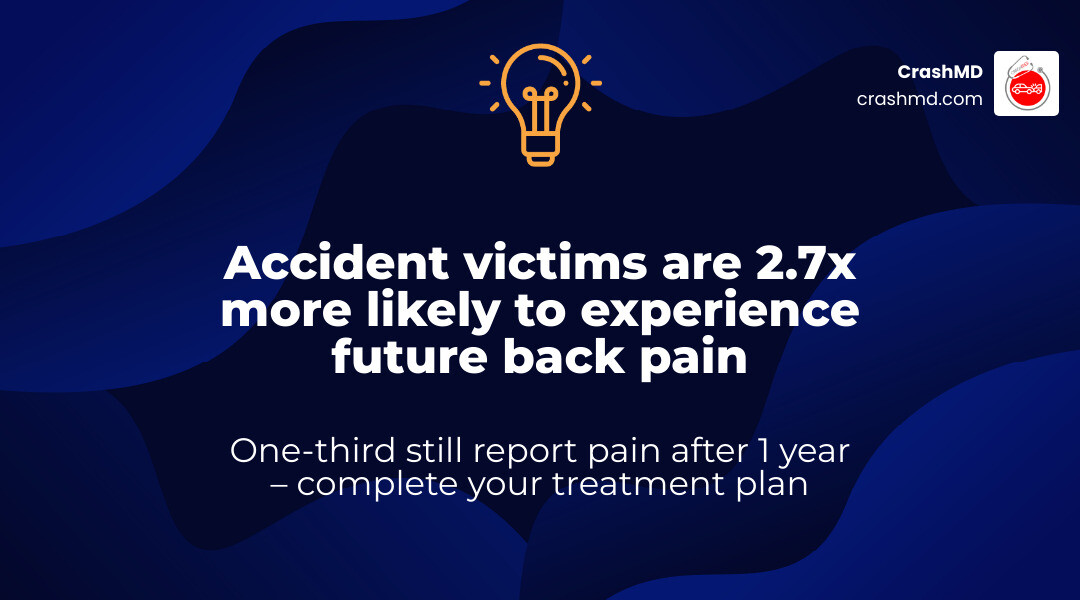
A comprehensive 2020 review found that individuals who suffer low back pain from a car accident are 2.7 times more likely to experience back issues in the future. Approximately one-third of victims still report some level of pain a year later. This is why finishing your full treatment plan is vital—even if you start feeling better halfway through. For tips on long-term prevention, see More info about avoiding chronic pain.
Protecting Your Health and Legal Rights
In our offices across Nevada, Oklahoma, and Southern California, we emphasize that medical documentation is your strongest ally. An “undeniable record” created shortly after the crash makes it much harder for insurance adjusters to claim your injuries were pre-existing or unrelated.

Insurers often use “degenerative findings” on an MRI—normal age-related wear and tear—to argue they aren’t responsible for your pain. However, if you were asymptomatic before the crash and are in pain now, the accident is the cause of your symptoms, and you are entitled to care. Be mindful of the statute of limitations in your state (which can range from one to four years) to ensure you don’t lose your right to compensation. For more on how this impacts your case, read More info about settlement amounts.
Immediate Steps for Back Pain After Crash
If you’ve been in a collision, follow these steps:
- Get a medical evaluation within 72 hours, even if you feel fine.
- Keep an injury journal: Note how the pain affects your sleep, work, and daily chores.
- Notify your insurance, but avoid giving recorded statements about your health until you’ve seen a doctor.
- Consult with legal experts who specialize in auto injuries.
Check out our guide on More info about average settlements for more practical advice.
Frequently Asked Questions about Back Pain After a Crash
How long does back pain typically last after a car accident?
For minor strains, you might feel better in 1 to 4 weeks. However, herniated discs or facet joint injuries can take 3 to 6 months of consistent treatment to stabilize. If pain lasts longer than 12 weeks, it is classified as chronic.
Can a minor fender bender cause permanent back damage?
Yes. Low-speed collisions can still transfer significant force to the spine. If a disc is already weakened by age or repetitive stress (like frequent driving), a minor jolt can be the “final straw” that causes a rupture.
Why should I see a doctor if my back doesn’t hurt immediately?
Adrenaline masks injury, and inflammation takes time to build. Seeing a doctor early establishes a medical link between the crash and your eventual symptoms, which is essential for both your health and any future insurance claims.
Conclusion
At CrashMD, we believe your only job after an accident should be getting better. We specialize in advocating for patients, ensuring that every injury is documented with precision and every treatment plan is tailored to your specific needs. From the moment of impact through your final physical therapy session, we guide you through the recovery process so you can return to your life without the burden of chronic pain.
Don’t let a “minor” fender bender turn into a lifelong struggle. Get expert help now and take the first step toward a full recovery.