

Why Back Pain After a Car Accident Demands Immediate Attention
Back pain car accident injuries affect millions of Americans every year. According to the National Highway Traffic Safety Administration, 1.9 million people were injured in passenger vehicle crashes in 2022 alone. If you’re experiencing back pain after a collision, you’re not alone—and understanding what’s happening to your body is the first step toward recovery.
Quick Answer: What You Need to Know Right Now
- Seek medical care immediately, even if pain is mild or delayed
- Common causes include soft tissue injuries, herniated discs, and spinal fractures
- Symptoms may appear hours or days later due to adrenaline masking pain
- Treatment options range from physical therapy to injections, with most cases resolving in weeks to months
- Untreated injuries can lead to chronic pain and permanent complications
Even seemingly minor accidents can cause significant back injuries. A collision at speeds as low as 20 mph can generate forces strong enough to damage your spine, muscles, and ligaments. The sudden impact follows Newton’s Laws of Motion—your body continues moving until abruptly stopped by your seatbelt, the airbag, or the vehicle itself. This violent motion strains the delicate structures of your back, from your neck down to your lower spine.
The challenge? You might not feel the pain right away. Your body’s “fight or flight” response releases adrenaline that temporarily masks discomfort. This means a collision that seems minor today could reveal itself as a serious injury tomorrow.
Understanding the specific type of injury you’ve sustained, recognizing warning signs, and getting proper treatment can mean the difference between a full recovery and years of chronic pain. This guide will walk you through everything you need to know about back pain after a car accident—from the moment of impact to your long-term recovery.
Why Your Back Hurts: Common Causes and Injury Types

When a car accident occurs, the forces involved can be immense, even in what might seem like a low-impact collision. Our bodies are not designed to absorb the sudden, violent shifts in momentum that happen during a crash. This is where the biomechanics of impact and Newton’s Laws of Motion come into play. Your body’s inertia causes it to continue moving at the pre-collision speed until an external force—like a seatbelt or airbag—abruptly stops it. This sudden deceleration can overstretch, compress, or twist the structures of your spine, leading to injury.
The spinal column is a complex and intricate system, consisting of 33 vertebrae, 23 spinal discs, and numerous muscles, ligaments, and nerve roots. Each component plays a vital role in supporting your body, protecting your spinal cord, and allowing movement. Vertebrae are the small bones that provide structure, while vertebral discs act as shock absorbers between them. When these structures are subjected to the extreme forces of a car accident, they can be damaged in various ways, resulting in back pain car accident injuries. Even a minor crash can alter body posture and cause an unexpected back injury.
Soft Tissue Injuries: Sprains, Strains, and Whiplash
One of the most common types of injuries following a car accident are soft tissue injuries. These involve damage to the muscles, ligaments, and tendons that support your spine.
- Sprains occur when ligaments (the fibrous tissues connecting bones) are stretched or torn.
- Strains involve damage to muscles or tendons (the fibrous cords connecting muscles to bones).
These injuries can cause inflammation, swelling, and muscle spasms, leading to significant pain and restricted movement. In the lower back, soft tissue injuries like strains and sprains were found to be more than 10 times more common than any other lumbar injury from motor vehicle collisions. While soft tissue injuries are more common in the neck, they can certainly affect the lower back as well.
Whiplash is a well-known example of a soft tissue injury, typically affecting the neck and upper back. It happens when your head is suddenly forced backward and then forward, like the cracking of a whip. This rapid movement can strain the muscles and ligaments in your cervical spine (neck region), often extending to the upper thoracic (mid-back) area. Whiplash is, in fact, the most common type of car accident injury.
For more detailed information on these common injuries, you can explore resources that discuss how soft tissue injuries are common after motor vehicle collisions.
Herniated, Bulging, and Slipped Discs
Between each of your vertebrae are spinal discs, which act as cushions and allow for flexibility. Each disc has a tough outer ring (annulus fibrosus) and a soft, gel-like center (nucleus pulposus). The violent impact of a car accident can put immense pressure on these discs, leading to several types of injuries:
- Bulging Disc: The outer wall of the disc weakens and protrudes outward, but the inner gel-like material remains contained.
- Herniated Disc (or Slipped Disc): The outer ring tears, allowing the inner gel-like material to push out. This material can then press on nearby nerves.
When a disc bulges or herniates, it can compress the spinal nerves, leading to pain, numbness, tingling, or weakness in the areas supplied by that nerve. A common condition caused by disc compression in the lower back is sciatica, where pain radiates down the leg, sometimes into the foot. Research from 2017 found that bulging discs were most likely to result from head-on collisions, while nerve pain from a herniated disc was most common after side-swipe collisions. The same study revealed that a significant majority—76.5% of people referred to a pain clinic for back pain—had some form of lumbar disk displacement. This underscores the prevalence and impact of disc injuries following car accidents. You can find more information about research on disc displacement after collisions.
Severe Spinal Injuries: Fractures and Spondylolisthesis
While less common than soft tissue injuries or disc damage, car accidents can also cause more severe spinal injuries, including fractures and conditions like spondylolisthesis.
- Vertebral Fractures: These are breaks in the bones of your spine. Types can include compression fractures (where the bone collapses), burst fractures (where the bone shatters), and Chance fractures. A Chance fracture, for example, can occur when your upper body thrusts forward while your lower body is restrained by a seatbelt, causing the vertebrae to pull apart. Fractures of the lumbar spine are the second most common low back injury from car accidents.
- Spondylolisthesis: This condition occurs when one vertebra slips forward over the one below it. It can be caused by a fracture or severe ligament damage, leading to spinal instability, pain, and potential nerve compression.
- Facet Joint Injuries: The facet joints are small joints located between each vertebra that allow your spine to bend and twist. During a car accident, these joints can be injured, leading to inflammation, pain, and restricted movement.
These more severe injuries often require immediate medical attention and can have long-term consequences if not properly managed. For a broader understanding of how various spinal injuries occur in car accidents, refer to resources like more on back injuries from accidents.
Recognizing the Signs: Symptoms and When to Seek Medical Help
After a car accident, recognizing the signs of a back pain car accident injury is crucial for your recovery. While some symptoms may be immediately apparent, it’s vital to understand the danger of delayed pain and the importance of seeking prompt medical evaluation.
Typical Symptoms of Back Pain After a Car Accident
The symptoms of back pain after a car accident can vary widely depending on the type and severity of the injury. We often see a range of complaints, including:
- Dull, aching pain: A persistent, low-level discomfort in the upper or lower back.
- Sharp, localized pain: Intense pain that may worsen with certain movements or positions.
- Stiffness: A feeling of tightness or reduced flexibility in the back, making it difficult to move freely.
- Reduced range of motion: Difficulty bending, twisting, or extending your back as you normally would.
- Numbness or tingling: Sensations that can travel down your arms, legs, or into your extremities, often indicative of nerve involvement.
- Weakness in limbs: A noticeable decrease in strength in your arms or legs.
- Pain that worsens with activity: Discomfort that increases with standing, walking, sitting for long periods, or lifting objects.
- Muscle spasms: Involuntary contractions of back muscles, which can be painful.
These symptoms can manifest differently for everyone. Some might experience only mild discomfort, while others face debilitating pain.
The Danger of Delayed Pain and the “Fight or Flight” Response
One of the most insidious aspects of car accident injuries is the phenomenon of delayed pain. You might walk away from an accident feeling shaken but otherwise fine, only for severe pain to emerge hours or even days later. This delay is largely due to your body’s natural response to trauma: the “fight or flight” mechanism.
When you’re in a stressful situation like a car accident, your body releases a surge of adrenaline and other hormones. This physiological response temporarily increases your pain tolerance, effectively masking any immediate discomfort or injury. You might not feel the full extent of the damage until the adrenaline wears off, and inflammation begins to set in.
This is why we emphasize the critical importance of seeking medical attention immediately after an accident, even if you feel okay. Injuries like whiplash and spinal damage often have delayed symptoms, and what starts as mild discomfort can escalate. A prompt post-accident check-up ensures that hidden injuries are identified and documented early, setting the foundation for effective treatment. Learn more about the body’s “fight or flight” response and how it affects pain perception.
Red Flag Symptoms Requiring Immediate Attention
While any back pain after a car accident warrants medical attention, certain “red flag” symptoms signal a potentially serious spinal injury that requires immediate emergency care. If you experience any of the following, do not delay—seek urgent medical help:
- Sudden or worsening pain: Pain that rapidly intensifies or becomes unbearable.
- Numbness or tingling: Especially if it’s severe, spreads rapidly, or affects both sides of your body.
- Progressive weakness in legs or arms: Difficulty moving your limbs, or a noticeable loss of strength.
- Changes in bowel or bladder function: Inability to control urination or defecation.
- Numbness in the groin or saddle area: A loss of sensation in the inner thighs, buttocks, and perineum.
These symptoms can indicate significant nerve damage, spinal cord compression, or other severe conditions that require rapid intervention to prevent permanent disability. For a comprehensive list of situations that demand immediate care, refer to guidelines on when to seek immediate care for low back pain.
The Road to Recovery: Treatment and Management for Back Pain Car Accident

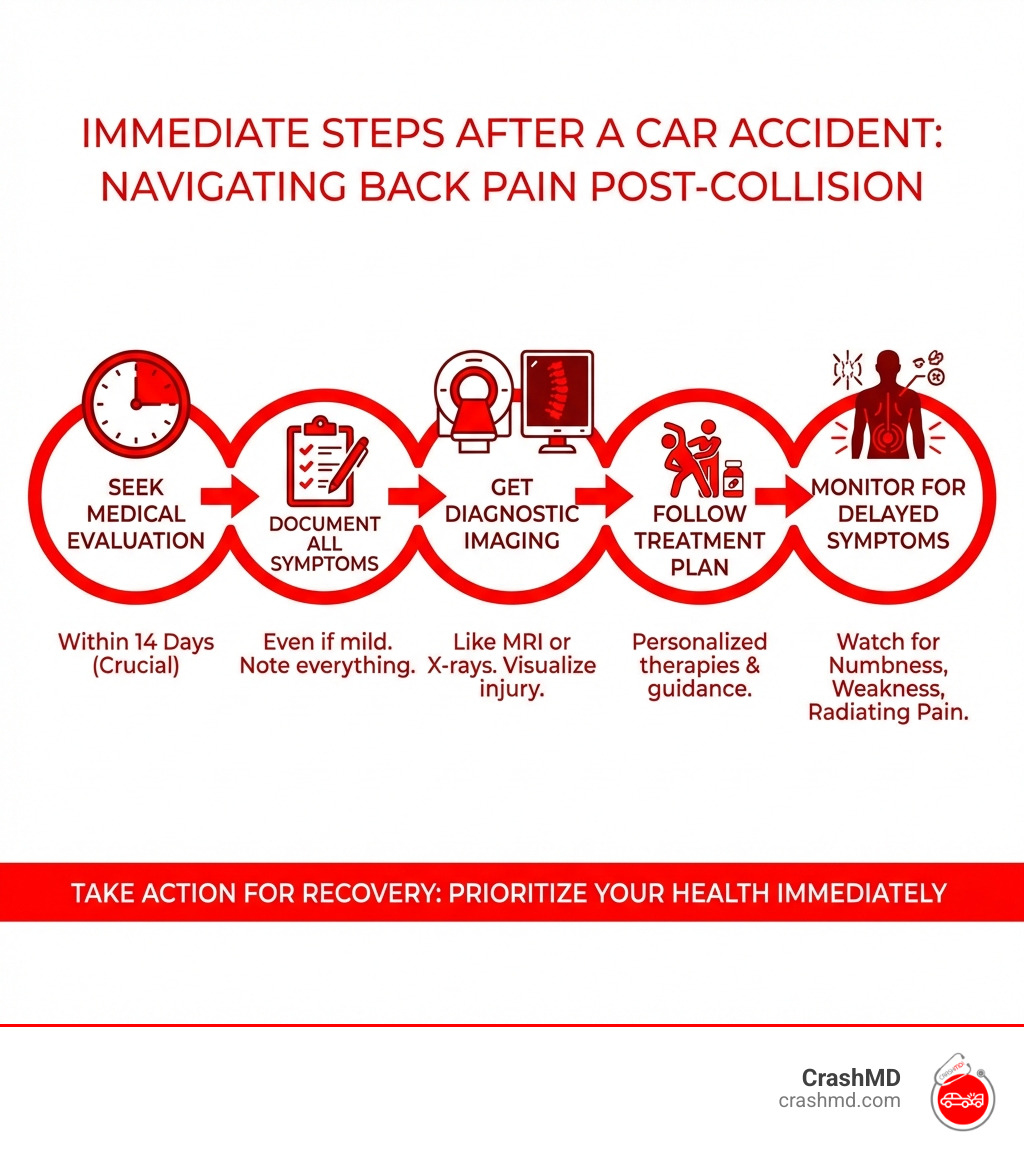
Once you’ve sought medical attention for your back pain car accident injury, the next step is a thorough diagnostic process. This typically involves a detailed physical examination, a review of your symptoms and the accident circumstances, and often imaging tests. X-rays can reveal bone fractures or dislocations, while MRI scans and CT scans provide more detailed images of soft tissues, discs, and nerves, helping to identify herniations, inflammation, or nerve compression. Based on these findings, we develop a personalized treatment plan custom to your specific injury, severity, and overall health.
Professional Medical Treatments
The goal of treatment is to alleviate pain, restore function, and prevent long-term complications. We use a range of professional medical treatments, often in combination:
- Physical Therapy: This is a cornerstone of recovery for many back injuries. A physical therapist will guide you through exercises to improve flexibility, strengthen core muscles, and restore proper body mechanics. They can also use modalities like ultrasound, electrical stimulation, or manual therapy.
- Chiropractic Adjustments: For certain types of spinal misalignments or joint restrictions, chiropractic care can help restore proper spinal alignment and reduce nerve irritation.
- Pain Medication: This can include over-the-counter non-steroidal anti-inflammatory drugs (NSAIDs) like ibuprofen, or prescription medications such as muscle relaxants or stronger pain relievers for short-term use.
- Corticosteroid Injections: For localized inflammation and nerve pain, injections (like epidural steroid injections or facet joint injections) can deliver powerful anti-inflammatory medication directly to the affected area.
- Spinal Decompression Therapy: This non-invasive treatment gently stretches the spine, creating negative pressure within the discs. This can help retract bulging or herniated discs, relieve pressure on nerves, and promote nutrient flow for healing.
- Massage Therapy: Therapeutic massage can help reduce muscle tension, improve circulation, and alleviate pain in the affected areas.
- Surgery: For severe cases, such as large herniated discs causing significant nerve compression, spinal fractures, or instability that doesn’t respond to conservative treatments, surgery may be considered a last resort. Options can include minimally invasive discectomy for lumbar herniations or cervical disc arthroplasty for cervical disc issues.
At-Home Care and Self-Management Strategies
While professional treatments are vital, what you do at home significantly impacts your recovery. We empower our patients with self-management strategies to support healing and manage pain:
- Ice and Heat Therapy: Apply ice packs for the first 24-48 hours to reduce inflammation, then switch to heat therapy to relax muscles and improve blood flow.
- Gentle Movement and Stretching: After the initial acute pain subsides, engaging in gentle exercises and stretches recommended by your physical therapist can prevent stiffness and promote healing.
- Avoiding Strenuous Activity: For several weeks, it’s crucial to decrease physical activity, avoid heavy lifting, twisting, and other movements that could re-aggravate your injury.
- Proper Sleeping Positions: Sleeping in a curled-up sideways position with a pillow between your legs, or on your back with a pillow or towel under your knees, can help maintain spinal alignment and reduce pressure.
- Ergonomic Adjustments: Use lumbar supports while sitting, consider a standing desk, and ensure your workspace supports good posture.
- Over-the-Counter Pain Relief: Use NSAIDs or acetaminophen as directed to manage pain and inflammation. Topical creams can also provide localized relief.
Understanding Your Prognosis and Long-Term Outlook
Facing back pain car accident injuries can be a daunting experience, and naturally, you’ll wonder about your prognosis and how long recovery will take. The journey from injury to full health involves distinguishing between acute and chronic pain, understanding typical recovery timelines, and recognizing factors that can influence your progress.
How Long Does Back Pain Last After a Car Accident?
The duration of back pain after a car accident varies significantly depending on the type and severity of the injury, as well as individual factors.
- Soft tissue injuries (sprains and strains) generally heal within a few days or weeks, with pain often subsiding within 1-2 weeks.
- Disc injuries, such as herniated discs, might take longer, with pain typically subsiding in 2-6 weeks, though full recovery can extend to several months.
However, it’s not always a straightforward recovery. If back pain persists for longer than 12 weeks, doctors classify it as chronic back pain. Unfortunately, almost one-third of people with low back pain after a car accident still experience pain after 12 months. This highlights the potential for long-term issues. A 2020 research review even notes that individuals who experience low back pain after a car accident are 2.7 times more likely than others to experience low back pain in the future.
Factors influencing recovery time include:
- Severity of the injury: Fractures or severe nerve damage naturally take longer to heal.
- Age and general health: Younger, healthier individuals often recover faster.
- Pre-existing conditions: Conditions like degenerative disc disease can complicate recovery.
- Adherence to treatment: Consistent physical therapy and following medical advice are crucial.
- Psychological factors: Stress, anxiety, or depression can sometimes prolong pain perception and recovery.
Potential Long-Term Consequences of Untreated Injuries
Ignoring back pain after a car accident is a risky gamble that can lead to severe and lasting consequences. While your body’s resilience is remarkable, untreated injuries can set in motion a cascade of problems:
- Chronic Pain Syndrome: The most direct consequence, where acute pain transitions into persistent pain that lasts for months or even years, significantly impacting daily life.
- Degenerative Disc Disease: Untreated disc injuries can accelerate the natural degenerative processes of the spine, leading to conditions like spinal stenosis (narrowing of the spinal canal) or further disc damage.
- Permanent Nerve Damage: If compressed nerves are not relieved, it can lead to permanent numbness, tingling, weakness, or even loss of function in the affected limbs.
- Reduced Mobility: Chronic pain and structural damage can limit your flexibility and range of motion, making everyday activities challenging.
- Decreased Quality of Life: Persistent pain can lead to sleep disturbances, reduced participation in hobbies, and a general decline in your overall well-being.
- Increased Risk of Future Back Pain: As mentioned earlier, those with accident-related back pain are significantly more likely to experience back pain again in the future.
- Psychological Impact: The physical trauma of an accident, combined with chronic pain, can also take a toll on mental health. Many individuals experience anxiety, depression, or post-traumatic stress disorder (PTSD) following a car accident, which can further complicate physical recovery. The psychological impact of a car accident is a crucial aspect of recovery that should not be overlooked.
Conclusion: Taking Control of Your Recovery Journey
Experiencing back pain car accident injuries is a challenging ordeal that impacts not just your physical health but also your daily life and emotional well-being. We’ve explored the common causes, from soft tissue damage and disc injuries to more severe fractures, and highlighted the critical importance of recognizing symptoms, especially delayed pain. We’ve also outlined the comprehensive range of professional medical treatments and essential at-home care strategies that form the backbone of a successful recovery.
The path to healing can sometimes be long and complex, with the potential for chronic pain if injuries are left unaddressed. This is why our core message remains consistent:
- Seek prompt medical care: Even if symptoms seem minor or are delayed, a professional medical evaluation is the first and most crucial step.
- Document all injuries: Thorough documentation of your injuries and symptoms is not only vital for your treatment plan but also for any potential legal or insurance claims.
- Follow a professional treatment plan: Adherence to your personalized recovery plan, including physical therapy and prescribed medications, significantly improves your chances of a full recovery.
- Prioritize proactive health management: Integrate at-home care, ergonomic adjustments, and mindful movement into your daily routine to support long-term spinal health.
At CrashMD, we understand the complexities of navigating post-collision recovery. Our mission is to guide accident victims through this journey, offering expert pain management and custom treatment plans. We advocate for our patients, ensuring comprehensive recovery through meticulous injury documentation and personalized care. Our approach ensures you receive the treatment you need, setting the stage for optimal health before any legal action is pursued.
Don’t let back pain define your life after a car accident. Take control of your recovery journey today. If you’re in Arizona, Nevada, Texas, Oklahoma, Southern California, or Northern California, we are here to help you heal and regain your quality of life.
To take the first step towards your recovery and find specialized care, please find a specialized motor vehicle accident doctor to start your recovery.