

From Ouch to Out-and-About: Navigating Car Accident Injury Recovery
What You Need to Know About Car Accident Injury Recovery
Car accident injury recovery is the process of healing physically, mentally, and functionally after a crash — and it looks different for everyone.
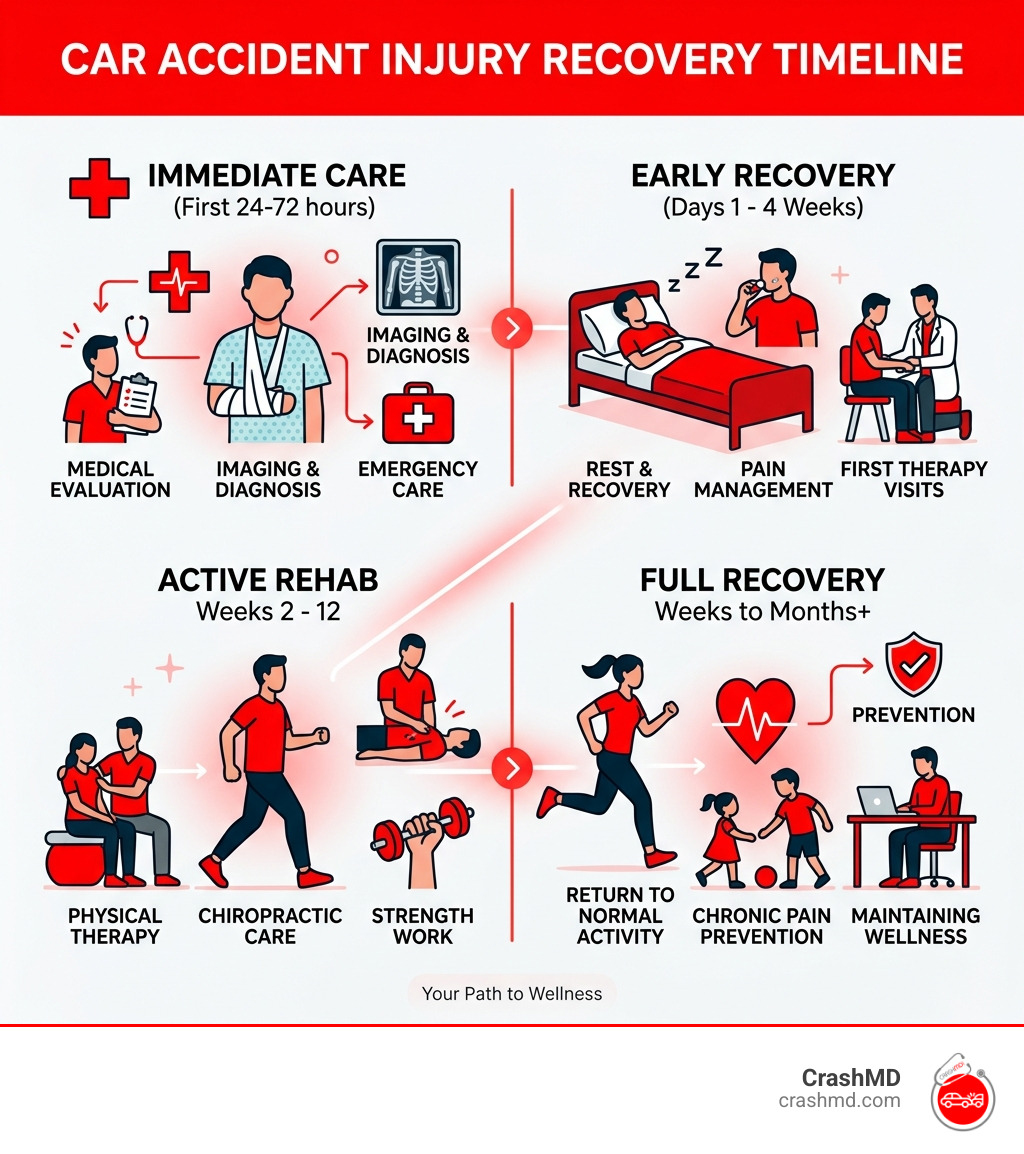
Here’s a quick overview of what recovery typically involves:
| Stage | What Happens | Timeframe |
|---|---|---|
| Immediate | Medical evaluation, imaging, emergency care | First 24-72 hours |
| Early recovery | Rest, pain management, first therapy visits | Days 1-4 weeks |
| Active rehab | Physical therapy, chiropractic care, strength work | Weeks 2-12 |
| Full recovery | Return to normal activity, chronic pain prevention | Weeks to months+ |
Key steps at a glance:
- Seek medical attention immediately, even if you feel fine
- Document everything — symptoms, visits, receipts
- Start physical therapy or chiropractic care within 72 hours if possible
- Address mental health alongside physical healing
- Follow your treatment plan consistently
More than 16,000 car accidents happen every single day in the United States. That’s a staggering number — and behind every one is a real person dealing with pain, confusion, and an overwhelming to-do list.
I’m Dr. Adam Savage, and I’ve seen this firsthand. Whether it’s a low-speed fender-bender or a serious multi-vehicle collision, the aftermath is rarely simple. Your body heals in chapters. Some injuries show up immediately. Others — like whiplash, concussions, or soft tissue damage — can take days to fully surface, long after the adrenaline has worn off.
The good news? With the right guidance, most people do recover fully. But the path matters. Skipping early care, ignoring delayed symptoms, or missing treatment windows can turn a short-term injury into a long-term problem.
This guide walks you through the entire recovery process — from the first 24 hours to preventing chronic pain down the road.
Immediate Steps for Car Accident Injury Recovery

When you are involved in a collision, your body’s “fight or flight” response kicks into overdrive. Adrenaline and cortisol flood your system, which is great for helping you get to safety, but terrible for accurate self-diagnosis. This “adrenaline mask” can hide significant pain and internal damage. You might walk away from a totaled car feeling “shaken but fine,” only to find yourself unable to get out of bed three days later.
We cannot stress this enough: the first 72 hours are the most critical window for your car accident injury recovery. Seeking a medical evaluation within this timeframe isn’t just about feeling better; it’s about catching hidden issues before inflammation and scar tissue set in. If you are in the Southwest or California, knowing What To Do After A Car Accident In Texas or your local area can save you months of physical and legal headaches.
At CrashMD, we often see patients who waited too long because they didn’t have “visible” wounds. Understanding Why Early Intervention is Key for Post-Accident Recovery is the difference between a six-week recovery and a two-year struggle.
Identifying Common Injuries and Delayed Symptoms
Car accident injuries generally fall into two categories: impact injuries (hitting the steering wheel or dashboard) and penetrating injuries (flying glass or loose objects). However, the most “famous” accident injury—whiplash—is often the most misunderstood. It occurs when the neck snaps forward and back, straining ligaments and muscles.
Keep a close eye out for these delayed symptoms:
- Headaches and Dizziness: These can indicate a concussion or a traumatic brain injury (TBI).
- Numbness or Tingling: Often a sign of nerve compression or a herniated disc in the spine.
- Abdominal Pain: This is a major red flag for internal bleeding or organ damage.
- Stiffness: While common, increasing stiffness in the days following a crash suggests significant soft tissue damage.
For a deeper dive into these sensations, check out our guides on Concussion Symptoms After Accident and Understanding Muscle and Joint Pain After a Crash.
Documenting Your Car Accident Injury Recovery for Legal Protection
While we focus on your health, we also know that bills follow injuries. In places like Las Vegas or Northern California, the strength of your legal claim depends entirely on the quality of your medical records.
Start a “Recovery Journal” on day one. Note your daily pain levels (1-10), activities you can no longer do (like carrying groceries or sitting at a desk), and any emotional fluctuations. This creates a “paper trail” that insurance adjusters cannot easily dismiss. For those in Nevada, understanding Recoverable Damages in Las Vegas Car Accident Claims helps you see why every doctor’s note and receipt matters.
The Multidisciplinary Approach to Healing

Modern medicine has moved away from the “rest in a dark room” philosophy. Today, the most successful car accident injury recovery plans involve a multi-specialty team. This might include a primary care doctor, a physical therapist, a chiropractor, and sometimes a neurologist.
This integrated care ensures that while your chiropractor is aligning your spine, your physical therapist is strengthening the muscles that hold that alignment in place. We call this Your Recovery Roadmap: Understanding Medical Treatment After a Car Accident, and it’s the gold standard for getting back to your life.
The Role of Physical Therapy in Car Accident Injury Recovery
Physical therapy (PT) is the engine of your recovery. It’s not just about “doing exercises”; it’s about functional retraining. A PT will assess your range of motion and create a plan for “graded loading”—slowly reintroducing weight and movement so your tissues heal stronger than before.
If you find yourself “guarding” a limb or moving differently to avoid pain, those are clear Signs You Need Physical Therapy After a Car Accident. Beyond just movement, The Role of Physical Therapy in Pain Management is vital for reducing reliance on heavy medications.
Chiropractic Care and Spinal Alignment
Chiropractors are often the first line of defense for whiplash and back pain. By focusing on joint motion, they help reduce the “stuck” feeling that follows a collision. Chiropractic adjustments help break down early scar tissue and reduce the inflammatory markers that cause that deep, throbbing ache.
For those specifically dealing with neck trauma, focusing on Whiplash Recovery through alignment is key. In Oklahoma, specialized clinics like Accident Care: Auto Accident Doctors Oklahoma City provide same-day evaluations to get this process started before the “delayed storm” of pain hits on day three.
Pain Management and Surgical Interventions
In the early days, we often recommend the RICE protocol: Rest, Ice, Compression, and Elevation. While NSAIDs can help with pain, some research suggests they might slow early soft tissue healing, so we always recommend discussing a medication schedule with your doctor.
Sometimes, non-invasive care isn’t enough. Surgery may be necessary for:
- Internal bleeding or organ repair.
- Shattered bones requiring plates or rods.
- Severe spinal disc herniations causing nerve damage.
Understanding the choice between Physical Therapy vs Surgery After Accident is a conversation we prioritize at CrashMD. We also provide guidance on How to Reduce Inflammation After a Car Accident to help avoid the operating table whenever possible.
Holistic Habits and Chronic Pain Prevention
Your body needs “building blocks” to repair itself. Think of your recovery like a construction site—if you don’t deliver the bricks (nutrition) and water (hydration), the workers (your cells) can’t rebuild.
- Nutrition: High protein supports muscle repair. Vitamin C is essential for soft tissue, and Calcium/Vitamin D are the duo for bone healing.
- Hydration: Aim for 0.5 to 1 ounce of water per pound of body weight. This flushes out the inflammatory byproducts of your injury.
- Sleep: This is when your body does 90% of its repair work. If pain is wrecking your sleep, your recovery will plateau.
Here is a look at what a typical timeline looks like based on injury severity:
| Injury Severity | Typical Symptoms | Estimated Recovery Time |
|---|---|---|
| Minor | Bruising, mild strains, small cuts | 2 – 4 Weeks |
| Moderate | Whiplash, minor fractures, deep muscle tears | 6 – 12 Weeks |
| Severe | TBI, spinal damage, internal surgery | 6 Months – 2 Years |
For more on how to optimize your daily routine, see our tips on Lifestyle Changes After Accident.
Mental Health and Psychological Support
One in three car accident victims develops moderate to severe mental health problems, such as PTSD, anxiety, or depression. In fact, 45% of people in recovery begin taking antidepressants. This isn’t a sign of weakness; it’s a physiological response to trauma.
Addressing the mind is a vital part of Beyond the Bump: Essential Steps for Your Car Accident Recovery. If you are afraid to drive, experiencing flashbacks, or feeling “detached,” please reach out for trauma-informed counseling.
Strategies for Preventing Long-Term Complications
The biggest mistake people make is stopping treatment the moment the pain fades. Pain is often the first thing to go, but “capacity”—your ability to handle stress on your joints—takes longer to return.
If you stop too early, you risk developing chronic issues like post-traumatic arthritis. Active rehabilitation and proper biomechanics are your best defense. We’ve detailed how to stay healthy for the long haul in Chronic Pain After a Car Accident: What You Need to Know and our guide on Long-Term Care After Accident.
Frequently Asked Questions about Car Accident Recovery
How long does recovery typically take for common injuries?
Most common injuries, like whiplash or mild concussions, follow a “6 to 8-week” chapter. However, factors like age, pre-existing conditions (like diabetes or arthritis), and how quickly you started treatment play a huge role. In Arizona, legal timelines often reflect these medical realities; you can learn more in the Average Car Accident Settlement Amounts in Arizona (2026 Guide).
Will my car insurance cover treatments like physical therapy?
In many states where we operate—like Texas, Oklahoma, and California—Personal Injury Protection (PIP) or MedPay often covers medical expenses regardless of who was at fault. We specialize in creating “attorney-ready” records to ensure your insurance or the at-fault party’s insurance has the documentation they need to approve your care.
When is surgery necessary following a car accident?
Surgery is usually reserved for “structural” failures: shattered bones that won’t align, internal bleeding that won’t stop, or spinal cord compression that threatens your ability to walk. Most soft tissue injuries can be managed with the multidisciplinary approach mentioned above, but your CrashMD team will monitor you closely to see if a surgical consult is needed.
Conclusion
Navigating car accident injury recovery can feel like a full-time job you never applied for. Between the physical pain, the doctor’s appointments, and the insurance paperwork, it’s easy to feel overwhelmed.
At CrashMD, we act as your advocate. We don’t just treat the “ouch”; we guide you through the entire journey, ensuring every injury is documented, every symptom is addressed, and every chapter of your healing is supported. You don’t have to do this alone.
If you’ve been in a crash in Arizona, Nevada, Texas, Oklahoma, or California, let us help you turn the page. More info about recovery services is just a click away. Together, we can get you from “ouch” back to “out-and-about.”