

Understanding What Your Back and Neck Injury Claim is Really Worth
The average settlement for car accident back and neck injury ranges from $12,000 to $90,000 nationwide, but this only tells part of the story. Your actual settlement could be much lower or reach into the millions, depending on your specific circumstances.
Quick Settlement Range Overview:
- Minor soft tissue injuries (whiplash): $6,000 – $30,000
- Moderate injuries (herniated discs, non-surgical): $20,000 – $100,000
- Severe injuries (requiring surgery): $70,000 – $375,000+
- Catastrophic injuries (spinal cord damage, paralysis): $500,000 – $5,750,000+
If you’re dealing with back or neck pain after a car accident, you’re likely wondering what fair compensation looks like. There’s no single answer, as settlement amounts vary dramatically based on injury severity, medical costs, lost wages, pain and suffering, and other factors.
Why settlement values differ so much: Two people with similar injuries can receive vastly different compensation—one might get $25,000 while another gets $250,000. The difference often comes down to injury documentation, medical evidence, the need for surgery, income level, and legal representation.
This guide breaks down what determines settlement value for back and neck injuries. We’ll cover factors that increase compensation, how injury types affect payouts, and steps to maximize your settlement. Most importantly, you’ll see why thorough medical documentation from specialists is critical for fair compensation.
What is the Average Settlement for Car Accident Back and Neck Injury?
Discussing the average settlement for car accident back and neck injury is complex, as values vary wildly. Nationally, figures range from $263,030 to $925,169, but these averages can be misleading. A few extremely high settlements for catastrophic injuries often skew the number upwards.
The median settlement often provides a clearer picture. For back and neck injuries, the nationwide median ranges from $34,065 to $316,000. This wide range highlights the complexity of these cases and why the median is often a more useful benchmark than the average.
Why Settlement Values Vary Widely
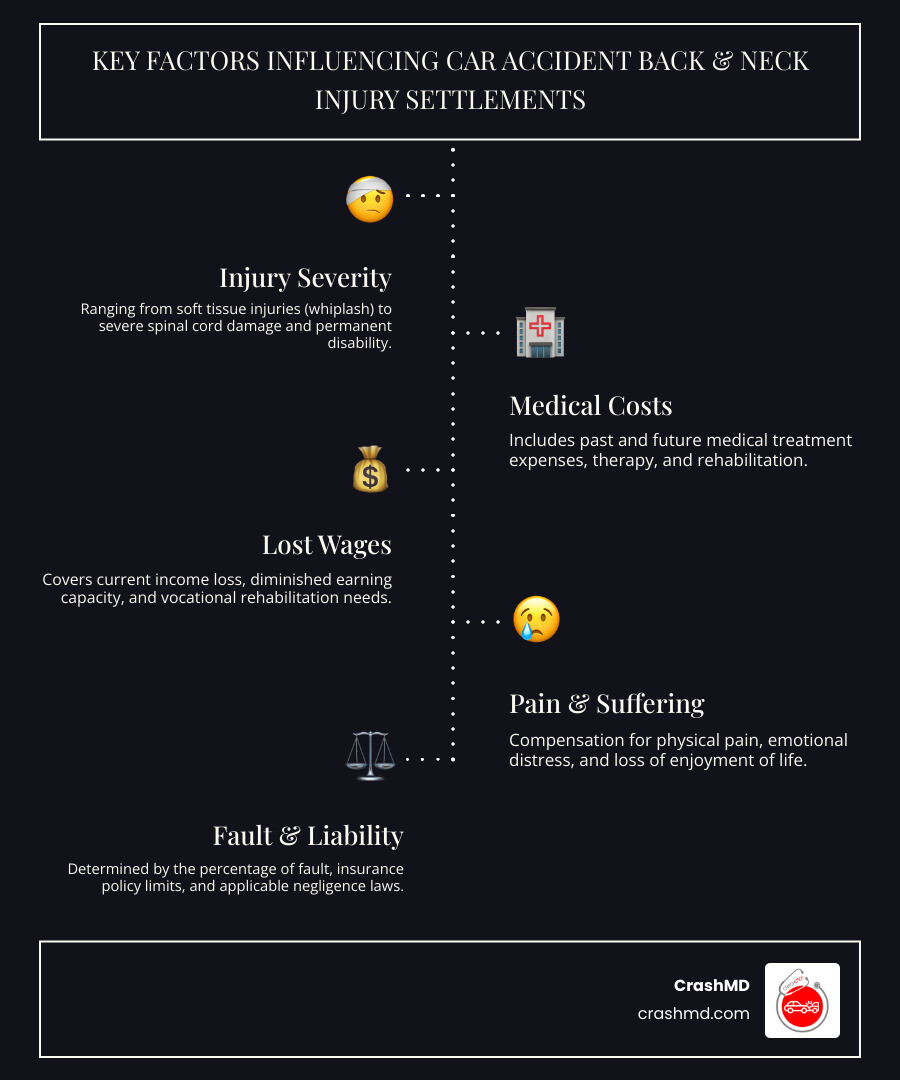
Settlement values vary because every case is unique. Key factors include injury severity, medical costs, lost wages, pain and suffering, fault, insurance coverage, and the quality of legal representation.
State-Specific Settlement Data for Our Service Areas
State-specific data for our service areas (Arizona, Nevada, Texas, Oklahoma, and California) highlights how location influences compensation:
- Arizona: Average $1,377,833, Median $500,000. The highest settlement recorded was approximately $7.4 million for a spinal cord injury in a semi-truck and motorcyclist accident.
- Nevada: Average $1,810,333, Median $1,270,000. A notable case involved a $4 million settlement for a driver requiring spinal surgery due to a car accident.
- Oklahoma: Average $448,600, Median $450,000. One case saw an $850,000 award for spinal injuries requiring two back surgeries after being struck by a negligent truck driver.
- Texas: Average $503,648, Median $350,000. A significant settlement reached nearly $2.1 million for multiple back surgeries following a T-bone collision with a commercial vehicle.
- California: Average $1,728,491, Median $1,535,500. This includes cases ranging from $1,070 for minor soft-tissue injuries to $5,750,000 for severe injuries. The average payout for a moderate car accident neck or back injury in California is $47,421.
These figures demonstrate that while national averages provide a starting point, local legal landscapes and specific case details truly dictate the potential value of your claim.
Here’s a comparison of average settlement ranges for different back and neck injury types:
| Injury Type | Average Settlement Range (National/General) | California Specific Ranges |
|---|---|---|
| Whiplash/Soft Tissue Injuries | $6,000 – $30,000 | Minor: $1,070 – $14,335 |
| Herniated Disc (Non-Surgical) | $20,000 – $100,000 | Moderate: $15,000 – $90,277 |
| Fractured Vertebrae | $50,000 – $300,000 | Severe: $100,000 – $5,750,000 |
| Serious Herniated Disc | $250,000 – $375,000 | Severe: $100,000 – $5,750,000 |
| Spinal Cord Injuries | $60,000 – $500,000 | Severe: $100,000 – $5,750,000 |
How Injury Severity Dictates Settlement Ranges
The severity of your injury is the most significant factor in your settlement. A minor sprain will result in a much lower payout than a life-altering spinal cord injury.
- Minor Injuries: These involve soft tissue damage like whiplash, with symptoms like muscle soreness and stiffness. Requiring physical therapy or chiropractic care, these cases usually settle for \$6,000 to \$30,000. For example, minor neck and back injuries in California average $7,668 ($1,070 to $14,335).
- Moderate Injuries: This includes non-surgical herniated discs causing persistent pain or numbness. Treatment may involve physical therapy or steroid injections, with settlements from $20,000 to $100,000. In California, moderate injuries average $47,421 ($15,000 to $90,277).
- Severe Injuries: These include fractured vertebrae, herniated discs requiring surgery, or spinal cord damage causing paralysis. Settlements can range from $50,000 for fractures to over $375,000 for surgical disc injuries. Spinal cord injuries can lead to six or seven-figure settlements. In California, severe injuries average $1,590,309 ($100,000 to $5,750,000).
The long-term impact of severe injuries is also a huge consideration. For example, lifetime treatment costs for a person paralyzed from the waist down can exceed $1,656,000 for a 50-year-old, and for a 25-year-old, it can exceed $2,500,000. These staggering costs are a major component of severe injury settlements.
Comparing Surgical vs. Non-Surgical Injury Settlements
The type of medical treatment you receive significantly affects your settlement. Cases requiring surgery generally result in much higher compensation.
- Non-Surgical Treatment Value: A back injury settlement without surgery can be substantial, often ranging from $20,000 to $100,000. The value depends on the extent of treatment (physical therapy, chiropractic care, injections) and its impact on your daily life. CrashMD ensures all non-surgical treatments are thoroughly documented to support your claim for medical costs, lost wages, and pain and suffering.
- Surgical Treatment Value: Surgery indicates a more severe injury, leading to higher medical costs, greater pain and suffering, and longer recovery. Back surgery settlements often exceed six figures. For instance, fusion surgery for herniated discs can cost $20,000 to $50,000, and the settlement reflects this expense and its long-term impact. While non-surgical fracture treatment might cost $5,000-$15,000, surgery can increase costs to $50,000-$150,000 or more, driving settlements higher.
Key Factors That Determine Your Settlement Amount
Beyond injury severity and surgery, several other crucial factors determine the final average settlement for car accident back and neck injury.

Calculating Economic Damages: Medical Bills and Lost Wages
Economic damages are your tangible, out-of-pocket financial losses resulting from the accident. They include:
- Past Medical Expenses: This covers everything from your initial emergency room visit (which can cost nearly $3,000 in California) to ambulance rides, doctor consultations, diagnostic tests (X-rays, MRIs), medications, and completed therapy sessions.
- Future Medical Costs: If your injury requires ongoing care, these projected costs for future surgeries, long-term therapy, or adaptive equipment are a significant part of your claim. For severe injuries, these can reach millions over a lifetime.
- Lost Income & Diminished Earning Capacity: This includes wages lost because you couldn’t work and compensation if the injury permanently affects your ability to earn at the same level as before the accident.
- Vocational Rehabilitation: In cases where you can no longer perform your previous job, the cost of retraining for a new career path can also be included.
The Significance of Non-Economic Damages: Pain and Suffering
Non-economic damages, or “pain and suffering,” compensate for the intangible impacts of your injury. These subjective damages often form the largest component of a settlement and include:
- Physical Pain and Emotional Distress: This encompasses the physical pain you endure and the emotional challenges like anxiety, depression, and PTSD that often accompany traumatic events.
- Loss of Enjoyment of Life: This refers to the inability to engage in activities you once loved, from hobbies to simply walking without pain.
- How it’s Calculated: Since pain and suffering doesn’t have a price tag, it’s typically calculated using one of two methods:
- Multiplier Method: This common approach multiplies your total economic damages by a factor (usually 1.5 to 5), which increases with injury severity.
- Per Diem Method: This less common method assigns a daily dollar value for each day you experienced pain until you reach maximum medical improvement. The final calculation depends on injury severity, recovery time, and impact on daily life. Detailed documentation is crucial for maximizing these damages.
Legal and Insurance Complexities That Impact Your Payout
Legal and insurance issues can dramatically affect your average settlement for car accident back and neck injury, even with severe injuries.
- At-Fault Driver’s Policy Limits: This is often the biggest limiting factor. Many drivers carry only minimum liability insurance (e.g., $15,000 per person in California), which may not cover all damages from a moderate or severe injury.
- Uninsured/Underinsured Motorist (UM/UIM) Coverage: This coverage is crucial if the at-fault driver has little or no insurance. An experienced lawyer can pursue all available coverage, including UM/UIM policies, to maximize your compensation.
- Contributory vs. Comparative Negligence Laws: Your share of fault can reduce your settlement. Most states, including California, follow a pure comparative fault rule, reducing your award by your percentage of fault. For example, if you’re awarded $100,000 but found 20% at fault, you’d receive $80,000. You can learn more about comparative negligence laws here.
- Pre-Existing Conditions: Insurers may argue your symptoms are from a pre-existing condition, not the accident. For example, they might claim a new herniated disk issue was pre-existing.
- Aggravation of a Prior Injury: If the accident worsened a pre-existing condition, you are entitled to compensation for that aggravation. Proving this requires meticulous medical documentation and expert medical opinions.
How to Maximize Your Back and Neck Injury Settlement
Navigating the aftermath of a car accident, especially with back and neck injuries, can feel overwhelming. However, by taking proactive steps, you can significantly increase your chances of securing a fair average settlement for car accident back and neck injury.

The Critical Role of Medical Documentation and Following Treatment
Your medical records are the backbone of your personal injury claim. Without thorough, consistent documentation, even severe injuries can be undervalued.
- Seeking Immediate Medical Care: Always seek medical attention immediately after an accident, even if you feel fine. Some serious injuries have delayed symptoms, and an immediate evaluation establishes a clear link between the accident and your injuries.
- Consistent Treatment: Follow all recommended medical treatment plans diligently. Gaps in treatment can be used by insurance companies to argue your injuries aren’t as severe as you claim.
- Diagnostic Imaging (MRI, CT Scans): Objective evidence from MRIs and CT scans is powerful. These scans can visually confirm injuries like herniated discs or fractures, which can significantly raise settlement payouts.
- Detailed Medical Records: Ensure your providers document your symptoms, pain levels, limitations, and how the injuries impact your daily life. At CrashMD, we specialize in documenting injuries for legal cases, ensuring a clear, comprehensive record that strengthens your claim.
- Proving Injury Causation: Your medical records are essential for proving your injuries were directly caused or worsened by the car accident, which is vital when dealing with pre-existing conditions.
Preparing Your Case for a Fair Settlement
A well-prepared case is a strong case. Taking these steps helps build a compelling argument for fair compensation.
- Gathering Evidence: Collect police reports, photos or videos of the accident scene and vehicle damage, and contact information for any witnesses.
- Documenting Pain Levels: Keep a detailed pain journal to track your symptoms, pain levels, and how your injuries affect your daily activities. This record helps illustrate your pain and suffering.
- Keeping All Receipts: Maintain meticulous records of all injury-related expenses, including medical bills, pharmacy receipts, and documentation of lost wages.
- Avoiding Quick Settlement Offers: Initial offers from insurance companies are often low. Do not accept an offer without consulting an attorney, as you risk settling for less than your claim is worth.
Why an Experienced Personal Injury Lawyer is Essential
An experienced personal injury lawyer is an invaluable asset in maximizing your average settlement for car accident back and neck injury.
- Negotiating with Insurance Adjusters: Lawyers know how to counter insurance company tactics and negotiate effectively on your behalf to prevent them from undervaluing your claim.
- Calculating Total Damages: They are experts at calculating the full scope of your damages, including economic and non-economic losses, often using financial and medical experts for accurate projections.
- Hiring Medical Experts: An attorney can work with medical experts to assess your injuries, their long-term impact, and provide testimony to prove causation, especially with pre-existing conditions.
- Proving Liability: A lawyer can investigate the accident to build a strong case, establish the other party’s fault, and minimize your own, which is critical in comparative negligence states.
- Maximizing Compensation: Experienced lawyers know how to pursue all available insurance coverage, including UM/UIM and umbrella policies, to ensure you receive maximum financial compensation. Learn more about the role of auto accident lawyers here.
Frequently Asked Questions about Back and Neck Injury Settlements
What is the average settlement for car accident back and neck injury without surgery?
The average settlement for car accident back and neck injury without surgery typically ranges from $20,000 to $100,000. The final amount depends on the extent of non-surgical treatment (physical therapy, chiropractic care, injections) and how the injury impacts your daily life.
Even without surgery, you are entitled to compensation for medical expenses, lost wages, and pain and suffering. Factors include treatment duration and cost, and whether the injury leads to chronic pain that limits your ability to work or enjoy life. We ensure all aspects of your non-surgical recovery are thoroughly documented.
How do pre-existing conditions really affect my settlement?
Pre-existing conditions can complicate a settlement but don’t disqualify you from compensation. Insurers often argue that your symptoms are from a prior condition, not the accident.
However, if the accident aggravated your pre-existing condition, you are entitled to compensation for that exacerbation. The key is proving the accident worsened your condition. This requires meticulous medical documentation and expert opinions to differentiate the pre-existing condition from the new injury or aggravation. We help ensure your medical records clearly demonstrate how the accident impacted your health, advocating for your right to fair compensation.
How long does it take to get a settlement for a back and neck injury?
The timeline for a settlement can vary from a few months to several years, depending on case complexity and injury severity.
- Case Complexity & Injury Severity: Minor injuries may settle quickly. Severe injuries take longer, as it’s best to wait until you reach Maximum Medical Improvement (MMI) to ensure all future medical costs are included.
- Negotiation Process: Negotiations can be swift or protracted. While laws like California’s Unfair Claim Settlement Practices require insurers to act promptly, reaching a fair settlement often involves extensive back-and-forth.
- Litigation Timeline: If a fair settlement isn’t reached, filing a lawsuit extends the timeline significantly, as court processes can take months or years.
Conclusion: Secure Your Health and Your Fair Compensation
Understanding the average settlement for car accident back and neck injury is a crucial first step, but as we’ve seen, there’s no magic number. Your claim’s true value is deeply personal and case-specific. It hinges on a complex interplay of your injury’s severity, the medical treatments you receive, the financial impact on your life, your pain and suffering, and the legal and insurance nuances specific to your situation in Arizona, Nevada, Texas, Oklahoma, or California.
The most important takeaways are:
- No Single Average: Forget the idea of a universal “average.” Your settlement will be unique to your circumstances.
- Value is Case-Specific: Every detail matters, from the moment of impact to your long-term recovery.
- Importance of Medical Evidence: Meticulous medical documentation is paramount. It’s the foundation upon which your entire claim is built, proving both the causation and the extent of your injuries.
- Expert Guidance is Key: Navigating insurance companies and legal complexities can be daunting. An experienced personal injury lawyer can be your advocate, ensuring all damages are calculated, negotiations are handled skillfully, and your rights are protected.
At CrashMD, we guide accident victims through recovery, offering expert pain management and custom treatment plans. Our unique strength lies in advocating for our patients and carefully documenting injuries for legal cases, ensuring comprehensive recovery before legal action. We believe that by providing top-tier medical care and thorough documentation, we empower you to achieve the fair compensation you deserve.
Your health is our priority, and securing your fair compensation is a critical part of your journey back to wellness. Learn more about our expert pain management services and how we can support your recovery and legal case.