

Fractured Scapula Symptoms: What You Need to Know After a Trauma
Fractured scapula symptoms can be easy to miss — especially after a violent accident when other injuries are competing for attention. But a broken shoulder blade is a serious injury that needs prompt medical evaluation.
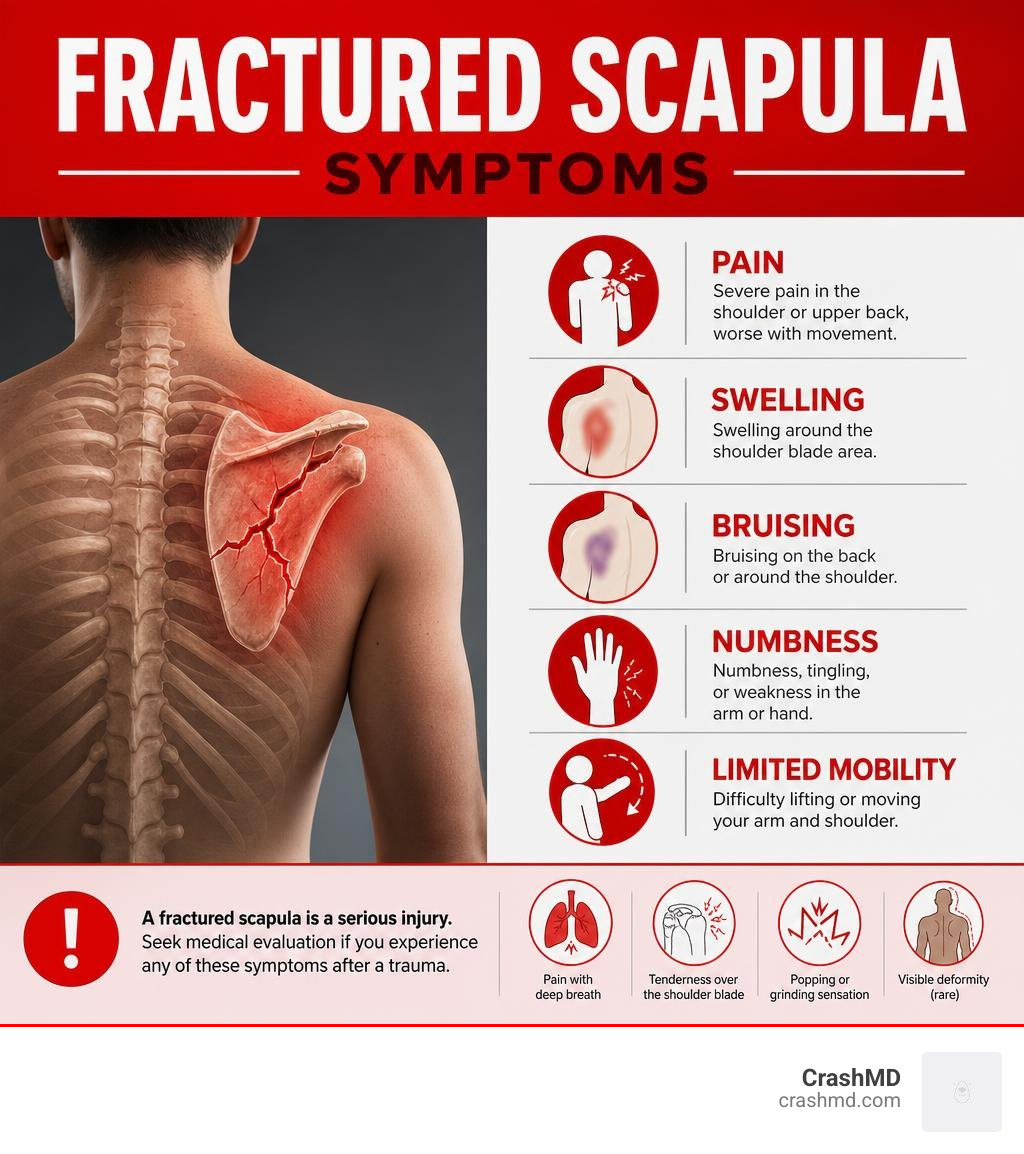
The most common symptoms of a fractured scapula include:
- Severe pain at rest and when moving your arm
- Swelling and bruising around the back of the shoulder
- Tenderness when pressing on the shoulder blade area
- Limited ability to lift or move your arm
- Numbness, tingling, or weakness in the arm or hand
- A popping or grinding sensation (crepitus) when moving the shoulder
- Pain when taking a deep breath
- A flattened or deformed appearance of the shoulder
I’m Dr. Adam Savage, and if you’ve been in a car accident or suffered a high-impact injury, understanding these symptoms matters — both for your health and for documenting your injuries properly.
The scapula (shoulder blade) is one of the most protected bones in your body. It’s cushioned by thick muscles and surrounded by your rib cage. That protection is exactly why a scapula fracture is rare — accounting for less than 1% of all broken bones. When it does break, it almost always means something hit you hard.
In fact, 80–95% of people with a scapula fracture have at least one other serious injury — such as broken ribs, a collapsed lung, or a spinal injury. That’s why these fractures are never just about the shoulder blade.
If you’re experiencing any of the symptoms above after an accident, this guide will walk you through everything you need to know — from what a fractured scapula actually is, to how it’s diagnosed, treated, and what your recovery could look like.
What is a Scapula Fracture and How Common Is It?
A scapula fracture is a break or crack in your shoulder blade, the flat, triangular bone located at the upper back of your shoulder girdle. Because the scapula is heavily shielded by a complex envelope of muscles and the rib cage, fracturing it requires an immense amount of force.
According to Scientific research on scapula fractures, these injuries represent less than 1% of all broken bones and only about 3% to 5% of all shoulder girdle fractures. When they do occur, they are most common in young males between the ages of 25 and 50 who are involved in high-energy trauma.
Anatomy of the Shoulder Girdle
To understand how a fracture impacts your body, it helps to look at the anatomy. The shoulder is a highly mobile ball-and-socket joint where the head of the upper arm bone (humerus) rests inside the glenoid cavity (socket) of the scapula.
The scapula acts as a crucial bridge connecting your arm to your axial skeleton. It provides attachment sites for 18 different muscles, which allow you to raise, rotate, and stabilize your arm. The collarbone (clavicle) and humerus frame this complex system, meaning any damage to the scapula can severely disrupt your entire upper body mechanics.
Common Causes and High-Impact Mechanisms
Because the shoulder blade is so well protected, it takes a severe impact to break it. The most common causes we see include:
- Motor vehicle collisions: Over 70% of scapula fractures result from high-speed car and motorcycle crashes.
- Falls from significant heights: Landing directly on the back or side.
- High-impact contact sports: Severe collisions in sports like football or rugby.
- Direct blows: A heavy, localized impact directly to the shoulder blade.
Recognizing Key Fractured Scapula Symptoms
Identifying fractured scapula symptoms early is vital. Because these injuries often occur alongside other painful traumas, the shoulder blade itself can sometimes be overlooked during initial emergency evaluations.
If you have recently survived a major accident, we highly recommend getting a specialized evaluation. You can read More info on finding a specialist to ensure your shoulder injuries are not neglected.
Primary Fractured Scapula Symptoms to Watch For
If you have fractured your shoulder blade, you will likely experience:
- Pain at rest and with movement: The pain is usually sharp, severe, and located over the back of the shoulder. Attempting to lift your arm can feel nearly impossible.
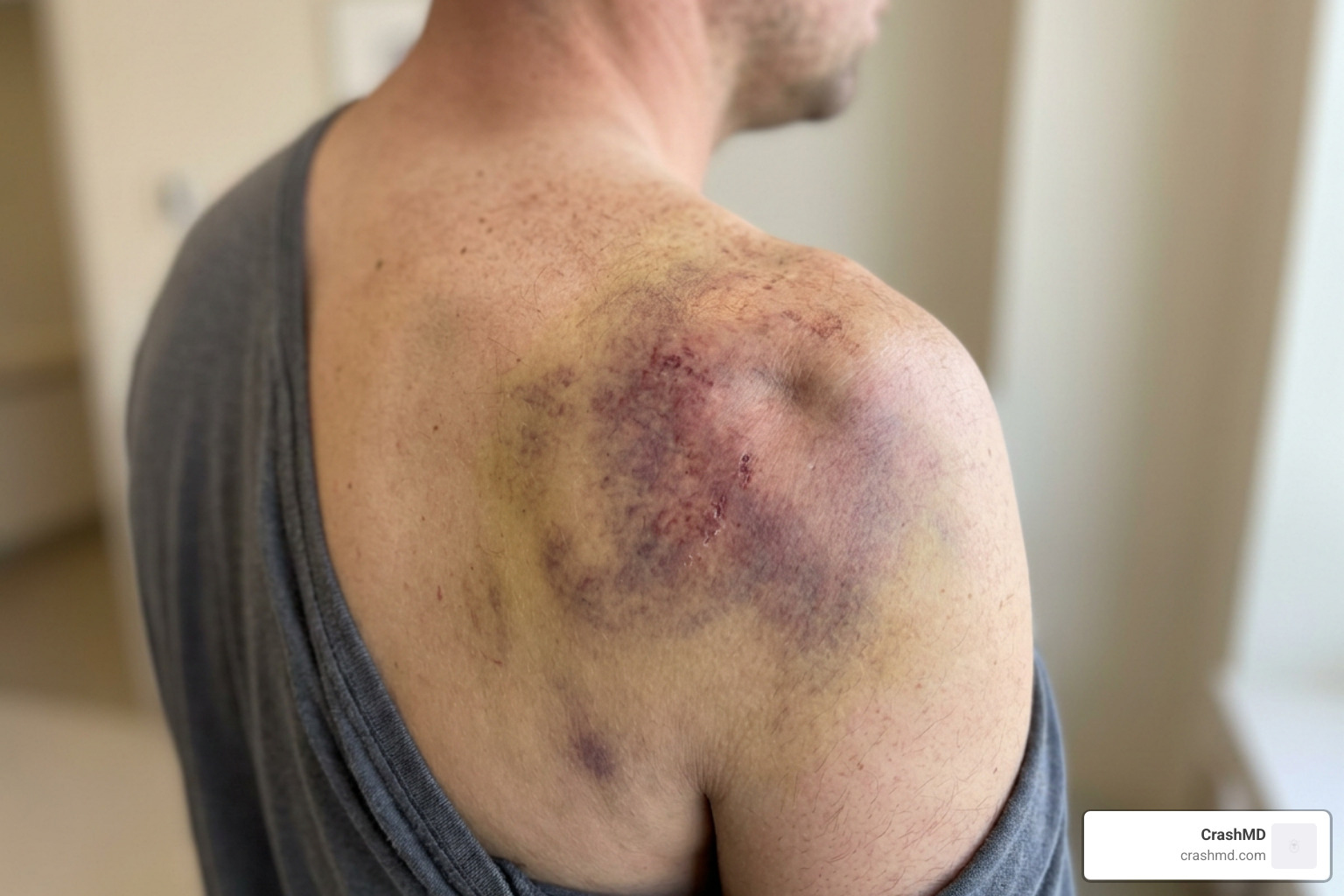
- Localized tenderness and swelling: The area over the shoulder blade will be highly sensitive to the touch, accompanied by rapid swelling and deep bruising.
- Crepitus: A distinct popping, cracking, or grinding sound when you attempt to move your shoulder, caused by bone fragments rubbing together.
- Shoulder deformity: The shoulder may appear flattened, drooped, or visibly different from your uninjured side.
Neurological and Vascular Fractured Scapula Symptoms
Because major nerves and blood vessels travel near the shoulder girdle, a severe fracture can cause neurological or vascular complications. Watch out for:
- Numbness and tingling radiating down your arm or into your hand.
- Weakness or an inability to move your fingers and wrist.
- Coldness or pale skin in your arm or hand, which can point to vascular compromise.
- Brachial plexus injuries: These nerve injuries occur in 5% to 13% of scapular fractures and require careful monitoring by a medical professional.
Classification and Associated Injuries
Orthopedic specialists classify scapula fractures based on where the break occurs. The location of the fracture plays a massive role in deciding whether you will need surgery.
| Fracture Location | Percentage of Cases | Description & Impact |
|---|---|---|
| Scapular Body / Spine | 45% – 50% | The flat part of the bone. Usually heals well without surgery due to rich blood supply from surrounding muscles. |
| Glenoid Fossa (Socket) | ~35% | Involves the shoulder joint surface. Displaced glenoid fractures often require surgery to prevent long-term arthritis. |
| Scapular Neck | ~25% | The area just below the socket. Can cause the shoulder joint to drift out of alignment if highly displaced. |
| Acromion Process | ~8% | The bony tip of the shoulder. Fractures here can lead to shoulder impingement. |
| Coracoid Process | ~7% | The small hook-like structure at the front. Rare, but crucial for muscle and ligament attachments. |
High-Energy Trauma and Associated Injuries
Because of the high-speed nature of these accidents, a broken shoulder blade rarely travels alone. According to Scientific research on scapula fracture classification, up to 95% of patients present with additional, potentially life-threatening injuries. These commonly include:
- Thoracic injuries: Rib fractures occur in over 53% of cases, and more than 40% of patients experience pulmonary contusions (bruised lungs) or a pneumothorax (collapsed lung).
- Clavicle fractures: About 25% of patients also fracture their collarbone, which can create a highly unstable “floating shoulder.”
- Head and spine injuries: Skull fractures, concussions, or spinal cord injuries are frequently seen alongside scapular trauma.
Diagnosis and Medical Evaluation
When you are evaluated after an accident, a doctor will perform a comprehensive physical exam and a neurovascular assessment. They will check the pulses in your arm and test the motor and sensory functions of your axillary, radial, median, and ulnar nerves.
Because other injuries can mask shoulder pain, doctors must look closely at your clinical history. For a deeper look at how doctors approach this, read this Scientific research on shoulder blade fractures.
Imaging Tests for Accurate Diagnosis
Accurate imaging is the cornerstone of diagnosing a scapular injury:
- X-rays: A standard trauma series includes an anteroposterior (AP) chest X-ray, as well as specialized shoulder views (Grashey AP, scapular Y, and axillary lateral). Note: Up to 43% of scapula fractures can be missed on initial chest X-rays alone.
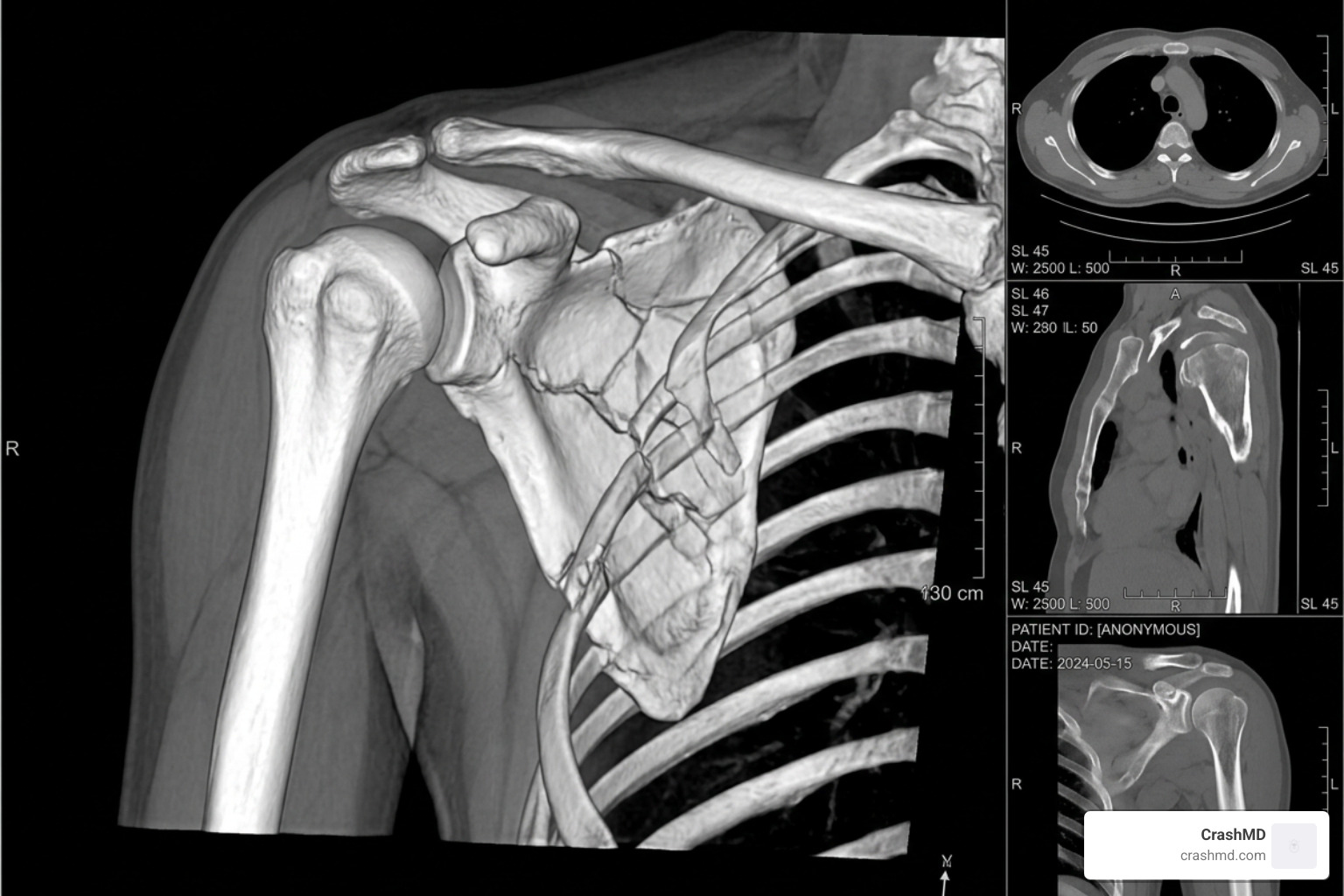
- CT Scan: This is the gold standard. A CT scan provides 3D detail of complex, displaced, or intra-articular (joint-involving) fractures.
- MRI: While less common in acute trauma, an MRI may be ordered if your doctor suspects soft tissue damage, such as a rotator cuff or labrum tear.
Treatment Options and Recovery Timelines
The good news is that over 90% of scapula fractures are minimally displaced and can be successfully treated without surgery.
Non-surgical treatment typically involves:
- Sling immobilization: Wearing a simple sling for 2 to 3 weeks to keep the shoulder stable.
- Pain management: Using a combination of ice packs (wrapped in a towel to prevent ice burn) and medications to keep you comfortable while minimizing opioid use.
- Early movement: Gently moving your shoulder within the first week to prevent stiffness.
For more details on what to expect during this process, read More info on broken scapula healing times.
When is Surgical Treatment Indicated?
While most cases heal with conservative care, surgery is necessary when the fracture threatens your long-term shoulder function.
According to Scientific research on surgical indications, open reduction and internal fixation (ORIF)—using metal plates and screws to realign the bone—is typically required if you have:
- A glenoid joint surface displacement greater than 4 to 5 mm.
- A scapular neck fracture with severe angulation (over 40 degrees) or translation (over 1 cm).
- A “floating shoulder” (simultaneous displaced fractures of both the scapula and the clavicle).
- Open fractures where the bone has broken through the skin.
Rehabilitation and Long-Term Outcomes
Whether you have surgery or recover conservatively, physical therapy is the key to regaining your strength. Fractures of the scapula actually heal at a faster rate than many other bones because of the rich blood flow from the surrounding muscles.
We typically break down rehabilitation into four distinct phases:
- Phase 1: Protection and Pain Control (Weeks 0–3): Focuses on sling use, icing, and very gentle passive range-of-motion exercises.
- Phase 2: Controlled Mobility (Weeks 3–6): Passive stretching expands, and active-assisted movements begin to prevent frozen shoulder.
- Phase 3: Strength and Stability (Weeks 6–12): Active exercises and light resistance bands are introduced to rebuild your rotator cuff and scapular stabilizers.
- Phase 4: Return to Sport/Work (Months 3+): Advanced strengthening to prepare your body for heavy lifting or athletic activities.
To learn more about how these phases fit into your personal recovery window, check out More info on healing timelines.
Frequently Asked Questions About Scapula Fractures
How long does it take for a fractured scapula to heal?
The bone itself typically achieves solid union within 3 to 4 months. However, recovering your full muscle strength, flexibility, and range of motion can take a few additional months. Patients treated non-surgically can often return to light, unrestricted daily activities within 6 to 8 weeks. For guidance on finding the right medical team for your recovery, see More info on finding a scapula pain specialist.
Can you walk with a fractured scapula?
Yes, you can walk, but you must be careful. Because walking involves natural arm-swinging motions that can cause pain and displace the healing bone, you will need to wear your sling to keep the arm fully immobilized. Your balance may also feel slightly off initially, so take your time and watch your step.
What happens if a scapula fracture is left untreated?
Leaving a severely displaced scapula fracture untreated can lead to malunion (the bone healing crooked). This can cause chronic pain, shoulder instability, severe muscle weakness, and a permanently limited range of motion. If the joint surface (glenoid) is left misaligned, it can lead to early-onset post-traumatic arthritis.
Conclusion
A fractured scapula is a complex, high-energy injury that requires careful medical attention and thorough documentation. At CrashMD, we specialize in guiding accident victims through this challenging recovery process.
We offer expert pain management, coordinate tailored physical therapy plans, and ensure your injuries are meticulously documented. This thorough documentation is vital for your health and essential if you are pursuing a legal case, ensuring you achieve a comprehensive recovery before taking legal action.
If you or a loved one are experiencing fractured scapula symptoms after an accident in Arizona, Nevada, Texas, Oklahoma, or California, we are here to support you. For professional guidance and specialized care, connect with our team today.