

Who You Gonna Call? Finding an Auto Accident Specialist
After a Crash, Who Actually Helps You Heal?
An auto accident specialist is a doctor trained to diagnose and treat injuries caused by car crashes — and finding the right one fast can make or break your recovery.
Here’s a quick overview of who to call and when:
| Situation | Who to See |
|---|---|
| Life-threatening emergency | Emergency room / trauma surgeon |
| Painful but stable | Urgent care or auto accident clinic |
| Whiplash, neck, or back pain | Chiropractor or orthopedic specialist |
| Numbness, headaches, brain fog | Neurologist or pain management doctor |
| Ongoing pain and rehabilitation | Physical therapist |
Every hour, more than 263 car accidents happen across the United States, according to safety data from the NHTSA. That’s a staggering number — and behind each one is a person who may be hurt without even knowing it yet.
Here’s the thing most people don’t realize: adrenaline surges after a crash can completely mask pain. You step out of your car, feel fine, and assume you got lucky. But hours or days later, the stiffness sets in. The headaches start. The neck won’t turn the way it used to.
I’m Dr. Adam Savage, and this is one of the most common stories I hear. Hidden injuries — whiplash, soft tissue damage, even internal bleeding — are routinely missed in the immediate aftermath of a collision.
That’s exactly why getting a medical evaluation from a qualified specialist as soon as possible is so critical. Not just for your health, but for your insurance claim and legal rights too.
This guide will walk you through everything you need to know.
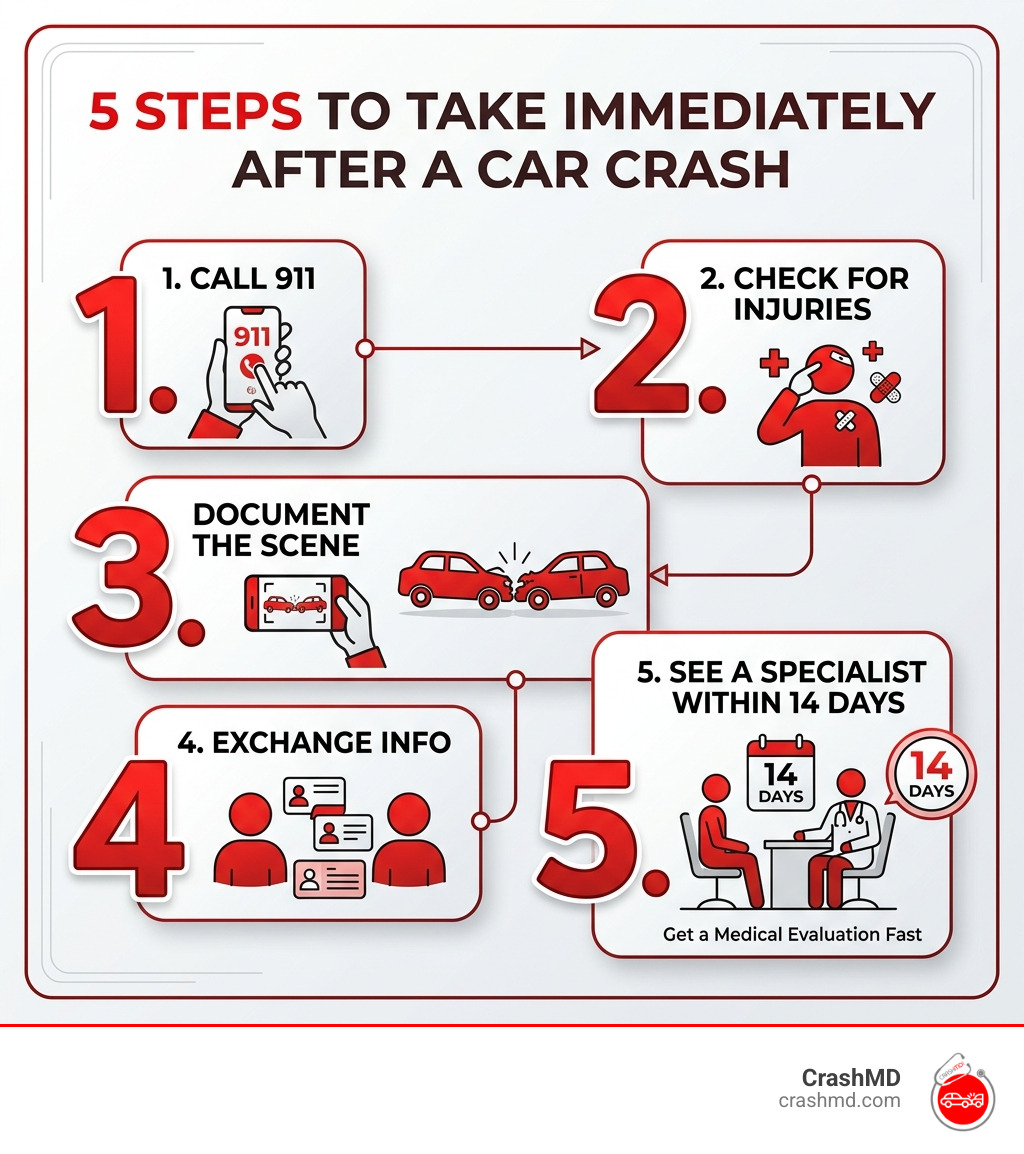
Relevant articles related to Auto accident specialist:
Why You Need an Auto Accident Specialist Immediately
When the metal crunches and the glass shatters, your body goes into survival mode. That “fight or flight” response floods your system with adrenaline and endorphins. While this helped our ancestors outrun saber-toothed tigers, it’s a bit of a nuisance after a fender bender because it acts as a natural painkiller. You might tell the police officer at the scene, “I’m fine,” only to wake up three days later feeling like you went twelve rounds with a heavyweight champion.

One of the most pressing reasons to see an auto accident specialist is the clock. In states like Florida, you are subject to the 14-day rule. This means you must seek medical treatment within exactly two weeks of your accident, or you forfeit your Personal Injury Protection (PIP) benefits forever. There are no “do-overs” or exceptions. Even if you aren’t in Florida, insurance companies in Texas, Arizona, and Nevada look at “gaps in treatment.” If you wait three weeks to see a doctor, the insurance adjuster will argue that you weren’t actually hurt in the crash, or that you hurt yourself doing something else in the meantime.
Beyond the legalities, there are the “silent” injuries. Soft tissue damage—tears in ligaments, tendons, and muscles—doesn’t show up on a standard X-ray. Whiplash symptoms, such as dizziness, blurred vision, and neck stiffness, can take 48 to 72 hours to manifest. Internal bleeding or a mild traumatic brain injury (mTBI) can be life-threatening if ignored, which is why the CDC emphasizes the importance of early diagnosis. By visiting motor-vehicle-accident-doctors, you ensure that these hidden issues are caught before they turn into chronic, lifelong pain or premature arthritis.
The Multidisciplinary Team: Types of Doctors You May Encounter
Recovering from a car crash isn’t usually a one-man show. Because the human body is complex, an auto accident specialist often works within a multidisciplinary team to address every facet of your injury.
Here is a breakdown of the experts you might meet on your road to recovery:
- Orthopedic Surgeons: These are the bone and joint experts. If you have a fracture, a torn rotator cuff, or a herniated disc that requires surgical intervention, they are the primary authority.
- Neurologists: Car accidents are a leading cause of concussions and nerve damage. If you’re experiencing “pins and needles,” weakness in your limbs, or memory fog, a neurologist will perform the brain and nerve screenings necessary to find the root cause.
- Pain Management Experts: Specialists like Dr. Denis Patterson focus on reducing your discomfort so you can actually participate in rehab. This might involve precisely guided injections or advanced medication management.
- Physical Therapists: They are the architects of your movement. Through targeted exercises, they help you regain the strength and range of motion you lost in the crash.
- Trauma Surgeons: Usually found in the ER, these doctors handle the immediate, life-saving procedures for high-impact collisions.
To help you decide where to go first, consider this comparison:
| Feature | Emergency Room (ER) | Urgent Care | Auto Accident Specialist |
|---|---|---|---|
| Primary Goal | Save life/limb | Patch minor wounds | Long-term recovery & claims |
| Wait Time | Very Long | Moderate | Short/Same-day |
| Documentation | Basic/Emergency only | Minimal | Comprehensive/Legal-ready |
| Follow-up Care | None (Referral only) | Limited | Full treatment plan |
| Billing | Health Insurance/Cash | Health Insurance/Cash | PIP, MedPay, LOP, Liens |
The Role of an Auto Accident Specialist in Documenting Injuries
You might be the toughest person in the world, but in the eyes of an insurance company, if it isn’t written down, it didn’t happen. This is where a pain-doctor-for-car-accident becomes your greatest ally.
Medical-legal documentation is a specific skill set. An auto accident specialist doesn’t just write “neck hurts.” They provide detailed injury reports that establish causation—the direct link between the collision and your physical condition. They use objective findings from diagnostic tests to prove the severity of your injuries. This is vital for insurance claim support. Without this level of detail, attorneys often face “lowball” settlement offers because they lack the evidence to counter the insurance company’s claims that your injuries are “pre-existing.” Experts like Christian Peccora in Texas understand exactly what documentation is needed to support a personal injury case in the Lone Star State.
Specialized Chiropractic Care and Rehabilitation
Chiropractic care is often the backbone (pun intended) of accident recovery. High-impact collisions knock the spine out of alignment, leading to nerve compression and restricted movement.
By seeking chiropractic-care-for-accidents, you are opting for a non-invasive approach to healing. Specialists focus on spinal alignment and soft tissue mobilization to reduce inflammation and restore your range of motion. This isn’t just about “cracking backs”; it’s about preventing the long-term buildup of scar tissue that leads to premature arthritis. Our California accident staff expertise ensures that patients in the Golden State receive gentle, effective adjustments tailored to the specific biomechanics of a car crash.
Navigating the Financials: PIP, MedPay, and Letters of Protection
One of the biggest stressors after an accident is the mounting pile of bills. Many victims hesitate to see a doctor because they fear the out-of-pocket costs. However, a true auto accident specialist clinic is set up to handle this exact situation.
In many cases, there are no upfront costs for the patient. Here is how the financial side usually works:
- PIP (Personal Injury Protection): In “no-fault” states and some others, your own insurance covers a portion of your medical bills regardless of who caused the crash.
- MedPay: This is an optional addition to many auto policies in states like Colorado and Arizona. It functions like a mini-health insurance policy specifically for accident-related injuries, often covering between $5,000 and $25,000 in expenses.
- Letters of Protection (LOP): If you are working with an attorney, your doctor may accept an LOP. This is a legal agreement stating that the medical provider will wait for payment until your legal case settles. This allows you to get the high-quality care you need now without paying a dime out of pocket today.
- Attorney Liens: Similar to an LOP, this ensures the doctor is paid directly from the settlement proceeds.
Understanding these options is part of our crash-course-in-care-how-to-choose-your-car-accident-injury-doctor. We believe that your focus should be on healing, not on how you’re going to pay for your next X-ray.
Why Your Primary Care Physician Might Refuse Your Case
It sounds counterintuitive, doesn’t it? You’ve seen your family doctor for years, they know your history, and you trust them. Yet, when you call to schedule an appointment after a car wreck, the receptionist says, “We don’t treat auto accident injuries.”
There are several reasons for this:
- Billing Complexities: Most primary care offices are set up to bill major health insurance companies like Blue Cross or Aetna. They are not equipped to handle third-party billing, PIP, or attorney liens.
- Court Testimony: Treating an accident victim often means the doctor might be called to give a deposition or testify in court. Many general practitioners simply don’t have the time or interest in the legal side of medicine.
- Specialized Equipment: General offices often lack the advanced diagnostic tools—like digital motion X-rays or EMG nerve testing—required to document soft tissue injuries.
- PIP Limitations: Some states have specific licensing requirements for doctors who bill PIP insurance, which many family doctors don’t maintain.
When choosing-a-pain-doctor, you need someone who understands the medical-legal landscape. Our network of doctors specializes exclusively in these cases, meaning we have the infrastructure to handle the paperwork that your regular doctor won’t touch.
Advanced Diagnostics and Your First Visit
Your first visit to an auto accident specialist is much more thorough than a standard check-up. We aren’t just looking at your height and weight; we are looking for the invisible fingerprints left by the collision.
During your initial evaluation, you can expect:
- Neurological Screening: We check your reflexes, balance, and cognitive function to rule out concussions or brain trauma.
- Diagnostic Imaging: While the ER might have given you a quick X-ray to check for broken bones, we may coordinate an MRI to look at the discs in your spine or the ligaments in your joints.
- EMG Nerve Testing: If you have numbness or tingling, this test helps us identify exactly which nerve is being compressed.
- Concussion Protocols: Using advanced tools like eye-tracking or cognitive testing, we ensure that “minor” head bumps aren’t actually serious brain injuries.
From there, we create a personalized treatment plan. This isn’t a “one size fits all” approach. Your recovery might include a mix of chiropractic care, physical therapy, and pain management, all designed to get you back to your baseline health.
How to Choose the Right Auto Accident Specialist Near You
Not all clinics are created equal. When you are searching for an auto accident specialist, keep these criteria in mind:
- Experience with Personal Injury: Do they understand how to write reports for attorneys? Do they know the 14-day rule?
- Integrated Services: It is much easier to recover when your chiropractor, MD, and physical therapist are all in the same building (or at least on the same page).
- Proximity: You’ll likely be visiting the clinic several times a week initially. Choose a location that is convenient to your home or work.
- Same-Day Appointments: Injuries don’t wait for an opening in the schedule. A good clinic will get you in immediately.
- Communication: Look for a team that communicates effectively with your legal counsel.
You can find a vetted list of experts through our motor-vehicle-accident-doctors directory, covering regions from Arizona and Nevada to Texas and California.
Frequently Asked Questions about Auto Accident Specialists
How soon must I see a doctor to preserve my insurance benefits?
In Florida, you must see a doctor within 14 days. In other states like Texas or Arizona, while there isn’t a strict “14-day law,” waiting more than 72 hours can significantly weaken your legal case and insurance claim. The sooner you go, the better for both your health and your wallet.
Can I see an auto accident specialist if I don’t have health insurance?
Yes! Most specialists work on Letters of Protection (LOP) or attorney liens. This means they provide the treatment now and wait to get paid from your final insurance settlement. You don’t need traditional health insurance to get high-quality accident care.
What are the most common hidden injuries treated by specialists?
Whiplash is the king of hidden injuries, but we also frequently treat:
- Traumatic Brain Injuries (TBI): Often dismissed as a “simple headache.”
- Herniated Discs: Which may start as a dull ache but lead to severe nerve pain.
- Spinal Ligament Damage: Which causes long-term instability in the neck and back.
- PTSD and Anxiety: The psychological impact of a crash is just as real as the physical.
Conclusion
A car accident is a traumatic event that turns your life upside down in a matter of seconds. Between the damaged vehicle, the insurance calls, and the physical pain, it’s easy to feel overwhelmed. But you don’t have to navigate this journey alone.
By choosing an auto accident specialist, you are choosing a partner who understands both the medical and legal complexities of your situation. At CrashMD, our mission is to provide comprehensive recovery through patient advocacy and meticulous injury documentation. We ensure that your injuries are fully treated and legally documented before you ever have to worry about a settlement.
Whether you need the expertise of Dr. Zach Cohen or a full team of motor-vehicle-accident-doctors, we are here to guide you through a personalized care path toward long-term wellness. Don’t wait for the pain to become permanent—reach out today and start your journey to a full recovery.