

From Broken Ribs to Bad Dreams: A Guide to Natural Recovery
When Pain Doesn’t Require a Surgeon’s Knife
Non surgical pain relief is a broad set of treatments — from physical therapy and injections to nerve-blocking devices and new medications — that can reduce or eliminate pain without going under the knife.
Here’s a quick look at the most effective options:
| Method | Best For | How Long Relief Lasts |
|---|---|---|
| Physical therapy | Muscle imbalances, joint pain, back pain | Long-term with consistency |
| Heat/cold therapy | Swelling, muscle tension | Hours |
| Corticosteroid injections | Inflammation, arthritis flare-ups | Weeks to months |
| Hyaluronic acid injections | Osteoarthritis joint pain | Weeks to months |
| Radiofrequency ablation (RFA) | Chronic back, neck, joint pain | 6–24 months |
| Neuromodulation (e.g., TENS, BioWave) | Nerve pain, muscle pain | Hours to days per session |
| Acupuncture / massage | Chronic pain, tension | Varies |
| Journavx (suzetrigine) | Moderate to severe acute pain | Short-term (acute use) |
If you’ve been in a car accident, you already know that pain doesn’t show up neatly. One day it’s broken ribs making every breath hurt. The next, it’s disrupted sleep, muscle spasms, or a dull ache that just won’t quit.
Surgery feels like the “serious” answer. But for most people recovering from trauma or living with chronic pain, it’s not the first step — and often not necessary at all.
Chronic pain is defined as pain lasting longer than three months, or beyond the time your body should have healed. Millions of Americans are living with exactly that. And for many, the path to real relief runs through non-surgical options that are safer, less disruptive, and more effective than most people expect.
This guide walks you through all of them — from basic at-home care to high-tech nerve treatments — so you can make informed decisions about your recovery.
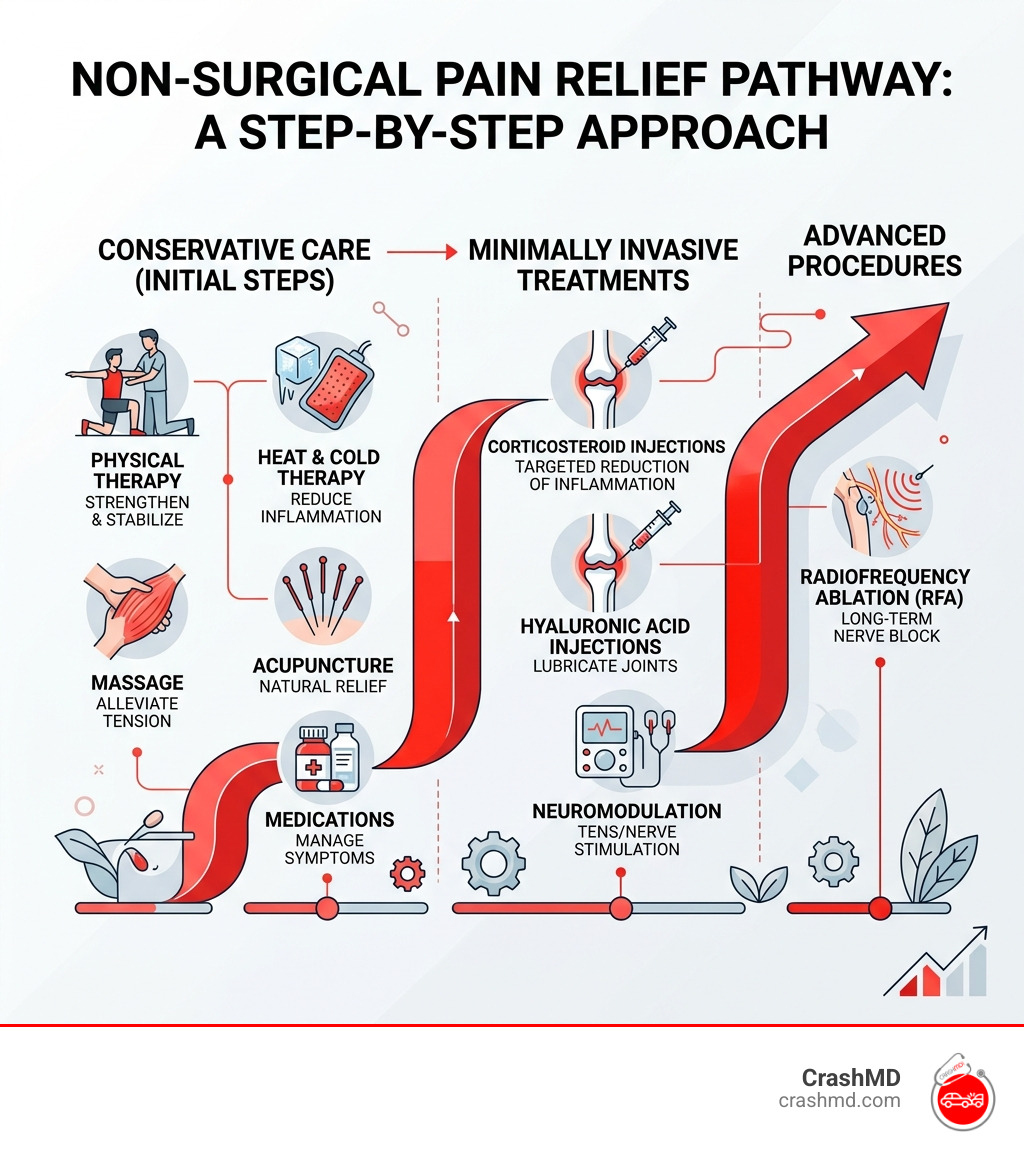
The Foundation of Non Surgical Pain Relief
When we talk about recovering from an accident or managing a long-term condition, we always start with the basics. Think of your body like a car that’s been in a fender bender; before you replace the engine, you check the alignment and the tires. In medicine, that “alignment check” is The Role of Physical Therapy in Pain Management.
Physical therapy (PT) is often the most effective tool in our kit. Why? Because many types of joint and back pain aren’t actually caused by “broken” parts, but by weak or imbalanced muscles that put unnecessary stress on your joints. By strengthening the support system around a painful hip or knee, we can often reduce the pressure enough to make the pain disappear.

Strengthening and Mobility
Manual therapy and targeted stretches go beyond just “working out.” In a clinical setting, physical therapists use hands-on techniques to mobilize stiff joints and break up scar tissue. This improves your range of motion and functional movement—the stuff that actually matters, like being able to reach the top shelf or get out of a car without a groan.
We also focus heavily on posture correction. In the age of “tech neck” (that lovely ache from staring at your phone), learning how to hold your body can take a massive load off your spine. By focusing on flexibility and core strength, we help you build a body that’s more resilient to future flare-ups.
At-Home Conservative Care
While we work on the long-term fix, you need relief now. This is where the RICE method (Rest, Ice, Compression, Elevation) comes into play.
- Cold therapy: Use ice packs for 10-15 minutes several times a day to knock down swelling and inflammation.
- Heat therapy: Once the initial swelling is gone, heat helps relax tight muscles and soothe “bad dreams” of recurring spasms.
- Bracing and Assistive Devices: Sometimes, a joint just needs a little extra help. Knee or hip braces can stabilize a joint and “offload” pressure, while canes or walkers can help you stay mobile while you heal.
Injection Therapies and Targeted Nerve Blocks
Sometimes, exercise isn’t enough because the inflammation is too high. It’s hard to do physical therapy when every movement feels like a lightning bolt. That’s when we look at Injection Therapy for Pain to “calm the storm.”

Corticosteroid injections are the heavy hitters here. They don’t just mask pain; they aggressively reduce inflammation in a specific area, such as a shoulder or a facet joint in the spine. For those dealing with the “grinding” sensation of osteoarthritis, we often use hyaluronic acid injections. Hyaluronic acid is a natural substance already found in your joint fluid. By supplementing it, we restore lubrication and reduce friction, which can slow down the progression of arthritis.
Epidural and Selective Nerve Blocks
If your pain is radiating—like the classic “sciatica” that shoots down your leg—we may use epidural steroid injections or selective nerve root blocks. These target the spinal nerves that are being pinched or irritated by herniated discs. By delivering medication directly to the source of the nerve signal, we can interrupt the pain loop. We also use “diagnostic blocks” (numbing the nerve temporarily) to confirm exactly which nerve is the culprit before moving on to more permanent solutions.
Duration and Expectations
How long does it last? Most patients experience a relief window of several weeks to several months. The goal isn’t just to stay on a cycle of shots; it’s to use that pain-free window to get back into physical therapy and address the underlying cause.
High-Tech Neuromodulation and Radiofrequency Ablation
If injections only provide temporary relief, we step up to technologies that actually “turn off” the pain signals. One of the most successful methods is Radiofrequency Ablation for Pain Management.
RFA uses thermal energy (heat) to destroy a tiny portion of the sensory nerves sending pain signals to your brain. It is most commonly used for chronic back and neck pain by targeting the medial branch nerves in the facet joints. It’s a minimally invasive procedure, not a surgery, and it’s performed in a hospital procedure room with same-day discharge.
Understanding Neuromodulation as Non Surgical Pain Relief
Neuromodulation is the “volume knob” for your nervous system. Devices like BioWave use high-frequency neurostimulation to block the transmission of pain signals. Unlike traditional TENS units that just tingle on the surface, BioWave’s patented technology goes deep to inhibit the “action potential” of the nerve itself. What Is BioWave? Drug-Free Pain Relief Explained shows that a single 30-minute treatment can provide up to 72 hours of relief in a clinical setting.
For a deeper dive into how these devices change the game, check out Neuromodulation Explained: Innovative Solutions for Pain Relief.
Long-Term Results with RFA
The statistics for RFA are impressive:
- 80% of patients report a clinically important improvement in pain.
- 85% of patients report satisfaction even two years after the procedure.
- Relief typically lasts 6 to 12 months, though many of our patients see results for much longer.
The best part? Because nerves eventually regenerate, RFA is repeatable. If the pain starts to creep back in a year or two, we can simply perform the procedure again. Long-lasting pain relief with radiofrequency ablation confirms that this is a safe, long-term strategy for avoiding spinal surgery.
Holistic Recovery and Emerging Non-Opioid Medications
In April 2026, the landscape of non surgical pain relief is more diverse than ever. We are moving away from the era of heavy opioids and toward targeted, non-addictive chemistry and holistic practices.
A major milestone in this journey was the FDA approval of Journavx (suzetrigine). This is a first-in-class non-opioid analgesic that targets sodium channels in the peripheral nervous system. Essentially, it blocks the pain signal before it ever reaches your brain, without the risks of addiction or the stomach irritation common with NSAIDs. It’s a “breakthrough therapy” that is changing how we handle moderate to severe acute pain after an accident.
For those interested in a broader approach, Holistic Pain Management offers a path that includes acupuncture, massage, and chiropractic care. Acupuncture, in particular, has shown great promise in injury recovery by stimulating the body’s natural healing responses.
Innovative Non Surgical Pain Relief Options
We are also seeing incredible results from “wearable tech” that doesn’t even require a battery. The Kailo pain patch, for instance, uses charged copper capacitors to interact with your body’s electrical system. Over 90% of users report an increase in comfort, and because it’s drug-free, there are no side effects or medication interactions. You can learn more about these “non-invasive wonders” in our guide on Pain Management Without Opioids: Alternative Treatments.
Addressing the “Bad Dreams”: Psychological Support
Pain isn’t just physical; it’s emotional. Chronic pain can lead to “bad dreams,” anxiety, and depression—all of which actually increase your sensitivity to pain. Psychotherapy, specifically Cognitive Behavioral Therapy (CBT), helps you manage the stress and negative thought patterns that come with a long recovery. By addressing the mind-body connection, we ensure that your brain isn’t stuck in a “high-alert” trauma state long after the tissues have healed.
Navigating the Path: When to Avoid the Operating Room
So, when do you choose non surgical pain relief over surgery? Generally, surgery should be the last resort—reserved for when your quality of life is so degraded that you can no longer perform daily activities, or when there is a risk of permanent nerve damage.
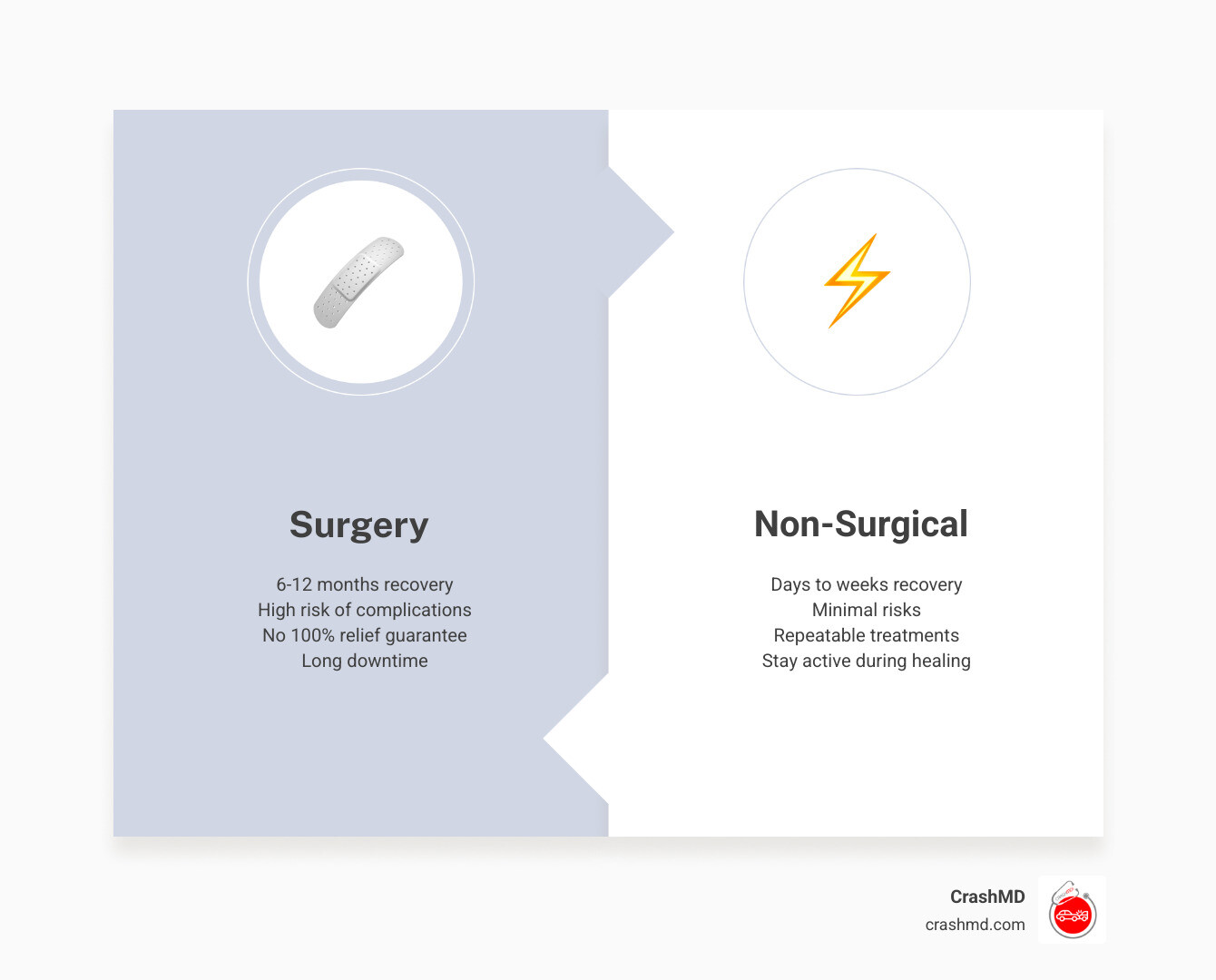
Most patients in Arizona, Nevada, Texas, Oklahoma, and California find that a combination of these treatments provides better outcomes with far less risk. Surgery often involves long recovery times, potential complications, and no guarantee of 100% relief. In contrast, non-surgical methods allow you to stay active and “test” what works for your body.
For a detailed breakdown of these options, see Non-Invasive Wonders: Effective Treatments for Chronic Discomfort.
Frequently Asked Questions about Non-Surgical Recovery
How long do the effects of radiofrequency ablation last?
Most patients enjoy relief for 6 to 12 months. In some cases, the benefits can last up to two years. Because the procedure is minimally invasive, it can be repeated if the treated nerves eventually regenerate and the pain returns.
Are non-surgical pain treatments covered by insurance?
Yes, most major insurance plans cover physical therapy, many types of injections, and radiofrequency ablation. Coverage for newer “wearable” technologies and certain holistic treatments varies, so we always recommend verifying with your provider. At CrashMD, we specialize in documenting these treatments to ensure they are properly accounted for in your recovery and any potential legal claims.
When should I stop conservative therapy and consider surgery?
If you have tried a combination of physical therapy, injections, and lifestyle modifications for at least six months without significant improvement, it may be time to consult a surgeon. However, if you experience sudden loss of bowel/bladder control or extreme muscle weakness, seek immediate medical attention as these can be signs of a surgical emergency.
Conclusion
I’m Dr. Adam Savage, and I’ve seen how the right non-surgical approach can transform a patient’s life. Whether you’re dealing with the aftermath of a car accident in Houston, a slip-and-fall in Las Vegas, or chronic back pain in Los Angeles, you deserve a recovery plan that treats you like a person, not a set of X-rays.
At CrashMD, we don’t just provide medical care; we advocate for you. We ensure your injuries are meticulously documented for your legal case while providing the most advanced non surgical pain relief options available today. Our goal is to get you back to your life—without the “bad dreams” of chronic pain holding you back.
Explore comprehensive recovery plans and take the first step toward a natural, non-surgical recovery today.