

What You Need to Know About Soft Tissue Injuries
A soft tissue injury is damage to the muscles, ligaments, tendons, or other connective tissues in your body. These injuries are incredibly common—whether from a car accident, a fall, a sports mishap, or even repetitive motions at work. Understanding what happened to your body is the first step toward healing and getting your life back.
Quick Overview: Soft Tissue Injury Basics
- What it is: Damage to muscles, ligaments, tendons, and other connective tissues
- Common types: Sprains (ligament tears), strains (muscle/tendon tears), contusions (bruises), tendinitis (inflamed tendons)
- Typical symptoms: Pain, swelling, bruising, limited movement, weakness
- Healing time: Most heal within 1-6 weeks, depending on severity
- First treatment: RICE protocol (Rest, Ice, Compression, Elevation) for the first 48-72 hours
Understanding Your Body’s Soft Tissues
Your body contains several types of soft tissues that work together to help you move:
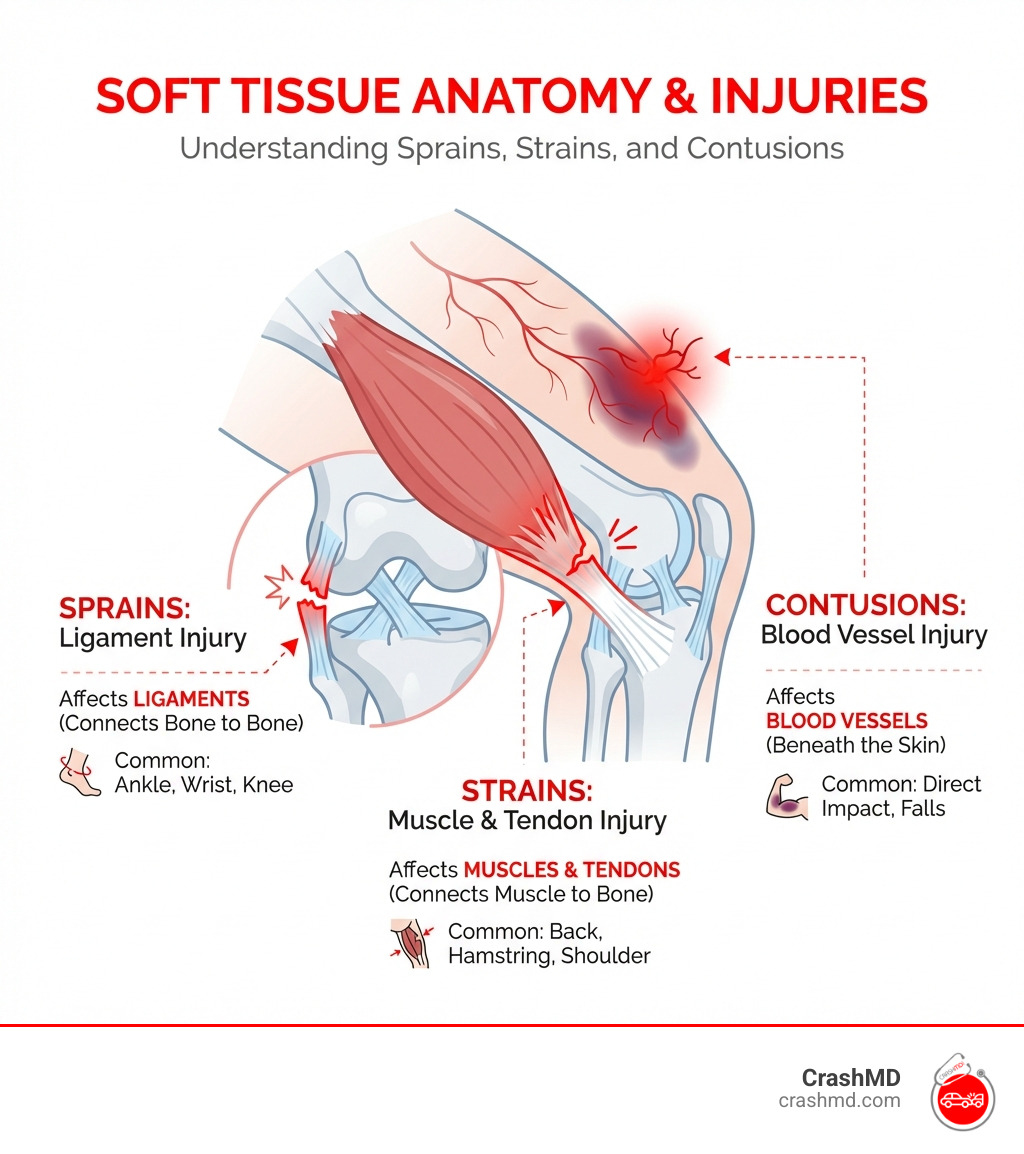
Muscles are the tissues that contract and relax to create movement. When they’re injured, you might feel pain, weakness, or spasms.
Ligaments are tough, fibrous bands that connect bone to bone and stabilize your joints. A torn or stretched ligament is called a sprain.
Tendons are flexible cords that attach muscles to bones, allowing your muscles to move your skeleton. Damage to tendons is called a strain when it happens suddenly, or tendinitis when it develops over time.
These injuries happen every day. They’re the most common type of sports injury, but you don’t need to be an athlete to suffer one. A sudden stop in a car accident, a slip on ice, lifting something heavy at work, or even just twisting awkwardly can damage these delicate tissues.
If you’ve been in a car accident, soft tissue injuries might not show up immediately. The adrenaline and shock can mask pain for hours or even days. That’s why getting a proper medical evaluation is critical—not just for your health, but also to document your injuries if you need to file a claim.
This guide will walk you through everything you need to know: the different types of injuries, how to recognize symptoms, what immediate steps to take, how doctors diagnose these injuries, and the path to full recovery.
Understanding the Types and Causes of Soft Tissue Injuries
Soft tissue injuries are a broad category encompassing various forms of damage to your body’s non-bony structures. These injuries can arise from a multitude of scenarios, ranging from sudden, acute trauma to the cumulative stress of repetitive motions. Understanding the different types and their common causes is crucial for effective treatment and prevention.
We typically categorize soft tissue injuries into two main groups:
- Acute Injuries: These occur suddenly due to a specific traumatic event. Think of a quick twist, a direct blow, or an unexpected impact. The symptoms usually appear immediately or very quickly after the incident.
- Overuse Injuries: These develop gradually over time from repetitive stress, friction, pulling, twisting, or compression on the soft tissues. The onset of pain and reduced function is typically slower and progressive.
Common causes of soft tissue injuries that we see in our offices across Arizona, Nevada, Texas, Oklahoma, and California include:
- Sports Activities: As the most common type of injury in sport, these often involve sudden movements, collisions, falls, or improper technique.
- Workplace Incidents: Repetitive tasks, heavy lifting, or falls can lead to strains, sprains, and other injuries.
- Falls: A simple slip or fall can result in significant trauma, especially to ankles, wrists, or hips.
- Motor Vehicle Accidents: Car accidents are a major cause of soft tissue injuries, often resulting in whiplash (a type of neck strain), back strains, and other impacts that damage muscles, ligaments, and tendons. For more information on navigating injuries after a collision, see our Helpful Car Accident Articles.
For a comprehensive medical perspective on these injuries, you can refer to An authoritative overview of Soft-Tissue Injuries from Johns Hopkins Medicine.
Sprains vs. Strains: What’s the Difference?
While often used interchangeably, “sprain” and “strain” refer to distinct types of soft tissue injuries, affecting different structures. Knowing the difference is key to understanding your injury.
A sprain is a stretch and/or tear of a ligament, which are the strong, fibrous bands of connective tissue that connect one bone to another, stabilizing and supporting your joints. Sprains typically occur when a joint is forced beyond its normal range of motion, causing the ligaments to overstretch or tear.
Common locations for sprains include:
- Ankles: Often caused by twisting or rolling the foot inward.
- Knees: Can result from sudden twists or impacts, affecting ligaments like the ACL or MCL.
- Wrists: Frequently happen when falling onto an outstretched hand.
Sprains are classified by severity:
- Grade 1 (Mild): Slight stretching and some damage to ligament fibers. You’ll likely experience mild pain, swelling, and tenderness, but joint function is mostly unaffected.
- Grade 2 (Moderate): Partial tearing of the ligament, leading to moderate pain, swelling, bruising, and some joint instability or laxity.
- Grade 3 (Severe): Complete tear of the ligament, resulting in significant pain, swelling, bruising, and complete loss of joint function or severe instability. These often require bracing or even surgery.
A strain is an injury to a muscle and/or tendon. Tendons are the flexible tissues that connect muscle to bone. Strains can range from a simple stretch to a partial or complete tear of muscle or tendon fibers. They usually occur due to overuse, overstretching, or a forceful contraction of the muscle.
Common locations for strains include:
- Back: Often from lifting heavy objects or sudden movements.
- Hamstrings: Common in sports with explosive movements like sprinting or jumping.
- Neck: Whiplash, a common injury in car accidents, is a form of neck strain. Learn more about Whiplash Recovery.
Here’s a quick comparison:
| Feature | Sprain | Strain |
|---|---|---|
| Affected Tissue | Ligament (bone-to-bone connector) | Muscle or Tendon (muscle-to-bone connector) |
| Cause | Joint forced beyond normal range of motion | Overstretching, forceful contraction, overuse |
| Common Symptoms | Pain, swelling, bruising, joint instability | Pain, muscle spasm, weakness, cramping, swelling, possible bruising |
Contusions, Tendinitis, and Other Common Injuries
Beyond sprains and strains, several other types of soft tissue injuries are frequently encountered:
-
Contusions (Bruises): A contusion is an injury to the soft tissue, often caused by a direct blow or blunt force. This impact crushes underlying muscle fibers and connective tissue without breaking the skin. The discoloration we see is due to bleeding into the tissue, where blood vessels are damaged and blood pools under the skin. Most contusions are mild and respond well to initial first aid, but deeper contusions can be more serious.
-
Tendinitis: This is the inflammation of a tendon, a flexible band of tissue connecting muscle to bones. Tendinitis is typically an overuse injury, resulting from repetitive motion or excessive stress on the tendon. It often leads to pain, tenderness, and reduced function in the affected area. Examples include “tennis elbow,” “golfer’s elbow,” and “jumper’s knee,” named for the activities that commonly trigger them.
-
Bursitis: Bursae are small, fluid-filled sacs that act as cushions between bones and muscles, tendons, or skin, reducing friction during movement. Bursitis is the inflammation of these bursae, usually caused by overuse, repetitive motion, or direct trauma to a joint. Symptoms include pain, swelling, and tenderness around the affected joint.
Recognizing Symptoms and Getting a Proper Diagnosis
Understanding the signs your body sends after an injury is crucial. While some symptoms of a soft tissue injury are immediately obvious, others might develop over time. Paying close attention to your body’s signals can guide you toward appropriate care and prevent further damage.
After an accident or injury, the initial shock can sometimes mask pain, leading to delayed recognition of symptoms. This is particularly true for injuries sustained in car accidents. For more on how to interpret pain signals, read our guide on Understanding Muscle and Joint Pain After a Crash.
Key Signs You Have a Soft Tissue Injury
If you’ve experienced an incident, look out for these common indicators of a soft tissue injury:
- Pain: This can vary from sharp and immediate to a dull, aching sensation that worsens with movement. It might be localized or spread across an area.
- Swelling: An accumulation of fluid around the injured area, often making the joint or limb appear puffy. Swelling is a natural part of the healing process but needs to be managed.
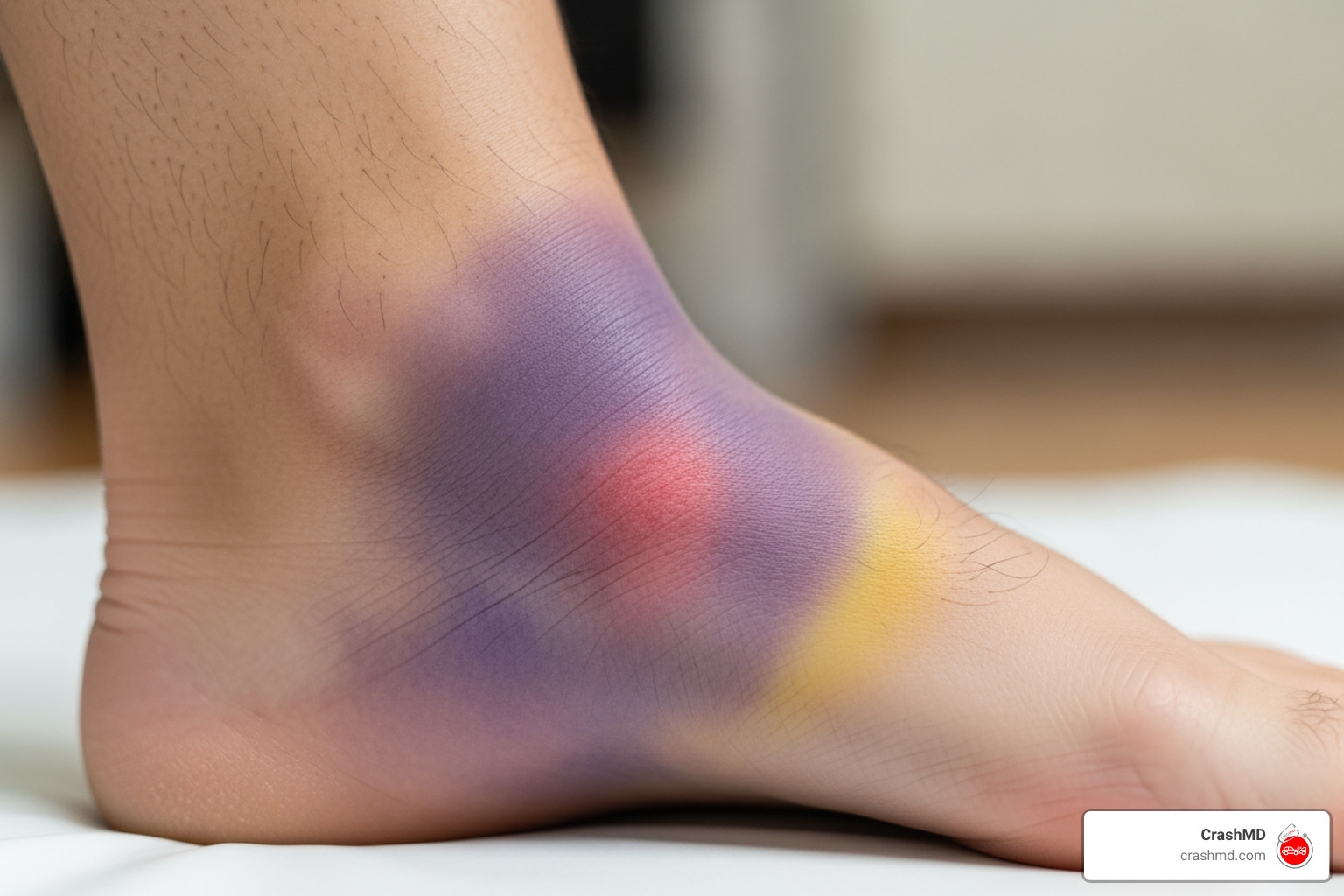
- Bruising or Discoloration: This happens when small blood vessels under the skin rupture, causing blood to leak into the surrounding tissues. The color can change from red or purple to green and yellow over several days.
- Joint Instability or Weakness: The affected joint may feel “loose” or give way easily, or you might struggle to apply normal force or bear weight.
- Muscle Spasms or Cramping: Involuntary contractions of the muscles, often a protective response to injury.
- Limited Range of Motion: Difficulty moving the injured part through its full normal range, either due to pain or mechanical restriction.
- Inability to Bear Weight: If the injury is in a lower extremity (foot, ankle, knee), you might find it impossible or extremely painful to put weight on it.
How Doctors Diagnose a Soft Tissue Injury
A proper diagnosis is the cornerstone of effective treatment. When you visit a healthcare professional, we follow a systematic approach to accurately identify the nature and extent of your soft tissue injury.
- Physical Examination: We will carefully inspect the injured area for swelling, bruising, and deformity. We’ll also gently palpate (feel) the area to pinpoint tenderness and identify any abnormalities.
- Medical History Review: We’ll ask you detailed questions about how the injury occurred, your symptoms, previous injuries, and your general health. This helps us understand the context of your injury.
- Range of Motion Tests: We’ll assess your ability to move the injured joint or limb, both actively (you moving it) and passively (us moving it). This helps determine the degree of functional limitation and pain.
In some cases, imaging may be needed to get a clearer picture:
- X-rays: Primarily used to rule out bone fractures or dislocations, as soft tissue injuries often mimic these symptoms. X-rays do not show soft tissues directly.
- MRI (Magnetic Resonance Imaging) or Ultrasound: These advanced imaging techniques provide detailed views of soft tissues like muscles, ligaments, and tendons, allowing us to identify tears, inflammation, or other damage that wouldn’t be visible on an X-ray. While MRI is excellent for soft tissue, it can be costly and sometimes show abnormalities that aren’t clinically significant.
Choosing the right pain doctor is vital for an accurate diagnosis and personalized treatment plan. Learn more about Choosing a Pain Doctor.
When to Seek Professional Medical Help
While many mild soft tissue injuries can be initially managed at home, it’s crucial to know when to seek professional medical help. Delaying care for serious injuries can lead to prolonged recovery, chronic pain, or even permanent damage.
You should seek immediate medical attention if you experience any of the following:
- Severe, Uncontrolled Pain: Pain that is excruciating, doesn’t improve with rest and over-the-counter pain relievers, or prevents you from sleeping.
- A “Popping” Sound at the Time of Injury: This can indicate a significant ligament tear (like an ACL rupture in the knee) or a tendon rupture.
- Obvious Deformity in the Joint or Limb: Any unusual shape, lump, or displacement suggests a serious injury.
- Inability to Move the Affected Area or Bear Weight: If you cannot move the injured part or put any weight on a lower extremity, it’s a red flag.
- Numbness, Tingling, or Loss of Sensation: These symptoms could indicate nerve damage, which requires prompt evaluation.
- Signs of Infection: If the injured area becomes hot, very red, swollen, or you develop a fever.
- Symptoms that Worsen or Don’t Improve: If your symptoms don’t start to get better after a few days of self-care, or if they actively get worse.
Early intervention is key for not only your physical recovery but also for documenting your injuries, especially if they are related to an accident. Find out more about Why Early Intervention is Key for Post-Accident Recovery.
A Comprehensive Guide to Treatment and Recovery
Recovering from a soft tissue injury involves a journey through several healing phases: inflammation, repair, and remodeling. Initially, your body responds with inflammation to protect the area and begin the cleanup process. This is followed by the repair phase, where new tissue is laid down, and finally, the remodeling phase, where this new tissue strengthens and organizes itself.
Most soft tissue injuries heal within 1–6 weeks, but this timeline can vary significantly. Factors affecting healing include your age, overall health (e.g., nutritional status, chronic conditions), and the severity of the injury. For example, a minor Grade 1 sprain will heal much faster than a complete Grade 3 ligament tear. Our goal at CrashMD is to guide you through each phase, ensuring a Successful Treatment After Car Accident.
Immediate First Aid: The RICE Method and Modern Updates
For acute soft tissue injuries, the immediate response is critical to minimize swelling, pain, and further damage. The long-standing recommendation has been the RICE protocol:

- Rest: Immediately stop the activity that caused the injury. Rest allows the damaged tissues to begin healing without additional stress. Avoid forceful or strenuous activity and running during the acute phase.
- Ice: Apply ice to the injured area. Ice helps reduce pain and swelling by constricting blood vessels. Use cold packs for 10-20 minutes every 2-3 hours, always wrapped in a damp towel or cloth to prevent skin damage. Never apply ice directly to the skin. If swelling is a major problem, ice is still recommended. However, be cautious if you have circulation issues.
- Compression: Use an elastic bandage to gently compress the injured area. This helps prevent excessive swelling. Ensure the bandage is snug but not so tight that it cuts off circulation (e.g., causing numbness, tingling, or increased pain).
- Elevation: Lift the injured limb above the level of your heart whenever possible. This uses gravity to help drain excess fluid away from the injury, reducing swelling.
Alongside RICE, the No HARM protocol is also recommended for the first 48-72 hours post-injury:
- No Heat: Avoid hot baths, showers, or heat packs, as heat can increase blood flow and swelling.
- No Alcohol: Alcohol can increase swelling and bleeding, and may mask pain.
- No Re-injury: Protect the injured area from any further trauma.
- No Massage: Avoid massaging the injured area in the acute phase, as it can increase bleeding and swelling.
The Debate on Icing: While RICE has been a staple, recent scientific discussions have explored the optimal use of ice. Some research suggests that while ice reduces pain and swelling, it might also delay the body’s natural inflammatory response, which is crucial for initiating healing. For instance, studies like “Topical cooling (icing) delays recovery from eccentric exercise-induced muscle damage” published in the Journal of Strength and Conditioning Research Scientific research on icing and muscle damage recovery indicate that icing might prolong the recovery of certain muscle markers. However, for significant swelling, ice still offers symptomatic relief. The key is balance – use ice judiciously for pain and swelling, but don’t overdo it to the point of potentially hindering the natural healing process. For more on managing inflammation, refer to How to Reduce Inflammation After a Car Accident.
The Crucial Role of Physical Therapy
Once the initial acute phase of a soft tissue injury has passed, movement and rehabilitation become paramount. This is where physical therapy plays a crucial, often indispensable, role in ensuring a full and lasting recovery. Physical therapy isn’t just about getting back to normal; it’s about restoring optimal function and preventing future injuries.
A physical therapist will work with you to:
- Restore Mobility and Function: Through targeted exercises and techniques, they help regain the full range of motion in the injured joint or limb, which can become stiff after injury and rest. Early, controlled movement is important to avoid stiffness and reduce risks like blood clots.
- Strengthening Exercises: As the tissue heals, strengthening the surrounding muscles is vital. This provides support to the injured area, improves stability, and helps the body cope with future stresses.
- Flexibility and Stretching Routines: Gentle stretching improves elasticity of the healing tissues, preventing scar tissue from becoming restrictive.
- Manual Therapy Techniques: Physical therapists may use hands-on techniques such as massage, mobilization, or manipulation to reduce pain, improve circulation, and improve tissue healing.
- Creating a Personalized Rehabilitation Program: Every soft tissue injury and every individual is unique. A physical therapist will design a program custom to your specific injury, progress, and activity goals, guiding you through each step of the healing process.
For many, especially after an accident, physical therapy is a cornerstone of pain management and recovery. Explore The Role of Physical Therapy in Pain Management and recognize the Signs You Need Physical Therapy After a Car Accident.
Advanced and Long-Term Management Strategies
Beyond immediate first aid and physical therapy, a comprehensive approach to soft tissue injury recovery often involves various advanced and long-term management strategies. Our pain management specialists at CrashMD are experts in creating personalized treatment plans to ensure sustained relief and full recovery.
-
Pain Relief Options:
- Over-the-Counter Medications: NSAIDs (like ibuprofen) and acetaminophen can help manage pain and inflammation. However, some evidence suggests NSAIDs may have limited value and could even slow healing if taken too early. Always consult with a doctor or pharmacist.
- Prescription Medications: For more severe pain, stronger medications may be prescribed.
- Injection Therapy: For persistent localized pain, injections such as corticosteroids or nerve blocks can provide significant relief. Learn more about Injection Therapy for Pain.
-
Braces and Splints: These devices provide support and immobilization, protecting the injured area from further damage while it heals. Splints are often used for shorter periods or initially to allow for swelling, while casts offer more rigid immobilization for longer durations. Orthopedic boots are common for foot and ankle injuries.
-
Complementary Therapies:
- Acupuncture: This ancient practice can be effective in reducing pain and promoting healing. Read about Acupuncture for Injury Recovery.
- Chiropractic Care: Chiropractors focus on musculoskeletal alignment and can help with pain relief and improved function, especially after accidents. Explore Chiropractic Care for Accidents.
-
Lifestyle Adjustments: Maintaining good nutrition, staying hydrated, and ensuring adequate sleep are vital for tissue repair. Avoiding complete immobility, even with rest, helps prevent stiffness and DVT.
-
Long-Term Care: For chronic soft tissue injuries or complex cases, long-term care may involve ongoing physical therapy, pain management strategies, and monitoring to prevent recurrence. This is especially important for injuries sustained in accidents that can have lasting effects. Our team can help you steer Long-Term Care After Accident.
How to Prevent Soft Tissue Injuries
Preventing soft tissue injuries is always better than treating them. While some incidents like car accidents are unpredictable, many injuries can be avoided by adopting smart habits and proper preparation.
Prevention strategies are crucial, especially if you’re active or have a job that involves physical demands. Here are key strategies we advocate for, applicable whether you’re in Arizona, Nevada, Texas, Oklahoma, or California:
- Proper Warm-up and Cool-down: Always begin any physical activity with a dynamic warm-up to prepare your muscles and increase blood flow. Finish with a static cool-down to improve flexibility and aid recovery.
- Regular Stretching and Strengthening: Incorporate a balanced routine of stretching to maintain flexibility and strengthening exercises to build resilience in your muscles, ligaments, and tendons. Strong, flexible tissues are less prone to injury.
- Using Correct Form and Technique: Whether lifting weights, playing a sport, or performing a repetitive task at work, proper technique is paramount. Incorrect form places undue stress on soft tissues.
- Wearing Appropriate Footwear and Protective Gear: Ensure your shoes provide adequate support and cushioning for your activity. Use protective gear (e.g., knee pads, wrist guards) when engaging in activities that carry a risk of impact or falls.
- Gradually Increasing Activity Intensity: Avoid the “too much, too soon” trap. Increase the intensity, duration, or frequency of your activities gradually to allow your body to adapt. This is crucial for preventing overuse injuries.
- Allowing for Adequate Rest and Recovery: Your body needs time to repair and rebuild. Incorporate rest days into your routine and ensure you get enough sleep. Overtraining or insufficient recovery significantly increases injury risk.
- Maintain Cardiovascular Fitness and Muscular Endurance: A healthy, fit body is better equipped to handle physical stress and recover from exertion.
- Stay Hydrated and Nourished: Proper hydration and a balanced diet support overall tissue health and healing capabilities.
By integrating these preventative measures into your daily life, you can significantly reduce your risk of experiencing a debilitating soft tissue injury.
Conclusion: Taking the Right Steps After an Injury
Navigating a soft tissue injury can be challenging, but with the right knowledge and support, a full recovery is within reach. We’ve explored the diverse types of these injuries, from common sprains and strains to contusions and tendinitis, understanding their causes, symptoms, and the critical steps for diagnosis and treatment.
To summarize the key takeaways:
- Identify the Injury Type: Knowing whether it’s a sprain (ligament), strain (muscle/tendon), or another soft tissue injury helps guide initial actions.
- Follow Immediate First Aid: The RICE protocol (Rest, Ice, Compression, Elevation) and the No HARM principles (No Heat, Alcohol, Re-injury, Massage) are vital in the first 48-72 hours to manage acute symptoms.
- Seek a Professional Diagnosis: For persistent pain, severe symptoms, or any concerns, consulting a pain management specialist is crucial for an accurate diagnosis and to rule out more serious issues.
- Follow a Structured Recovery Plan: Physical therapy plays an indispensable role in restoring mobility, strength, and function, guided by personalized exercises and techniques. Advanced therapies and long-term strategies ensure comprehensive healing.
At CrashMD, we understand that a soft tissue injury, especially one sustained in an accident, impacts more than just your physical health. Our mission is to guide accident victims through every stage of recovery. We ensure you receive a proper diagnosis and a personalized treatment plan, advocating for you every step of the way. Crucially, we carefully document your injuries and treatment, which is essential for both your health and any potential legal claims you may have.
Don’t let a soft tissue injury define your future. Take control of your recovery with expert care and a dedicated team.
Contact CrashMD for expert pain management and a personalized recovery plan today.