

Twist, Tear, or Trauma: A Guide to Car Accident Knee Injuries
Why Knee Injuries After Car Accidents Demand Your Attention
Knee injury car accident victims often face a painful reality that many don’t anticipate. While most people worry about whiplash or head injuries after a crash, knee damage is surprisingly common—and frequently overlooked until it becomes a serious problem.
Quick Answer: What You Need to Know About Knee Injuries from Car Accidents
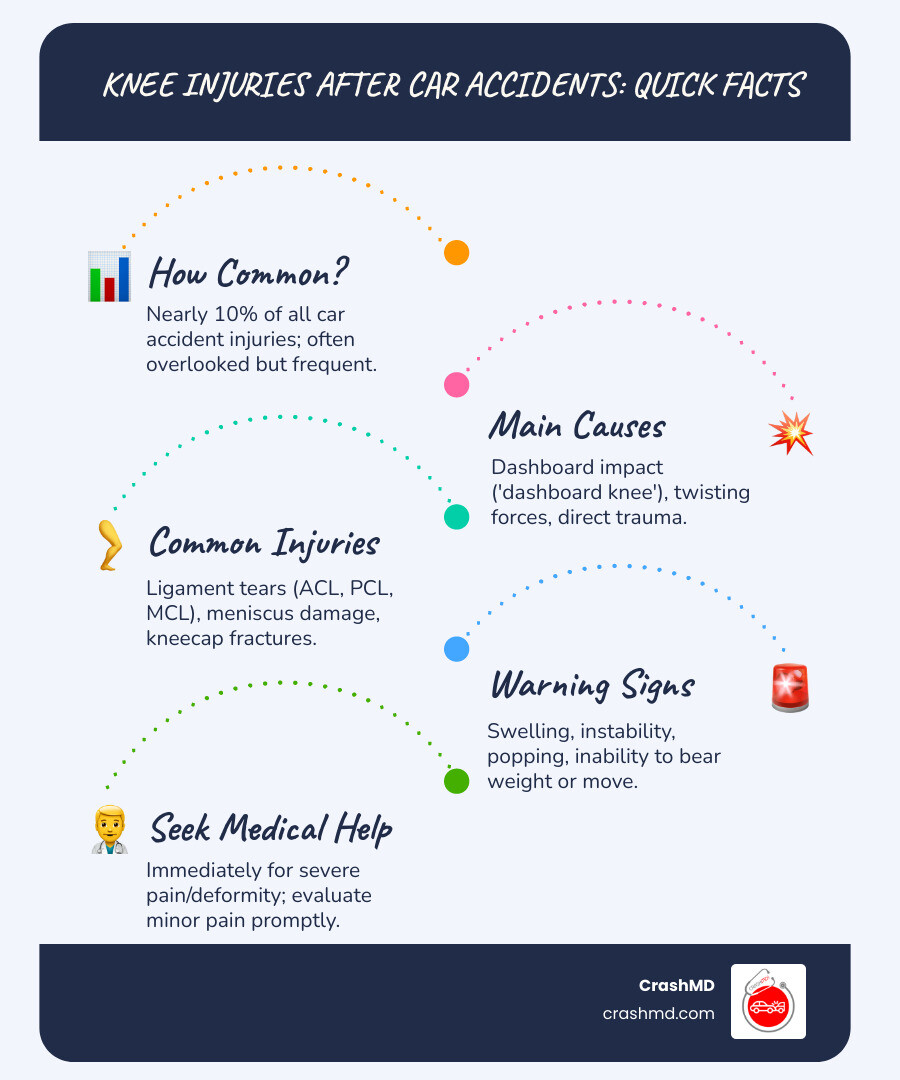
- How common are they? Knee injuries account for nearly 10% of all car accident injuries, making them one of the most frequent crash-related injuries
- Main causes: Dashboard impact (called “dashboard knee”), twisting forces during collision, and direct trauma from objects inside the vehicle
- Common injury types: Ligament tears (ACL, PCL, MCL), meniscus damage, kneecap fractures, and knee dislocations
- Warning signs: Swelling, instability, popping sounds, inability to bear weight, or reduced range of motion
- When to seek help: Immediately if you experience severe pain, visible deformity, or inability to walk—but even “minor” pain should be evaluated within days
Here’s what makes knee injuries particularly tricky: the adrenaline rush after a crash can mask your pain. You might walk away from the accident feeling okay, only to wake up the next morning unable to bend your leg.
The forces involved in even a low-speed collision are enormous. Your body moves forward while your knee slams into the dashboard or twisting forces tear delicate ligaments and cartilage. Research shows that lower limb injuries are second only to head injuries in frequency among vehicle occupants—and they’re possibly the leading cause of permanent disability from car accidents.
This guide walks you through everything you need to know: what causes knee injuries in crashes, how to recognize the symptoms, when you need immediate medical attention, and what treatment options exist. Whether you’re dealing with a minor sprain or facing surgery, understanding your injury is the first step toward recovery.
Don’t wait to get evaluated. The sooner you understand what’s wrong with your knee, the better your chances of a full recovery—and the stronger your insurance claim will be.
Why Your Knee Hurts: Common Causes and Injury Mechanisms
When a car accident occurs, the sudden, violent forces at play can wreak havoc on your body, and your knees are particularly vulnerable. We often see patients whose knee pain stems from a few common scenarios during a collision.
One of the most frequent culprits is dashboard impact. In a frontal collision, your body continues to move forward due to inertia, often causing your bent knees to slam into the dashboard, steering wheel, or even the back of the front seat. This direct, blunt force can drive your shinbone (tibia) backward, leading to a specific injury often referred to as “dashboard knee.” This mechanism is a prime example of collision force transfer directly to the joint.
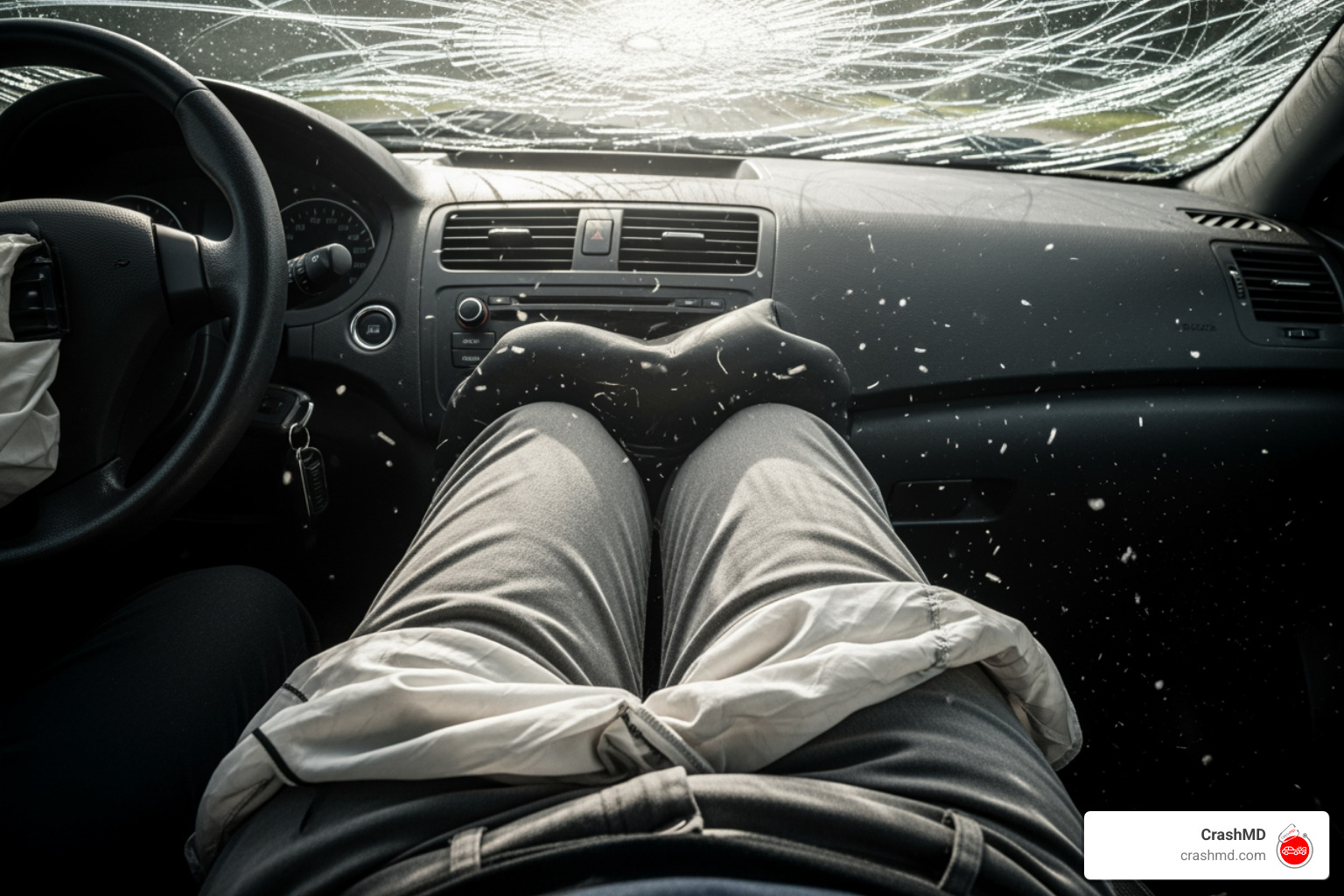
Beyond direct impact, twisting forces are another major cause of knee injuries. Imagine your foot is braced against the floorboard while the vehicle twists or impacts from the side. This can cause your knee to rotate unnaturally, tearing ligaments or cartilage within the joint. Similarly, direct trauma from objects inside the vehicle, such as loose items becoming projectiles or even shattered components, can strike the knee, leading to various forms of injury.
The biomechanics of a car crash are complex, but the bottom line is that the knee joint, despite its strength, is not designed to withstand these extreme, sudden forces. As research highlights, lower limb injury is second only to head injury in frequency among injured motor vehicle occupants, and we’ve seen how these injuries can lead to significant, long-term problems.
The Anatomy of the Knee
To understand why these impacts are so damaging, let’s briefly look at the knee’s intricate design. Your knee is the largest joint in your body, a marvel of engineering that allows for complex movements like walking, running, and bending. It’s formed by the meeting of three bones:
- The femur (thigh bone)
- The tibia (shinbone)
- The patella (kneecap)
These bones are held together and stabilized by a network of tough, fibrous tissues:
- Ligaments: These strong bands of tissue connect bones to other bones, providing stability. We have four main knee ligaments: the anterior cruciate ligament (ACL), posterior cruciate ligament (PCL), medial collateral ligament (MCL), and lateral collateral ligament (LCL).
- Cartilage: The ends of your bones are covered with smooth articular cartilage, which allows them to glide effortlessly against each other.
- Meniscus: Within the knee, two C-shaped pieces of cartilage (the medial and lateral menisci) act as shock absorbers between the femur and tibia, distributing weight and stabilizing the joint.
- Tendons: These connect muscles to bones. The patellar tendon, for example, connects your kneecap to your shinbone.
This complex arrangement, while incredibly functional, also makes the knee highly susceptible to injury when subjected to the unnatural and powerful forces of a car accident. A blow or twist can disrupt any of these delicate structures, leading to pain, instability, and a long road to recovery.
Identifying the Damage: Types of Car Accident Knee Injuries
When we evaluate patients after a car accident, we look for several common types of knee injuries. The specific injury often depends on the direction and force of the impact.
Ligament Tears and Sprains
Ligaments are crucial for knee stability, and they’re frequently damaged in car accidents.
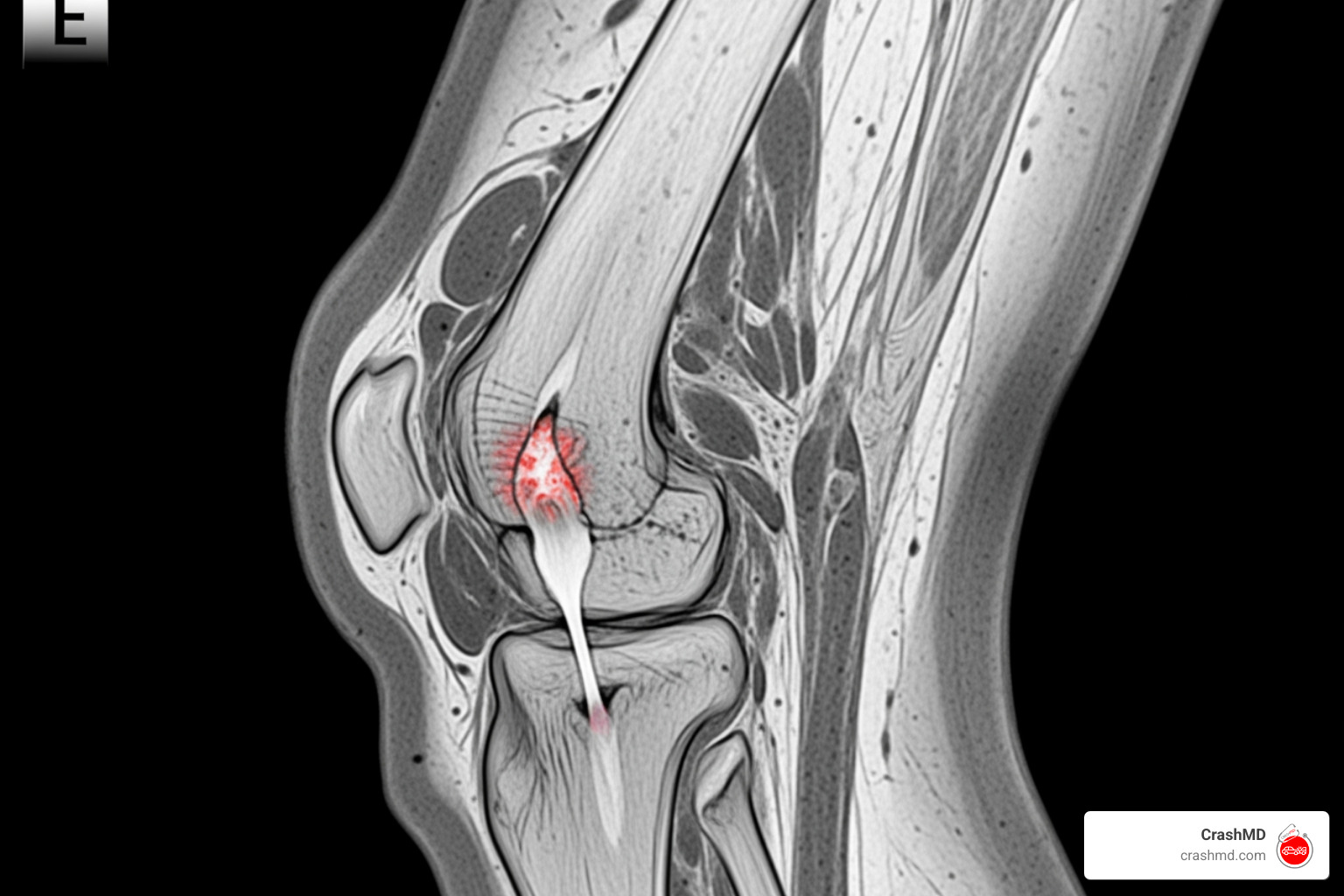
- Anterior Cruciate Ligament (ACL) Tear: This is one of the most common and well-known knee injuries, often associated with athletes. In car accidents, it can occur from a twisting force or hyperextension of the knee. An ACL tear can cause significant instability and pain.
- Posterior Cruciate Ligament (PCL) Injuries: These occur less frequently than ACL tears but are still significant. The PCL stabilizes the knee and can be injured from a direct blow to the knee, such as hitting the dashboard during a collision—this is the classic “dashboard knee” injury. Symptoms include pain, swelling, and difficulty walking. For more in-depth information, you can refer to resources on PCL injuries.
- Medial Collateral Ligament (MCL) Injuries: MCL injuries involve damage to the ligament on the inner side of the knee. This injury can happen when the knee is pushed inward during an accident, often from a side impact. Symptoms typically include pain on the inner knee, swelling, and a feeling of instability. More details are available on MCL injuries.
- Lateral Collateral Ligament (LCL) Tear: Similar to the MCL, the LCL is on the outer side of the knee and can be damaged by forces pushing the knee outward.
- Multi-ligament Injuries: In severe collisions, multiple ligaments can be torn simultaneously, leading to a highly unstable knee and requiring complex surgical intervention.
Cartilage and Meniscus Damage
The cartilage within your knee is also highly susceptible to injury:
- Meniscus Tears: The menisci are the shock absorbers of your knee. A meniscus tear often results from a forceful twisting motion or direct pressure on the knee during an accident. Patients frequently report a “popping” sound at the time of injury, followed by pain, swelling, and sometimes a “locking” sensation where the knee gets stuck.
- Articular Cartilage Damage: The smooth articular cartilage covering the ends of your bones can be bruised, chipped, or fractured during impact. This type of damage can be particularly problematic as it doesn’t heal well on its own and can lead to long-term issues like post-traumatic arthritis.
Fractures and Dislocations
Beyond soft tissue damage, car accidents can lead to severe bone injuries:
- Patella (Kneecap) Fracture: A direct impact to the front of the knee, such as hitting the dashboard, can fracture the kneecap. This can be incredibly painful and often requires surgery to repair.
- Tibial Plateau Fracture: This is a break in the top part of the shinbone (tibia) where it meets the knee joint. These are serious injuries that can affect the stability and alignment of the knee, often requiring surgery and extensive recovery.
- Femur Fracture: While less common than lower leg fractures in car accidents, severe impacts can lead to fractures of the distal femur (the part closest to the knee).
- Knee Dislocation: This is a medical emergency where the tibia and femur are completely separated at the knee joint. It’s often associated with multi-ligament tears and can have severe consequences, including nerve and blood vessel damage.
Recognizing the Warning Signs and Seeking Medical Help
The immediate aftermath of a car accident can be disorienting, and it’s common for adrenaline to mask pain. You might not feel the full extent of a knee injury car accident right away. We’ve seen many patients whose knee pain shows up days, or even weeks, after the initial incident. This delayed onset of symptoms is why we always emphasize prompt medical evaluation, even if you feel “fine” at the scene. Early diagnosis and documentation are crucial, not just for your health but also for any potential insurance claims.
Common Symptoms of a Knee Injury Car Accident
If you’ve been in a car accident, keep an eye out for any of these common symptoms that could indicate a knee injury:
- Pain and tenderness: This can range from a dull ache to sharp, excruciating pain, especially when moving or putting weight on the knee.
- Swelling and bruising: Inflammation and discoloration around the knee are clear signs of tissue damage.
- Instability or knee “giving way”: You might feel like your knee is buckling or can’t support your weight, indicating ligament damage.
- Popping or clicking sounds: These noises, especially if accompanied by pain, can suggest a ligament tear or meniscus injury.
- Reduced range of motion: Difficulty bending or straightening your knee fully.
- Inability to straighten the knee: This can be a sign of a significant injury, such as a large meniscus tear or a fracture.
- Stiffness: The knee might feel rigid, particularly after periods of rest.
Minor vs. Severe: When to See a Doctor Immediately
While any knee pain after an accident warrants medical attention, certain “red flag” symptoms demand immediate emergency care. Don’t wait for an appointment if you experience any of the following:
- Inability to bear weight: If you cannot put any weight on your injured leg.
- Visible deformity of the joint: If your knee looks out of place or misshapen.
- Severe, uncontrolled pain: Pain that doesn’t subside with rest or over-the-counter medication.
- Numbness or tingling in the leg or foot: This could indicate nerve damage.
- Signs of infection: Such as fever, redness, warmth, or pus around the injury site (though this is less common immediately after an accident, it can develop).
If you’re unsure, it’s always better to err on the side of caution and seek medical attention.
The First Steps After a Suspected Injury
If you suspect a knee injury after a car accident, here’s what we recommend:
- Seek immediate medical attention: Even if you think it’s minor, a professional evaluation is essential for proper diagnosis and to rule out serious injuries.
- Do not self-diagnose: Leave the diagnosis to the experts. Attempting to “walk it off” or self-treat could worsen the injury.
- Follow all doctor’s orders: Adhere strictly to recommendations for rest, medication, and follow-up appointments. This is vital for your recovery and for providing consistent medical documentation.
- Document your symptoms and limitations: Keep a detailed record of your pain levels, any swelling, limitations in movement, and how the injury impacts your daily life. Photos can also be helpful. This documentation will be invaluable for your medical treatment plan and any legal or insurance claims.
- Find a doctor specializing in car accident injuries: We understand the unique aspects of post-accident care and how to properly document injuries for insurance and legal purposes. You can find a doctor specializing in car accident injuries through CrashMD.
The Road to Recovery: Treatment and Rehabilitation
Once a knee injury car accident is diagnosed, we focus on a comprehensive treatment and rehabilitation plan custom to your specific needs. The goal is always to restore function, reduce pain, and prevent long-term complications.
Immediate and Non-Surgical Treatments
For many minor to moderate knee injuries, our first approach often involves conservative, non-surgical treatments:
- RICE method (Rest, Ice, Compression, Elevation): This is a foundational first-aid strategy. Rest the injured knee, apply ice packs for 15-20 minutes several times a day, use a compression bandage to reduce swelling, and lift your leg above your heart.
- Over-the-counter pain relievers: Medications like ibuprofen or naproxen can help manage pain and inflammation. We may also prescribe stronger pain medication if necessary.
- Immobilization with a brace or cast: Depending on the injury, a brace or cast may be used to stabilize the knee and prevent further damage, allowing torn tissues or mending bones to heal.
- Weight-bearing restrictions: You may be advised to limit or avoid putting weight on the injured leg, often requiring the use of crutches.
These methods are particularly effective for sprains, minor tears, and contusions.
The Role of Physical Therapy in Recovery
Physical therapy (PT) is an indispensable component of recovery for almost all knee injuries, whether surgical or non-surgical. It’s not just about getting better; it’s about getting stronger and preventing future problems. Our physical therapists will guide you through a structured program designed to:
- Restoring range of motion: Gentle exercises to regain full flexibility in your knee.
- Strengthening exercises: Focusing on the muscles surrounding the knee, especially the quadriceps and hamstrings, to improve stability and support.
- Balance and coordination training: To help you regain confidence and control over your movements.
- Neuromuscular control: Re-educating your muscles and nerves to work together effectively.
- Prehabilitation and post-operative rehab: If surgery is anticipated, pre-surgical PT can improve your knee’s condition, leading to better post-operative outcomes. After surgery, PT is critical for a successful recovery, often starting with early mobilization to prevent stiffness.
Consistent physical therapy is key to restoring strength, flexibility, and stability, reducing pain, and helping you return to your daily activities.
When Is Surgery Necessary for a Knee Injury Car Accident?
While we always try conservative approaches first, some knee injuries sustained in car accidents are severe enough to require surgical intervention. We typically consider surgery for:
- Complete ligament tears: Especially for ACL, PCL, or multi-ligament injuries that cause significant instability.
- Displaced fractures: When bone fragments are out of alignment and need to be realigned and fixed with plates, screws, or pins.
- Significant joint instability: When the knee consistently buckles or gives way, impacting daily function and increasing the risk of further injury.
- Large meniscus tears causing locking: If a torn meniscus prevents the knee from fully straightening or bending.
- Failure of conservative treatment: If non-surgical methods don’t provide sufficient relief or functional improvement.
Many knee surgeries today are performed using minimally invasive arthroscopic techniques, which involve small incisions and a camera to repair damage. This often leads to less pain and a faster recovery compared to traditional open surgery. However, even with arthroscopic surgery, a dedicated physical therapy program is essential for a full recovery.
Navigating the Aftermath: Long-Term Outlook and Insurance
A knee injury car accident can have repercussions that extend far beyond the initial recovery period. For some, these injuries can lead to a lifetime of challenges, impacting their quality of life and even their ability to work. Understanding these long-term implications and how insurance companies handle such claims is crucial for securing a comprehensive recovery.
Long-Term Implications of Knee Injuries
Unfortunately, knee injuries from car accidents often come with a risk of long-term complications, even after successful treatment and rehabilitation.
- Post-traumatic osteoarthritis: Fractures that extend into the knee joint, or even severe ligament and cartilage damage, can accelerate the development of arthritis. This can lead to chronic pain, stiffness, and reduced function years down the line, potentially requiring future surgeries, including total knee replacement.
- Chronic pain and instability: Some individuals may experience persistent pain or a feeling of instability in the knee, even after their injury has “healed.” This can affect their ability to participate in sports, hobbies, or even perform daily tasks.
- Need for future surgeries: The initial surgery might not be the last. Hardware removal, addressing scar tissue, or even knee replacement surgery may be necessary years later.
- Diminished earning capacity: If a knee injury limits your ability to perform your job, especially one that requires physical activity, it can lead to lost wages and a diminished earning capacity over your lifetime. This is a significant economic damage that needs to be considered in any claim.
Lower limb injuries are possibly the commonest cause of permanent disability and impairment resulting from motor vehicle accidents, highlighting the seriousness of these conditions.
How Insurance Companies Handle Knee Injury Claims
Navigating insurance claims after a car accident with a knee injury can be complex. Insurance companies, understandably, have their own financial interests at heart, and they often look for ways to minimize payouts. Here’s what we’ve learned and why our approach at CrashMD is so vital:
- Importance of medical documentation: Thorough, consistent, and objective medical documentation is your strongest ally. This includes detailed doctor’s notes, MRI reports, X-rays, operative notes, physical therapy records, and measurements of your range of motion and strength. Without this, it’s difficult to prove the extent of your injury.
- Proving the injury resulted from the crash: Insurance companies may argue that your knee injury was pre-existing or unrelated to the accident. Our role is to ensure your medical records clearly link your injury to the car accident and document its severity.
- Common tactics to undervalue claims: Insurers might downplay the severity of the injury, question the necessity of treatment, or offer a quick, low settlement hoping you won’t understand the long-term costs. They may even suggest your injury isn’t “serious” enough if you can still walk, overlooking the internal damage.
- Economic vs. non-economic damages: Your claim should cover both. Economic damages include medical expenses (past and future), lost wages (past and future), and rehabilitation costs. Non-economic damages cover pain and suffering, loss of enjoyment of life, and emotional distress.
- Why a specialist’s report is crucial: An expert medical opinion from a doctor specializing in accident injuries can provide a clear prognosis, detailing the long-term impact of your injury and the potential for future medical needs. This is invaluable in counteracting attempts by insurance companies to undervalue your claim.
We advocate for our patients, ensuring their injuries are fully documented and that they receive the comprehensive care needed for recovery, before engaging in legal action. This helps protect your health and your rights.
Frequently Asked Questions about Car Accident Knee Injuries
We often get asked similar questions by patients dealing with knee injury car accident cases. Here are some of the most common ones:
How long does it take to recover from a knee injury after a car accident?
Recovery time varies significantly depending on the type and severity of the knee injury. Minor sprains might heal in a few weeks with rest and physical therapy. However, more severe injuries, such as complete ligament tears or fractures requiring surgery, can take six months to a year, or even longer, for a full recovery. This includes post-operative rehabilitation. The individual’s overall health, adherence to treatment plans, and age also play a role. Some injuries may lead to permanent limitations.
Can knee pain show up days after a car accident?
Absolutely, yes. It’s very common for knee pain to have a delayed onset after a car accident. The rush of adrenaline and shock experienced during and immediately after a collision can mask pain signals. Additionally, inflammation and swelling may not fully develop until 24-48 hours post-accident. We always advise patients to monitor their symptoms closely for several days and seek medical attention even if pain appears to be minor or delayed.
What is a “dashboard knee”?
“Dashboard knee” is a common term used to describe a Posterior Cruciate Ligament (PCL) injury that occurs specifically in car accidents. This injury happens when the bent knee strikes the dashboard during a frontal collision. The impact forces the shinbone (tibia) backward, causing a tear in the PCL, which is one of the major ligaments stabilizing the knee. It can cause pain, swelling, and instability.
Your Next Steps to a Full Recovery
Dealing with a knee injury car accident can be overwhelming, but you don’t have to steer it alone. Our mission at CrashMD is to guide accident victims through their recovery, offering expert pain management and custom treatment plans. We understand the physical, emotional, and financial toll these injuries can take.
Do not ignore knee pain, even if it seems minor or develops days after the accident. Prompt diagnosis is key to effective treatment and preventing long-term complications. Following a comprehensive treatment plan, including any necessary surgery and dedicated physical therapy, is crucial for your recovery. Equally important is proper documentation of your injuries and treatment, which protects both your health and your rights in the context of insurance claims.
We are here to help. If you’ve been in a car accident and are experiencing knee pain in Arizona, Nevada, Texas, Oklahoma, Southern California, or Northern California, we encourage you to take the next step towards healing. Schedule an evaluation with a motor vehicle accident doctor at CrashMD today. We’ll ensure you receive the comprehensive care and support you need on your journey to recovery.