

When a Headache After a T-Bone Crash Needs Medical Attention
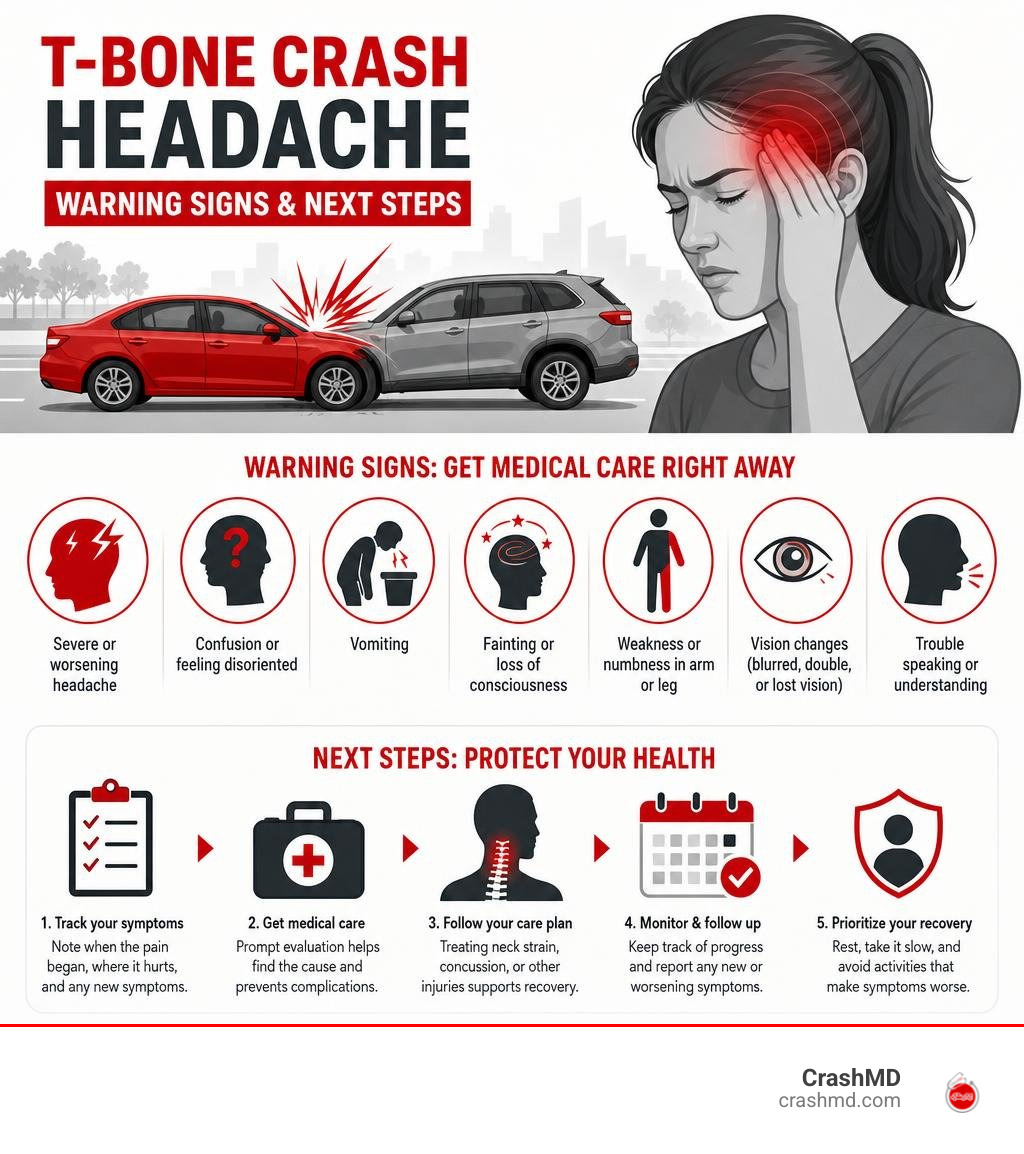
A headache after t-bone crash can come from neck strain, concussion, or other head injuries caused by the sudden sideways force. Because serious symptoms may not start right away, get medical care promptly – especially if the headache is severe, worsening, or paired with confusion, vomiting, fainting, weakness, vision changes, or trouble speaking.
Do not assume you are fine just because you did not hit your head. In a side-impact collision, your head and neck can move sharply to the side and rotate. That motion can strain the cervical spine or move the brain inside the skull.
Track when the pain began, where it hurts, and any new symptoms. This helps your care team identify the cause and creates a clear record of your condition.
I’m Dr. Adam Savage, and this guide explains what may be causing your headache, the warning signs to act on, and the next steps toward care and recovery.
Related content about headache after t-bone crash:
Understanding the Biomechanics: Why a Headache After T-Bone Crash Occurs
Side-impact collisions expose the human body to violent physics. Unlike frontal or rear-end collisions—where vehicle bumpers and long engine blocks absorb significant impact—the side profile of a car offers minimal protection. With only a door and window separating you from an oncoming vehicle, lateral kinetic forces transfer almost instantly into the cabin.
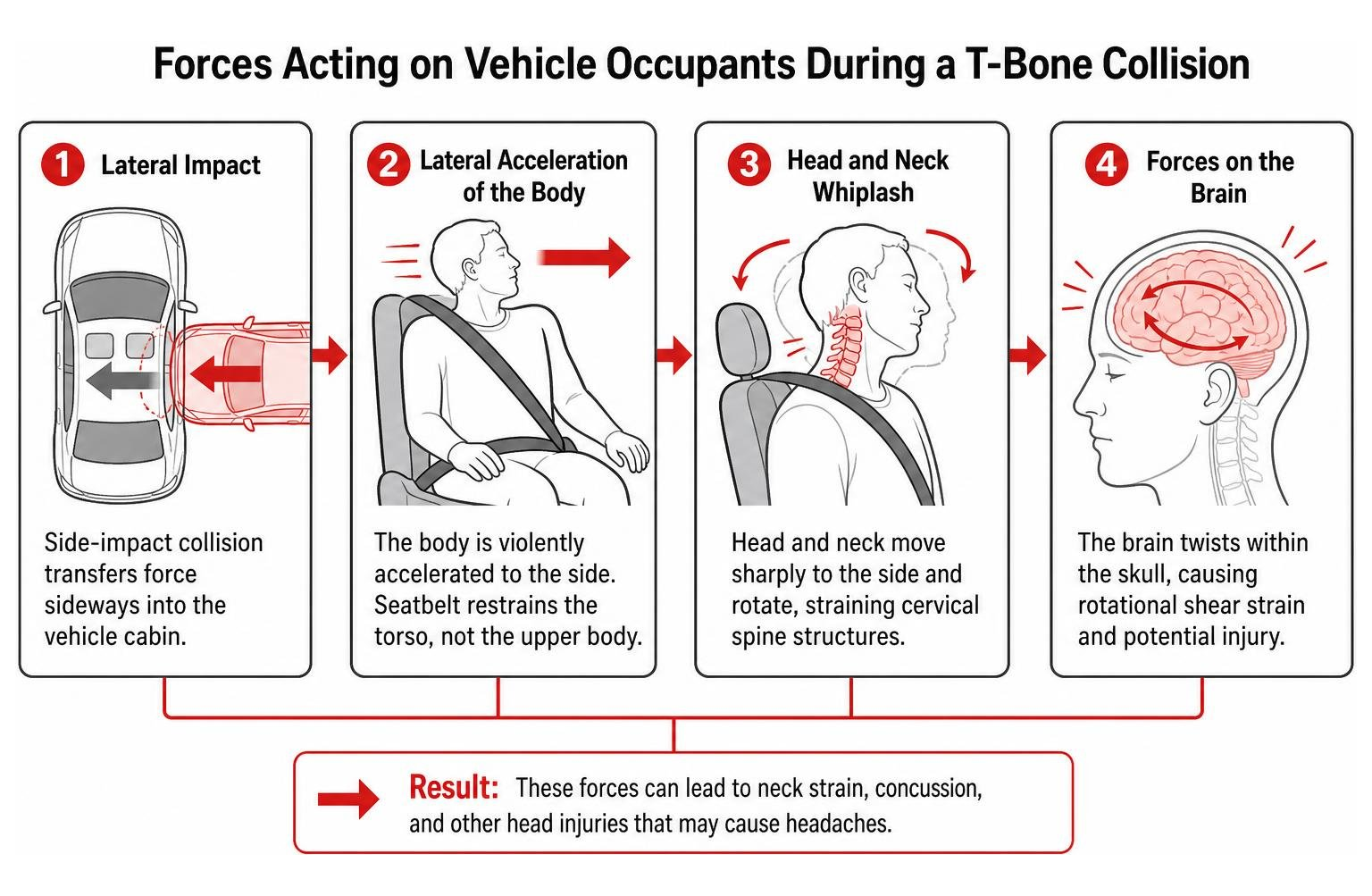
Because doors lack the deep lateral crumple zones found at the front and rear of a vehicle, occupants experience severe lateral acceleration. Standard three-point seatbelts are designed primarily to restrain forward motion. During a T-bone collision, asymmetrical seatbelt restraint holds your lower torso while allowing your upper body, neck, and head to whip violently to the side.
This motion produces rapid rotational shear strain across delicate spinal structures and neural pathways. The brain undergoes closed head injury dynamics as it twists within the rigid cranial vault, potentially leading to diffuse axonal injury—microscopic damage to neural axons throughout the brain’s white matter. For deeper insights into these mechanics, review research on side-impact crash injury dynamics.
Lateral Whiplash and Cervicogenic Headache After T-Bone Crash
When your vehicle is struck from the side, your cervical spine undergoes rapid lateral neck flexion and rebound extension. This unnatural bending stretches and compresses anatomical structures that were never meant to move sideways so forcefully.
This extreme cervical spine distortion frequently leads to:
- C1–C3 Facet Joint Compression: The upper cervical facet joints bear intense shearing pressure, triggering local inflammation and referred pain into the base of the skull, temples, and behind the eyes.
- Suboccipital Nerve Impingement: Hyper-extended or spasming muscles in the upper neck can pinch the greater and lesser occipital nerves, causing shooting, electric sensations over the scalp.
- Myofascial Trigger Points: Tense muscle fibers throughout the trapezius, sternocleidomastoid, and levator scapulae refer dull, aching pain upward into the head.
To explore how neck injuries translate to chronic head discomfort, consult our detailed guide to head pain after car accident.
Diffuse Brain Movement Without Direct Head Impact
Many patients tell us, “I didn’t hit my head on the window, so I couldn’t have a head injury.” In reality, direct contact is unnecessary.
During a violent broadside impact, intracranial inertia causes the brain to lag behind the sudden movement of the skull. The brain collides with the inner cranial wall and rebounds against the opposite side—a mechanism known as the coup-contrecoup phenomenon.
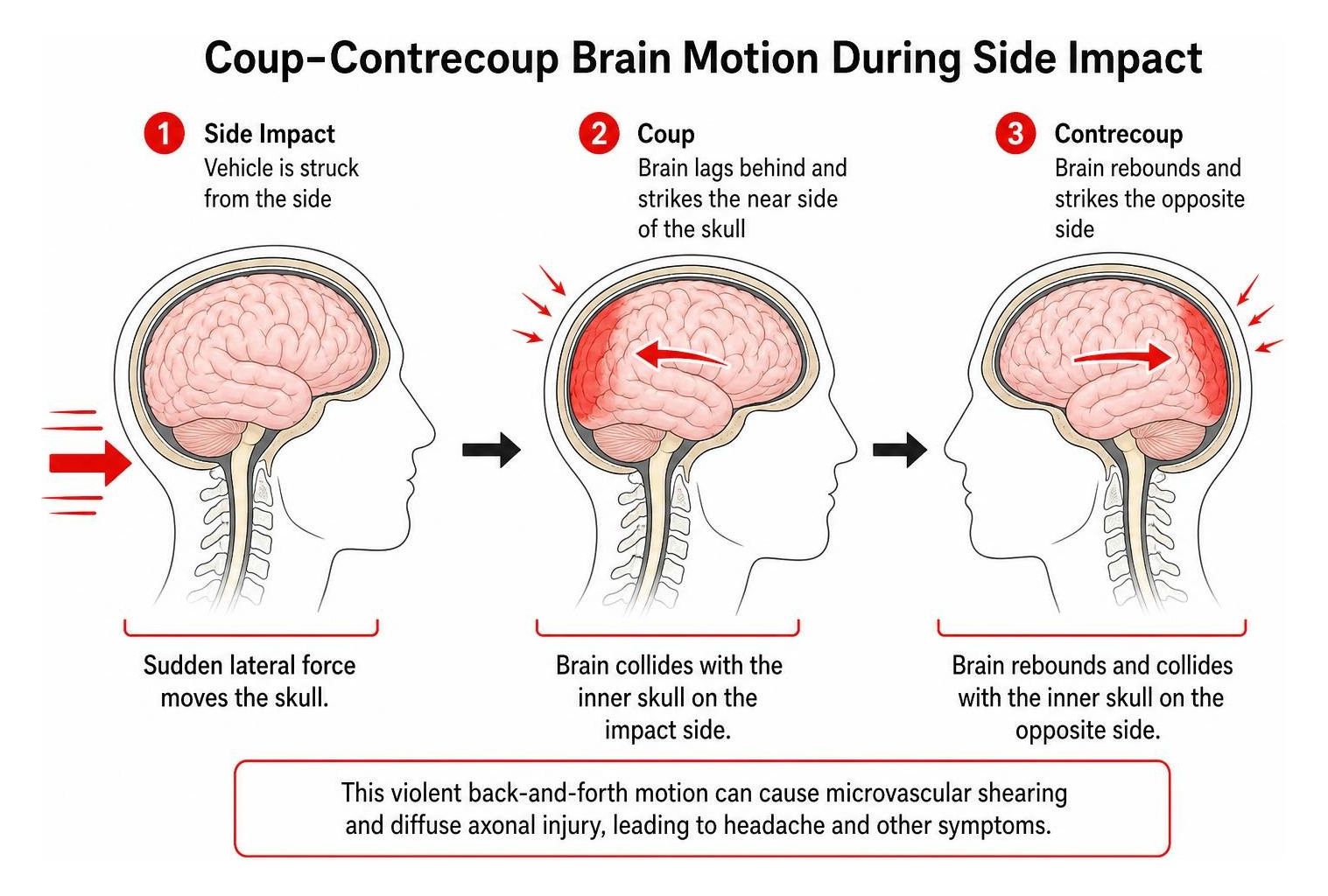
This violent sloshing causes microvascular shearing, damaging tiny blood vessels and launching an inflammatory metabolic cascade. Cellular energy plummets while demand for blood flow spikes, triggering chemical migraine phenomena and persistent head pain. Even seemingly minor impacts can create lasting distress, as we highlight in our overview of fender bender headaches.
Classifying Post-Collision Headaches: Types and Distinctions
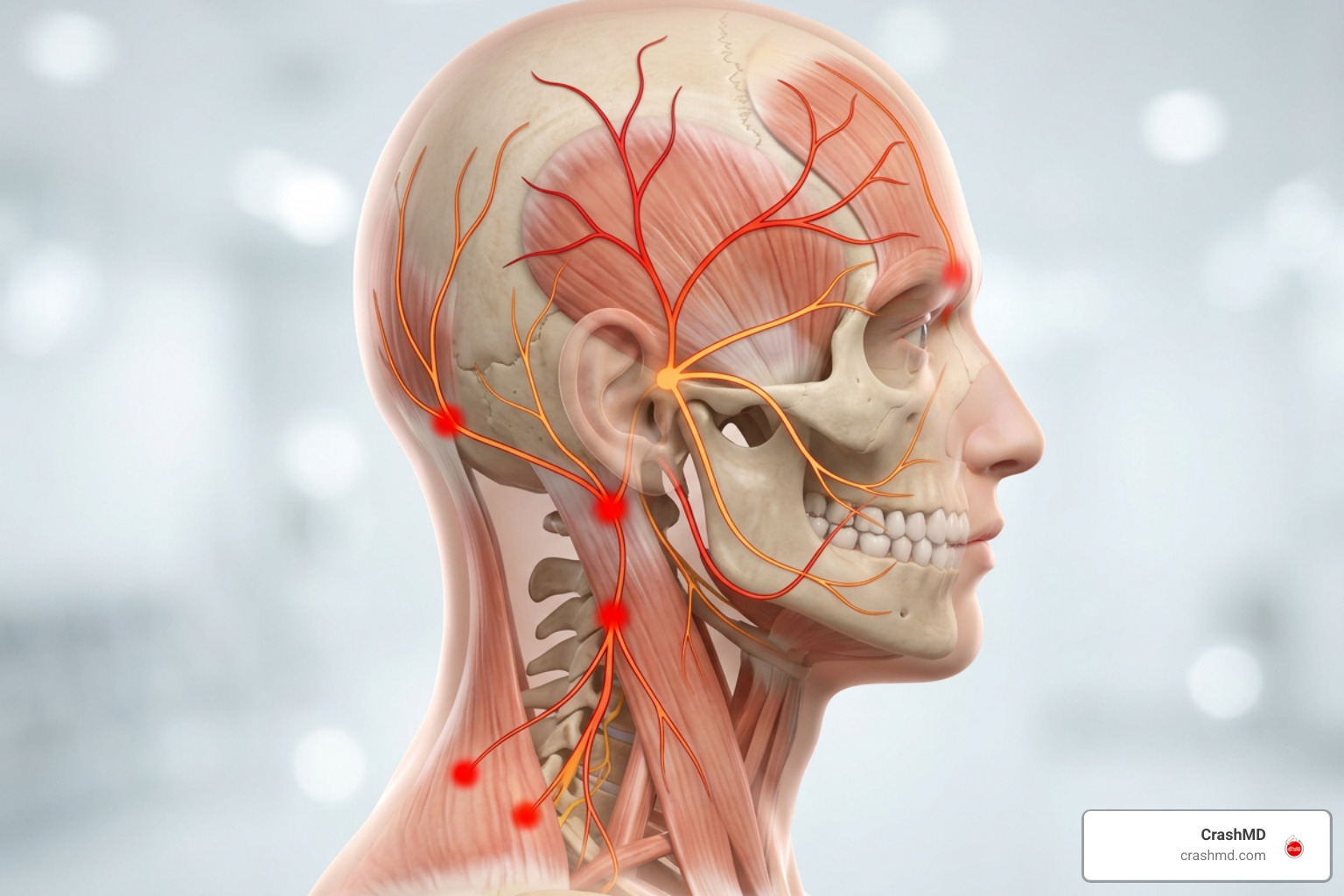
Headaches following a collision are clinically categorized as primary or secondary. Primary headaches occur independently, whereas secondary headaches stem directly from underlying structural damage, nerve trauma, or brain injury. Pinpointing the exact category allows us to tailor effective interventions rather than simply masking symptoms.
When inner ear mechanisms are rattled alongside the cervical spine, patients frequently experience occipital neuralgia and vestibular dysfunction, leading to imbalance and nausea. We explore this specific combination in our headache from dizziness after crash guide.
Differentiating Cervicogenic, Tension, and Post-Traumatic Headaches
Understanding the distinct features of post-collision headache presentations is vital for accurate diagnosis:
| Headache Type | Primary Cause | Pain Location & Sensation | Accompanying Symptoms |
|---|---|---|---|
| Cervicogenic | Upper cervical spine (C1–C3) facet or disc trauma | Unilateral radiating pain starting at neck/skull base and wrapping forward | Reduced neck mobility, tenderness over upper cervical joints |
| Tension-Type | Severe myofascial contraction across neck and shoulders | Band-like constriction squeezing around the entire circumference of the head | Muscle tightness, scalp tenderness, worsening with physical fatigue |
| Post-Traumatic (Migrainous) | Metabolic disruption, neurovascular shearing, or concussion | Throbbing, pulsating pain often localized over one temple or forehead | Photophobia, phonophobia, nausea, neurocognitive slowing |
Concussion and Mild Traumatic Brain Injury
A concussion is a functional mild traumatic brain injury (mTBI). Even without loss of consciousness, post-concussion syndrome can develop within hours or days following a T-bone crash.
Common indicators include:
- Marked photophobia (sensitivity to light) and phonophobia (sensitivity to sound)
- Cognitive slowing, brain fog, and executive dysfunction
- Uncharacteristic irritability, emotional volatility, or sleep disruption
- Lingering dizziness and balance disturbances
Accurate clinical identification requires standardized diagnostic protocols. You can learn more about these evaluations in our breakdown of how doctors assess traumatic brain injuries.
Critical Red Flags: Recognizing Life-Threatening Complications

While many post-collision headaches arise from musculoskeletal strain, lateral impacts carry a high risk of vascular and structural neurotrauma that requires emergency triage.
Intracranial bleeding—such as an acute or chronic subdural hematoma or an epidural hematoma—increases intracranial hypertension rapidly. As pooled blood expands within the unyielding skull, it can cause a life-threatening midline shift of brain tissue. Delayed presentations are particularly deceptive, a topic documented extensively in this case study on delayed-onset post-traumatic headache.
High-Risk Warning Signs Requiring Immediate Emergency Care
Seek emergency medical attention immediately if you or a loved one experiences any of the following:
- A sudden, excruciating “thunderclap” headache reaching peak intensity within seconds
- Progressive neurological deficits, such as localized numbness or limb weakness
- Pupillary asymmetry (one pupil larger than the other)
- Confusion, slurred speech, profound lethargy, or inability to awaken
- Persistent, projectile nausea and vomiting
- New-onset seizures or loss of consciousness
For an expanded checklist of critical symptoms, review our guide to headache after car crash warning signs.
Managing Delayed-Onset Headache After T-Bone Crash
Immediately following an accident, high levels of adrenaline mask underlying pain. Furthermore, a slow-bleeding subdural hematoma may develop over days or weeks as micro-tears in bridging veins leak blood gradually into the subdural space.
As intracranial pressure steadily climbs, headaches may worsen rather than improve. Never ignore symptoms that emerge well after the collision date. Discover why prompt medical evaluation is essential in our resource on delayed symptoms after a car accident.
Diagnostic Procedures and Imaging Protocols
Accurate diagnosis requires comprehensive neuroimaging modalities and physical evaluations across our clinics in Arizona, Nevada, Texas, Oklahoma, Southern California, and Northern California:
- Non-Contrast Head CT: The emergency standard to rapidly identify acute intracranial hemorrhage, skull fractures, and midline shifts.
- High-Resolution Brain MRI: Highly sensitive for detecting subtle soft-tissue changes, micro-hemorrhages, contusions, and post-traumatic structural anomalies.
- Cervical Spine MRI: Evaluates intervertebral disc herniations, facet joint effusion, nerve root compression, and ligamentous tears caused by lateral whiplash.
- Diffusion Tensor Imaging (DTI): Advanced imaging that detects disruption in white-matter tracts associated with diffuse axonal injury.
- Neurological Physical Examination: Comprehensive testing of cranial nerves, deep tendon reflexes, vestibulo-ocular reflexes, and cervical range of motion.
Medical Care, Claims Documentation, and Recovery Paths
Recovering from post-traumatic head pain requires an integrated, multidisciplinary approach. Effective care plans often combine targeted pharmacological intervention (to calm nerve irritation and reduce inflammation) with suboccipital nerve blocks, trigger point injections, and specialized cervical mobilization.
Our team at CrashMD provides expert pain management and customized longitudinal care plans to guide you toward full recovery. Establishing prompt clinical care is essential for both your health and your personal injury claim, as outlined in our analysis on the importance of seeking medical treatment after a car accident.
Establishing Medical Causation for Insurance and Legal Protection
Insurance adjusters routinely dispute lateral-impact injury claims, attempting to minimize settlements by arguing that headaches were pre-existing or purely psychological.
To protect your legal case, we establish unequivocal medical causation through:
- Objective Imaging Records: MRI and CT findings confirming disc injuries, joint inflammation, or traumatic tissue changes.
- Contemporaneous Symptom Charting: Documenting symptoms from initial onset to demonstrate an unbroken timeline of injury.
- Event Data Recorder Corroboration: Matching recorded lateral g-force data from the vehicle to documented biomechanical trauma.
- Quantifying Economic Damages: Providing detailed records of ongoing physical therapy, pain interventions, lost earning capacity, and future care needs.
Frequently Asked Questions About Side-Impact Collisions and Headaches
Why does a side-impact crash cause more severe headaches than a rear-end collision?
Side-impact crashes transfer immediate lateral force into the vehicle cabin because doors lack the large crumple zones found at the front and back of cars. This produces violent lateral-rotational head acceleration and asymmetrical cervical loading, straining stabilizing neck joints and tearing delicate soft tissues far more severely than standard forward-backward motion.
How long can a post-traumatic headache last after a T-bone accident?
Acute post-traumatic headaches frequently resolve within several weeks when treated with early physical therapy and medical care. However, if symptoms persist beyond three months, the condition is classified as persistent post-traumatic headache or post-concussion syndrome. These cases require specialized interventional pain management and rehabilitative therapy to resolve long-term neural and muscular dysfunction.
Can you sustain a traumatic brain injury in a T-bone crash without hitting your head against the window?
Yes. Rapid rotational acceleration causes intracranial brain displacement without direct impact. The brain moves within the cerebrospinal fluid and collides against the rough interior of the skull. This shearing motion disrupts bridging veins and damages delicate neural axons, resulting in concussions or traumatic brain injuries.
Conclusion
A side-impact collision generates powerful, asymmetric forces that can cause complex head and neck trauma. Whether your discomfort stems from cervical facet damage, nerve impingement, or a mild traumatic brain injury, waiting for symptoms to fade on their own can lead to chronic complications.
Prioritize your health by seeking a comprehensive clinical evaluation. At CrashMD, we advocate for injured patients across Arizona, Nevada, Texas, Oklahoma, Southern California, and Northern California. We provide precise pain management, personalized rehabilitation, and thorough medical documentation to support your full recovery before legal claims move forward. If you are experiencing concerning symptoms, review the critical warning signs of post-crash headaches and reach out to our medical team for a thorough evaluation today.