

Why Shoulder Pain After an Accident Demands Your Immediate Attention
Shoulder pain after accident is one of the most common injuries people experience following a collision, yet it’s often dismissed or ignored in the immediate aftermath. You might not feel anything right away—adrenaline can mask pain for hours or even days. But as that wears off, you may find yourself struggling with pain, weakness, or limited movement that makes everyday tasks feel impossible.
Quick Answer: What Causes Shoulder Pain After an Accident?
| Injury Type | What Happens | Common Symptoms |
|---|---|---|
| Soft Tissue Damage | Muscles, tendons, or ligaments stretch or tear from impact force | Pain, swelling, bruising, stiffness |
| Bone Fractures | Clavicle, humerus, or scapula breaks from direct impact | Severe pain, visible deformity, inability to move arm |
| Joint Injuries | Shoulder dislocates or AC joint separates from sudden force | Instability, popping sounds, intense pain |
| Nerve Damage | Brachial plexus nerves compressed or stretched | Numbness, tingling, radiating pain down arm |
| Rotator Cuff Tears | Tendons detach from bone due to impact or bracing | Weakness, pain when lifting, crackling sensation |
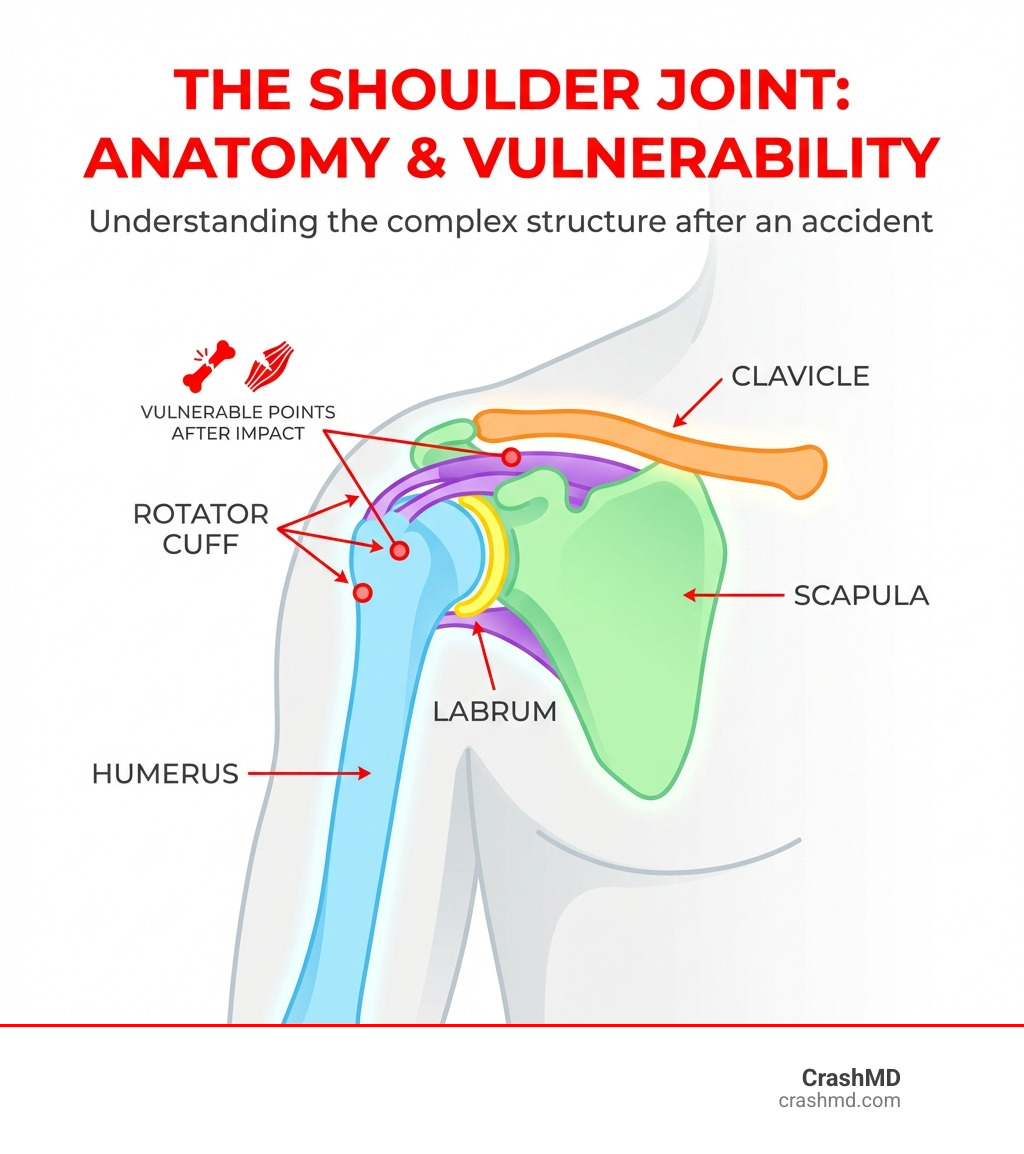
Your shoulder is a complex ball-and-socket joint that allows an incredible range of motion—but that same mobility makes it vulnerable during a crash. Whether you braced against the steering wheel, got thrown forward by your seatbelt, or experienced whiplash that radiated through your shoulder, the forces involved can cause serious damage.
The danger lies in waiting. Research shows that shoulder pain affects 5% to 47% of adults each year, and rotator cuff injuries account for 65% of all shoulder pain visits to doctors. After a car accident, ignoring that pain can lead to chronic issues, frozen shoulder, or permanent loss of function.
The good news? Most shoulder injuries don’t require surgery when caught early. But you need an accurate diagnosis and the right treatment plan—and you need to document everything for both your recovery and any insurance or legal claims.
Why Your Shoulder Hurts: Common Causes of Post-Accident Pain
During a car accident, your body is subjected to immense forces it isn’t designed to withstand. These forces can cause numerous injuries, and your shoulder’s intricate structure makes it particularly susceptible. Understanding how these injuries occur can help connect your symptoms to potential causes.
The sudden impact causes your body to move violently, leading to strain, compression, or tearing of the shoulder’s components. Bracing for impact by gripping the steering wheel can transmit force directly to your shoulders. Similarly, a seatbelt can exert significant pressure across your chest and shoulder, causing strain or bruising. Even a minor fender bender can result in substantial shoulder pain after accident from the jolt and your body’s bracing reaction.
Whiplash, commonly a neck injury, can also damage the shoulders. The rapid back-and-forth movement of your head and neck can stretch and tear soft tissues in your upper back and shoulders, causing referred pain or direct injury. Simply put: if your car is damaged, your body likely is too.
For a deeper dive into how car accidents affect your body, explore our guide on Understanding Muscle and Joint Pain After a Crash.
Soft Tissue Damage: Sprains, Strains, and Tears
Most shoulder problems involve soft tissues like muscles, ligaments, and tendons. These injuries are common after car accidents because the force can stretch these tissues beyond their limits, causing tears.
- Ligament Sprains: Ligaments connect bone to bone. A sprain is a stretch or tear of a ligament, often affecting the AC (acromioclavicular) or glenohumeral joints in the shoulder.
- Muscle Strains: Muscles and tendons (connecting muscle to bone) can be strained or torn when an accident forces them to contract violently or stretch beyond their capacity.
- Rotator Cuff Tears: The rotator cuff is a group of muscles and tendons that stabilize the shoulder joint and enable arm movement. These are among the most frequent and severe shoulder injuries after a crash. The force can cause a partial tear (thinning) or a full-thickness tear (detachment from the bone). Rotator cuff injuries account for 65% of all shoulder pain visits.
- Contusions (Bruises): A direct impact or hitting an interior surface like a door can cause deep bruising, resulting in pain, swelling, and discoloration.
- Inflammation: Soft tissue injuries trigger inflammation, causing swelling, pain, and reduced mobility. This response can be delayed, with symptoms appearing days or weeks later.
Managing this inflammation is key to recovery. Learn more about how to reduce it here: How to Reduce Inflammation After a Car Accident.
Bone and Joint Injuries
While soft tissue injuries are prevalent, car accidents can also cause fractures and significant joint damage.
- Fractures: The shoulder’s bones—clavicle (collarbone), humerus (upper arm bone), and scapula (shoulder blade)—can fracture.
- Clavicle Fractures: Commonly accounting for 12% of adult fractures, these often result from direct impact. Most nondisplaced clavicle fractures are treated nonoperatively with a sling.
- Proximal Humerus Fractures: Occurring at the top of the upper arm bone, these account for 4-6% of adult fractures. For older patients, nonoperative treatment is often encouraged due to better outcomes and fewer complications than surgery.
- Dislocation: A dislocation happens when the upper arm bone (humerus) comes out of its socket. These are extremely painful, common when the arm is forced into an awkward position, and require immediate medical attention to be repositioned.
- Shoulder Separation (AC Joint Injury): Unlike a dislocation, a shoulder separation involves torn ligaments at the acromioclavicular (AC) joint, where the collarbone meets the shoulder blade. Severity is classified from Type I to VI. Milder types (I-III) often respond well to non-surgical treatment, while more severe types (IV-VI) may require surgery.
Nerve-Related Pain
The shoulder is a hub for nerves extending down the arm. Nerve damage can cause significant pain and functional issues.
- Brachial Plexus Injury: The brachial plexus is a nerve network from the neck to the arm controlling movement and sensation. In a crash, these nerves can be stretched, compressed, or torn, causing shoulder pain after accident, numbness, tingling, or weakness. These are sometimes called “burners” or “stingers.” If symptoms last over 24 hours, a cervical spine assessment is crucial.
- Pinched Nerves: A pinched nerve in the neck or shoulder, caused by trauma or swelling, can lead to pain radiating down the arm.
- Radiating Pain, Numbness, and Tingling: If your shoulder pain after accident includes radiating pain, numbness, or tingling into your arm or hand, it may indicate nerve involvement and requires immediate evaluation to prevent long-term damage.
Whiplash trauma, which involves the neck, can frequently lead to such radiating pain. For more information on how whiplash affects your body, visit our page on Whiplash Recovery.
Recognizing the Red Flags: Symptoms of a Shoulder Injury
After a car accident, shock and adrenaline can mask pain, making it hard to assess your injuries immediately. It’s crucial to know the common symptoms of a shoulder injury and seek prompt medical attention, even for delayed symptoms.
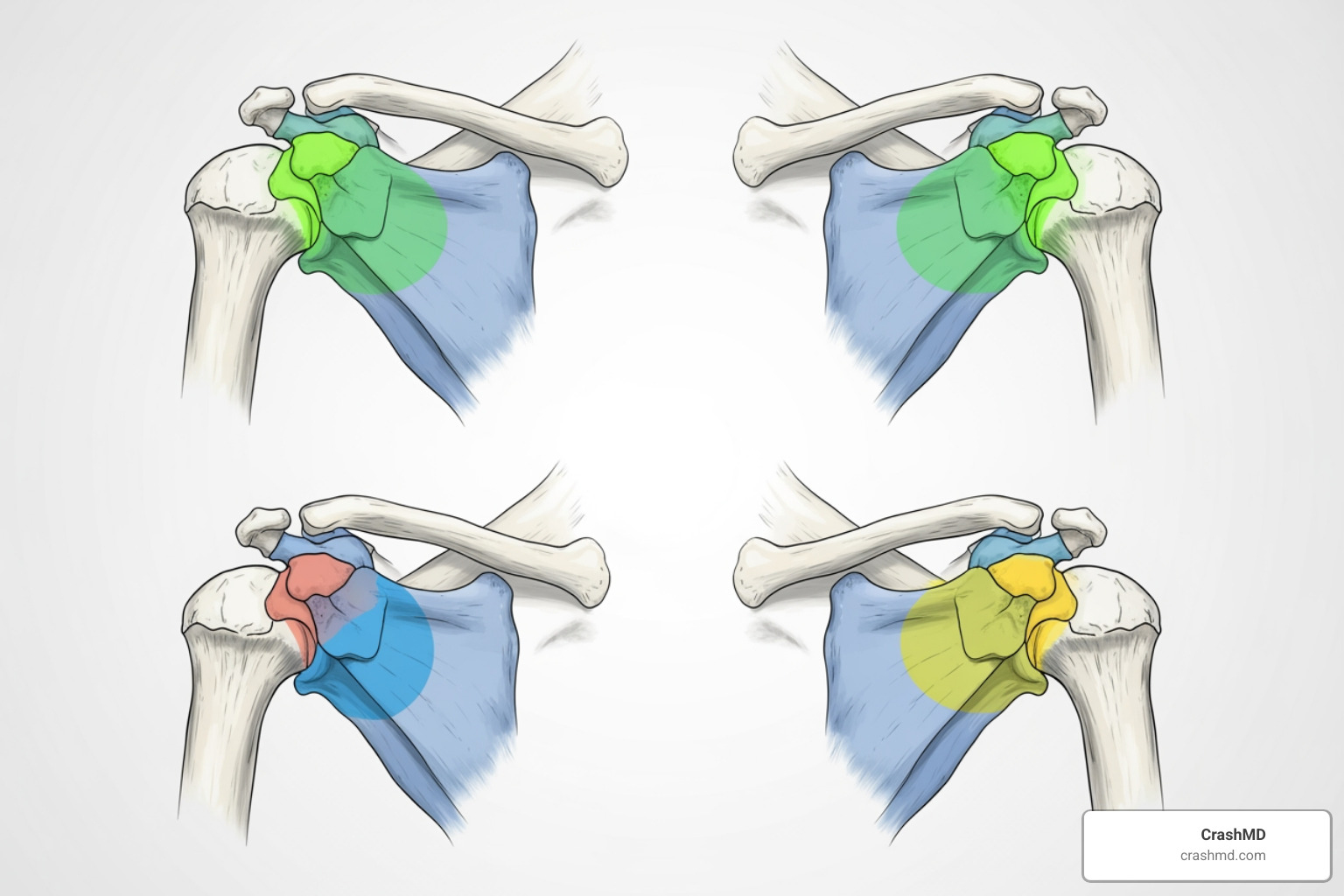
Symptoms of shoulder pain after accident can range from mild discomfort to severe, debilitating pain. Here’s what to look for:
- Severe Pain: Pain that is intense, persistent, or worsens with movement.
- Swelling and Inflammation: Visible puffiness or warmth around the shoulder joint.
- Bruising: Discoloration on the skin around the shoulder, which might appear immediately or develop over a few days.
- Limited Range of Motion: Difficulty lifting your arm, reaching overhead, or rotating your shoulder. You might not be able to move your arm away from your body.
- Weakness or Numbness: A feeling of weakness in the arm or hand, or a loss of sensation.
- Instability: A feeling that your shoulder joint is loose or might “pop out.”
- Popping or Cracking Sounds: Hearing or feeling unusual sounds when moving your shoulder.
- Deformed Joint: A visible change in the shape of your shoulder, which can indicate a dislocation or severe fracture.
When to Seek Medical Attention
Always see a medical professional after an accident, as many injuries have delayed pain. The following symptoms warrant immediate medical attention:
- A visibly deformed shoulder joint.
- Inability to use the shoulder or move the arm away from the body.
- Intense pain that doesn’t subside.
- Sudden swelling.
- Difficulty breathing, chest tightness, or sweating accompanying shoulder pain (could signal a heart attack, though rare for accident-related shoulder pain, it’s a medical emergency).
For more detailed guidance on when to see a doctor for shoulder pain, you can refer to resources like Shoulder pain.
What Does a Popping or Cracking Sound Mean?
A popping or cracking sound in your shoulder after an accident is a significant symptom that shouldn’t be ignored. These sounds, often with pain or instability, can indicate several issues:
- Dislocation: A complete displacement of the upper arm bone from the shoulder socket can cause a distinct popping sound as the bones shift.
- Labral Tears: The labrum is cartilage that stabilizes the shoulder socket. A tear, such as a SLAP tear, can result from the force of an accident and cause popping or cracking sounds with movement. Learn more about this injury on our page about What is a SLAP tear?.
- Joint Instability: If the ligaments and other structures supporting your shoulder joint are damaged, the joint might become unstable, leading to clicking or popping as the bones move abnormally.
- Cartilage Damage: Damage to the smooth cartilage surfaces within the joint can also cause grinding or popping sensations.
What if the Pain Shows Up Days Later?
Delayed onset pain is a common and insidious part of car accident injuries. You might feel fine after a collision, only for severe shoulder pain after accident to appear days or weeks later. This delay is due to:
- Adrenaline Wear-Off: Your body releases adrenaline, a natural painkiller, during a traumatic event. As this hormone wears off, the true extent of your injuries and pain becomes apparent.
- Inflammation Process: Inflammation takes time to build. Swelling and bruising may not peak for 24-72 hours, and this response can increase pain and stiffness.
- Hidden Injuries: Subtle injuries like hairline fractures or small soft tissue tears may not cause immediate pain but can worsen with use.
This is why early intervention is so crucial. Getting a medical evaluation soon after an accident, even without immediate symptoms, can help identify and address hidden injuries before they become more severe or chronic. Learn why early intervention is key for your recovery: Why Early Intervention Is Key for Post-Accident Recovery.
Can an Accident Cause Frozen Shoulder?
Yes, a car accident can lead to frozen shoulder (adhesive capsulitis). It’s not an immediate injury but can develop as a secondary complication.
Frozen shoulder typically occurs when:
- Immobility Following Injury: Pain from a shoulder injury like a fracture or rotator cuff tear may cause you to immobilize your arm. This lack of movement can cause the joint’s connective tissue (capsule) to thicken and tighten.
- Inflammation and Scar Tissue: Trauma from the accident can trigger chronic inflammation, which can lead to scar tissue forming in the joint capsule, restricting movement.
Frozen shoulder involves progressive stiffness and pain that hinders daily activities. It has three stages: freezing (increasing pain, decreasing motion), frozen (stiffness remains), and thawing (motion returns). Recovery can be long and requires physical therapy. Preventing prolonged immobility is key to avoiding this condition.
Diagnosing and Treating Shoulder Pain After Accident
If you have shoulder pain after accident, an accurate diagnosis is the critical first step to recovery. Our pain management specialists understand post-accident injuries and provide comprehensive care. We use a thorough approach, combining your medical history, a physical exam, and advanced diagnostics to pinpoint the cause of your pain.
Finding the right medical team is essential for a successful recovery journey. We encourage you to learn about Choosing a Pain Doctor who specializes in accident-related injuries.
How Doctors Pinpoint the Problem
Diagnosing shoulder injuries after an accident is a systematic process:
- Medical History and Physical Examination: We listen to your account of the accident and symptoms. A physical exam assesses your range of motion, strength, and stability, and identifies tenderness or deformity by comparing your injured shoulder to the uninjured one.
- Diagnostic Imaging: These tools offer a look inside your shoulder:
- X-rays: These are usually the first imaging test for traumatic shoulder injuries, excellent for identifying fractures and dislocations.
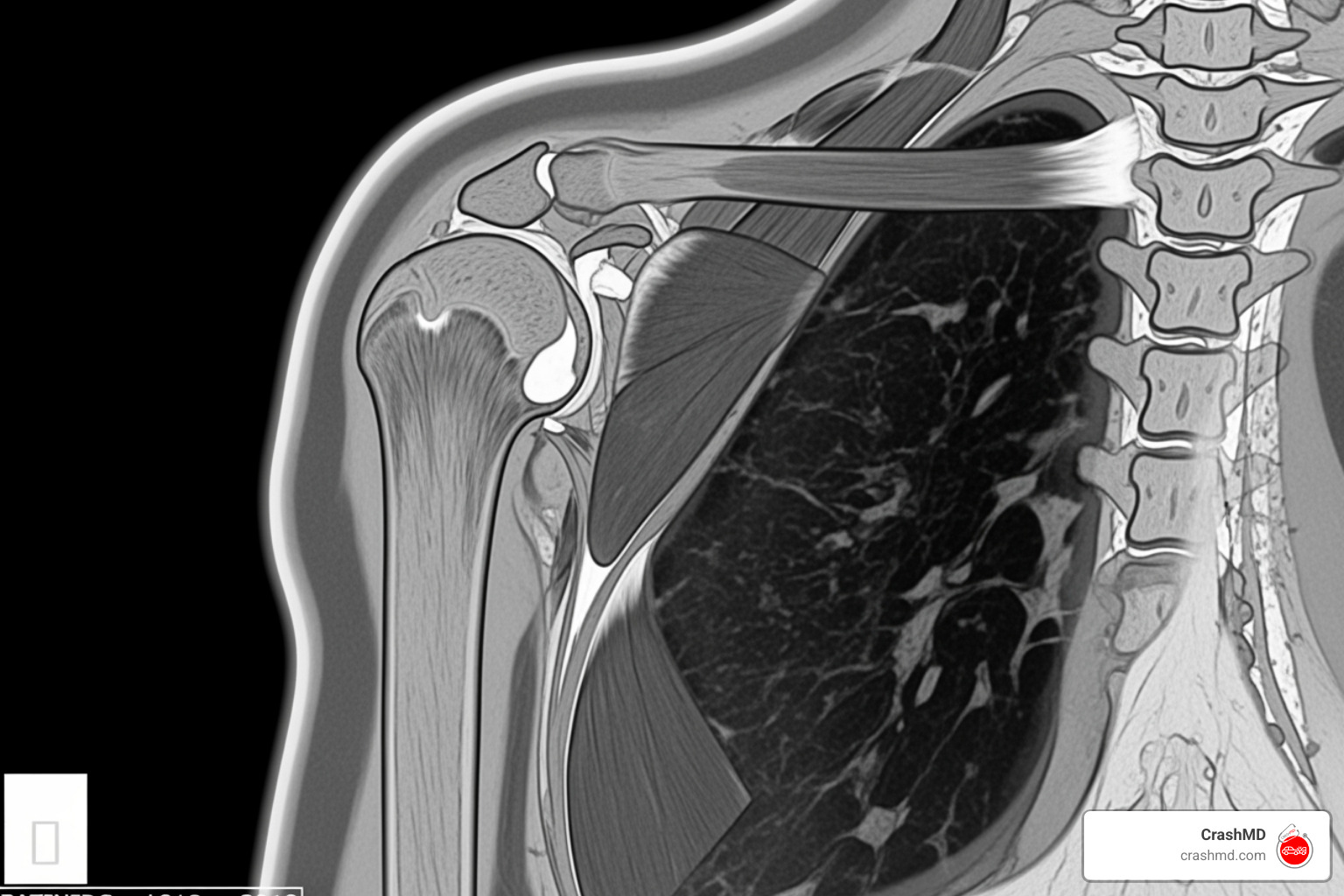
- MRI (Magnetic Resonance Imaging): An MRI is the go-to for suspected soft tissue damage like rotator cuff or labral tears. It provides detailed images of muscles, tendons, and ligaments and is highly sensitive for detecting partial rotator cuff tears.
- Ultrasound: Ultrasound is valuable for evaluating rotator cuff tears and tendinopathy. In skilled hands, it can be a good initial imaging option, comparable to MRI for full-thickness tears.
- CT Scans (Computed Tomography): A CT scan may be used for complex fractures, providing a more detailed view of bones than an X-ray.
A precise diagnosis allows us to create a targeted treatment plan custom to your specific injury and needs.
Non-Surgical Treatment Options for Shoulder Pain After Accident
Fortunately, many cases of shoulder pain after accident are manageable without surgery, especially with early treatment. We often begin with conservative options:
- RICE Method: This acronym stands for Rest, Ice, Compression, and Elevation. It’s a foundational self-care strategy for acute injuries:
- Rest: Avoid activities that aggravate your shoulder.
- Ice: Apply ice packs for 15-20 minutes several times a day to reduce pain and swelling.
- Compression: A bandage or brace can provide support and help control swelling.
- Elevation: Keep your arm liftd if there’s swelling in your hand or wrist.
- Pain Medication: Over-the-counter medications like acetaminophen (Tylenol) or NSAIDs (non-steroidal anti-inflammatory drugs) such as ibuprofen (Advil) or naproxen (Aleve) can manage pain and inflammation. Prescription medications may also be necessary.
- Physical Therapy (PT): PT is a cornerstone of recovery. A physical therapist creates a custom exercise program to restore motion, strengthen muscles, improve flexibility, and reduce pain, playing a vital role in long-term management. Explore how it can help you here: The Role of Physical Therapy in Pain Management.
- Chiropractic Care: For pain stemming from spinal misalignment or nerve impingement, chiropractic adjustments can be effective. Chiropractors restore proper alignment to alleviate nerve pressure and improve function. Learn more about Chiropractic Care for Accidents.
- Injections: Injections can offer significant relief for localized pain and inflammation. These may include corticosteroid injections to reduce swelling or nerve blocks to numb pain. Find out more about Injection Therapy for Pain.
- Acupuncture: This traditional technique uses thin needles inserted at specific points to relieve pain and promote healing. It can be an effective complementary therapy.
When Is Surgery the Right Choice?
While we prioritize non-surgical options, surgery is sometimes necessary for severe or complex shoulder pain after accident. It’s typically considered when:
- Severe Tears: For complete rotator cuff tears in young, active patients, surgery often yields better outcomes than conservative management.
- Unstable Fractures: Significantly displaced or unstable fractures of the clavicle, humerus, or scapula may require surgical fixation (plates, screws, or pins) for proper healing.
- Recurrent Dislocations: Surgery should be considered for first-time shoulder dislocations in active patients under 25 due to a high recurrence rate (up to 90%).
- Failed Conservative Treatment: If several months of consistent non-surgical treatment fail to bring improvement, surgery may be recommended.
- Arthroscopic Surgery: Many shoulder surgeries are now done arthroscopically (using small incisions and a camera). This minimally invasive technique can repair tears or remove inflamed tissue.
- Shoulder Replacement: For severe, irreparable joint damage, like post-fracture arthritis, shoulder replacement may be an option to relieve pain and restore function.
Our pain management specialists will discuss all your options with you, ensuring you understand the benefits and risks of each treatment path.
Your Recovery Roadmap: Long-Term Care and Legal Documentation
Recovering from shoulder pain after accident requires a comprehensive roadmap for long-term care and documentation. Improperly managed injuries can lead to chronic pain, reduced quality of life, or permanent disability. We focus on personalized treatment plans to prevent long-term complications and support your full recovery.
We understand that every patient’s situation is unique, and our specialists are adept at creating custom plans that evolve with your progress. Learn more about How Pain Management Specialists Create a Personalized Treatment Plan.
Why Documenting Your Shoulder Pain After Accident is Crucial
While the pain and stress of an accident are overwhelming, documenting your injuries, symptoms, and treatment is paramount for your medical care, insurance claims, and legal proceedings.
Here’s why detailed documentation is crucial:
- Medical Records: Comprehensive medical records give all your healthcare providers a complete picture of your condition, leading to better, coordinated treatment.
- Insurance Claims: Insurance companies require detailed evidence linking your injuries to the accident. Thorough documentation strengthens your claim for medical expenses, lost wages, and other damages.
- Legal Proof: For a personal injury claim, accurate documentation provides undeniable evidence of your injuries and their impact, which is essential for proving negligence and securing fair compensation.
- Pain Journal: A personal pain journal is invaluable. Daily, record your pain’s intensity, type, and location, and what affects it. Note its impact on sleep, work, and daily activities. This complements your medical records and provides a powerful narrative.
- Tracking Symptoms: Documenting symptom changes helps your medical team adjust your treatment plan and provides a clear recovery timeline.
We work closely with you to ensure all necessary documentation is carefully maintained. Our network of motor vehicle accident doctors understands the specific requirements for accident-related injuries. Find a Motor Vehicle Accident Doctor near you.
Preventing Long-Term Complications
Ignoring shoulder pain after accident or failing to follow a treatment plan can have serious long-term consequences:
- Chronic Pain Development: Acute pain can become chronic if an injury isn’t properly managed. Chronic pain can persist for months or years, impacting your quality of life.
- Arthritis: Joint injuries like dislocations or fractures can accelerate the development of arthritis in the shoulder.
- Loss of Function: Untreated injuries can lead to permanent weakness, stiffness, or limited range of motion, making simple tasks difficult.
- Frozen Shoulder: As discussed, prolonged immobility or chronic inflammation can lead to frozen shoulder (adhesive capsulitis), causing severe stiffness and pain.
- Importance of Rehabilitation: Consistent physical therapy and following specialist recommendations are crucial. Rehabilitation restores strength, flexibility, and function, preventing re-injury.
Our goal is to help you achieve a full recovery while minimizing long-term risks. We provide comprehensive Long-Term Care After Accident to support you every step of the way.
Conclusion
Experiencing shoulder pain after accident is a serious matter that demands your immediate attention. From the adrenaline-fueled moments right after a collision to the delayed onset of debilitating symptoms, understanding the potential causes and recognizing the red flags is the first step toward healing. Whether it’s a soft tissue tear, a bone fracture, or nerve damage, your shoulder is vulnerable to the forces of a crash.
At CrashMD, we believe in a holistic approach to post-accident recovery. We emphasize prompt and accurate diagnosis, followed by a personalized treatment plan that may include physical therapy, chiropractic care, injections, or, if necessary, surgical intervention. Our pain management specialists are dedicated to guiding you through every stage of your recovery, ensuring you receive the comprehensive care needed to prevent long-term complications and reclaim your well-being.
Beyond medical treatment, we understand the critical link between your health and any legal or insurance claims. Our commitment to meticulous documentation of your injuries and treatment ensures that you have the necessary evidence to support your case, allowing you to focus on getting better.
Don’t let shoulder pain after accident derail your life. Early intervention and expert care are key to a successful recovery. We are here to advocate for you, ensuring that your journey from injury to full health is as smooth and successful as possible. Your path to recovery starts with taking that first step.
For more information on how we facilitate your healing process, read about Successful Treatment After Car Accident.
Contact our experienced motor vehicle accident doctors today to start your journey toward recovery and pain relief.