

What You Need to Know About Soft Tissue Injury Treatment
Soft tissue injury treatment depends on the type and severity of the injury, but most cases follow a clear, evidence-based path to recovery. Here’s a quick overview:
- Protect the injured area and limit movement for the first 1-3 days.
- Elevate the limb above heart level to reduce swelling.
- Compress with a firm bandage to control inflammation.
- Avoid ice and anti-inflammatory medications in the early stages — both may slow natural healing.
- Educate yourself on active recovery rather than relying on passive treatments.
- Gradually reintroduce movement and load as pain allows, guided by a 0-10 pain scale.
- Seek professional care if you cannot bear weight, notice numbness, or symptoms worsen.
Soft tissue injuries are incredibly common — and often misunderstood. They affect the muscles, tendons, and ligaments that hold your body together. They can happen in a split second: a car crash, a bad step off a curb, or a sudden twist on the field.
For accident victims, the challenge goes beyond the physical pain. Many people are also navigating insurance claims, mounting medical bills, and uncertainty about how long recovery will take. Meanwhile, the injury itself quietly demands attention.
What makes soft tissue injuries especially tricky is that they don’t always show up on a standard X-ray. There’s no cast to point to. No visible break. Yet the pain can be just as real — and just as disabling — as a fracture.
The good news is that treatment has come a long way. Older approaches like RICE (Rest, Ice, Compression, Elevation) have evolved into more comprehensive frameworks that prioritize long-term healing over short-term symptom control. As rehabilitation science has advanced, so has our understanding of what the body actually needs to repair damaged soft tissue.
This guide walks you through everything — from understanding what soft tissue injuries are, to how they’re diagnosed, treated, and prevented — so you can make informed decisions about your recovery.
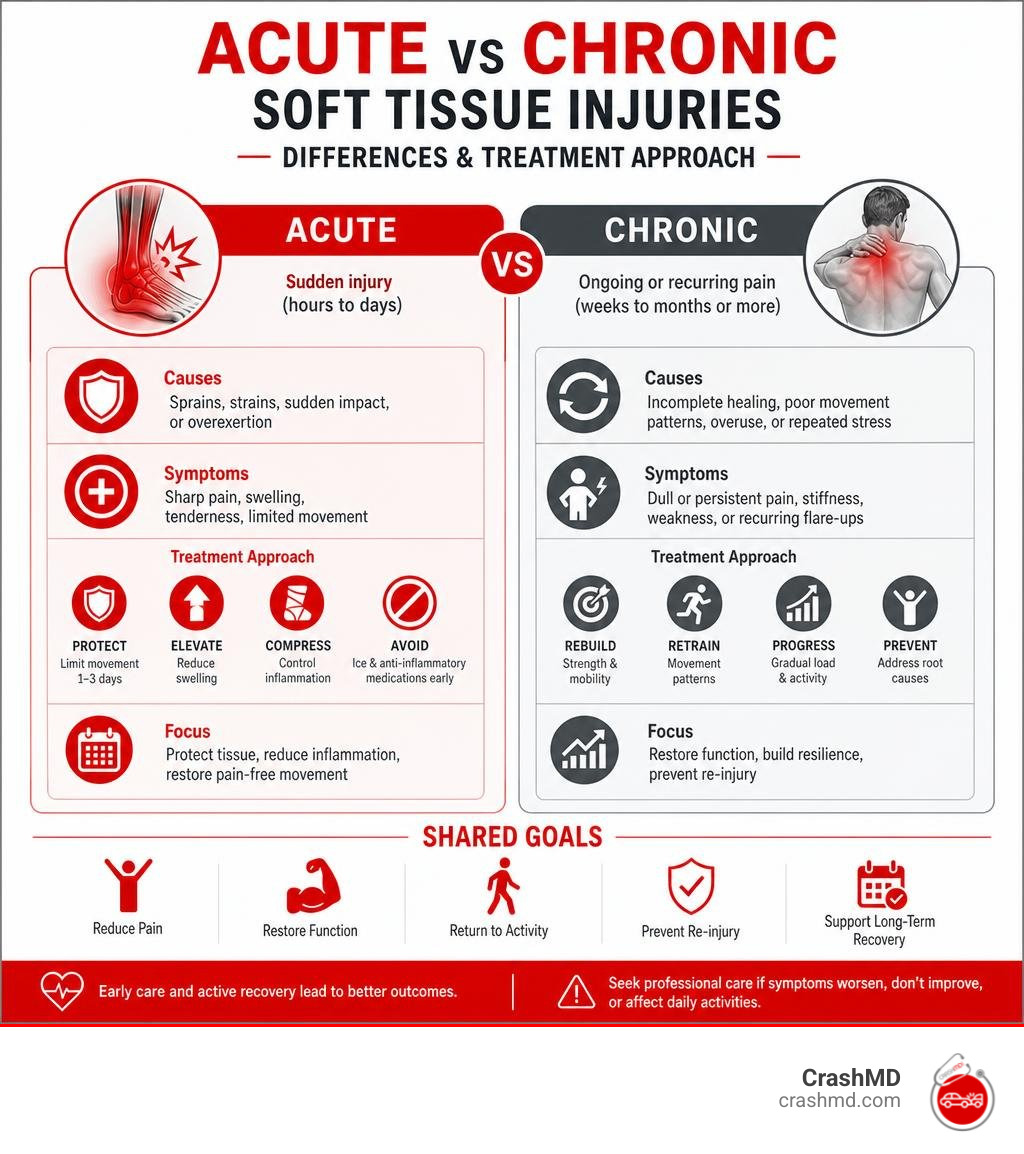
Soft tissue injury treatment vocab explained:
Understanding Soft Tissue Injuries: Types, Causes, and Symptoms
To understand how to treat these injuries, we first have to understand what they are. In the simplest terms, a soft tissue injury involves damage to the muscles, ligaments, and tendons, rather than the bones.
These injuries are typically categorized into two main groups: acute traumatic injuries (caused by a sudden event like a fall or car crash) and repetitive strain or overuse injuries (caused by repeating the same movement over time).
Let’s break down the most common types as detailed in the Cleveland Clinic’s guide to soft tissue damage:
- Sprains: These occur when a ligament—the tough, fibrous tissue connecting bone to bone—is stretched or torn. Sprains are incredibly common in joints like the ankle, knee, and wrist.
- Strains: Often confused with sprains, strains affect muscles or tendons (the tissues that connect muscle to bone). A sudden twist or heavy lifting can cause a muscle strain or even a partial tendon tear.
- Contusions: This is the clinical term for a bruise. It occurs when a direct, blunt force damages the muscle fibers and connective tissues beneath the skin, causing blood to pool.
- Tendonitis and Bursitis: These are classic overuse injuries. Tendonitis is the inflammation of a tendon, while bursitis is the irritation of the bursa—the small, fluid-filled sacs that cushion the spaces between bones, tendons, and muscles.
For a deeper dive into how these injuries differ anatomically, take a look at our article on understanding sprains and strains.
Sprains vs. Strains: A Quick Comparison
| Feature | Sprain | Strain |
|---|---|---|
| Affected Tissue | Ligaments (connect bone to bone) | Muscles or Tendons (connect muscle to bone) |
| Common Locations | Ankles, knees, wrists, spine | Back, hamstrings, neck (e.g., whiplash) |
| Typical Cause | Sudden twisting, joint hyper-extension | Overstretching, heavy lifting, rapid contraction |
| Key Symptom | Joint instability, localized bruising | Muscle spasms, localized weakness |
Common Symptoms of Soft Tissue Injuries
If you have recently experienced a physical trauma, you might notice several of these symptoms:
- Pain: Often sharp at the moment of injury, settling into a dull, throbbing ache that intensifies when you try to use the affected area.
- Swelling and Inflammation: The body’s natural defense mechanism, which can sometimes take several hours to fully develop.
- Bruising and Discoloration: Caused by broken blood vessels under the skin.
- Muscle Spasms: Involuntary, painful contractions as the body tries to “splint” and protect the injured muscle.
- Joint Instability: A feeling that the joint is “giving out,” which is a classic sign of a moderate to severe ligament tear.
- Loss of Function: Difficulty moving the limb, bending a joint, or bearing weight.
How Soft Tissue Injuries Are Diagnosed
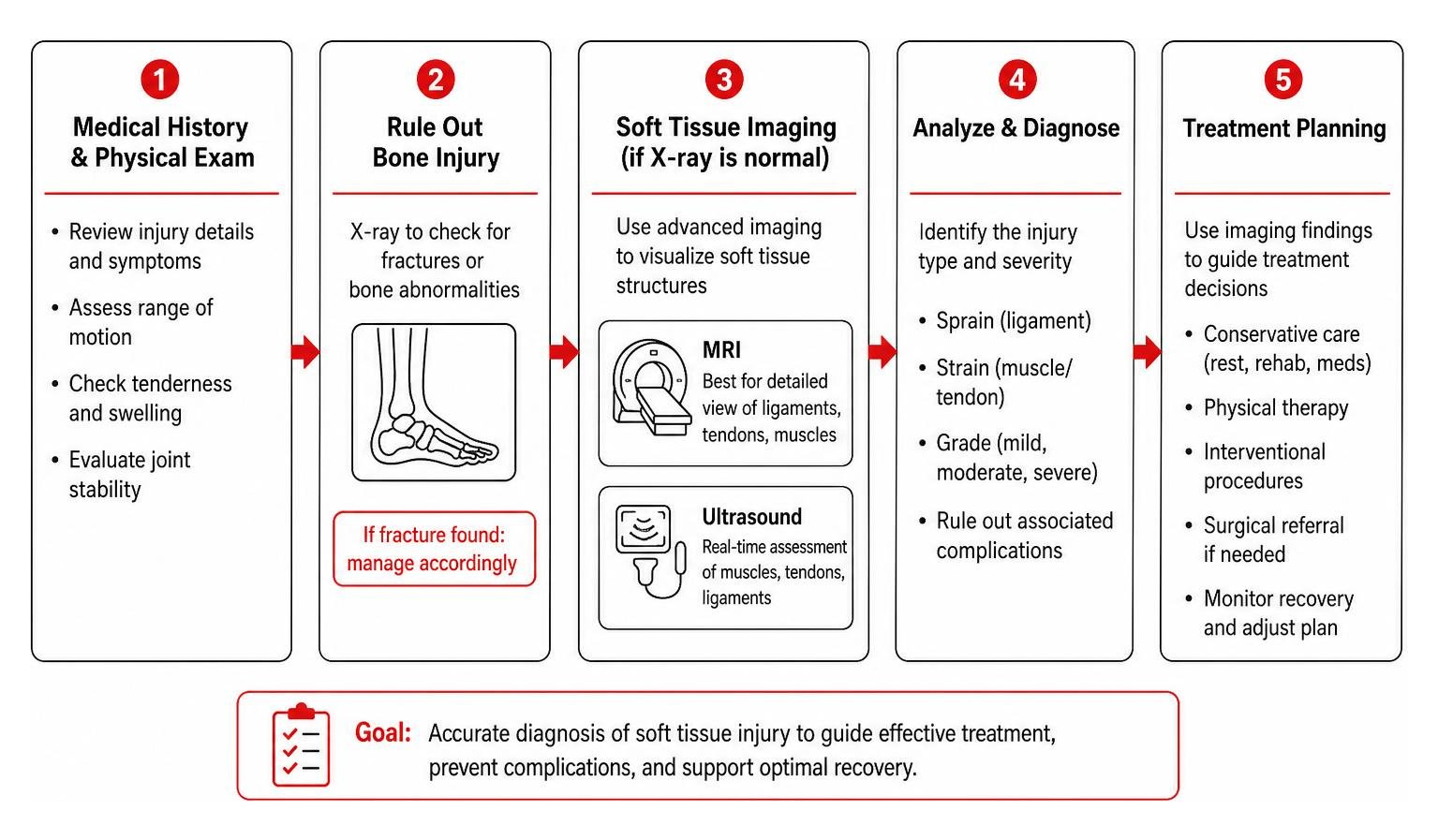
A proper diagnosis is the cornerstone of effective soft tissue injury treatment. When you visit a healthcare provider, the process begins with a detailed medical history and physical examination. Your doctor will assess your range of motion, check for localized tenderness, and evaluate joint stability.
However, because soft tissues are invisible on standard X-rays, further diagnostic imaging is often required. While an X-ray is incredibly useful for ruling out bone fractures, an MRI (Magnetic Resonance Imaging) or musculoskeletal ultrasound is needed to visualize the actual tear in a ligament, tendon, or muscle.
Understanding the precise nature of the damage is critical because it helps explain why soft tissue injuries hurt so and allows us to rule out dangerous acute complications. According to the Merck Manual’s overview of sprains and strains, a thorough examination must check for:
- Compartment Syndrome: A medical emergency where swelling builds up dangerous pressure inside a muscle compartment, restricting blood flow and risking permanent nerve and muscle damage.
- Nerve Damage: Indicated by numbness, tingling, or a “pins and needles” sensation.
- Blood Vessel Damage: Indicated by cool, pale, or blue skin below the site of the injury.
Modern Protocols for Soft Tissue Injury Treatment
For decades, the go-to first aid instruction for any bump, bruise, or sprain was simple: grab an ice pack and rest. We called this RICE or PRICE (Protection, Rest, Ice, Compression, Elevation).
However, modern rehabilitation science has moved away from this passive approach. Today, clinical guidelines like those from NHS Inform soft tissue injury advice advocate for a much more comprehensive, active recovery framework known as PEACE and LOVE.
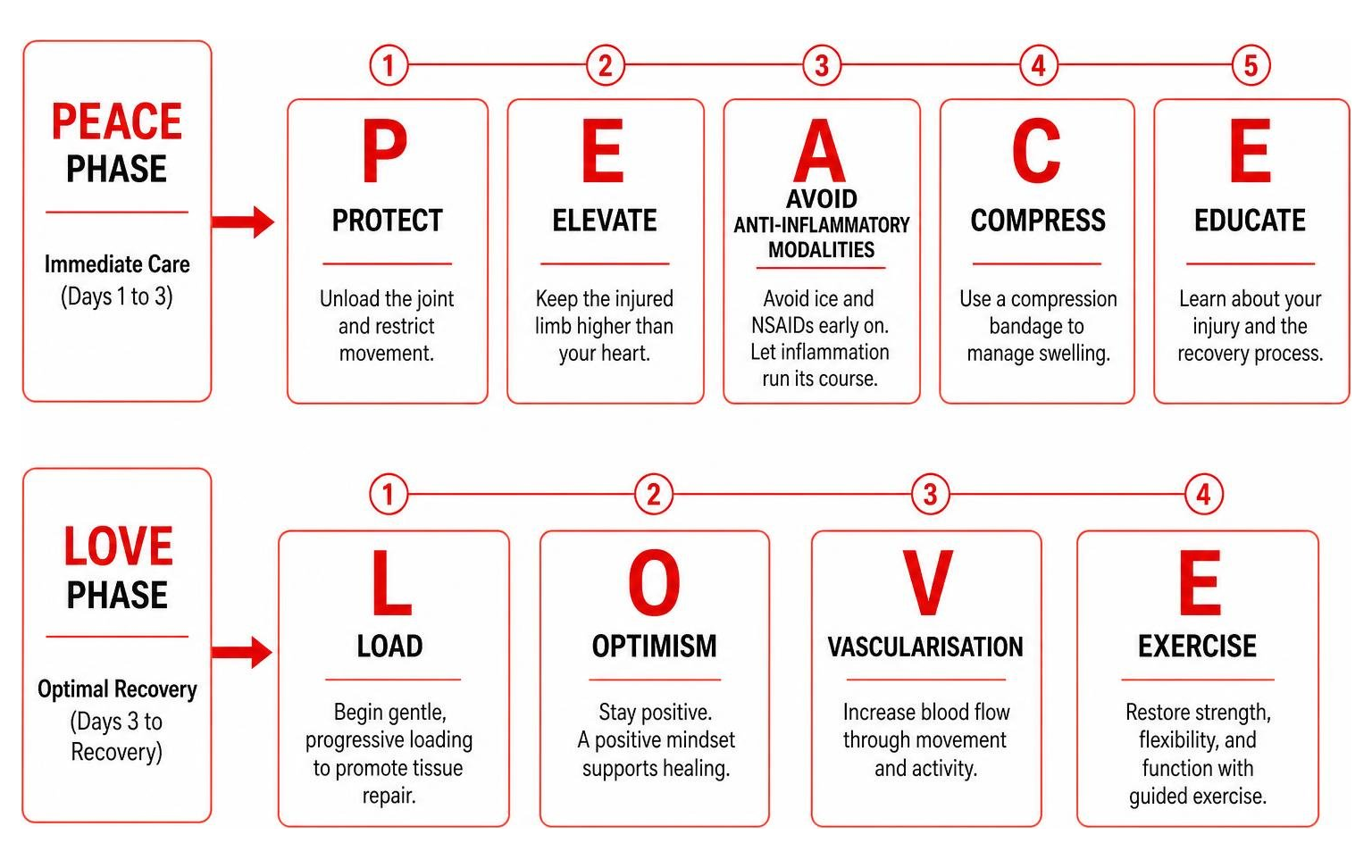
The PEACE Phase (Immediate Care: Days 1 to 3)
- P for Protect: Unload the joint and restrict movement for the first 1 to 3 days to minimize further damage.
- E for Elevate: Keep the injured limb higher than your heart to promote fluid drainage.
- A for Avoid Anti-Inflammatory Modalities: This is the most significant shift in modern medicine. Early inflammation is actually the first phase of the injury recovery process. Taking NSAIDs (like ibuprofen) or applying ice can disrupt this natural healing cascade, potentially delaying tissue repair.
- C for Compress: Use a snug, elastic bandage to limit swelling and protect joint integrity.
- E for Educate: Work with your doctor to understand that active recovery, rather than passive treatments, is the fastest path to healing.
The LOVE Phase (Subacute Care: Day 4 Onward)
- L for Load: Gradually reintroduce weight and movement. Controlled mechanical stress actually stimulates tissue repair through a biological process called mechanotransduction.
- O for Optimism: Your brain plays a massive role in recovery. Staying positive and managing fear of movement can improve overall outcomes.
- V for Vascularisation: Engage in pain-free cardiovascular activity to boost blood flow, which delivers essential nutrients to the healing tissues.
- E for Exercise: Perform targeted physical therapy exercises to restore strength, flexibility, and balance.
Advanced Care: Physical Therapy, Immobilization, and Surgery
While minor, first-degree injuries often heal with conservative home care, moderate (second-degree) and severe (third-degree) injuries require professional intervention.
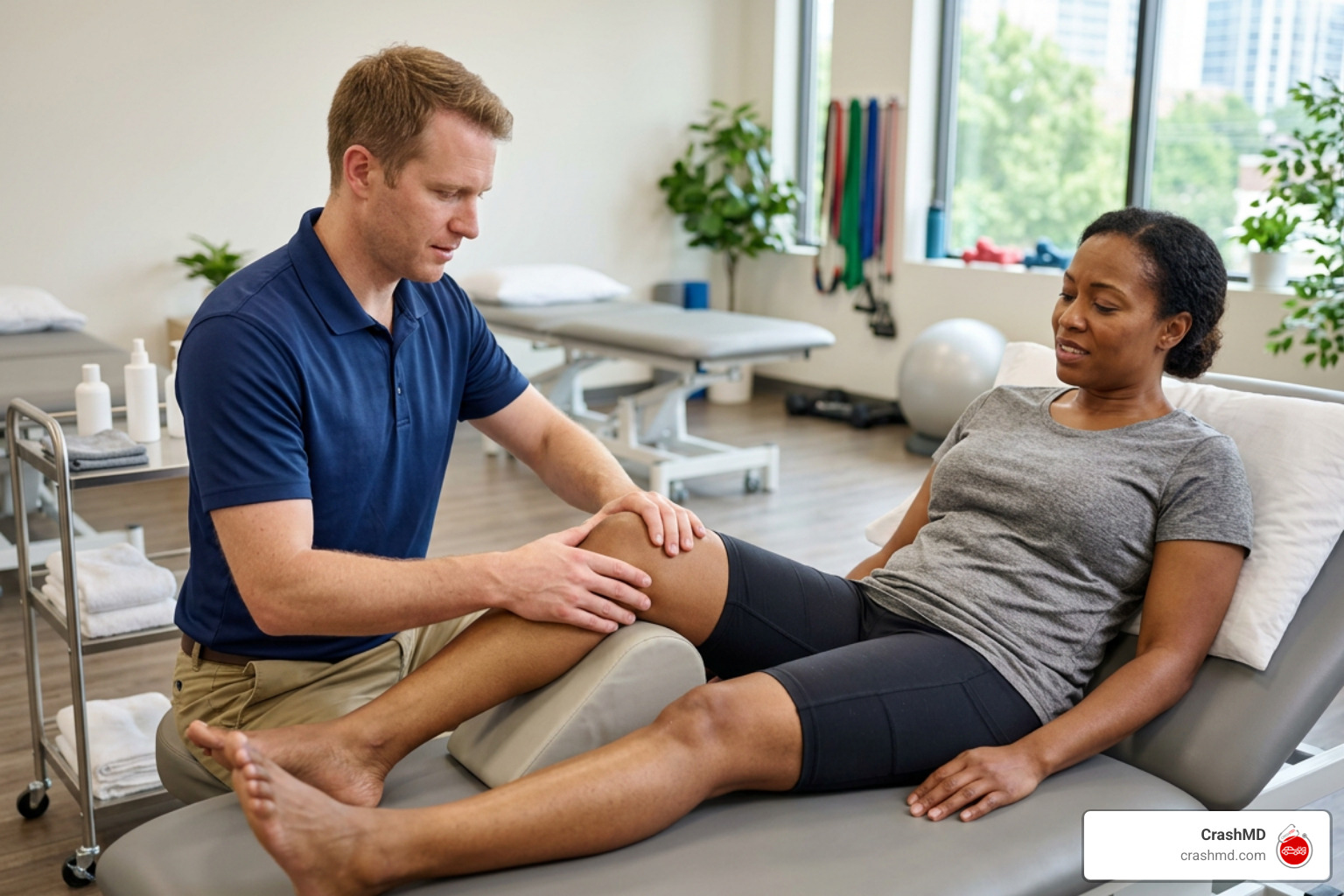
The Indispensable Role of Physical Therapy
Once the acute phase has settled, physical therapy becomes the primary driver of recovery. In fact, our benefits of post-accident PT guide highlights how structured rehabilitation prevents long-term joint stiffness and chronic pain. Under the guidance of a physical therapist, you will work through range-of-motion, strengthening, and proprioception (balance) exercises.
Immobilization
For severe sprains or partial tears, temporary immobilization using a splint, brace, or cast may be necessary. This keeps the tissue aligned so it can heal without being constantly restretched. However, prolonged immobilization is avoided today because it can lead to muscle atrophy and joint stiffness.
Surgical Repair
When a ligament or tendon is completely ruptured (a third-degree tear, such as an ACL tear or Achilles tendon rupture), surgical intervention is often required to reattach the tissue.
Preventing Long-Term Complications
Neglecting proper treatment can lead to chronic complications, including:
- Chronic Joint Instability: Repeatedly spraining the same joint because the ligaments healed stretched out.
- Heterotopic Ossification: A rare condition where bone tissue abnormally develops inside muscle tissue after severe trauma.
- Joint Stiffness and Contractures: Permanent tightening of the surrounding muscles and tendons.
Recovery Timelines and Prevention Strategies
“How long will this take to heal?” is the most common question we hear. Typically, mild soft tissue injuries recover within 1 to 6 weeks. However, severe tears requiring surgery can take several months to a year for a complete return to sport or heavy labor.

Safe Return-to-Activity Guidelines
To avoid reinjury, use a pain-rating scale from 0 to 10. When reintroducing activities:
- Keep pain levels between 0 and 5.
- If pain exceeds 5, back off and reduce the load.
- Any pain experienced during activity should resolve quickly and should not feel worse the next morning.
For a step-by-step approach to managing your recovery milestones, refer to our guide on navigating car accident injury recovery.
Prevention Strategies
- Warm-Up and Cool-Down: Never skip a dynamic warm-up before physical exertion.
- Hydration and Nutrition: Well-hydrated tissues are more resilient and less prone to tearing.
- Progressive Loading: Avoid sudden spikes in exercise intensity or volume. Give your tissues time to adapt.
Frequently Asked Questions
What is the fastest soft tissue injury treatment?
The fastest treatment is a structured, active recovery protocol. Following the PEACE and LOVE framework—which emphasizes early compression, elevation, and a gradual return to active loading rather than prolonged rest—promotes faster, stronger tissue remodeling.
When should I seek professional soft tissue injury treatment?
You should seek immediate medical attention if you experience an inability to bear weight on the injured limb, notice an obvious physical deformity, experience numbness or tingling, or if the skin below the injury becomes cool, pale, or blue. These are signs of a severe tear or a vascular complication.
Why is ice no longer recommended for immediate treatment?
While ice is excellent for numbing pain, modern clinical studies show that it constricts blood vessels and disrupts the natural inflammatory response. Because your body relies on inflammation to deliver healing cells to the damaged site, icing can actually delay the long-term tissue repair process.
Conclusion
Recovering from a physical trauma is a journey that requires patience, the right clinical guidance, and an active approach to healing. I’m Dr. Adam Savage, and at CrashMD, we specialize in guiding accident victims through this exact process.
Our team provides expert pain management and tailored treatment plans across Arizona, Nevada, Texas, Oklahoma, and California. We don’t just focus on physical rehabilitation; we also advocate for our patients by meticulously documenting their injuries for legal and insurance claims, ensuring they receive the comprehensive care they deserve before taking any legal action.
If you or a loved one is recovering from an accident, don’t let a hidden injury derail your future. Connect with our motor vehicle accident doctors today to start your personalized journey back to pain-free living.