

Kidney Contusion After a Car Accident: Understanding, Symptoms, and Recovery
Car accidents can happen in an instant and leave lasting physical and emotional effects. While visible injuries such as cuts or bruises are often noticed immediately, some injuries are internal and potentially life-threatening. One such injury is a kidney contusion, which is essentially a bruise to the kidney caused by blunt trauma. Kidney contusions can range from mild, requiring only observation, to severe, causing internal bleeding and organ damage.
The kidneys are vital organs located in the back of the abdomen, just below the rib cage on either side of the spine. They play a critical role in filtering waste from the blood, balancing fluids, and maintaining blood pressure. Because of their location, the kidneys are particularly vulnerable to blunt trauma during car accidents. Even if there are no outward signs of injury, a kidney contusion can affect the body’s ability to filter blood and maintain vital functions, making early recognition and treatment essential.
This article will guide you through understanding kidney contusions, how they occur, their symptoms, diagnosis, treatment, recovery, and long-term considerations.
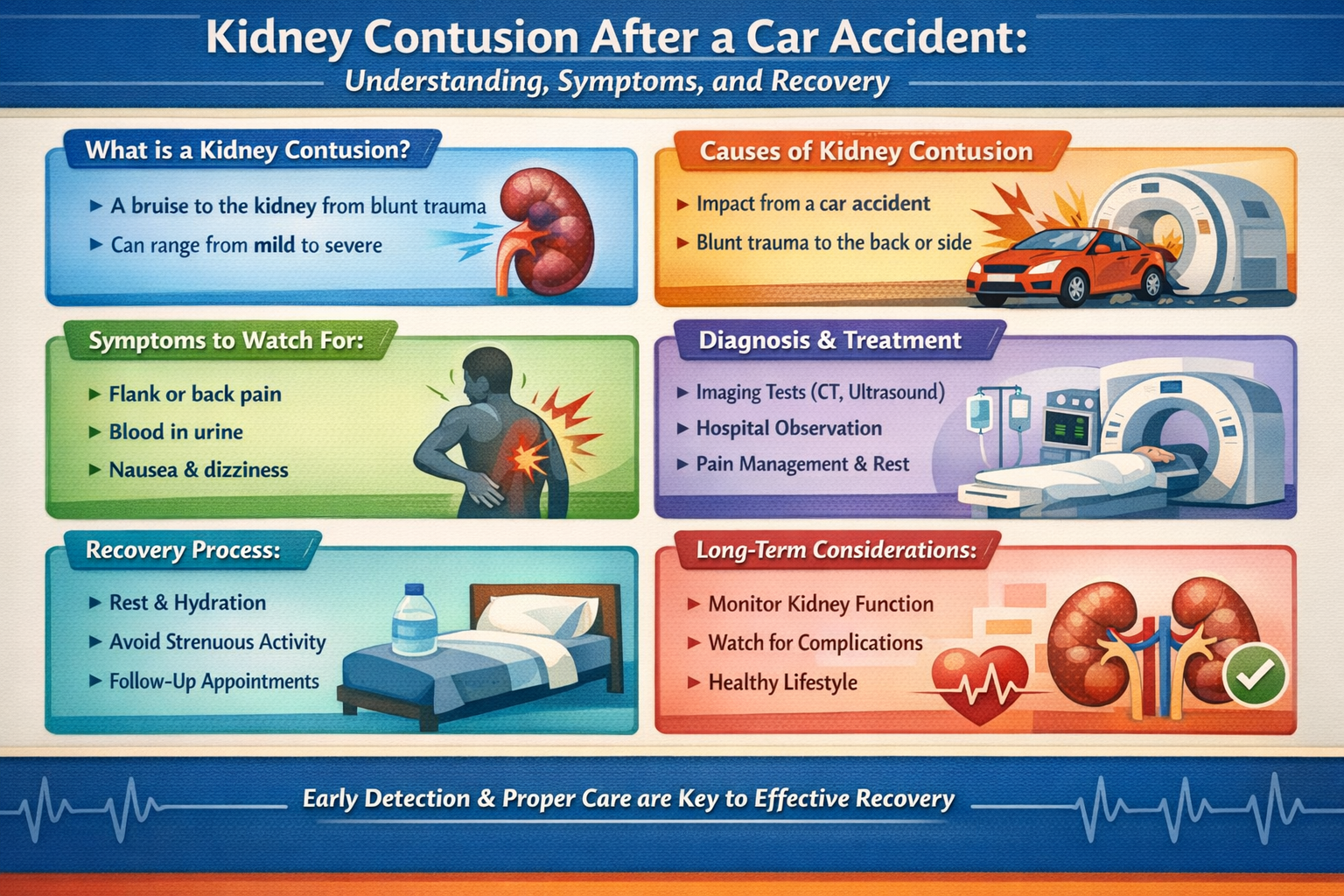
What is a Kidney Contusion?
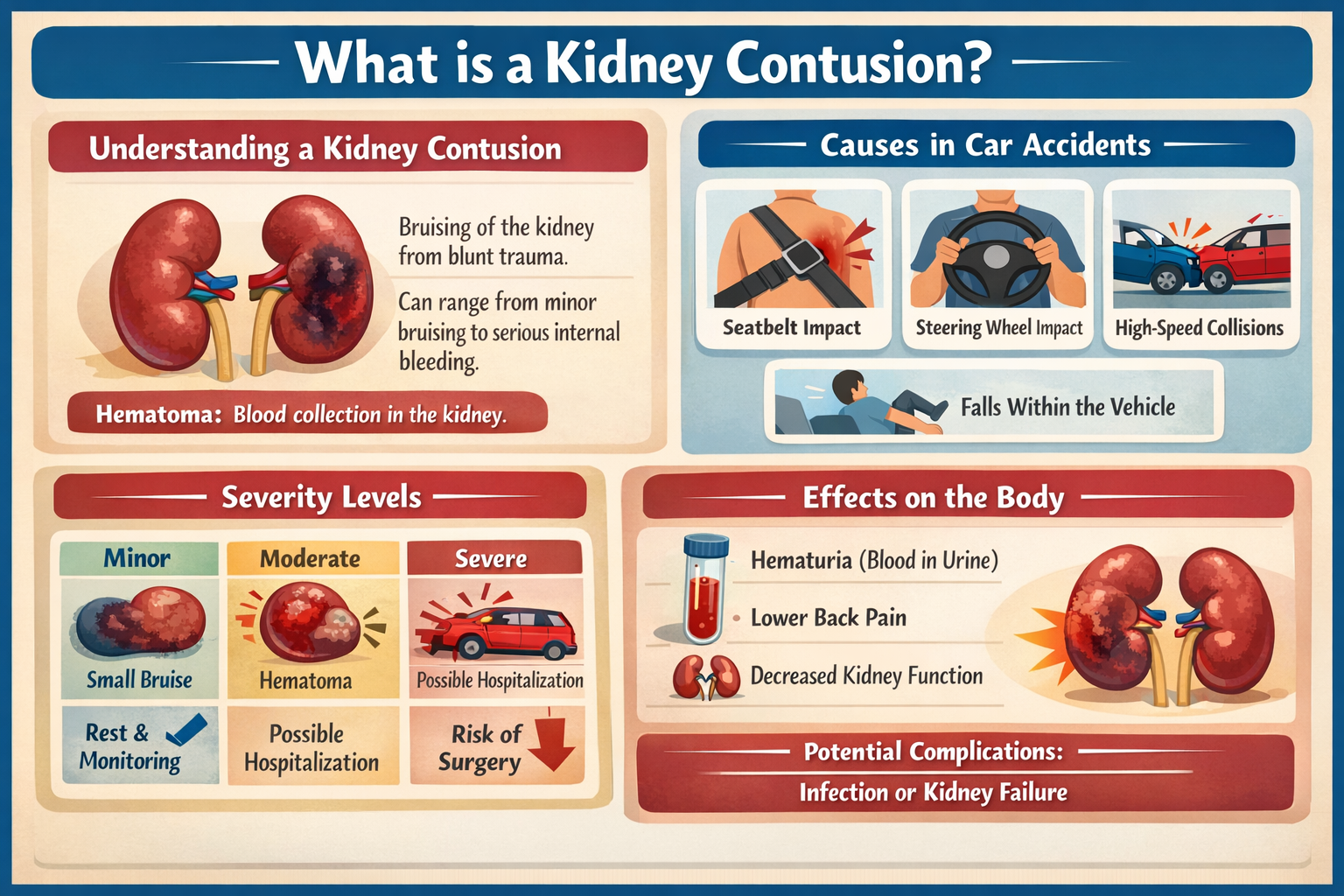
A kidney contusion is a type of blunt force injury to the kidney that causes bruising without necessarily tearing the organ. In more severe cases, a contusion can cause bleeding inside or around the kidney, which may lead to a hematoma—a collection of blood within the kidney tissue.
The severity of a kidney contusion is classified based on the extent of damage: minor contusions cause small amounts of bleeding and may heal with rest, while more severe contusions may disrupt kidney function, require hospitalization, or even surgery. Kidney contusions often occur alongside other injuries, such as rib fractures, abdominal trauma, or spinal injuries, which can complicate diagnosis and management.
Even mild kidney contusions should be taken seriously, as untreated internal bleeding or delayed complications can be dangerous.
Causes of Kidney Contusions in Car Accidents
Kidney contusions are usually the result of blunt trauma to the lower back or flanks during a car accident. Common causes include:
- Seatbelt impact: During sudden deceleration, the seatbelt can press forcefully against the lower back, bruising the kidneys.
- Steering wheel or dashboard impact: The force of hitting the steering wheel or dashboard can transmit trauma to the back and kidney area.
- High-speed collisions: Greater speed increases the severity of trauma, making deep bruising or associated injuries more likely.
- Falls within the vehicle: Being thrown against seats, doors, or other objects can also injure the kidneys.
Because the kidneys are partially protected by the rib cage, direct impact is often needed to cause a contusion. Even so, the force from seatbelts or sudden deceleration can still cause significant injury.
How a Kidney Contusion Affects the Body
Kidney contusions can disrupt the organ’s ability to filter blood, regulate fluids, and maintain electrolyte balance. The main concern is internal bleeding, which can lead to blood loss and affect kidney function.
Other potential effects include pain in the lower back or sides, hematuria (blood in the urine), and general symptoms such as nausea, vomiting, or dizziness. Severe contusions may compromise kidney function, leading to decreased urine output or electrolyte imbalances. In rare cases, untreated contusions can progress to kidney rupture or infection.
Because kidney contusions often occur alongside other injuries, evaluating the patient as a whole is essential to prevent complications and ensure proper healing.
Symptoms of a Kidney Contusion
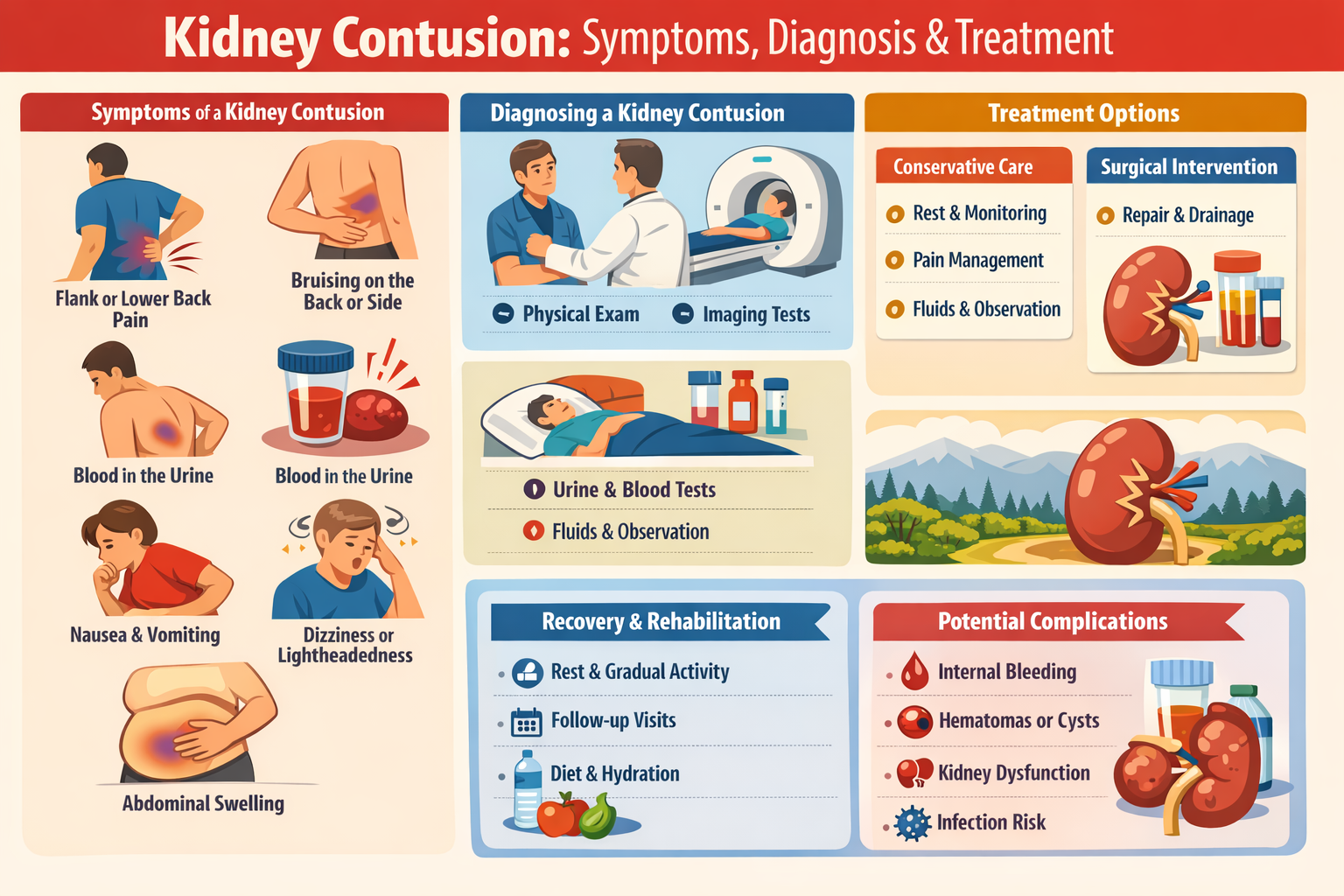
Symptoms can appear immediately after the accident or develop over the next few hours. Common signs include:
- Pain or tenderness in the flank or lower back area
- Bruising on the back or side
- Blood in the urine, which may appear pink, red, or dark brown
- Nausea or vomiting
- Dizziness or lightheadedness from blood loss in severe cases
- Abdominal discomfort or swelling
Since these symptoms can overlap with other injuries, including muscle strains or rib fractures, professional evaluation is critical. Any abdominal or flank pain after a car accident should be taken seriously.
Diagnosing Kidney Contusion
Diagnosis involves a combination of physical examination, imaging, and laboratory tests. Physicians will check for tenderness, swelling, or bruising in the flank area. Blood tests and urine analysis help detect blood loss and kidney function abnormalities.
Imaging studies such as ultrasound, CT scans, or MRI are often used to confirm the presence and severity of the contusion, assess internal bleeding, and identify any associated injuries. Vital signs, including blood pressure, heart rate, and oxygen levels, are closely monitored to detect signs of shock or deterioration.
Early and accurate diagnosis is essential to guide treatment and prevent complications, especially since internal bleeding may not be immediately obvious.
Treatment of Kidney Contusion
The treatment of a kidney contusion depends on its severity and whether the patient is stable.
Conservative Management
Mild kidney contusions without active bleeding are often treated with observation and rest. Patients may be hospitalized briefly to monitor vital signs, urine output, and kidney function. Pain management, bed rest, and limited physical activity are essential to support healing.
Surgical or Interventional Treatment
Severe kidney contusions with significant bleeding, expanding hematomas, or compromised kidney function may require surgical intervention or minimally invasive procedures. These may include:
- Repair of kidney tissue or surrounding blood vessels
- Drainage of hematomas to relieve pressure
- Blood transfusions to manage significant blood loss
The primary goal is to preserve kidney function while preventing further complications. Supportive care, including fluids and monitoring, is crucial for recovery.
Recovery and Rehabilitation
Recovery from a kidney contusion varies depending on the severity of the injury. Mild contusions may heal within a few weeks with rest and careful monitoring. Severe injuries may require hospitalization, surgical repair, and several months of gradual recovery.
During the recovery period, patients are advised to avoid heavy lifting, contact sports, or activities that could cause additional trauma. A balanced diet, adequate hydration, and adherence to follow-up appointments support kidney healing and overall recovery.
Patients recovering from severe contusions may need periodic imaging and laboratory tests to monitor kidney function and ensure there are no delayed complications. Gradually resuming normal activities under the guidance of a healthcare provider is important for long-term health.
Potential Complications
Even with proper care, kidney contusions can lead to complications such as:
- Internal bleeding requiring intervention
- Formation of hematomas or cysts around the kidney
- Impaired kidney function or decreased urine output
- Infection if tissue is damaged or hematomas persist
- Chronic flank pain or discomfort in rare cases
Close monitoring and following medical advice reduce the risk of complications and support a full recovery.
Patient Experiences
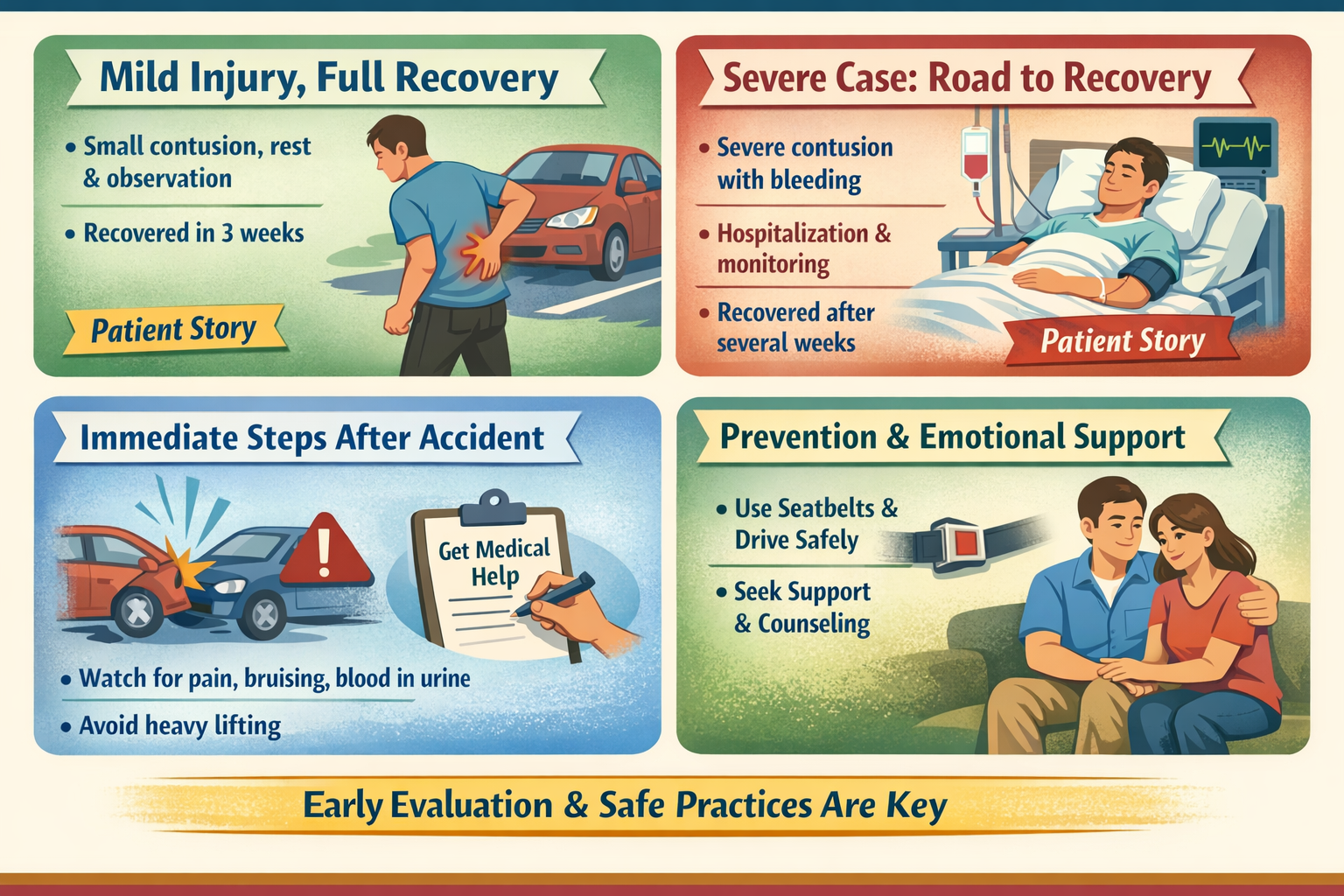
Patient stories illustrate the real-life impact of kidney contusions. One patient experienced mild flank pain after a minor collision. Imaging revealed a small contusion without active bleeding. Observation, rest, and gradual return to activity led to a full recovery in about three weeks.
Another patient involved in a high-speed collision suffered a more severe kidney contusion with bleeding. Hospitalization, monitoring, and supportive care were required. After several weeks of recovery and follow-up, the patient regained normal kidney function and resumed daily activities with no long-term effects.
These stories highlight the importance of early evaluation and adherence to medical guidance, even when symptoms seem mild.
Immediate Steps After a Car Accident
Anyone who suspects a kidney injury after a car accident should seek immediate medical attention. Avoid heavy lifting or activities that strain the back and abdomen. Monitor for pain, bruising, blood in urine, dizziness, or fainting, and communicate all symptoms to healthcare professionals promptly. Early intervention is key to preventing complications.
Prevention and Safety Measures
While car accidents cannot always be prevented, safety measures can reduce the risk of internal injuries like kidney contusions. Proper seatbelt use, seat adjustment, safe driving practices, and avoiding distractions or impaired driving can minimize trauma. Maintaining core and back strength may also provide some protection during impacts.
Emotional and Psychological Considerations
Recovering from a kidney contusion can be stressful. Patients may feel anxious, frustrated, or uncertain about returning to normal activity. Emotional support from family, counseling if needed, and clear communication with healthcare providers can help patients feel empowered during the recovery process.
Living After a Kidney Contusion
Most patients recover fully with proper treatment and follow-up care. Post-recovery, patients should gradually resume activities under medical guidance, maintain hydration and a kidney-friendly lifestyle, and attend all follow-up appointments. Being attentive to any recurring flank pain, changes in urine color, or digestive discomfort is important for long-term kidney health. With timely treatment and structured care, patients can return to their daily lives safely and confidently.