Bladder Rupture After a Car Accident: Understanding, Symptoms, and Recovery
Car accidents are sudden, often traumatic events that can leave lasting physical and emotional impacts. While external injuries like cuts, bruises, and broken bones are usually visible, internal injuries may go unnoticed, yet they can be just as serious or even life-threatening. One such hidden injury is a bladder rupture, a condition that occurs when the urinary bladder tears or bursts due to blunt force trauma.
The bladder is a hollow, muscular organ located in the pelvis. It stores urine produced by the kidneys until it is ready to be expelled from the body. During a car accident, especially high-impact collisions or situations where the bladder is full, sudden force can cause the bladder wall to tear. Because the bladder contains urine, a rupture allows urine to leak into the surrounding tissues or abdominal cavity, causing severe complications such as infection, sepsis, or damage to nearby organs.
Bladder ruptures are relatively uncommon but carry serious risks. They often occur alongside other injuries, including pelvic fractures, abdominal trauma, or spinal injuries. Early recognition, diagnosis, and treatment are critical to prevent long-term complications and ensure full recovery. This article explores bladder rupture in detail, including causes, symptoms, diagnosis, treatment, recovery, complications, and long-term considerations. It is written in a human-centered, patient-friendly tone for education and support.
What Is a Bladder Rupture?
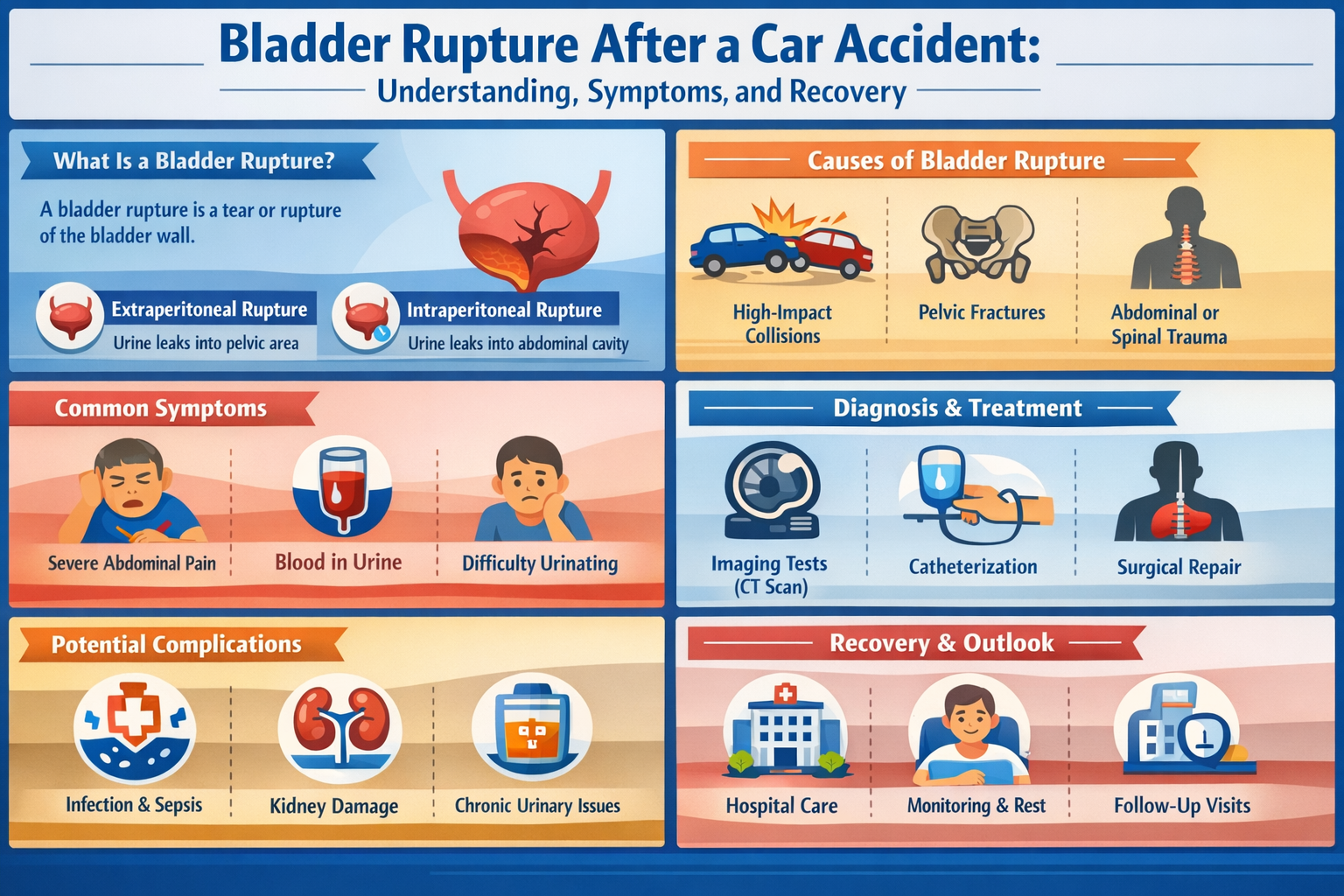
A bladder rupture is a tear or rupture of the bladder wall. The injury can be classified as:
- Extraperitoneal rupture: The tear occurs outside the abdominal cavity, usually associated with pelvic fractures. Urine leaks into the surrounding pelvic tissues.
- Intraperitoneal rupture: The tear occurs within the abdominal cavity, allowing urine to leak into the peritoneal space. This type is more serious due to the risk of widespread infection.
- Combined rupture: Both extraperitoneal and intraperitoneal involvement occur, often in high-impact trauma or severe pelvic injuries.
The severity of the rupture depends on the location, size of the tear, and presence of associated injuries. Delayed diagnosis or treatment can lead to serious infections, kidney problems, or chronic urinary complications.
Causes of Bladder Rupture in Car Accidents
Bladder ruptures typically result from blunt trauma to the lower abdomen or pelvis. Car accidents are a common cause due to:
- Seatbelt compression: During sudden deceleration, the lap belt may compress the lower abdomen, especially if the bladder is full, increasing the risk of rupture.
- Pelvic fractures: High-impact collisions often fracture pelvic bones, which can directly damage the bladder wall.
- Dashboard or steering wheel impact: Direct trauma to the lower abdomen can force the bladder to tear.
- High-speed collisions or ejections: Severe force can crush or rupture the bladder, sometimes alongside injuries to the kidneys, urethra, or intestines.
Because the bladder sits deep within the pelvis, injuries may not be obvious externally. Even minor-looking collisions can cause serious internal injury if the bladder is full or if there is significant pelvic trauma.
How a Bladder Rupture Affects the Body
The bladder’s primary role is to store and release urine. When the bladder ruptures, urine can leak into surrounding tissues or the abdominal cavity. This leakage causes inflammation and increases the risk of infection or peritonitis, a severe infection of the abdominal lining.
In addition to local infection, urine in the abdominal cavity can irritate organs such as the intestines, kidneys, and pelvic structures, causing pain, swelling, and digestive disruption. If untreated, bladder rupture can lead to sepsis, a life-threatening systemic infection, or renal dysfunction due to impaired urinary drainage.
Bladder rupture also affects the normal process of urination. Patients may experience inability to urinate, blood in the urine, or persistent pelvic pain. Because bladder injuries often occur alongside other trauma, a comprehensive evaluation is essential for patient safety.
Recognizing the Symptoms
Symptoms of bladder rupture may appear immediately after the accident or develop over hours or days. Common signs include:
- Severe pelvic or lower abdominal pain
- Difficulty or inability to urinate
- Blood in the urine (hematuria)
- Abdominal swelling or tenderness
- Nausea or vomiting
- Signs of infection such as fever or chills
- Low blood pressure or rapid heart rate in severe cases with fluid leakage or shock
Because these symptoms can overlap with other injuries, anyone with pelvic or abdominal trauma after a car accident should be evaluated promptly by a healthcare professional.

Diagnosing Bladder Rupture
Accurate diagnosis involves a combination of physical examination, laboratory testing, and imaging studies:
- Physical examination: Doctors check for abdominal or pelvic tenderness, swelling, or signs of trauma.
- Urine analysis: Blood in the urine or abnormal chemical markers may indicate bladder injury.
- Imaging studies:
- CT cystography is the most accurate test to visualize bladder tears.
- Ultrasound or X-rays may be used initially to assess for pelvic fractures or free fluid.
- Monitoring: Vital signs are closely observed to detect infection, internal bleeding, or early signs of shock.
Early diagnosis is critical because bladder ruptures can rapidly progress to infection, sepsis, or kidney damage.
Treatment of Bladder Rupture
Treatment depends on the type and severity of the rupture, as well as the patient’s overall condition.
Conservative Management
Some small extraperitoneal ruptures without other injuries may heal with:
- Placement of a urinary catheter to allow continuous drainage
- Antibiotics to prevent infection
- Monitoring in a hospital setting for signs of worsening or complications
Surgical Intervention
Intraperitoneal ruptures, large tears, or ruptures associated with pelvic fractures typically require surgery to:
- Repair the bladder wall
- Remove any urine or blood from the abdominal cavity to prevent infection
- Address associated injuries such as pelvic fractures, urethral tears, or intestinal trauma
Post-surgery, patients may require catheterization for several days to weeks to allow the bladder to heal fully.
Recovery and Rehabilitation
Recovery from bladder rupture varies depending on severity. Minor extraperitoneal injuries may heal within a few weeks, while severe intraperitoneal injuries requiring surgery may require several months for full recovery.
During recovery, patients are advised to:
- Avoid heavy lifting, strenuous activity, and contact sports
- Follow catheter care instructions and maintain hygiene to prevent infection
- Monitor for urinary changes, persistent pain, or signs of infection
- Attend follow-up appointments to ensure proper healing and bladder function
Nutritional support, hydration, and rest are essential for optimal recovery. Patients may also require guidance on returning to normal daily activities gradually.
Potential Complications
Bladder rupture carries potential complications, even with proper treatment, including:
- Infection or abscess formation
- Sepsis from urine leakage into the abdominal cavity
- Chronic urinary problems such as incontinence or difficulty urinating
- Bladder scarring or reduced capacity
- Injury to surrounding organs like the urethra, intestines, or pelvic structures
Timely diagnosis, appropriate treatment, and close follow-up significantly reduce these risks.
Patient Experiences
Patient stories help illustrate the real-life impact of bladder rupture.
One patient involved in a moderate-speed accident experienced pelvic pain and blood in the urine. Imaging confirmed a small extraperitoneal bladder tear. Conservative management with catheterization and antibiotics allowed full recovery within four weeks.
Another patient in a high-speed crash suffered a severe intraperitoneal bladder rupture with a pelvic fracture. Emergency surgery was required, followed by several weeks of catheterization and intensive monitoring. Over months, the patient regained normal bladder function, returned to daily activities, and learned strategies for preventing long-term complications.
These experiences highlight the importance of early medical evaluation, adherence to treatment, and patience during recovery.

Immediate Steps After a Car Accident
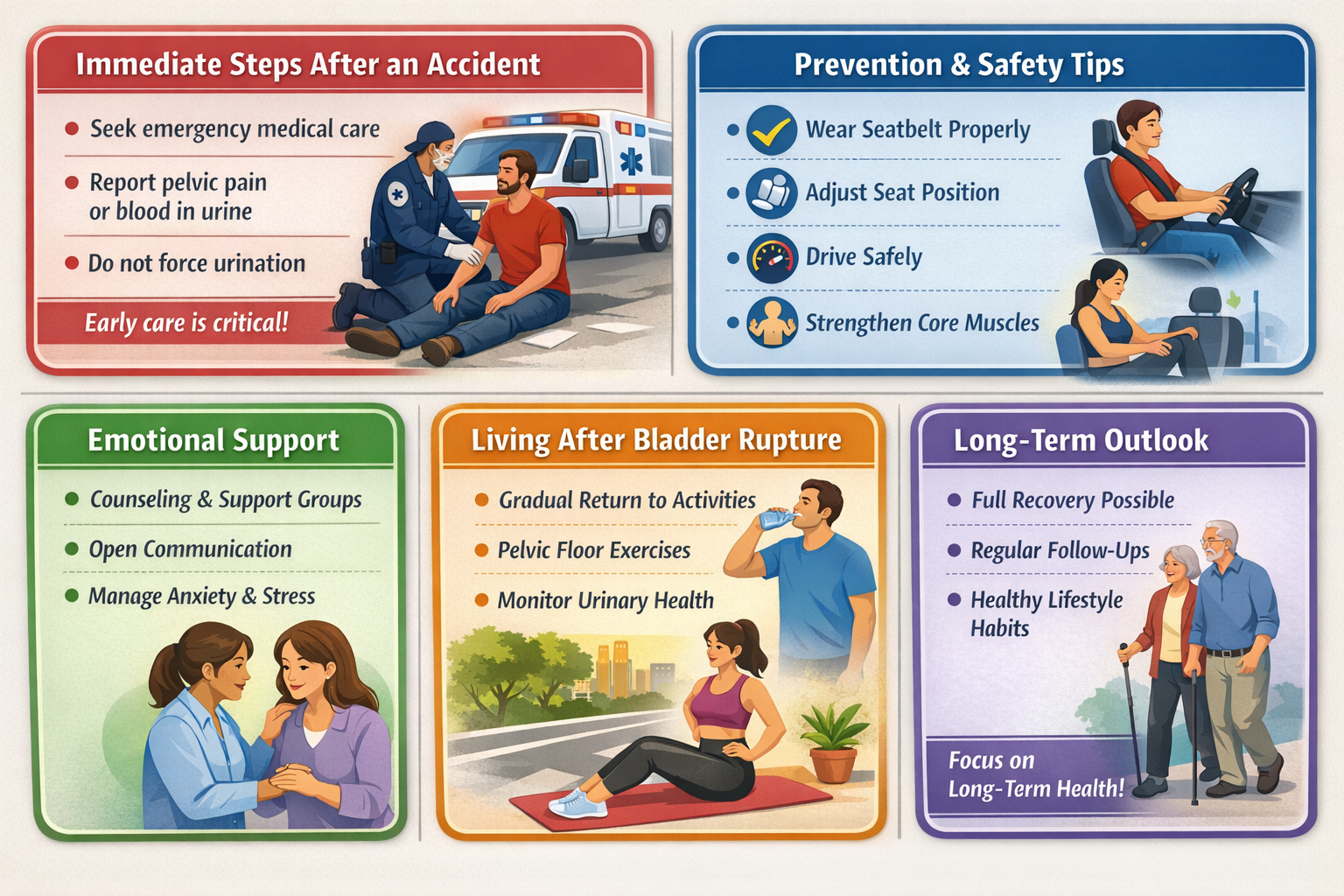
Anyone with suspected bladder injury should seek emergency medical care immediately. Avoid attempting to urinate forcefully or delay evaluation. Report any pelvic pain, swelling, blood in urine, or inability to urinate to healthcare providers. Early intervention is critical to prevent infection, organ damage, or long-term urinary problems.
Prevention and Safety Measures
While car accidents cannot always be avoided, safety measures can reduce the risk of bladder injury:
- Proper seatbelt use, ensuring the lap belt sits low on the hips, not across the abdomen
- Correct seat adjustment to maintain distance from the steering wheel
- Safe driving practices, including obeying speed limits and avoiding distractions
- Strengthening core and pelvic muscles to provide some protection against sudden trauma
These measures may not prevent all injuries but can reduce severity and complications during collisions.
Emotional and Psychological Considerations
Recovering from a bladder rupture can be emotionally challenging. Patients may experience anxiety, fear, or frustration about physical limitations, catheter use, and recovery timelines. Emotional support from family, open communication with healthcare providers, and patient education can help patients feel empowered and engaged in their recovery. Counseling or support groups may also be helpful for addressing the psychological impact of trauma.
Living After a Bladder Rupture
With timely treatment and proper follow-up care, most patients recover fully from bladder rupture. After discharge, patients should gradually resume daily activities, follow dietary and hydration recommendations, and monitor for urinary changes or pain. Long-term monitoring may be needed for those with complex injuries or surgery to ensure bladder function remains normal.
Patients may benefit from guidance on pelvic floor exercises, lifestyle adjustments, and ongoing follow-up to prevent complications and maintain overall health.
Long-Term Outlook
The long-term outlook depends on rupture severity, timely intervention, and overall health. Minor extraperitoneal injuries often heal completely without lasting effects. Severe intraperitoneal ruptures may require long-term monitoring, but with proper care, most patients regain normal bladder function.
Awareness of urinary changes, adherence to follow-up care, and lifestyle adjustments are key to sustaining long-term health. Patients can safely return to normal life while maintaining bladder and overall health with structured medical support.