

Facial Bone Fractures After a Car Accident: Understanding Orbital, Maxilla, and Mandible Injuries
Car accidents happen in a split second. One moment, you’re on your way to work or running errands. The next, your body jolts from the impact, metal crunches around you, and everything feels chaotic. In the aftermath, you might notice bruises, scrapes, or broken bones—but sometimes the most serious injuries are the ones you can’t immediately see.
Facial bone fractures fall into that category. They can be painful, disorienting, and life-changing, affecting how you see, speak, chew, and even breathe. They can also take an emotional toll, since our faces are central to identity and communication. Understanding facial fractures—their symptoms, treatment, and recovery—can help you act quickly and confidently if you or a loved one experiences one after a car accident.
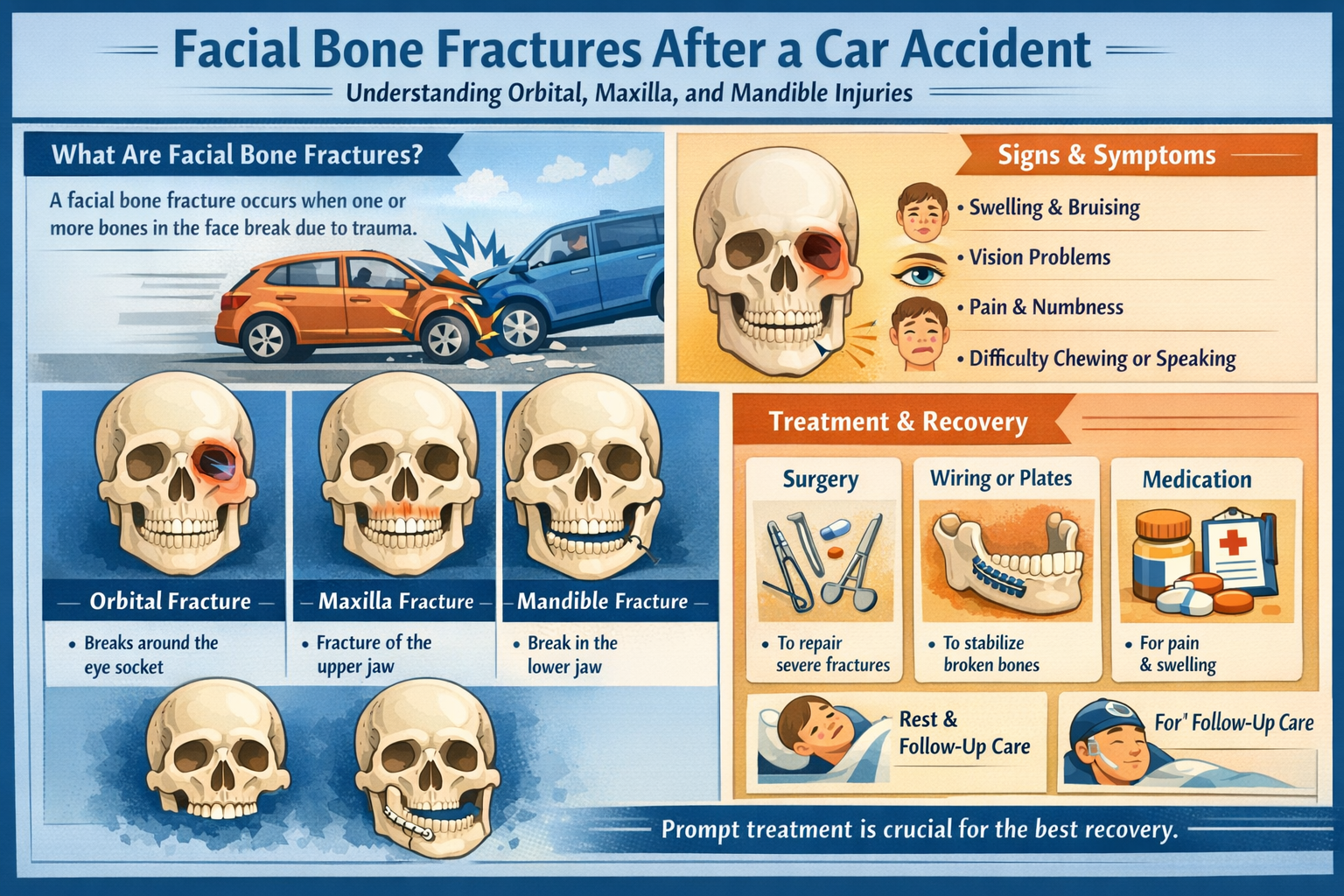
What Are Facial Bone Fractures?
A facial bone fracture occurs when one or more bones in the face break due to trauma. In car accidents, the sudden force of impact—whether from hitting the steering wheel, dashboard, windshield, or even an airbag—can cause fractures in the orbital bones around the eyes, the maxilla (upper jaw), or the mandible (lower jaw).
Your face is made up of several bones that protect critical structures like your eyes, nose, and mouth. These bones also play a role in chewing, speaking, and shaping your appearance. A fracture to any of these areas is not just a cosmetic concern—it can affect your ability to function and recover fully without prompt medical care.
How Car Accidents Cause Facial Fractures
Even at low to moderate speeds, car accidents generate tremendous force. Your head may snap forward, backward, or sideways, and in some cases, strike a hard surface inside the car. Common scenarios include:
- The driver hitting the steering wheel during a frontal collision
- A passenger’s face striking a window or dashboard
- Airbag deployment causing forceful contact with the face
- Pedestrians or cyclists thrown onto the pavement
Seatbelts and airbags save lives, but they cannot eliminate all trauma. Even a minor-looking impact can lead to fractures, nerve injury, or damage to the eyes, jaw, or teeth.
Types of Facial Bone Fractures
Facial fractures are categorized based on which bones are affected.
Orbital Fractures
The orbital bones surround and protect your eyes. Fractures here often result from a direct blow to the eye area. Signs may include double vision, swelling, bruising around the eyes, a sunken eye appearance, or difficulty moving the eye. Some fractures can trap muscles or nerves, which makes timely medical evaluation essential.
Maxilla (Upper Jaw) Fractures
The maxilla forms the upper jaw and supports your teeth, the roof of the mouth, and part of the nose. Fractures in this area can misalign your bite, affect the sinuses, and cause numbness in your upper lip or cheeks. Symptoms may include swelling, bleeding from the nose, difficulty opening the mouth, or facial deformity.
Mandible (Lower Jaw) Fractures
The mandible is your lower jaw and is critical for chewing, speaking, and maintaining facial symmetry. Fractures here may cause jaw pain, swelling, misaligned teeth, numbness in the chin, difficulty opening or closing your mouth, or problems speaking clearly. Severe fractures often require surgical stabilization.
Some car accidents can cause multiple facial fractures at once, making evaluation and treatment more complex.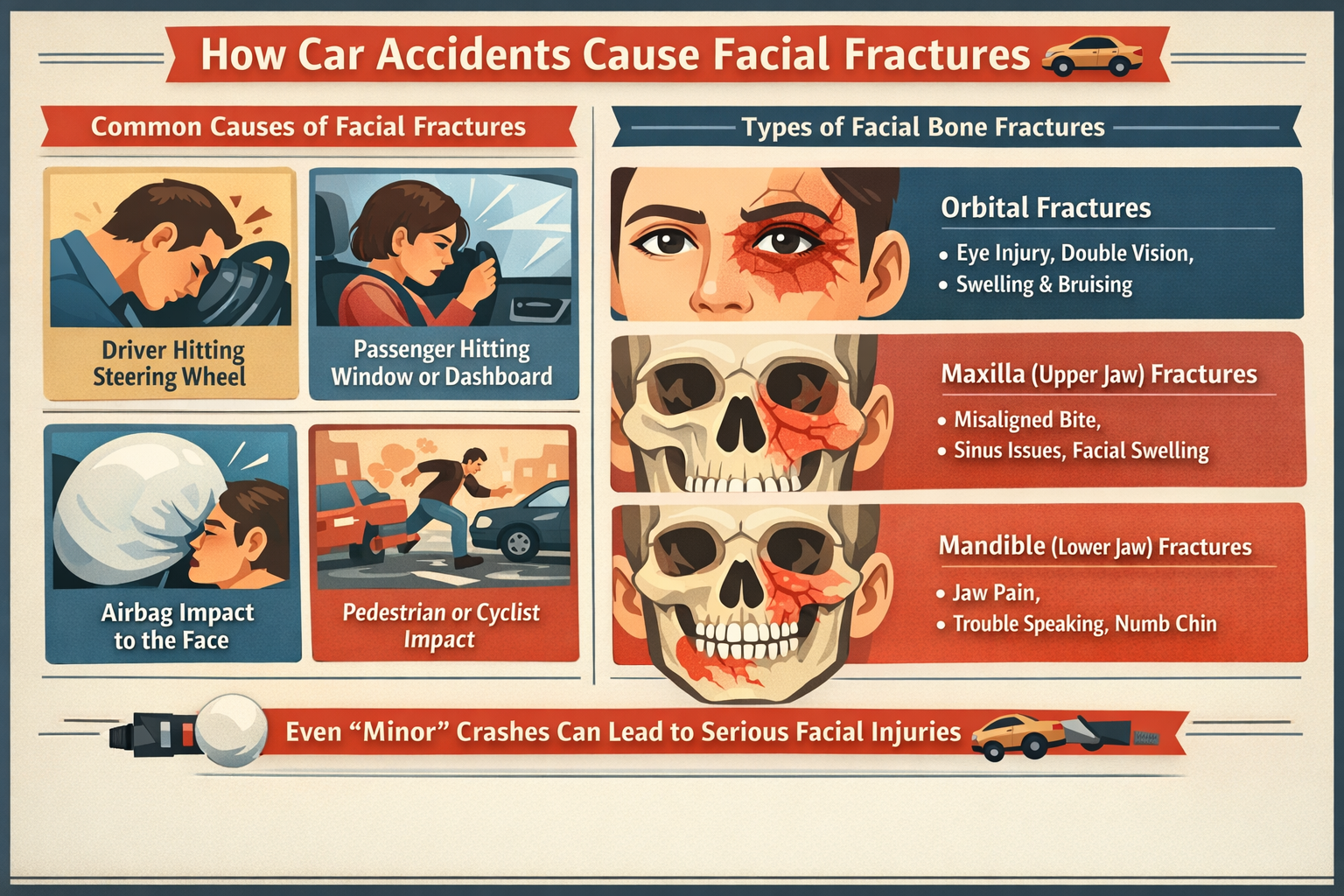
Signs and Symptoms to Recognize
Not all facial fractures are immediately obvious. Key warning signs include:
- Swelling or tenderness on the face
- Bruising around the eyes or on the cheeks
- Pain when chewing, speaking, or moving the jaw
- Misaligned teeth or bite
- Numbness or tingling in the face
- Double vision or difficulty moving an eye
- Bleeding from the nose or mouth
- Difficulty speaking clearly
Even if these symptoms seem mild at first, prompt medical attention is critical. Facial fractures can worsen over time and may lead to permanent complications if untreated.
Diagnosis After a Car Accident
Doctors use a combination of physical exams and imaging to diagnose facial fractures:
Physical Examination
A clinician will check for swelling, tenderness, bruising, alignment of teeth and jaw, and eye movement. Neurological function is also assessed to ensure nerves controlling sensation and movement are intact.
Imaging Studies
CT scans provide detailed images of bone structures and can detect even subtle fractures. X-rays may be used for simpler cases, but CT is preferred for complex injuries. MRIs may be used if soft tissue or nerve damage is suspected.
Early diagnosis is critical to prevent long-term issues and plan the appropriate treatment.
Treatment Options
Treatment depends on the type, location, and severity of the fracture.
Conservative Management
Minor, non-displaced fractures may heal with rest, pain management, ice, and dietary adjustments (soft foods to reduce stress on the jaw). Close monitoring and follow-up imaging ensure proper healing.
Surgical Intervention
More serious fractures often require surgery to realign bones and stabilize the face. Procedures may include:
- Plates and screws to hold fractured bones in place
- Jaw wiring to maintain alignment
- Reconstruction of orbital bones to restore eye function and appearance
- Maxilla repair to correct bite and sinus function
Surgery is typically followed by monitoring, dietary adjustments, and therapy to regain full function.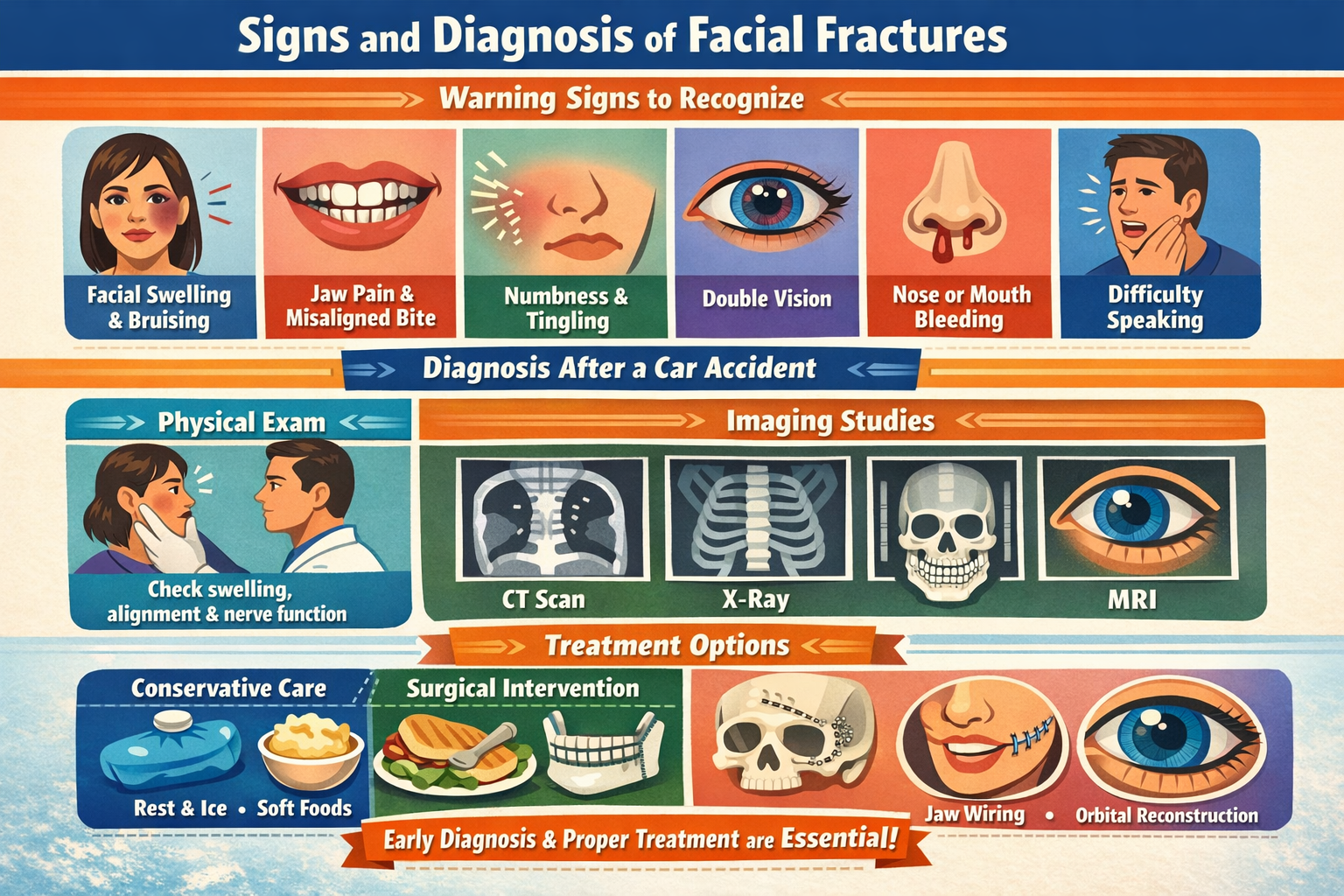
Recovery and Rehabilitation
Recovery from facial fractures involves both physical and emotional healing.
Physical Recovery
- Swelling and bruising usually peak within 48–72 hours and gradually subside
- Pain management is important, especially for jaw fractures
- Soft or liquid diets may be required for several weeks
- Follow-up imaging ensures proper bone healing
Functional Rehabilitation
- Speech therapy may help if jaw or oral structures are affected
- Vision evaluation and therapy for orbital fractures
- Dental or orthodontic care for maxilla or mandible fractures
Emotional Recovery
Facial injuries can impact self-esteem and social confidence. Counseling or support groups can help patients cope with anxiety, depression, or frustration that may arise during recovery.
Possible Complications
Complications can vary depending on fracture type and severity:
- Chronic pain or sensitivity
- Nerve damage causing numbness or tingling
- Misaligned bite or dental problems
- Vision problems if the orbital bones are involved
- Infection, especially with open fractures
- Cosmetic concerns or scarring
Close follow-up care significantly reduces the risk of long-term complications.
When to Seek Emergency Care
Seek immediate medical attention if you experience:
- Severe swelling or facial deformity
- Uncontrolled bleeding
- Loss of vision or double vision
- Difficulty opening or closing the mouth
- Numbness or loss of sensation in the face
- Signs of infection such as fever or redness
- Persistent or worsening pain
Prompt care can prevent permanent damage and support better functional and cosmetic outcomes.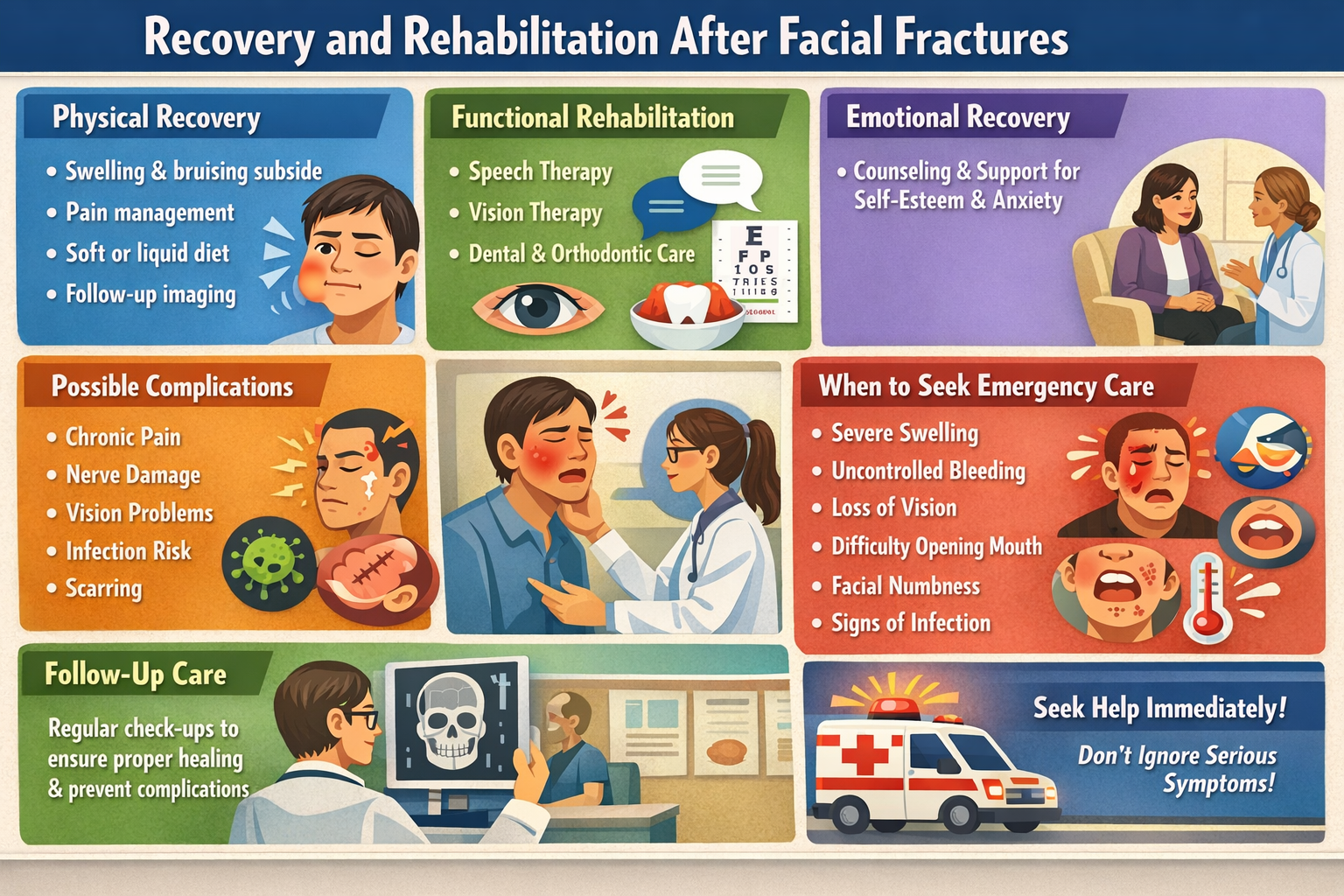
Prevention and Safety
Although car accidents cannot always be prevented, certain safety measures can reduce the risk of facial fractures:
- Always wear a seatbelt
- Ensure airbags are functional and correctly positioned
- Adjust headrests properly
- Avoid distracted or impaired driving
- Use appropriate child car seats and head restraints
These simple precautions can dramatically reduce the severity of injuries in a crash.
Living After a Facial Fracture
Recovering from a facial fracture takes time, patience, and support. Healing may involve multiple specialists, including maxillofacial surgeons, dentists, ophthalmologists, and therapists. Emotional support is equally important, as facial injuries can affect confidence, social interactions, and daily life.
With timely treatment, careful rehabilitation, and emotional support, most people regain full function, appearance, and quality of life. Recovery is a gradual process, but with patience, guidance, and care, a return to normal life is possible.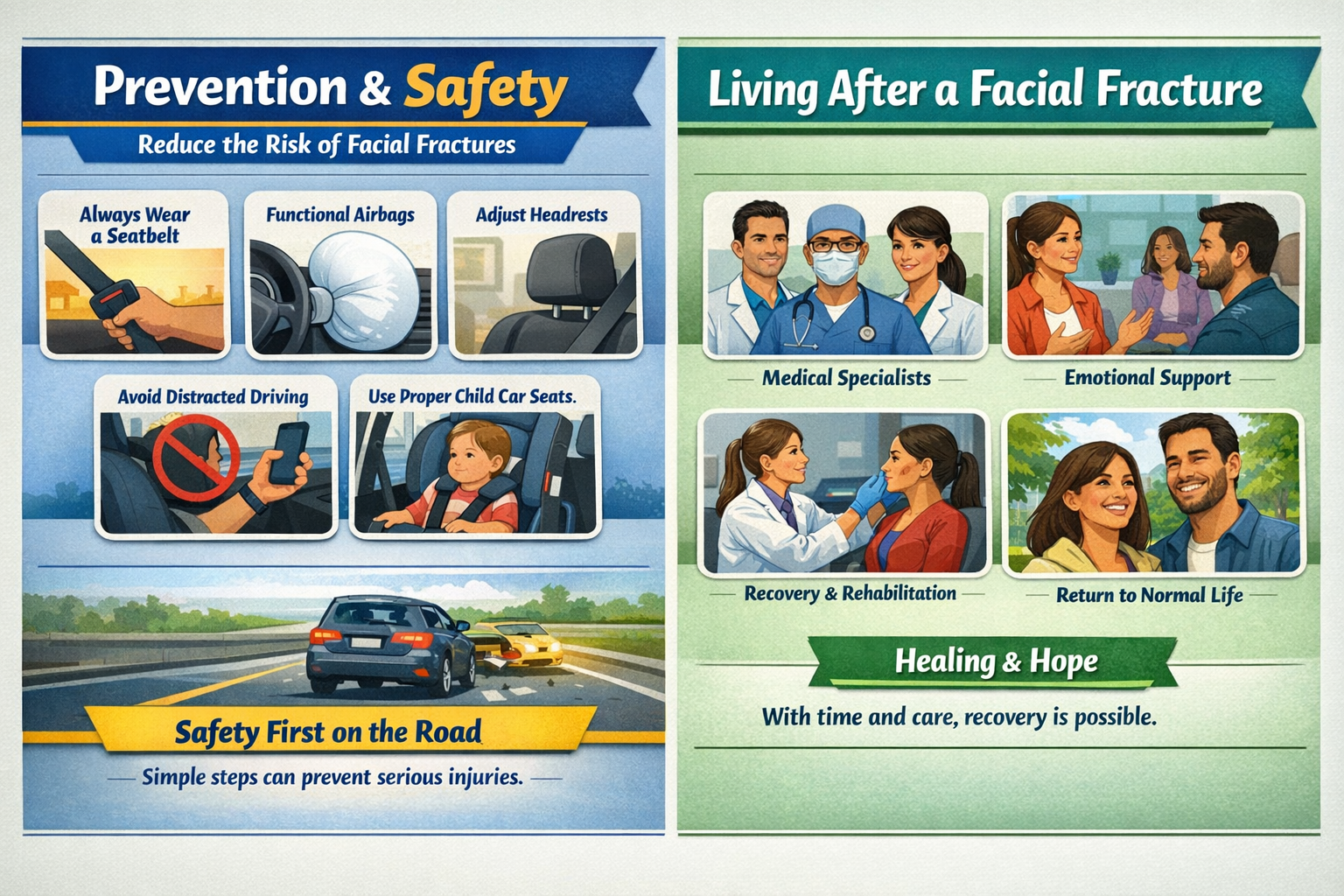
A Compassionate Perspective
Facial fractures are more than broken bones—they impact essential functions, appearance, and emotional well-being. Experiencing a car accident can be frightening and overwhelming, but early medical care, thoughtful treatment, and supportive rehabilitation can make a real difference in recovery.
Listen to your body, seek prompt medical attention, and give yourself the time and care needed to heal. With the right support, life after a facial fracture can be full, functional, and hopeful.