

Acute Stress Reaction: Understanding the Immediate Impact of Trauma
Life After a Traumatic Event
Trauma can strike suddenly. A car accident, natural disaster, sudden loss, or a violent incident can leave individuals feeling shaken, disoriented, or overwhelmed. While long-term consequences such as post-traumatic stress disorder (PTSD) often receive attention, the immediate psychological and physical responses to trauma—known as acute stress reactions—are equally important to understand.
Acute stress reaction (ASR), sometimes referred to as a “shock reaction” or “acute stress response,” is the body and mind’s natural response to a traumatic event. Unlike PTSD, which develops over time, ASR occurs within minutes to hours of trauma, often lasting up to several days. Clinically significant symptoms lasting from 3 days to 1 month after trauma may meet criteria for acute stress disorder, while PTSD is considered when symptoms persist beyond 1 month.
Recognizing and addressing acute stress reactions is crucial for supporting recovery, reducing distress and monitoring for acute stress disorder or PTSD if symptoms persist, and maintaining emotional and physical health.
Experiencing ASR can be confusing and frightening. Patients may feel disconnected from reality, unable to process what happened, or physically unwell. Understanding ASR—including its causes, symptoms, assessment, management, and recovery strategies—empowers patients, families, and healthcare providers to respond effectively in the aftermath of trauma.
What Is an Acute Stress Reaction?
An acute stress reaction is a transient, immediate response to a traumatic or stressful event. It is the body and brain’s way of mobilizing resources to survive or cope with danger. This response involves both physiological and psychological changes, triggering the “fight, flight, or freeze” reaction.
The hallmark of ASR is its sudden onset and short duration. Symptoms can appear within minutes of trauma and typically resolve within hours to a few days. However, in some cases, they may persist longer, particularly if the stressor is ongoing or compounded by additional traumatic experiences.
Acute stress reactions are common and can occur after a variety of events, including:
- Car accidents or severe injuries
- Natural disasters such as earthquakes, hurricanes, or floods
- Assault, robbery, or personal violence
- Sudden loss of a loved one
- Medical emergencies or life-threatening illness
The intensity and type of response vary depending on individual factors, the nature of the trauma, and prior experiences with stress or mental health conditions.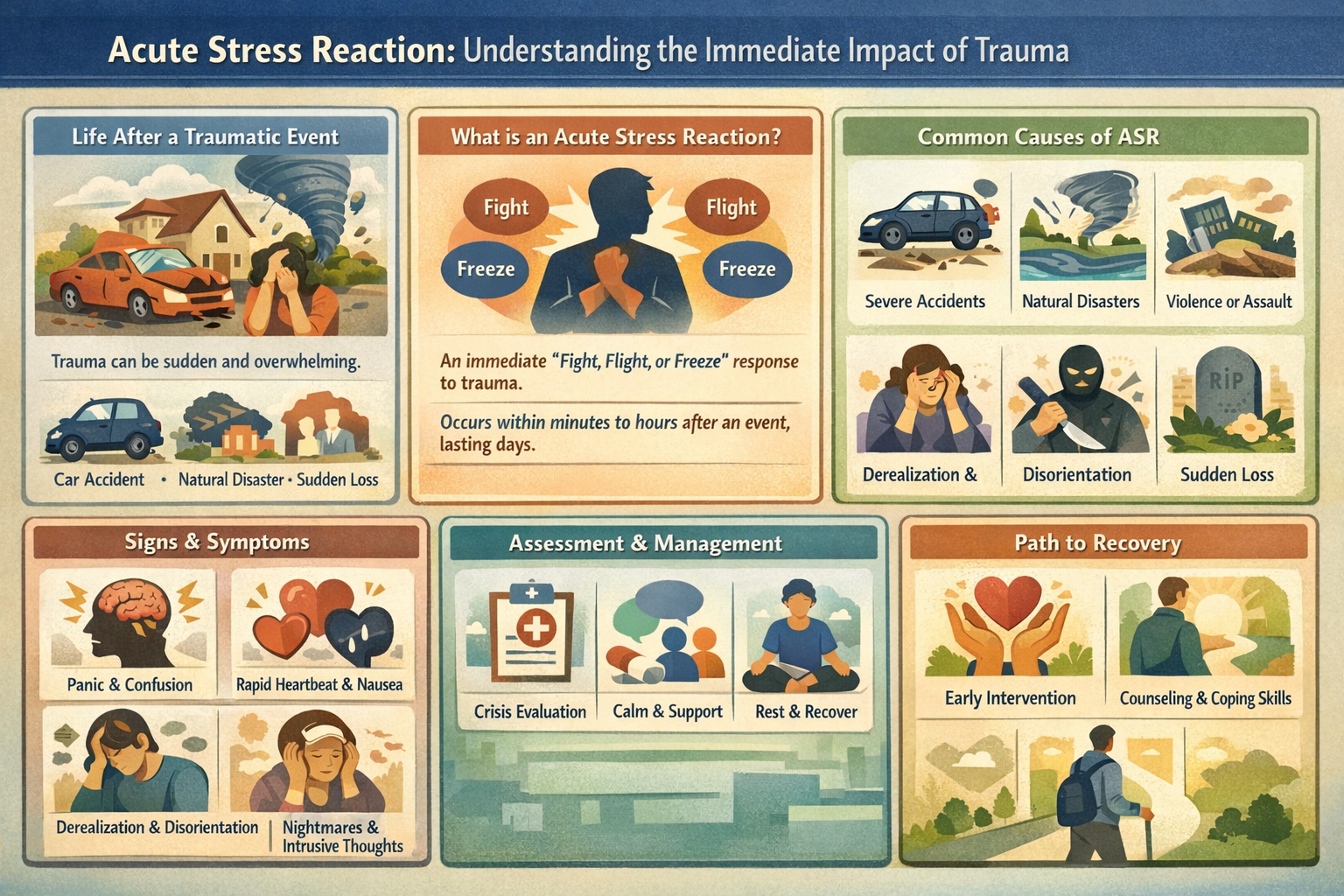
Causes of Acute Stress Reactions
ASR occurs when the brain perceives a situation as life-threatening or overwhelming. This perception activates the sympathetic nervous system and the hypothalamic-pituitary-adrenal (HPA) axis, releasing stress hormones such as adrenaline and cortisol. These physiological changes prepare the body to respond to danger but also produce the hallmark symptoms of acute stress.
Key factors influencing the likelihood and severity of ASR include:
- Severity of the trauma: More sudden or life-threatening events typically trigger stronger reactions.
- Previous trauma exposure: Individuals with a history of trauma may be more sensitive to new stressors.
- Psychological resilience: Coping skills, emotional regulation, and prior mental health can influence response.
- Social support: Immediate support from family, friends, or professionals can mitigate the intensity of ASR.
- Physical health: Chronic illnesses, fatigue, or pain can exacerbate stress responses.
Understanding these factors helps healthcare providers identify individuals at higher risk and implement supportive interventions.
How Acute Stress Reaction Affects the Body and Mind
Acute stress reactions involve both physiological and psychological changes:
Physiological effects:
- Rapid heartbeat or palpitations
- Shortness of breath or hyperventilation
- Sweating or chills
- Trembling or shaking
- Dizziness or lightheadedness
- Nausea or gastrointestinal upset
- Muscle tension or weakness
Psychological effects:
- Feeling dazed, confused, or disconnected
- Intense fear, anxiety, or panic
- Emotional numbness or detachment
- Heightened irritability or anger
- Difficulty concentrating or making decisions
- Flashbacks or intrusive thoughts about the trauma
- Hypervigilance or exaggerated startle response
These symptoms are often normal reactions to abnormal events, reflecting the body’s attempt to cope with a sudden threat. While alarming, they usually diminish as the individual begins to process the trauma.
Recognizing Symptoms of Acute Stress Reaction
Symptoms of ASR can vary widely depending on the individual and the event:
- Feeling emotionally numb, detached, or overwhelmed
- Crying, trembling, or shaking without apparent cause
- Racing heart, chest tightness, or difficulty breathing
- Confusion, disorientation, or difficulty focusing
- Heightened awareness of surroundings or exaggerated startle response
- Disturbed sleep or insomnia
- Loss of appetite or gastrointestinal discomfort
- Urges to escape, avoid, or isolate oneself
In some cases, individuals may experience dissociative symptoms, feeling as if they are outside their body, watching events unfold like a movie, or having an altered sense of time. These experiences can be frightening but are generally temporary and protective in nature.
Diagnosing Acute Stress Reaction
Diagnosis of ASR is based on clinical evaluation rather than laboratory tests. Healthcare providers typically assess:
- Timing of symptom onset in relation to the traumatic event
- Nature and severity of symptoms
- Functional impairment, including ability to care for oneself, work, or interact with others
- History of prior trauma or mental health conditions
- Risk factors for escalation to chronic stress disorders or PTSD
While ASR is typically self-limiting, evaluation is important to rule out medical complications, ensure patient safety, and provide appropriate support and guidance.
Management of Acute Stress Reactions
Most acute stress reactions resolve on their own within hours to days, but supportive care can significantly reduce distress and prevent complications:
Immediate supportive measures:
- Provide a safe, calm environment
- Encourage the patient to sit or lie down and focus on slow, deep breathing
- Offer reassurance that symptoms are common and temporary
- Avoid overwhelming the patient with too much information or activity
- Allow the patient to express emotions without judgment
Psychological support:
Do not force the person to recount the traumatic event before they are ready.
- Listen actively and empathetically
- Validate feelings of fear, anger, or sadness
- Encourage social support from trusted family or friends
- Monitor for signs of dissociation, panic, or severe anxiety
Medical intervention:
- Short-term medications may be considered for severe anxiety, insomnia, or physical symptoms
- Referral to a mental health professional if symptoms persist beyond several days, worsen, impair functioning, or include safety concerns”.
- Monitoring for development of post-traumatic stress disorder (PTSD) if symptoms continue beyond one month
Self-care strategies:
- Rest and hydration to support physical recovery
- Gentle physical activity as tolerated to reduce muscle tension and promote circulation
- Limiting exposure to media or reminders that may exacerbate distress
- Maintaining routines, meals, and sleep schedules to enhance stability
Recovery and Rehabilitation
Most individuals recover from acute stress reactions within a few days, particularly with supportive care and a stable environment. Recovery strategies focus on processing the trauma, restoring a sense of safety, and maintaining emotional and physical health:
- Education: Understanding that ASR is a normal response reduces fear and confusion.
- Social support: Connection with family, friends, or peer groups fosters reassurance and reduces isolation.
- Stress management: Techniques such as mindfulness, meditation, and guided relaxation help regulate the nervous system.
- Gradual re-engagement: Returning to daily routines and responsibilities at a comfortable pace aids normalization.
Early attention and care improve resilience and reduce the likelihood of progression to PTSD or other chronic stress disorders.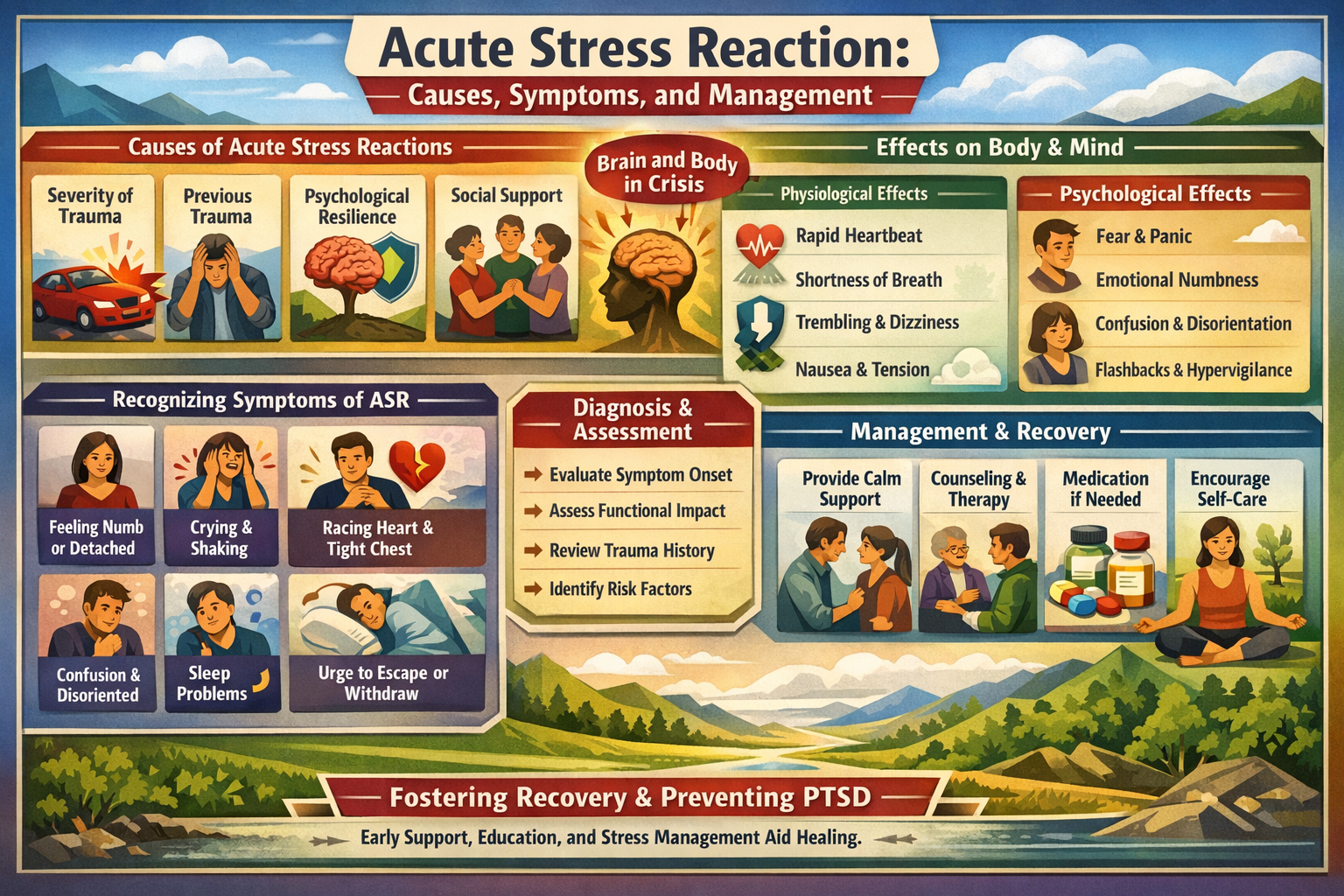
Potential Complications
If acute stress reactions are unrecognized or unmanaged, they can evolve into more persistent conditions:
- Post-traumatic stress disorder (PTSD) if symptoms persist beyond one month
- Acute stress disorder (ASD) within the first month after trauma,
- Anxiety or panic disorders
- Depression or mood disturbances
- Substance misuse as a coping mechanism
Healthcare providers monitor for these complications and provide early interventions when needed.
Hypothetical Patient Experiences
Individuals’ experiences with ASR vary, but common themes include fear, confusion, and relief upon understanding the condition:
The following examples are hypothetical patient scenarios.
A car accident survivor described feeling “frozen and disconnected” immediately after the crash, unable to process what had happened. With reassurance from emergency responders and family support, the survivor gradually regained awareness and control over emotions within hours.
Another patient experienced trembling, heart palpitations, and nausea after witnessing a traumatic event at work. Supportive listening, guided breathing exercises, and time in a quiet environment helped alleviate symptoms, allowing the patient to recover without long-term consequences.
These hypothetical examples highlight the importance of early support, validation, and safe environments in the immediate aftermath of trauma.
Immediate Steps After Trauma
Anyone experiencing symptoms of acute stress reaction should:
- Seek medical evaluation if symptoms are severe or involve physical health concerns
- Ensure personal safety and access to a calm environment
- Accept support from trusted family, friends, or professionals
- Avoid isolating oneself or making major decisions while overwhelmed
- Track symptoms to help healthcare providers monitor recovery
Seek urgent help if there are thoughts of suicide, self harm, inability to care for oneself, severe panic, confusion, chest pain, severe breathing difficulty, neurologic symptoms, or serious physical injury.
Prompt attention reduces distress, prevents escalation, and supports faster recovery.
Prevention and Coping Strategies
While trauma cannot always be prevented, certain strategies can reduce the intensity of acute stress reactions:
- Preparedness training: For high-risk professions, including emergency responders or drivers
- Education: Understanding common stress responses and normalizing them
- Social support: Strong family, peer, or community networks buffer the impact of trauma
- Stress reduction techniques: Mindfulness, breathing exercises, and grounding methods
- Safe environments: Ensuring secure and calm spaces after traumatic events
These strategies enhance resilience and support emotional stability.
Emotional and Psychological Considerations
Acute stress reactions involve emotional upheaval that can feel overwhelming. Validation, empathy, and reassurance are critical. Patients benefit from knowing their responses are normal, temporary, and treatable. Emotional support from family, friends, and professionals is often the most effective intervention during the acute phase.
Living After an Acute Stress Reaction
With proper care, patients typically return to baseline functioning within days. Practical approaches include:
- Maintaining routines for sleep, meals, and activity
- Engaging in gentle physical exercise to release tension
- Using mindfulness and relaxation exercises to regulate emotional responses
- Seeking professional support if symptoms persist beyond a few days
- Reconnecting socially to reinforce a sense of safety and normalcy
Education, support, and structured care facilitate smooth recovery.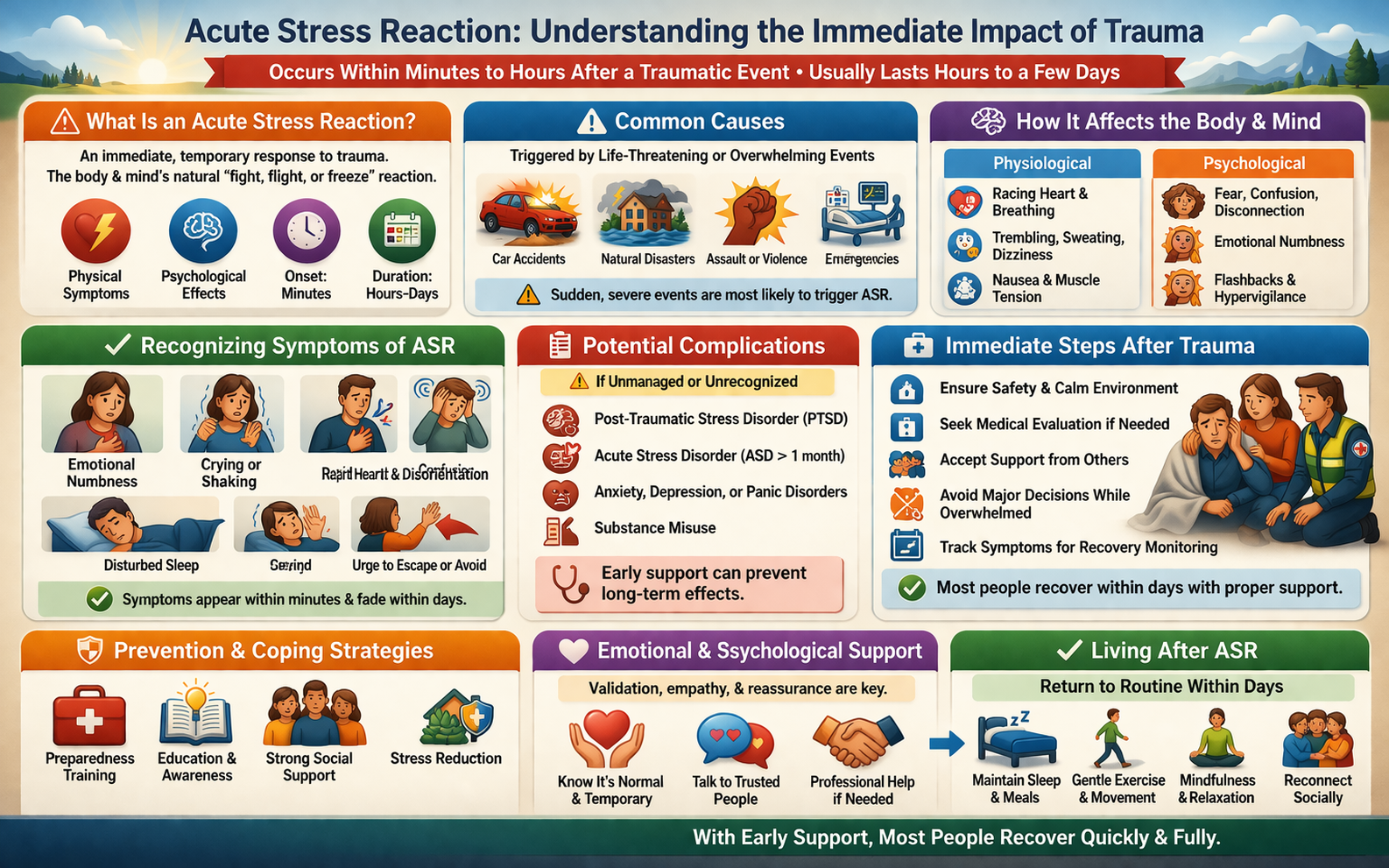
Long-Term Outlook
Acute stress reactions are usually self-limiting. Many people improve within hours to days, but persistent or impairing symptoms need follow up. Early support, understanding, and coping strategies greatly improve outcomes. In some cases, persistent symptoms may evolve into acute stress disorder or PTSD, emphasizing the importance of monitoring, early intervention, and referral to mental health professionals if necessary.