

Why Abdominal Pain After an Accident Needs Attention
Abdominal pain after accident can come from stress, muscle bruising, seat belt pressure, or a more serious hidden injury such as internal bleeding or damage to an organ or bowel. You may have no cuts or visible bruises, and pain can begin hours or even days later after adrenaline fades.
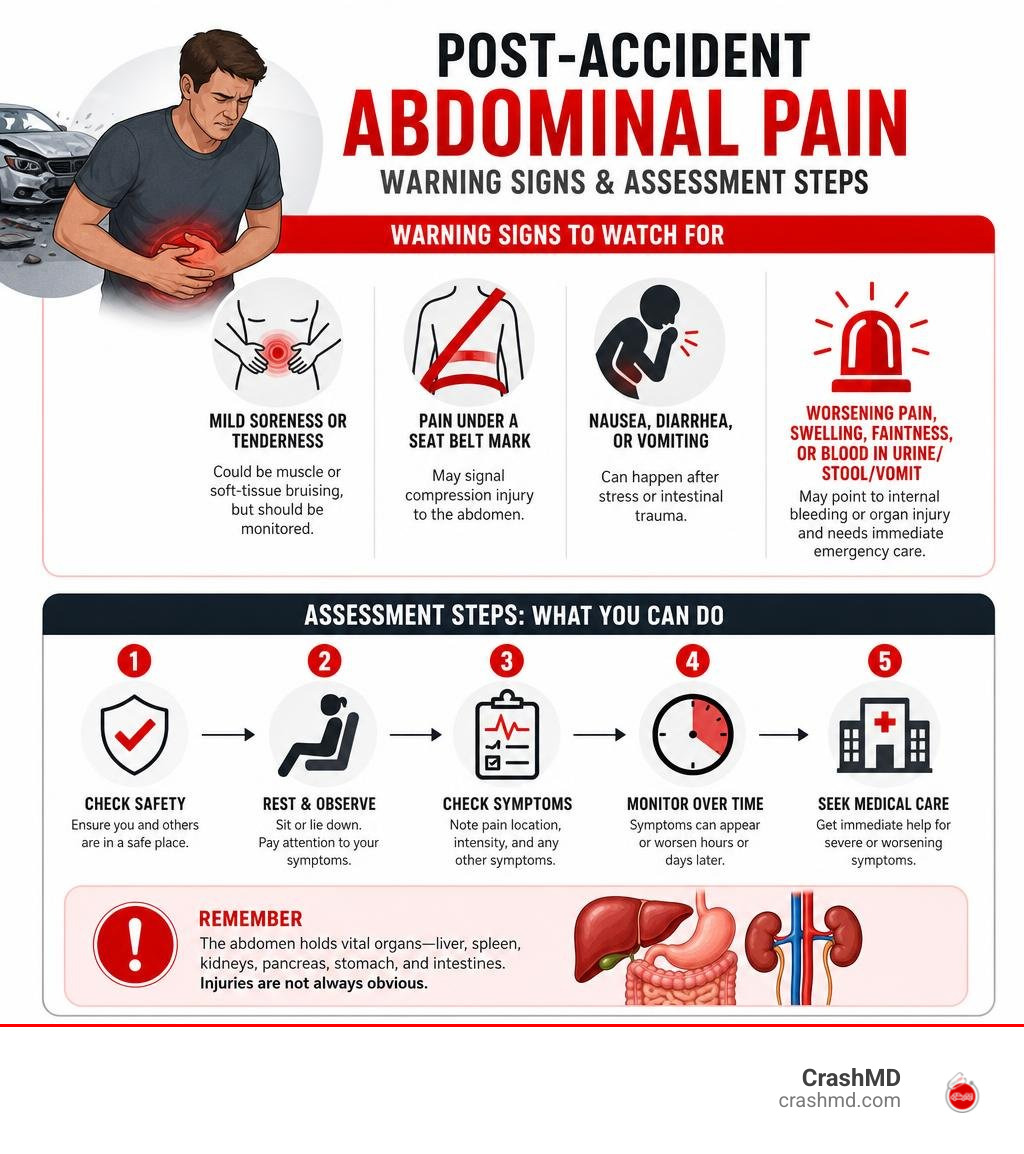
| What you notice | Why it may matter |
|---|---|
| Mild soreness or tenderness | Could be muscle or soft-tissue bruising, but should be monitored |
| Pain under a seat belt mark | May signal compression injury to the abdomen |
| Nausea, diarrhea, or vomiting | Can happen after stress or intestinal trauma |
| Worsening pain, swelling, faintness, or blood in urine/stool/vomit | May point to internal bleeding or organ injury and needs emergency care |
A crash can force the body into the steering wheel, airbag, seat belt, or another part of the vehicle. The abdomen holds vital organs, including the liver, spleen, kidneys, pancreas, stomach, and intestines. Damage is not always obvious at the scene.
I’m Dr. Adam Savage, and this guide will help you understand the warning signs, likely causes, and next steps after abdominal trauma.
Abdominal pain after accident vocabulary:
Primary Causes of Abdominal Pain After Accident
When a vehicle comes to a sudden halt, kinetic energy has to go somewhere. Sudden deceleration drives physical force directly into your torso. Even with modern vehicle safety features, severe impact forces can cause internal blunt abdominal trauma without breaking the skin.
Common sources of blunt force include:
- Rapid tightening of lap seat belts
- High-speed airbag deployment strike
- Impact with the steering wheel, door frame, or dashboard
- Direct pressure from loose objects inside the cabin
These forces can result in deep tissue bruising, micro-tears in blood vessels, internal hemorrhaging, or blunt damage to internal organs.
Why You Might Experience Delayed Abdominal Pain After Accident
It is extremely common to step away from a collision feeling completely fine, only to wake up the next morning feeling nauseous or in severe pain. During a crash, your body pumps out a massive surge of adrenaline and cortisol. This natural chemical spike masks pain signals and masks serious physical symptoms.
As adrenaline levels normalize over several hours or days, hidden injuries become noticeable. Slow internal bleeding, gradual tissue swelling, and expanding organ hematomas often take time to exert painful pressure on surrounding nerve endings. Understanding why delayed symptoms after a car accident demand your attention is critical to catching internal complications before they become life-threatening.
Understanding Seat Belt Syndrome and Compression Forces
Seat belts are undeniable lifesavers, but the immense force they exert during a crash can leave behind a specific cluster of trauma known as “Seat Belt Syndrome.” This pattern includes visible abdominal surface bruising (a seat belt sign), internal organ damage, and potential spinal injuries like a Chance fracture (a flexion-distraction spinal injury caused by the spine pulling forward over a lap belt).
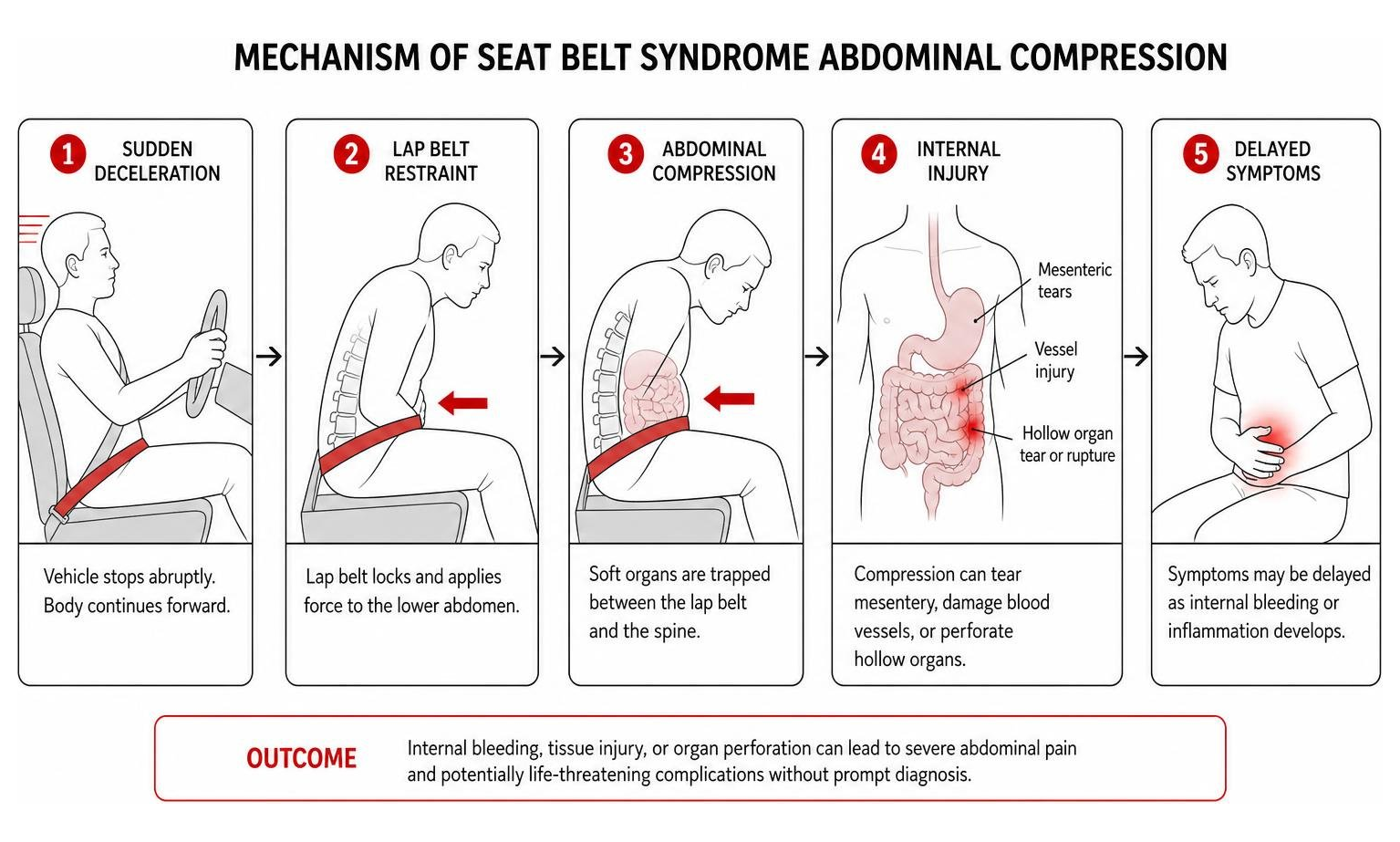
If a lap belt sits too high across your soft abdomen rather than low across your pelvic bones, violent compression traps soft organs directly against your rigid spine. This sudden pressure can tear delicate mesenteric tissue, compress blood supply, or burst hollow intestinal walls.
Step 1: Identifying Red-Flag Symptoms and Organ Damage
Evaluating abdominal pain after accident events requires paying close attention to systemic warning signs. Internal bleeding and hollow organ tears are medical emergencies that require swift diagnosis.
Post-Crash Stomach Pain and Diarrhea Concerns
Experiencing sudden gastrointestinal distress, such as delayed diarrhea or persistent stomach cramps, is surprisingly common after physical trauma. This can happen for several reasons:
- Intestinal Shock & Malabsorption: Blunt trauma causes temporary paralysis or inflammation of the intestinal lining, stopping proper fluid absorption.
- Stress Response: Extreme physical shock triggers fight-or-flight signaling that alters gut motility.
- Micro-Tears: Minor physical trauma to the bowel wall disrupts normal digestion and bacterial balance.
If your post-crash diarrhea persists or is accompanied by severe cramping, it must be evaluated by a medical professional to rule out underlying structural injury.
Bowel Perforation and Intestinal Trauma
A seat belt compression impact can cause a tear or burst in the walls of your small or large intestine. When bowel contents leak into the sterile abdominal cavity, it causes severe inflammation known as peritonitis.
Key warning signs include a abdomen that feels rigid or hard to the touch, rapidly worsening abdominal distension, fever, and severe tenderness. Reviewing the 7 devastating symptoms of perforated bowel mistakes to avoid can help you recognize critical warning signs early.
Liver, Spleen, and Kidney Trauma
Solid organs have rich blood supplies, making them particularly susceptible to life-threatening lacerations or ruptures during blunt force collisions:
- Spleen: Positioned in the upper left abdomen, a ruptured spleen causes sharp pain beneath the left ribcage that can radiate to the left shoulder (Kehr’s sign).
- Liver: Located in the upper right quadrant, liver tears cause sharp tenderness and rapid blood loss. For detailed insights into liver trauma levels, consult our guide to liver laceration severity and treatment.
- Pancreas: Deeply seated near the spine, pancreatic injuries carry high risks if overlooked. Read our pancreas injury severity and symptoms guide to understand this rare condition.
- Kidneys: Motor vehicle collisions are the leading cause of traumatic kidney damage. Sudden abdominal compression against seat restraints can tear renal tissue, causing severe flank pain and blood in the urine (hematuria).
Rare Complications: Trauma-Induced Appendicitis
While appendicitis usually results from intestinal blockages, severe blunt abdominal trauma can trigger acute appendicitis in rare instances. Sudden spikes in intra-abdominal pressure, direct impact edema, or reduced visceral blood flow can inflame the appendix. Detailed medical documentation on this rare phenomenon is documented in a published clinical case study on trauma-induced appendicitis.
Step 2: Emergency Room Diagnostics and Evaluation

When you arrive at an emergency department or specialized post-accident clinical facility, healthcare providers conduct systematic assessments to check for occult (hidden) internal bleeding.
ER Imaging Tests: FAST Ultrasound and CT Scans
Modern emergency rooms rely on rapid, non-invasive diagnostic tools:
- eFAST Ultrasound: Focused Assessment with Sonography for Trauma allows clinicians to quickly screen for free fluid or active internal bleeding around the heart, lungs, liver, spleen, and pelvis.
- Contrast CT Scan: The gold standard for assessing abdominal trauma. A computed tomography scan provides high-resolution 3D cross-sections of organ tissue, identifying deep lacerations, retroperitoneal bleeding, and subtle intestinal perforation.
- Lab Diagnostics: Standard blood draws measure hemoglobin, white blood cell count, and liver/kidney enzymes to monitor hidden blood loss or organ stress.
When to Seek Immediate 911 Care
Call 911 or head straight to the nearest emergency department if you experience any of these red-flag emergency symptoms:
- Dizziness, lightheadedness, or sudden fainting (syncope)
- A rapidly swelling or rigid, board-like abdomen
- Cold, clammy skin paired with a rapid heart rate (signs of hypovolemic shock)
- Persistent, uncontrollable vomiting or vomiting blood (which may look like dark coffee grounds)
- Stools that are tarry, black, or contain bright red blood
- Visible blood in your urine
Step 3: Assessing Pediatric and Specialized Vulnerabilities
Not all vehicle occupants experience trauma in the exact same way. Children, for instance, face unique physiological risks during car crashes.
Children have thinner abdominal walls, less protective abdominal fat, and less developed abdominal musculature than adults. Their ribcages are also more flexible, offering less structural protection to underlying organs like the liver and spleen. As a result, lap belt force can cause more severe internal injuries in children even in moderate-impact collisions.
In female survivors, physical trauma and traumatic brain injury (TBI) can disrupt the hypothalamic-pituitary-adrenal axis. This hormonal stress response can trigger irregular menstrual cycles, delayed ovulation, or missed periods following a major collision.
Step 4: Navigating Medical Recovery and Legal Rights
Recovering from physical abdominal trauma requires balancing proper medical treatment with diligent legal and financial protection.
| Diagnostic Timeline | Immediate Onset (0–6 Hours) | Delayed Onset (6 Hours to Days) |
|---|---|---|
| Typical Symptoms | Severe acute pain, visible bruising, rapid drop in blood pressure | Gradual swelling, worsening cramps, diarrhea, nausea, fever |
| Primary Suspicion | Acute vascular laceration, splenic rupture, severe organ tears | Slow internal bleed, bowel wall breakdown, peritonitis, soft tissue edema |
| Recommended Action | Immediate 911 transport & emergency CT evaluation | Urgent clinical imaging evaluation & full medical charting |
Documenting Abdominal Pain After Accident for Medical and Legal Protection
At CrashMD, we advocate for crash survivors across Arizona, Nevada, Texas, Oklahoma, and California. One of the biggest mistakes victims make is delaying medical evaluation because symptoms seem mild at first.
Establishing an immediate “temporal relationship” (a clear timeline connecting the collision date directly to your medical charts) is vital. If you wait weeks to visit a doctor, insurance carriers often argue that your abdominal issues were caused by a non-accident event, denying your claim.
Protecting Your Right to Comprehensive Compensation
Before signing any quick settlement offers or liability waivers from insurance adjusters, ensure your body has completely healed. Internal injuries can require long-term monitoring, follow-up imaging, physical therapy, or delayed surgical interventions.
Properly documenting your medical care ensures your claim accounts for past and future medical expenses, lost wage recovery, and non-economic pain and suffering damages.
Frequently Asked Questions About Post-Accident Abdominal Pain
Can a car accident cause stomach pain even if there are no visible injuries?
Yes. Deep abdominal organs and tissues can suffer blunt force bruising, micro-lacerations, or slow internal bleeding without breaking the skin or leaving surface bruises. Pain often appears hours later after adrenaline wears off.
What are the common causes of stomach pain and diarrhea after a car accident?
Post-accident stomach pain and diarrhea typically stem from lap belt force compression, physical shock altering intestinal motility, stress-induced gut inflammation, or micro-trauma to the bowel lining.
What is seat belt syndrome and how does it relate to abdominal pain?
Seat belt syndrome refers to a specific pattern of injuries caused by the restraint force of a seat belt. It often involves visible abdominal seat belt bruising, internal bowel or organ perforation, and potential lumbar spine hyperflexion fractures.
Conclusion
Experiencing abdominal pain after accident events should never be brushed off as minor soreness. Prompt diagnostic evaluation protects your health, detects hidden internal injuries, and ensures your physical recovery is fully supported.
Our specialized medical team at CrashMD is dedicated to helping accident victims recover safely. We focus on thoroughly evaluating your symptoms, delivering customized pain management care, and providing complete injury documentation for your legal case. If you are navigating bowel complications post-crash, explore our guide on car accident intestinal perforation symptoms and recovery options to ensure your health is fully protected.