

Understanding the Causes and Types of Rib Pain After Injury
Lingering rib pain after an injury typically signifies a rib fracture, cartilage tear or separation, or an intercostal muscle strain. Most rib fractures and soft-tissue injuries heal within 6 to 12 weeks, but severe pain, difficulty breathing, or signs of internal injury require immediate medical evaluation. The human rib cage is a sturdy protective barrier guarding the heart, lungs, and upper abdominal organs. However, blunt force trauma—most notably from motor vehicle collisions, physical impacts, or falls—can stretch, bruise, or fracture these bones and the cartilage connecting them to your sternum.
Understanding what is causing your discomfort is the first step toward effective treatment.
| Injury Type | Primary Tissue Involved | Common Diagnostic Findings | Typical Healing Window |
|---|---|---|---|
| Rib Contusion (Bruise) | Periosteum & chest wall soft tissue | Soft tissue swelling, clear bone on CT/X-ray | 2 to 4 weeks |
| Cartilage Tear / Separation | Costochondral junction | Localized popping, negative X-ray, seen on MRI/ultrasound | 6 to 12 weeks |
| Rib Fracture | Cortical bone structure | Visible fracture line on CT or detailed X-ray | At least 6 weeks |
Differentiating Between Fractures, Contusions, and Cartilage Damage
A chest wall injury can involve several distinct anatomical structures:
- Bone Fractures: Fractures range from hairline cracks to completely displaced breaks. When multiple lower ribs are impacted, understanding floating ribs pain and relief becomes crucial, as these lowest ribs behave differently under kinetic stress.
- Cartilage Tears and Costochondral Separation: The ribs connect to the breastbone via tough cartilage. A blunt steering wheel impact can shear this cartilage, causing sharp localized pain that mimics a fracture. Reviewing a detailed guide to rib cartilage injury can help you identify symptoms like clicking sensations when twisting.
- Intercostal Muscle Strains: The intercostal muscles sit between each rib, expanding and contracting your chest. Severe trauma can stretch or tear these fibers, producing sharp, catching pain whenever you inhale.
Identifying Severe Rib Pain After Injury and Emergency Red Flags
Certain chest trauma complications demand immediate emergency medical intervention. The Merck Manual clinical guide on rib fractures emphasizes looking out for systemic symptoms that indicate internal organ damage.
Seek emergency medical attention immediately if you experience:
- Flail Chest: Occurs when three or more adjacent ribs are broken in multiple places, creating a detached segment that moves inward when you inhale and outward when you exhale (paradoxical breathing).
- Shortness of Breath (Dyspnea) or Cyanosis: Bluish discoloration of the lips or fingernails indicating severe oxygenation failure.
- Hemothorax or Pneumothorax: Accumulation of blood or air in the pleural space collapsing the lung, which may present with sudden chest pressure and coughing up blood.
- Blunt Lung Trauma: Severe impacts can directly bruise delicate lung tissue; an early evaluation of pulmonary contusion is critical to prevent sudden respiratory deterioration.
- Abdominal Pain or Rigidity: Fractures in the lower ribs (ribs 9–12) can pierce internal organs, carrying a heightened risk of liver, kidney, or spleen lacerations.
Diagnostic Imaging and Clinical Evaluation

When evaluating chest injuries, we perform a thorough physical examination involving gentle palpation along the chest wall to identify focal tenderness and crepitus (a crunchy sensation caused by bone ends or air under the skin). We also auscultate (listen to) your lungs to ensure air enters all lung fields evenly and rule out abnormal breath sounds like crackles, wheezing, or absent breath sounds that could indicate a pleural effusion or collapsed lung.
Why Standard X-Rays Might Miss Rib Damage
Standard chest radiography is routinely ordered after trauma, but according to Mayo Clinic diagnostic protocols for broken ribs, plain X-rays miss up to 50% of fresh rib fractures, particularly non-displaced hairline fractures. Furthermore, cartilage is radiolucent, meaning it does not show up on standard X-rays.
Emergency rooms use chest X-rays primarily to rule out life-threatening internal injuries like a pneumothorax or hemothorax rather than purely mapping bone cracks. When persistent pain suggests an occult injury, computed tomography (CT) scans offer fine-slice, 3D visualization of subtle bone breaks and soft tissue damage. In addition, diagnostic ultrasound is increasingly utilized to detect subtle costochondral dislocations and cartilaginous fractures that remain invisible on radiographs.
Knowing whether you have a hairline crack or deep soft-tissue trauma helps establish an accurate rib contusion recovery timeline for your return to work. Comprehensive diagnostic imaging also ensures that all traumatic injuries are objectively documented for insurance claims and personal injury legal protection following an accident.
Treatment Protocols, Pain Relief, and Respiratory Care
Managing rib trauma focuses on controlling pain so you can breathe deeply and keep your airways clear. Because chest pain naturally leads to shallow breathing (hypoventilation), small air sacs in the lungs can collapse (atelectasis), creating an environment ripe for secondary pneumonia.
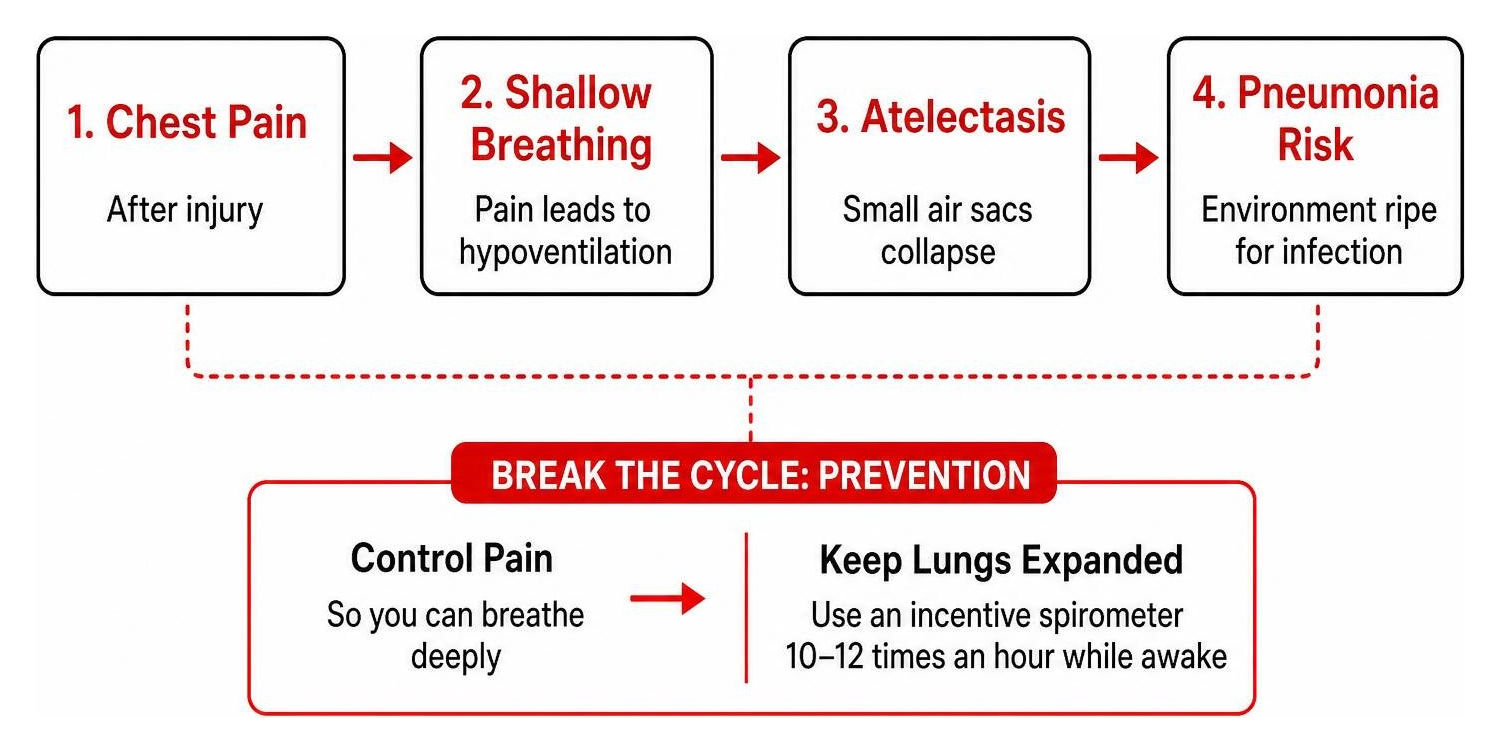
Standard recovery includes following MedlinePlus medical aftercare instructions to practice intentional lung expansion using an incentive spirometer 10 to 12 times an hour while awake.
Managing Persistent Rib Pain After Injury at Home
Home care revolves around targeted pain relief without restricting your lung mechanics:
- Cryotherapy: Apply an ice pack wrapped in a thin towel for 20 minutes every waking hour during the first 48 hours, transitioning to 10 to 20 minutes 3 times daily as needed to reduce swelling.
- Pillow Splinting: When you need to cough, sneeze, or take deep breaths, firmly hold a pillow against the injured side of your chest to stabilize the wall and dampen sharp spikes in pain.
- Medications: Over-the-counter NSAIDs (like ibuprofen) or acetaminophen help manage baseline inflammation. If prescription pain relievers are necessary, take them with meals and maintain hydration.
- Avoid Chest Binders: Never use tight elastic bandages or compression binders. Restricting chest expansion dramatically increases your risk of developing lung collapse and pneumonia.
You can learn more actionable home strategies in our guide on broken rib pain relief and explore holistic recovery strategies to support your body’s natural healing process.
Advanced Interventions: Nerve Blocks and Surgical Fixation
When oral medications are insufficient to allow full, deep breaths, interventional pain management can provide targeted relief:
- Intercostal Nerve Blocks: Injections of local anesthetics and anti-inflammatory agents near the specific nerves running along the bottom groove of the injured ribs.
- Thoracic Epidural Analgesia: Used in hospitalized trauma settings for multiple bilateral fractures.
- Surgical Stabilization of Rib Fractures (SSRF): Reserved for severe trauma, flail chest, or nonunion (where fractured bone fails to heal). Surgeons use low-profile titanium plates and screws to restore chest wall stability.
Expected Recovery Timeline and Safe Return to Activities
Most uncomplicated rib fractures require at least six weeks to heal, during which the body deposits new bone matrix across the fracture gap. Understanding the staged physiological phases of tissue repair can help set realistic expectations and prevent re-injury during daily routines.
Healing Phases and Activity Milestones
- Weeks 1 to 2 (Acute Inflammatory Phase): The initial focus is strict pain control, dedicated respiratory hygiene, and preventing lung collapse. Avoid lifting anything heavier than 5 to 10 pounds, refrain from pushing or pulling, and sleep in an elevated semi-reclined position to minimize chest wall strain.
- Weeks 3 to 4 (Reparative Callus Formation): As the body forms a soft cartilaginous callus across the bone ends, acute sharp pain typically subsides to a dull ache. You can gradually increase light walking and low-impact daily activities, but continue avoiding sudden twisting, heavy lifting, or high-impact cardiovascular exercise.
- Weeks 5 to 6 (Bony Consolidation): The soft callus mineralizes into solid woven bone. Most patients can return to standard sedentary desk work and light non-strenuous physical duties, though sudden direct pressure over the healing site may still feel tender.
- Weeks 6 to 12 (Bone Remodeling and Full Recovery): Hard bone remodels into durable lamellar bone. With physician clearance, patients can progressively reintroduce resistance training, heavy physical labor, and recreational sports.
Recovery factors include age (older adults have a higher risk of complications and require closer monitoring), overall bone density, and whether there are concurrent pulmonary injuries. For a deeper look at managing underlying lung trauma, explore our comprehensive pulmonary contusion guide.
Frequently Asked Questions About Rib Injuries
How do I know if my rib pain is an emergency?
Seek emergency care if you develop severe shortness of breath, sudden lightheadedness, blue-tinged lips, blood in your cough, or rigid abdominal pain beneath the rib cage.
Why is it dangerous to wrap or bind an injured rib cage?
Wrapping the chest prevents the lungs from expanding fully. This hypoventilation causes the microscopic air sacs (alveoli) to collapse, dramatically increasing the risk of secondary pneumonia.
How long does post-traumatic chest wall pain typically last?
Most broken ribs heal within six weeks, but residual muscular soreness, cartilage tenderness, or intercostal nerve irritation can cause intermittent aching for several months during twisting or heavy exertion.
Conclusion
Lingering chest pain after an accident should never be brushed aside as just another bruise. Proper diagnostic imaging, proactive pain management, and dedicated respiratory exercises are essential to prevent secondary complications like pneumonia and ensure your chest wall heals with proper anatomical alignment.
At CrashMD, we guide accident victims across Arizona, Nevada, Texas, Oklahoma, Southern California, and Northern California through every step of physical recovery. We provide expert clinical pain management, create tailored rehabilitation plans, and ensure that all accident-related injuries are thoroughly and objectively documented. If you are struggling with post-trauma chest or rib pain, connect with our clinical team today to ensure your recovery stays on the right track.