

Understanding Rib Fracture Injuries
Rib Fracture
A rib fracture is one of the most common injuries people experience after a car accident, yet it is often underestimated. Because ribs are strong, curved bones designed to protect the heart and lungs, it takes significant force to break them. That is why rib fractures frequently occur in high impact collisions, sudden deceleration crashes, or situations where the chest strikes the steering wheel, dashboard, or even tight seat belt restraints. While some rib fractures are relatively straightforward and heal with time, others can lead to serious complications, especially if internal organs are involved.

The human rib cage consists of twelve pairs of ribs that attach to the thoracic spine in the back and curve around toward the sternum in the front. This structure forms a protective cage around vital organs, including the lungs and heart. It also plays an essential role in breathing. Every time you inhale, the ribs expand outward to allow the lungs to fill with air. When a rib is fractured, even simple breathing can become painful, which is one reason these injuries can feel so debilitating.
In car accidents, rib fractures most commonly happen due to blunt force trauma. During a sudden stop, the body continues moving forward until it is restrained. Even though seat belts save lives and significantly reduce the risk of fatal injuries, the force of restraint across the chest can sometimes cause bruising or fractures. Airbags, while protective, deploy with substantial speed and can also contribute to chest wall injuries in certain cases. In more severe crashes, direct impact with the interior of the vehicle can lead to multiple broken ribs.
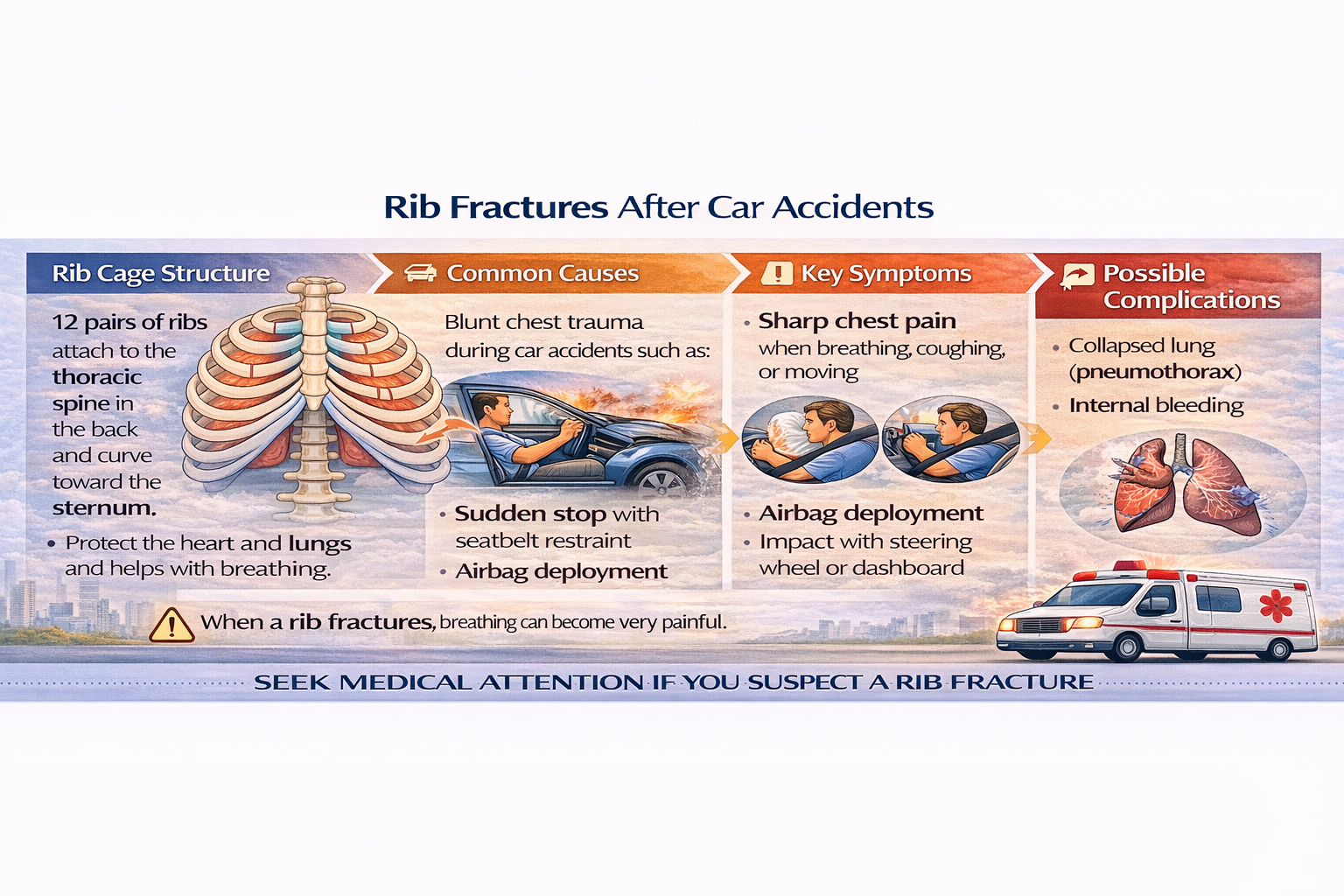
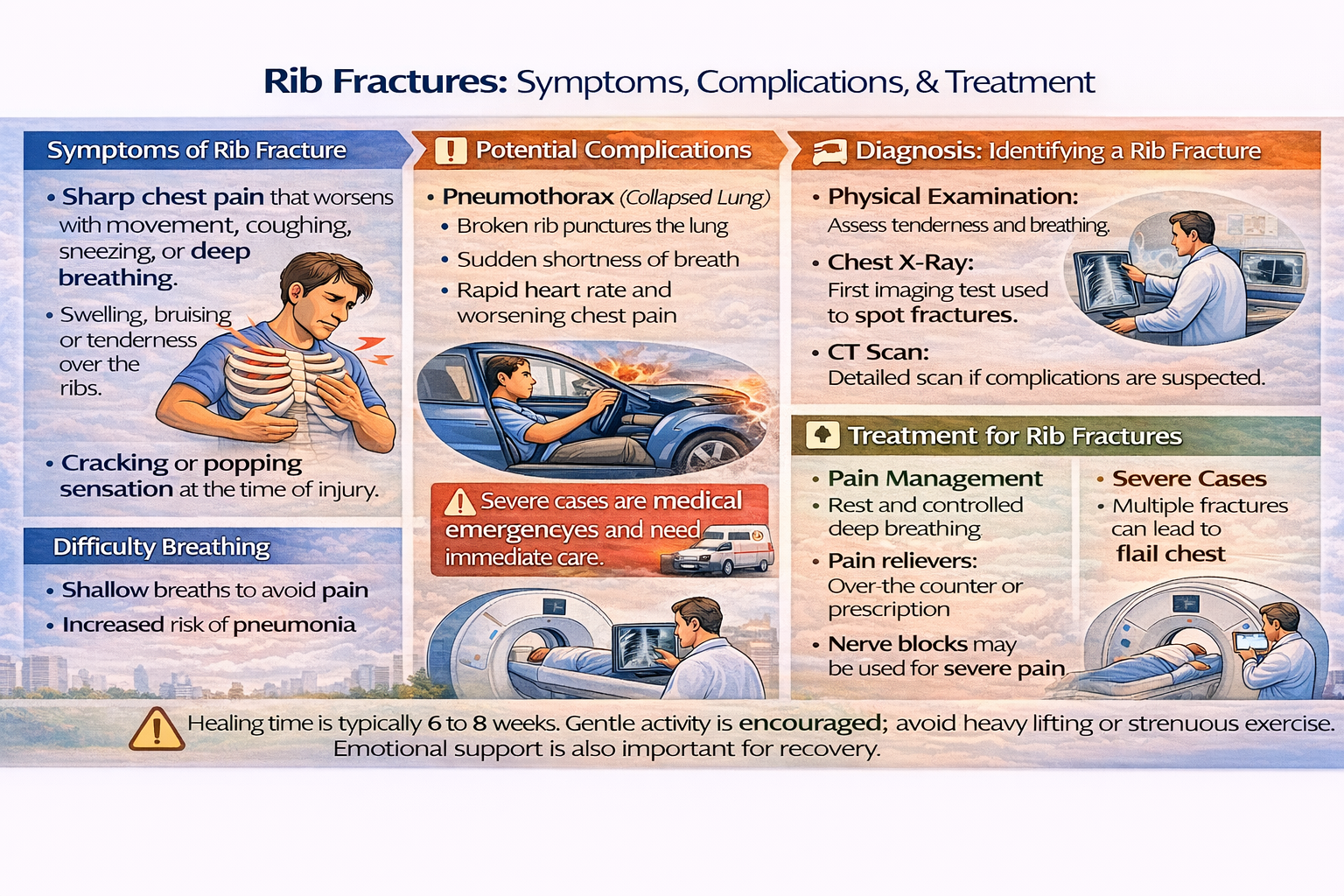
The most obvious symptom of a rib fracture is sharp chest pain that worsens with movement, coughing, sneezing, or deep breathing. Many people describe the pain as stabbing or intense, particularly when attempting to take a full breath. There may also be swelling, bruising, or tenderness over the injured area. Some individuals feel or even hear a cracking sensation at the moment of injury. Unlike muscle strains, the pain from a rib fracture does not improve quickly and often remains persistent for weeks.
Breathing changes are another common sign. Because deep breaths are painful, patients often take shallow breaths to avoid discomfort. While this may seem like a natural response, shallow breathing can increase the risk of complications such as pneumonia. Proper pain management is therefore a key part of treatment, as it allows patients to breathe fully and reduce the chance of lung infections.
In more serious cases, a rib fracture can puncture or damage nearby organs. A broken rib can potentially injure the lung, causing a pneumothorax, which is a collapsed lung. Symptoms of a pneumothorax may include sudden shortness of breath, rapid heart rate, and worsening chest pain. Internal bleeding is another possible complication, particularly if blood vessels are damaged. These conditions are medical emergencies and require immediate attention.
Diagnosis typically begins with a physical examination. A healthcare provider will assess areas of tenderness and evaluate breathing patterns. Imaging studies such as chest X rays are commonly used to confirm the presence of a fracture. However, not all rib fractures are easily visible on standard X rays, especially if the break is small. In cases where complications are suspected, a CT scan may provide a more detailed view of the chest and surrounding structures.
Treatment for rib fractures largely depends on the severity of the injury. For uncomplicated fractures where the bone remains aligned and there is no organ damage, treatment is usually conservative. This includes rest, pain management, and gradual return to activity. Unlike other broken bones, ribs are not typically placed in casts or braces because restricting chest movement can interfere with breathing. Instead, patients are encouraged to move carefully and practice controlled deep breathing exercises.
Pain control is a critical part of recovery. Doctors may recommend over the counter medications or prescribe stronger pain relievers if necessary. In some cases, nerve blocks or other targeted therapies are used to manage severe discomfort. Adequate pain relief allows patients to breathe deeply and cough effectively, which helps clear the lungs and prevent infection.
For multiple rib fractures, especially when several ribs are broken in more than one place, a condition known as flail chest can occur. This is a serious injury where a segment of the chest wall moves independently from the rest of the rib cage during breathing. Flail chest often requires hospitalization and sometimes surgical intervention to stabilize the chest wall and ensure adequate oxygenation.
Surgical treatment for rib fractures is not common but may be necessary in complex cases. Surgeons can use plates and screws to stabilize broken ribs, particularly when fractures are severely displaced or causing ongoing complications. Advances in surgical techniques have improved outcomes for patients with significant chest trauma.
Healing time for a rib fracture typically ranges from six to eight weeks, although discomfort may persist longer. During recovery, patients are advised to avoid heavy lifting, strenuous activity, and movements that aggravate pain. Gentle walking and light activity are usually encouraged to promote circulation and prevent stiffness.
Emotional and psychological factors should not be overlooked. After a car accident, individuals may experience anxiety about driving again or fear related to their injuries. Persistent pain can also affect mood and sleep. Addressing both physical and emotional recovery is essential for overall well being.
Older adults face additional risks when it comes to rib fractures. Bone density decreases with age, making fractures more likely and recovery more complicated. Complications such as pneumonia occur more frequently in elderly patients, which is why close monitoring and early intervention are especially important in this population.
Athletes and physically active individuals may find rib fractures particularly frustrating because even minor movements can trigger pain. Returning to sports too soon can delay healing or worsen the injury. A gradual, medically supervised return to activity ensures the ribs have properly healed before full exertion resumes.
Preventing rib fractures in car accidents largely comes down to vehicle safety and responsible driving. Wearing a properly positioned seat belt, adjusting the seat to maintain safe distance from the steering wheel, and ensuring airbags are functioning correctly all reduce the risk of severe injury. While no safety measure can eliminate risk entirely, these precautions significantly improve outcomes in collisions.
It is important to seek medical evaluation after any significant car accident, even if symptoms seem mild at first. Rib fractures can sometimes be missed initially, especially if adrenaline masks pain. Delayed symptoms such as increasing chest discomfort, difficulty breathing, fever, or persistent coughing should prompt immediate medical attention.
Long term outcomes for simple rib fractures are generally good. Most individuals recover fully without lasting complications. However, severe injuries involving organ damage or multiple fractures may require longer recovery periods and ongoing follow up care. Early diagnosis, appropriate pain management, and adherence to medical guidance play major roles in ensuring the best possible outcome.

In the end, a rib fracture is more than just a broken bone. It is an injury that affects breathing, movement, and overall comfort. While many cases heal with time and conservative care, the potential for serious complications makes prompt medical evaluation essential. If you experience chest pain after a car accident, do not dismiss it as minor bruising. Proper assessment and treatment can make the difference between a straightforward recovery and a preventable complication.