Pneumothorax After a Car Accident: Understanding, Symptoms, and Recovery
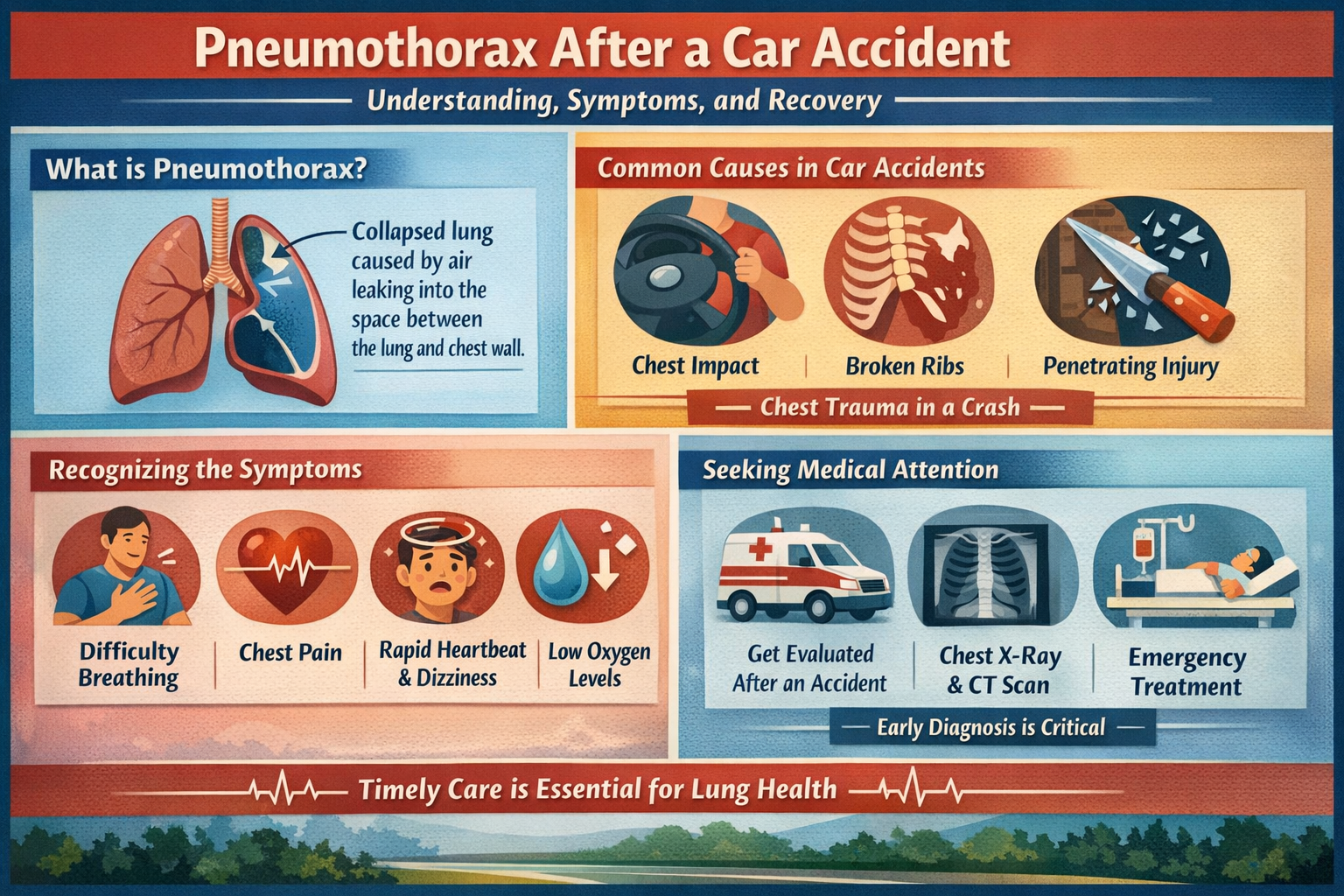
Car accidents are sudden, unsettling events that can leave lasting effects on the body. While broken bones and visible injuries often draw immediate attention, some injuries are hidden and can be life-threatening if not recognized promptly. One such serious injury is pneumothorax, commonly referred to as a collapsed lung. A pneumothorax occurs when air leaks into the space between the lungs and the chest wall, causing the lung to partially or completely collapse. This condition can make it difficult to breathe, reduce oxygen delivery to the body, and in severe cases, become life-threatening.
Understanding pneumothorax, recognizing its symptoms, and seeking timely medical attention are essential steps to ensure a full recovery and protect long-term lung health.
Pneumothorax is often caused by trauma to the chest during a car accident. It can occur when the chest strikes the steering wheel, dashboard, or seatbelt, or when ribs break and puncture the lung tissue. Rapid deceleration and internal movements can also injure the lungs, even without direct impact. Penetrating injuries, such as sharp objects inside the vehicle during a collision, can also lead to a collapsed lung. In some cases, a pneumothorax can occur without any obvious external injury, which is why anyone who experiences chest trauma after a car accident should be evaluated by a healthcare professional.
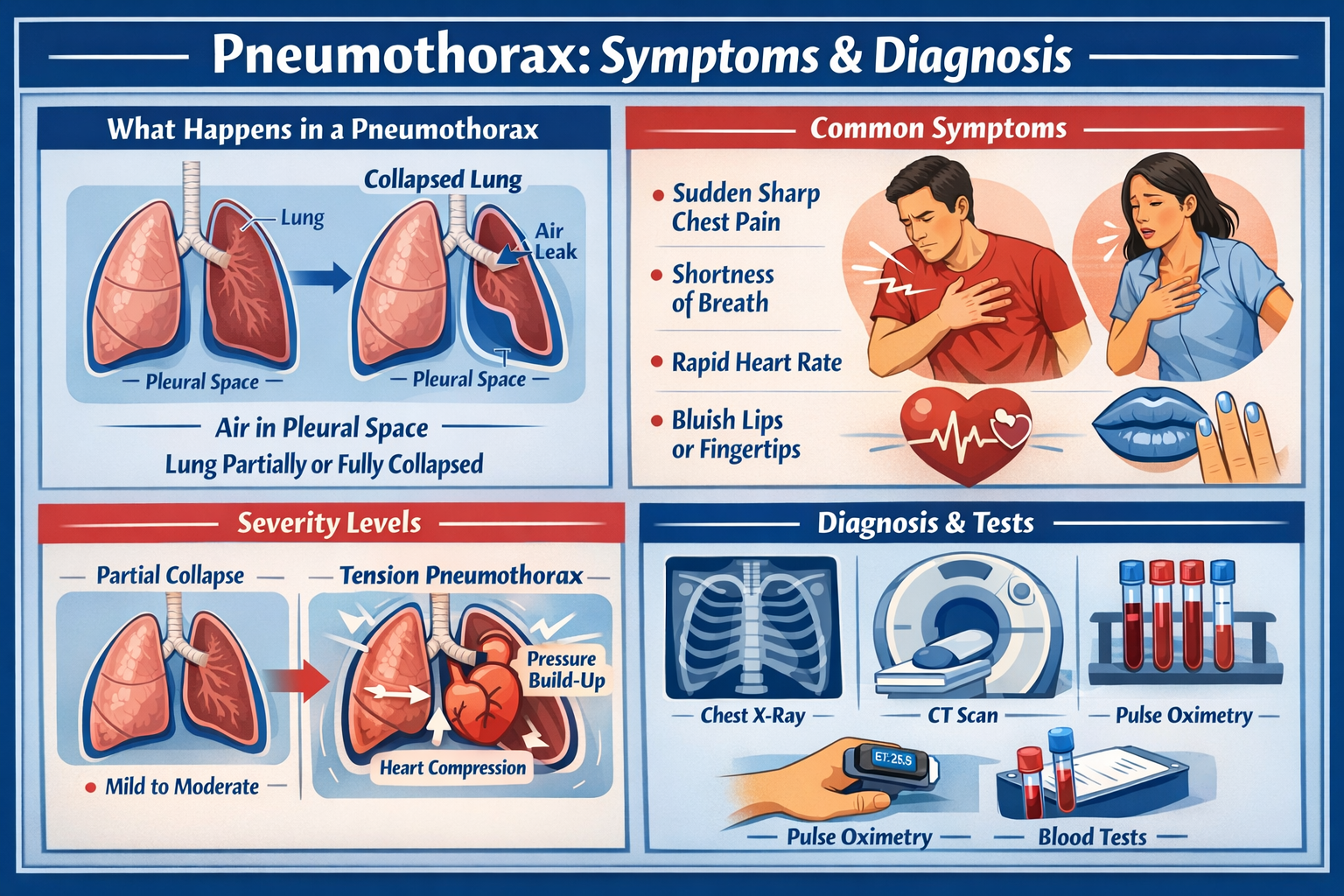
The lungs are delicate organs responsible for exchanging oxygen and carbon dioxide, a process critical for every function in the body. Normally, the lungs are surrounded by a small amount of fluid in the pleural space that allows smooth movement during breathing. When air enters this space, it prevents the lung from fully expanding. This can result in shortness of breath, chest pain, rapid heart rate, and low oxygen levels, which may affect vital organs. A collapsed lung can vary in severity, from a small partial collapse that may resolve on its own to a tension pneumothorax, a life-threatening situation where pressure builds up in the chest and compresses the heart and the other lung.
Symptoms of pneumothorax can appear immediately after the accident or develop gradually over several hours. Many patients describe sudden, sharp chest pain on one side, often worsened by deep breaths or movement. Shortness of breath, rapid or shallow breathing, fatigue, and a feeling of tightness in the chest are common. In severe cases, lips or fingertips may appear bluish due to lack of oxygen. Because these symptoms can resemble other injuries, such as rib fractures or pulmonary contusions, seeking medical care is essential to ensure the correct diagnosis.
Medical evaluation typically begins with a physical examination, where a healthcare provider listens for decreased or absent breath sounds and checks oxygen levels. Imaging studies such as chest X-rays or CT scans are crucial for confirming the presence and severity of a pneumothorax. Additional tests, such as pulse oximetry or blood tests, may be used to assess oxygenation and overall health. Timely diagnosis is essential for effective treatment and to prevent serious complications.
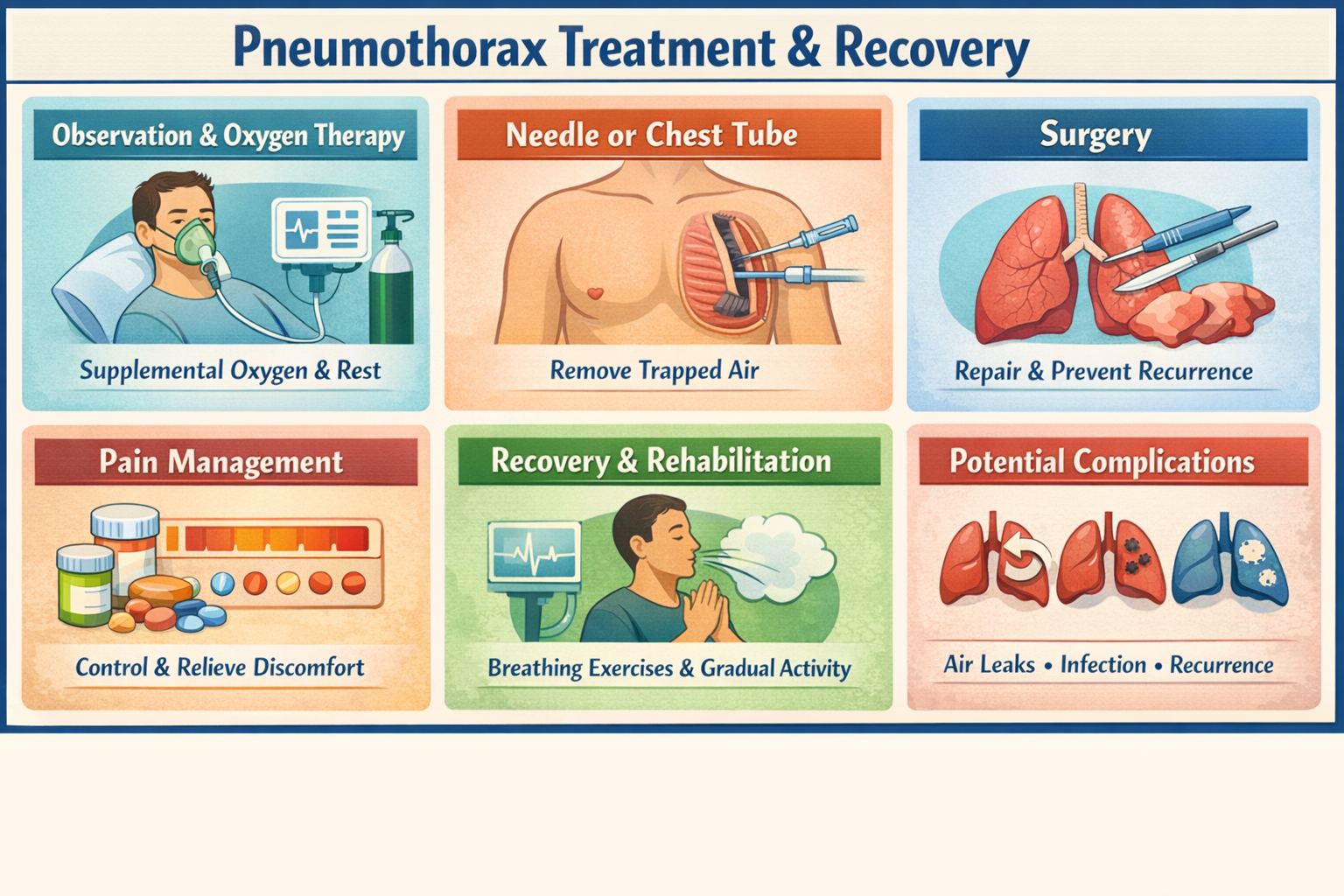
Treatment for pneumothorax depends on the severity and type of collapse. In mild cases, observation and supplemental oxygen may be sufficient. Oxygen therapy helps the lung re-expand naturally, while resting and avoiding strenuous activity support the healing process. In more significant cases, a needle or chest tube may be inserted to remove the trapped air and allow the lung to inflate. This procedure is usually performed in a hospital setting under close monitoring. In rare or recurrent cases, surgery may be necessary to repair lung tissue, seal leaks, or prevent future collapses. Pain management is an important part of treatment, as controlling discomfort allows patients to breathe deeply and prevents additional complications such as pneumonia.
Recovery from a pneumothorax varies depending on the extent of the collapse, the patient’s overall health, and whether additional injuries are present. Mild pneumothoraces may resolve within a few weeks, while severe or surgically treated cases may require several months of healing and rehabilitation. Hospitalization may be required to monitor oxygen levels, manage pain, and prevent secondary complications. After discharge, patients are encouraged to continue breathing exercises to restore lung capacity and gradually return to normal activity. Avoiding heavy lifting or strenuous movements is important during the early stages of recovery.
Potential complications can occur if a pneumothorax is not managed appropriately. Recurrence is possible, especially in individuals with pre-existing lung conditions. Persistent air leaks may require additional intervention, and severe untreated cases can lead to respiratory distress or failure. Infections can sometimes develop following procedures like chest tube placement or surgery. Early recognition, consistent follow-up, and adherence to medical guidance are essential to reduce these risks.
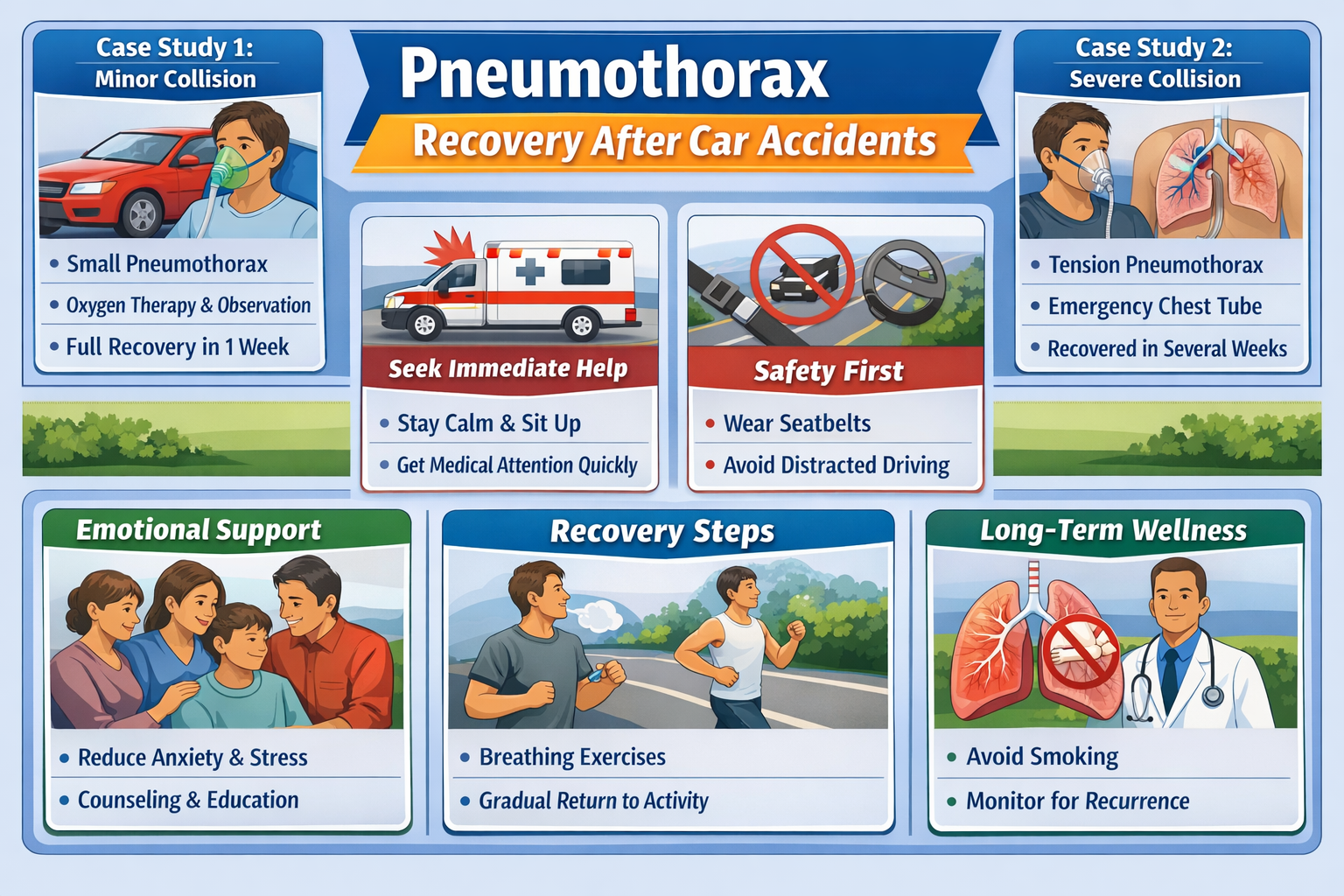
 Patient experiences illustrate the importance of prompt care and proper management. One patient involved in a moderate-speed collision initially felt only mild chest discomfort, but over several hours, they developed difficulty breathing. Imaging revealed a small pneumothorax. With oxygen therapy and careful observation in the hospital, the lung re-expanded fully within a week, and the patient returned to normal activity shortly afterward. Another patient, involved in a high-speed collision, developed a tension pneumothorax that required emergency chest tube placement. With close monitoring, pain management, and a gradual rehabilitation program, the patient regained full lung function over several weeks. These examples highlight how early evaluation, structured care, and patient support can lead to successful recovery.
If a pneumothorax is suspected after a car accident, it is critical to seek emergency medical attention. Patients should remain calm and breathe slowly and steadily if possible. Lying flat may worsen breathing, so maintaining an upright or slightly reclined position can be helpful. Symptoms should never be ignored, even if they seem mild, because delayed treatment can be dangerous.
Although accidents cannot always be prevented, safety measures can reduce the risk or severity of lung injury. Wearing seatbelts properly, adjusting headrests, avoiding distracted driving, and maintaining chest strength through regular exercise can all help protect the lungs during a collision. Awareness of the risks and understanding how to respond after an accident can significantly impact recovery and overall health.
Recovering from a pneumothorax is not just a physical process. Many patients experience anxiety or stress following a car accident, particularly when breathing is affected. Emotional support from family, counseling, and patient education can help individuals feel more confident and empowered during recovery. Knowing what to expect, understanding the treatment process, and having a clear plan for follow-up care can alleviate fears and contribute to a smoother healing process.
With proper treatment and monitoring, most patients recover fully from a pneumothorax. Ongoing attention to lung health, adherence to breathing exercises, and a gradual return to physical activity help ensure long-term wellness. Patients are advised to avoid smoking, monitor for recurrence, and communicate promptly with healthcare providers if symptoms worsen. By taking these steps, the lungs can heal effectively, and patients can regain confidence in their breathing and overall health.
Pneumothorax after a car accident can be frightening, but with timely medical care, structured treatment, and patient support, recovery is possible. Even mild symptoms should never be ignored, as early intervention prevents serious complications and supports full lung function. Protecting the lungs after trauma ensures both physical recovery and peace of mind. Patients can return to normal life and enjoy daily activities with the knowledge that their lungs are healing safely.
Understanding pneumothorax, its risks, and the steps to recovery empowers patients and families to take control of the healing process. With proper guidance, patients can navigate the recovery journey with confidence, restore lung function, and maintain long-term health.