

Neck Strain After a Car Accident: Causes, Symptoms, and Recovery
Car accidents can be sudden, frightening, and disorienting. Even when the collision seems minor, it can leave lasting effects on the body that aren’t immediately obvious. One of the most common injuries after a car accident is neck strain, often associated with whiplash. This injury happens when the muscles and ligaments in the neck are stretched or torn due to the rapid back-and-forth movement of the head during a collision.
While some people experience mild discomfort that disappears in a few days, others may develop more severe pain, limited mobility, or lingering symptoms that can affect daily life. Understanding neck strain, recognizing early warning signs, and getting proper care can make all the difference in a smooth recovery and long-term neck health.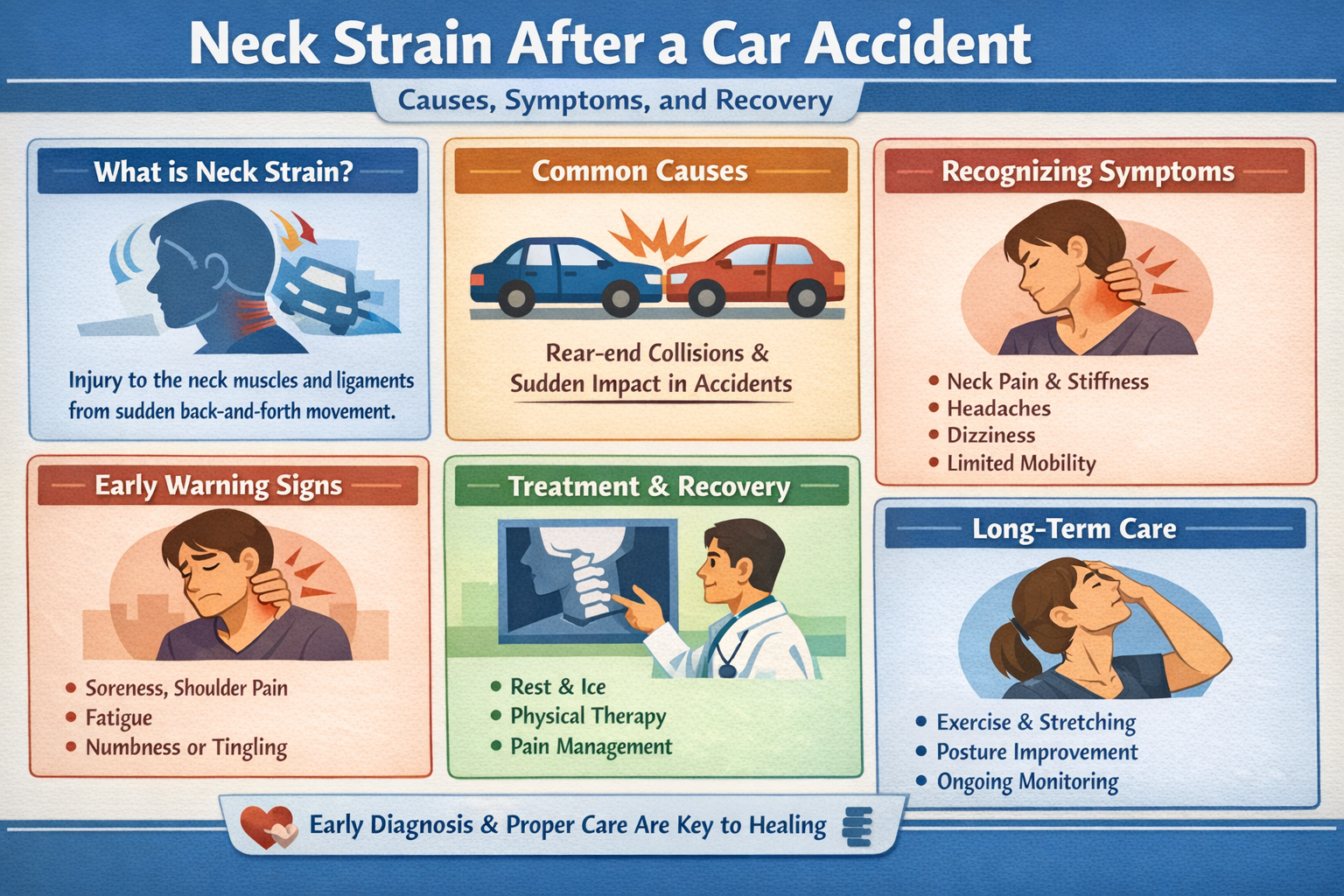
How Car Accidents Cause Neck Strain
Neck strain is often caused by whiplash, which occurs during sudden collisions. In a rear-end impact, for example, the body moves forward while the head lags behind, creating a rapid snapping motion. This movement stretches the muscles, tendons, and ligaments beyond their normal limits.
Even at low speeds, the force can be enough to injure the neck. The severity of the strain depends on several factors, including the direction of the impact, whether the seatbelt was worn properly, headrest position, and posture at the moment of the crash.
Passengers are just as susceptible as drivers. While safety features like airbags save lives, the force of deployment can also contribute to neck trauma. Even if you don’t feel pain immediately after the accident, it’s important to monitor your symptoms over the next few days, as neck strain can develop gradually.
Understanding Neck Strain
A neck strain occurs when muscles or tendons in the neck are overstretched or torn. It affects the soft tissues rather than the bones and can vary from mild to severe. Mild strains may cause occasional discomfort, while severe strains can result in significant pain, stiffness, and limited movement.
Whiplash can involve multiple structures in the neck:
- The cervical muscles that support head movement
- Ligaments that stabilize the vertebrae
- Tendons that connect muscles to bones
- Joints and discs in the cervical spine
Damage to any of these structures can cause discomfort, tightness, or even neurological symptoms if nearby nerves are affected.
Symptoms of Neck Strain
Symptoms of neck strain may appear immediately or develop slowly over the first 24 to 48 hours. Common signs include:
- Neck pain and stiffness that makes turning the head difficult
- Headaches that often start at the base of the skull
- Shoulder or upper back pain
- Limited range of motion
- Muscle spasms
- Tingling or numbness in the arms or hands
- Fatigue, difficulty concentrating, or dizziness
The severity of symptoms varies. Some people experience mild soreness, while others may feel persistent discomfort that impacts daily life.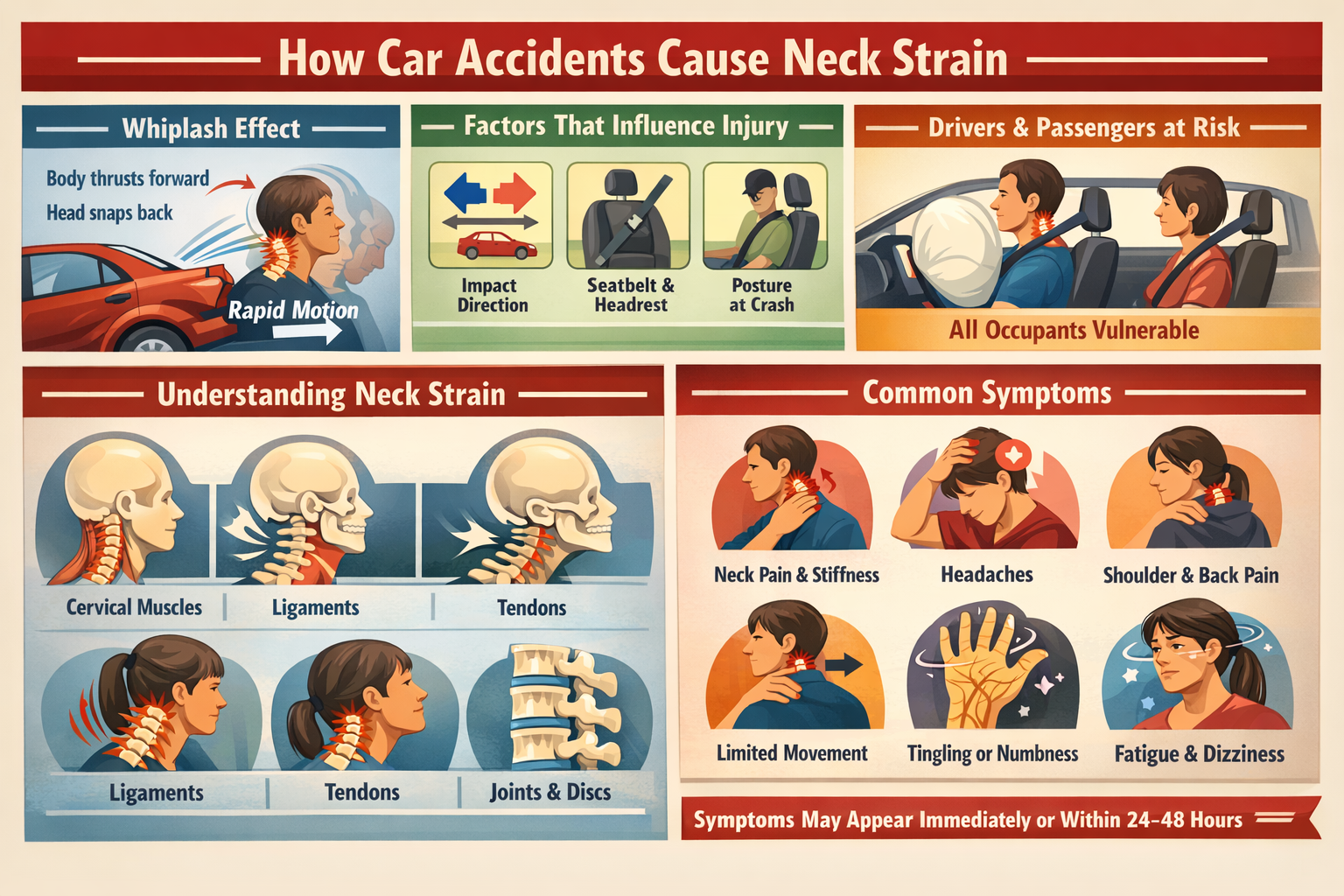
How Neck Strain is Diagnosed
Accurate diagnosis is important to rule out more serious injuries, such as fractures, herniated discs, or nerve damage. A healthcare provider will typically begin with a physical examination, assessing the range of motion, muscle strength, and areas of tenderness.
In some cases, imaging may be necessary:
- X-rays to rule out fractures or misalignment
- MRI scans to evaluate soft tissues, discs, and nerves
- CT scans for detailed imaging when trauma is severe
Early diagnosis allows for a tailored treatment plan, helping to prevent long-term complications and chronic pain.
Treatment for Neck Strain
Treatment depends on the severity of the strain. Mild strains often improve with conservative care, while more severe strains may require a combination of therapies.
Rest and Gentle Movement
Short-term rest can help reduce pain, but complete immobilization is not recommended. Gentle movement helps maintain flexibility and prevent stiffness.
Pain Relief
Over-the-counter medications, such as acetaminophen or anti-inflammatory drugs, can help manage discomfort. In some cases, prescription medications or muscle relaxants may be needed temporarily.
Physical Therapy
Physical therapy is a key component of recovery. Therapists guide patients through exercises to strengthen neck muscles, improve flexibility, and restore mobility. Posture training and ergonomic advice are also essential for preventing re-injury.
Heat and Cold Therapy
Ice can reduce inflammation and relieve pain immediately after the injury. Later, heat therapy can relax tight muscles and improve blood flow, aiding recovery.
Supportive Devices
Temporary use of neck collars or braces may provide relief for severe strains, but long-term use is generally avoided to prevent weakening of neck muscles.
Alternative Therapies
Some patients benefit from massage therapy, acupuncture, or chiropractic care. It is important that these treatments are provided by licensed professionals familiar with whiplash or neck strain injuries.
Recovery and Rehabilitation
Recovery times vary. Mild neck strains may improve within a few days to a few weeks, while severe strains can take several months to fully heal. A structured rehabilitation program helps restore strength, flexibility, and function.
Gradual Return to Daily Activities
As pain decreases, patients are encouraged to gradually resume normal activities. Avoiding sudden or heavy lifting, repetitive motions, and strenuous activity during early recovery is crucial.
Strengthening and Posture Exercises
Rehabilitation exercises focus on improving cervical muscle strength, spinal stability, and overall posture. Strengthening the neck and upper back reduces the likelihood of future injury.
Follow-Up Care
Regular follow-up appointments allow healthcare providers to monitor progress, adjust treatment plans, and address lingering pain or stiffness.
Potential Complications
While most neck strains heal completely, some patients may develop complications if the injury is severe or left untreated. These can include chronic neck pain, headaches, limited mobility, or nerve irritation. Post-traumatic cervical syndrome is a condition characterized by persistent pain, stiffness, and fatigue, which can impact daily life.
Early treatment, adherence to a rehabilitation program, and ongoing monitoring are essential to reduce the risk of long-term complications.
Preventing Neck Strain in Car Accidents
While not all accidents are preventable, taking certain precautions can reduce the risk or severity of neck strain:
- Always wear a properly adjusted seatbelt
- Ensure headrests are at the correct height to support the neck
- Avoid distracted or impaired driving
- Strengthen neck and upper back muscles through regular exercise
- Maintain proper posture while driving and sitting
These steps can protect the cervical spine and reduce the impact if an accident occurs.
Living With a Neck Strain
Neck strain can affect many aspects of daily life, including sleep, work, and recreation. Patients may need to adjust routines temporarily, use supportive pillows, or take breaks from prolonged computer or phone use.
Emotional well-being is also important. Chronic pain or limited mobility can cause frustration, anxiety, or reduced quality of life. Staying informed about treatment options, following medical guidance, and seeking support can help patients feel empowered during recovery.
Real-Life Scenarios
A driver involved in a rear-end collision at low speed initially felt only mild discomfort. Over the next day, neck stiffness increased, and headaches developed. After consulting a healthcare provider, they were diagnosed with a moderate neck strain. With physical therapy, gentle exercises, and pain management, they regained full mobility within six weeks.
In another scenario, a passenger involved in a high-speed collision experienced severe whiplash. They required prescription medications, intensive therapy, and posture retraining over several months. Despite the severity of the injury, consistent care allowed them to return to work and daily life, highlighting the importance of early intervention and rehabilitation.
Tips for Supporting Neck Health
Patients recovering from neck strain can take several steps to support their recovery:
- Use supportive pillows and maintain proper head alignment while sleeping
- Take regular breaks from prolonged computer or phone use
- Perform gentle stretching exercises to maintain flexibility
- Avoid heavy lifting or sudden neck movements early in recovery
- Follow all medical advice and attend follow-up appointments
- Communicate with healthcare providers about persistent pain, numbness, or weakness
These strategies not only aid recovery but also reduce the risk of future injury.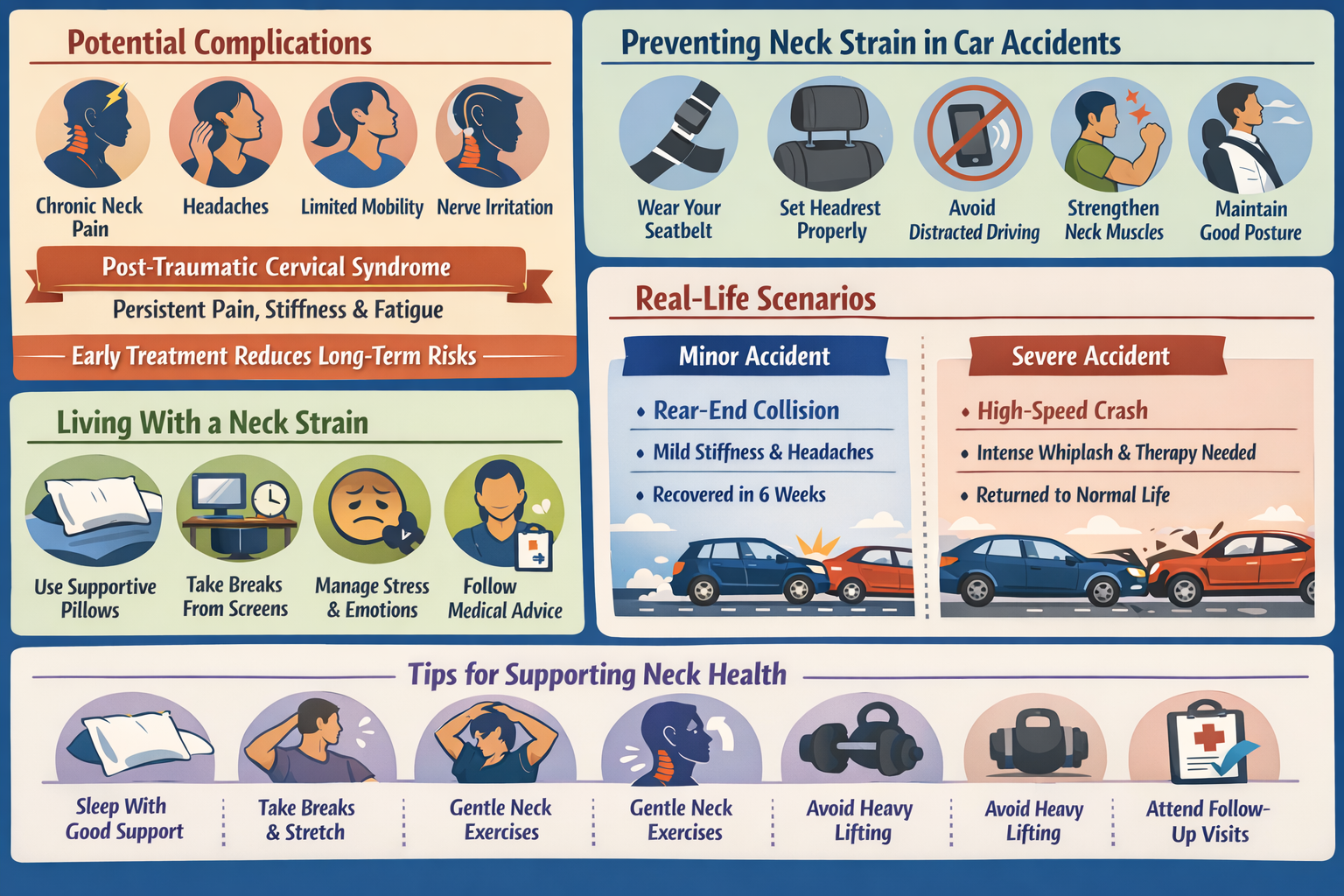
A Compassionate Perspective
Neck strain after a car accident is common, but with proper care, most patients recover fully. Early recognition of symptoms, timely medical evaluation, and a structured rehabilitation plan are essential for a smooth recovery.
Your neck supports your head, posture, and daily activities. Taking care of it after an injury ensures that you regain full mobility, reduce pain, and protect your long-term health. With patience, guidance, and support, patients can recover successfully and return to their everyday lives with confidence.