

Airway Management and Intubation in Car Accident Treatment: A Critical Life-Saving Intervention
Car accidents are among the leading causes of severe trauma worldwide. In a matter of seconds, a collision can cause multiple injuries affecting the brain, chest, spine, and internal organs. Among the most urgent and life-threatening complications following a motor vehicle accident is airway compromise, a condition in which a patient is unable to breathe properly or maintain a clear airway.
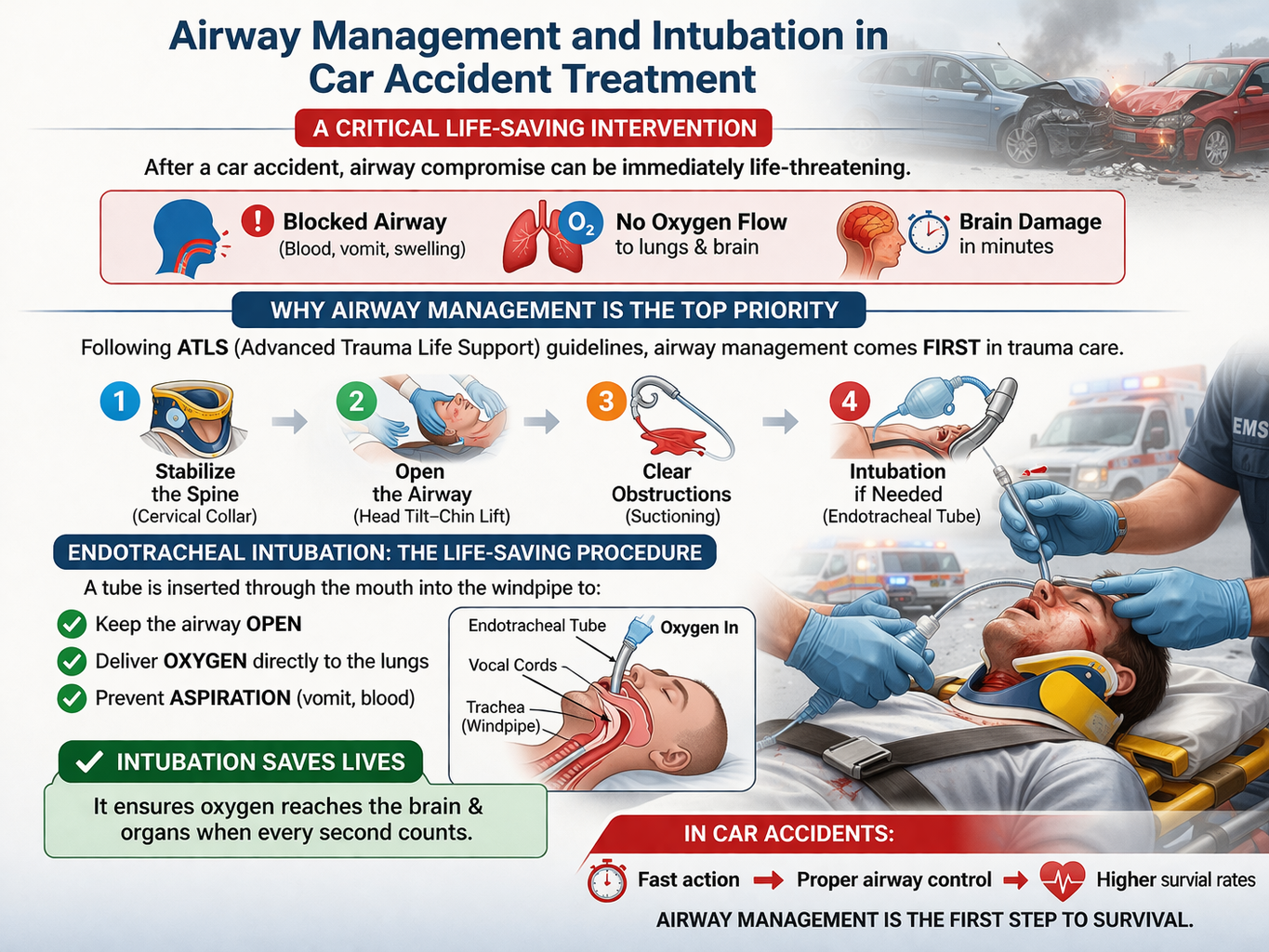
When breathing becomes impaired, oxygen cannot reach the lungs and circulate through the body. The brain is especially vulnerable to oxygen deprivation, and permanent damage can occur within just a few minutes. Because of this, securing the airway is often the first and most important step in trauma care.
Emergency medical professionals rely on structured trauma care guidelines, including protocols from Advanced Trauma Life Support (ATLS) developed by the American College of Surgeons. These guidelines prioritize airway management as the first step in evaluating and stabilizing trauma patients.
One of the most important procedures used to secure the airway in critically injured patients is endotracheal intubation. This life-saving intervention ensures that oxygen can reach the lungs and vital organs when normal breathing is no longer possible.
This article explores airway management and intubation in the context of car accident injuries, explaining why it is necessary, how it is performed, and its role in improving survival outcomes.
Understanding the Importance of Airway Management in Trauma
Airway management refers to the medical techniques used to ensure that a patient’s airway remains open and that oxygen can reach the lungs. In trauma medicine, maintaining oxygen delivery is one of the highest priorities because the body cannot survive long without it.
The brain requires a continuous supply of oxygen-rich blood to function properly. When oxygen levels drop, brain cells begin to die rapidly. Within four to six minutes, irreversible brain injury may occur if oxygen supply is not restored.
Following a car accident, several injuries may interfere with normal breathing. In some cases, the patient may lose consciousness and lose the ability to maintain their airway. In others, trauma to the face, neck, or chest may physically block airflow.
Emergency physicians and trauma teams must quickly determine whether the airway is stable or whether immediate intervention is required.
Why Car Accident Victims Often Require Airway Intervention
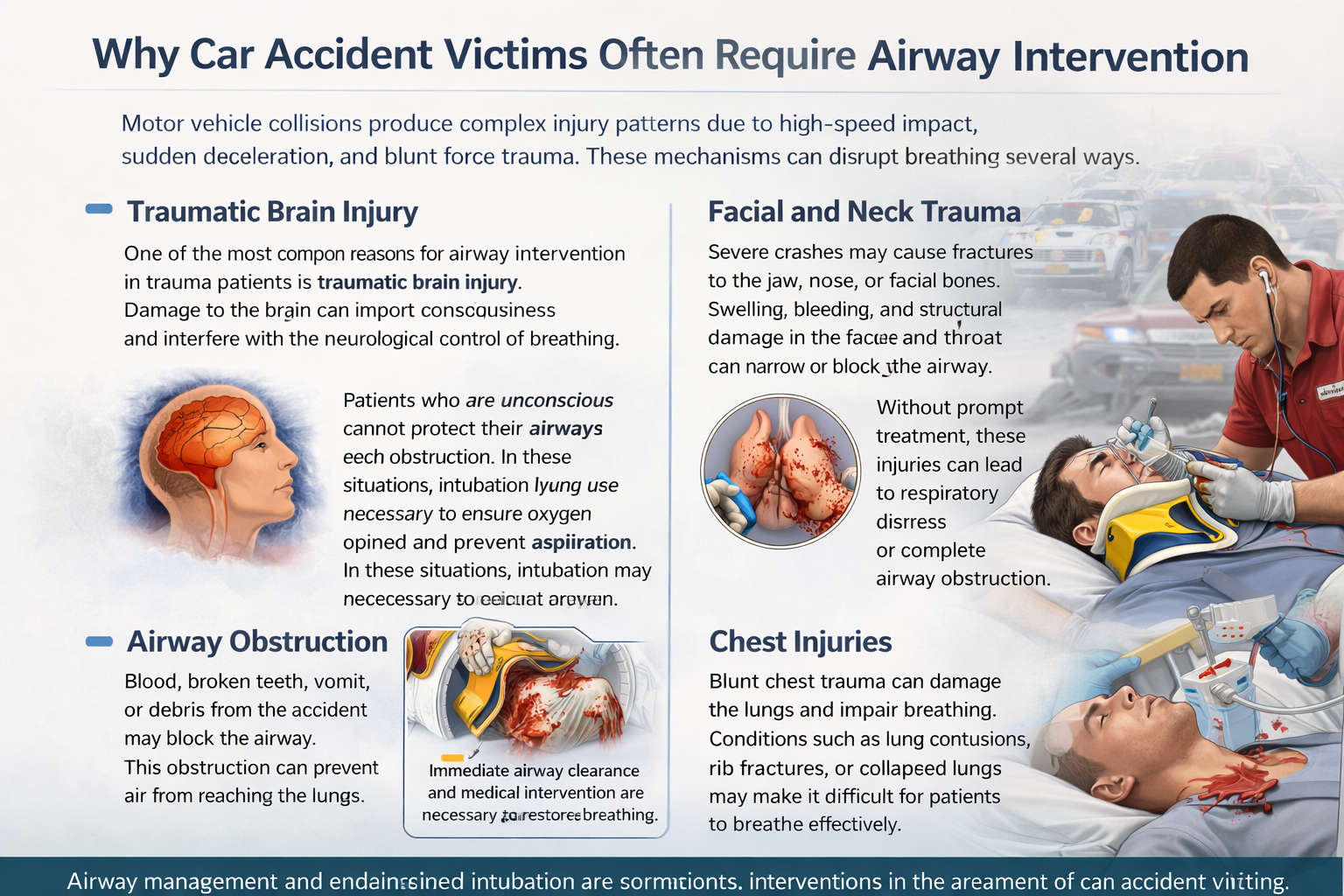
Motor vehicle collisions produce complex injury patterns due to high-speed impact, sudden deceleration, and blunt force trauma. These mechanisms can disrupt breathing in several ways.
Traumatic Brain Injury
One of the most common reasons for airway intervention in trauma patients is traumatic brain injury. Damage to the brain can impair consciousness and interfere with the neurological control of breathing.
Patients who are unconscious cannot protect their airway from obstruction. In these situations, intubation may be necessary to ensure oxygen delivery and prevent aspiration.
Facial and Neck Trauma
Severe crashes may cause fractures to the jaw, nose, or facial bones. Swelling, bleeding, and structural damage in the face and throat can narrow or block the airway.
Without prompt treatment, these injuries can lead to respiratory distress or complete airway obstruction.
Airway Obstruction
Blood, broken teeth, vomit, or debris from the accident may block the airway. This obstruction can prevent air from reaching the lungs.
Immediate airway clearance and medical intervention are necessary to restore breathing.
Chest Injuries
Blunt chest trauma can damage the lungs and impair breathing. Conditions such as lung contusions, rib fractures, or collapsed lungs may make it difficult for patients to breathe effectively. In severe cases, mechanical ventilation may be required to support breathing.
Spinal Cord Injuries
High cervical spinal cord injuries can disrupt nerve signals that control breathing muscles, including the diaphragm. Patients with these injuries may require assisted ventilation and airway support.
Recognizing Signs of Airway Distress
Airway Management and Intubation: A Comprehensive Overview
Healthcare providers are trained to quickly identify signs that a patient may be experiencing airway compromise. Common symptoms include:
- Difficulty breathing
- Rapid or shallow breathing
- Noisy breathing or choking sounds
- Bluish skin or lips (cyanosis)
- Severe facial injuries
- Confusion or altered mental status
- Loss of consciousness
Any of these signs may indicate that oxygen levels in the body are dangerously low. Immediate airway management may be required to prevent respiratory failure or cardiac arrest.
What Is Endotracheal Intubation?
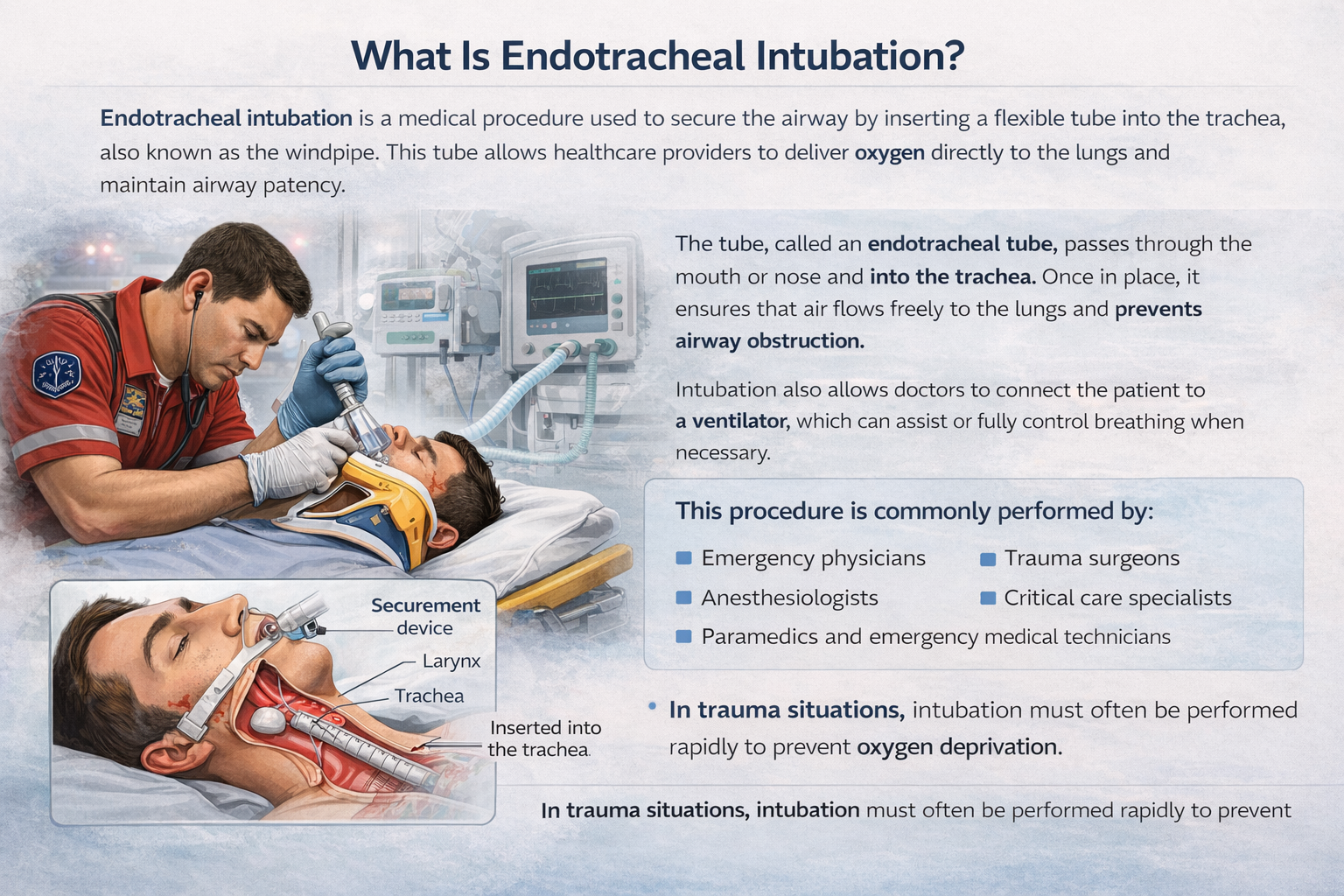
Endotracheal intubation is a medical procedure used to secure the airway by inserting a flexible tube into the trachea, also known as the windpipe. This tube allows healthcare providers to deliver oxygen directly to the lungs and maintain airway patency.
The tube, called an endotracheal tube, passes through the mouth or nose and into the trachea. Once in place, it ensures that air flows freely to the lungs and prevents airway obstruction.
Intubation also allows doctors to connect the patient to a ventilator, which can assist or fully control breathing when necessary.
This procedure is commonly performed by:
- Emergency physicians
- Trauma surgeons
- Anesthesiologists
- Critical care specialists
- Paramedics and emergency medical technicians
In trauma situations, intubation must often be performed rapidly to prevent oxygen deprivation.
The Process of Emergency Intubation
Although intubation is a routine procedure for trained medical professionals, it requires careful technique and precision.
Patient Assessment
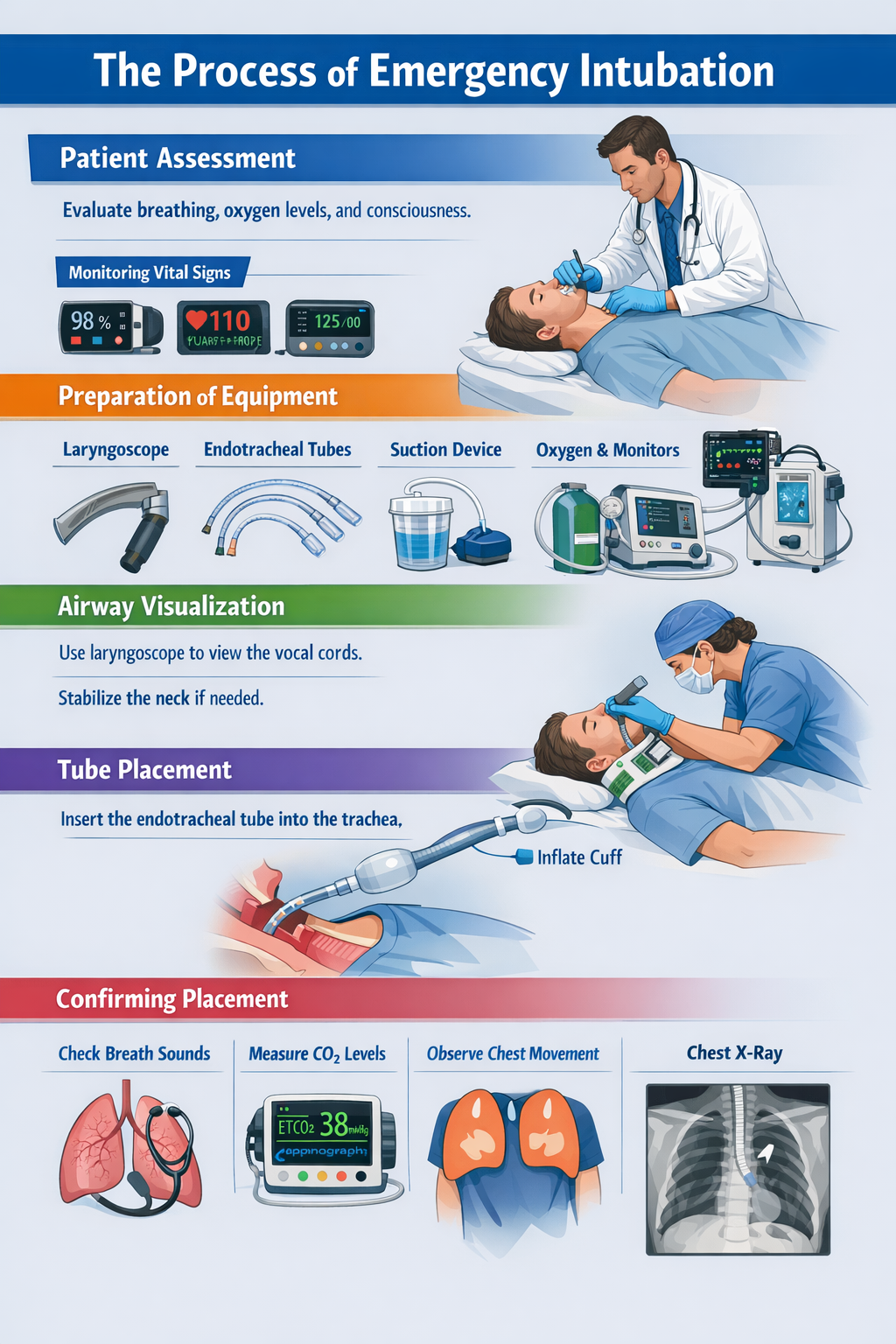
Before performing intubation, medical providers evaluate the patient’s breathing, oxygen levels, and level of consciousness. This assessment helps determine whether airway intervention is necessary.
Monitoring equipment may be used to measure oxygen saturation, heart rate, and blood pressure.
Preparation of Equipment
Medical teams prepare the tools required for the procedure, including:
- A laryngoscope (used to visualize the airway)
- Endotracheal tubes of various sizes
- Oxygen delivery systems
- Suction devices
- Monitoring equipment
Having the correct equipment readily available helps ensure a smooth and safe procedure.
Airway Visualization
The healthcare provider uses a laryngoscope to gently open the mouth and visualize the vocal cords. This allows the endotracheal tube to be placed accurately into the trachea.
In trauma patients, the neck must be carefully stabilized to prevent worsening spinal injuries.
Tube Placement
The endotracheal tube is carefully advanced through the vocal cords into the trachea. Once the tube is positioned correctly, a small balloon at the end of the tube is inflated to keep it securely in place.
The tube is then connected to an oxygen source or ventilator.
Confirming Placement
Proper tube placement is critical. Medical teams confirm correct placement through several methods, including:
- Listening for breath sounds in both lungs
- Measuring carbon dioxide levels in exhaled air
- Observing chest movement
- Performing a chest X-ray
These steps ensure that the tube is delivering oxygen effectively to the lungs.
Rapid Sequence Intubation in Trauma Care
In emergency trauma situations, doctors often perform rapid sequence intubation (RSI). This technique uses medications that quickly sedate the patient and relax the muscles, making it easier to insert the breathing tube safely.
RSI provides several advantages:
- It reduces discomfort for the patient
- It prevents airway reflexes that may interfere with the procedure
- It improves the chances of successful intubation on the first attempt
This method is commonly used in trauma centers and emergency departments.
Mechanical Ventilation After Intubation
Once the airway is secured, many patients require mechanical ventilation. A ventilator is a machine that helps deliver oxygen to the lungs and removes carbon dioxide from the body.
Mechanical ventilation may be necessary for patients with:
- Severe head injuries
- Lung damage
- Shock or major trauma
- Respiratory failure
The ventilator supports the patient’s breathing while doctors treat the underlying injuries caused by the accident.
Airway Management Before Hospital Arrival
In many cases, airway management begins at the accident scene. Emergency medical services (EMS) personnel are trained to provide immediate respiratory support.
Prehospital airway interventions may include:
- Oxygen therapy
- Manual airway positioning
- Bag-valve-mask ventilation
- Supraglottic airway devices
- Endotracheal intubation in advanced EMS systems
Early airway management during transport can greatly improve survival rates.
Potential Risks and Complications
Although intubation is a critical life-saving procedure, it does carry some risks.
Possible complications may include:
- Injury to the teeth or throat
- Incorrect tube placement
- Aspiration of stomach contents
- Temporary drops in blood pressure
- Airway irritation
However, experienced medical professionals are trained to minimize these risks. In life-threatening situations, the benefits of securing the airway far outweigh potential complications.
Recovery and Extubation
As the patient’s condition improves, doctors evaluate whether the breathing tube can be safely removed. This process is called extubation.
Before removing the tube, healthcare providers assess:
- The patient’s ability to breathe independently
- Oxygen levels in the blood
- Lung function
- Neurological status
Some patients may be extubated within hours or days, while others may require longer periods of ventilatory support depending on the severity of their injuries.
The Role of Airway Management in Trauma Survival
Airway management is the cornerstone of emergency trauma care. Without a secure airway and adequate oxygenation, the body cannot sustain life.
By rapidly identifying airway problems and performing interventions such as intubation, healthcare providers can prevent:
- Brain damage caused by oxygen deprivation
- Respiratory failure
- Cardiac arrest
These interventions provide valuable time for doctors to diagnose and treat other injuries caused by the accident.
Final Thoughts
Car accidents can create chaotic and life-threatening situations where rapid medical intervention is essential. Among the many injuries trauma victims may suffer, compromised breathing is one of the most urgent emergencies.
Airway management and endotracheal intubation are powerful life-saving procedures that allow medical teams to restore oxygen flow and stabilize critically injured patients. By securing the airway early, healthcare providers can prevent severe complications and improve survival outcomes.
For patients involved in serious car accidents, timely airway intervention often represents the first step toward recovery. Through skilled medical care, advanced technology, and coordinated trauma response, airway management continues to play a vital role in saving lives after motor vehicle accidents.