

Advanced Trauma Life Support (ATLS) Protocols in Car Accident Treatment
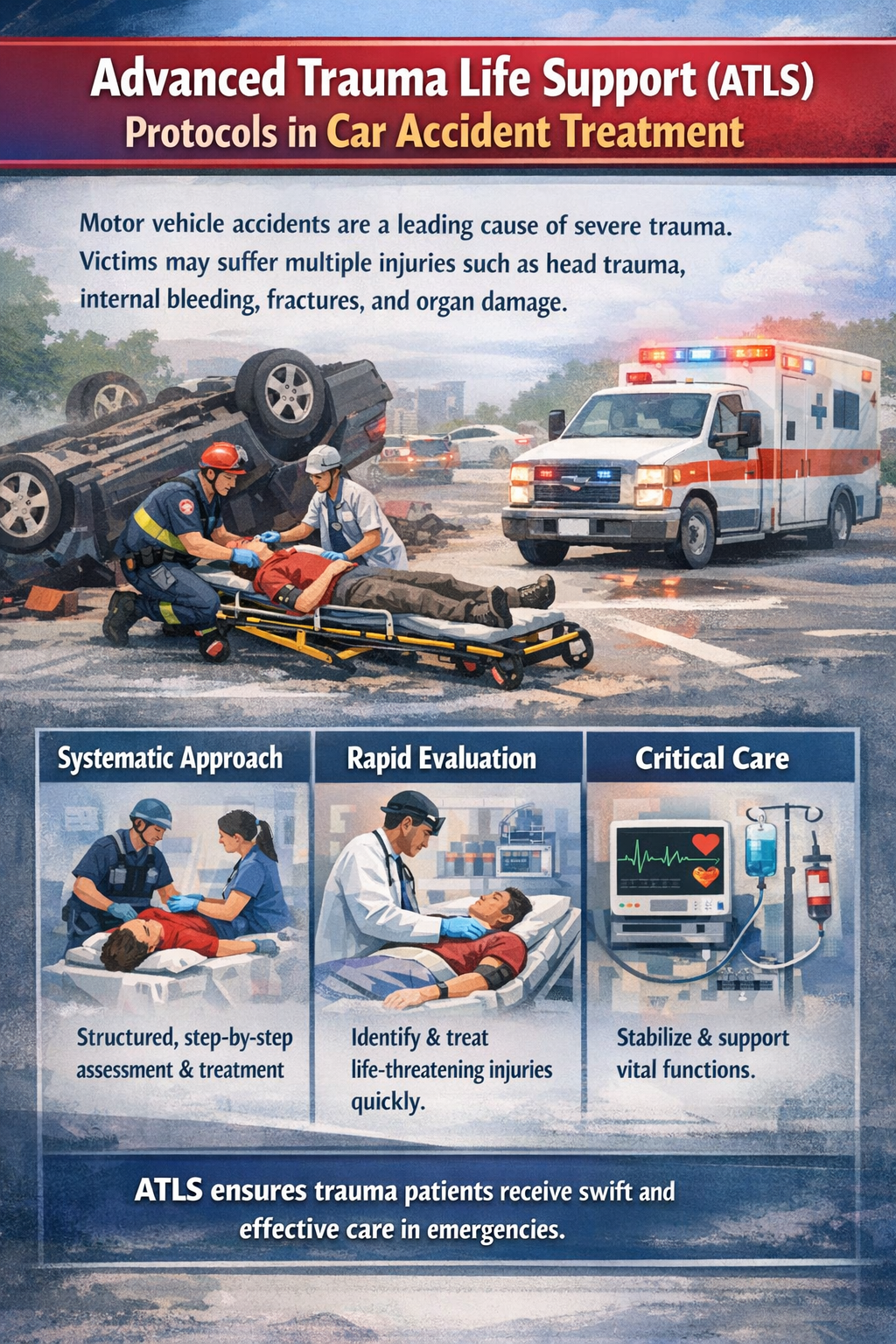
Motor vehicle accidents are among the most common causes of severe trauma worldwide. Victims may suffer multiple injuries at once—head trauma, internal bleeding, fractures, spinal injuries, or organ damage. In these critical situations, medical teams must act quickly and follow a systematic approach to assess and treat patients.
One of the most widely used systems in emergency trauma care is Advanced Trauma Life Support (ATLS). Developed by the American College of Surgeons, ATLS provides a structured framework that helps doctors, nurses, and emergency responders rapidly evaluate and stabilize trauma patients.
ATLS is especially important in the management of car accident victims because it ensures that life-threatening conditions are identified and treated immediately, even when multiple injuries are present.
This article explores ATLS protocols, how they work, and why they are essential in the treatment of patients involved in motor vehicle accidents.
What Is Advanced Trauma Life Support (ATLS)?
Advanced Trauma Life Support (ATLS) is a standardized training program designed to teach healthcare professionals how to manage trauma patients during the critical early moments after injury.
The primary goal of ATLS is simple but vital: treat the greatest threats to life first.
In severe trauma, patients often have multiple injuries occurring at the same time. Without a systematic approach, important life-threatening problems—such as airway obstruction or internal bleeding—could be missed.
ATLS provides a step-by-step method that ensures:
- Rapid patient assessment
- Immediate stabilization
- Identification of life-threatening injuries
- Efficient coordination among trauma teams
This approach has become the global standard in trauma care and is used in emergency departments and trauma centers around the world.
Why ATLS Is Critical After Car Accidents
Car crashes often produce complex injuries due to high-speed impact, sudden deceleration, and blunt force trauma. Victims may suffer injuries to several body systems simultaneously.
Some of the most common life-threatening injuries seen after car accidents include:
- Traumatic brain injury
- Internal bleeding
- Collapsed lungs
- Severe chest trauma
- Spinal cord injury
- Major fractures
- Organ damage
ATLS protocols allow healthcare providers to quickly identify these injuries and begin treatment within minutes of the patient’s arrival at the emergency department.
Time is critical in trauma care. The first hour after injury—often called the “golden hour”—is when prompt medical intervention has the greatest impact on survival.
The ATLS Primary Survey: ABCDE Approach
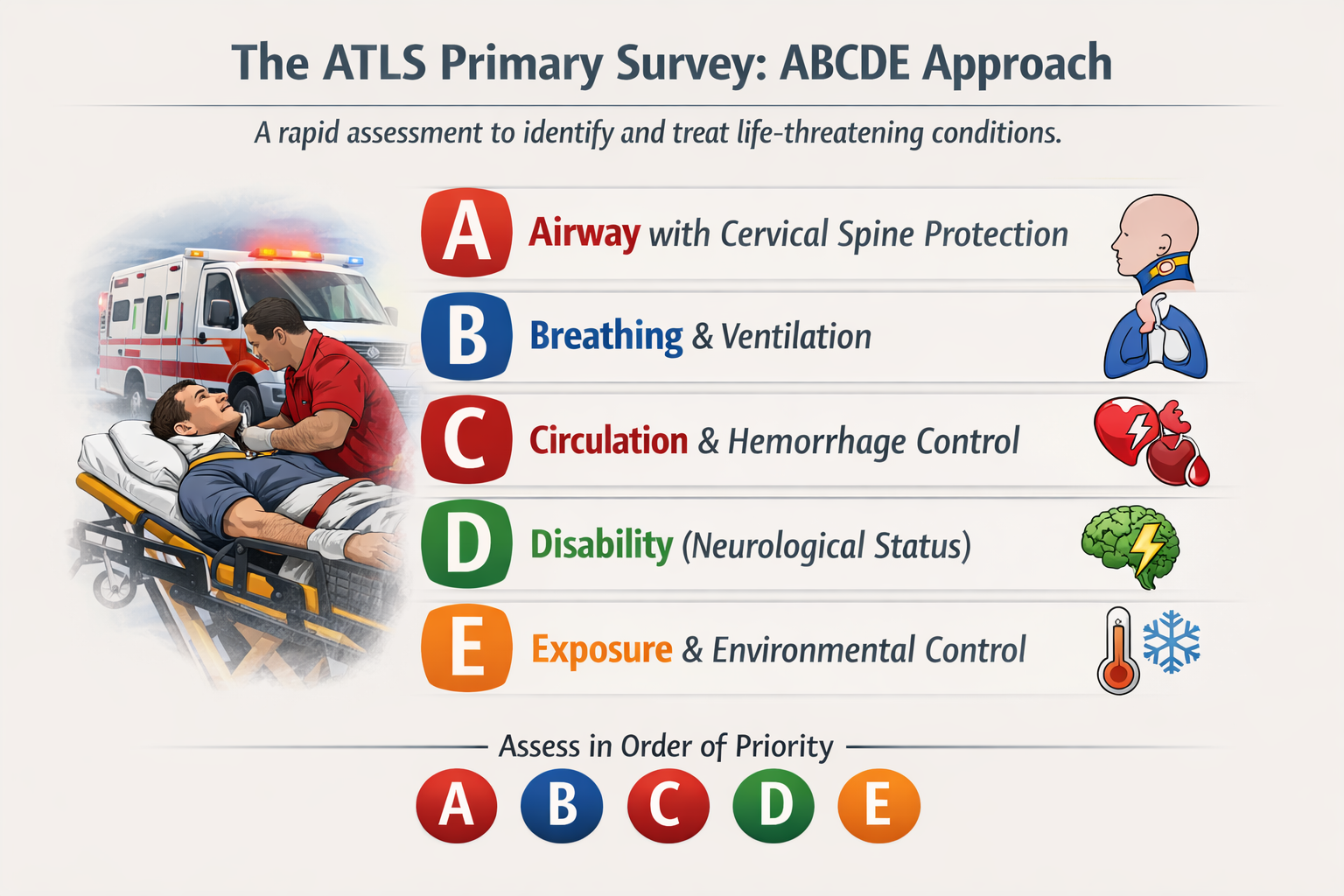
The cornerstone of ATLS is the Primary Survey, a rapid assessment designed to identify and treat life-threatening conditions immediately.
This process follows the ABCDE approach, which stands for:
- A – Airway with cervical spine protection
- B – Breathing and ventilation
- C – Circulation with hemorrhage control
- D – Disability (neurological status)
- E – Exposure and environmental control
Each step is performed in order of priority.
Airway Management with Cervical Spine Protection
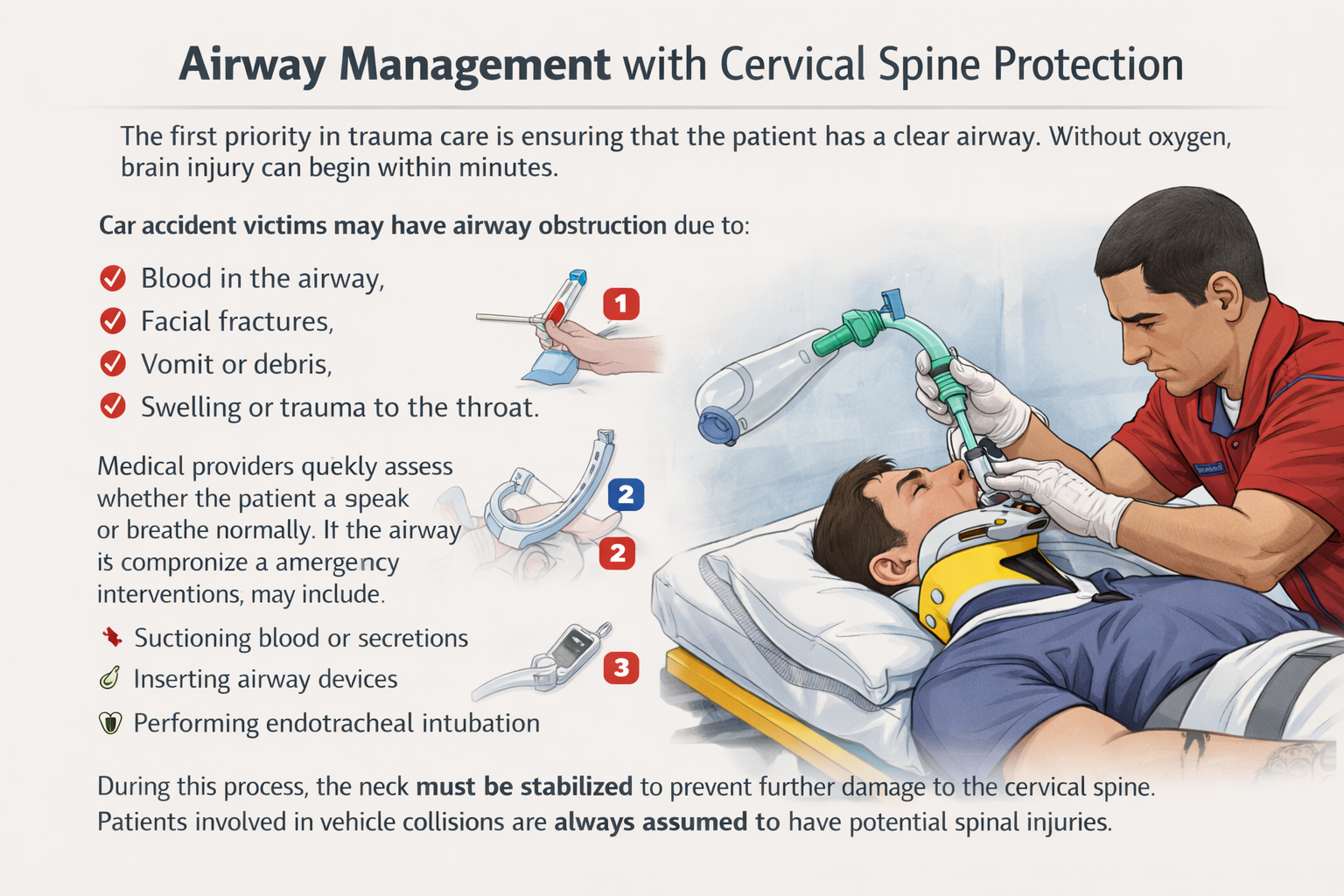
The first priority in trauma care is ensuring that the patient has a clear airway. Without oxygen, brain injury can begin within minutes.
Car accident victims may have airway obstruction due to:
- Blood in the airway
- Facial fractures
- Vomit or debris
- Swelling or trauma to the throat
Medical providers quickly assess whether the patient can speak or breathe normally. If the airway is compromised, emergency interventions may include:
- Suctioning blood or secretions
- Inserting airway devices
- Performing endotracheal intubation
During this process, the neck must be stabilized to prevent further damage to the cervical spine. Patients involved in vehicle collisions are always assumed to have potential spinal injuries until proven otherwise.
Breathing and Ventilation
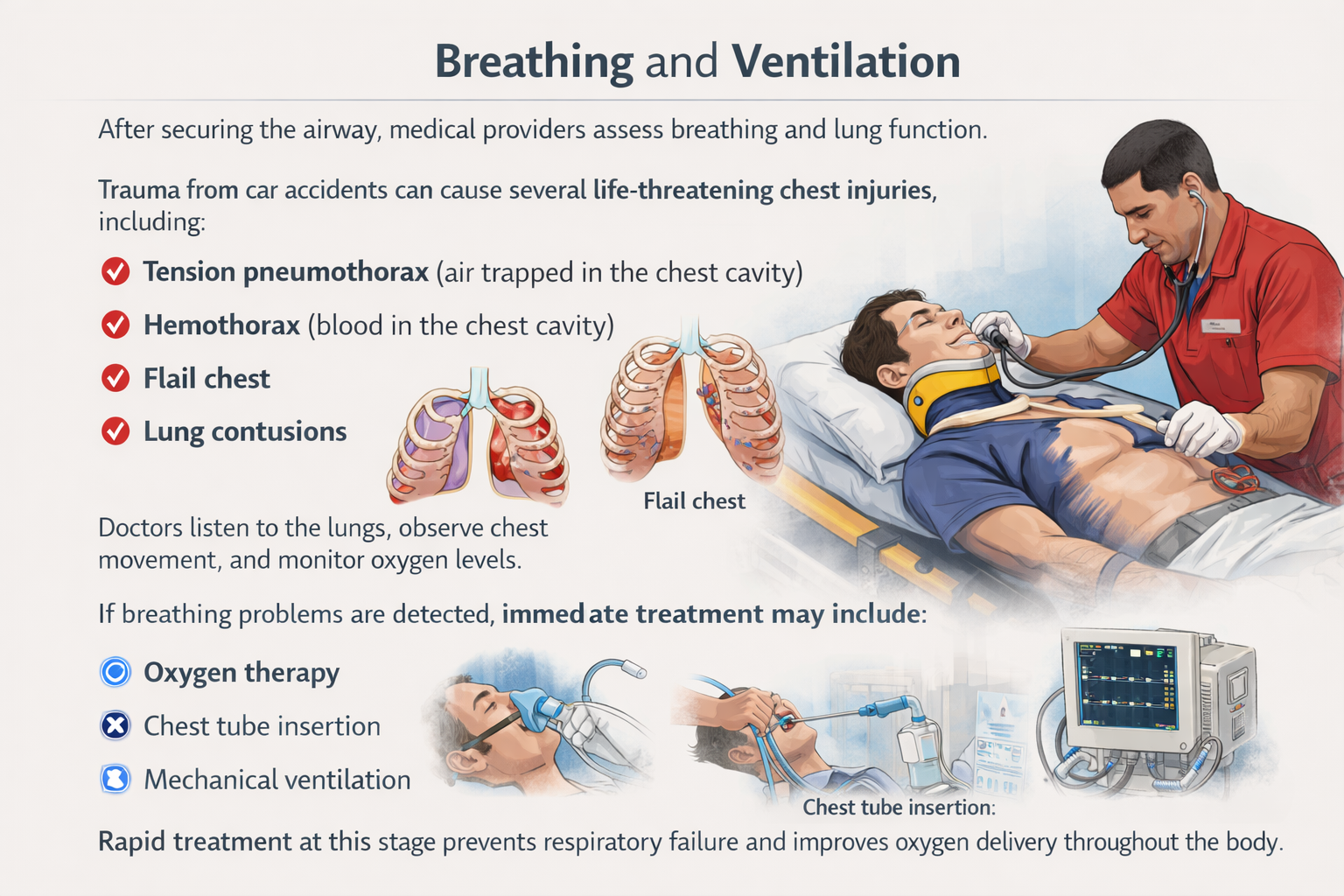
After securing the airway, medical providers assess breathing and lung function.
Trauma from car accidents can cause several life-threatening chest injuries, including:
- Tension pneumothorax (air trapped in the chest cavity)
- Hemothorax (blood in the chest cavity)
- Flail chest
- Lung contusions
Doctors listen to the lungs, observe chest movement, and monitor oxygen levels.
If breathing problems are detected, immediate treatment may include:
- Oxygen therapy
- Chest tube insertion
- Mechanical ventilation
Rapid treatment at this stage prevents respiratory failure and improves oxygen delivery throughout the body.
Circulation and Hemorrhage Control
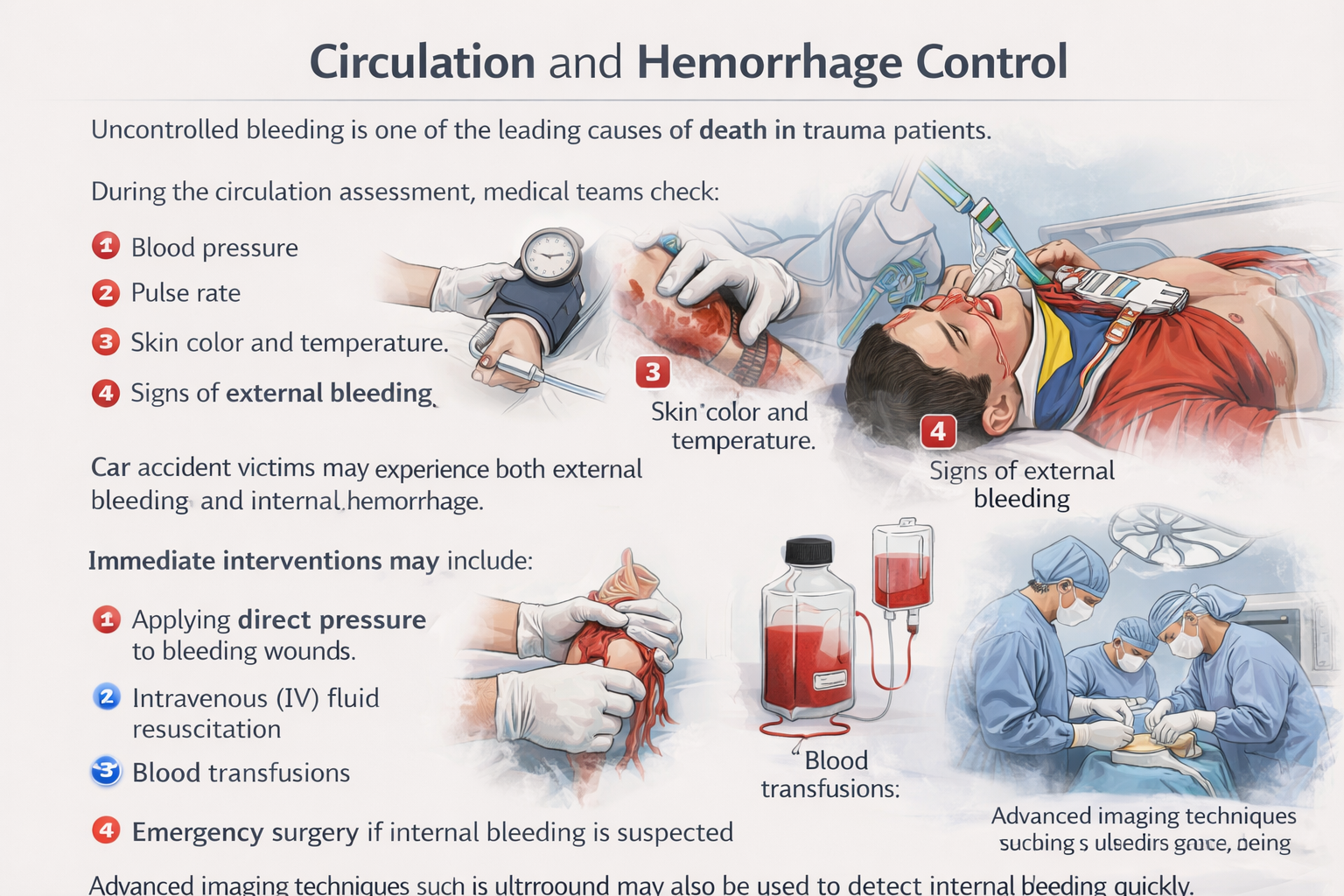
Uncontrolled bleeding is one of the leading causes of death in trauma patients.
During the circulation assessment, medical teams check:
- Blood pressure
- Pulse rate
- Skin color and temperature
- Signs of external bleeding
Car accident victims may experience both external bleeding and internal hemorrhage.
Immediate interventions may include:
- Applying direct pressure to bleeding wounds
- Intravenous (IV) fluid resuscitation
- Blood transfusions
- Emergency surgery if internal bleeding is suspected
Advanced imaging techniques such as ultrasound may also be used to detect internal bleeding quickly.
Disability: Neurological Assessment
The next step involves a rapid neurological evaluation to determine the patient’s level of consciousness and potential brain injury.
Doctors often use the Glasgow Coma Scale (GCS) to measure neurological status. This scale evaluates:
- Eye opening
- Verbal response
- Motor response
The results help determine the severity of a head injury and guide further treatment decisions.
Signs of neurological injury may include:
- Confusion
- Loss of consciousness
- Unequal pupils
- Weakness in the limbs
If a traumatic brain injury is suspected, patients may undergo immediate imaging such as CT scans.
Exposure and Environmental Control
The final step of the primary survey involves fully examining the patient for hidden injuries.
Car accident victims may have injuries that are not immediately visible, including:
- Internal bleeding
- Burns
- Hidden fractures
- Penetrating injuries
Medical teams remove clothing to carefully inspect the entire body.
However, trauma patients are also at risk of hypothermia, which can worsen bleeding and shock. To prevent this, patients are kept warm using blankets, warming devices, and warmed IV fluids.
The Secondary Survey
Once life-threatening conditions are stabilized, doctors perform a secondary survey, which is a detailed head-to-toe examination.
This phase includes:
- A complete physical exam
- Medical history if available
- Imaging tests such as X-rays or CT scans
- Laboratory tests
The goal is to identify injuries that were not immediately life-threatening but still require treatment.
Common injuries identified during the secondary survey include:
- Bone fractures
- Internal organ injuries
- Soft tissue damage
- Spinal injuries
This comprehensive evaluation ensures that no injuries are overlooked.
Diagnostic Tools Used in ATLS
Several diagnostic tools assist medical teams during trauma assessment.
FAST Ultrasound
The Focused Assessment with Sonography for Trauma (FAST) exam is a rapid bedside ultrasound used to detect internal bleeding.
It is commonly performed in the emergency department within minutes of patient arrival.
CT Scans
Computed tomography (CT) scans provide detailed images of internal structures and help identify:
- Brain injuries
- Internal bleeding
- Organ damage
- Fractures
X-Rays
X-rays are often used to evaluate chest injuries, spinal injuries, and bone fractures.
These imaging techniques allow doctors to quickly diagnose injuries and plan appropriate treatment.
Trauma Team Coordination
One of the strengths of ATLS protocols is the team-based approach.
Trauma care typically involves multiple specialists working together, including:
- Emergency physicians
- Trauma surgeons
- Nurses
- Radiologists
- Respiratory therapists
Each member of the trauma team has a defined role during patient resuscitation. This coordinated approach improves efficiency and reduces the risk of delays in treatment.
The Importance of the “Golden Hour”
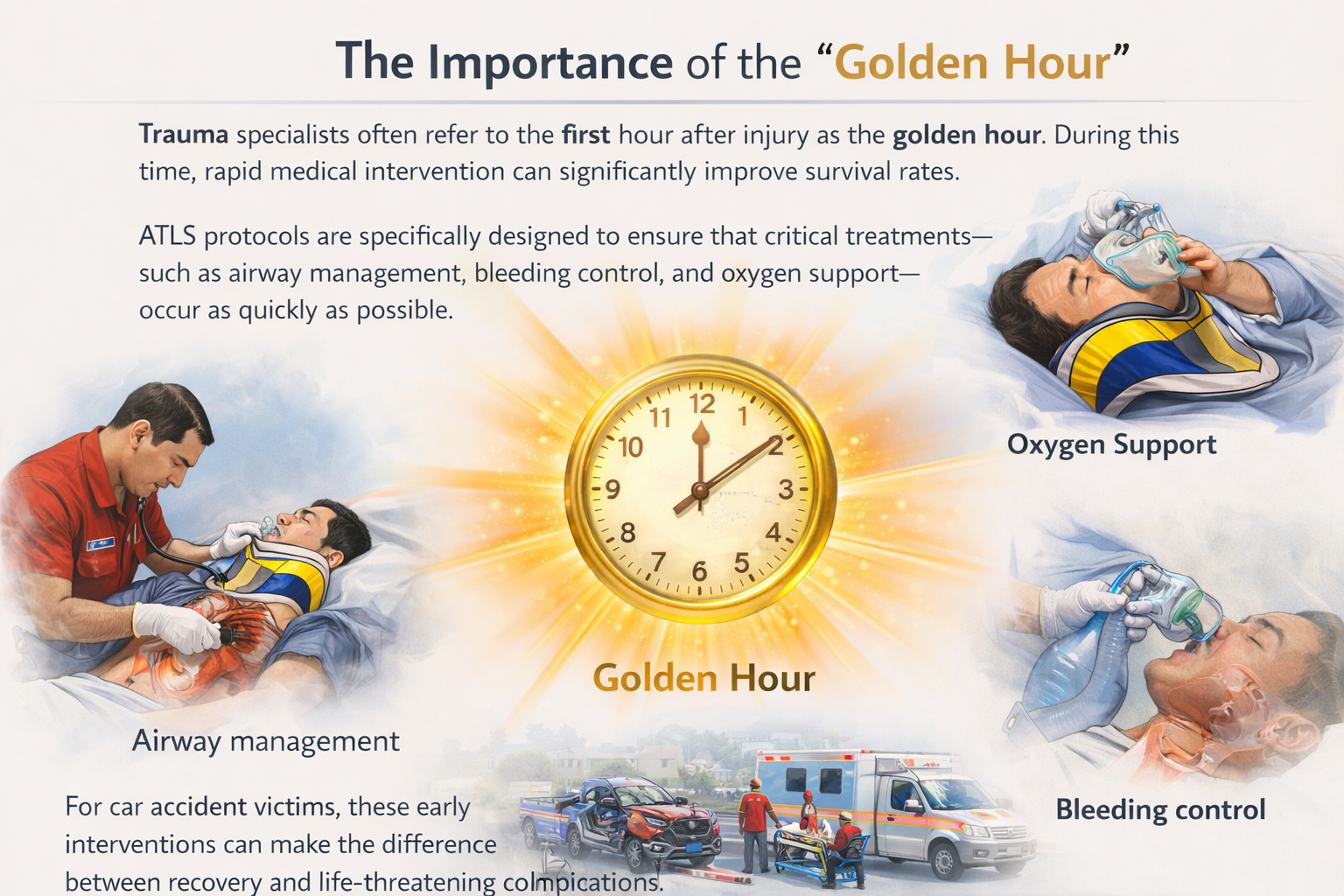
Trauma specialists often refer to the first hour after injury as the golden hour. During this time, rapid medical intervention can significantly improve survival rates.
ATLS protocols are specifically designed to ensure that critical treatments—such as airway management, bleeding control, and oxygen support—occur as quickly as possible.
For car accident victims, these early interventions can make the difference between recovery and life-threatening complications.
Outcomes and Prognosis
The outcome for trauma patients depends on several factors, including:
- Severity of injuries
- Speed of medical intervention
- Patient’s overall health
- Access to advanced trauma care
Hospitals that follow ATLS guidelines typically demonstrate improved survival rates for severely injured patients.
Early stabilization allows patients to receive definitive treatments such as surgery, rehabilitation, and long-term recovery care.
Preventing Severe Trauma in Motor Vehicle Accidents
While ATLS provides a critical framework for managing trauma, prevention remains the best strategy for reducing injuries.
Drivers and passengers can reduce their risk by:
- Wearing seatbelts
- Following traffic laws
- Avoiding distracted driving
- Not driving under the influence
- Using proper child safety restraints
Safety measures significantly reduce the severity of injuries during collisions.
Final Thoughts
Advanced Trauma Life Support protocols have transformed the way medical professionals treat severe injuries after car accidents. By following a structured approach that prioritizes the most life-threatening conditions first, healthcare providers can stabilize patients quickly and efficiently.
The ABCDE system used in ATLS ensures that no critical injury is overlooked, even in the chaotic and high-pressure environment of trauma care.
For victims of motor vehicle accidents, these protocols provide the best possible chance for survival and recovery. Through rapid assessment, coordinated teamwork, and evidence-based treatment, ATLS continues to play a vital role in saving lives in emergency medicine.