

The Best Calcium Tablets for Fractures: A Quick Answer
If you’re looking for the best calcium tablets for fractures, here are the top options based on form, absorption, and supporting nutrients:
- Ultra Calcium Tablets – 1,000 mg calcium carbonate + 800 IU vitamin D3; simple, high-dose daily formula
- Osteocare Chewable Tablets – 800 mg calcium carbonate + magnesium, zinc, and vitamin D3; great if you struggle to swallow pills
- Osteocare Fizz Effervescent Tablets – Dissolves in water; includes vitamin D3, magnesium, and zinc
- Calcium Breakthrough – Multi-form calcium (citrate, bisglycinate, carbonate, phosphate) for broader absorption
- Osteoguard Ultra – Calcium citrate + carbonate blend with vitamin K2 (MK-7) and D3 for bone mineralization
- M.C.H.C. Calcium – Microcrystalline hydroxyapatite + calcium citrate with full bone matrix cofactors; best for advanced skeletal support
Recovering from a fracture — especially after a car accident — is physically and emotionally exhausting. You’re managing pain, medical appointments, insurance paperwork, and trying to figure out what your body actually needs to heal.
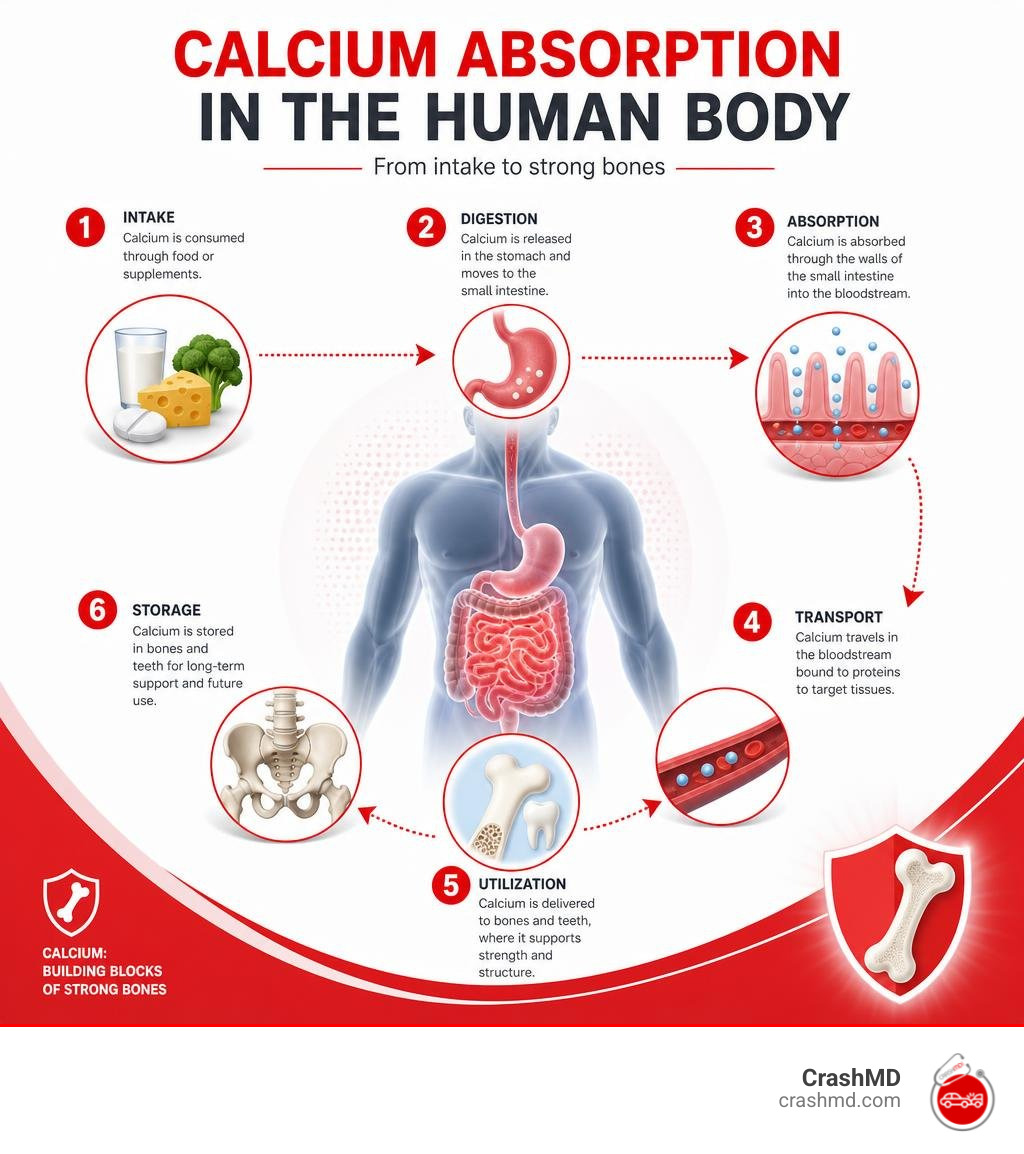
Calcium is the mineral your bones are literally made of. About 99% of the calcium in your body is stored in your bones and teeth. After a fracture, your body needs adequate calcium to rebuild bone tissue. But not all calcium tablets work the same way, and the evidence on who actually benefits from supplements is more nuanced than most product labels suggest.
I’m Dr. Adam Savage, and in this guide I’ll walk you through what the science actually says, which products are worth considering, and how to use them safely — especially if you’re recovering from an injury.
Key fact: Calcium supplements produce roughly a 1% increase in bone density in the first year of use — but that increase doesn’t continue after that. And for healthy adults living independently, supplements alone have not been shown to prevent fractures. The picture is different for people who are vitamin D deficient or have limited sun exposure.
This matters because many people take calcium tablets expecting significant fracture protection, when the real benefit is more targeted than that.
Best calcium tablets for fractures word guide:
Do Calcium Supplements Actually Prevent and Heal Fractures?
It is easy to assume that swallowing a calcium pill is an automatic shield against broken bones. However, clinical studies paint a much more specific picture.
According to a comprehensive Scientific review on fracture prevention, supplementation with calcium, vitamin D, or a combination of both does not prevent fractures in healthy, community-dwelling adults. If you are an active adult with a balanced diet and regular sun exposure, loading up on extra calcium pills won’t necessarily make your bones bulletproof.
However, the story changes dramatically for high-risk populations. A landmark Clinical study on calcium and fracture risk highlighted that in vitamin D-deficient nursing home residents, daily calcium and vitamin D supplementation significantly reduced the risk of hip and non-vertebral fractures.
Why the difference? Institutionalized older adults often have severe, baseline vitamin D deficiencies and inadequate dietary calcium. For them, supplements bridge a critical gap. If you have suffered an acute traumatic injury—like a bone fracture from a car accident—your body enters a high-demand state of bone mineralization. In these cases, ensuring you meet your daily nutritional baseline is vital. For a deeper look at how this process works, check out our In-depth guide to calcium tablets for bone healing.
Choosing the Best Calcium Tablets for Fractures
When shopping for the best calcium tablets for fractures, the most important thing to look at is the “Supplement Facts” label. You need to check the amount of elemental calcium—which is the actual amount of calcium your body can absorb—rather than the total weight of the tablet compound.

The two most common forms of calcium in supplements are:
- Calcium Carbonate: This form is highly common because it contains a massive 40% elemental calcium by weight. However, it requires stomach acid to dissolve and absorb properly, meaning you must take it with food.
- Calcium Citrate: This form contains 21% elemental calcium. Because it is highly bioavailable and does not rely on stomach acid for breakdown, you can take it with or without food. It is also the preferred form for individuals with low stomach acid or those taking acid-reducing medications.
According to the Mayo Clinic guide on choosing calcium supplements, your body can only absorb about 500 to 600 mg of calcium at one single time. Taking a giant 1,200 mg pill in the morning is mostly a waste—your body will simply excrete the excess. For more practical tips on building a recovery-focused supplement routine, read our A practical guide to supplements for bone fracture healing.
Top-Rated Calcium Carbonate Formulations
If you prefer calcium carbonate because it offers more elemental calcium per pill, several top-tier formulations are designed to make absorption easier:
- Ultra Calcium Tablets: This straightforward, vegetarian-friendly option provides 1,000 mg of calcium per two-tablet serving. It is carefully balanced with 800 IU (20 µg) of vitamin D3 to ensure your body can actually utilize the calcium you swallow.
- Osteocare Chewable Tablets: If you dislike swallowing large pills, these orange-and-peppermint flavored chewables are a fantastic alternative. They deliver 800 mg of calcium alongside essential bone-building cofactors like magnesium, zinc, and vitamin D3.
- Osteocare Fizz Effervescent Tablets: These effervescent tablets dissolve into a refreshing orange drink. They use high-quality, pharmaceutical-grade calcium carbonate and include magnesium and zinc to support normal bone mineralization.
Best Calcium Tablets for Fractures with High Bioavailability
If you have a sensitive stomach or want a supplement that is exceptionally easy for your body to process, these highly bioavailable options are excellent choices:
- Calcium Breakthrough: This advanced formula bypasses the limitations of single-source supplements by combining four bioavailable forms of calcium: calcium bisglycinate, calcium citrate, calcium carbonate (sourced from mineral-rich marine algae), and calcium phosphate. It also features manganese and copper to activate bone matrix synthesis.
- Osteoguard Ultra: This power formula blends calcium citrate and carbonate with magnesium, vitamin D3, and vitamin K2 (MK-7 derived from chickpeas). Vitamin K2 plays a critical role in bone healing by activating osteocalcin, the protein that binds calcium directly to your bone matrix rather than letting it settle in your arteries.
Advanced Bone Matrix and MCHC Supplements
For those looking for comprehensive skeletal support that goes beyond basic mineral salts, whole-bone extracts are the gold standard:
- M.C.H.C. Calcium: This premium formula features Microcrystalline Hydroxyapatite Concentrated (MCHC), a highly bioavailable compound derived from bovine bone. Unlike isolated calcium salts, MCHC provides calcium and phosphorus in their natural clinical ratio, along with naturally occurring bone proteins, collagen peptides, and glycosaminoglycans. It is paired with calcium citrate for acid-independent absorption and vitamin K1 to support bone matrix integrity.
How to Optimize Dosage and Avoid Risks of Calcium Supplements
More is not always better. Taking massive doses of calcium supplements can lead to uncomfortable and sometimes dangerous side effects.
Over-supplementing with calcium can cause gastrointestinal issues like constipation and bloating. More seriously, excess calcium that your body cannot absorb is filtered through your kidneys, increasing your risk of painful kidney stones by roughly 17%. Furthermore, some clinical data suggests that high-dose calcium supplements may increase the risk of cardiovascular issues, including heart attacks, by about 20% due to calcium depositing in arterial walls.
To keep your recovery safe, follow these rules:
- Split your doses: Never take more than 500–600 mg of calcium at one time.
- Stay hydrated: Drink plenty of water to help your kidneys flush out excess minerals.
- Watch your medication timing: If you are taking osteoporosis medications like bisphosphonates, wait at least 30 minutes before taking your calcium supplement, as calcium can interfere with their absorption.
- Balance with Vitamin D: Keep your daily vitamin D intake under 4,000 IU unless prescribed by a doctor, as excessive vitamin D can actually accelerate bone loss and increase your risk of falls.

To help you plan your daily intake, consult the table below for standard daily calcium and vitamin D requirements:
| Age & Sex Group | Daily Calcium RDA | Daily Vitamin D RDA | Safe Upper Limit (Calcium) |
|---|---|---|---|
| Women 50 & younger | 1,000 mg | 600 IU (15 mcg) | 2,500 mg |
| Women 51 & older | 1,200 mg | 800 IU (20 mcg) | 2,000 mg |
| Men 70 & younger | 1,000 mg | 600 IU (15 mcg) | 2,500 mg |
| Men 71 & older | 1,200 mg | 800 IU (20 mcg) | 2,000 mg |
Before starting any high-dose supplement protocol, we highly recommend consulting a medical professional who understands your specific injury and recovery needs.
For a complete breakdown of how different vitamins and minerals interact during the bone-healing process, refer to The complete guide to supplements for fractures.
Frequently Asked Questions about the Best Calcium Tablets for Fractures
What are the best calcium tablets for fractures to take after an accident?
The best tablet is one that combines a highly bioavailable form of calcium (like calcium citrate or MCHC) with vitamin D3 and magnesium. After an accident, your body requires consistent, daily skeletal support to handle bone mineralization. Choosing a supplement with active cofactors helps ensure that the calcium you consume is directed straight to your healing bones.
Can I get enough calcium from my diet instead of tablets?
Absolutely, and getting your calcium from dietary sources is actually the preferred method. High-quality dietary sources include low-fat dairy products (milk, yogurt, and cheese), leafy greens (like collard greens), and canned fish with soft bones (like sardines). Supplements should only be used to bridge the gap if your dietary intake falls short of your daily age-based requirements.
Should I take calcium carbonate or calcium citrate for a broken bone?
It depends on your lifestyle and stomach sensitivity. Calcium carbonate contains more elemental calcium per pill but must be taken with a meal because it requires stomach acid to absorb. Calcium citrate is gentler on the stomach, has higher absorption efficiency, and can be taken on an empty stomach, making it a more flexible option during a hectic recovery.
Conclusion
Recovering from a bone fracture is a journey that requires patience, proper medical care, and targeted nutrition. While the best calcium tablets for fractures can help support your skeletal system, they are only one piece of the recovery puzzle.
At CrashMD, we specialize in post-accident medical care across Arizona, Nevada, Texas, Oklahoma, and California. We know that healing from an injury involves more than just physical recovery—it also requires careful documentation of your injuries for legal and insurance purposes. We advocate for your health, helping you secure tailored pain management and treatment plans so you can focus entirely on getting better.
If you want to dive deeper into optimizing your recovery protocol, you can explore targeted nutritional strategies and discover how to give your body the best tools to heal.