

Immediate At-Home Strategies for Broken Rib Pain Relief
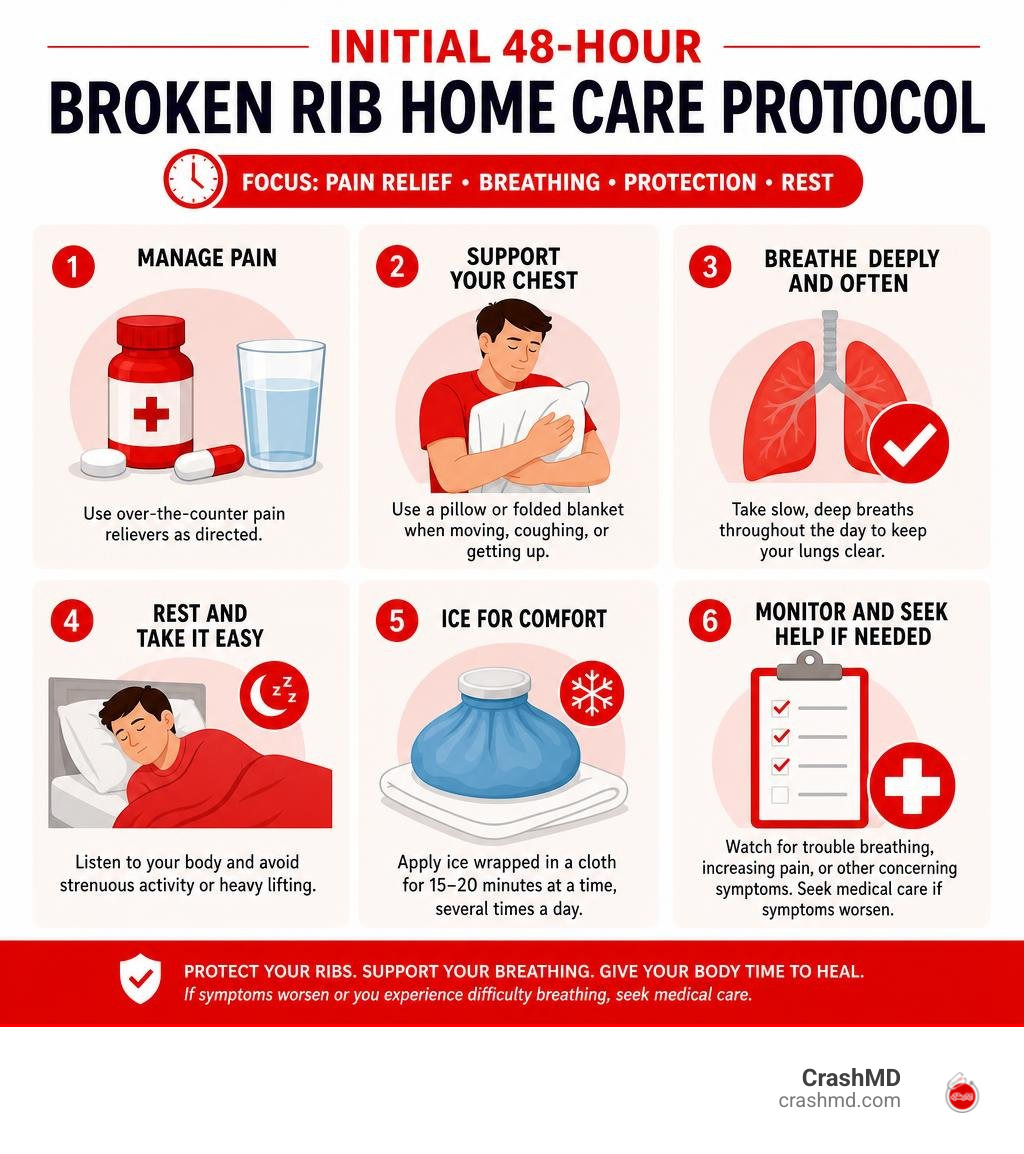
Immediate broken rib pain relief focuses on controlling acute inflammation and protecting lung function through over-the-counter pain relievers (like acetaminophen or ibuprofen), applying 20-minute cold packs to reduce swelling, practicing gentle pillow splinting during coughs or deep breaths, and resting in an elevated, semi-upright position. Around 30% of people who experience chest trauma break at least one rib, and structured home care helps manage discomfort while preventing respiratory complications.
Over-the-Counter Medications for Broken Rib Pain Relief
Oral analgesics form the foundation of early conservative care. Acetaminophen works through central pain pathways to reduce overall ache without irritating your stomach lining. Non-steroidal anti-inflammatory drugs (NSAIDs) such as ibuprofen and naproxen directly target localized swelling at the fracture site.
Some protocols suggest relying primarily on acetaminophen during the initial 48 hours before adding systemic NSAIDs, while topical anti-inflammatory gels (such as diclofenac) can offer localized soothing without heavy digestive impact. Always check with your physician before starting NSAIDs if you have high blood pressure, kidney disease, or a history of stomach ulcers, as noted in the Rib fracture – aftercare: MedlinePlus Medical Encyclopedia guidelines. Exploring conservative options helps you find your relief practical tips to ease pain and discomfort along the way.
Cryotherapy and Cold Compression Techniques
Cold therapy provides rapid, non-pharmacological relief by constricting localized blood vessels, numbing irritated intercostal nerves, and curbing soft-tissue swelling.
Apply an ice pack or a bag of frozen peas wrapped in a thin towel directly over the tender area. Apply it for 20 minutes at a time during waking hours for the first 48 hours. After two days, apply cold therapy for 10 to 20 minutes three times daily as needed. Never place bare ice directly onto your skin.
Splinting and Mechanical Support Without Restrictive Binding
Old-school remedies often involved wrapping the chest with tight elastic bandages, but modern medicine strictly advises against this practice. Binding the chest wall restricts normal lung expansion, trapping secretions at the base of your lungs and dramatically increasing the risk of secondary chest infections like pneumonia.
Instead of tight wraps, rely on manual pillow splinting. When you need to cough, laugh, sneeze, or take a deeper breath, hug a firm pillow against the fractured area. This physical support stabilizes the bone fragments against muscle tension, reducing sharp pain while allowing your lungs to expand fully.
Clinical and Prescription Options for Broken Rib Pain Relief

When at-home methods leave pain uncontrolled, professional medical interventions provide targeted support to keep you breathing comfortably.
Prescription Medications and Muscle Relaxants
Severe chest trauma can cause surrounding thoracic muscles to lock up in painful spasms. Physicians may prescribe short-term antispasmodics or muscle relaxants alongside multimodal non-opioid regimens to ease muscular tension around the rib cage.
For intense pain that prevents basic respiration, a short course of prescription opioids (such as tramadol or codeine) may be considered under strict clinical supervision. Because opioids can suppress the central respiratory drive, healthcare teams monitor these medications carefully. Patients can explore non-invasive wonders effective treatments for chronic discomfort to avoid over-reliance on heavy sedation, while reviewing clinical guidance on Care options for patients with rib fracture – Mayo Clinic.
Intercostal Nerve Blocks and Advanced Medical Interventions
For severe, localized pain that fails to respond to oral medications, targeted interventional procedures offer rapid relief:
- Intercostal Nerve Blocks: A clinician uses ultrasound guidance to inject a local anesthetic directly around the intercostal nerves running along the bottom groove of each fractured rib. This temporarily numbs the pain pathway for hours or days without clouding your mental clarity.
- Thoracic Epidural Analgesia: Used primarily in hospital trauma settings for patients with multiple broken ribs, delivering continuous regional relief across multiple chest segments.
- Surgical Stabilization of Rib Fractures (SSRF): Reserved for severe, displaced fractures, non-union, or flail chest, using specialized titanium plates and screws to restore chest wall stability.
Essential Breathing Exercises and Preventing Respiratory Complications
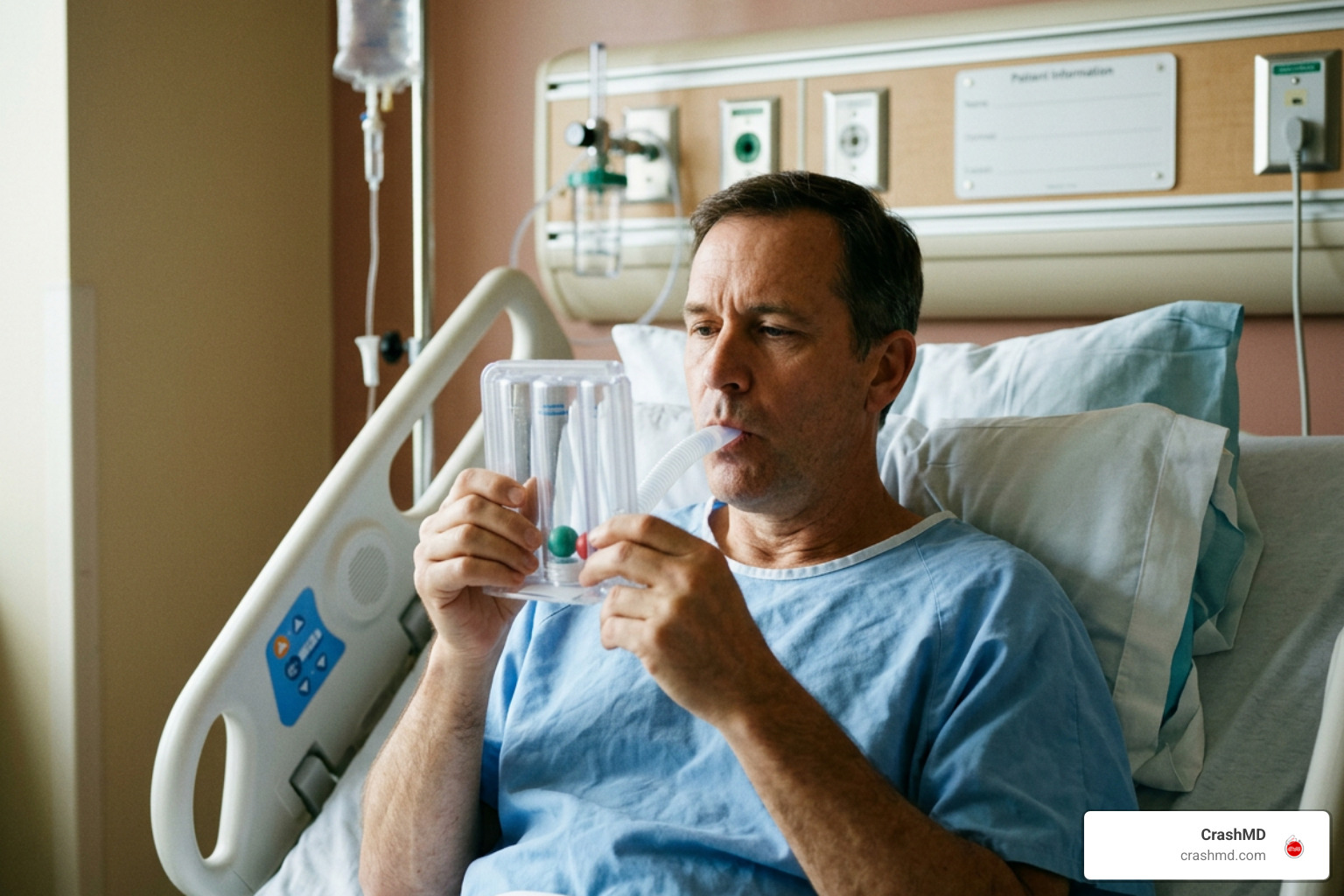
Taking shallow breaths feels like the safest way to avoid rib pain, but hypoventilation causes tiny air sacs in your lungs to collapse (atelectasis). This creates a breeding ground for bacteria. Active respiratory care is essential, as detailed in Broken or bruised ribs – NHS resources. If you experienced severe blunt trauma, review a practical guide to pulmonary contusion to watch for underlying lung bruising.
Safe Coughing and Phlegm Clearance Techniques
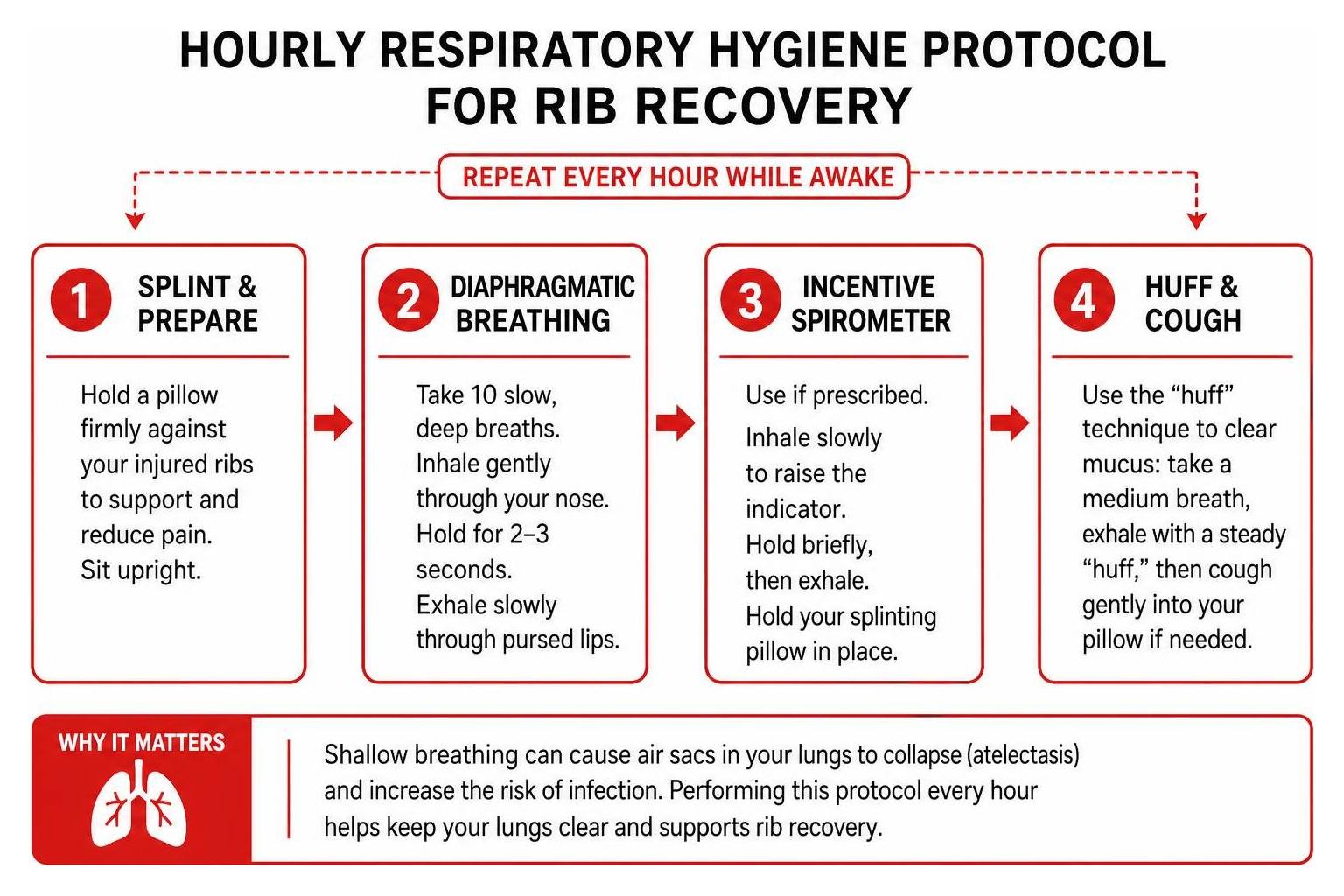
Clearing mucus is vital to keep your airways open. Use the “huffing” technique rather than sharp, forceful coughs:
- Sit upright and hold a pillow firmly against your injured ribs.
- Take a slow, medium-depth breath in through your nose.
- Open your mouth wide and breathe out forcefully from your diaphragm with a steady “huff” sound (like trying to fog up a bathroom mirror).
- Follow with a gentle, supported cough into your pillow if secretions reach your throat.
Hourly Deep Breathing Protocols and Incentive Spirometry
Perform diaphragmatic breathing exercises every hour while awake:
- Take 10 slow, deep breaths every hour. Inhale gently through your nose, hold the breath for two to three seconds, and exhale slowly through pursed lips.
- If prescribed an incentive spirometer, use it regularly to visually monitor your lung volume. Hold your splinting pillow in place to keep the exercise comfortable.
Safe Sleeping Positions and Ergonomic Adjustments
Nighttime often brings an uptick in pain as muscles relax and pressure shifts onto the chest wall. Adjusting your sleep posture is essential for uninterrupted rest. If your injury involves surrounding cartilage, our guide on how to master rib cartilage injury recovery in 30 days provides additional positional tips.
Elevating the Torso and Using Supportive Pillows
Lying completely flat stretches the intercostal muscles and makes diaphragmatic expansion more difficult. Instead:
- Sleep in a semi-upright position (at a 30- to 45-degree angle) using a wedge pillow or by sleeping in a supportive recliner during the first week.
- If you transition to side sleeping, lie on your uninjured side and place a body pillow between your knees and against your chest to prevent your torso from twisting overnight.
Mobility Adjustments for Getting In and Out of Bed
Avoid sitting straight up from a flat position, as this engages your core and torques the rib cage. Use the log-roll method:
- Bend your knees while lying on your back.
- Roll your entire body—shoulders, hips, and knees—together onto your uninjured side in one fluid motion.
- Drop your feet gently over the edge of the bed while using your arms to push your upper body into a seated position.
Recovery Timeline, Safe Activities, and Emergency Warning Signs
Most uncomplicated rib fractures heal within 4 to 6 weeks, though the acute phase requires careful activity modification.
| Recovery Phase | Typical Timeline | Expected Symptoms | Recommended Activity Level |
|---|---|---|---|
| Phase 1: Acute Inflammatory | Days 1 to 7 | Sharp pain with movement, coughing, and deep breathing; localized swelling. | Strict avoidance of lifting; hourly breathing exercises; light walking; cold therapy. |
| Phase 2: Early Callus Formation | Weeks 2 to 3 | Pain transitions to a dull ache; sharp twinges only during sudden movements. | Light daily household tasks; lifting restricted to under 10 lbs; continue walking. |
| Phase 3: Bone Consolidation | Weeks 4 to 6 | Significant pain reduction; tenderness only upon direct palpation. | Gradual return to normal routines; avoid contact sports and heavy lifting (>25 lbs). |
| Phase 4: Full Remodeling | Beyond Week 6 | Bone structure stabilizes; residual stiffness resolving. | Physician clearance for full workouts, heavy labor, and contact sports. |
Throughout recovery, protect your chest by avoiding heavy pushing, pulling, contact sports, and prolonged bed rest. To understand how systemic repair works after trauma, see the ultimate guide to post-crash physical repair.
Certain symptoms signal underlying complications such as a punctured lung, internal bleeding, or organ injury, as detailed in the Rib Fractures – Injuries and Poisoning – Merck Manual Consumer Version.
Seek emergency medical care immediately if you notice:
- Sudden or worsening shortness of breath
- Coughing up pink, frothy, or blood-streaked mucus
- Pain spreading across your shoulder or into your abdomen
- A high fever, chills, or thick green/yellow sputum
- Dizziness, confusion, or a visible sinking segment of the chest wall (flail chest)
Frequently Asked Questions About Broken Rib Recovery
How long does broken rib pain typically last?
Acute pain generally eases within 2 to 3 weeks as early bone callus bridges the fracture gap. Most uncomplicated rib fractures heal fully within 4 to 6 weeks, though mild tenderness or stiffness during strenuous exertion may linger for several months.
Is it safe to wrap or bind a broken rib for support?
No. Tight elastic chest wraps, binders, or restrictive tape prevent your lungs from expanding fully. This hypoventilation can lead to atelectasis (collapsed lung tissue) and pneumonia. Always use manual pillow splinting instead of restrictive wraps.
When should I go to the emergency room for rib fracture pain?
Go to the emergency department immediately if your pain stems from severe trauma (like a motor vehicle collision), if you develop sudden shortness of breath, cough up blood, experience severe abdominal or shoulder pain, or notice uneven movement of your chest wall.
Conclusion
Managing rib fracture recovery requires balancing effective pain control with proactive lung care. By combining cold therapy, scheduled medications, pillow splinting, and structured breathing exercises, you can protect your lungs and heal safely. For nutritional strategies that support bone remodeling during recovery, explore a practical guide to supplements for bone fracture healing.
At CrashMD, we guide accident victims through every stage of recovery across Arizona, Nevada, Texas, Oklahoma, and Northern and Southern California. Our medical teams provide specialized post-crash injury evaluations, comprehensive pain management plans, and the meticulous clinical documentation needed to support your personal injury claims. If you are recovering from a motor vehicle accident, reach out to our team to ensure your health is fully protected.