

Why Hip Pain After an Accident Deserves Your Attention
Hip pain after an accident, fall, or intense activity can range from a minor annoyance to a debilitating condition. Whether you’re struggling to walk, sleep, or stand, understanding the cause is the first step toward recovery.
Common causes include:
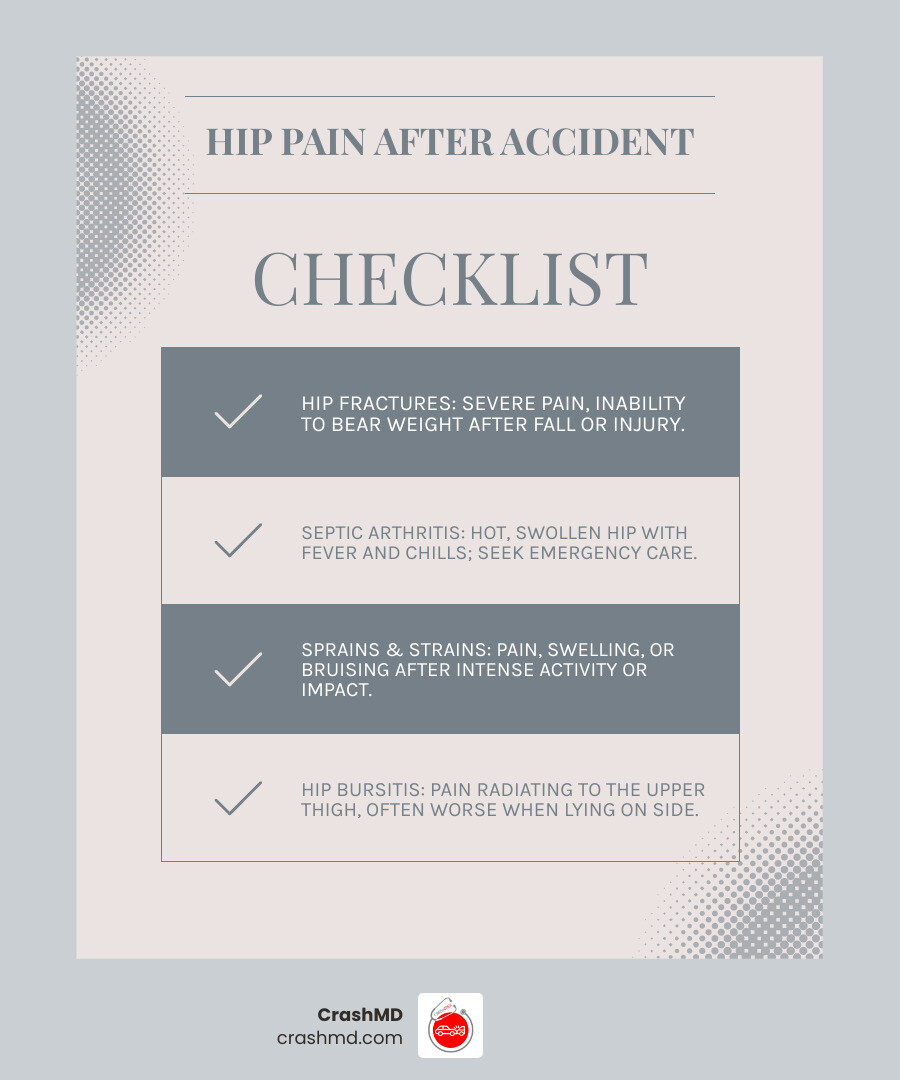
- Hip fractures – Severe pain and inability to walk after a fall.
- Sprains or strains – Pain and swelling after intense exercise.
- Osteoarthritis – Stiffness that improves with movement.
- Rheumatoid arthritis – Stiffness worse after rest.
- Hip bursitis – Pain spreading to the thigh, worse when lying on your side.
- Septic arthritis – Hot, swollen hip with fever; a medical emergency.
The hip is a complex joint connecting the femur to the pelvis. When injured, it affects muscles, tendons, and nerves. For accident victims, pain may appear immediately or develop over weeks. Recognizing when pain signals a serious issue is vital.
Greater trochanteric pain syndrome (GTPS) often affects those aged 40-60, particularly women, but accident-related injuries can affect anyone. This guide covers causes, warning signs, and treatment options from RICE to surgery.
Common Causes of Hip Pain After an Accident
Hip pain after an accident often involves traumatic injuries requiring immediate attention. For victims in Arizona, Nevada, Texas, Oklahoma, and California, understanding these causes is essential for effective diagnosis.
- Hip Fracture: A break in the upper femur near the joint. It causes severe pain and an inability to bear weight. This is a medical emergency.
- Labral Tears: The labrum is cartilage lining the hip socket. Forceful twisting or impact can tear it, causing clicking, locking, or catching sensations.
- Femoroacetabular Impingement (FAI): An accident can exacerbate FAI, where extra bone growth causes the ball and socket to rub, leading to acute pain and limited motion.
- Osteoarthritis: Trauma can accelerate cartilage breakdown, leading to stiffness and a dull ache that worsens with activity.
Hip pain can also be referred from the lower back. For more details, see the Hip pain: MedlinePlus Medical Encyclopedia.
Recognizing Serious Symptoms of Hip Pain After a Fall
Seek immediate medical attention if you experience:
- Inability to Bear Weight: Suggests a fracture or severe structural injury.
- Severe, Unrelenting Pain: Pain not eased by rest or OTC medication.
- Nighttime Discomfort: Persistent pain that disrupts sleep while lying still.
- Clicking or Popping with Pain: Indicates potential labral tears or instability.
- Limping or Restricted Motion: Difficulty with daily tasks like putting on shoes.
- Deformity or Significant Swelling: Visible changes after an impact.
- Fever and Chills: Signs of a serious infection like septic arthritis.
Use a Symptom Checker for guidance, but always consult a professional.
Effective Strategies for Managing Hip Pain After Exercise
Hip pain after exercise often stems from muscle strain, tendonitis, or overuse. Active individuals in our service areas can manage this with proactive steps:
- Muscle Strain: Overstretched fibers in the hip flexors or glutes.
- Tendonitis: Inflammation of tendons, such as iliopsoas or gluteal tendons.
- Overuse: Gradual damage from repetitive stress without adequate recovery.
Management Strategies:
- Warm-up and Cool-down: Prepare muscles with dynamic stretches and recover with static stretches.
- Gradual Progression: Increase intensity slowly to avoid injury.
- Cross-Training: Vary activities to distribute stress.
- The RICE Method: Rest, Ice (10-15 mins), Compression, and Elevation.
If pain persists, schedule a consultation to identify the root cause.
Identifying Red Flags: When to See a Specialist
Hip pain after an accident can indicate underlying conditions requiring expert care.
Red flags include:
- Persistent Pain: Lasting more than a few weeks despite home care.
- Limited Mobility: Difficulty climbing stairs or getting out of a car.
- Clicking and Popping: Painful joint noises suggesting structural damage.
- Muscle Weakness: Limping or feeling unstable.
- Radiating Pain: Pain spreading to the groin, leg, or lower back.
Early intervention prevents worsening and may reduce the need for invasive surgery. For accident victims, specialist care ensures injuries are documented for legal purposes.
Signs of Septic Hip Bursitis
Septic hip bursitis is an infection of the bursa and is a medical emergency. Watch for:
- Fever and Chills: Systemic signs of infection.
- Redness and Warmth: Skin over the hip feeling hot and looking inflamed.
- Severe Tenderness: Intense pain when the area is touched.
- Swelling: Significant fluid accumulation in the bursa.
If you have hip pain after a skin break near the joint accompanied by these symptoms, seek emergency care immediately.
Understanding GTPS and Hip Bursitis
Hip pain after daily activity often involves Greater Trochanteric Pain Syndrome (GTPS) or hip bursitis, common in middle-aged individuals and women.
Greater Trochanteric Pain Syndrome (GTPS)
GTPS involves irritation of the tendons and bursae over the bony knob (greater trochanter) on the outside of the thigh. Symptoms include pain when lying on the affected side, climbing stairs, or sitting with legs crossed. Risk factors include sudden activity increases, weight, and previous injury.
Hip Bursitis
This is the inflammation of fluid-filled sacs (bursae) that reduce joint friction.
- Trochanteric Bursitis: Pain on the outer hip; often part of GTPS.
- Iliopsoas Bursitis: Pain in the groin or front of the hip.
- Ischial Bursitis: Pain in the buttock, worse when sitting on hard surfaces.
- Septic Hip Bursitis: An infected bursa requiring urgent antibiotics.
| Type of Hip Bursitis/Condition | Location of Pain | Key Characteristics |
|---|---|---|
| GTPS | Outer hip/thigh | Includes tendinopathy; common in women 40-60. |
| Trochanteric Bursitis | Outer hip | Inflammation over the greater trochanter. |
| Iliopsoas Bursitis | Groin/Front hip | Worsened by hip flexion (e.g., walking uphill). |
| Ischial Bursitis | Upper buttock | Pain when sitting for long periods. |
| Septic Hip Bursitis | Varies | Infection; fever and severe pain. Emergency. |
Treatment Options: From RICE to Hip Replacement
Managing hip pain after an injury involves a tiered approach, starting with conservative care for patients in Arizona, Nevada, Texas, Oklahoma, and California.
Home Remedies:
- RICE: Rest, Ice, Compression, and Elevation for acute flare-ups.
- OTC Medications: NSAIDs (ibuprofen) for short-term pain relief.
- Lifestyle: Weight management and activity modification to reduce joint stress.
- Home Safety: Removing clutter to prevent falls.
Injections: Corticosteroid injections can reduce inflammation in cases of GTPS or bursitis when oral meds fail.
Physical Therapy: Focuses on strengthening and flexibility (see below).
Surgery:
- Hip Arthroscopy: Minimally invasive repair of labral tears or FAI.
- Hip Replacement: Replacing diseased joint parts with artificial components for advanced arthritis or severe fractures. See Hip Replacement Surgery for more.
The Role of Physical Therapy
Physical therapy is vital for recovering from hip pain after an accident. A custom plan helps through:
- Strengthening: Targeting glutes and core to support the joint.
- Flexibility: Restoring range of motion through manual therapy and stretching.
- Pain Management: Using therapeutic exercises to reduce inflammation.
- Biomechanics: Correcting movement patterns to minimize joint stress.
- Balance: Improving proprioception to prevent future falls.
Rehabilitation for conditions like GTPS can take 6-12 months. Our team ensures your progress is documented for both medical and legal needs.
Frequently Asked Questions about Hip Health
When should I see a doctor for hip pain?
See a professional if hip pain after an incident is persistent (over 2 weeks), severe, prevents weight-bearing, or is accompanied by fever, swelling, or clicking. For accident victims, prompt evaluation is essential for injury documentation.
Can hip pain be managed without surgery?
Yes. Most cases resolve with conservative care, including physical therapy, activity modification, OTC medications, and corticosteroid injections. Surgery is typically a last resort for structural damage or failed conservative treatment.
What is the recovery time for GTPS?
GTPS recovery is a gradual process, often taking 6 to 12 months of consistent rehabilitation. Success requires activity modification and a dedicated strengthening program to build tendon resilience.
Conclusion
Hip pain after an accident or injury can disrupt every facet of life. Understanding the cause—whether it’s a fracture, GTPS, or bursitis—is the first step toward healing.
At CrashMD, we empower victims across Arizona, Nevada, Texas, Oklahoma, and California with expert care. I’m Dr. Adam Savage, and our mission is to guide you through recovery with custom treatment and meticulous injury documentation. We advocate for your health and ensure your recovery is comprehensive before legal actions proceed. Don’t let hip pain sideline you; reach out today to get back on your feet.