

Understanding Your Medical Evaluation After an Accident
What do doctors check after a car accident depends on your symptoms and the collision, but every evaluation follows a systematic approach to catch injuries that aren’t immediately obvious.
Here’s what doctors typically check:
- Vital Signs – Blood pressure, heart rate, and breathing to detect shock or internal problems
- Head and Brain – Neurological tests, eye tracking, memory checks for concussions or traumatic brain injury
- Neck and Spine – Range of motion, tenderness, numbness to identify whiplash or disc injuries
- Chest and Ribs – Breathing, bruising, fractures that could indicate internal damage
- Abdomen – Palpation and inspection for internal bleeding or organ injury
- Extremities – Swelling, deformity, fractures in arms and legs
- Soft Tissues – Muscles, ligaments, and tendons for strains and tears
Being in a car accident is overwhelming, leaving you to deal with police reports, insurance calls, and a body that might not hurt yet.
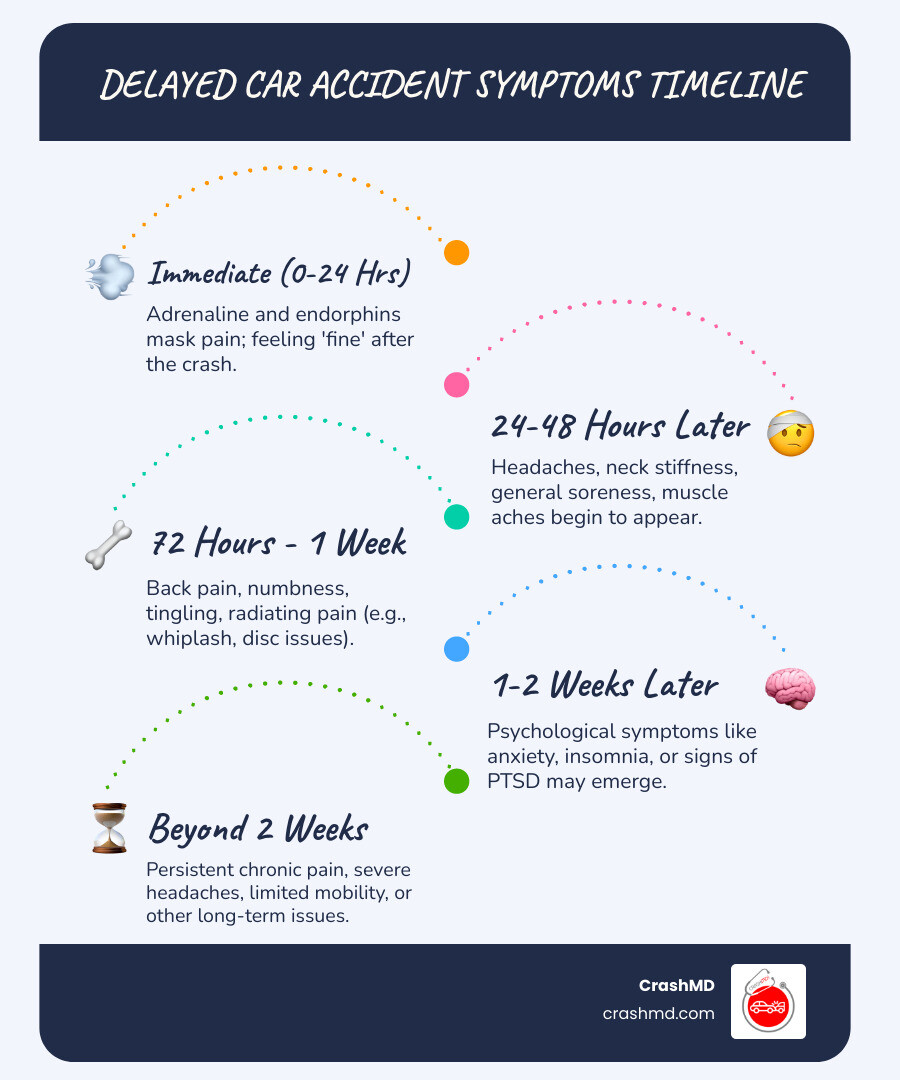
That’s the tricky part. Adrenaline and endorphins flood your system during a crash, masking pain that can show up hours or even days later. You might walk away feeling fine, only to wake up the next morning unable to turn your head.
This is why a thorough medical evaluation matters, even when you feel okay. Doctors know what to look for beyond obvious cuts and bruises, such as internal bleeding, brain injuries, and spinal damage that won’t show up until the shock wears off.
A complete medical exam also creates a documented record of your injuries. This timeline is crucial if you need to file an insurance claim. Adjusters often argue that delayed treatment means your injuries weren’t serious or weren’t caused by the accident.
This guide explains what happens during a post-accident medical check-up, what injuries doctors look for, and why each test matters for your recovery.
Why Seeking Medical Attention Immediately is Crucial
After a car accident, hoping any aches will resolve on their own is a risky approach for both your health and any potential personal injury claim. Seeking immediate medical attention is paramount, even if you feel fine.
During a crash, your body releases a surge of adrenaline and endorphins that can mask pain, making you feel “okay” despite significant injuries. It’s common for people to feel no pain at the scene, only to experience severe symptoms like pain, numbness, or dizziness a day or even a week later.
This delayed onset of symptoms is common for several types of injuries:
- Whiplash and soft tissue injuries: These can take days to manifest as inflammation builds up.
- Head injuries and concussions: Symptoms like confusion or dizziness might not appear for hours or days.
- Internal injuries: Conditions like internal bleeding might not present outward symptoms immediately but can be life-threatening if untreated. Swelling and bruising may not appear for 24-48 hours.
- Spinal cord damage: Numbness can indicate serious issues like disc herniation that might not be immediately obvious.
Ignoring these potential issues can lead to severe health consequences. A minor ache could escalate into a chronic condition. This is why early intervention is key for post-accident recovery.
Beyond your health, delaying medical treatment can severely hurt a personal injury claim. Insurance adjusters often argue that if you didn’t seek immediate medical attention, your injuries weren’t caused by the accident or weren’t serious. They might claim something else caused or worsened the injury between the accident and your treatment, which can reduce or deny your claim.
The legal system views prompt medical treatment as essential for validating an injury claim. By seeing a doctor right away, you create an official, time-stamped record linking your injuries to the accident. This documentation is crucial for proving causation and strengthening your case. We always advise patients to see a doctor as soon as possible after a car accident. For more on this, you can read about reasons to see a doctor after a car accident.
The Initial Medical Assessment: What to Expect
When you first see a doctor after a car accident, the goal is to thoroughly assess your condition, identify any immediate threats, and document all injuries. This initial assessment is methodical and designed to catch both obvious and hidden trauma.

Initial Diagnostic Discussion and Medical History
The examination begins with a detailed conversation. We will ask about:
- The accident: What happened? What was your position in the car? What was the nature of the impact? Were seatbelts worn, and did airbags deploy?
- Your symptoms: This includes any pain, discomfort, or numbness you’re experiencing, even if it seems minor.
- Your medical history: We’ll ask about allergies, medications, and previous conditions to understand your baseline health. This is often remembered by the “AMPLE” mnemonic: Allergies, Medications, Past Medical History, Last Meal, and Events leading to the injury.
Physical Examination: From Head-to-Toe
Following the discussion, we conduct a thorough physical examination in two stages.
Primary Survey (ABCDE)
This rapid assessment identifies life-threatening conditions using the “ABCDE” protocol:
- A – Airway: Ensuring your airway is clear.
- B – Breathing: Checking your breathing rate and for signs of chest injury.
- C – Circulation: Assessing heart rate, blood pressure, and signs of bleeding.
- D – Disability: A quick neurological check for your level of consciousness.
- E – Exposure: A full-body inspection for all injuries, which may require removing clothing.
Secondary Survey
Once you are stable, a more detailed head-to-toe examination begins. This involves:
- Vital Signs Check: Continuously monitoring blood pressure, heart rate, and temperature for signs of shock or internal problems.
- Visual Inspection and Palpation: Looking for visible injuries like cuts and bruises and gently feeling for tenderness, swelling, or misalignment in your spine, abdomen, and limbs.
- Range of Motion and Neurological Tests: Assessing joint flexibility in your neck, back, and limbs, and conducting detailed checks of your reflexes, sensory responses, and coordination.
The initial assessment is comprehensive and lays the groundwork for understanding the full extent of your injuries. It’s a critical step in determining the appropriate treatment and documenting your condition. You can learn more about the trauma assessment process from medical guidelines.
What Do Doctors Check After a Car Accident for Specific Injuries?
After an initial assessment, our focus shifts to specific areas commonly affected by car accidents. What do doctors check after a car accident is custom to these common injury patterns, ensuring nothing is overlooked.
Common injury types we frequently see include:
- External Wounds: Cuts, bruises, and burns.
- Soft Tissue Injuries: Strains, sprains, and tears affecting muscles, ligaments, and tendons.
- Whiplash: A specific type of neck injury.
- Back Injuries: Ranging from muscle strains to herniated discs.
- Traumatic Brain Injuries (TBI): Including concussions.
- Fractures/Broken Bones: Which may go undetected without imaging.
- Internal Bleeding and Organ Damage: Which can be life-threatening.
- Psychological Trauma: Such as PTSD and anxiety.
For a deeper dive, explore our article on understanding muscle and joint pain after a crash.
How doctors evaluate head injuries and concussions
Head injuries are a significant concern. A traumatic brain injury (TBI) can occur from direct impact or from the brain jostling inside the skull. Concussions are a common TBI, and their symptoms can be delayed. To evaluate potential head injuries, we perform a thorough neurological assessment:
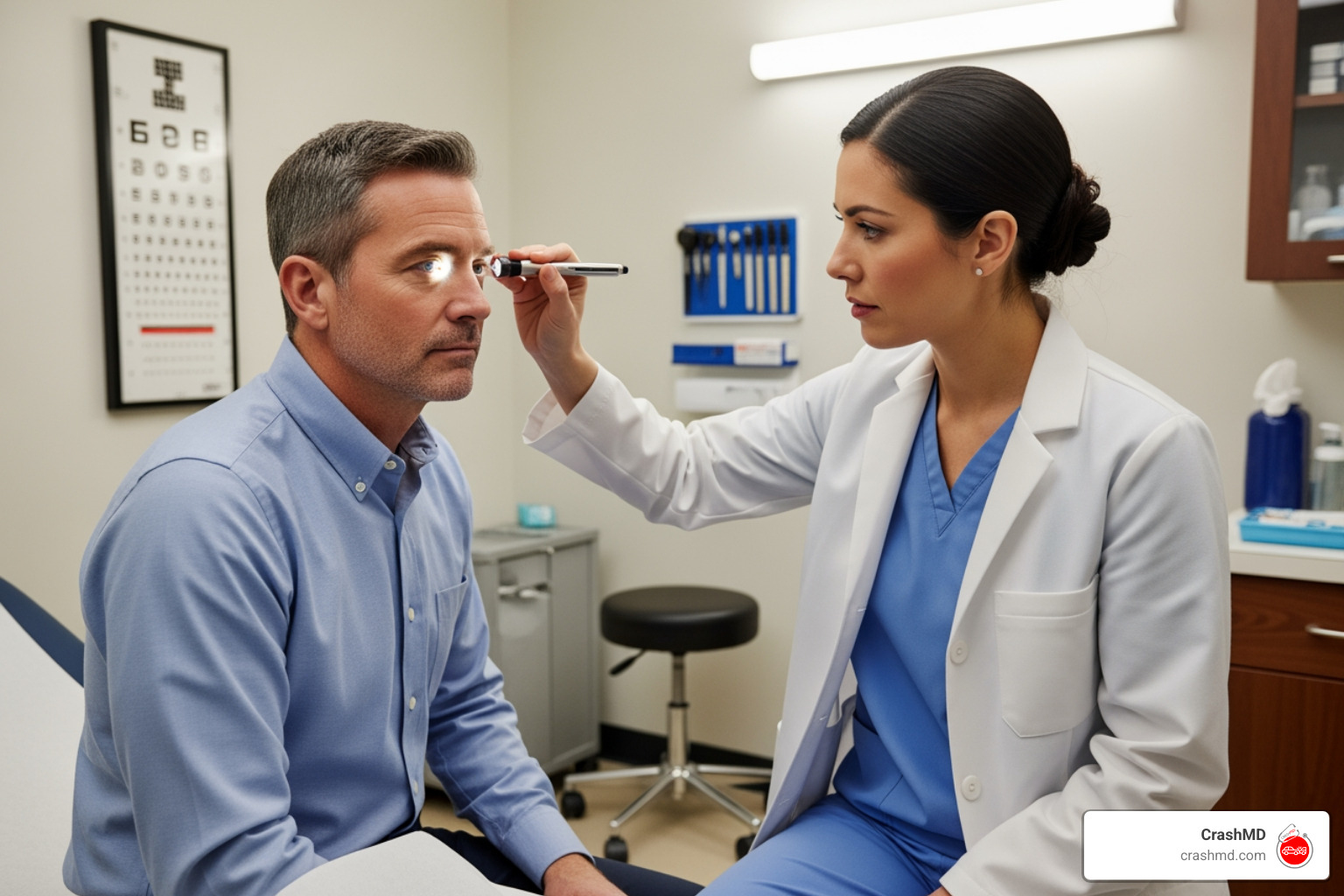
- Neurological and Cognitive Evaluation: We check for confusion, memory loss, and headaches by asking questions to gauge your orientation and concentration.
- Physical Coordination Tests: We assess eye movement, balance, and coordination to detect subtle impairments.
- Standardized Scales: We may use tools like the Glasgow Coma Scale (GCS) to measure your level of consciousness.
- Cranial Nerve Assessment: We test the nerves controlling senses and movements in your head and face.
We also look for signs of more severe head injuries, like a loss of consciousness at the time of the accident. It’s crucial to be aware of concussion symptoms after accident and refer to resources like the CDC checklist for mTBI.
What specific checks are done for back and neck injuries?
Back and neck injuries like whiplash and disc herniation are incredibly common. Whiplash is caused by the rapid back-and-forth movement of the head, straining neck tissues. Evaluating these injuries involves a meticulous examination:
- Spinal Palpation: We carefully feel along your entire spine and surrounding muscles for tenderness, spasms, or swelling.
- Range of Motion: We assess your ability to move your head and neck. Pain or limited movement can indicate whiplash.
- Neurological Tests: We check for numbness, tingling, or weakness in your arms or legs, which can suggest nerve compression from a herniated disc.
- Posture and Alignment Check: We observe your spinal alignment for any abnormalities.
While many neck pain cases involve muscle strain, we remain vigilant for serious conditions. Understanding whiplash recovery is crucial, and chiropractic care for accidents can play a significant role in diagnosis and treatment.
How doctors check for internal and musculoskeletal damage
Car accidents can cause significant trauma to the torso and extremities. Internal injuries are particularly dangerous as they often don’t have immediate, obvious symptoms.
- Abdominal Assessment: We palpate your abdomen for tenderness or rigidity and look for bruising like the “seatbelt sign,” which can indicate internal injury. The accuracy of a physical exam alone for blunt abdominal trauma is only 55% to 65%, making this a critical check.
- Chest Examination: We inspect your chest for bruising or tenderness, listen to your breath sounds for lung injuries, and feel for rib fractures.
- Extremity Examination: We examine your arms and legs for swelling, deformities, or wounds, assessing range of motion, strength, and sensation.
- Monitoring for Internal Bleeding: We remain vigilant for subtle signs of internal bleeding, such as an liftd heart rate or unexplained pain, and monitor your vital signs. For a comprehensive understanding, refer to signs of internal bleeding.
Looking Deeper: Diagnostic Imaging and Lab Tests
After the physical examination, if we suspect certain injuries or need to confirm a diagnosis, we will recommend diagnostic imaging and lab tests. These tools reveal hidden damage that a physical exam alone cannot detect, helping us rule out serious injuries and confirm the exact nature and extent of any trauma.
What do doctors check after a car accident with imaging tests?
Imaging tests are crucial for visualizing bones, soft tissues, and internal organs. Here’s a breakdown of the most common types:
| Imaging Test | What it Checks For | Why it’s Used After a Car Accident |
|---|---|---|
| X-Rays | Fractures, dislocations, other bone injuries | Detects broken bones in the spine, ribs, limbs, or skull. Often the first imaging test to rule out obvious bone trauma. Small fractures may go undetected without X-rays or other imaging. |
| CT Scans | Internal bleeding, organ damage, brain injuries, complex fractures | Provides detailed cross-sectional images. Essential for diagnosing internal bleeding, organ lacerations (liver, spleen, kidneys), and brain injuries (hematomas, contusions), especially after high-impact accidents. |
| MRI Scans | Soft tissue injuries (muscles, ligaments, tendons), herniated discs, spinal cord damage | Uses magnets and radio waves for highly detailed images of soft tissues. Crucial for identifying whiplash-related injuries, herniated discs, torn ligaments in joints (knees, shoulders), and nerve damage. |
| Ultrasound | Abdominal injuries, internal bleeding, fluid buildup | Uses sound waves to create real-time images. Primarily used to quickly assess for internal bleeding or fluid around organs in the abdomen (FAST exam), particularly in stable patients. |
The role of blood tests and other diagnostics
Beyond imaging, other diagnostic tests provide valuable information about your internal health.
- Blood Tests: These can detect internal complications that aren’t visible externally, such as signs of internal bleeding (anemia), inflammation, or organ damage. Microscopic hematuria (blood in urine) with abdominal tenderness is a strong predictor of intra-abdominal injury.
- Echocardiogram: If you experienced blunt force trauma to the chest, an echocardiogram (an ultrasound of the heart) might be performed to assess its function and check for cardiac injuries.
These advanced diagnostic tools help us build a complete picture of your injuries, guiding the most effective treatment plan. For specialized care, understanding the role of pain management doctors for car accidents can be very beneficial.
Beyond the Physical: Mental Health and Follow-Up Care
A car accident takes a physical and emotional toll. At CrashMD, we believe in a holistic approach, recognizing that true healing encompasses both body and mind. This is why our evaluation extends beyond physical checks to include mental health considerations and a clear plan for follow-up care.
How mental health can impact physical pain is a crucial area of understanding, as unchecked emotional distress can worsen physical symptoms and delay recovery.
Why is a psychological evaluation important?
The emotional aftermath of an accident can be profound, even with minor physical injuries. The traumatic experience can lead to significant psychological distress, which is why an evaluation helps us identify and address these issues early.
We look for signs of:
- Post-Traumatic Stress Disorder (PTSD): Symptoms can include flashbacks, nightmares, and severe anxiety about the accident.
- Anxiety and Depression: Accidents can trigger panic attacks or depressive episodes. Look for changes in mood, difficulty sleeping, or trouble concentrating.
- Emotional Trauma: Many patients experience a general sense of fear or vulnerability that interferes with daily life.
Addressing these mental health concerns is as vital as treating physical injuries. Early intervention can prevent chronic conditions and improve your quality of life. For resources, consider exploring information on coping with trauma after an accident.
The role of follow-up care in your recovery
Your first check-up is just the beginning. Follow-up care is essential for monitoring your progress and addressing new or delayed symptoms. Injuries like soft tissue damage can have symptoms that evolve, making ongoing assessment crucial.
Your follow-up care plan might include:
- Ongoing Monitoring: Regular appointments to track your healing and pain levels.
- Physical Therapy: Often a cornerstone of recovery, physical therapy helps restore strength, flexibility, and function. The role of physical therapy in pain management is undeniable.
- Pain Management Specialists: For persistent pain, specialists can offer treatments beyond medication, such as injection therapy.
- Completing Treatment: It’s vital to stick with your prescribed treatment plan until your doctor clears you to prevent relapses or chronic issues.
Consistent follow-up care ensures the best possible outcome. For those looking at the long haul, understanding long-term care after accident is also important.
Frequently Asked Questions about Post-Accident Medical Checks
We understand that car accidents come with a lot of questions. Here are some of the most common questions we hear about what do doctors check after a car accident and the process that follows.
How long after a car accident can injuries appear?
Injuries can appear hours, days, or even weeks later. A post-accident rush of adrenaline can mask pain, so you might not feel hurt right away.
- Soft tissue injuries like whiplash often cause pain or stiffness 24 to 72 hours later as inflammation sets in.
- Concussion symptoms such as headaches, dizziness, or confusion can also be delayed.
- Bruising and swelling may not be fully visible for 24 to 48 hours.
Because of these delays, get a medical evaluation promptly, even if you feel fine. Waiting can delay crucial treatment and allow injuries to worsen.
What if the emergency room said I was fine?
An emergency room’s primary goal is to rule out immediate, life-threatening conditions. If the ER clears you, it means you are stable, not necessarily injury-free. ER visits are often too brief to diagnose subtle or delayed-onset injuries like whiplash or mild concussions.
A follow-up evaluation with a specialist in car accident injuries is crucial. These doctors perform more detailed examinations, look for trauma specific to collisions, and can order advanced imaging like MRIs for soft tissue damage. This ensures a complete diagnosis and a proper treatment plan for injuries the ER might have missed.
How do medical records help my personal injury claim?
Medical records are the backbone of a personal injury claim, providing official documentation of your injuries and treatment. They are crucial for several reasons:
- Establishing Causation: They create a clear timeline linking your injuries directly to the accident, countering claims that they were pre-existing.
- Justifying Costs: They provide evidence of your medical expenses, justifying the compensation you seek.
- Quantifying Damages: They help calculate non-economic damages like pain and suffering by detailing the extent of your injuries.
- Countering Insurance Disputes: Prompt and thorough documentation refutes common insurance company arguments that you delayed treatment or exaggerated symptoms.
- Supporting Expert Testimony: They provide the foundation for medical experts to explain your injuries if your case goes to trial.
In short, robust medical records translate your experience into a compelling case for fair compensation. Understanding how pain management specialists create a personalized treatment plan also highlights the value of thorough documentation in your recovery journey.
Your Next Step to a Full Recovery
Navigating the aftermath of a car accident can feel overwhelming, but understanding what do doctors check after a car accident is your first step towards taking control of your health and future. We’ve seen that a comprehensive medical evaluation is not just about addressing immediate pain; it’s about uncovering hidden injuries, preventing long-term complications, and creating a documented record crucial for your recovery and any legal needs.
At CrashMD, we are dedicated to guiding accident victims through this complex journey. Our expert teams in Arizona, Nevada, Texas, Oklahoma, Southern California, and Northern California specialize in post-accident medical care, providing custom treatment plans and meticulous documentation. We advocate for our patients, ensuring they receive comprehensive care and that their injuries are thoroughly documented before any legal action.
Don’t let the adrenaline mask your pain or the confusion of the moment deter you from seeking the care you deserve. Taking prompt action ensures your well-being and protects your rights.
Your path to recovery starts here. If you or a loved one has been in a car accident, don’t wait. Find specialized motor vehicle accident doctors to guide your recovery and schedule your evaluation today. We’re here to help you heal, every step of the way.