

Why Finding the Right Pain Relief Team Matters After Your Accident
Expert pain relief starts with finding specialists who understand your unique pain condition and can create a personalized treatment plan. Here’s what you need to know:
Quick Guide to Finding Expert Pain Relief:
- Pain Management Specialists – Doctors with fellowship training beyond their residency, board-certified in treating complex pain
- Multidisciplinary Teams – Coordinated care from physiatrists, anesthesiologists, physical therapists, and behavioral health specialists
- Advanced Diagnostics – 3-D CT scanners, fluoroscopy, and ultrasound to pinpoint your pain source
- Modern Treatments – Evidence-based nonopioid therapies, interventional procedures, and integrative medicine approaches
- Referral Required – Most specialized pain centers require a referral from your primary care provider
When ongoing pain prevents you from meeting your goals for a meaningful life, it’s time to seek specialized help.
I’m Dr. Adam Savage, and I’ve seen how the right pain relief team can transform recovery for accident victims. Pain management doctors treat the most common injury-related conditions – back pain, neck pain, headaches, and radiating pain like sciatica. They use a combination of advanced imaging, minimally invasive procedures, and non-medication therapies to address pain at its source.
The difference between general care and expert pain relief comes down to specialized training and coordinated treatment. Pain management specialists complete at least one additional year of fellowship training after their residency. They’re board-certified in their specialty and stay current with the latest research on pain mechanisms and treatment options.
Most importantly, they don’t work alone. The best outcomes happen when your care team includes physical therapists, behavioral health specialists, and other experts working together toward your recovery goals.
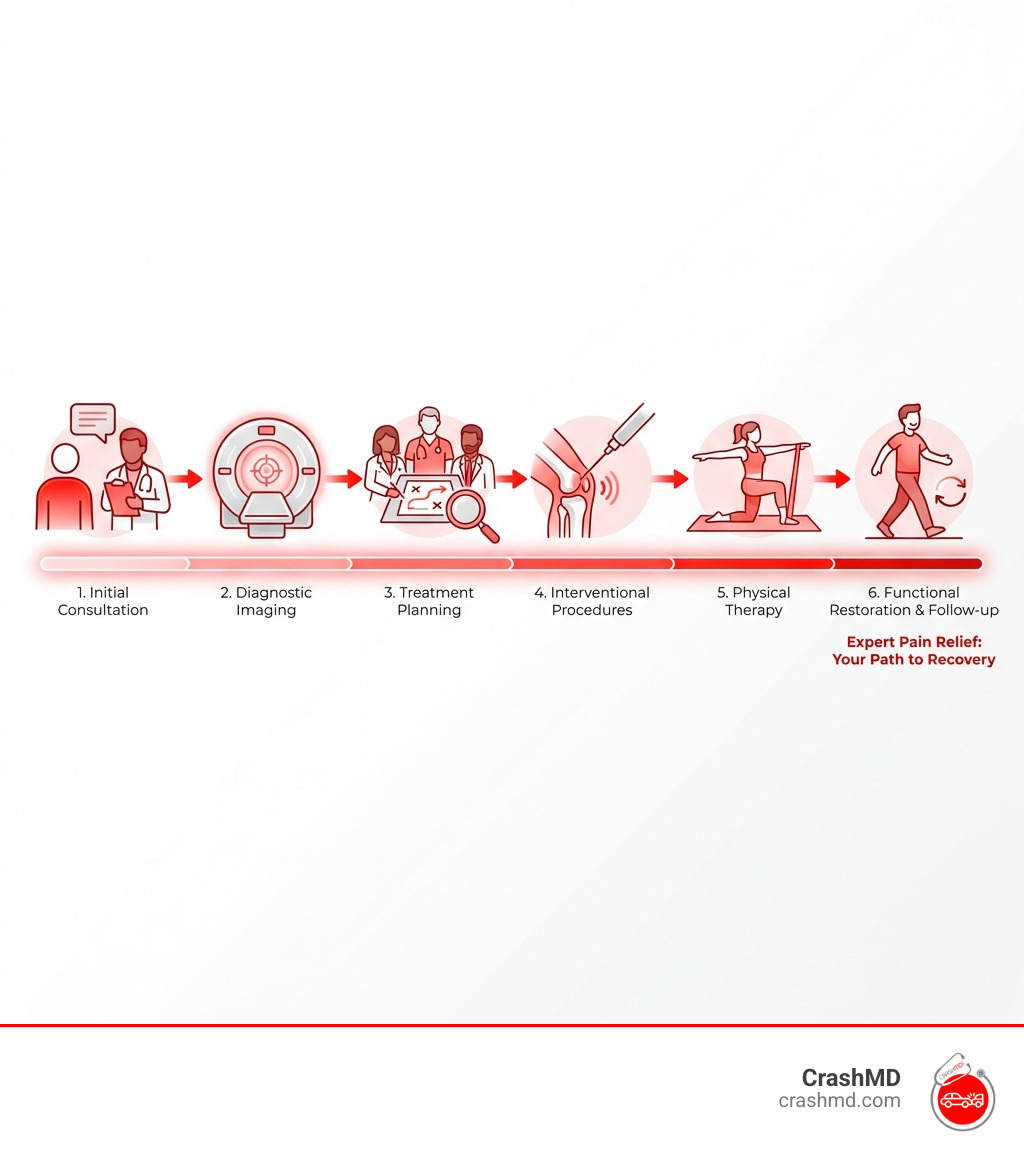
The Multidisciplinary Approach to Expert Pain Relief
When you’re dealing with persistent pain, especially after an accident, it can feel like a complex puzzle. Our primary goal is to piece together that puzzle, offering you compassionate, multidisciplinary pain diagnosis and treatment. We believe that true expert pain relief isn’t a one-size-fits-all solution; it’s a carefully coordinated effort by a team of dedicated professionals all focused on your unique needs.
Imagine having a team of experts, each bringing their specialized knowledge to the table, all working together to get you back on your feet. That’s the essence of our multidisciplinary approach. Pain management doctors, physiatrists, physical therapists, and behavioral health specialists collaborate to ensure every aspect of your pain—physical, emotional, and functional—is addressed. This coordinated care is vital for navigating complex pain conditions and achieving functional restoration.
We treat a wide spectrum of pain conditions that can arise from accidents or pre-existing issues exacerbated by trauma. These often include:
- Musculoskeletal pain: This covers a broad range, from low back pain and neck pain (some of the most common complaints seen by pain management doctors) to shoulder, hip, knee, and other joint pain.
- Neurological conditions: Such as sciatica, neuropathy, nerve root pain, and complex regional pain syndrome (CRPS).
- Arthritis and rheumatologic disorders: Conditions that can cause chronic joint pain and stiffness, often requiring ongoing management.
- Headaches: Including chronic headaches and migraines, which can be debilitating.
- Fibromyalgia and myofascial pain: Widespread chronic pain conditions that benefit greatly from a comprehensive approach.
- Post-surgery pain: Managing pain after an operation to ensure a smoother recovery.
Our approach isn’t just about masking symptoms; it’s about conducting a thorough evaluation of your pain experience, functional status, and overall health. We identify the type of pain, establish clear treatment goals, and then create a personalized plan to help you restore function and improve your quality of life. This may involve medication management, nonsurgical treatments, physical therapy, and other modalities. We coordinate treatment between multiple doctors and healthcare professionals, ensuring a seamless journey toward your recovery.
For a deeper dive into how various pain conditions are treated, you can explore resources like the Treatment of Pain guide, which outlines the different types of pain and their management.
The Role of Specialists and Diagnostic Tools
When it comes to expert pain relief, the specialists you choose make all the difference. Our pain management doctors are not just general practitioners; they are highly trained experts who have completed an additional one-year fellowship in pain management after their general residency. This specialized training allows them to become board-certified in a subspecialty like interventional pain medicine, sports injuries, or cancer pain, giving them a deeper understanding of complex pain mechanisms.
These specialists act as your advocates, dedicated to relieving your symptoms and restoring your ability to live a meaningful life. They are at the forefront of identifying the specific cause of your pain and the underlying conditions that lead to it. This expertise is crucial, especially when your pain is challenging to diagnose or hasn’t responded to conventional treatments.
At CrashMD, we understand that recovering from an accident involves more than just treating physical pain. It also means navigating the often-complex medical and legal aspects. Our team includes not only top-tier medical providers but also staff who are adept at documenting injuries for legal cases, ensuring comprehensive recovery before legal action is pursued. We guide accident victims through recovery, offering custom treatment plans and patient advocacy. For more information about our dedicated team and how we support your recovery journey, please visit our More info about recovery services page.
Diagnostic Tools for Expert Pain Relief
Pinpointing the exact source of your pain is paramount to effective treatment. This is where advanced diagnostic tools come into play. We use sophisticated imaging techniques to get a precise picture of what’s happening inside your body. These include:
- 3-D CT scanners: These provide detailed, cross-sectional images of bones, soft tissues, and blood vessels, allowing for a comprehensive view of potential injury sites.
- Fluoroscopy: A type of medical imaging that shows a continuous X-ray image on a monitor, much like an X-ray movie. This real-time imaging is invaluable for guiding precise injections and other interventional procedures.
- Ultrasound imaging: Uses sound waves to produce images of structures inside the body. It’s particularly useful for visualizing soft tissues, muscles, tendons, ligaments, and nerves, and can guide injections without radiation exposure.
Beyond these high-tech tools, our specialists also rely on a thorough physical evaluation and functional assessment. This involves understanding your symptoms, conducting physical exams, and assessing how your pain impacts your daily activities. This holistic diagnostic approach ensures we don’t miss any pieces of your pain puzzle.
Interventional Procedures for Expert Pain Relief
Once the source of your pain is identified, our experts can deploy a range of minimally invasive, interventional procedures designed to decrease chronic pain and make day-to-day activities easier. These aren’t surgeries of last resort, but rather targeted treatments that can provide significant relief and often reduce the need for long-term medication. Some common interventional procedures include:
- Epidural injections: Delivering anti-inflammatory medication (like corticosteroids) directly into the epidural space surrounding the spinal cord to reduce inflammation and pain caused by nerve compression.
- Nerve blocks: Injecting local anesthetics or other medications near specific nerves to block pain signals. These can be diagnostic (to identify the pain source) or therapeutic (to provide relief).
- Radiofrequency ablation (RFA): Uses heat generated by radio waves to ablate (destroy) nerve tissue, preventing it from sending pain signals to the brain. This can provide long-lasting relief for conditions like facet joint pain or knee pain.
- Spinal cord stimulation: Involves implanting a small device that sends mild electrical pulses to the spinal cord, interrupting pain signals before they reach the brain. This is often trialed externally first to ensure effectiveness.
- Trigger point therapy: Involves injecting local anesthetic, sometimes with a corticosteroid, directly into tight bands of muscle (trigger points) that can cause referred pain.
These procedures are performed by our board-certified pain management doctors, who leverage their specialized training and the advanced diagnostic tools mentioned above to ensure precision and effectiveness.
Modern Treatment Approaches: Beyond Opioids
The landscape of pain management has evolved significantly, especially with a growing understanding of the opioid crisis. Today, the focus for expert pain relief has shifted towards maximizing nonopioid therapies, which are often at least as effective as opioids for many common types of acute pain and are preferred for subacute and chronic pain. This approach aligns with the 2022 CDC Clinical Practice Guideline for Prescribing Opioids for Pain, which recommends prioritizing nonopioid options.
We are committed to providing safe, effective, and sustainable pain management strategies. This means embracing a wide array of treatments that either avoid opioids entirely or use them sparingly and with careful monitoring, always with a clear plan for discontinuation. Our goal is to improve your pain and function without the risks associated with long-term opioid use.
Nonopioid therapies encompass both pharmacologic (medication) and nonpharmacologic approaches. Here’s a brief comparison:
| Category | Pharmacologic Nonopioid Treatments | Nonpharmacologic Treatments |
|---|---|---|
| Acute Pain | NSAIDs (oral/topical), acetaminophen, triptans (for migraines), antiemetics | Ice, heat, elevation, rest, immobilization, exercise |
| Subacute/Chronic Pain | NSAIDs (oral/topical), acetaminophen, tricyclic/tetracyclic antidepressants, SNRIs, anticonvulsants (e.g., gabapentin, pregabalin), capsaicin/lidocaine patches | Exercise (aerobic, aquatic, resistance), yoga, tai chi, qigong, weight loss, psychological therapies (CBT), manual therapies, acupuncture, massage, spinal manipulation, mindfulness-based stress reduction, low-level laser therapy |
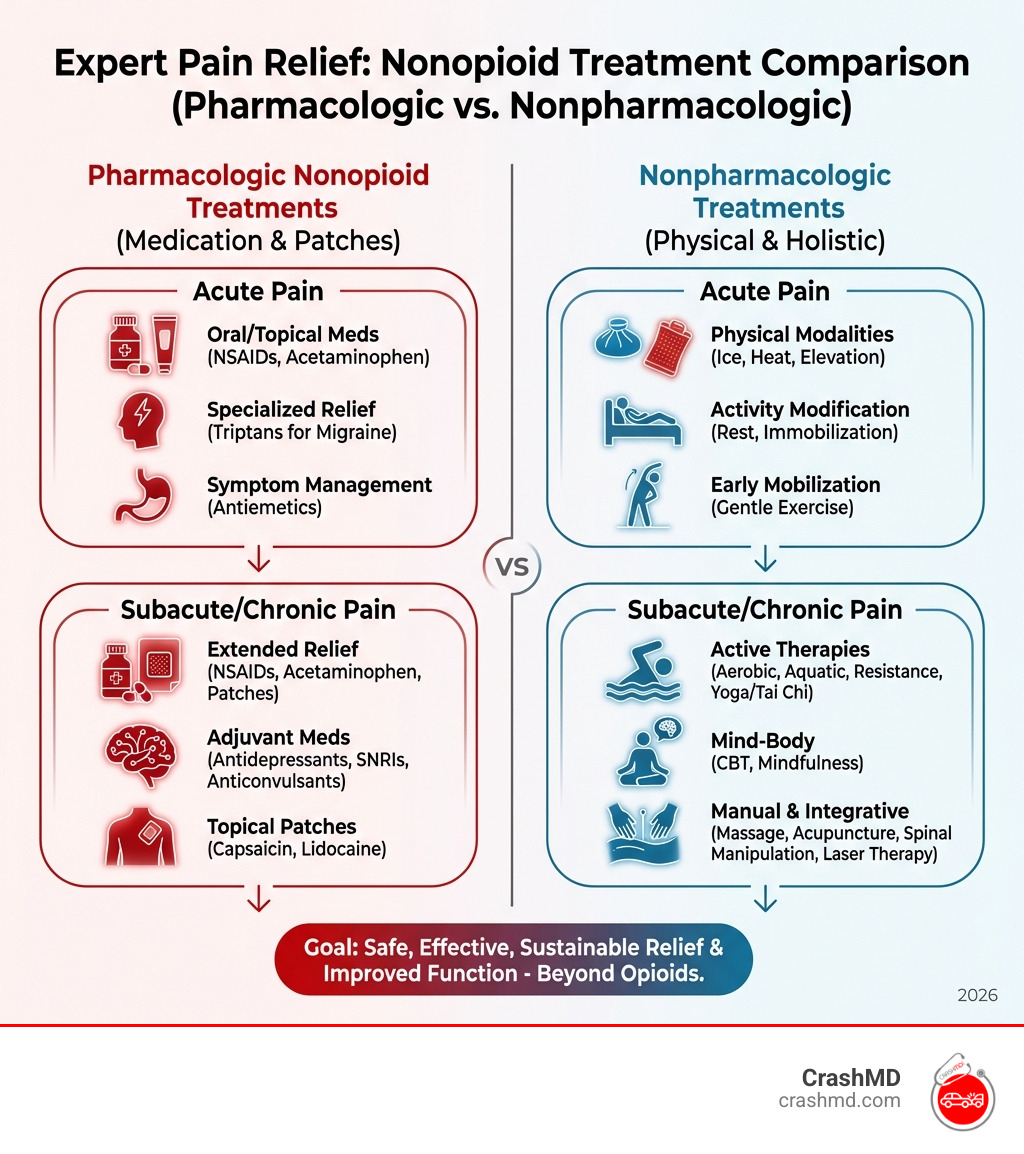
As you can see, there’s a broad toolkit available! For many people, low-cost group aerobics can be as effective as individual physical therapy for reducing low back pain and improving function. We aim to identify the best combination of these treatments to help you regain control over your life. You can learn more about these strategies from the CDC’s Nonopioid Therapies for Pain Management resources.
Integrative Medicine for Expert Pain Relief
Beyond traditional medications and interventional procedures, integrative medicine plays a crucial role in providing comprehensive expert pain relief. These approaches focus on treating the whole person, addressing not just the physical symptoms but also the psychological and emotional aspects of pain. After all, pain can significantly impact your mental well-being, and addressing this is key to long-term recovery.
Some of the integrative medicine techniques we incorporate include:
- Cognitive therapy and coping training: These behavioral health approaches, including Cognitive Behavioral Therapy (CBT), help you understand the relationship between thoughts, emotions, and pain. They equip you with strategies to manage pain, reduce distress, and improve your ability to function.
- Relaxation training: Techniques such as deep breathing, progressive muscle relaxation, and guided imagery can help reduce muscle tension, lower stress, and improve your body’s natural ability to cope with pain.
- Acupuncture: An ancient Chinese practice involving the insertion of thin needles into specific points on the body. It has been shown to provide substantial pain relief for some individuals, particularly for chronic conditions.
- Physical therapy: A cornerstone of pain management, physical therapy focuses on improving strength, flexibility, posture, and movement patterns. It’s essential for functional restoration and preventing future injuries.
- Empowered Relief: This is a structured, two-hour intervention that provides individuals with essential pain relief skills. Delivered by certified clinicians, it’s anchored in rigorous published efficacy research and has been integrated into standard patient care by leading healthcare organizations. Over 10,000 individuals globally have received Empowered Relief from our 1,300 certified instructors, demonstrating its widespread impact. This program empowers you with practical tools to manage your pain actively.
By combining these diverse approaches, we can offer a truly holistic path to expert pain relief, helping you to not only reduce pain but also to build resilience and improve your overall quality of life.
Navigating Your Recovery Journey
Starting on a journey toward expert pain relief can seem daunting, but we’re here to guide you every step of the way. Understanding how to access care, prepare for appointments, and manage your health information is key to a smooth recovery.
The first step in seeking specialized pain management with us is typically a referral process. We encourage you to consult your usual care provider to discuss your persistent pain. If they believe a visit to our pain specialists would be beneficial for you, they can initiate the referral. This ensures that your care is coordinated and that our specialists receive a comprehensive overview of your medical history. Once referred, our team will reach out to help you schedule your new patient appointment.
Preparing for your appointment can make a significant difference in how effectively we can help you. We recommend gathering the following:
- Detailed medical history: Include any relevant past injuries, surgeries, and chronic conditions.
- Pain diary: Keep a record of your pain levels, triggers, what makes it better or worse, and how it impacts your daily activities. This helps us understand your pain patterns.
- Current medications: A list of all prescription and over-the-counter medications, supplements, and dosages you are currently taking.
- Previous imaging and reports: Bring any X-rays, MRI scans, CT scans, or other diagnostic reports related to your pain.
- Treatment goals: Think about what you hope to achieve through pain management. Is it to reduce pain for daily tasks, return to work, or participate in a specific activity?
For managing your health and appointments, we use a secure online patient portal. This portal allows you to access your medical records, review test results, communicate with your care team, and manage your appointments conveniently. It’s a powerful tool to keep you engaged and informed throughout your treatment.
We understand that logistics, especially after an accident, can be challenging. Whether you’re driving yourself or using public transportation, planning your route ahead of time is helpful. We can provide detailed directions and information regarding parking or accessible public transit options in our areas of Arizona, Nevada, Texas, Oklahoma, Southern California, and Northern California. If you have specific transportation needs, please let us know, and we will do our best to assist you.
Our dedicated team of medical providers and support staff are committed to making your experience as comfortable and effective as possible. For more insights into our team, please visit our More info about our expert staff page.
Frequently Asked Questions
Navigating pain management can bring up many questions. Here, we address some of the most common inquiries to help you better understand when and how to seek expert pain relief.
When should I see a pain management specialist?
If you’re experiencing pain that just won’t quit, it might be time to see a pain management specialist. Here are some key indicators:
- Chronic pain: If your pain has lasted longer than six months, especially after an accident, and hasn’t responded to initial treatments from your primary care physician, it’s a strong sign you need specialized care.
- Unresolved injury: If an injury from an accident continues to cause significant discomfort or limits your function long after the initial healing period, a pain specialist can help diagnose and treat the underlying issues.
- Radiating symptoms: Pain that shoots down your arm or leg (like sciatica) often indicates nerve involvement, which pain specialists are expertly trained to treat.
- Daily limitations: If your pain prevents you from performing daily tasks, enjoying hobbies, or maintaining your quality of life, it’s time to seek expert intervention. Pain management doctors are equipped to handle complex cases and provide custom solutions.
Don’t wait until your pain becomes unbearable. Early diagnosis and intervention often lead to the best outcomes.
Are nonopioid treatments as effective as opioids?
Yes, for many common types of pain, nonopioid therapies are at least as effective as opioids, and often come with a much safer profile. This is a critical insight from current clinical evidence and guidelines.
- Acute pain: For conditions like low back pain, neck pain, dental pain, and musculoskeletal injuries, nonopioid therapies (such as NSAIDs, acetaminophen, and nonpharmacologic options like ice, heat, and exercise) can provide comparable or superior relief without the risks of opioids.
- Clinical evidence: Research consistently shows that a comprehensive approach combining nonopioid medications with nonpharmacologic therapies (like physical therapy, cognitive behavioral therapy, and interventional procedures) is highly effective.
- Safety profile: Nonopioid treatments significantly reduce the risks of dependence, addiction, and severe side effects associated with opioids (such as respiratory depression, confusion, and chronic constipation).
- Long-term outcomes: For subacute and chronic pain, nonpharmacologic and nonopioid pharmacologic therapies are preferred because they focus on restoring function and improving long-term quality of life, rather than just masking pain.
Our goal is always to maximize your comfort and function using the safest and most effective methods available, with a strong emphasis on nonopioid strategies.
How do I prepare for my first appointment?
Preparing for your first appointment is crucial for making the most of your visit and helping our specialists understand your condition quickly. Here’s what we recommend:
- Gather your medical history: Be ready to discuss your past medical conditions, surgeries, and any previous treatments for your current pain.
- Keep a pain diary: For a few days or weeks leading up to your appointment, track your pain. Note when it occurs, its intensity (on a scale of 1-10), what makes it better or worse, and how it impacts your daily activities. This gives us valuable insights into your pain patterns.
- List current medications: Bring a complete list of all prescription drugs, over-the-counter medications, vitamins, and supplements you are currently taking, including dosages.
- Bring relevant imaging and reports: If you have any X-rays, MRI scans, CT scans, or other diagnostic test results related to your pain, please bring them.
- Define your treatment goals: Think about what you hope to achieve through pain management. Do you want to reduce pain to return to work, resume a hobby, or simply improve your sleep? Clear goals help us tailor your treatment plan.
- Prepare questions: Write down any questions or concerns you have about your condition or treatment options. No question is too small!
The more information you provide, the better equipped we are to understand your unique situation and develop an effective, personalized treatment plan for your expert pain relief.
Conclusion
Navigating the aftermath of an accident, especially when dealing with persistent pain, can be an overwhelming experience. But you don’t have to face it alone. At CrashMD, we are dedicated to providing comprehensive, expert pain relief that focuses on your complete recovery and well-being.
We pride ourselves on our ability to guide accident victims through every step of their recovery journey. Our approach emphasizes custom treatment plans, carefully custom to your specific injuries and needs. We understand the complexities of injury documentation, ensuring that every aspect of your condition is thoroughly recorded, which is invaluable for both your medical recovery and any legal considerations. Our patient advocacy means we’re always in your corner, fighting for your right to the best possible care and a full return to a meaningful life.
Don’t let pain dictate your future. Reach out to us today to begin your journey toward lasting relief. Our expert team in Arizona, Nevada, Texas, Oklahoma, Southern California, and Northern California is ready to help you refind comfort and reclaim your life. For more information about our dedicated recovery staff and how we can support you, please visit our More info about our recovery staff page.