

Sprains (ankle, wrist, knee)
A car accident can change your life in a matter of seconds. Even when there are no visible fractures or life-threatening injuries, the body absorbs tremendous force during a collision. One of the most common results of that force is a sprain. Ankle, wrist, and knee sprains frequently occur after car accidents, and while they may sound minor compared to broken bones, they can be painful, limiting, and emotionally exhausting.
If you or someone you love is dealing with a sprain after a crash, understanding what happened inside your body can make recovery feel less overwhelming. This guide explains how sprains occur in car accidents, what symptoms to expect, how they are treated, and what healing realistically looks like.
Understanding What a Sprain Really Is
A sprain is an injury to a ligament. Ligaments are strong bands of connective tissue that hold bones together at a joint. They provide stability and guide movement. When a ligament is stretched beyond its normal range or torn, a sprain occurs.
Sprains range in severity. A mild sprain involves stretched ligaments with microscopic tears. A moderate sprain includes partial tearing. A severe sprain may involve a complete tear of the ligament, sometimes requiring surgical repair.
In a car accident, the sudden deceleration, twisting, and bracing movements place enormous strain on joints. Even if there is no fracture, the ligaments can absorb enough force to become damaged.

Why Sprains Are Common in Car Accidents
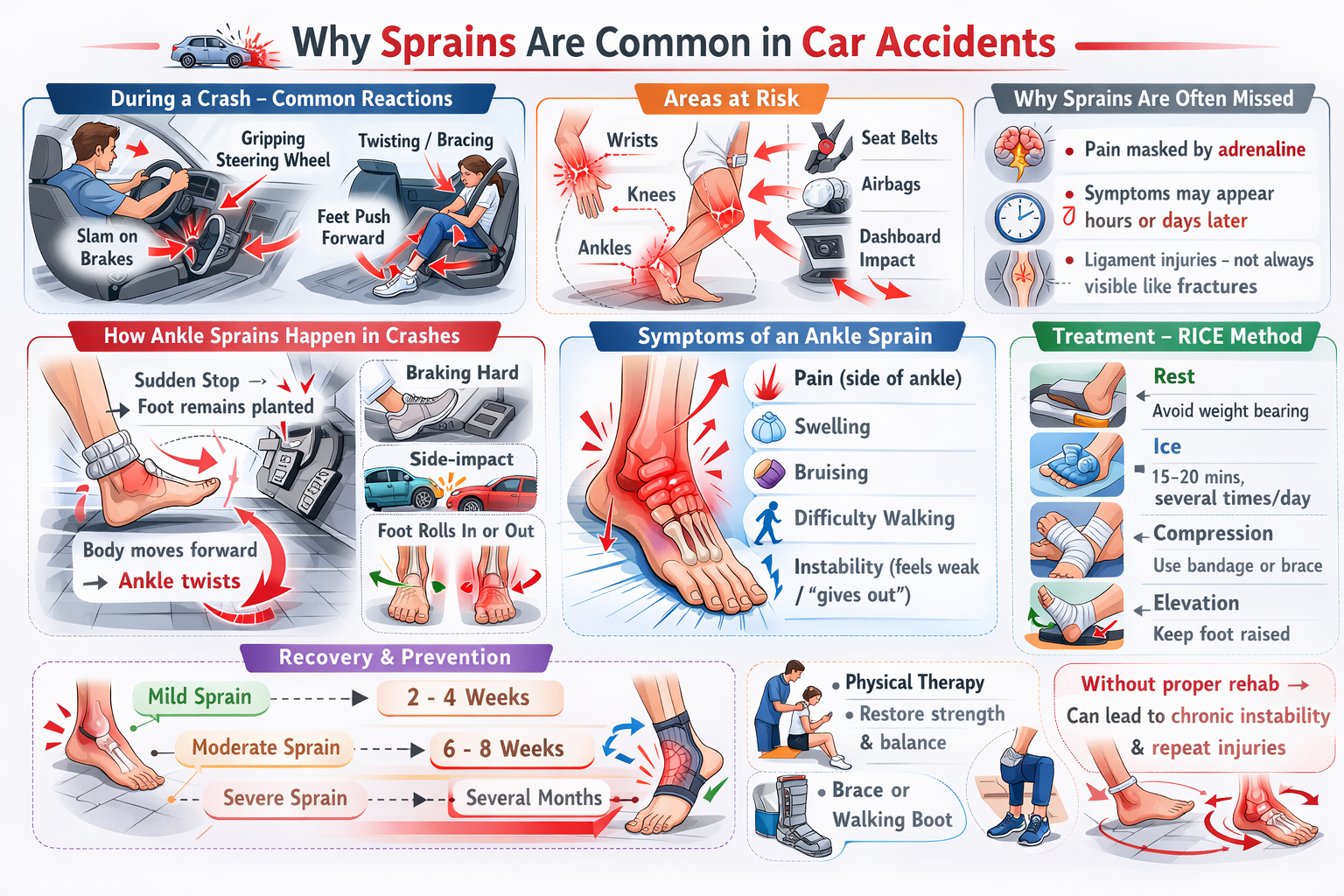
During a crash, the body instinctively reacts. Drivers may slam on the brakes, grip the steering wheel tightly, or brace their legs against the floorboard. Passengers may twist suddenly or press their feet against the vehicle interior.
These protective reactions are natural, but they expose the wrists, knees, and ankles to abrupt forces. Seat belts, airbags, and dashboard impact can also contribute to joint strain.
Unlike broken bones, sprains may not be immediately obvious. Adrenaline often masks pain in the first few hours after a collision. It is common for symptoms to appear or worsen a day or two later.
Ankle Sprains After a Car Accident
The ankle is particularly vulnerable in a collision. Drivers often press hard on the brake pedal during impact. That force can twist the ankle awkwardly, especially if the foot rotates inward or outward.
How Ankle Sprains Happen in Crashes
When a vehicle suddenly stops, your foot may remain planted while your body continues moving forward. This motion can cause the ankle joint to roll or twist beyond its normal range. Side-impact collisions can also cause the foot to shift abruptly, stretching the ligaments on either side of the ankle.
Symptoms of an Ankle Sprain
An ankle sprain typically causes pain on one side of the joint. Swelling may develop quickly. You may notice bruising within hours or days. Walking can become painful, and in more severe cases, it may feel impossible to bear weight.
Instability is another common symptom. Some people describe the ankle as feeling weak or like it might “give out.”
Treatment and Recovery for Ankle Sprains
Initial treatment usually follows the RICE method: rest, ice, compression, and elevation. This helps reduce swelling and inflammation.
More severe sprains may require a brace or walking boot. Physical therapy is often recommended to restore strength and balance. Without proper rehabilitation, ankle sprains can lead to chronic instability and repeated injuries.
Recovery time varies. Mild sprains may improve within two to four weeks. Moderate to severe sprains can take several months to heal fully.
Wrist Sprains After a Car Accident
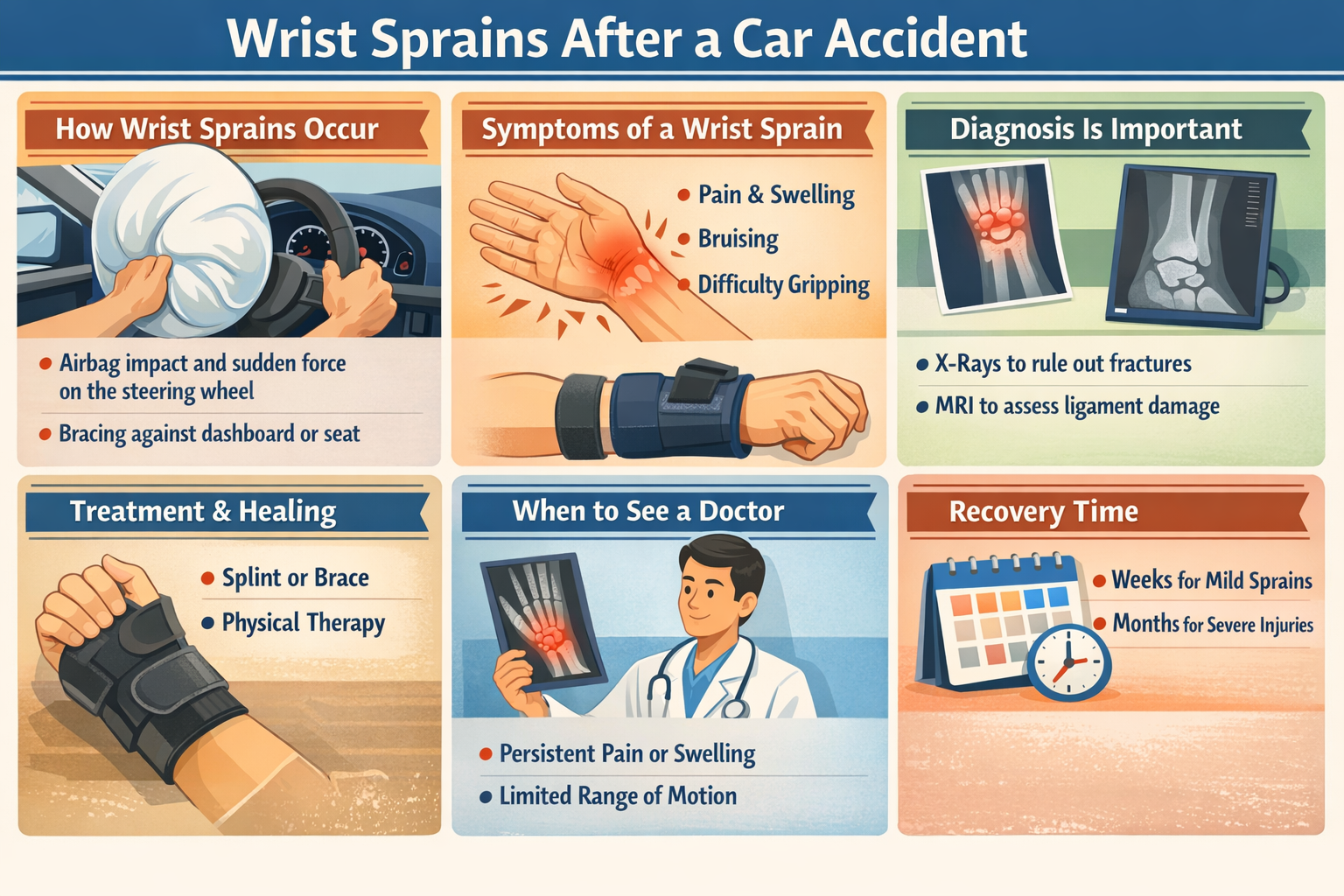
Wrist sprains are extremely common in drivers. When impact is imminent, many people grip the steering wheel tightly. The force of the collision can bend the wrist backward or sideways.
How Wrist Sprains Occur
During a crash, airbags deploy rapidly. If your hands are on the steering wheel at the time, the force of the airbag combined with the sudden stop can strain the wrist ligaments.
Passengers may also injure their wrists by bracing against the dashboard or seat in front of them.
Symptoms of a Wrist Sprain
Pain in the wrist may be sharp or aching. Swelling and tenderness are common. You may experience difficulty gripping objects or turning your wrist. Bruising can appear after a day or two.
In more severe cases, there may be limited range of motion or a feeling of instability in the joint.
Diagnosis Is Important
Wrist sprains can sometimes mimic fractures. A scaphoid fracture, for example, may initially feel like a sprain. This is why imaging such as X-rays is important after a car accident. If symptoms persist, an MRI may be needed to evaluate ligament damage.
Treatment and Healing
Most wrist sprains are treated with immobilization using a splint or brace. Anti-inflammatory medications may help with pain. Physical therapy can restore strength and mobility once healing has begun.
Mild sprains may improve within a few weeks. More severe ligament injuries can take several months and may occasionally require surgical intervention.
Knee Sprains After a Car Accident
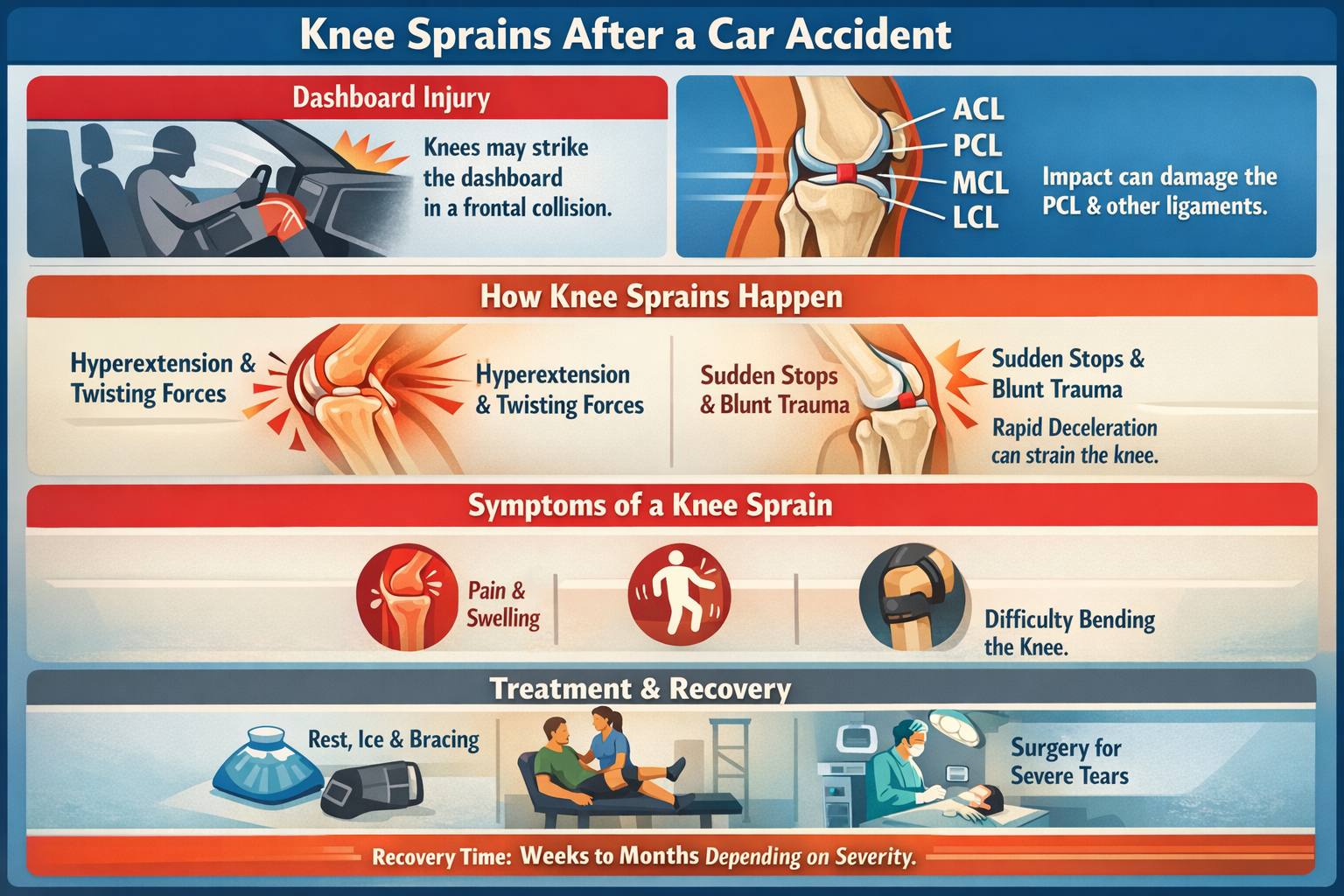
The knee is particularly susceptible to injury in frontal collisions. When the car stops suddenly, the knees may strike the dashboard. This is often referred to as a “dashboard injury.”
How Knee Sprains Happen
The knee joint contains multiple ligaments, including the ACL, PCL, MCL, and LCL. A direct blow to the front of the knee can damage the posterior cruciate ligament (PCL). Twisting motions during impact can strain other ligaments.
Even without direct impact, sudden deceleration can cause the knee to hyperextend or twist unnaturally.
Symptoms of a Knee Sprain
Pain may be immediate or develop over several hours. Swelling is common and may appear rapidly if there is internal bleeding within the joint.
You may feel instability when walking. Some people report a popping sensation at the time of injury. Bending or straightening the knee may become difficult.
Treatment and Rehabilitation
Knee sprains vary widely in severity. Mild sprains may only require rest, ice, and bracing. Moderate sprains often benefit from structured physical therapy to strengthen surrounding muscles and improve joint stability.
Severe ligament tears may require surgical repair, particularly in active individuals.
Recovery can range from a few weeks for mild sprains to six months or longer for significant ligament injuries.
The Emotional Side of “Just a Sprain”
It is common for people to minimize sprains. You might hear phrases like “at least it’s not broken.” While that may be true, sprains can still significantly disrupt your life.
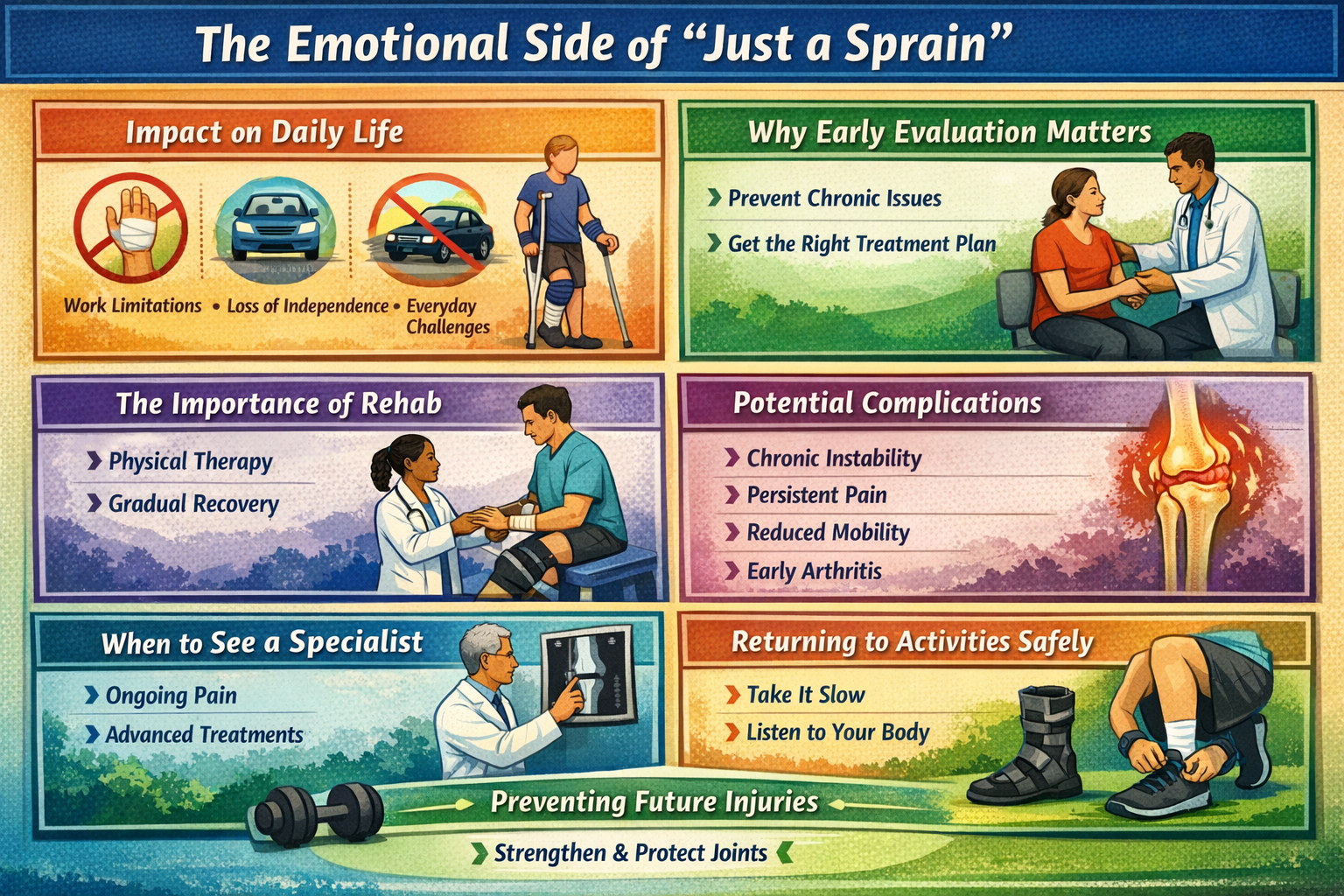
If you rely on your hands for work, a wrist sprain can affect your income. If you are active or athletic, a knee or ankle sprain can limit your independence. Even simple tasks like driving, cooking, or walking your dog may become challenging.
Pain can also interfere with sleep, mood, and overall well-being. Feeling frustrated or discouraged during recovery is normal.
Why Early Medical Evaluation Matters
After a car accident, it is important to seek medical evaluation even if injuries seem minor. Some ligament injuries worsen without proper support. Untreated sprains can lead to chronic pain or joint instability.
A healthcare provider can determine the severity of the sprain and create an appropriate treatment plan. Early intervention often leads to better outcomes.
Physical Therapy and Long-Term Recovery
Rehabilitation is one of the most important parts of healing from a sprain. Physical therapy focuses on restoring range of motion, strengthening muscles, and improving balance.
For ankle sprains, balance training reduces the risk of reinjury. For wrist sprains, strengthening exercises improve grip and stability. For knee sprains, strengthening the quadriceps and hamstrings supports the joint and protects healing ligaments.
Consistency is key. Skipping therapy or returning to activity too quickly can delay recovery.
Potential Complications
While many sprains heal completely, complications can occur. These may include:
- Chronic joint instability
- Persistent pain
- Reduced range of motion
- Early arthritis
Repeated ankle sprains, for example, may lead to long-term instability. Severe knee ligament injuries can increase the risk of arthritis later in life.
Following medical advice and completing rehabilitation significantly reduces these risks.
When to See a Specialist
If pain, swelling, or instability continues beyond the expected healing time, further evaluation may be necessary. Orthopedic specialists can assess whether there is significant ligament damage or associated injuries.
In some cases, imaging studies reveal tears that were not initially apparent. Advanced treatment options, including injections or surgery, may be considered for persistent symptoms.
Returning to Normal Activities
One of the most common questions after a sprain is, “When can I go back to normal?”
The answer depends on the severity of the injury and your body’s healing process. Returning too quickly can lead to reinjury. Gradual progression is safer and more effective.
Most people can resume light activities within weeks, but high-impact sports or physically demanding jobs may require longer recovery.
Listening to your body is important. Pain is often a signal that the joint needs more time.
Preventing Future Injury
After healing, strengthening exercises and supportive braces during high-risk activities can reduce the chance of another sprain.
For drivers, proper seat positioning and awareness may help minimize joint strain during sudden stops. While accidents cannot always be prevented, maintaining overall joint strength improves resilience.
Final Thoughts
Sprains of the ankle, wrist, and knee are common after car accidents. They may not always look dramatic, but they can significantly affect your daily life. Pain, swelling, and limited movement are real challenges that deserve proper care and attention.
The good news is that most sprains heal well with appropriate treatment and rehabilitation. Patience, consistency, and professional guidance play major roles in recovery.
If you have been involved in a car accident and are experiencing joint pain, do not ignore it. Seeking timely medical care can prevent long-term problems and help you regain strength, mobility, and confidence.
Healing takes time, but with the right support and commitment, you can return to your normal activities and move forward stronger than before.