

Abrasions and Lacerations: Understanding Common Skin Injuries After Trauma
The skin is the body’s largest organ and serves as the first line of defense against infection, environmental hazards, and physical injury. It protects the internal organs, helps regulate body temperature, and provides sensation. However, when accidents occur—such as car crashes, falls, sports injuries, or workplace incidents—the skin can be damaged.
Two of the most common types of traumatic skin injuries are abrasions and lacerations. While these injuries may seem minor compared to more severe trauma, they can still cause significant pain, bleeding, and risk of infection. In some cases, they may also lead to scarring or complications if not properly treated.
Understanding how abrasions and lacerations occur, how they are treated, and when medical attention is necessary can help patients recover more safely and effectively.
What Are Abrasions?
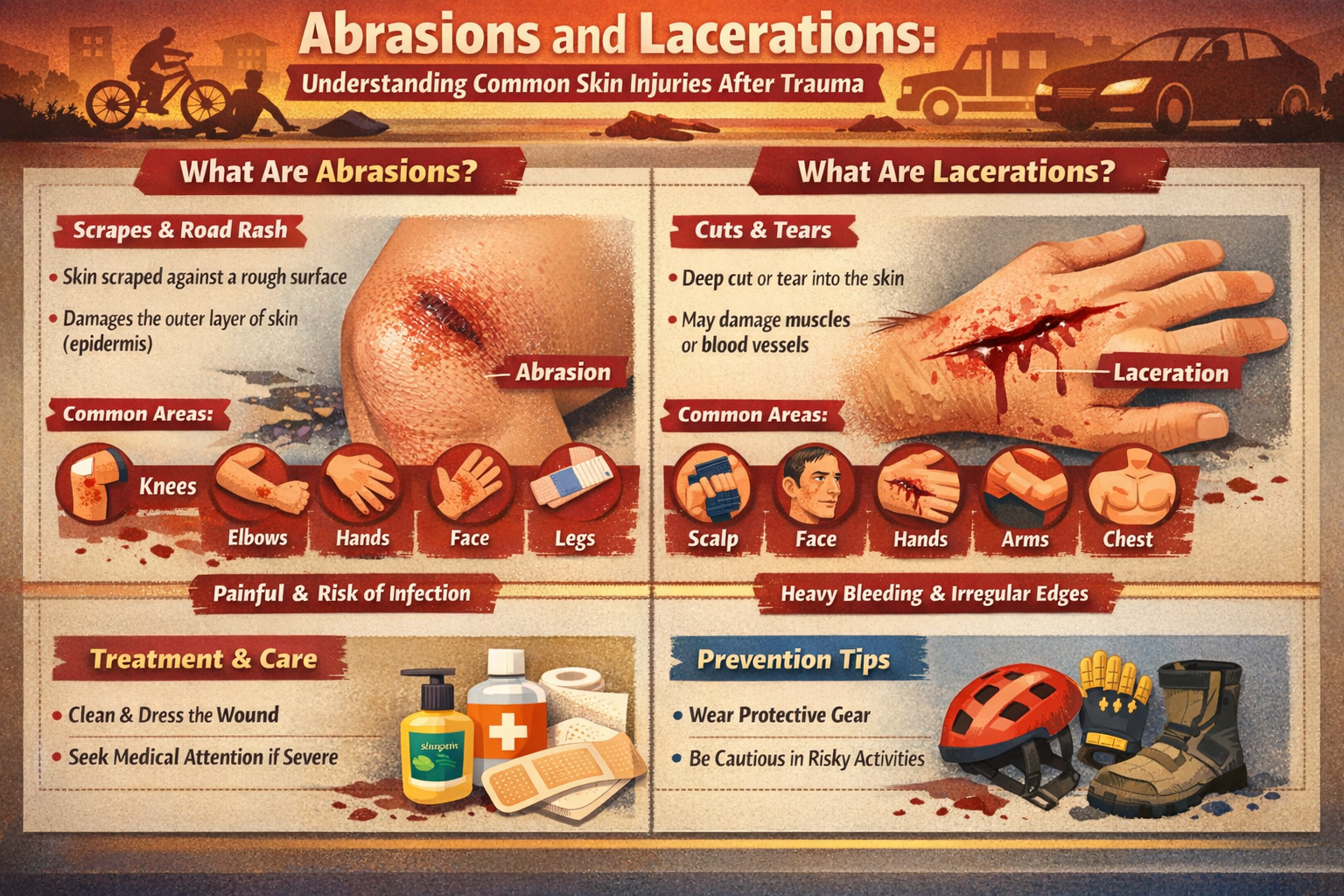
An abrasion occurs when the skin is scraped or rubbed against a rough or hard surface. This type of injury typically removes the outer layer of the skin, known as the epidermis, and sometimes part of the deeper dermis layer.
Abrasions are often referred to as scrapes. They commonly occur when a person slides across pavement, gravel, or other rough surfaces.
A well-known example is road rash, which frequently occurs in motorcycle, bicycle, or pedestrian accidents when the skin makes forceful contact with asphalt or concrete.
Even though abrasions are usually superficial injuries, they can be quite painful because the outer layers of the skin contain numerous nerve endings. When those layers are damaged, the exposed nerves can cause a burning or stinging sensation.
Abrasions can occur anywhere on the body but are most common on:
- Knees
- Elbows
- Hands
- Shoulders
- Face
- Legs
These injuries are especially common in children, athletes, and individuals involved in high-impact accidents.
What Are Lacerations?
A laceration is a cut or tear in the skin that occurs when the tissue is forcibly split apart. Unlike abrasions, lacerations usually extend deeper into the skin and may affect underlying structures such as muscles, nerves, or blood vessels.
Lacerations often have irregular or jagged edges, especially when they are caused by blunt trauma rather than a sharp blade. The tearing force can stretch and damage surrounding tissues, which may complicate healing.
Lacerations may vary greatly in severity. Some are small and shallow, while others can be deep wounds that require medical intervention such as stitches or surgery.
Common locations for lacerations include:
- The scalp
- Face
- Hands and fingers
- Arms and legs
- Chest or abdomen
Because lacerations often involve deeper tissue layers, they typically cause more bleeding than abrasions.
Common Causes of Abrasions and Lacerations
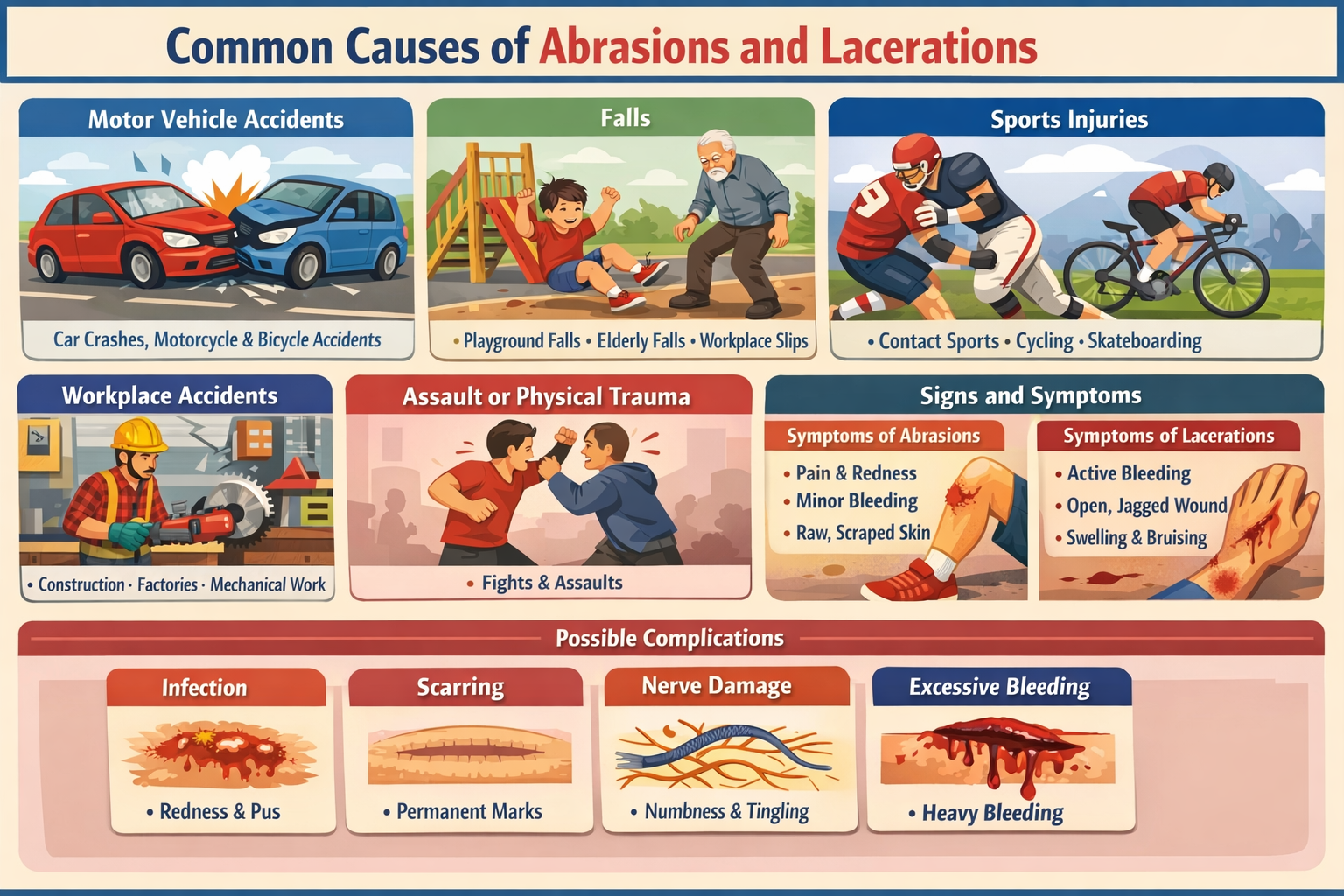
Abrasions and lacerations can occur in many different situations. While some injuries happen during everyday activities, others occur as part of more serious trauma.
Motor Vehicle Accidents
Car accidents are one of the leading causes of traumatic skin injuries. During a collision, occupants may strike the steering wheel, dashboard, or windows. Broken glass and metal surfaces can also cause deep cuts.
Motorcycle and bicycle accidents often result in extensive abrasions, especially when riders slide across pavement.
Falls
Falls are another common cause of abrasions and lacerations. A person may scrape or cut their skin when landing on rough ground or sharp objects.
Falls frequently affect:
- Children during play
- Older adults with balance issues
- Workers in physically demanding environments
Sports Injuries
Athletes often experience abrasions and lacerations during contact sports or high-speed activities.
Common sports-related causes include:
- Sliding on turf or pavement
- Colliding with other players
- Impact with equipment
Sports such as football, soccer, cycling, skateboarding, and basketball carry a higher risk of skin injuries.
Workplace Accidents
Certain professions expose workers to sharp tools, machinery, or rough materials. Construction workers, factory employees, mechanics, and agricultural workers may experience cuts or scrapes if safety precautions are not followed.
Assault or Physical Trauma
In some cases, abrasions and lacerations occur during violent incidents such as assaults. These injuries may accompany other forms of trauma and should be carefully evaluated by medical professionals.
Signs and Symptoms
The symptoms of abrasions and lacerations can vary depending on the depth and severity of the injury.
Symptoms of Abrasions
Typical symptoms include:
- Pain or burning sensation
- Redness and inflammation
- Minor bleeding or oozing
- Raw or scraped skin
- Swelling around the injured area
Because abrasions expose sensitive nerve endings, they may cause significant discomfort even when the injury is shallow.
Symptoms of Lacerations
Lacerations usually present with more noticeable signs, including:
- Active bleeding
- A visible cut or tear in the skin
- Separated wound edges
- Swelling or bruising
- Tenderness around the injury
If deeper tissues are affected, additional symptoms may develop, such as:
- Numbness from nerve damage
- Difficulty moving nearby muscles or joints
- Severe or persistent bleeding
These symptoms may indicate a more serious injury requiring medical evaluation.
Seek urgent care for uncontrolled bleeding, a deep or gaping wound, exposed fat, muscle, tendon, or bone, loss of movement, numbness, a wound over a joint, or a wound caused by a bite, dirty object, glass, or high force trauma.
Possible Complications
Although many abrasions and lacerations heal without difficulty, complications can occur if wounds are not treated properly.
Infection
Infection is one of the most common risks associated with open wounds. When bacteria enter the injured area, they can multiply and cause inflammation.
Signs of infection may include:
- Increasing redness around the wound
- Warmth and swelling
- Pus or drainage
- Persistent pain
- Fever
If an infection spreads beyond the wound, it may lead to more serious medical problems.
Scarring
Scars form as part of the body’s natural healing process. However, deeper wounds are more likely to leave permanent marks on the skin.
Factors that influence scar formation include:
- Depth of the injury
- Location of the wound
- Genetics and skin type
- Quality of wound care during healing
Some scars may become raised or thickened, a condition known as hypertrophic scarring.
Nerve Damage
Deep lacerations may damage nearby nerves. When this happens, patients may experience:
- Numbness
- Tingling sensations
- Muscle weakness
Severe nerve injuries may require surgical repair.
Excessive Bleeding
Certain areas of the body contain large blood vessels. Lacerations in these areas can lead to significant bleeding, which may require urgent medical care.
Diagnosis and Medical Evaluation
Most abrasions and lacerations can be diagnosed through a physical examination by a healthcare professional.
During the evaluation, the provider will assess:
- The size and depth of the wound
- The presence of debris such as dirt or glass
- The condition of surrounding tissues
- Signs of infection or complications
Assessment should include wound location, depth, contamination, time since injury, bleeding control, foreign body risk, tendon function, nerve function, blood supply, and tetanus vaccination status.
Imaging Tests
In some cases, additional imaging may be necessary to identify deeper injuries.
These tests may include:
- X-rays to detect foreign objects or bone fractures
- Ultrasound to evaluate soft tissue damage
- CT scans for more complex trauma cases
These tests help ensure that no underlying injuries are overlooked.
Treatment and Wound Care
Treatment for abrasions and lacerations focuses on preventing infection, controlling bleeding, and promoting proper healing.
The approach depends on the severity of the injury.
First Aid for Abrasions
Minor abrasions can often be treated at home with proper first aid.
Cleaning the Wound
The wound should be gently rinsed with clean water to remove dirt and debris. Mild soap may be used around the wound area to reduce bacteria.
Stopping Bleeding
Most abrasions bleed only slightly. Applying gentle pressure with a clean cloth or bandage can help stop the bleeding.
Applying Antibiotic Ointment
A thin layer of petroleum jelly or topical antibiotic ointment may help keep the wound moist; topical antibiotics can cause allergic skin reactions in some patients.
Covering the Wound
A sterile bandage protects the injury from further irritation and contamination.
Dressings should be changed daily or whenever they become wet or dirty.
Medical Treatment for Lacerations
Deeper lacerations usually require professional medical care.
Thorough Cleaning
Healthcare providers clean the wound using sterile solutions to remove debris and bacteria. This process, known as irrigation, reduces the risk of infection.
Sutures or Stitches
Many lacerations require stitches to close the wound edges.
Stitches help:
- Stop bleeding
- Promote faster healing
- Reduce scarring
Depending on the injury, doctors may use:
- Sutures
- Skin staples
- Adhesive strips
- Medical tissue glue
Tetanus Vaccination
Tetanus vaccination status should be checked for open wounds. A booster may be needed based on wound type and time since the last dose.
Antibiotics
Systemic antibiotics are not needed for most simple clean wounds, but may be prescribed for contaminated wounds, bite wounds, open fractures, deep tissue involvement, immunocompromised patients, or other high risk situations.
Healing and Recovery
Healing time varies depending on the type of injury.
Recovery From Abrasions
Most minor abrasions heal within one to two weeks. A protective scab usually forms as the body repairs the damaged skin.
Keeping the wound clean and moisturized can help speed healing and reduce scarring.
Recovery From Lacerations
Lacerations may take several weeks to heal fully.
Stitches are usually removed within 5 to 14 days, depending on the location of the wound.
Patients should follow their doctor’s instructions carefully and avoid activities that may reopen the wound.
Scar Care and Long-Term Healing
After the wound has healed, scar management may help improve the appearance of the skin.
Strategies may include:
- Silicone gel sheets
- Scar creams
- Sun protection
- Gentle massage of scar tissue
In some cases, dermatological treatments such as laser therapy or steroid injections may be recommended for severe scars.
When to Seek Medical Care
Although many skin injuries are minor, some require immediate medical attention.
Seek medical care for animal or human bites, puncture wounds, wounds on the face, eyelid, hand, genitals, or over a joint, wounds with glass or dirt inside, crush injury, diabetes, immunosuppression, or delayed healing.
Seek medical care if:
- The wound is deep or large
- Bleeding does not stop after several minutes of pressure
- Bone, muscle, or fat is visible
- The wound was caused by a dirty object, bite, puncture, or contaminated material, or tetanus vaccination is not up to date.
- Signs of infection appear
- There is numbness or loss of movement
Prompt treatment can prevent complications and improve healing outcomes.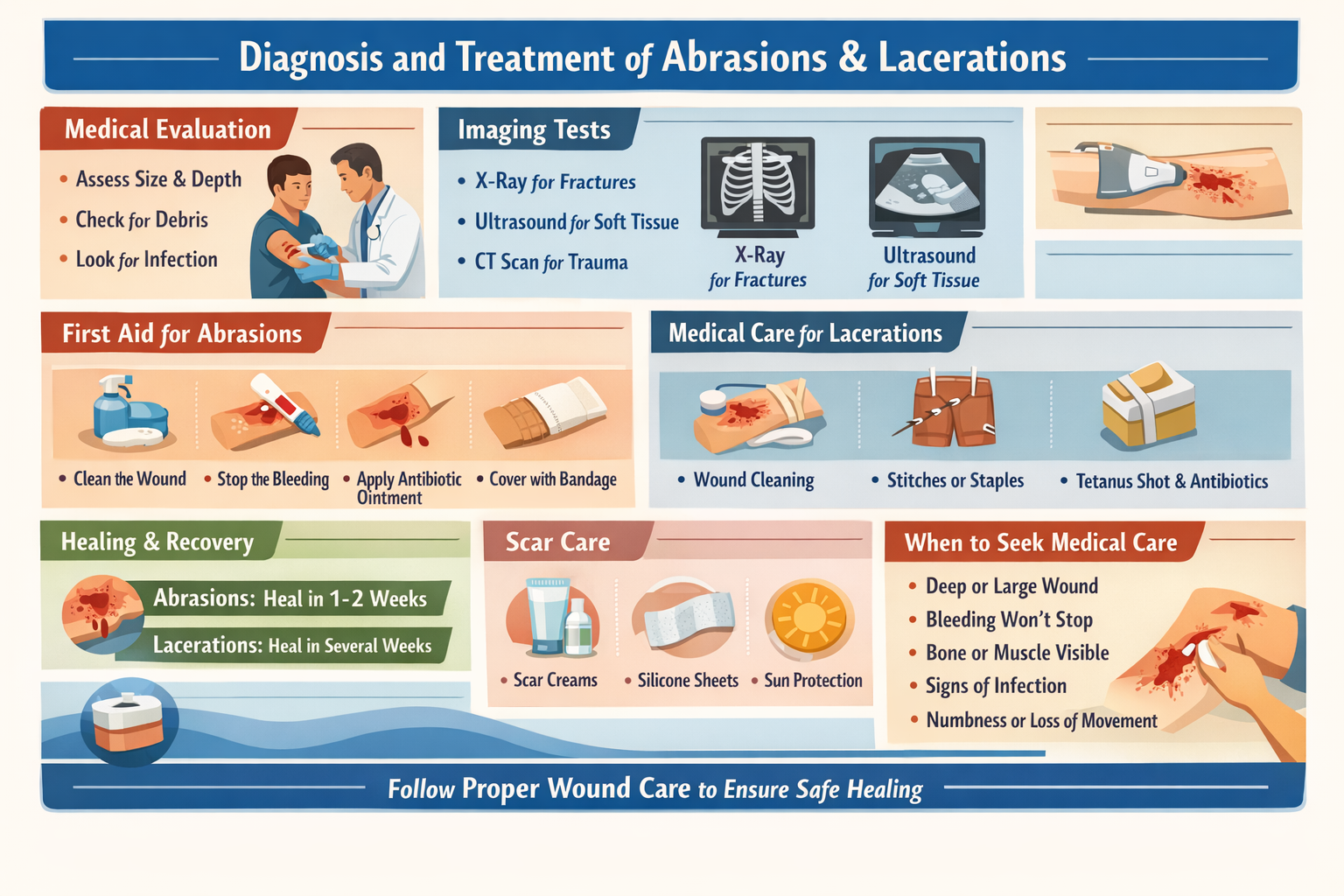
Preventing Skin Injuries
While accidents cannot always be prevented, several safety measures can reduce the risk of abrasions and lacerations.
Protective Gear
Wearing helmets, gloves, and protective pads during sports or high-risk activities can help protect the skin.
Workplace Safety
Following workplace safety guidelines and using protective equipment can significantly reduce injury risks.
Safe Driving
Seatbelts, airbags, and responsible driving habits play an important role in preventing serious injuries during vehicle accidents.
Emotional Impact of Traumatic Injuries
Even seemingly minor injuries can have an emotional impact, especially if they occur during a traumatic event such as a car accident.
Visible scars may affect self-confidence, and some individuals may experience anxiety or distress related to the incident.
Support from healthcare providers, family, and mental health professionals can help individuals cope with these challenges.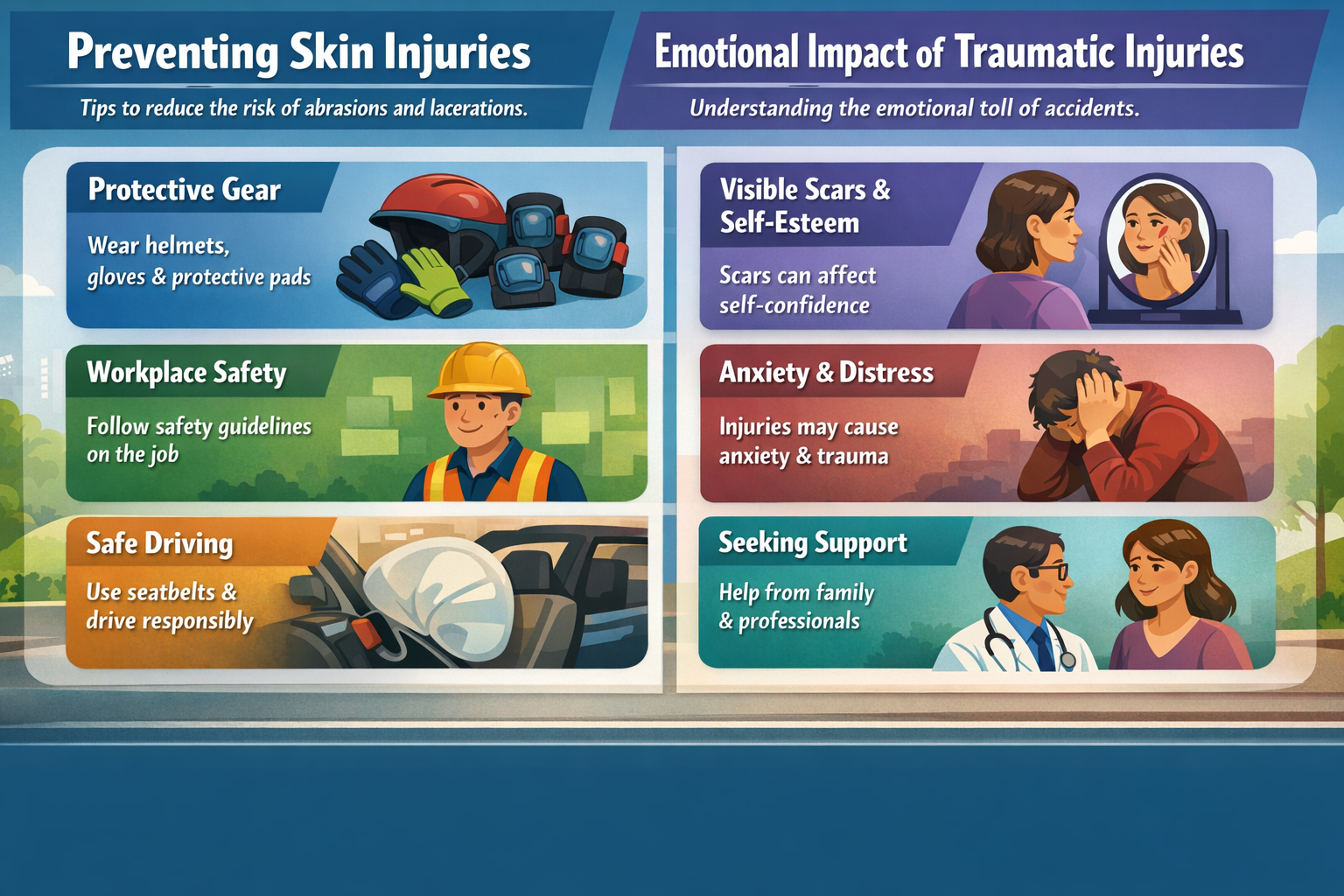
Outlook and Prognosis
The overall outlook for abrasions and lacerations is generally very good. Most wounds heal completely with proper care and do not lead to long-term complications.
However, deeper injuries may require more extensive treatment and a longer recovery period.
Early medical evaluation, proper wound care, and regular follow-up appointments are key factors in achieving the best possible outcome.
Conclusion
Abrasions and lacerations are among the most common injuries associated with accidents, falls, and everyday activities. Although they may appear minor at first glance, these wounds require proper attention to ensure safe healing.
Understanding how these injuries occur, recognizing warning signs, and seeking medical care when necessary can help prevent complications and support recovery.
With timely treatment and careful wound care, many minor wounds heal well, but deeper, contaminated, infected, or cosmetically sensitive wounds may leave scars or require follow up.