

Clavicle Fracture
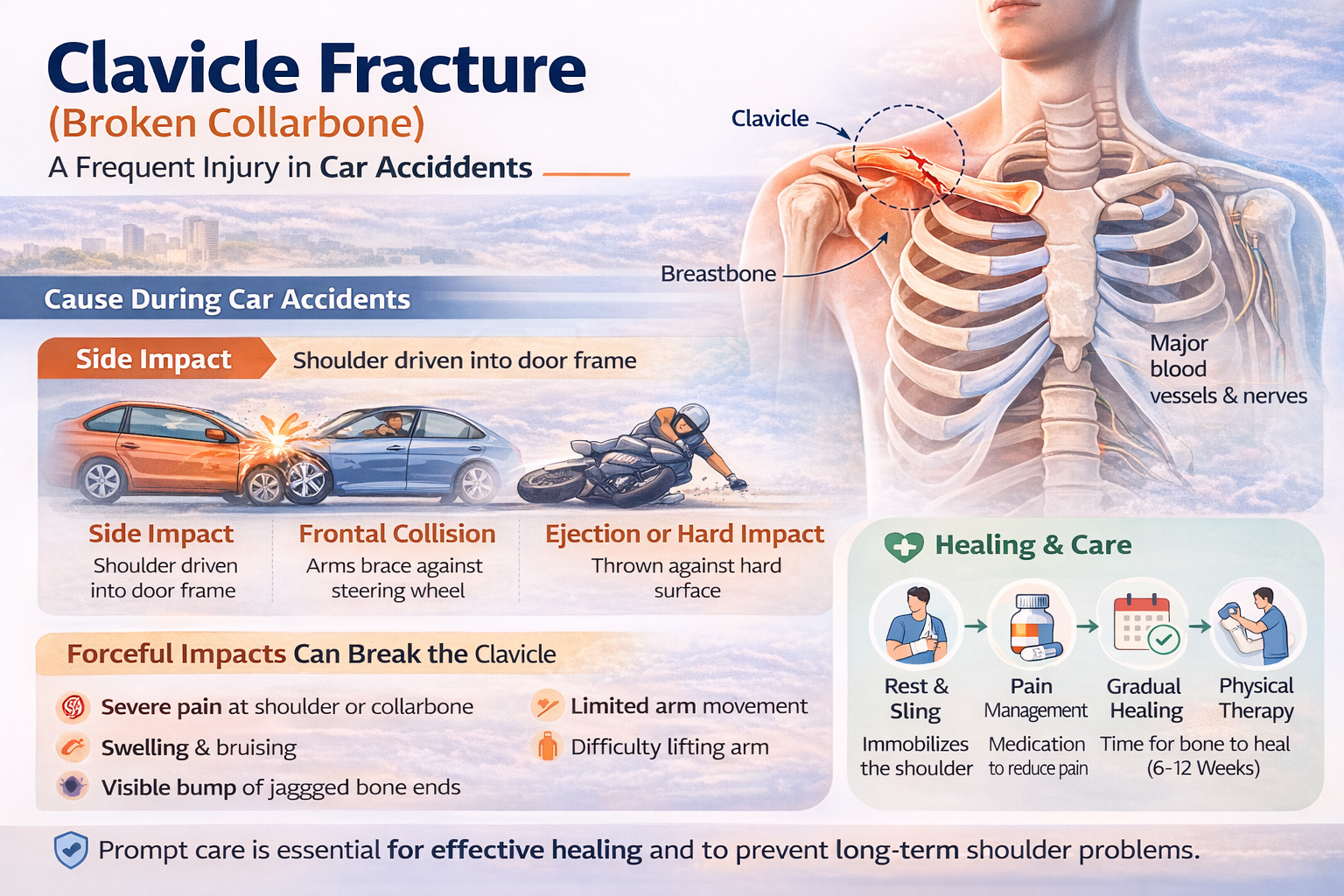
A clavicle fracture, commonly known as a broken collarbone, is one of the most frequent injuries seen after a car accident. The clavicle is a long, slender bone that connects the breastbone to the shoulder blade. Because of its position across the top of the chest and shoulder, it is especially vulnerable during high impact collisions. When a crash occurs and the body is thrown forward or sideways, the shoulder often absorbs a significant amount of force, placing the clavicle at risk.
Although many clavicle fractures heal well with proper care, they can be extremely painful and temporarily limit arm and shoulder movement. In some cases, the injury may be more complex and require surgical repair. Understanding how these fractures happen, what symptoms to look for, and what recovery involves can help individuals seek timely treatment and protect their long term shoulder function.
The clavicle serves as a critical support structure for the shoulder. It acts as a strut that keeps the shoulder blade properly aligned, allowing for smooth arm movement. It also helps protect major blood vessels and nerves that run from the neck into the arm.
Because the clavicle sits just beneath the skin with little muscle or fat covering it, it is relatively easy to fracture when exposed to sudden force. During a car accident, even with seat belts and airbags deployed, the shoulder can strike the door, steering wheel, or seat belt restraint, transferring impact directly to the collarbone.
How Car Accidents Cause Clavicle Fractures
Motor vehicle collisions often involve rapid deceleration. When a car stops suddenly, the body continues moving until restrained. The seat belt crosses the chest and shoulder, which helps prevent more serious injuries but can also concentrate force along the clavicle.
Side impact collisions are particularly associated with clavicle fractures. In these cases, the shoulder may be driven forcefully into the door frame. Frontal collisions can also cause injury when the arms brace against the steering wheel at the moment of impact.
Motorcycle accidents, pedestrian accidents, and rollover crashes increase the likelihood of being thrown against hard surfaces, further raising the risk of collarbone fractures.
Types of Clavicle Fractures
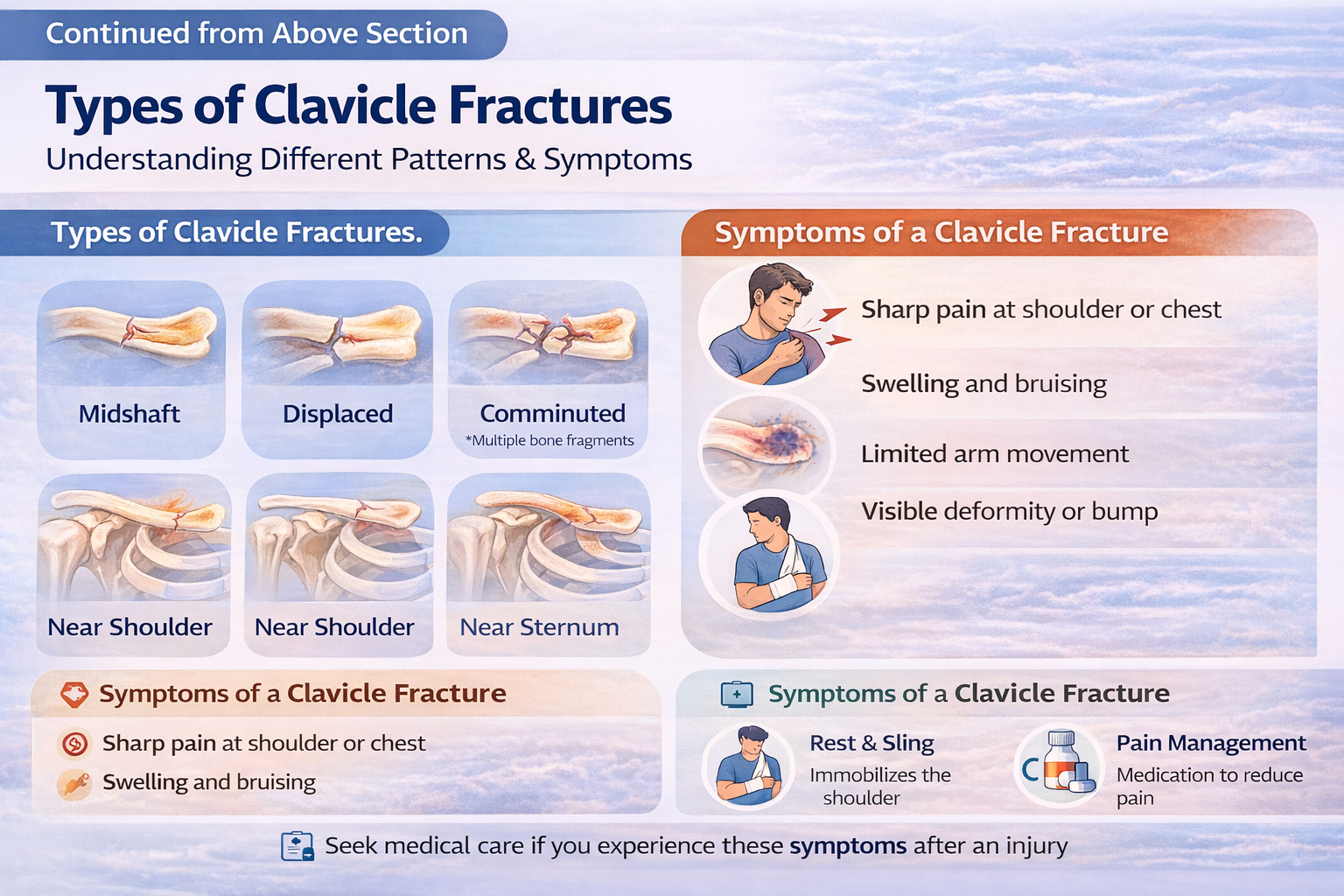
Clavicle fractures vary in severity and location. The majority occur in the middle portion of the bone, known as the midshaft. This area is structurally thinner and more prone to breaking under stress.
Some fractures are nondisplaced, meaning the bone cracks but remains aligned. Others are displaced, where the broken ends shift out of position. In more severe cases, the bone can break into multiple pieces, which is referred to as a comminuted fracture.
Occasionally, the fracture occurs near the shoulder or near the sternum. These fractures may involve surrounding ligaments and joints, making them more complicated to treat.
Symptoms of a Clavicle Fracture
The most immediate symptom of a broken collarbone is sharp pain at the top of the shoulder or chest area. The pain typically worsens with arm movement or attempts to lift the arm. Many individuals instinctively hold their injured arm close to their body to reduce discomfort.
Swelling, bruising, and tenderness over the collarbone are common. In some cases, a visible deformity or bump may appear where the bone has shifted. Patients may hear or feel a grinding sensation when attempting to move the shoulder.
Limited range of motion is another key sign. Simple activities such as reaching, lifting, or even dressing can become difficult. If nerves or blood vessels are affected, there may be numbness, tingling, or weakness in the arm, although this is less common.
Diagnosis and Medical Evaluation
After a car accident, any shoulder pain should be evaluated promptly. A healthcare provider will perform a physical examination, checking for tenderness, deformity, and reduced mobility.
X rays are typically used to confirm the diagnosis and determine the type and severity of the fracture. In complex cases, especially when joint involvement is suspected, a CT scan may provide more detailed imaging.
Early diagnosis allows doctors to decide whether conservative treatment is appropriate or if surgical intervention is necessary.
Treatment Options
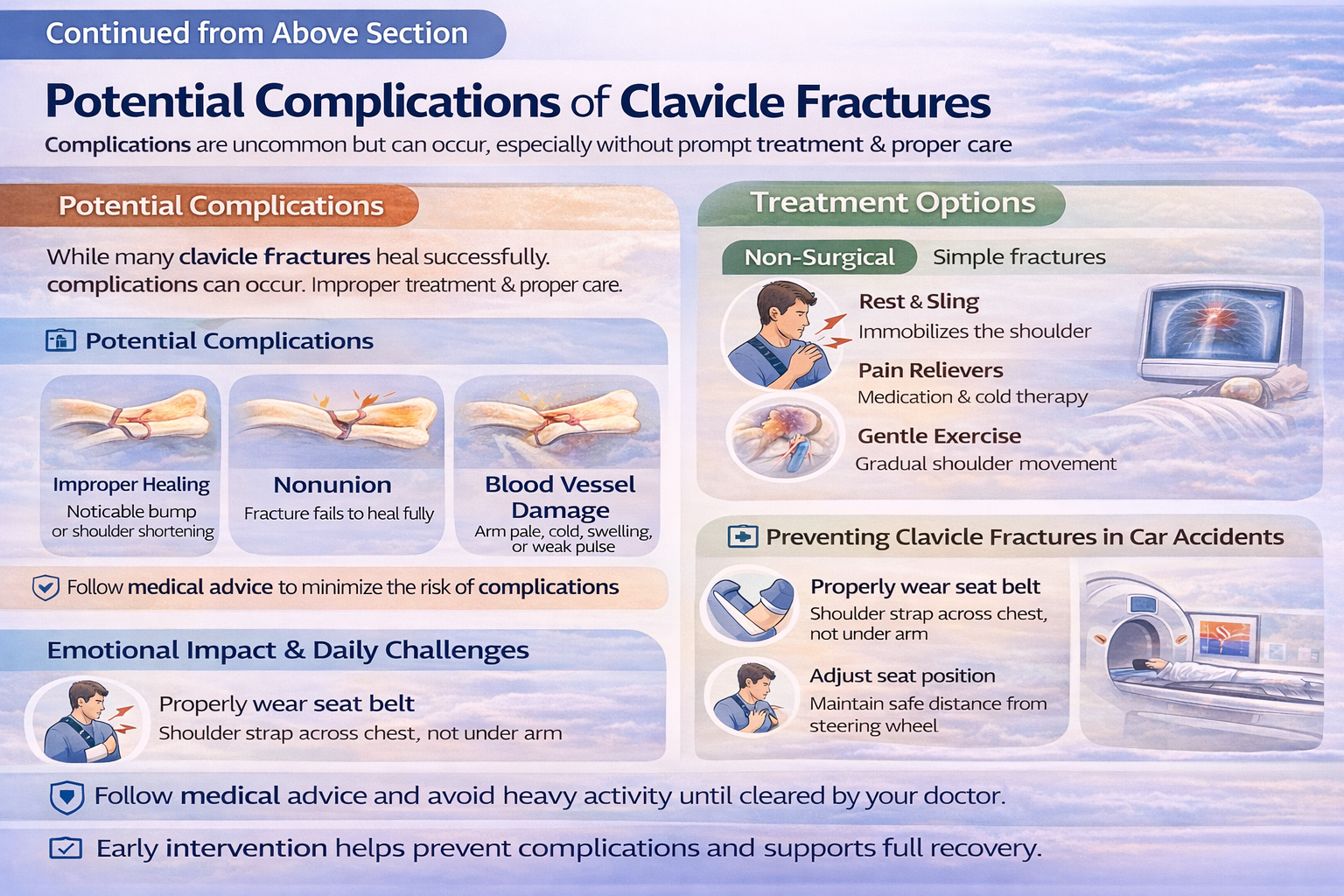
Most clavicle fractures are treated without surgery. For nondisplaced or mildly displaced fractures, immobilization with a sling is usually sufficient. The sling supports the arm and reduces movement while the bone heals naturally. Pain management is provided through medications and cold therapy to control swelling.
Patients are generally advised to limit shoulder movement for several weeks. However, gentle range of motion exercises may be introduced early under medical supervision to prevent stiffness.
Surgery may be recommended for severely displaced fractures, open fractures where the bone pierces the skin, or fractures that involve significant shortening of the bone. During surgery, orthopedic surgeons typically use plates and screws to realign and stabilize the bone. Surgical repair can provide quicker structural stability and may improve alignment in complex cases.
Recovery and Rehabilitation
Healing time for a clavicle fracture usually ranges from six to twelve weeks, depending on the severity of the break and the individual’s overall health. Children and younger adults often heal more quickly than older individuals.
Once the bone begins to mend, physical therapy plays an important role in restoring strength and mobility. Exercises focus on improving shoulder flexibility, rebuilding muscle strength, and gradually returning to normal function.
It is important not to rush recovery. Returning to heavy lifting or high impact activities too soon can disrupt healing and increase the risk of complications.

Potential Complications
While many clavicle fractures heal successfully, complications can occur. Improper alignment during healing may lead to a noticeable bump or slight shortening of the shoulder. Some individuals experience lingering discomfort or reduced shoulder endurance.
In rare cases, the fracture may not heal properly, a condition known as nonunion. Additional surgery may be required in such situations. Nerve or blood vessel injury is uncommon but can occur in severe trauma cases.
Prompt treatment and adherence to follow up care significantly reduce the risk of long term issues.
Emotional Impact and Daily Challenges
A clavicle fracture can temporarily disrupt daily life. Activities such as driving, working, or caring for children may become challenging. The inability to use one arm comfortably can lead to frustration.
After a car accident, emotional stress is common. Anxiety about returning to driving or fear of another collision may accompany the physical injury. Addressing both physical and emotional recovery supports overall healing.
Preventing Clavicle Fractures in Car Accidents
Although accidents cannot always be avoided, certain safety measures reduce the risk of severe injury. Wearing a properly positioned seat belt is critical. The shoulder strap should lie across the chest and not under the arm. Adjusting the seat to maintain appropriate distance from the steering wheel and ensuring airbags are functional also contribute to safer outcomes.
Safe driving practices such as avoiding distractions, maintaining safe speeds, and obeying traffic laws further lower the likelihood of high impact collisions.
When to Seek Immediate Care
Seek emergency medical attention if shoulder pain after a car accident is severe, if there is visible deformity, or if numbness and weakness develop in the arm. Difficulty breathing or significant chest pain should also be evaluated promptly, as these symptoms may indicate additional injuries.
Early intervention helps prevent complications and ensures the best possible recovery.
Final Thoughts
A clavicle fracture after a car accident is a painful but often treatable injury. While most cases heal with conservative care, some require surgical stabilization. The clavicle plays a key role in shoulder function and upper body movement, making proper treatment essential.
If you experience shoulder pain following a collision, do not ignore it. Timely medical evaluation, appropriate treatment, and dedicated rehabilitation can help you regain strength, restore mobility, and return to normal activities with confidence.