

Lumbar Spine Fracture After a Car Accident
A lumbar spine fracture is a serious injury that affects the lower portion of the back. While neck injuries often receive immediate attention after a car accident, injuries to the lumbar spine can be just as significant and, in some cases, life altering. The lumbar region carries much of the body’s weight and plays a central role in movement, balance, and stability. When one of these vertebrae breaks, everyday activities such as standing, walking, or even sitting can become painful and difficult.
This article explains lumbar spine fractures in clear and practical terms. If you or someone you love has been in a car accident and is experiencing lower back pain, understanding this condition can help you recognize the seriousness of the injury and seek appropriate care.
What Is a Lumbar Spine Fracture
The lumbar spine consists of five vertebrae labeled L1 through L5. These bones are larger and thicker than those in the neck and upper back because they support most of the body’s weight. Between each vertebra are discs that act as cushions, absorbing shock and allowing flexibility. Surrounding the spine are ligaments and muscles that provide support and movement.
A lumbar spine fracture occurs when one or more of these vertebrae crack or break due to trauma. In car accidents, the injury is usually caused by sudden force, compression, or impact. Depending on the severity, a fracture can range from a small crack that remains stable to a severe break that disrupts spinal alignment and threatens the spinal cord or nearby nerves.
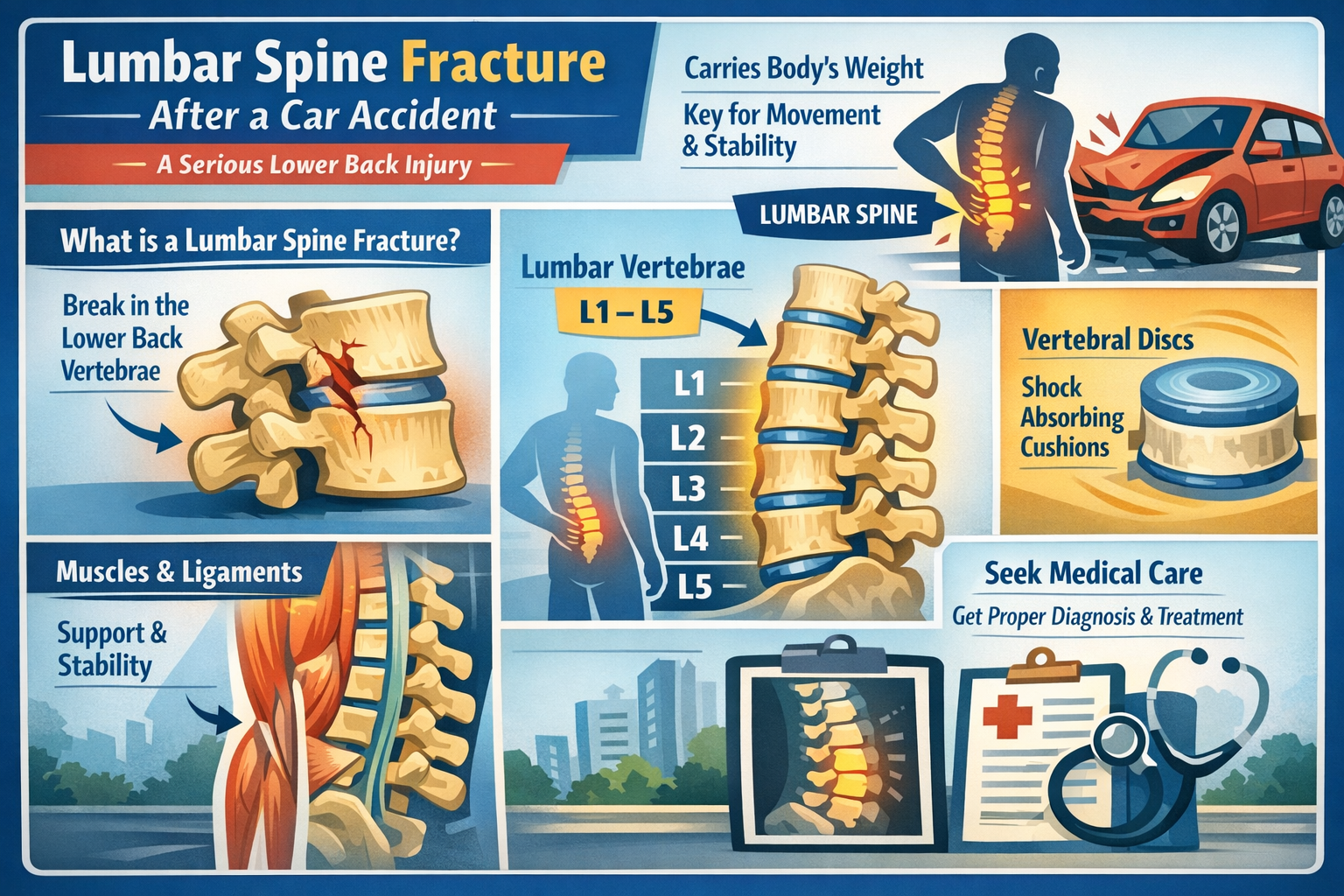
Although the spinal cord typically ends around the L1 or L2 level, the lower lumbar spine contains important nerve roots known as the cauda equina. These nerves control movement and sensation in the legs and regulate bowel and bladder function. A serious lumbar fracture can compress these nerves and cause significant neurological symptoms.
How Car Accidents Cause Lumbar Fractures
Car accidents create powerful forces that travel through the body. During a high impact collision, especially a head on crash or rollover, the spine may experience intense compression. When the torso is thrown forward against a seat belt, the lumbar spine can flex sharply. In other situations, a vertical force, such as landing hard after a rollover, can compress the vertebrae from top to bottom.
Seat belts save lives, but the lap belt portion can sometimes concentrate force across the lower abdomen and lumbar spine during sudden deceleration. This mechanism can contribute to certain types of fractures, particularly flexion distraction injuries.
Direct trauma can also occur if part of the vehicle intrudes into the passenger compartment or if the body strikes the dashboard or interior structures. The lumbar spine is strong, but it is not designed to withstand extreme forces beyond its normal limits.
Types of Lumbar Spine Fractures
Not all lumbar fractures are the same. The type of fracture depends on the mechanism of injury and how the bone fails under stress.
A compression fracture is one of the most common types. It occurs when the front part of the vertebra collapses under pressure, creating a wedge shape. These fractures are often stable and may not involve neurological damage.
A burst fracture is more severe. In this case, the vertebra shatters outward in multiple directions. Bone fragments can move into the spinal canal and compress nerve structures. Burst fractures are often unstable and require careful evaluation.
A flexion distraction fracture, sometimes referred to as a seat belt injury, occurs when the spine is forcefully bent forward. This can cause the vertebra to split horizontally. These injuries are often associated with abdominal trauma.
Fracture dislocations are among the most serious lumbar injuries. They involve both a broken vertebra and displacement of the spinal segments. These injuries are typically unstable and frequently require surgical stabilization.
Symptoms of a Lumbar Spine Fracture
The most common symptom of a lumbar spine fracture is severe lower back pain. The pain may begin immediately after the accident or develop shortly afterward. It often worsens with movement and may feel sharp, deep, or throbbing.
Swelling and muscle spasms are common as the body attempts to protect the injured area. Patients often find it difficult to stand upright or walk comfortably. 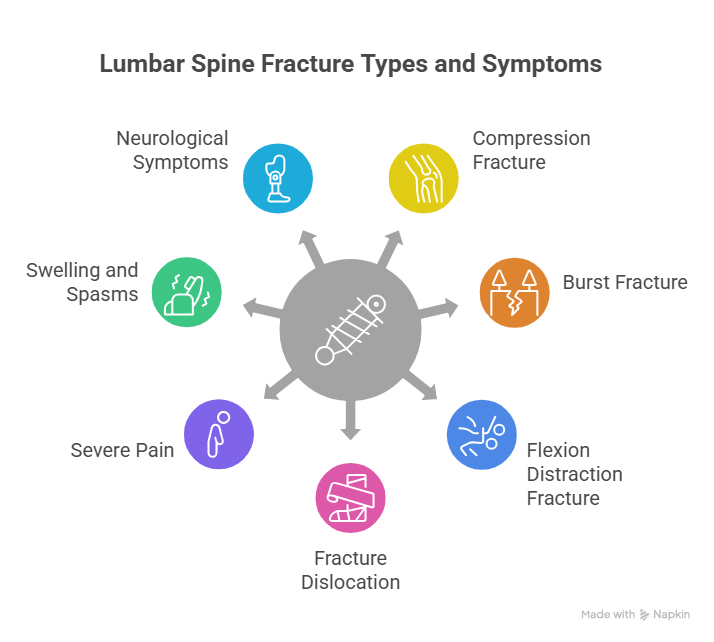
If nerve roots are affected, additional symptoms may occur. These include numbness or tingling in the legs, weakness, shooting pain down one or both legs, and difficulty with coordination. In severe cases, patients may experience loss of bowel or bladder control, which is a medical emergency.
Any neurological symptoms following a car accident require immediate evaluation. Even if pain seems manageable, the presence of numbness or weakness suggests potential nerve involvement.
Emergency Evaluation and Diagnosis
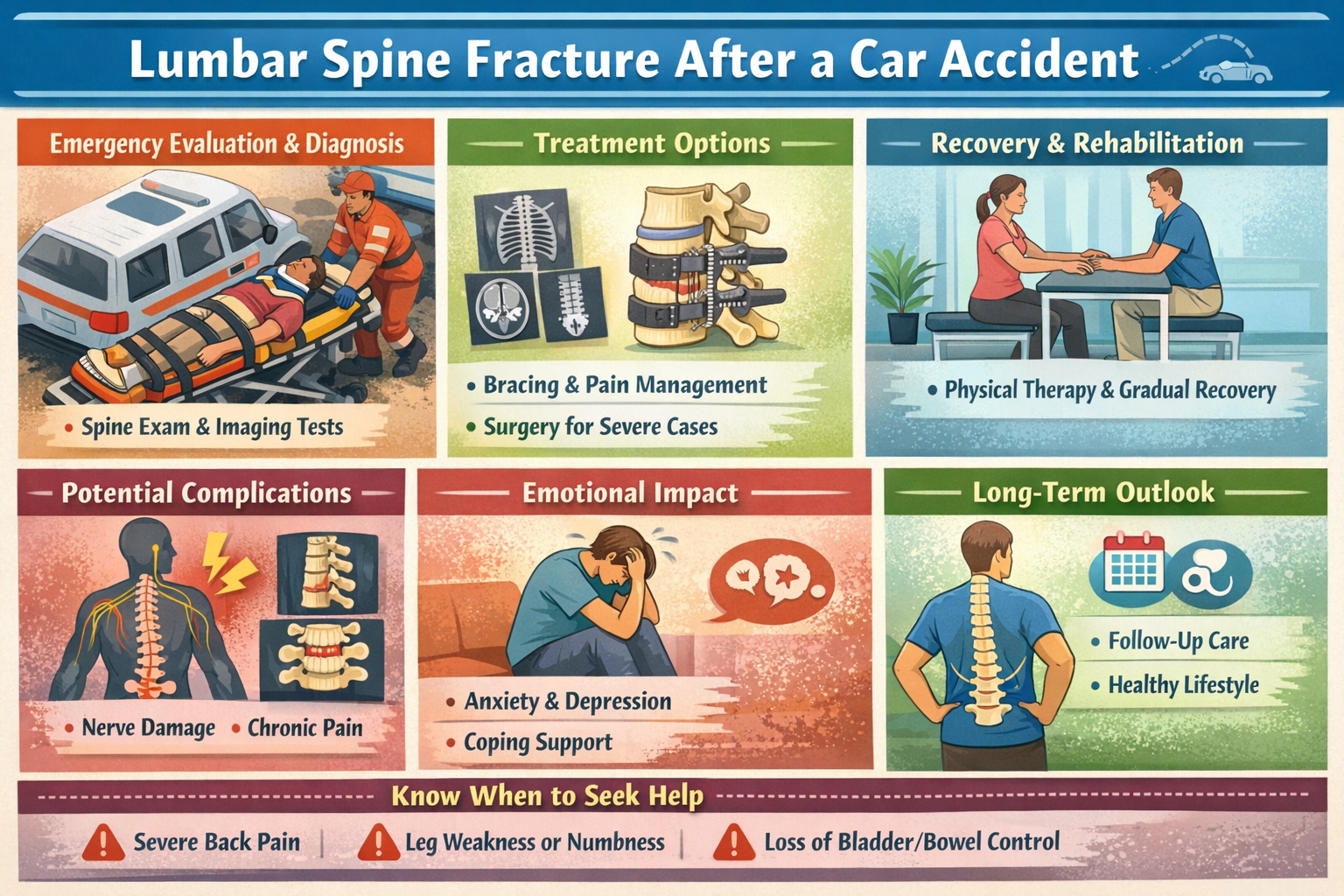
After a serious car accident, emergency responders assess the entire spine to rule out fractures. Immobilization may be used during transport to prevent further injury.
In the emergency department, doctors perform a physical examination to evaluate pain, tenderness, range of motion, and neurological function. Imaging studies are critical for confirming the diagnosis.
X rays can detect many fractures, but computed tomography scans provide more detailed images of bone structure and are commonly used in trauma settings. Magnetic resonance imaging may be ordered to evaluate soft tissue structures, discs, ligaments, and nerve compression.
Early and accurate diagnosis helps guide appropriate treatment and reduces the risk of complications.
Treatment Options
Treatment for a lumbar spine fracture depends on the type of fracture, spinal stability, and whether nerves are involved.
Stable compression fractures without neurological deficits may be treated conservatively. This often includes bracing to limit movement while the bone heals. Pain management is important, and activity may be restricted for several weeks. Physical therapy is usually introduced gradually to restore strength and flexibility.
Unstable fractures, burst fractures with nerve compression, or fracture dislocations typically require surgical intervention. Surgery aims to stabilize the spine, realign vertebrae, and relieve pressure on nerve structures. Surgeons may use screws, rods, or metal plates to secure the spine. In some cases, bone grafts are used to promote fusion between vertebrae.
The decision to operate is based on careful evaluation of imaging findings, neurological status, and overall patient health.
Recovery and Rehabilitation
Recovery time varies depending on the severity of the fracture and the treatment approach. Stable fractures treated without surgery may heal within eight to twelve weeks, though some residual stiffness or discomfort may persist for longer.
Surgical cases often require a longer recovery period. Hospital stays may last several days, followed by weeks or months of rehabilitation. Physical therapy focuses on restoring core strength, improving posture, and gradually increasing activity levels.
Rehabilitation is a crucial part of healing. Strengthening the muscles that support the spine helps prevent further injury and promotes long term stability. Patients are often guided through safe movement techniques to protect the healing spine.
Patience is essential. Healing from a lumbar fracture is not just about bone recovery but also about rebuilding confidence in movement.
Potential Complications
Complications depend on the severity of the fracture and whether nerve structures were damaged. Chronic back pain is one possible outcome, especially if the injury altered spinal alignment.
Nerve damage can result in persistent weakness, numbness, or radiating leg pain. In rare but serious cases, injury to the cauda equina can lead to permanent bowel or bladder dysfunction.
Spinal instability may develop if the fracture does not heal properly. This can lead to long term discomfort and may require additional intervention.
Early treatment, adherence to rehabilitation plans, and regular follow up care significantly reduce the risk of complications.
Emotional and Psychological Impact
A lumbar spine fracture does not just affect the body. It can also impact emotional well being. Sudden loss of mobility, ongoing pain, and the stress of medical treatment can lead to anxiety or depression.
Car accidents themselves are traumatic events. The combination of physical pain and emotional stress can slow recovery if not addressed. Support from healthcare providers, family, and mental health professionals plays an important role in overall healing.
Long Term Outlook
The long term outlook for a lumbar spine fracture depends largely on whether nerve damage occurred and how quickly treatment was initiated. Many patients with stable fractures recover well and return to normal activities with minimal long term limitations.
Patients who required surgery or experienced neurological deficits may have a longer recovery path. Advances in surgical techniques and rehabilitation have greatly improved outcomes over the years.
Consistent follow up care, proper body mechanics, and maintaining a strong core can help protect the spine in the future.
Preventing Lumbar Spine Injuries
While no one can fully eliminate the risk of car accidents, certain precautions reduce injury severity. Wearing seat belts correctly, maintaining proper seating position, and following safe driving practices are critical. Modern vehicle safety features such as airbags and reinforced frames also help distribute crash forces more safely.
Good overall bone health also plays a role. Maintaining adequate calcium and vitamin D intake, engaging in weight bearing exercise, and addressing conditions like osteoporosis can strengthen bones and reduce fracture risk.
When to Seek Immediate Medical Attention
After a car accident, seek immediate medical care if you experience severe lower back pain, numbness or weakness in the legs, difficulty walking, or loss of bowel or bladder control. Even if symptoms seem mild at first, worsening pain or neurological changes require urgent evaluation.
It is always better to rule out a serious injury than to delay care and risk complications.
Final Thoughts
A lumbar spine fracture is a significant injury that requires careful medical evaluation and thoughtful treatment. The lower back is central to nearly every movement we make, and damage to this area can affect daily life in profound ways.
With early diagnosis, appropriate treatment, and dedicated rehabilitation, many individuals recover and regain their strength and independence. If you or someone you care about has been involved in a car accident and is experiencing lower back pain, do not ignore it. Prompt medical attention can make a lasting difference in recovery and long term spinal health.