

Why Car Accident Head Pain Needs Prompt Attention
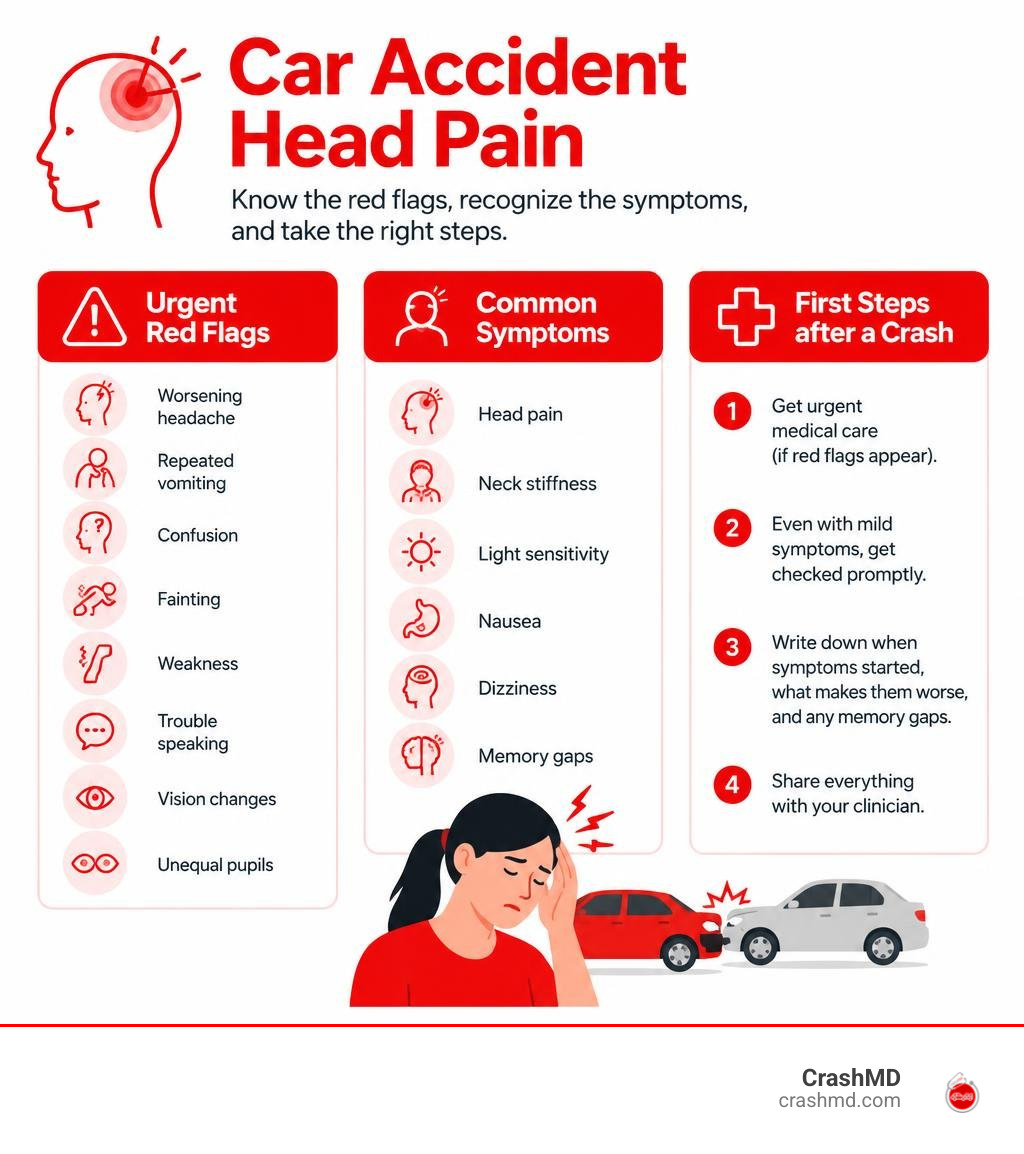
Car accident head pain can come from neck strain, a concussion, or both. After a crash, seek urgent medical care right away for a worsening headache, repeated vomiting, confusion, fainting, weakness, trouble speaking, vision changes, or unequal pupils. Even if symptoms seem mild, get checked promptly if head pain, neck stiffness, light sensitivity, nausea, dizziness, or memory gaps appear.
A rear-end collision can snap the neck forward and back, irritating muscles and nerves that refer pain from the base of the skull toward the forehead. The same sudden force can also move the brain inside the skull and cause a concussion – even when you never hit your head.
Symptoms may not fully show up until hours or days later. Do not assume a low-speed crash or limited vehicle damage means you are uninjured. Write down when symptoms started, what makes them worse, and any moments you cannot remember, then share all of it with your clinician.
I’m Dr. Adam Savage, and this guide will help you recognize possible causes of post-crash head and neck pain, understand warning signs, and take practical next steps toward recovery.
Car accident head pain glossary:
Primary Causes of Car Accident Head Pain
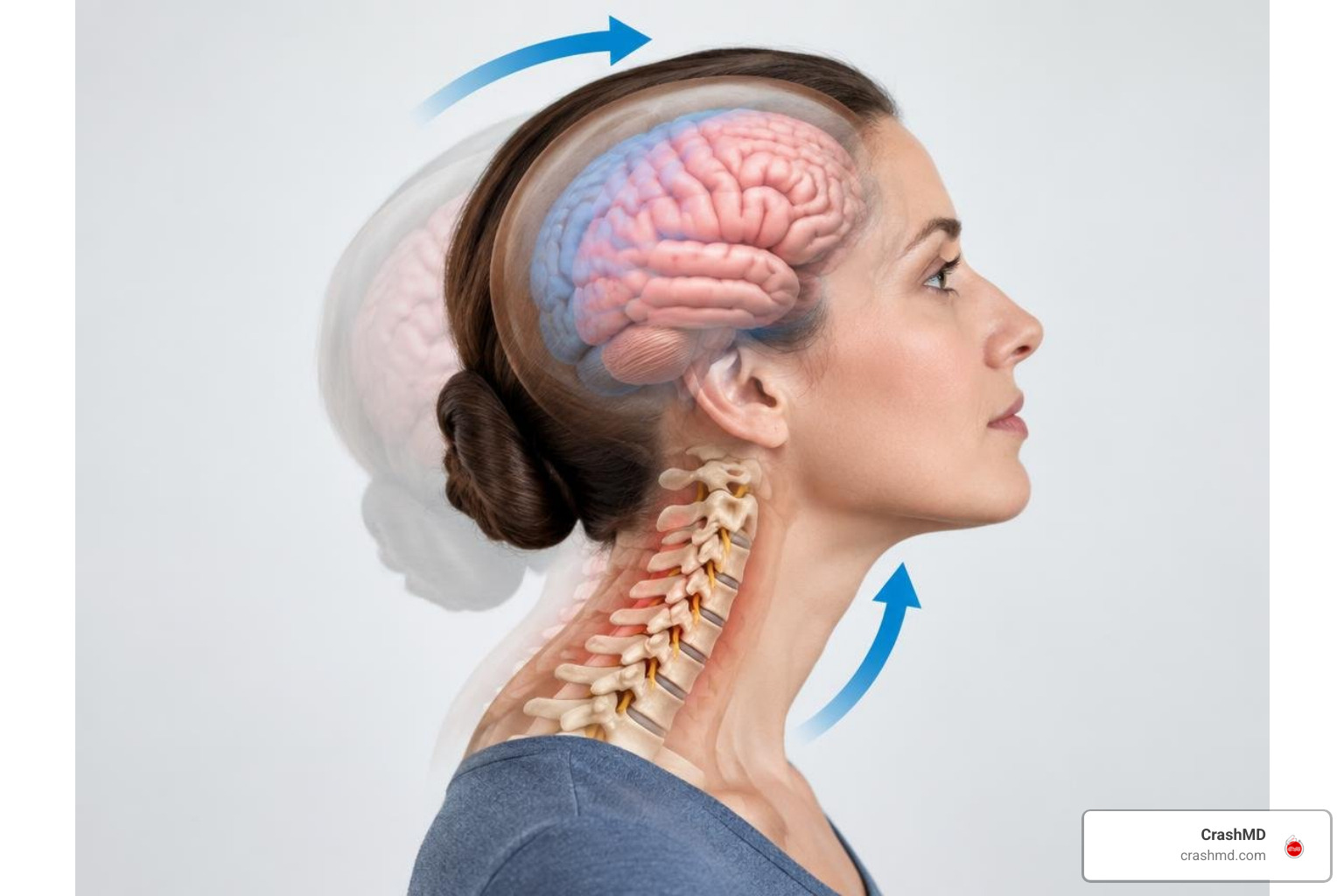
When two vehicles collide, powerful acceleration-deceleration forces travel instantly through the cabin and into your body. Even when your seatbelt keeps your torso firmly anchored to the seat, your head and neck whip violently in opposing directions. This rapid, uncontrolled motion creates intense mechanical strain across delicate muscles, ligaments, and cervical vertebrae. Reviewing our detailed guide to head pain after car accident illustrates how these physical forces create distinct physiological injuries beneath the surface.
Whiplash and Cervicogenic Nerve Irritation
Whiplash is an acute cervical acceleration-deceleration injury that strains the supporting muscles, tendons, and facet joints of the upper neck (specifically the C1 to C3 spinal segments). When micro-tears develop in these soft tissues, inflammation quickly follows.
This localized inflammation irritates the greater and lesser occipital nerves that branch out from the upper cervical spine. As a result, pain signals radiate upward from the base of your skull, over the scalp, and settle behind the eyes or across the forehead. This phenomenon is known clinically as a cervicogenic headache. Learning more through a beginners guide to whiplash headaches from rear end collision causes can help you trace how restricted cervical movement triggers these ascending aches.
Coup-Contrecoup Traumatic Brain Injuries Without Direct Impact
Many drivers assume that a traumatic brain injury requires a direct blow to the steering wheel, window, or headrest. However, intracranial physics tells a very different story. Your brain floats inside the skull cushioned by cerebrospinal fluid. When a car stops suddenly or gets struck from behind, the brain continues moving due to inertia, striking the hard inner surface of the cranium (the “coup” impact) and rebounding against the opposite side (the “contrecoup” impact).
A driver sitting still at a stoplight can end up with a genuine brain injury after being rear-ended at just 25 to 30 miles per hour. This rapid snapping motion can stretch and shear brain cells at a microscopic level, producing a mild traumatic brain injury (mTBI) or concussion. Understanding what headaches after a car crash tell you highlights why violent motion alone is more than enough to cause neurochemical disruption.
Whiplash Headache vs. Concussion: Identifying the Difference
Distinguishing between neck-related pain and an underlying brain injury is vital for getting the right care. While both injuries often occur simultaneously during collisions, their root causes and primary symptom profiles differ.
| Feature | Whiplash (Cervicogenic) Headache | Concussion (mTBI) Headache |
|---|---|---|
| Primary Origin | Cervical spine, neck muscles, facet joints | Direct intracranial inertia / brain parenchymal trauma |
| Pain Location | Base of skull, radiating up over the head to the forehead | Diffuse, generalized pressure across the entire head |
| Aggravating Factors | Neck movement, poor posture, turning the head | Bright lights, loud sounds, cognitive effort, screen use |
| Associated Physical Signs | Neck stiffness, muscle spasms, tender cervical trigger points | Nausea, balance deficits, visual blurring, dizziness |
| Cognitive Symptoms | Typically absent (unless pain impairs focus) | Brain fog, confusion, short memory gaps, sluggishness |
According to medical insights on how to tell whiplash injury from a concussion, recognizing these structural versus neurological distinctions allows doctors to tailor an accurate rehabilitation plan.
Symptom Patterns and Cervical Pain Progression
A whiplash headache generally follows a predictable mechanical path. It tends to start as a dull, steady ache at the suboccipital region (where your neck meets your skull) and creeps forward. Moving your head to check blind spots, working at a computer, or sitting upright without neck support often intensifies the discomfort.
Recognizing Concussion Red Flags and Diffuse Headaches
In contrast, a concussion headache feels like an all-encompassing pressure wrapping around the cranium. It is frequently accompanied by neurological symptoms, including photophobia (light sensitivity), phonophobia (sound sensitivity), lightheadedness, and cognitive fatigue. If your head pain is paired with visual disturbances, exploring our guide on blurry vision and headache after car accident can provide deeper context on cranial nerve and visual processing strain.
Evaluating Medical Urgency and Navigating Clinical Diagnosis

Prompt medical evaluation establishes a baseline for recovery and ensures life-threatening complications are ruled out early. Listening to headache after crash specialists share their advice underscores why timely clinical triage is crucial for long-term health.
Emergency Warning Signs Requiring Immediate Care
Some post-accident symptoms indicate dangerous intracranial events, such as acute subdural hematomas or structural spinal damage. Seek immediate emergency department care if you or a passenger experience:
- Repeated episodes of nausea or projectile vomiting
- Asymmetrical or unequal pupil dilation
- Progressive confusion, slurred speech, or profound disorientation
- Stumbling, loss of motor coordination, or limb weakness
- Seizures, worsening lethargy, or an inability to awaken fully
For insights into high-impact side collisions, see our overview on headache after t-bone crash symptoms next steps.
Diagnosing Subtle Memory Gaps and Car Accident Head Pain
One of the most overlooked signs of a concussion is brief post-traumatic amnesia. Missing even 20 to 30 seconds immediately following impact counts clinically as an altered state of consciousness. Many accident victims report remembering the squeal of brakes, followed by a sudden jump forward in time to seeing deployed airbags or emergency responders.
Be completely transparent with your examining clinician. Keep a daily symptom log noting headache frequency, pain intensity (on a 1–10 scale), light sensitivity, and any lapses in focus. For an in-depth breakdown of diagnosis protocols, refer to everything you need to know about headache post trauma.
Recovery Protocols and Post-Accident Home Care
Recovering from post-accident head trauma demands structured pacing rather than simply toughing it out. A comprehensive roadmap like a practical guide to post-concussion headache management helps you balance physical healing with neural recovery.
Managing Car Accident Head Pain During At-Home Rehabilitation
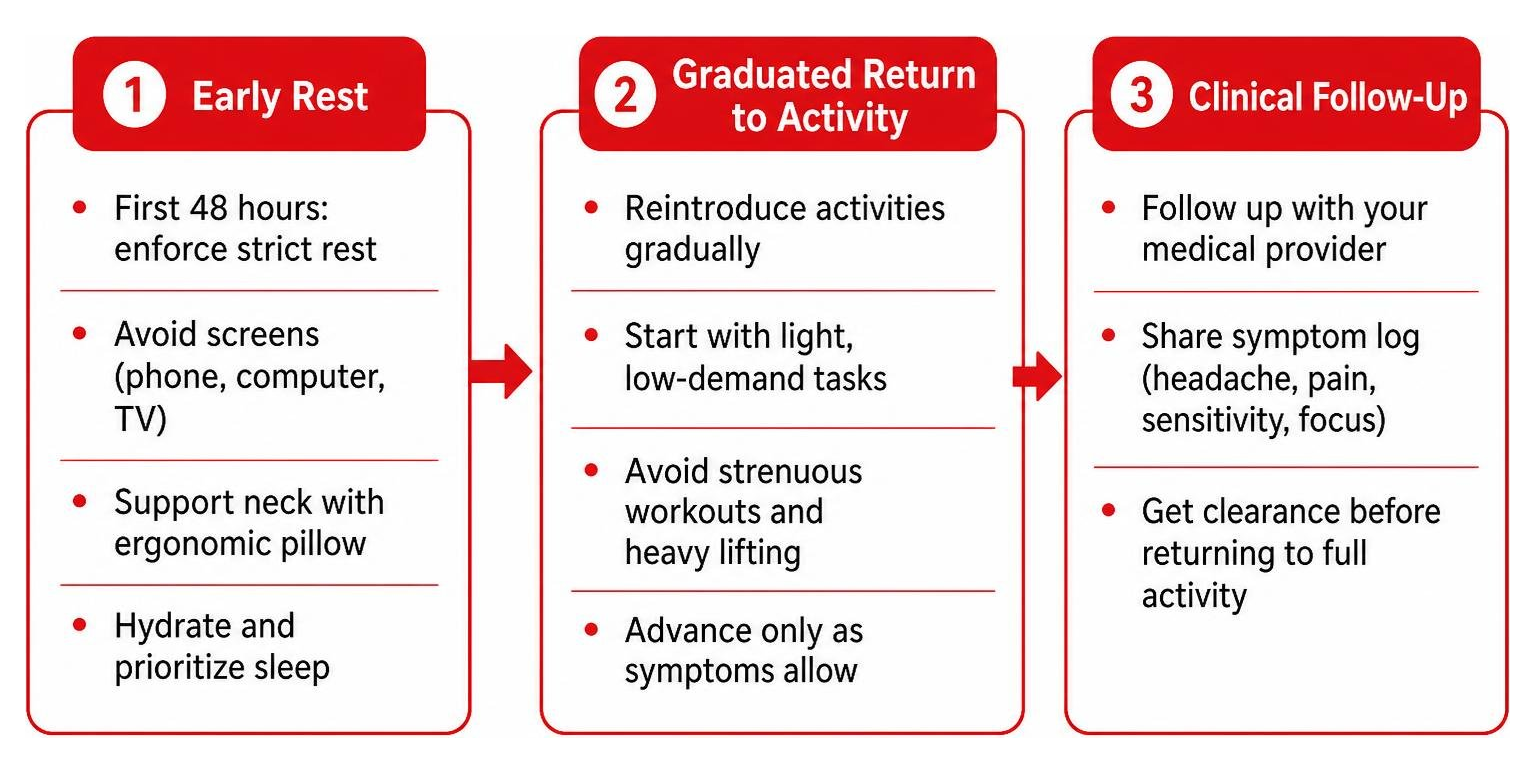
- Enforce strict visual rest: Turn off smartphones, computers, and televisions for the first 48 hours to minimize blue light strain.
- Maintain gentle neck ergonomics: Support your cervical spine with an ergonomic pillow and avoid harsh head rotations.
- Hydrate and prioritize sleep: Your brain requires substantial metabolic energy and quality non-REM sleep to heal microvascular stress.
- Gradually reintroduce activity: Avoid strenuous workouts or heavy lifting until you are cleared by a medical provider. Exploring how to never worry about concussion headache treatment again offers additional strategies for managing post-injury discomfort.
Common Pitfalls and Long-Term Prognosis Realities
A frequent mistake crash victims make is returning to demanding work or screen-heavy tasks the moment their initial sharp headache dulls. Rushing back into high-stress environments can trigger symptom relapses and prolong recovery.
Recent medical literature suggests that only around half of concussions fully resolve quickly without lingering effects. When head trauma is ignored, symptoms can develop into persistent post-concussion syndrome or chronic cervicogenic pain. Consulting our step-by-step guide to how long headaches last after concussion provides realistic recovery milestones for patients navigating extended healing timelines.
Frequently Asked Questions About Crash-Related Head Injuries
Can you get a concussion without hitting your head in a car accident?
Yes. Concussions occur when the brain moves rapidly within the skull. Sudden deceleration forces from collisions at speeds as low as 25 to 30 mph generate enough rotational force to disrupt neural membranes without your head ever making contact with an interior vehicle surface. You can learn more by reading all about headache after car wreck.
How does a whiplash headache feel compared to a concussion headache?
A whiplash headache typically begins as tightness at the base of the skull that radiates up into the neck, shoulders, and forehead, worsening with physical head movements. A concussion headache is more diffuse, characterized by generalized internal head pressure, dizziness, brain fog, and sensitivity to environmental light and sound. Check our guide on what to know about headaches and aches after your accident for further symptom comparisons.
Do concussion symptoms always go away quickly after a collision?
No. While many mild concussions improve within two to four weeks, recovery varies widely based on impact severity, past head trauma, and how well you rest in the acute phase. To learn how minor crashes can lead to lingering head pain, see our article on fender bender headaches when a small bump becomes a big pain.
Conclusion
Car accident head pain should never be dismissed as routine soreness. Whether your pain stems from cervical whiplash, an intracranial concussion, or a combination of both, getting a thorough medical evaluation is the foundation of a full recovery.
At CrashMD, we guide accident victims through every stage of physical recovery across Arizona, Nevada, Texas, Oklahoma, Southern California, and Northern California. We specialize in post-accident medical care, tailored pain management, and thorough injury documentation to ensure your physical well-being is fully supported before you ever consider legal action.
If you or a loved one is dealing with lingering head or neck pain after a collision, visit us to access specialized post-traumatic headache care and start your path toward lasting relief today.