

That “Minor” Crash Headache May Not Be So Minor
A headache after a fender bender is one of the most commonly dismissed symptoms after a car accident — and one of the most important ones to take seriously.
If you’re dealing with head pain after a minor crash, here’s what you need to know right away:
- It’s common. Headaches affect the vast majority of accident victims, even after low-speed collisions.
- You don’t need to hit your head. The force of impact alone can trigger headaches through whiplash and brain movement inside the skull.
- Symptoms can be delayed. Pain may not appear until hours, days, or even weeks after the crash.
- Some headaches signal serious injury. Conditions like concussion, nerve damage, and in rare cases, bleeding in the brain, can all begin as a “simple” headache.
- See a doctor promptly. Early evaluation protects both your health and your legal rights.
Here’s something that surprises a lot of people: you can walk away from a fender bender feeling completely fine — no broken bones, no visible injuries, no immediate pain. Adrenaline and stress hormones flood your body during a crash, and they are remarkably good at masking pain signals in the hours immediately after impact.
Then, the next morning, you wake up with a pounding headache.
That delay is not unusual. Research shows post-traumatic headaches can appear within 7 days of an injury — and in some cases, symptoms develop up to a year later. More than 2 million Americans suffer whiplash injuries every year, and headaches are among the most reported symptoms that follow.
The headache isn’t the problem itself. It’s your body’s signal that something else may be wrong.
Understanding what’s actually happening inside your body after a fender bender — and when to act — can make the difference between a full recovery and months of chronic pain.
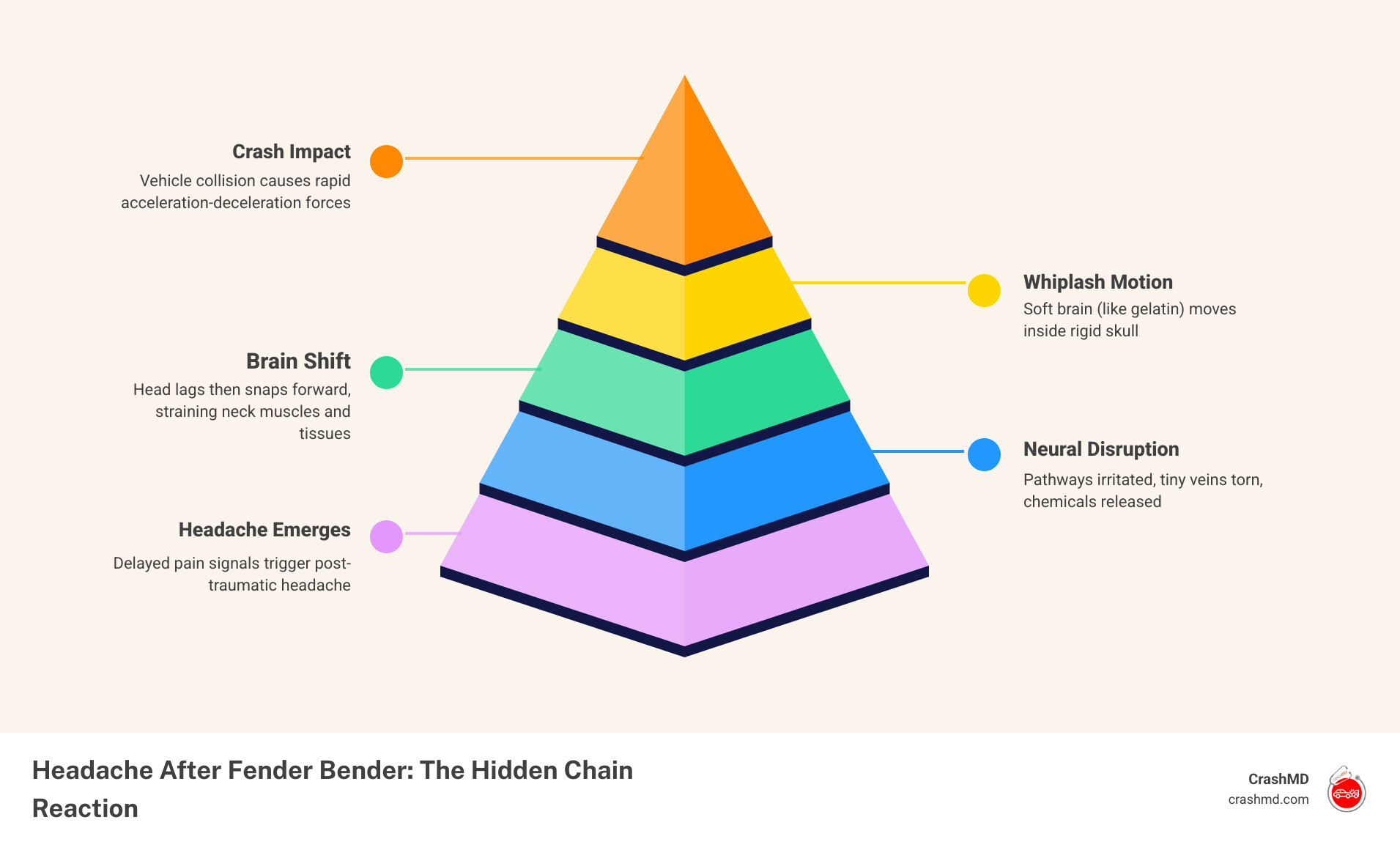
Why You Might Have a Headache After a Fender Bender (Even Without Hitting Your Head)
It is a common misconception that you must strike your head against the steering wheel or window to sustain an injury. In reality, a headache after a fender bender is frequently caused by the physics of rapid acceleration and deceleration.
When your vehicle is struck, even at low speeds, your body is thrust forward while your head lags behind, then snaps forward. This is whiplash. This violent motion causes the brain—which has the consistency of soft gelatin—to shift or twist inside the hard protective shell of the skull. This movement can disrupt neural pathways and tear tiny bridging veins, leading to what doctors call a “chemical migraine phenomena.”
Beyond the brain itself, the aches and pains after your accident what to know about headaches and more often stem from soft tissue strain. The muscles and ligaments in your neck connect directly to the base of your skull. When these tissues are stretched or torn, they become inflamed. This inflammation sends pain signals upward, creating a persistent headache. We often tell our patients: dont let a car crash headache drive you crazy, because understanding the mechanical cause is the first step toward relief.
Common Types of Headache After a Fender Bender
Not all post-accident headaches feel the same. Identifying the “flavor” of your pain helps us pinpoint the source of the injury:
- Post-Traumatic Headache: These typically appear within hours or days of the crash. Scientific research on post-traumatic headaches indicates that they occur in 30% to 90% of traumatic brain injuries (TBIs). They can mimic migraines, featuring throbbing pain and sensitivity to light.
- Cervicogenic Headache: This is a “referred” pain. The injury is actually in your cervical spine (neck), but the brain perceives the pain in the head. It often starts at the base of the skull and radiates toward the forehead or behind the eyes.
- Tension-Type Headache: About 37% of post-accident patients experience these. They feel like a “tight band” squeezing the head, usually caused by intense muscle contractions in the neck and shoulders.
- Occipital Neuralgia: This occurs when the nerves running from the top of the spinal cord up through the scalp are compressed or irritated. It causes sharp, jolt-like, or burning pain.
Managing Your Headache After a Fender Bender: Treatment and Recovery
Recovery isn’t just about waiting for the pain to stop; it’s about active rehabilitation. At CrashMD, we believe in a multidisciplinary approach to post traumatic headache management.
Effective treatments often include:
- Physical Therapy: Specialized exercises like “chin tucks” and myofascial release help restore range of motion and reduce the “cycle of stiffness” that keeps headaches coming back.
- Chiropractic Care: Spinal adjustments can realign the cervical vertebrae, taking pressure off compressed nerves.
- Medical Management: This may include NSAIDs for inflammation or, in chronic cases, Botox injections to prevent muscle-contraction headaches.
- Lifestyle Changes: Maintaining a regular sleep pattern and avoiding caffeine can prevent “rebound” headaches during the healing process.
Red Flags: When a Headache After a Fender Bender Requires Emergency Care
While most headaches resolve with proper care, some are “red flags” for life-threatening conditions. Distinguishing between a standard tension headache and a neurological emergency is vital.
| Symptom | Normal Stress/Tension | Injury-Related Red Flag |
|---|---|---|
| Onset | Gradual | Sudden or “Thunderclap” |
| Cognition | Alert, maybe tired | Confusion, memory loss, “brain fog” |
| Speech | Clear | Slurred or difficulty finding words |
| Vision | Normal | Blurred, double vision, or light sensitivity |
| Nausea | Rare | Persistent vomiting |
| Physical | Mild neck stiffness | Weakness in limbs, seizures, or loss of balance |
If you experience any of these headache after car crash warning signs, seek emergency medical attention immediately.
Serious Conditions Signaled by Post-Accident Pain
Even a “minor” bump can hide major issues. A persistent headache after a fender bender might be signaling:
- Concussion: 95% of concussion patients develop headaches. It is a functional brain injury that requires cognitive rest.
- Subdural Hematoma: This is a blood clot on the brain’s surface. While the incidence is only 0.5–1% in mild injuries, it can be fatal if untreated.
- Traumatic Brain Injury (TBI): About 215,000 Americans are hospitalized for TBIs annually, many from motor vehicle accidents.
- Intracranial Pressure: Increased pressure from swelling or bleeding can lead to permanent neurological damage.
Ignoring headaches after auto accident 5 red flags is a risk no one should take.
Diagnosis and Professional Evaluation for Accident Victims

When you visit an auto injury specialist, we don’t just ask where it hurts; we look for the “why.” A family doctor might suggest rest and aspirin, but more info about motor vehicle accident doctors reveals that specialized clinics use more targeted diagnostic tools.
A comprehensive evaluation typically includes:
- Neurological Exam: Checking your reflexes, gait, and cranial nerve function.
- Physical Assessment: Measuring the range of motion in your neck and identifying “trigger points” in the muscles.
- Imaging: While a CT scan is excellent for finding fractures or acute bleeding, an MRI is often superior for detecting subtle soft tissue damage and small TBIs.
As noted in the guide headaches after a car accident should you get care, early diagnostic imaging provides the objective evidence needed to correlate your symptoms with the crash.
The Importance of Medical Documentation for Legal Claims

Beyond your physical health, there is a legal component to your recovery. Insurance companies are notorious for claiming that if you didn’t seek care immediately, you weren’t actually hurt. They view a delay in treatment as a “gap” in your story.
In states like Texas, Arizona, and Nevada, having a clear medical trail is essential for Personal Injury Protection (PIP) or third-party insurance claims. Proper documentation helps:
- Establish Causation: Proving the headache after a fender bender was caused by the crash and not a pre-existing condition.
- Quantify Damages: Documenting lost income, medical bills, and “pain and suffering.”
- Protect Rights: Ensuring you have a full diagnosis before signing any insurance settlements.
Our guide, from fender bender to frozen shoulder your guide to post accident pain, explains how specialized documentation serves as the backbone of any successful legal claim.
Frequently Asked Questions about Fender Bender Headaches
How long do headaches typically last after a minor accident?
Most post-traumatic headaches resolve within a few weeks with proper treatment. However, if left unaddressed, they can become chronic. In 10% of concussion cases, symptoms persist for more than three months.
Can a headache start weeks or months after a fender bender?
Yes. While most appear within seven days, some delayed inflammatory responses or slow-growing subdural hematomas can cause headaches to manifest much later. This is why monitoring your health for at least 4–6 weeks post-accident is crucial.
Is it normal to have a headache if I didn’t hit my head during the crash?
Absolutely. The “violent jolt” of whiplash is enough to cause brain movement, muscle tears, and nerve compression—all of which result in significant head pain without any direct impact.
Conclusion
As we look toward May 2026, the technology for diagnosing and treating auto injuries continues to evolve, but the fundamental rule remains the same: never “tough out” a headache. Whether you are in Southern California, Oklahoma, or any of our other service areas, your recovery timeline depends on early intervention.
At CrashMD, we act as your patient advocate. We ensure that every “minor” symptom is investigated, every injury is documented, and every patient receives the care they deserve.
I’m Dr. Adam Savage, and at CrashMD, we specialize in guiding accident victims through tailored treatment plans to ensure a full recovery before finalizing any legal action. Don’t let a small bump turn into a lifelong pain. Schedule an appointment with our specialists today and let us help you get back on the road to health.