

Why Pancreatic Trauma Needs Long-Term Medical Follow-Up
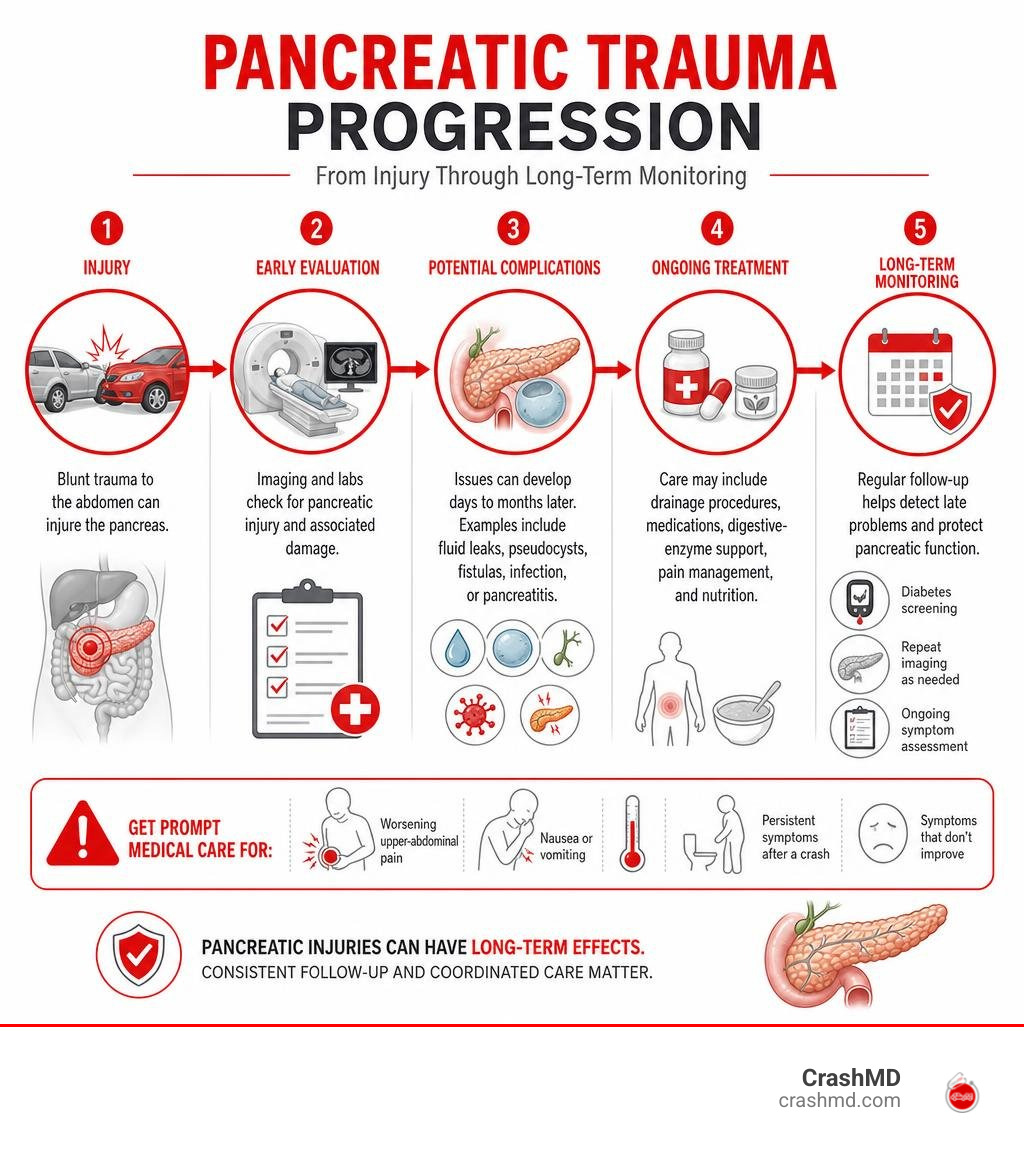
A pancreatic injury can cause problems long after a car accident or other trauma. Future medical needs may include repeat imaging, treatment for fluid leaks or pseudocysts, digestive-enzyme support, pain care, and regular diabetes screening. The focus on pancreas injury future medical considerations is crucial, especially when the main pancreatic duct is damaged or pancreatic tissue must be removed.
Pancreatic trauma is easy to miss at first because the pancreas sits deep behind other abdominal organs. Pain, nausea, vomiting, fever, or worsening upper-abdominal pain after a crash need urgent medical review, even if initial scans seemed reassuring. A delayed diagnosis can allow inflammation, infection, fistulas, or pancreatitis to become more serious.
Long-term effects are not rare. A systematic review found new-onset diabetes developed in about 5.7% of patients after pancreatic injury overall, rising to 11.1% after high-grade injuries. Risk was also higher after partial pancreatic resection than after non-operative care (van et al., 2025).
I’m Dr. Adam Savage, and this guide explains what to watch for after pancreatic trauma and how coordinated specialty care can protect your health and document your future medical needs.
Discover more about pancreas injury future medical:
Understanding the implications of pancreatitis and the necessity for ongoing care is essential for managing future medical needs.
- Long-term pancreas injury effects
- How does a pancreas injury affect the body
- Pancreas injury survival guide
Mechanisms, Clinical Grading, and Early Diagnostic Protocols

The pancreas sits snugly deep in the retroperitoneum, sandwiched directly between the spine and the anterior abdominal wall. Because of this anatomical position, severe blunt trauma—such as sudden deceleration against a seatbelt or direct steering-wheel impact in a motor vehicle crash—compresses the organ against the rigid vertebral column. In pediatric patients, direct handlebar strikes from bicycle falls represent a classic mechanism of parenchymal transection. Penetrating trauma from gunshot wounds or stab wounds also frequently injures adjacent major vascular structures and bowel loops.
Diagnosing these injuries quickly is notoriously difficult. Serum amylase and lipase levels are elevated in up to 82% of pancreatic injury cases, but initial enzyme levels alone do not reliably correlate with the actual severity of tissue destruction. Unrecognized retroperitoneal hemorrhage and subtle duct disruption can silently advance into enzymatic autodigestion if missed during primary trauma surveys.
Diagnostic Imaging Advances: CT, PCCT, and MRCP
Standard contrast-enhanced computed tomography (CT) remains the first-line screening tool in trauma centers, but its sensitivity for detecting main pancreatic duct (MPD) tears can be limited on initial presentation. As detailed in updates in pancreatic trauma imaging, multidetector protocols with dual-energy CT (DECT) and virtual monoenergetic imaging (VMI at 40 keV) have significantly improved the contrast-to-noise ratio, making parenchymal lacerations clearer (Lanier & Mellnick, 2026).
For equivocal cases, emerging technologies like photon-counting CT (PCCT) and high-resolution magnetic resonance cholangiopancreatography (MRCP) offer superior spatial resolution. While initial CT scans can miss subtle duct tears, MRCP boasts diagnostic accuracy exceeding 90% for detecting main duct involvement without exposing the patient to radiation or invasive instruments. Contrast-enhanced ultrasound (CEUS) and evolving artificial intelligence (AI) algorithms are also showing promise in flagging subtle peripancreatic fluid stranding early.
AAST Organ Injury Scale and Duct Disruption
Accurate grading by the American Association for the Surgery of Trauma Organ Injury Scale (AAST-OIS) dictates whether a patient can be managed conservatively or requires surgical intervention (Lanier & Mellnick, 2026).
| AAST Grade | Injury Description | Duct Involvement | Standard Clinical Pathway |
|---|---|---|---|
| Grade I | Minor contusion or superficial laceration | No duct injury | Non-operative monitoring, bowel rest, serial labs |
| Grade II | Major contusion or deep laceration | No duct injury | Conservative management, closed suction drainage if operated |
| Grade III | Distal parenchymal transection or parenchymal injury | Duct injury (distal to mesenteric vessels) | Distal pancreatectomy or endoscopic transpapillary stenting |
| Grade IV | Proximal parenchymal transection (head/neck) | Duct injury (proximal to mesenteric vessels) | Endoscopic stenting, wide surgical drainage, or reconstruction |
| Grade V | Massive disruption of the pancreatic head | Complete duct/ampullary destruction | Damage-control laparotomy, pancreaticoduodenectomy (Whipple) |
Pancreas Injury Future Medical Risks and Chronic Complications
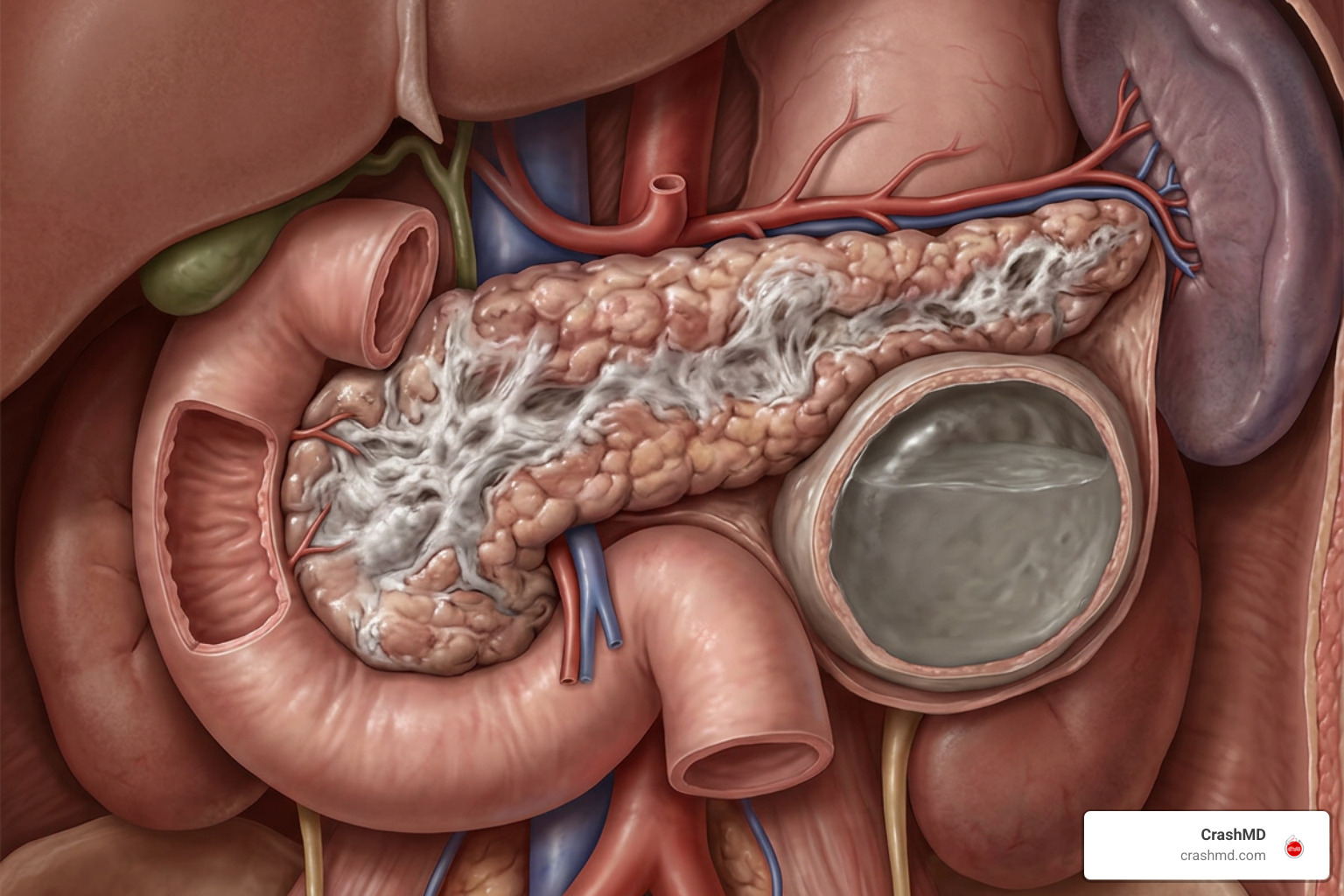
When pancreatic tissue is crushed or torn, digestive enzymes leak directly into surrounding spaces. In a major clinical characteristics and long-term outcomes following pancreatic trauma study tracking patients across international centers, nearly 38% reported lingering systemic, gastrointestinal, or physical symptoms years down the road (Meijer et al., 2023). Ensuring comprehensive pancreas injury car accident symptoms, treatment, and recovery documentation is essential to protecting your health and establishing future care needs.
Endocrine Dysfunction and New-Onset Post-Traumatic Diabetes
A comprehensive systematic review on new-onset diabetes mellitus after pancreatic injury revealed that the overall cumulative incidence of new-onset diabetes mellitus (NODM) is 5.7% (95% CI: 3.4%–9.0%) (van et al., 2025). This risk increases sharply depending on the anatomical loss of islet cells:
- High-grade injuries (Grades III–V): 11.1% incidence (95% CI: 4.9%–20.7%) (van et al., 2025).
- Low-grade injuries (Grades I–II): 5.5% incidence (95% CI: 2.0%–11.5%) (van et al., 2025).
- Partial surgical resection: 8.2% incidence compared to 2.9% following non-operative treatment (van et al., 2025).
Because post-traumatic diabetes can surface anywhere from months to over two decades after injury, regular glycemic monitoring through fasting glucose and HbA1c screening is vital.
Exocrine Insufficiency, Pseudocysts, and Persistent Fistulas
When pancreatic acinar cells are damaged, the gland can lose its ability to produce essential digestive enzymes—a condition known as exocrine pancreatic insufficiency (EPI). Patients experience chronic bloating, steatorrhea (oily stools), and unintended weight loss, requiring daily pancreatic enzyme replacement therapy (PERT).
Other common structural complications include:
- Pancreatic Pseudocysts: Encapsulated fluid collections that form in 18% to 47% of conservatively managed high-grade injuries.
- Pancreatic Fistulas: External or internal leakage of enzyme-rich fluid, requiring prolonged closed-suction drainage or somatostatin analogues.
- Necrotizing Pancreatitis: Ischemic tissue necrosis that carries up to a 30% mortality rate if secondary infection occurs.
Treatment Pathways: Non-Operative, Endoscopic, and Surgical Strategies
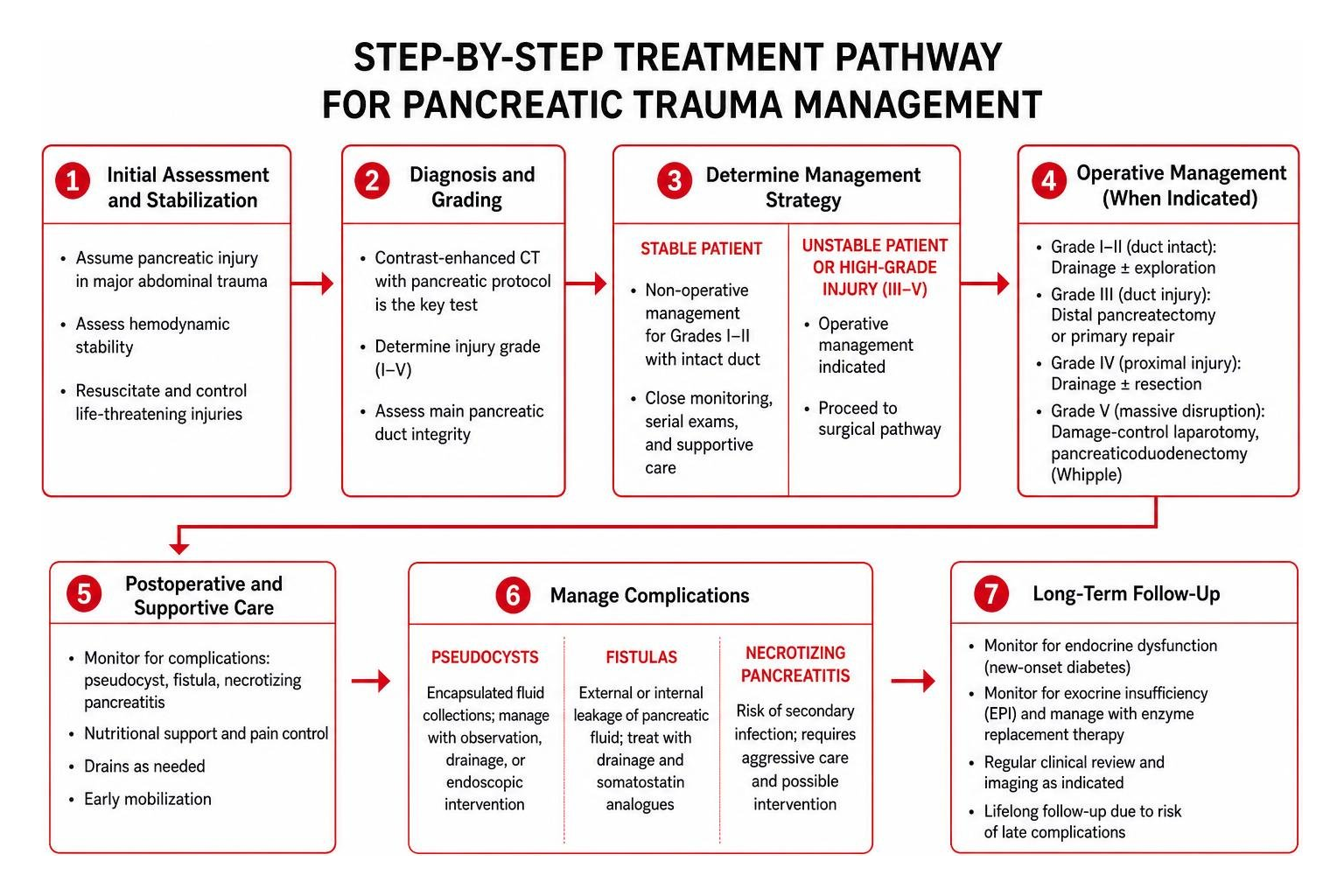
Management decisions follow strict guidelines for the surgical management of pancreatic trauma based on hemodynamic stability and ductal integrity (Pavlidis et al., 2022).
Pediatric Protocols and Minimally Invasive Approaches
Pediatric cases highlight the value of tissue-sparing strategies. A multicenter trial on prospective outcomes of non-operative management in pediatric pancreatic trauma demonstrated that a standardized protocol incorporating early oral feeding based on clinical symptoms rather than serum enzymes safely reduces hospital length of stay.
When high-grade damage does require intervention, advanced techniques like robotic-assisted laparoscopic repair for pediatric pancreaticoduodenal injury allow surgeons to perform precise resections and Roux-en-Y reconstructions with minimal blood loss, preserving healthy endocrine tissue (Liang et al., 2026).
Evaluating Pancreas Injury Future Medical Interventions and Surgeries
For adults with ductal disruption, endoscopic retrograde cholangiopancreatography (ERCP) with transpapillary stenting can bridge ductal tears and avoid major surgery. When operative management is unavoidable, distal pancreatectomy (with or without splenic preservation) is preferred for Grade III body and tail injuries, while Grade V trauma may necessitate a two-stage damage-control approach culminating in a pancreaticoduodenectomy (Whipple procedure) (Pavlidis et al., 2022). When calculating a patient’s pancreas injury future medical costs, the potential for revision surgeries or endoscopic drainage using lumen-apposing metal stents (LAMS) must be carefully accounted for.
Multidisciplinary Care, Targeted Therapeutics, and Medico-Legal Planning
Optimal recovery requires a dedicated team including trauma surgeons, interventional gastroenterologists, diagnostic radiologists, and clinical endocrinologists.
Emerging Molecular Therapies and Research Gaps
Recent discoveries highlighted in targeted therapeutics and molecular pathways for pancreatitis show that early acinar injury is driven by sustained calcium overload through Orai1 store-operated calcium channels and mitochondrial permeability transition pore opening. Investigational agents like Orai1 inhibitors (CM4620), mitochondrial protectors (NIM811), and anti-fibrotic TGF-beta pathway inhibitors are entering clinical pipelines to halt progressive tissue scarring before chronic pancreatitis takes hold.
Navigating Pancreas Injury Future Medical Needs and Legal Claims
At CrashMD, our clinicians evaluate accident victims across Arizona, Nevada, Texas, Oklahoma, and California to ensure life care plans reflect realistic future expenses:
- Lifetime Diabetic Care: Daily insulin, continuous glucose monitors (CGMs), and routine endocrinology consultations.
- Enzyme Replacement & Nutrition: Long-term prescription PERT and clinical dietary management.
- Interventional Procedures: Endoscopic stent exchanges, cyst gastrostomies, and repeated cross-sectional imaging.
- Dedicated Injury Documentation: Establishing clear, objective medical causation linking post-traumatic pancreatitis or surgical resection directly to the accident.
Frequently Asked Questions About Pancreatic Trauma Recovery
What is the risk of developing diabetes after a traumatic pancreatic injury?
The overall risk is roughly 5.7%, but it increases to 11.1% in severe Grade III–V injuries and 8.2% when surgical resection removes a significant portion of islet-cell-bearing tissue (van et al., 2025). Screening HbA1c levels annually is strongly advised.
How are pancreatic duct injuries repaired without major surgery?
In hemodynamically stable patients, interventional endoscopists perform an ERCP to place a temporary transpapillary stent across the injured duct segment. This bridges the leak, restores normal digestive flow into the duodenum, and allows the duct to heal without open surgery (Pavlidis et al., 2022).
Why do pancreatic trauma symptoms sometimes take days or weeks to appear?
Because the pancreas lies behind the peritoneal cavity, initial contusions are buffered by retroperitoneal fat. As leaked digestive enzymes slowly cause autodigestion and secondary microvascular ischemia, swelling, duct necrosis, and pseudocyst formation worsen, leading to delayed-onset pain and vomiting.
Conclusion
Pancreatic trauma is a complex, high-stakes condition where the initial hospital stay is often just the first chapter. Long-term health depends on standardized endocrine monitoring, prompt treatment of fluid collections, and specialized digestive support.
At CrashMD, we guide accident victims throughout Arizona, Nevada, Texas, Oklahoma, Southern California, and Northern California, providing comprehensive medical documentation and expert pain management to support both your physical recovery and your future care needs. If you or a loved one sustained an abdominal injury during a collision, reach out to our clinical team today to ensure your recovery is thoroughly protected.
Scientific References
van Zon VPC, Tol MC, Krijnen P, Huurman VAL, Ruess DA, Schipper IB. “New-Onset Diabetes Mellitus Following Pancreatic Injury: A Systematic Review..” World journal of surgery, 2025. PMCID PMC12515025. Laura L. Meijer, Yrjö Vaalavuo, Sara Regnér, Ville Sallinen, Aurora Lemma, Urban Arnelo, Roberto Valente, Sofia Westermark, David An, John A.G. Moir, Ellen A. Irwin, Esther A. Biesel, Ulrich T. Hopt, Stefan Fichtner-Feigl, Uwe A. Wittel, Maximilian Weniger, Henning Karle, Frank W. Bloemers, Robert Sutton, Richard M. Charnley, Dietrich A. Ruess, Peter Szatmary. “Clinical characteristics and long-term outcomes following pancreatic injury – An international multicenter cohort study.” Heliyon, 2023. DOI 10.1016/j.heliyon.2023.e17436. Pavlidis ET, Psarras K, Symeonidis NG, Geropoulos G, Pavlidis TE. “Indications for the surgical management of pancreatic trauma: An update..” World journal of gastrointestinal surgery, 2022. PMCID PMC9258242. Zijian Liang, Xinxing Wang, Menglong Lan, Xiaogang Xu, Jixiao Zeng. “Case Report: Robotic-assisted laparoscopic primary repair for pancreaticoduodenal grade V injury in a pediatric patient.” Frontiers in Pediatrics, 2026. DOI 10.3389/fped.2026.1693462. Michael Hunter Lanier, Vincent M. Mellnick. “Updates in Pancreatic Trauma Imaging.” Canadian Association of Radiologists Journal, 2026. DOI 10.1177/08465371261424865.