

What You Need to Know About an Accident Injury Lawsuit (And How to Win One)
An accident injury lawsuit is a legal claim you file against the person or party responsible for your injuries — and winning one comes down to four key things:
- Proving duty of care — the other party had a legal obligation not to harm you
- Proving breach — they failed to meet that obligation
- Proving causation — their failure directly caused your injuries
- Proving damages — you suffered real, documentable harm as a result
If you can show all four, you have a viable personal injury case.
Here’s a quick look at what the process typically involves:
| Stage | What Happens |
|---|---|
| After the accident | Seek medical care, gather evidence, contact a lawyer |
| Pre-lawsuit | File insurance claim, send demand letter, negotiate |
| Filing the lawsuit | Submit summons and complaint if negotiations fail |
| Discovery | Both sides exchange evidence (can take up to a year) |
| Settlement or trial | Most cases settle before trial; few go to a jury |
| Resolution | Damages awarded or settlement check issued |
Most accident injury lawsuits never reach a courtroom. The majority settle during negotiations — but how much you recover depends heavily on how well you document your injuries and build your case from day one.
That’s where things get complicated. You’re dealing with pain, medical bills, time off work, and insurance adjusters who are trained to minimize what they pay you. It’s a lot to navigate while you’re trying to heal.
This guide walks you through every step — from the legal foundations of your claim, to medical documentation, discovery, and what to expect if your case goes to trial.

Simple Accident injury lawsuit word guide:
Understanding the Foundations of an Accident injury lawsuit
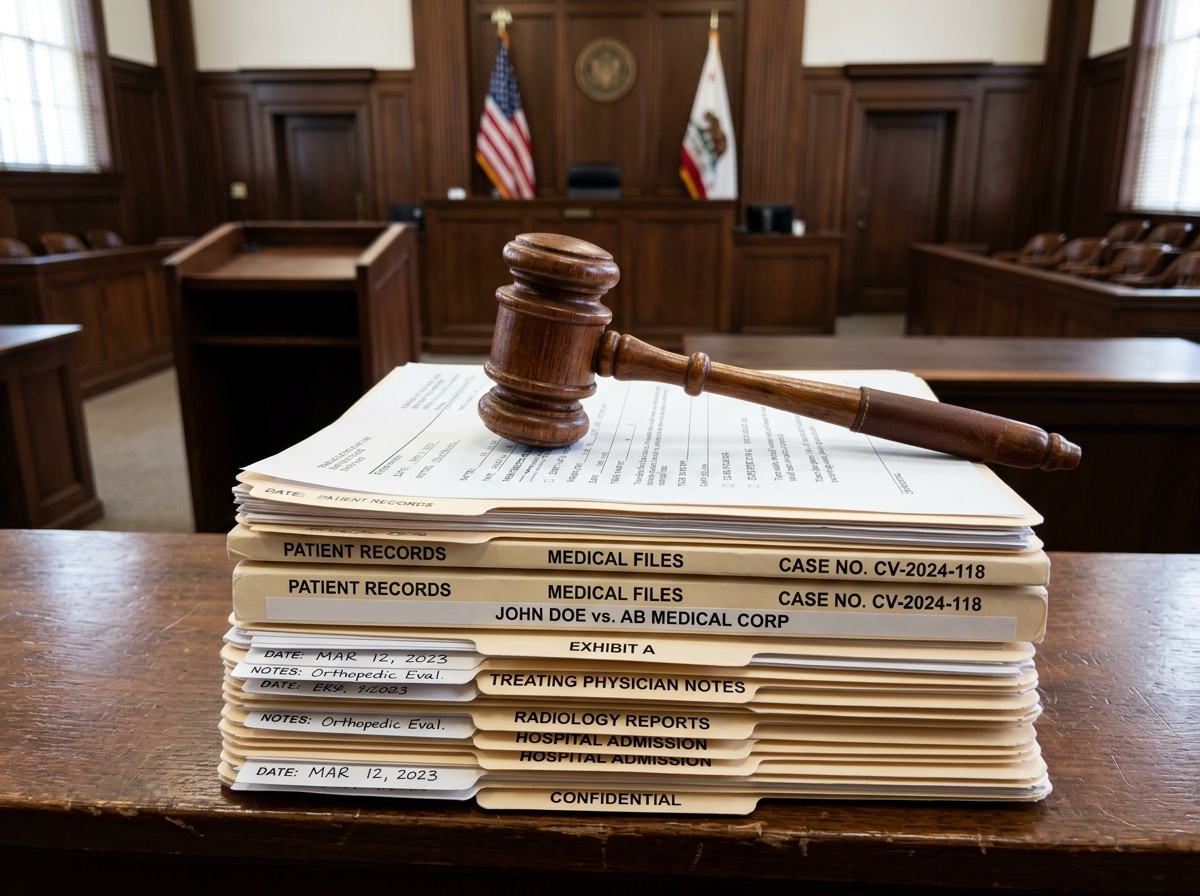
When we talk about an accident injury lawsuit, we are moving beyond a simple insurance claim. A lawsuit is a formal legal process filed in court. To succeed, your case must be built on a solid foundation of four legal pillars: duty, breach, causation, and damages.
First, we must establish a duty of care. This is a legal obligation to act with reasonable care to avoid injuring others. For example, every driver in New York or California has a duty to follow traffic laws and keep a lookout for other motorists. If you are a guest on someone’s property, the owner has a duty to keep the premises safe.
Next comes the breach of duty. This happens when someone fails to live up to that obligation. If a driver is texting and runs a red light, they have breached their duty of care. Proximate causation is the third pillar; it means the breach was the direct cause of your harm. It isn’t enough that someone was negligent; that negligence must be the “near cause” of your specific injury. If a driver almost hits you, and you get so startled that you trip over your own feet three blocks later, the connection might be considered too remote.
Finally, you must prove compensatory damages. You can’t sue just because you’re angry or “almost” got hurt. You must have suffered actual losses, such as medical bills or lost wages. For more on the basics of filing, the Personal injury cases | California Courts | Self Help Guide provides an excellent overview of these requirements.
Proving Negligence and Liability
Liability isn’t always a straight line. In most cases, we look at ordinary care—what a “reasonable person” would have done in the same situation. However, some cases involve recklessness, where a person consciously disregards a substantial risk (like extreme speeding in a school zone).
There are also intentional torts, such as assault, where the harm was on purpose, and strict liability, which often applies to defective products. If a lawnmower blade flys off due to a manufacturing defect, the company may be liable regardless of how “careful” they claim to have been. To see how these are categorized in court, you can look at the General Negligence (form PLD-PI-001(2)).
Economic vs. Non-Economic Damages
In an accident injury lawsuit, damages are generally split into two buckets:
- Economic Damages: These are the “receipt-based” losses. They include your hospital bills, physical therapy costs, and the wages you lost because you couldn’t work.
- Non-Economic Damages: These are more subjective, covering “pain and suffering,” emotional distress, and loss of enjoyment of life.
In rare cases involving “gross negligence” or “intentional misconduct,” a court might award punitive damages. These aren’t meant to compensate you, but rather to punish the defendant and deter others from acting the same way. You can see how these are requested using the Exemplary Damages Attachment (form PLD-PI-001(6)).
The Roadmap: From Initial Claim to Accident injury lawsuit
The journey to compensation usually starts long before a judge is involved. It begins with an initial consultation where a lawyer evaluates if you have a viable case. From there, the case investigation begins—gathering police reports, interviewing witnesses, and, most importantly, reviewing your medical records.
Once the evidence is ready, your attorney sends a demand letter to the insurance adjusters. This letter outlines the facts of the accident, your injuries, and the amount of money you are willing to accept to settle the case. If the insurance company refuses to offer a fair amount, we move toward litigation. For a deeper look at this transition, check out our guide on Post-Accident Protocol: Navigating Your Medical Journey.
Personal Injury Claim vs. Accident injury lawsuit
Many people use these terms interchangeably, but they are different stages of the same battle. A personal injury claim is an informal negotiation with an insurance company. You are essentially saying, “Your client messed up; pay me so we don’t have to go to court.”
If settlement negotiations fail, we file an accident injury lawsuit. This officially starts when your lawyer files a summons and complaint with the court. The service of process then occurs, where the defendant is formally notified they are being sued. You can view the standard Complaint — Personal Injury, Property Damage, Wrongful Death (form PLD-PI-001) to see what this document looks like.
Key Steps in the Litigation Process
Once the lawsuit is filed, the “clock” of the court system starts ticking. There are filing fees to pay and strict deadlines to meet. The defendant must file an answer and cross-complaint within a set timeframe (usually 20 to 30 days depending on the state).
Before a trial ever happens, attorneys will file various pre-trial motions. These are requests for the judge to make certain rulings, such as throwing out weak evidence or even dismissing the case if the legal grounds are insufficient. A common form used for the defense is the Answer — Personal Injury, Property Damage, Wrongful Death (form PLD-PI-003).
Proving Your Case: Medical Documentation and Evidence
I’m Dr. Adam Savage, and I cannot stress this enough: your medical records are the heart of your accident injury lawsuit. Without objective medical evidence, your case is just your word against theirs. Insurance companies love to claim that injuries were “pre-existing” or that you are “exaggerating” your pain.
To win, you need more than just a doctor saying you “hurt.” You need diagnostic testing like MRIs, CT scans, and EMGs that show physical proof of the damage. At CrashMD, we specialize in documenting these injuries specifically for legal cases, ensuring that every ache and limitation is backed by medical science. Read more about Your Health, Your Case: The Importance of Seeking Medical Treatment After a Car Accident to understand why this is so vital.
Meeting the New York Serious Injury Threshold
If you are in New York, motor vehicle accidents have an extra hurdle. Because New York is a “no-fault” state, you can only step outside the no-fault system and file a lawsuit if your injury is “serious” as defined by Insurance Law 5102(d).
What counts as a serious injury?
- A fracture (even a small one).
- Significant disfigurement (permanent scarring).
- Permanent loss of use of a body organ or member.
- The 90/180 day rule: An injury that prevents you from performing your usual daily activities for at least 90 of the 180 days immediately following the accident.
Proving you meet this threshold requires meticulous documentation. If you are dealing with lasting effects, our article on Chronic Pain After a Car Accident: What You Need to Know can help you understand the long-term medical perspective.
Crucial Evidence to Gather
Beyond medical records, you need a “file for a judge” that includes:
- Police reports: These provide an unbiased third-party account of the scene.
- Witness statements: People who saw what happened are incredibly persuasive.
- Scene photos: Pictures of skid marks, vehicle damage, and weather conditions.
- Evidence of long-term impact: Documentation regarding Long-Term Care After Accident helps prove the future costs of your injury.
Navigating Discovery and Settlement Negotiations
The discovery phase is often the longest part of an accident injury lawsuit, sometimes lasting up to a year. This is the formal “information exchange” between both sides.
You will likely deal with interrogatories, which are written questions you must answer under oath. You might also sit for a deposition, where the opposing lawyer asks you questions in person while a court reporter records everything. This is also when expert witnesses—such as accident reconstructionists or medical experts—are brought in to provide their professional opinions. For an idea of how these factors influence the money side of things, see The Bottom Line: Average Settlement Amounts for Back and Neck Injuries After a Car Crash.
What to Expect During the Discovery Phase
During discovery, expect a lot of “paper shuffling.” There will be document production (exchanging medical bills, tax returns to prove lost wages, etc.) and potentially mental or physical examinations by doctors chosen by the defense. The goal of this phase is case valuation—both sides are trying to figure out exactly how much the case is worth based on the evidence uncovered.
Settling Your Accident injury lawsuit vs. Going to Trial
Most cases settle because trials are risky, expensive, and slow. However, if the insurance company won’t play fair, a trial may be necessary.
| Feature | Settlement | Trial |
|---|---|---|
| Speed | Faster (weeks or months) | Slower (months or years) |
| Control | You decide to accept or reject | A jury or judge decides |
| Certainty | Guaranteed payout amount | Risk of getting zero |
| Cost | Lower legal expenses | High costs for experts and court time |
Many courts require mediation—a meeting with a neutral third party—to try and reach a settlement before a jury verdict is sought. If you do go to trial and lose (or win but think the amount is wrong), the appeals process can add years to the timeline. For help finding a representative in New York, the New York City Bar Legal Referral Service is a great resource.
Legal Timelines and Comparative Negligence Rules
You cannot wait forever to file your accident injury lawsuit. Every state has a statute of limitations. In New York, the general deadline is 3 years from the date of the injury. If you are filing for wrongful death, that limit drops to 2 years. If you are suing a government entity (like a city bus), you may only have 90 days to file a formal notice of claim. Missing these deadlines means you lose your right to recover anything, period. You can read more about these strict rules in Filing a Car Accident Lawsuit in Florida? Read This First.
New York’s Pure Comparative Negligence Rule
New York follows a pure comparative negligence rule. This means that even if you were partially at fault for the accident, you can still recover damages—but your award will be reduced by your fault percentage.
For example, if a jury decides your total damages are $100,000, but they find you were 20% at fault because you were slightly over the speed limit, you would receive $80,000. This differs from states like Florida, where Florida Statute § 768.81 now bars you from recovering anything if you are more than 50% at fault.
What to Do if You Are Being Sued
If the shoe is on the other foot and you are being sued, do not panic, but do not ignore it. Contact your liability insurance company immediately. They have a duty to provide you with defense counsel. However, keep an eye on your policy limits. If the victim’s damages exceed your insurance coverage, you could be personally liable for the difference. A common first step in defense is filing a General Denial (form PLD-050).
Frequently Asked Questions about Accident Injury Lawsuits
What is the statute of limitations for a personal injury lawsuit in New York?
In New York, you generally have 3 years from the date of the accident to file a lawsuit for personal injuries. For wrongful death cases, the limit is 2 years from the date of death. If your claim involves a government entity, you must file a “Notice of Claim” within 90 days.
What qualifies as a ‘serious injury’ under New York no-fault law?
Under Insurance Law 5102(d), a “serious injury” includes a fracture, permanent loss of a body organ or function, significant disfigurement, or a non-permanent injury that prevents you from performing substantially all of your daily activities for 90 out of the 180 days following the injury.
How do I deal with insurance companies during the claims process?
Be careful! Insurance adjusters are not your friends; their goal is to save the company money. Avoid giving recorded statements without a lawyer present. Document every phone call and email, and never sign a release or accept a check until you have consulted an attorney and finished your medical treatment. For a more detailed look, see this How to File a Personal Injury Claim: Step-by-Step Guide.
Conclusion
At CrashMD, we believe that winning an accident injury lawsuit starts with a healthy recovery. Our mission is to provide expert patient advocacy and medical care that focuses on your long-term well-being. By ensuring your injuries are comprehensively documented and your treatment plan is tailored to your needs, we help build the strongest possible foundation for your legal case. Don’t let the legal process overwhelm you—focus on healing while we focus on the medical proof you need.