

Bowel Perforation Symptom Checklist: Signs That Need Emergency Care
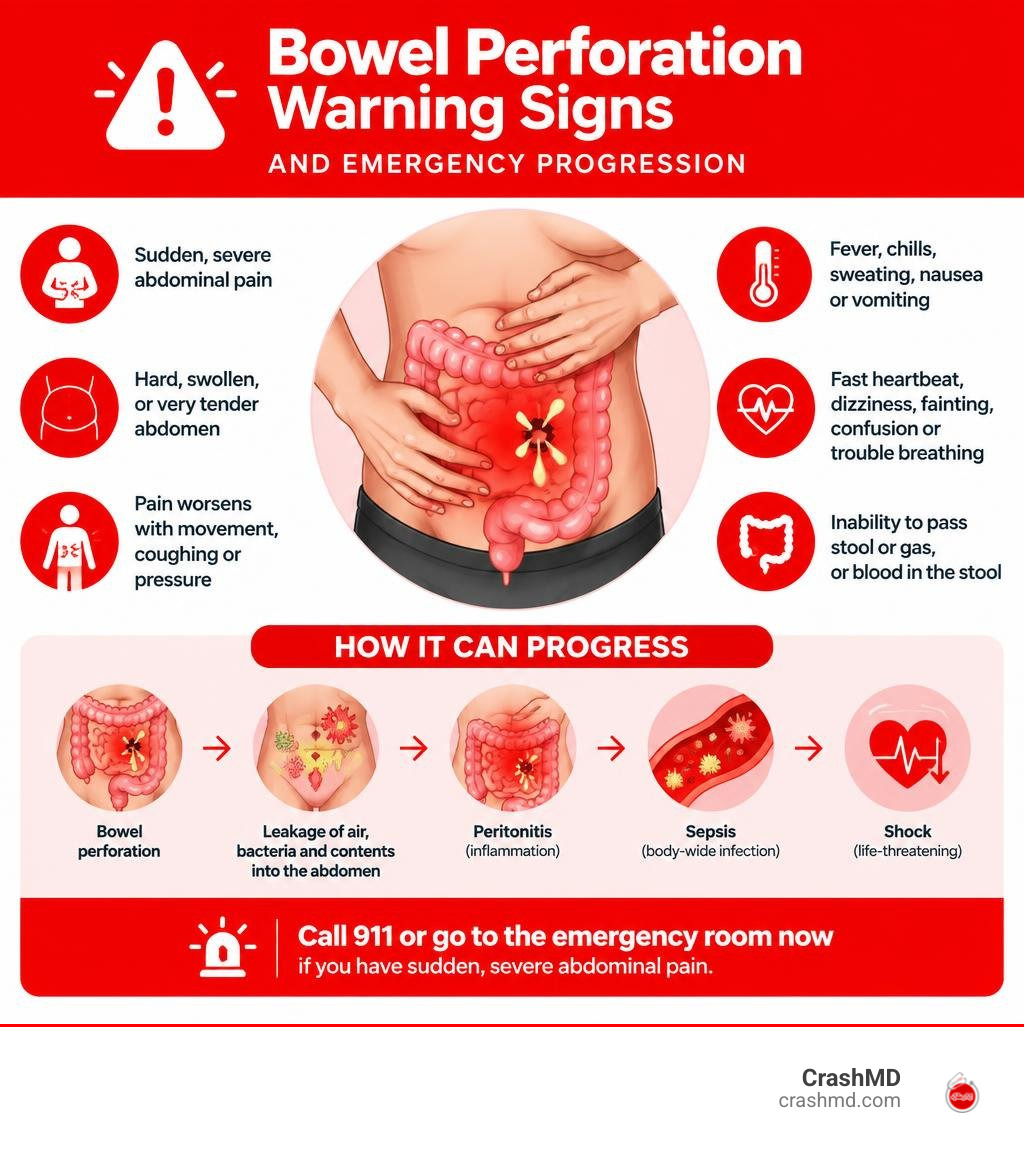
A bowel perforation is a hole in the intestine that lets air, bacteria, and digestive contents leak into the abdomen. It can quickly lead to peritonitis, sepsis, and shock. Call 911 or go to the emergency room now if severe abdominal pain starts suddenly, especially after a car accident, surgery, or colonoscopy.
Use this bowel perforation symptom checklist to spot urgent warning signs:
- Sudden, severe, sharp, or worsening belly pain
- A hard, swollen, or very tender abdomen
- Pain that worsens with movement, coughing, or gentle pressure
- Fever, chills, sweating, nausea, or vomiting
- Fast heartbeat, dizziness, fainting, confusion, or trouble breathing
- Inability to pass stool or gas, or blood in the stool
Do not eat or drink, take laxatives, or try to wait out these symptoms. A perforation may be subtle at first in older adults, children, and people taking steroids or immune-suppressing medicines.
I’m Dr. Adam Savage, and the next sections explain what these signs can mean, who faces higher risk after trauma, and what emergency teams do to confirm and treat a suspected perforation.
Basic bowel perforation symptom checklist terms:
Understanding Bowel Perforation and Why It Is a Surgical Emergency
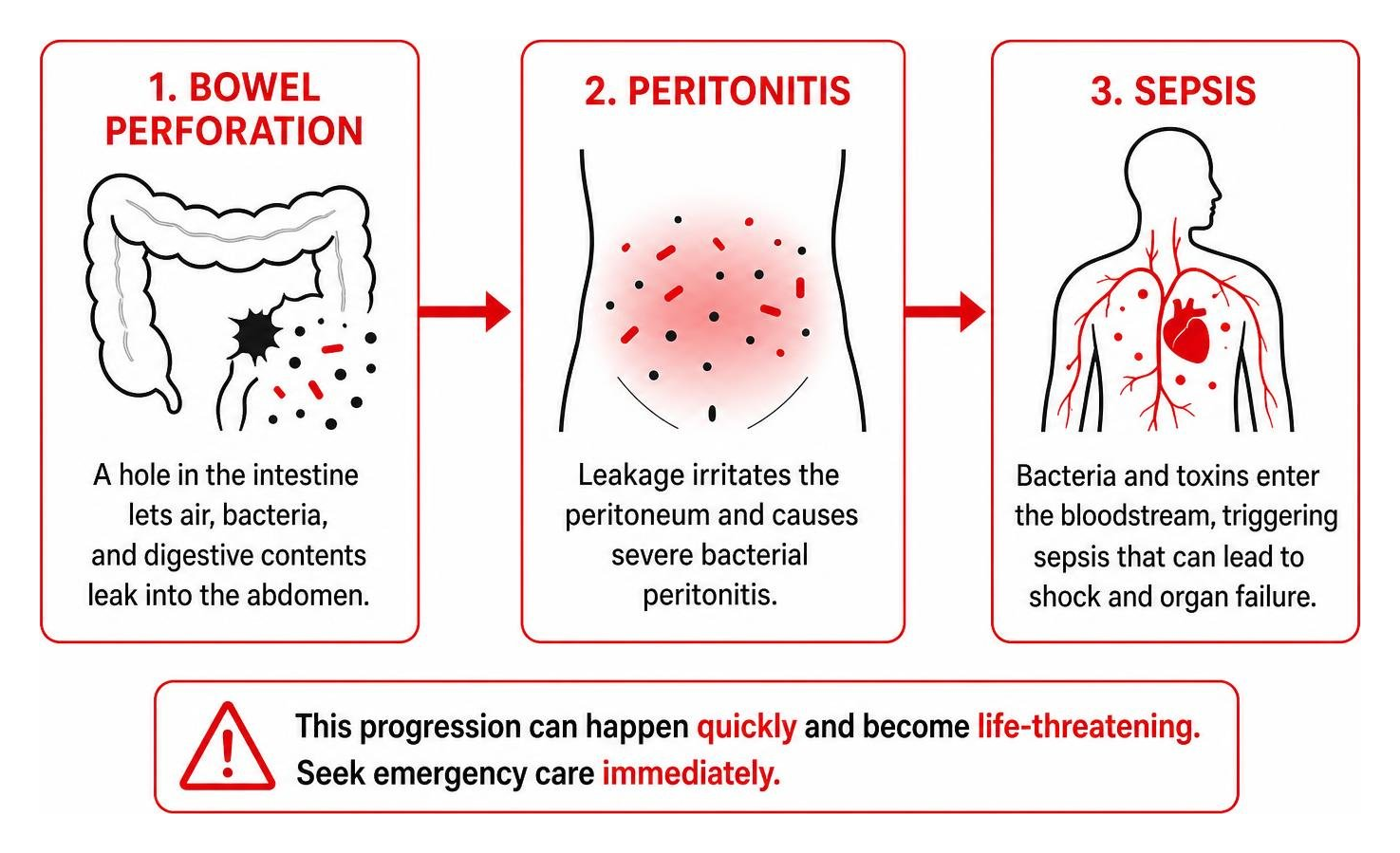
A gastrointestinal rupture is not a simple stomach bug. When a full-thickness defect develops in the intestinal wall, the sterile peritoneal cavity is instantly exposed to caustic gastric juices, bile, food particles, and trillions of bacteria. This breach triggers an immediate chemical irritation, rapidly followed by severe bacterial peritonitis.
Without rapid intervention, leaked pathogens infiltrate the bloodstream. This unleashes a massive systemic inflammatory response, escalating into sepsis, septic shock, and multi-organ failure. The mortality rate rises substantially if diagnosis and surgical repair are delayed past the initial 24-hour window. Any suspected perforation of the digestive tract demands emergency medical stabilization to prevent hemodynamic collapse.
The Definitive Bowel Perforation Symptom Checklist

Recognizing the clinical features of an acute abdomen can save your life. Perforation symptoms typically follow a progressive timeline from localized irritation to widespread systemic collapse.
Core Warning Signs in the Bowel Perforation Symptom Checklist
The initial presentation of a perforated hollow organ often hits like a lightning bolt:
- Sudden, Knife-Like Pain: Intense, sharp abdominal pain that begins abruptly and rapidly intensifies.
- Involuntary Guarding: The abdominal muscles reflexively spasm to protect internal organs when lightly touched.
- Board-Like Rigidity: The belly feels completely unyielding and rock-hard.
- Rebound Tenderness: Releasing hand pressure causes significantly more excruciating pain than pressing down.
- Severe Motion Intolerance: Walking, coughing, or even hitting a bump in a car ride causes unbearable agony; patients typically lie completely still with their knees drawn to their chest.
- Gastrointestinal Distress: Persistent nausea, persistent bilious vomiting, and the inability to pass gas or stool.
To avoid critical delays in care, be aware of the 7 devastating symptoms of perforated bowel mistakes to avoid when managing acute discomfort.
Red-Flag Signs of Peritonitis and Sepsis Progression
As toxins and bacteria enter the vascular system, the presentation shifts from localized abdominal signs to systemic decompensation:
- High Spiking Fever or Hypothermia: Core body temperature rising above 101°F (38.3°C) or dropping below 96.8°F (36°C).
- Tachycardia: A resting heart rate exceeding 100 to 120 beats per minute as the body struggles to maintain blood flow.
- Tachypnea: Rapid, shallow breathing (over 20 breaths per minute) caused by systemic acidosis and diaphragmatic splinting.
- Hypotension: Dangerously falling blood pressure leading to lightheadedness, dizziness, and cold, clammy extremities.
- Oliguria: Markedly decreased urine output, signaling early kidney hypoperfusion.
- Altered Mentation: Confusion, delirium, lethargy, or extreme restlessness due to septic encephalopathy.
- Kehr’s Sign (Referred Shoulder Pain): Free air and acidic fluid irritating the underside of the diaphragm, causing sharp pain at the tip of the left or right shoulder.
For an organized list of high-risk indicators, review our ultimate checklist for perforated bowel emergency signs.
Atypical Presentations on the Bowel Perforation Symptom Checklist
Not every patient presents with classic, textbook signs. Certain populations have blunted physiological reflexes:
| Patient Population | Why Symptoms Are Masked | Common Subtle Warning Signs |
|---|---|---|
| Older Adults (Elderly) | Decreased inflammatory response and reduced abdominal wall musculature | Mild, vague abdominal ache, absence of fever, new confusion, acute weakness, loss of appetite |
| Patients on Steroids / Immunosuppressants | Anti-inflammatory medications suppress pain pathways and white blood cell activity | Minimal physical tenderness, lack of fever, unexplained tachycardia, quiet distention |
| Infants and Young Children | Inability to localize or verbalize pain sensations | Inconsolable crying, bilious emesis, abdominal bloating, grunting respirations, lethargy |
| Diabetic Patients | Diabetic autonomic neuropathy dulls visceral pain signals | Gradual abdominal distention, unexplained nausea, sudden hyperglycemia instability |
| Trauma Patients with Brain Injury | Altered mental status or distracting orthopedic injuries | Unexplained drops in blood pressure, rising heart rate, subtle abdominal firmness |
Common Causes and Risk Factors for Gastrointestinal Perforation
Understanding what causes bowel integrity to fail helps patients and clinicians maintain vigilance. Perforations arise from progressive disease, physical trauma, or medical procedures. For detailed background on underlying pathology, read our detailed guide to causes of perforated bowel urgency and review guidelines on the emergency evaluation and management of bowel perforation.
Medical Conditions and Chronic Disease Complications
Internal disease can erode tissue layers until the bowel ruptures:
- Peptic Ulcer Disease (PUD): Perforation occurs in 2% to 10% of peptic ulcers (60% duodenal, 40% gastric), releasing harsh stomach acid (NBK537224).
- Diverticular Disease: Approximately 1% to 2% of acute diverticulitis episodes cause free intraperitoneal perforation, while up to 30% cause contained perforations with localized abscesses (NBK537224).
- Inflammatory Bowel Disease (IBD): Perforation rates reach up to 20% in severe ulcerative colitis (often linked to toxic megacolon) and 1% to 3% in Crohn’s disease (NBK537224).
- Colorectal Malignancy: Obstructing or necrotic colon tumors cause perforation in 3% to 10% of cases (NBK537224).
- Foreign Body Ingestion: Swallowed objects (such as fish bones, toothpicks, or button batteries) cause 1% to 5.6% of perforations (NBK537224).
- Ischemia and Bowel Obstruction: Compromised blood supply or extreme bowel distention (diameter ≥13 cm) leads to transmural necrosis.
Trauma, Seat-Belt Injuries, and Iatrogenic Factors
External forces and diagnostic instrumentation can also breach the digestive wall:
- Blunt Abdominal Trauma: Rapid deceleration during car accidents compresses bowel loops against the spine or shears mesenteric vessels. The pediatric trauma population exhibits a 10% to 12% incidence of bowel perforation (NBK537224).
- The “Seat-Belt Sign”: Erythema, contusions, or abrasions across the lower abdomen after a crash are strongly associated with occult hollow viscus rupture.
- Iatrogenic Complications: Perforation rates after routine or therapeutic colonoscopy range from 0.01% up to 6.7% depending on whether complex polypectomy or stricture dilation was performed (NBK537224).
If you have been involved in a collision, follow our step-by-step guide to assessing abdominal pain after an accident to catch hidden internal injuries early.
Diagnostic Testing and Emergency Hospital Management
When a patient arrives at the emergency department, immediate stabilization follows the ABCDE survey:
- Immediate Bowel Rest (NPO): Strict cessation of all oral intake to prevent further peritoneal leakage.
- Intravenous Access & Fluid Resuscitation: Placement of two large-bore IV lines with crystalloid fluids to restore intravascular volume and correct lactic acidosis.
- Nasogastric (NG) Decompression: Insertion of an NG tube to suction out gastric contents and relieve internal pressure.
- Empiric Broad-Spectrum IV Antibiotics: Immediate antimicrobial coverage targeting Gram-negative enterics, anaerobes, and enterococci.
Diagnostic Imaging Protocols
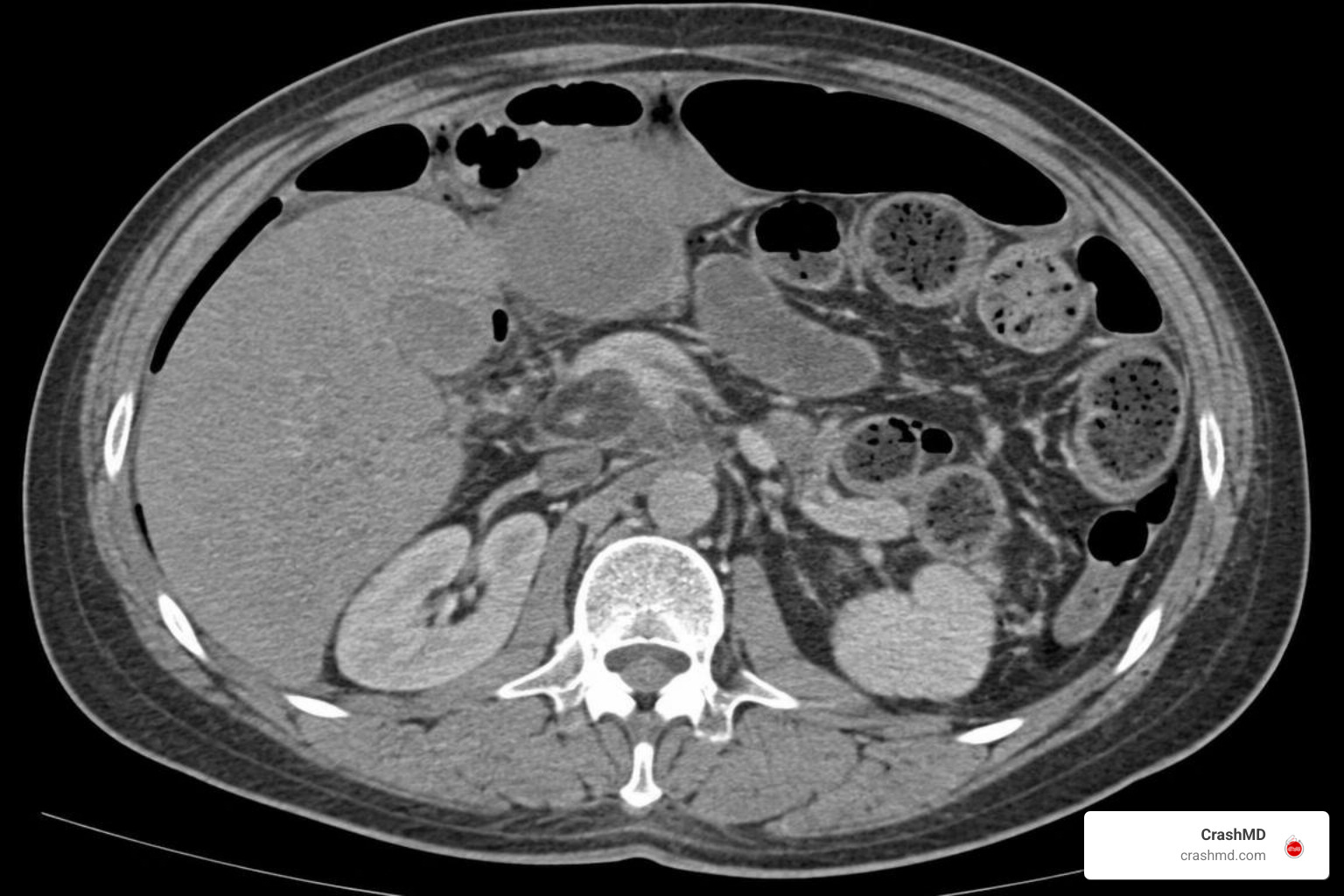
- Upright Chest and Abdominal X-Rays: Rapid screening showing subdiaphragmatic free air (pneumoperitoneum) in 50% to 70% of cases.
- Contrast-Enhanced CT (Abdomen/Pelvis): The diagnostic gold standard, providing over 95% sensitivity. CT detects trace extraluminal gas, identifies the exact anatomical site of perforation, and assesses abscess formation.
- Absolute Contraindication: Diagnostic colonoscopy or barium contrast studies are strictly contraindicated, as air insufflation and barium extravasation worsen peritoneal contamination and drive up mortality.
Surgical Intervention and Operative Repair
According to clinical evidence on bowel perforation, hemodynamic instability or generalized peritonitis demands immediate exploratory laparotomy (NBK537224). The surgical team performs thorough peritoneal lavage, followed by primary closure (such as an omental Graham patch for peptic ulcers) or segmental bowel resection. In unstable patients with gross contamination, a temporary diverting stoma (ileostomy or colostomy) is placed rather than an immediate anastomosis. To learn more about surgical techniques and recovery, explore everything patients need to know about perforated bowel surgery.
In select, hemodynamically stable patients with small, sealed diverticular perforations, non-operative management with bowel rest, broad-spectrum antibiotics, and image-guided percutaneous drainage of collections (≥3 cm) may be considered (NBK537224).
Frequently Asked Questions About Bowel Perforations
How can you tell the difference between standard abdominal pain and a perforated bowel?
Standard digestive pain (such as gastroenteritis, gas, or mild constipation) is generally crampy, intermittent, and tends to improve after passing stool or flatulence. The abdominal wall remains soft, and light movement is tolerable. In contrast, perforated bowel pain is sharp, constant, and unyielding. The abdomen becomes board-like and hard to the touch, and any movement—even deep breathing—worsens the pain.
What is the expected recovery rate following emergency treatment?
Around 70% of patients treated promptly for gastrointestinal perforation make a full recovery (NBK537224). Outcomes depend on how quickly surgery is initiated, the patient’s age, baseline medical health, and whether septic shock was present prior to operation. Comprehensive ICU care, early nutritional support, and infection management are key determinants of recovery.
When should you call 911 for suspected gastrointestinal rupture?
Call 911 immediately if you experience sudden, severe abdominal pain accompanied by a rigid, rock-hard abdomen, high fever, rapid pulse, dizziness, confusion, or difficulty breathing. Do not attempt to drive yourself to the emergency department.
Conclusion: Immediate Action and Post-Injury Advocacy
A perforated bowel is a critical surgical emergency where every minute counts. Rapidly identifying symptoms—from sudden sharp abdominal pain and board-like rigidity to rapid heart rate and fever—makes all the difference in preventing life-threatening sepsis.
For accident victims across Arizona, Nevada, Texas, Oklahoma, Southern California, and Northern California, internal abdominal injuries often present complex recovery challenges. At CrashMD, we specialize in post-accident medical care, delivering customized pain management, advanced injury evaluation, and meticulous medical documentation to support you throughout your recovery.
If you sustained trauma in a motor vehicle collision, learn more about car accident intestinal perforation symptoms and recovery to ensure your health and legal rights remain fully protected.