

Why a Stage 4 Liver Laceration Needs Urgent Trauma Care
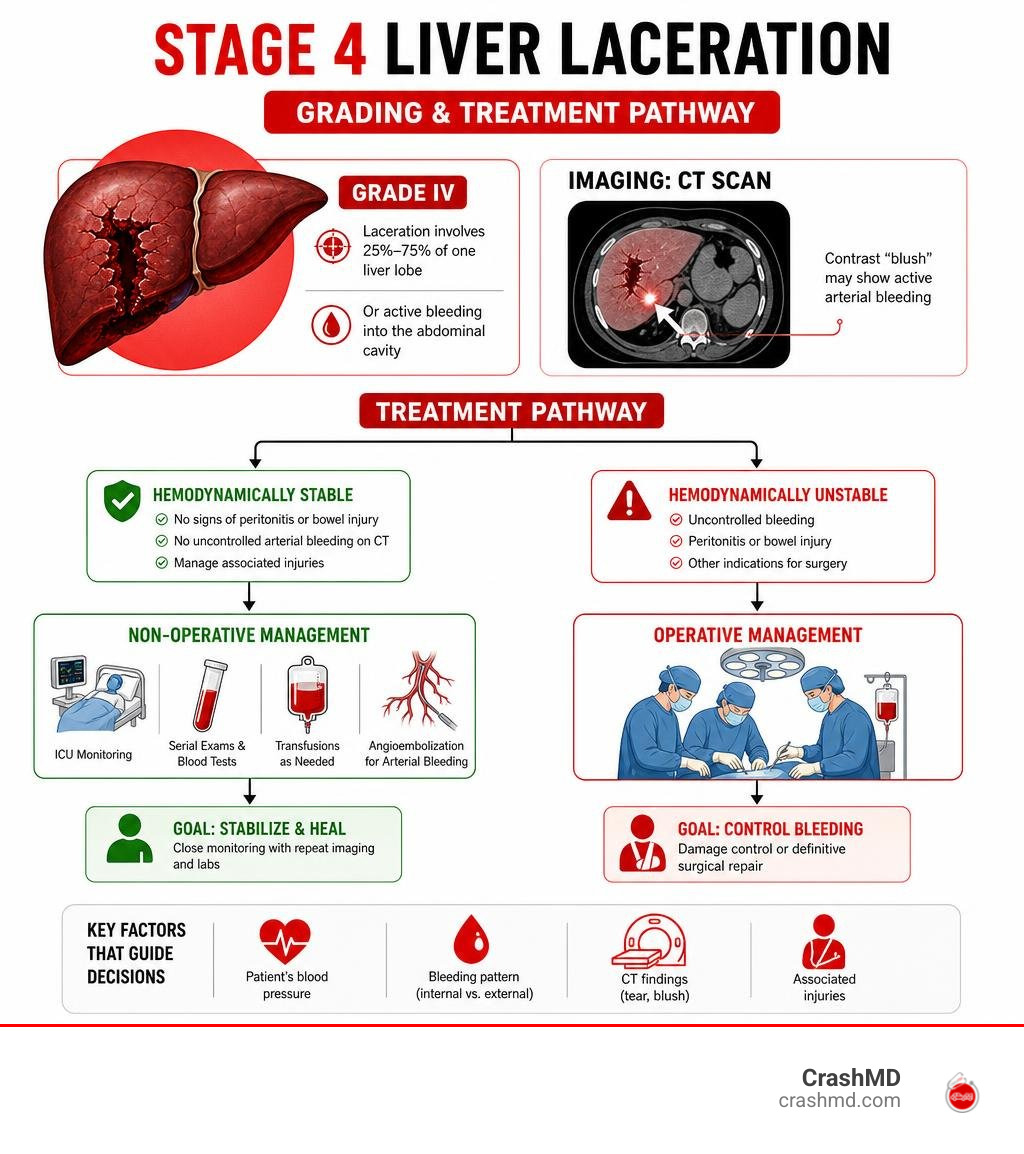
A stage 4 liver laceration, also called a Grade IV liver injury, is a serious tear that disrupts about 25% to 75% of one liver lobe. It can also be classified as Grade IV when imaging shows active bleeding that has broken through the liver into the abdominal cavity.
It is life-threatening, but it does not automatically mean surgery. If a person is stable after a car crash or other blunt trauma, has no signs of peritonitis or bowel injury, and CT imaging shows no uncontrolled arterial bleeding, trauma teams may treat the injury with ICU monitoring, repeat blood tests, transfusions when needed, and sometimes angioembolization to stop arterial bleeding.
The key point is simple: the patient’s blood pressure, bleeding pattern, and associated injuries matter as much as the Grade IV label. Modern CT scans help trauma teams map the tear, spot contrast “blush” from active bleeding, and decide whether close observation, embolization, or emergency surgery is safest.
I’m Dr. Adam Savage, and this guide will walk through what the grade means, how treatment decisions are made, and what recovery can look like after a severe liver injury.
Discover more about stage 4 liver laceration:
What Is a Stage 4 Liver Laceration?
The liver is the largest solid internal organ in the human body, holding roughly a pint of blood at any given second. Because of its dense vascular network and location beneath the right ribcage, severe blunt abdominal trauma—such as the impact from a high-speed motor vehicle collision—can cause extensive structural tearing.
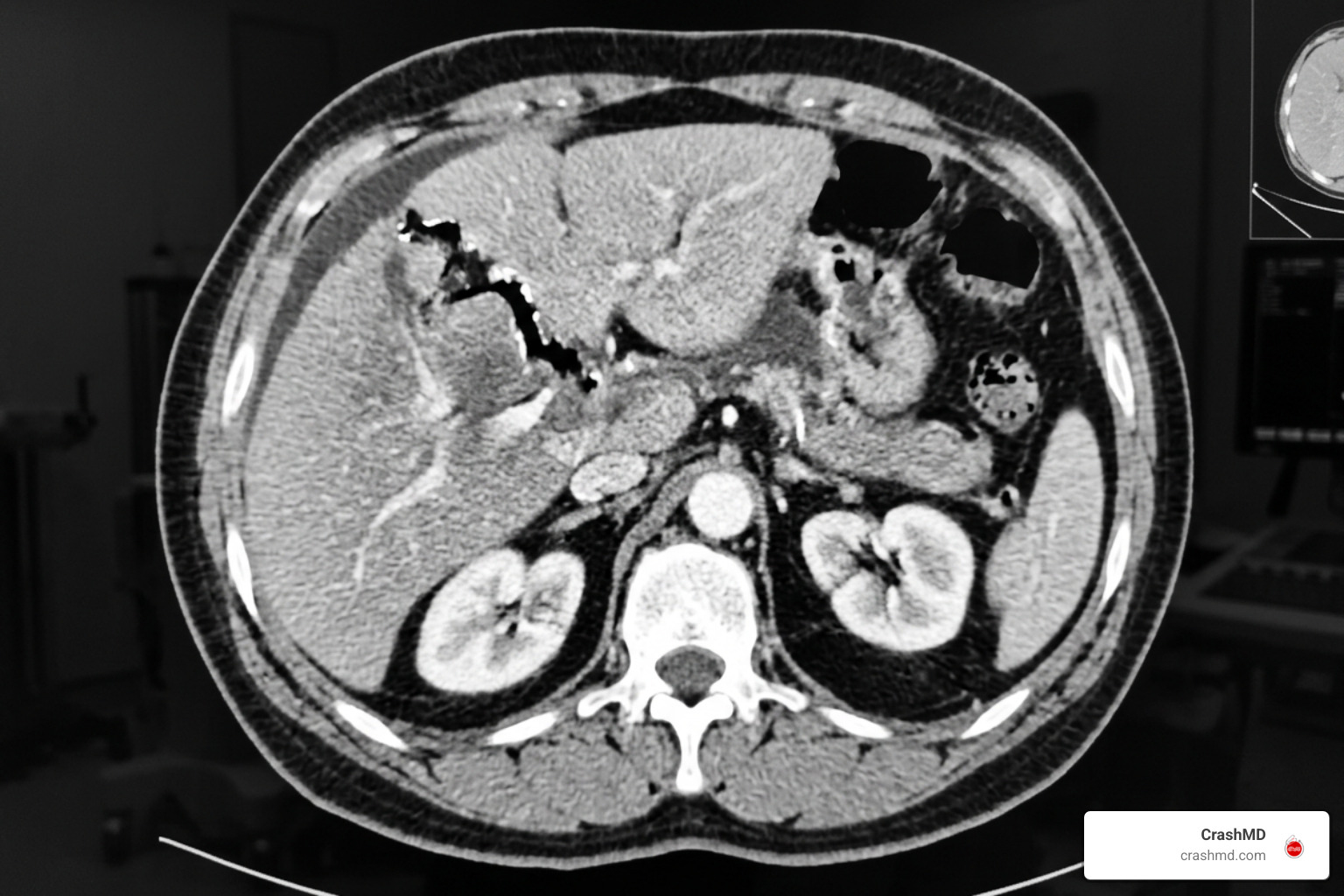
When clinicians diagnose a stage 4 liver laceration, they are describing deep parenchymal disruption that extends across a substantial portion of the organ. To better understand how anatomical trauma translates into clinical risk, review our in-depth guide to liver laceration severity and treatment.
AAST Grading Criteria for Grade IV Hepatic Injury
Trauma centers classify liver trauma using the American Association for the Surgery of Trauma (AAST) Organ Injury Scale. While minor injuries (Grades I and II) account for roughly 80% to 90% of all hepatic trauma, high-grade injuries demand advanced diagnostic precision.
Under the updated AAST classification system and the WSES classification and guidelines for liver trauma, a Grade IV designation involves:
- Parenchymal disruption involving 25% to 75% of a single hepatic lobe, or affecting 1 to 3 Couinaud segments within a single lobe.
- Vascular injury with active bleeding breaching the liver parenchyma into the peritoneal cavity.
- Active arterial extravasation (contrast blush) seen on cross-sectional imaging, which automatically upgrades the injury to high-grade status regardless of the superficial laceration depth.
| AAST Grade | Parenchymal Disruption & Depth | Vascular & Bleeding Criteria |
|---|---|---|
| Grade I | Subcapsular hematoma <10% surface area; laceration <1 cm deep | None |
| Grade II | Subcapsular hematoma 10–50%; laceration 1–3 cm deep (<10 cm length) | None |
| Grade III | Subcapsular hematoma >50% or expanding; laceration >3 cm deep | Contained intrahepatic vascular injury |
| Grade IV | Disruption of 25–75% of a lobe or 1–3 Couinaud segments | Active bleeding breaching parenchyma into peritoneum |
| Grade V | Parenchymal disruption >75% of a lobe; juxtahepatic venous injuries | Main portal or retrohepatic vena cava injury |
Diagnostic Imaging and Contrast Blush Detection
Contrast-enhanced multidetector computed tomography (CT) serves as the diagnostic gold standard for stable trauma patients. By utilizing dual-phase imaging (arterial and portal-venous phases), radiologists can identify exact anatomical tearing, hemoperitoneum volume, and active vascular extravasation.
An active “contrast blush” indicates pooled radiopaque dye escaping injured arterial branches. Accurately capturing these initial imaging findings is critical not only for medical triage but also when compiling a practical guide to car accident injury documentation for long-term legal and medical records.
Nonoperative Management and Treatment Protocols for Stage 4 Liver Laceration
Historically, severe hepatic tears triggered immediate exploratory surgery. However, modern trauma medicine favors nonoperative management (NOM) for hemodynamically stable patients (Zago et al., 2012).

According to the Hepatic Injury – Injuries; Poisoning – Merck Manual Professional Edition, stable patients treated conservatively achieve high survival rates while avoiding the morbidity of major open surgery. For an overview of how conservative protocols compare with surgical approaches, explore a practical guide to liver laceration treatment options.
Criteria for Nonoperative Management vs. Angioembolization
Candidates for conservative management must meet strict clinical criteria:
- Hemodynamic stability: Systolic blood pressure consistently maintained above 90–100 mm Hg following initial fluid resuscitation.
- Absence of peritonitis: No rigid abdominal guarding, rebound tenderness, or signs of hollow-organ perforation.
- Dedicated monitoring resources: Continuous ICU observation, serial hemoglobin/hematocrit tracking every 4 to 6 hours, and immediate operating room access.
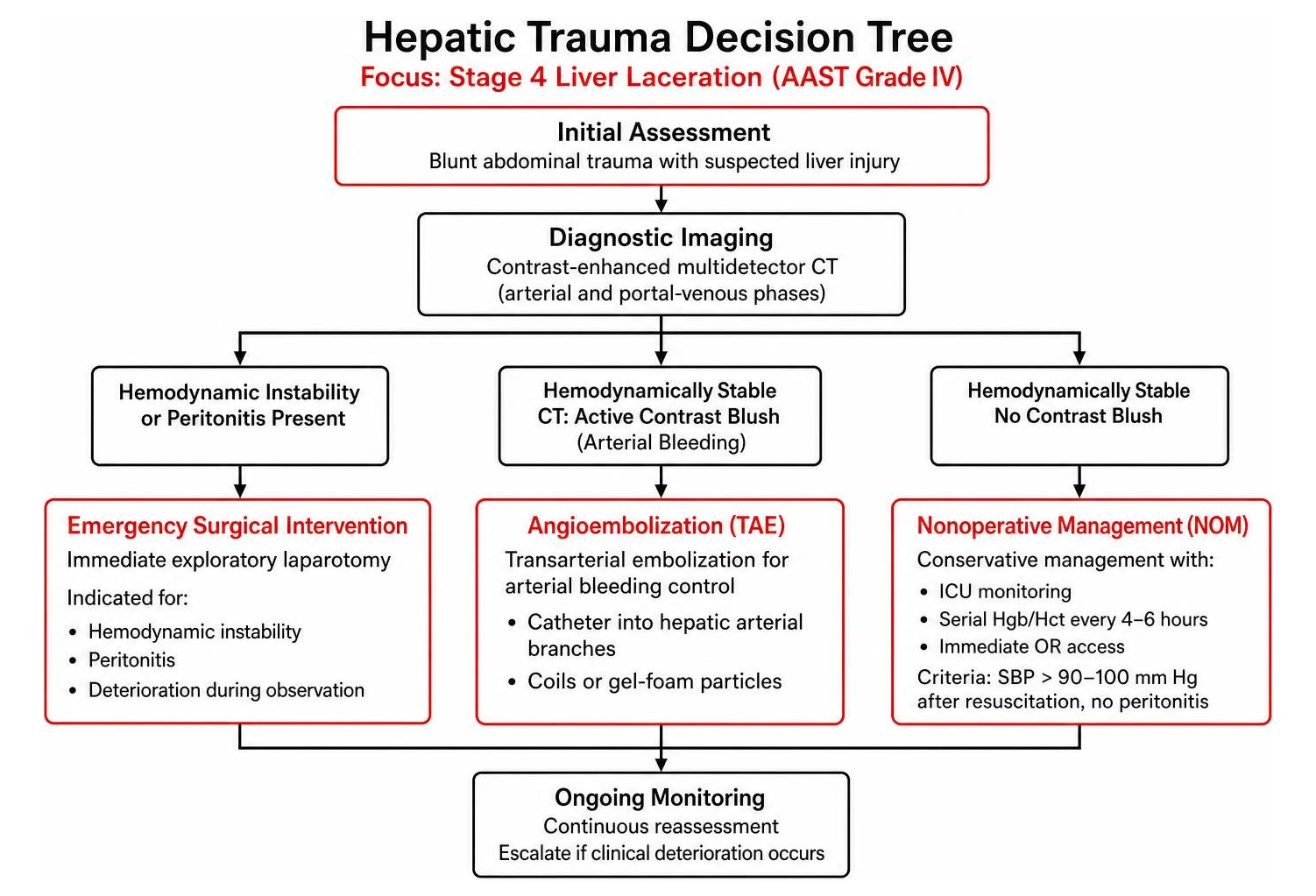
When CT imaging identifies an arterial blush in a stable patient, transarterial embolization (TAE) provides targeted hemorrhage control. As detailed in clinical reviews on Hepatic Trauma Interventions – PMC – NIH, interventional radiologists insert catheters into hepatic arterial branches to deploy micro-coils or gel-foam particles, achieving arterial bleeding control rates exceeding 80% to 90%.
Indications for Emergency Surgical Intervention
Nonoperative management is immediately abandoned if clinical deterioration occurs. Emergency exploratory laparotomy is indicated when:
- The patient exhibits persistent hemodynamic instability or refractory shock despite blood transfusions.
- CT scans or physical exams indicate concurrent hollow-viscus perforation (bowel rupture) or expanding peritonitis.
- Transarterial embolization fails to arrest ongoing hemorrhage.
Surgical strategies described in Liver Trauma | IntechOpen focus on damage-control laparotomy, perihepatic packing, topical hemostatic agents, and temporary abdominal closure to stabilize vital signs before attempting formal anatomical resections. In rare donor scenarios, complex techniques can even isolate uninjured segments (Levy et al., 2021).
Associated Traumatic Injuries and Potential Complications
Blunt hepatic trauma rarely occurs in complete isolation. In clinical studies, approximately 22.2% of patients with high-grade blunt liver trauma present with concomitant intra-abdominal injuries, with renal lacerations being the most frequent secondary abdominal finding.
Chest impact from steering wheels or seatbelts frequently produces thoracic trauma. Evaluating trauma patients often involves assessing rib fractures alongside a practical guide to pulmonary contusion to manage combined cardiopulmonary and abdominal stress.
Hepatic and Biliary Complications
While studies in trauma centers demonstrate nonoperative success rates reaching 94.5% in hemodynamically stable cohorts (Zago et al., 2012), high-grade tears still carry risks of secondary organ complications:
- Delayed Hemorrhage: Secondary bleeding can occur days after initial stabilization if a pseudoaneurysm ruptures.
- Biloma and Biliary Fistulas: Bile ducts severed during parenchymal disruption can leak bile into the peritoneal cavity, forming localized fluid collections (bilomas). These are managed via percutaneous catheter drainage or endoscopic retrograde cholangiopancreatography (ERCP) stenting.
- Hepatic Abscess: Devitalized, ischemic liver parenchyma can become infected, developing into abscesses in roughly 5% of severe liver trauma cases.
Systemic and Non-Hepatic Complications
Severe trauma also provokes systemic complications. In published series of patients managed nonoperatively, unrelated secondary complications occurred in 16.7% of individuals (Zago et al., 2012). These include sympathetic right-sided pleural effusions, atelectasis, hospital-acquired pneumonia, and post-intubation airway issues such as tracheal stenosis. Overall mortality across broader medical literature for Grade IV hepatic injuries ranges from 8% to 56%, largely influenced by the presence of hemorrhagic shock, associated multi-organ injuries, and patient age.
Clinical Recovery Roadmap for a Stage 4 Liver Laceration
Recovering from a severe liver laceration requires structured inpatient monitoring followed by a strict outpatient healing phase.
Detailed instructions from Liver Injuries & Home Care | Patient Education highlight the importance of physical restrictions to allow tissue regeneration. For realistic timelines on return-to-work phases, see the ultimate guide to liver laceration recovery time.
Inpatient Monitoring and Discharge Milestones
The average hospital length of stay for Grade IV nonoperative management ranges between 10 and 15 days, with roughly 66.7% of patients requiring blood transfusions (averaging 2 to 3 units of packed red blood cells).
Discharge criteria require:
- Stable hemoglobin levels over consecutive 24- to 48-hour lab draws.
- Complete tolerance of a regular diet with normal bowel function.
- Well-controlled pain using oral medications.
- Independent mobility without significant dizziness or orthostatic hypotension.
Long-Term Follow-Up and Activity Restrictions
The human liver possesses remarkable regenerative capacity, capable of regenerating substantial tissue mass over several months. To protect the healing capsule and prevent delayed rupture, patients must adhere to post-injury guidelines:
- Strict Activity Restrictions: Avoid contact sports, heavy lifting (>10–15 lbs), and high-impact workouts for 8 to 12 weeks, or until repeat imaging confirms parenchymal consolidation.
- Medication Management: Avoid NSAIDs (such as ibuprofen or naproxen) and aspirin during early recovery to minimize bleeding risks; use doctor-approved alternatives like acetaminophen.
- Warning Signs: Seek immediate emergency care for sudden right upper quadrant pain, lightheadedness, unexplained fever, or jaundice. Review key symptoms in our guide on liver laceration car accident symptoms recovery.
Frequently Asked Questions About Stage 4 Liver Lacerations
Can a stage 4 liver laceration heal without surgery?
Yes. If the patient remains hemodynamically stable without signs of peritonitis or bowel rupture, nonoperative management in an intensive care setting achieves high success rates. Interventional radiology techniques like transarterial embolization can halt active arterial bleeding without open surgery.
How long is the recovery period for a grade IV liver injury?
Complete clinical and parenchymal healing typically requires 3 to 6 months. Most patients spend 1 to 2 weeks in the hospital and must observe strict physical rest and lifting restrictions for at least 8 to 12 weeks following discharge.
What are the main signs of delayed complications after blunt liver trauma?
Key warning signs include worsening right upper quadrant pain, fever, nausea, progressive abdominal swelling, lightheadedness, or yellowing of the skin and eyes (jaundice), which may indicate delayed bleeding, a biloma, or an intrahepatic abscess.
Conclusion
A Grade IV liver injury represents severe abdominal trauma, but advances in multi-slice CT diagnostics, ICU resuscitation protocols, and transarterial embolization allow many patients to recover safely without open surgery. Successful long-term recovery depends on careful hemodynamic monitoring, phased physical rehabilitation, and thorough medical documentation across Arizona, Nevada, Texas, Oklahoma, and California.
At CrashMD, our team specializes in post-accident medical care and pain management. We provide tailored treatment plans while ensuring injuries and recovery milestones are documented for your legal case.
References
Zago TM, Tavares Pereira BM, Araujo Calderan TR, Godinho M, Nascimento B, Fraga GP. “Nonoperative management for patients with grade IV blunt hepatic trauma..” World journal of emergency surgery : WJES, 2012. PMCID PMC3425664. Marlon F. Levy, Daisuke Imai, Vinay Kumaran, David A. Bruno, Chandra S. Bhati, Adrian H. Cotterell, Amit Sharma, Seung Duk Lee, Aamir A. Khan, Marlon F. Levy. “Utilization of a Reduced Graft from a Severely Traumatized Liver: A Case Report and Strategy to Increase Availability of Livers for Transplant.” Surgical Case Reports, 2021. DOI 10.31487/j.scr.2021.04.09.