

Foot Fractures After a Car Accident
The foot is a complex structure composed of 26 bones, multiple joints, ligaments, tendons, and muscles, all working together to support weight, maintain balance, and allow mobility. The foot is divided into three main regions: the hindfoot (heel and ankle), midfoot (arches), and forefoot (toes and metatarsals). Because it bears the full weight of the body and absorbs force during movement, the foot is particularly vulnerable to injury during high-impact events, such as car accidents.
Foot fractures, whether involving the toes or the metatarsals, can range from minor injuries to complex, multi-bone breaks. These injuries can significantly affect mobility, balance, and quality of life if not treated promptly. Understanding the causes, symptoms, diagnosis, treatment options, and recovery process is essential for patients and caregivers navigating this type of injury.
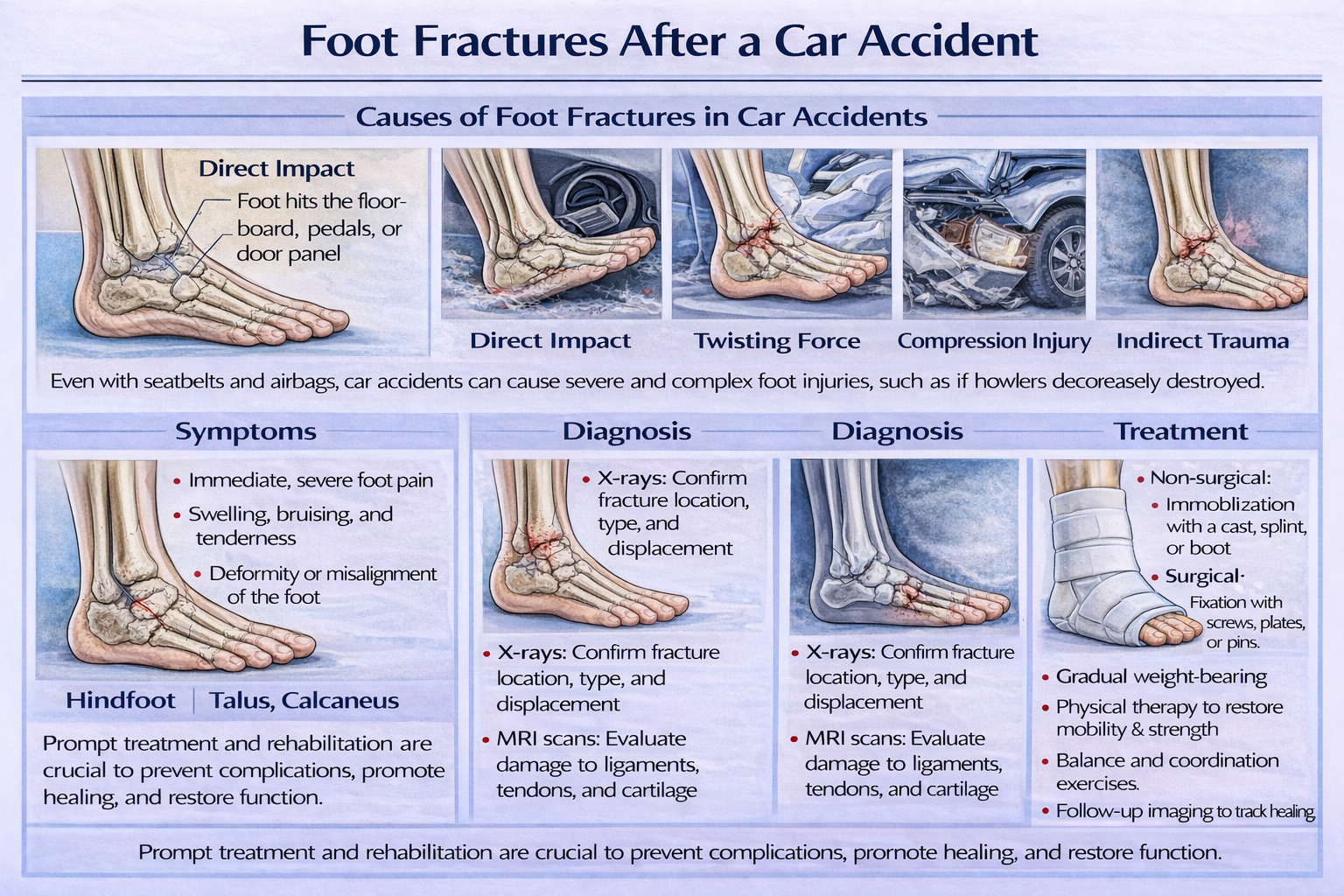
How Car Accidents Cause Foot Fractures
Car accidents are a common cause of foot fractures due to the sudden, high-energy forces involved. During a collision, the foot may be exposed to direct impact, crushing forces, or rotational stress, resulting in fractures.
Common mechanisms of injury include:
- Direct impact: The foot may strike the floorboard, pedals, or door panel during a collision.
- Crushing or compression forces: In rollovers or when the foot becomes trapped under a vehicle, bones can shatter.
- Twisting or rotational forces: Abrupt movements during a crash can cause spiral or oblique fractures.
- Indirect trauma: Force transferred from the ankle or lower leg may fracture one or more bones of the foot.
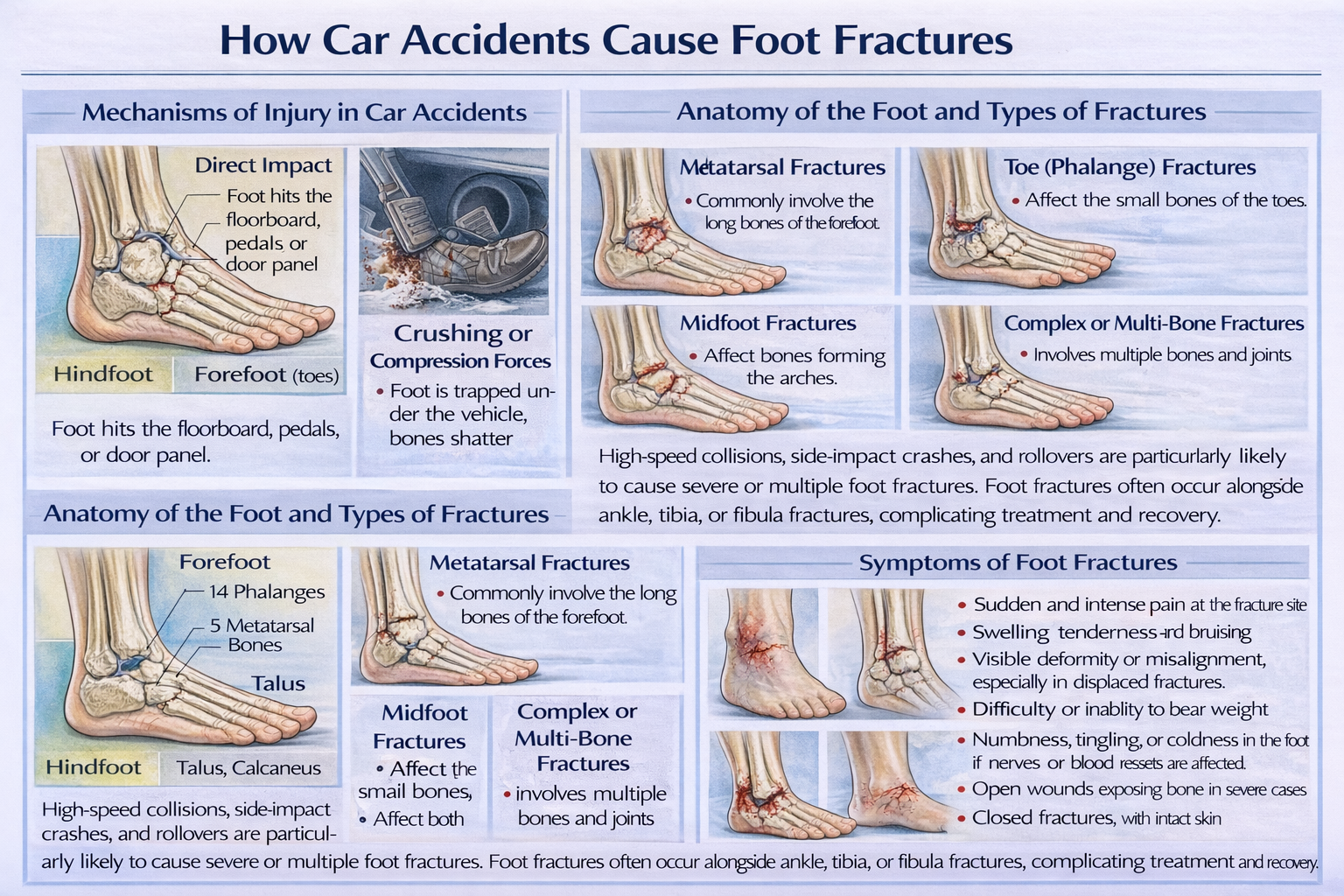
High-speed collisions, side-impact crashes, and rollovers are particularly likely to cause severe or multiple fractures. Foot fractures often occur alongside ankle, tibia, or fibula fractures, which can complicate treatment and recovery.
Anatomy of the Foot and Types of Fractures
The forefoot contains five metatarsal bones and fourteen phalanges (toe bones), which play a critical role in weight-bearing, balance, and walking. The midfoot includes the arches formed by smaller bones, including the cuneiforms, navicular, and cuboid, which stabilize the foot during movement. The hindfoot connects to the ankle and heel.
Foot fractures are classified based on the bone involved and the fracture pattern:
- Metatarsal fractures: Often affect the long bones of the forefoot. The fifth metatarsal on the outer side of the foot is particularly vulnerable.
- Toe (phalange) fractures: Involve the small bones of the toes and often result from direct trauma or crushing injuries.
- Midfoot fractures: Affect bones forming the arches, including the navicular, cuboid, and cuneiforms.
- Complex or multi-bone fractures: Often require surgical intervention due to involvement of multiple bones and joints.
Fractures may also be described according to the fracture line:
- Transverse fractures, straight across the bone
- Oblique fractures, at an angle
- Spiral fractures, caused by twisting forces
- Comminuted fractures, where the bone shatters into multiple pieces
- Displaced fractures, with misaligned bone fragments
- Non-displaced fractures, with bones remaining aligned
- Open fractures, where the bone pierces the skin
- Closed fractures, with intact skin
The type, location, and severity of the fracture are critical in guiding treatment and predicting recovery timelines.
Symptoms of Foot Fractures
Symptoms vary depending on the bone involved and severity of the injury. Common signs include:
- Sudden and intense pain at the fracture site
- Swelling, tenderness, and bruising
- Visible deformity or misalignment, especially in displaced fractures
- Difficulty or inability to bear weight
- Numbness, tingling, or coldness in the foot or toes if nerves or blood vessels are affected
- Open wounds exposing bone in severe cases
Even minor toe fractures can lead to long-term pain, deformity, or functional limitations if untreated. Immediate medical evaluation is recommended for any suspected fracture following a car accident.
Diagnosing Foot Fractures
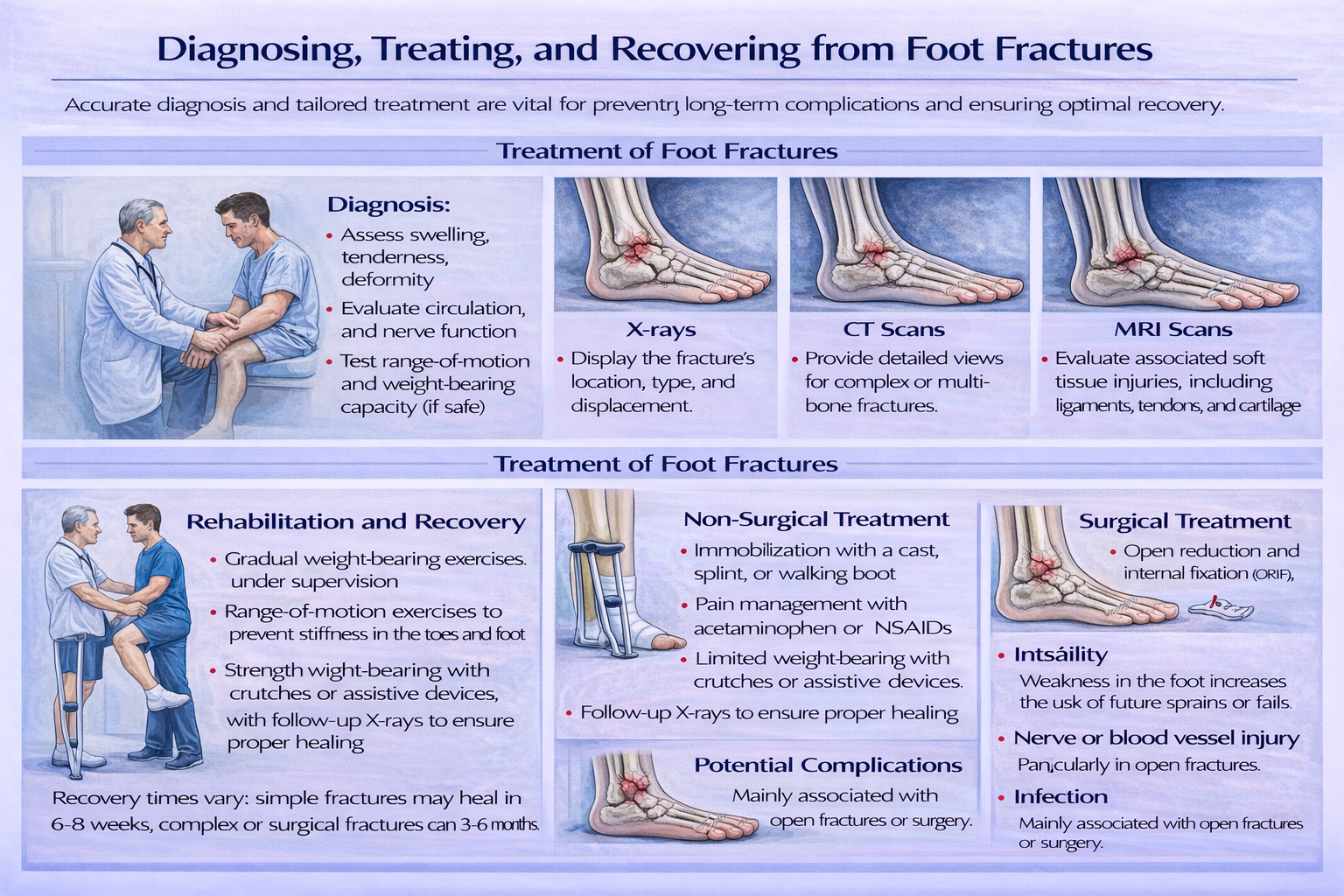
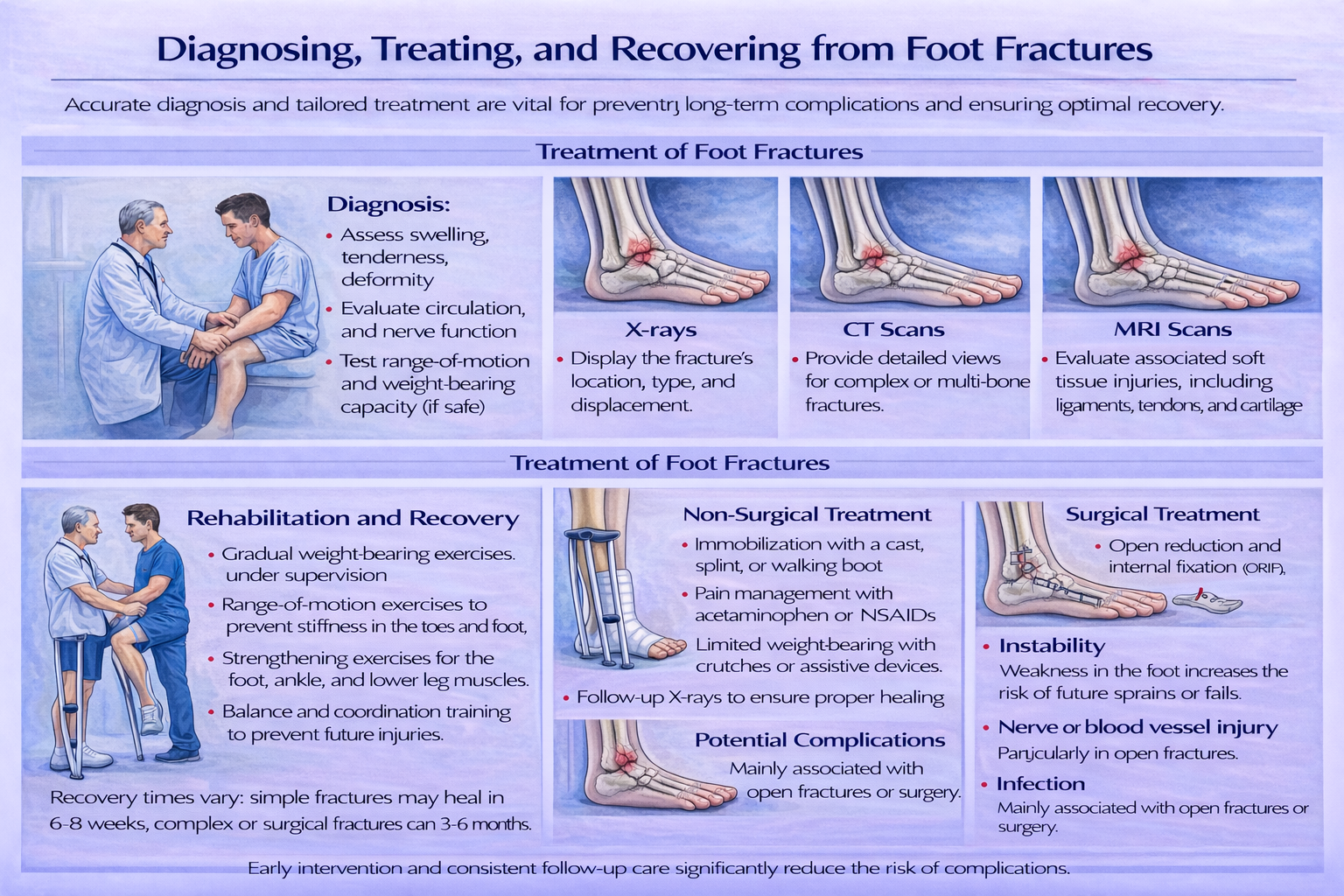
A thorough clinical examination is the first step in diagnosis. Doctors assess swelling, tenderness, deformity, circulation, and nerve function in the foot and toes. Range-of-motion and weight-bearing capacity are evaluated if safe.
Imaging studies confirm the fracture and guide treatment:
- X-rays: Reveal the fracture location, type, and displacement.
- CT scans: Provide detailed views for complex or multi-bone fractures.
- MRI scans: Evaluate associated soft tissue injuries, including ligaments, tendons, and cartilage.
Accurate diagnosis is essential for proper alignment, prevention of long-term complications, and optimal recovery.
 Treatment of Foot Fractures
Treatment depends on the bone involved, fracture pattern, severity, and overall patient health. The primary goals are to stabilize the bones, restore proper alignment, and allow safe mobility as early as possible.
Non-Surgical Treatment
Stable, non-displaced fractures may be treated conservatively:
- Immobilization with a cast, splint, or walking boot
- Pain management with acetaminophen or nonsteroidal anti-inflammatory drugs
- Limited weight-bearing with crutches or assistive devices
- Follow-up imaging to ensure proper healing
Even minor fractures require careful monitoring, as improper healing can lead to chronic pain, deformity, or long-term functional limitations.
Surgical Treatment
Surgery is often required for displaced, comminuted, open, or multi-bone fractures, or fractures involving the joint surface. Common surgical procedures include:
- Open reduction and internal fixation (ORIF), using plates, screws, or wires to stabilize bone fragments
- External fixation, used temporarily in severe injuries with extensive soft tissue damage
- Joint reconstruction, for fractures affecting the joint surface to prevent post-traumatic arthritis
Surgical intervention ensures proper bone alignment, reduces the risk of deformity, and allows for earlier rehabilitation.
Rehabilitation and Recovery
Rehabilitation is crucial for restoring mobility, strength, and balance after a foot fracture. Physical therapy often includes:
- Gradual weight-bearing exercises under supervision
- Range-of-motion exercises to prevent stiffness in the toes and foot
- Strengthening exercises for the foot, ankle, and lower leg muscles
- Balance and coordination training to prevent future injuries
Recovery timelines vary depending on fracture type. Simple fractures may heal within six to eight weeks, while complex or surgical fractures can take three to six months or longer. Consistent adherence to rehabilitation protocols is essential to regain full function.
Potential Complications
High-energy foot fractures from car accidents may lead to complications, including:
- Malunion or nonunion, where the bone heals improperly or fails to heal
- Chronic pain or stiffness, particularly if joints are involved
- Post-traumatic arthritis, due to cartilage damage
- Instability, increasing the risk of future sprains or falls
- Nerve or blood vessel injury, especially in open fractures
- Infection, particularly in open fractures or surgical cases
Early intervention, proper treatment, and adherence to rehabilitation significantly reduce the risk of complications.
Real-Life Scenarios
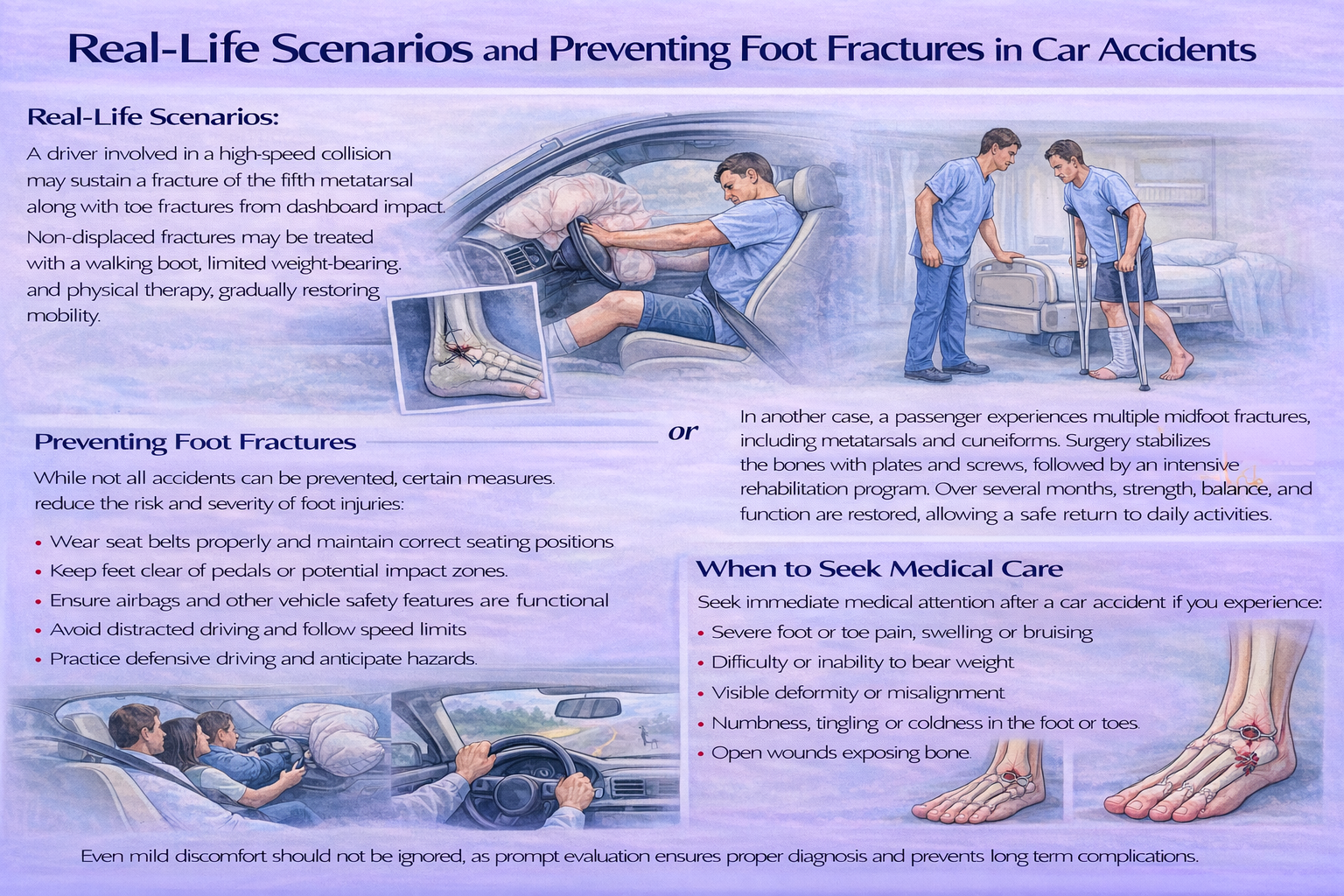
A driver involved in a high-speed collision may sustain a fracture of the fifth metatarsal along with toe fractures from dashboard impact. Non-displaced fractures may be treated with a walking boot, limited weight-bearing, and physical therapy, gradually restoring mobility.
In another case, a passenger experiences multiple midfoot fractures, including metatarsals and cuneiforms. Surgery stabilizes the bones with plates and screws, followed by an intensive rehabilitation program. Over several months, strength, balance, and function are restored, allowing a safe return to daily activities.
Preventing Foot Fractures
While not all accidents can be prevented, certain measures reduce the risk and severity of foot injuries:
- Wear seat belts properly and maintain correct seating positions
- Keep feet clear of pedals or potential impact zones
- Ensure airbags and other vehicle safety features are functional
- Avoid distracted driving and follow speed limits
- Practice defensive driving and anticipate hazards
Responsible driving and proper vehicle safety significantly reduce the likelihood of serious foot injuries.
When to Seek Medical Care
Seek immediate medical attention after a car accident if you experience:
- Severe foot or toe pain, swelling, or bruising
- Difficulty or inability to bear weight
- Visible deformity or misalignment
- Numbness, tingling, or coldness in the foot or toes
- Open wounds exposing bone
Even mild discomfort should not be ignored, as prompt evaluation ensures proper diagnosis and prevents long-term complications.
Long-Term Outlook
With timely and appropriate treatment, most foot fractures heal successfully. Isolated metatarsal or toe fractures typically recover fully with conservative care, while complex fractures or those involving the joints may require surgery and extended rehabilitation. Modern orthopedic techniques and physical therapy have greatly improved outcomes.
Recovery involves not only bone healing but also regaining strength, balance, and functional mobility. Most patients can return to normal activities, work, and recreational pursuits with proper care and adherence to rehabilitation programs.
Foot fractures after a car accident can be painful and limiting, but prompt medical care, proper stabilization, and structured rehabilitation make full recovery possible. Early intervention reduces complications, restores mobility, and helps patients regain independence and quality of life.