

Femur Fractures After a Car Accident
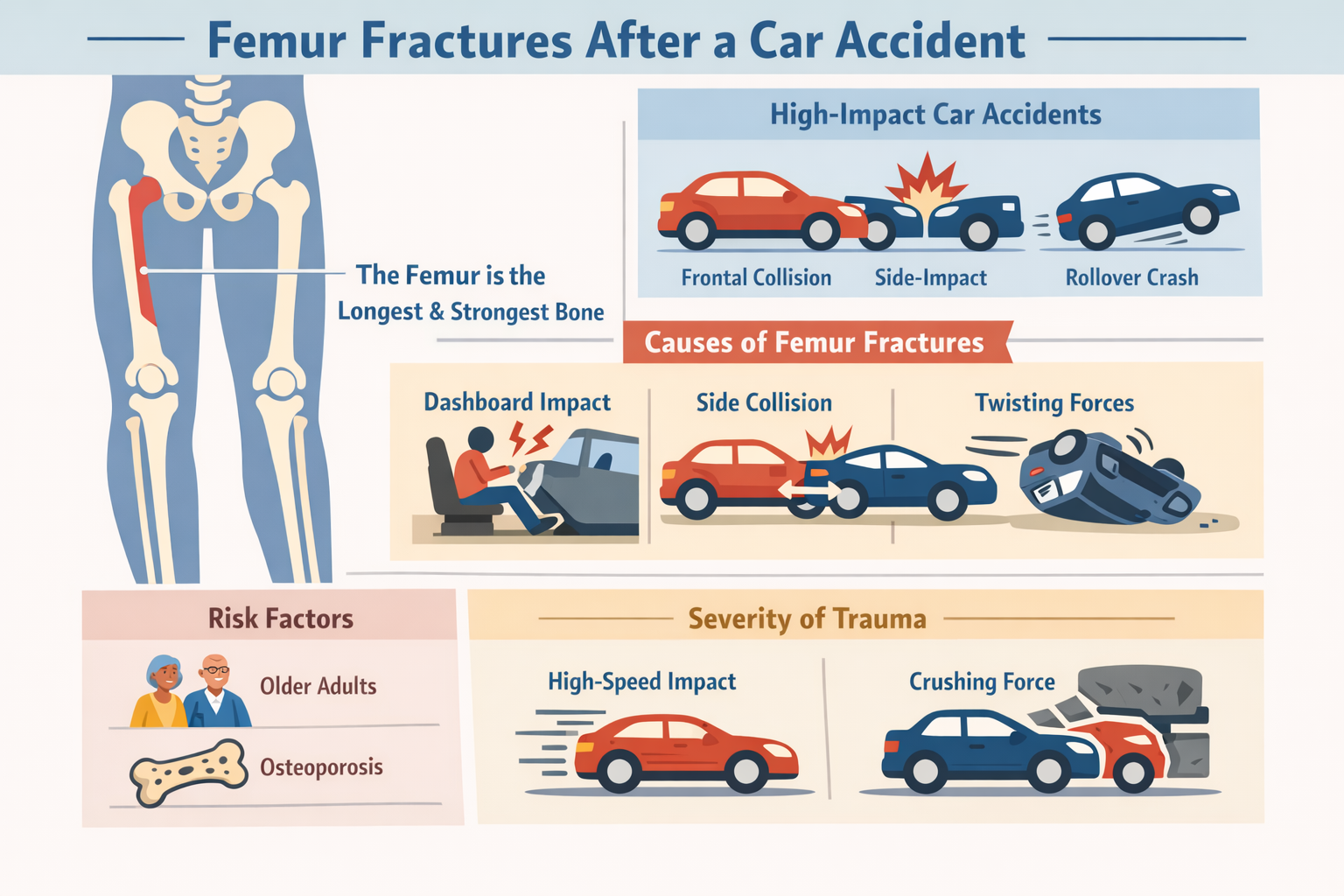
A femur fracture is one of the most serious injuries that can occur during a car accident. The femur, or thigh bone, is the longest and strongest bone in the human body, connecting the hip to the knee. It provides critical support for the weight of the upper body, facilitates movement, and absorbs significant forces during daily activities and sudden impacts. Despite its strength, the femur can fracture under high-energy trauma, making collisions a common cause of femur injuries.
Car accidents expose the body to sudden and extreme forces. Frontal collisions can drive the knees and thighs backward into the dashboard or seat structure, generating enough pressure to break the femur. Side-impact accidents or rollovers can produce lateral compression or twisting forces that shatter the bone. Even with modern safety features like seat belts and airbags, the force from a high-speed collision can exceed the femur’s capacity. Older adults and individuals with underlying bone conditions such as osteoporosis are particularly susceptible to fractures.
Anatomy of the Femur and Common Fracture Sites
The femur consists of three main sections:
- Proximal femur – Located near the hip, this includes the femoral head, neck, and intertrochanteric region. Fractures in this area are common among older adults but can also occur in high-energy car accidents. These fractures can affect hip joint stability and mobility.
- Femoral shaft – The long, middle portion of the bone. Shaft fractures typically result from direct impact or compressive forces and often occur in younger adults involved in high-speed collisions.
- Distal femur – Located near the knee joint, distal fractures may involve the joint surface. These injuries can complicate knee function and require precise surgical alignment for optimal recovery.
Fractures are also classified by displacement and complexity:
- Stable fractures are simple breaks with minimal displacement, often manageable with conservative treatment.
- Unstable fractures are displaced, comminuted (shattered into multiple fragments), or involve the joint, often requiring surgical intervention.
- Open fractures occur when the bone penetrates the skin, increasing the risk of infection.
- Closed fractures do not break the skin but can still involve significant soft tissue injury.
How Car Accidents Cause Femur Fractures
During a car accident, the femur can be exposed to multiple forces simultaneously:
- Direct impact from the dashboard or seat
- Compression as the body is thrown forward or sideways
- Twisting or rotational forces during a rollover
- Indirect trauma transmitted through the pelvis or knee
Fractures may occur in isolation or along with other injuries, such as pelvic fractures, ligament tears, or internal organ damage. High-speed collisions, rollovers, and collisions with larger vehicles increase the likelihood of severe femur fractures.
Symptoms of a Femur Fracture
Femur fractures are usually immediately evident due to intense pain and functional limitations. Symptoms may include:
- Severe thigh pain and swelling
- Inability to bear weight or walk
- Visible deformity, such as shortening or angulation of the leg
- Bruising along the thigh
- Numbness, tingling, or weakness if nerves are affected
- Signs of internal bleeding, including dizziness, pale skin, or fainting
Because the femur is a large bone near major blood vessels, fractures can result in significant internal bleeding. Immediate medical evaluation is critical to prevent shock and other life-threatening complications. 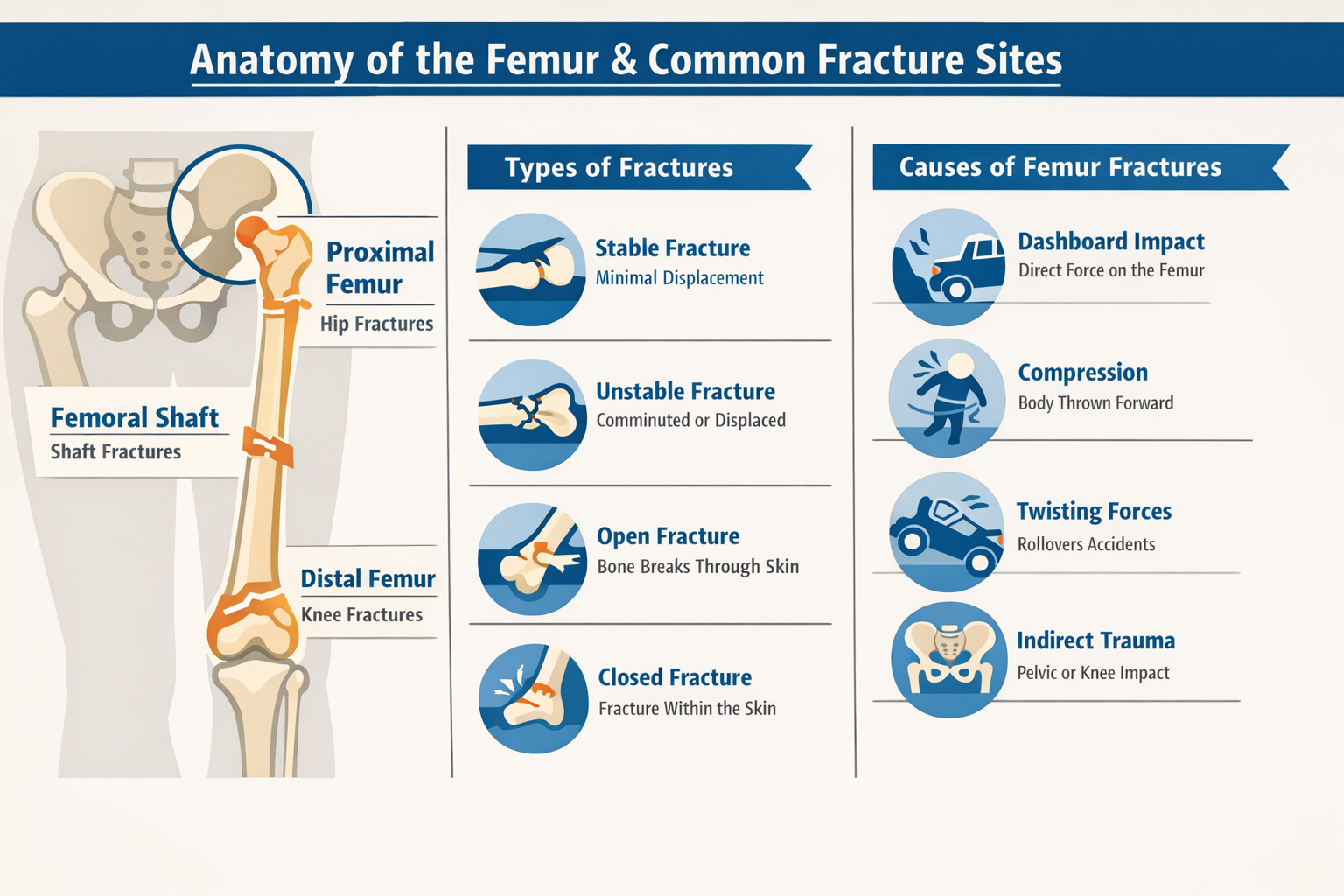 Diagnosing a Femur Fracture
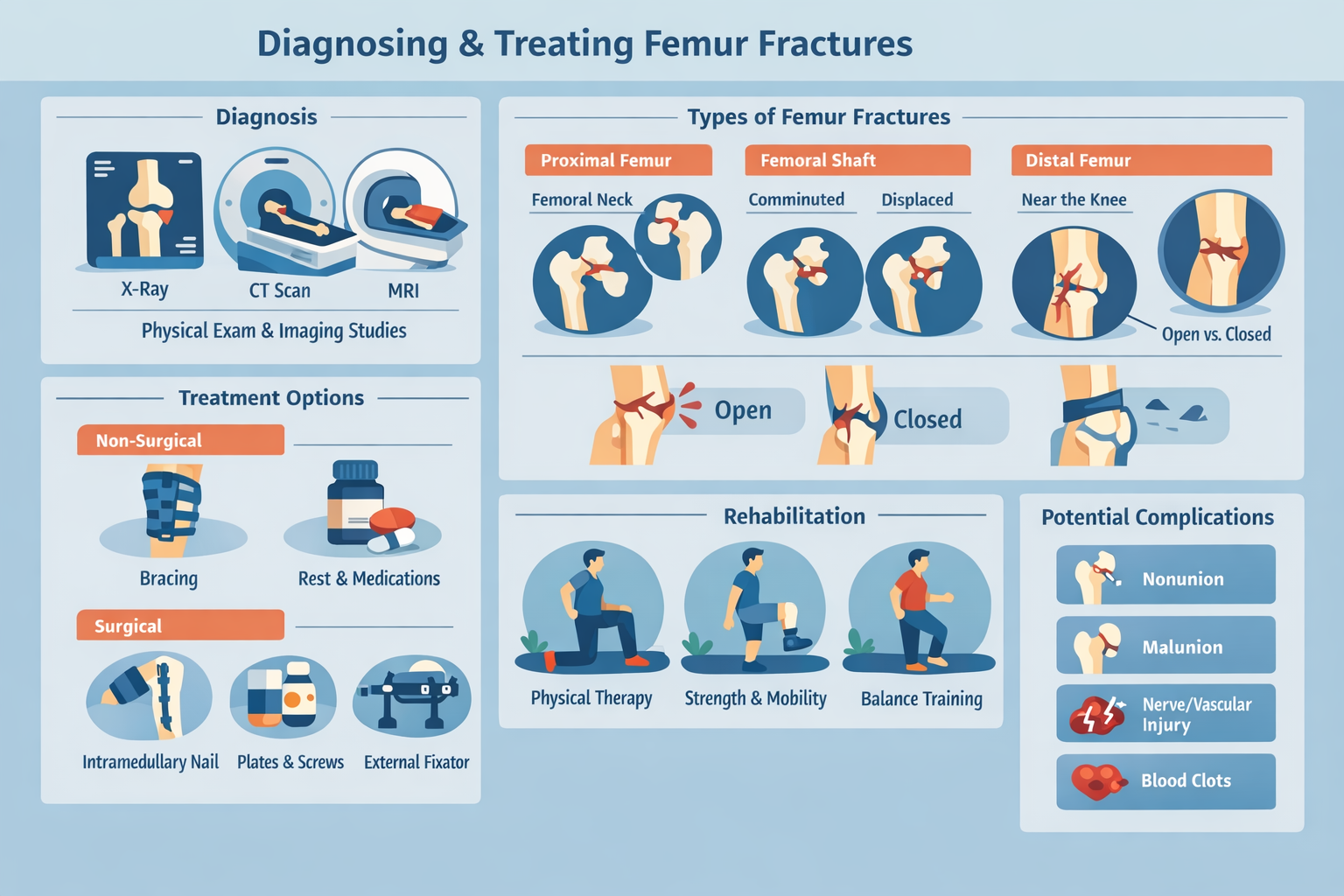
Diagnosis begins with a thorough physical examination, checking for deformity, tenderness, swelling, circulation, and nerve function in the affected leg.
Imaging studies are essential to confirm the fracture and plan treatment:
- X-rays provide a clear view of bone breaks, displacement, and fracture type.
- CT scans offer detailed images of complex or comminuted fractures.
- MRI scans assess soft tissue involvement, including ligament, tendon, and muscle damage.
Timely and accurate imaging ensures proper treatment planning and reduces the risk of long-term complications.
Types of Femur Fractures
Proximal Femur Fractures
These fractures involve the hip region and include:
- Femoral neck fractures – Occur just below the ball of the hip joint and can disrupt blood flow to the femoral head, increasing the risk of avascular necrosis.
- Intertrochanteric fractures – Occur between the greater and lesser trochanters and are often treated surgically with plates or intramedullary nails.
Femoral Shaft Fractures
Fractures of the shaft usually result from high-energy trauma and are often comminuted or displaced. They are associated with other injuries, such as tibial fractures or pelvic trauma. Surgical fixation is typically required to restore alignment and facilitate weight-bearing.
Distal Femur Fractures
These fractures involve the area near the knee joint and may extend into the joint itself. Proper alignment is crucial to prevent long-term arthritis or limited range of motion. Surgical fixation using plates or screws is usually necessary.
Open vs Closed Fractures
- Open fractures expose the bone to the external environment, increasing infection risk and requiring urgent surgical management.
- Closed fractures remain beneath the skin but may still cause significant internal damage.
Treatment of Femur Fractures
Treatment depends on fracture location, type, stability, and associated injuries.
Non-Surgical Treatment
Stable, non-displaced fractures may be treated without surgery using:
- Traction or braces to immobilize the leg
- Pain management with medications
- Limited weight-bearing activities until healing occurs
While some fractures can heal with conservative treatment, the femur’s critical role in mobility often necessitates surgical intervention.
Surgical Treatment
Surgery is the standard approach for most femur fractures, especially those that are displaced or involve multiple fragments. Options include:
- Intramedullary nailing – A metal rod is inserted into the femur’s marrow canal to stabilize the bone.
- Plate and screw fixation – Plates are attached along the bone with screws to hold fragments in place.
- External fixation – Used temporarily in cases of severe trauma or open fractures to stabilize the bone.
Surgical goals include restoring alignment, stabilizing the bone, preserving hip and knee function, and reducing the risk of complications such as malunion or nonunion.
Rehabilitation and Recovery
Rehabilitation is a critical component of recovery from femur fractures. Physical therapy focuses on:
- Restoring range of motion in the hip, knee, and ankle
- Strengthening thigh and core muscles
- Improving balance, coordination, and walking mechanics
- Gradually increasing weight-bearing activity
Recovery timelines vary. Simple fractures may heal within three to six months, while complex fractures with surgery may require six months to a year of rehabilitation. Consistent therapy, gradual progression, and adherence to medical guidance are essential for regaining mobility and strength.
Complications of Femur Fractures
Potential complications depend on the fracture’s severity and location:
- Nonunion – The bone fails to heal properly
- Malunion – Improper alignment during healing
- Chronic pain or stiffness – Particularly in hip or knee joints
- Nerve or vascular injury – Affecting sensation or circulation
- Deep vein thrombosis – Blood clots due to immobility
- Post-traumatic arthritis – If joint surfaces are involved
Early intervention and structured rehabilitation minimize these risks and promote optimal recovery.
Real-Life Scenarios
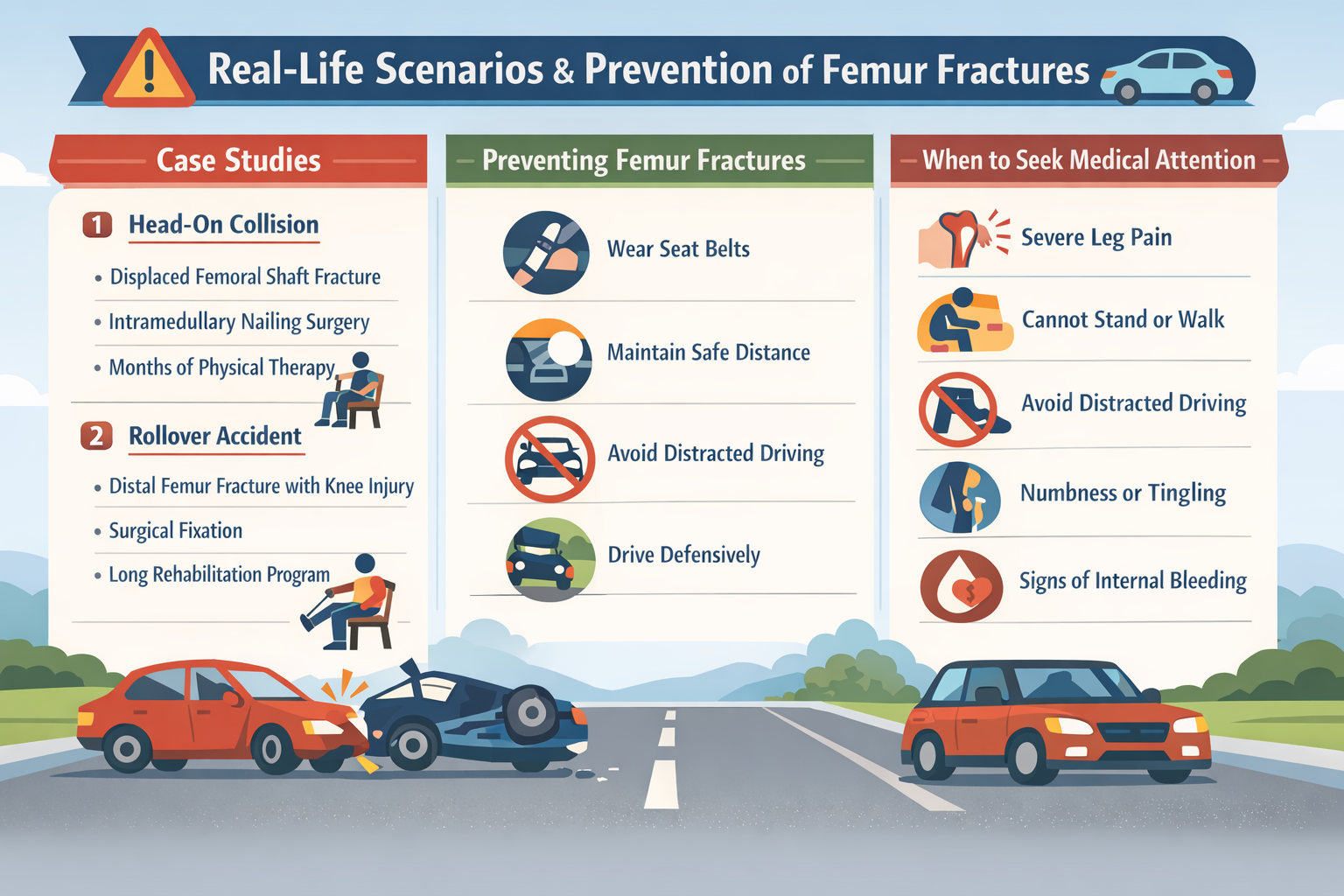
Consider a patient involved in a head-on collision, striking their knees against the dashboard and sustaining a displaced femoral shaft fracture. Emergency responders immobilize the leg, and the patient undergoes intramedullary nailing surgery. Months of physical therapy restore strength, mobility, and daily function.
In a severe rollover accident, a patient sustains a distal femur fracture with associated knee joint involvement. Surgical fixation stabilizes the fracture, followed by a long rehabilitation program focusing on range of motion, strength, and balance. Recovery may take several months, but with consistent therapy, functional independence is regained.
Preventing Femur Fractures
While accidents cannot always be avoided, certain precautions reduce the risk:
- Wear seat belts correctly and ensure airbags are functional
- Maintain proper seating distance from the dashboard
- Avoid distracted driving and obey speed limits
- Practice defensive driving and remain aware of road conditions
Safe driving and properly maintained vehicle safety features significantly reduce the severity and likelihood of femur fractures.
When to Seek Medical Attention
After a car accident, seek medical care if you experience:
- Severe thigh, hip, or knee pain
- Inability to stand, walk, or bear weight
- Visible deformity or angulation of the leg
- Numbness, tingling, or weakness in the leg
- Signs of internal bleeding such as dizziness, pale skin, or fainting
Even mild pain should not be ignored. Adrenaline can mask symptoms immediately after a collision, and prompt evaluation reduces the risk of long-term complications.
Long-Term Outlook
With proper treatment, many patients regain full function after a femur fracture. Stable fractures generally heal well, while complex fractures may require prolonged rehabilitation. Advances in surgical techniques, trauma care, and physical therapy have significantly improved outcomes, even for severe fractures.
Femur fractures after a car accident represent significant trauma that requires timely attention. Prompt medical evaluation, accurate diagnosis, appropriate surgical or conservative treatment, and structured rehabilitation are essential for restoring mobility, reducing complications, and regaining independence.
If you experience thigh pain, swelling, or difficulty moving following a car accident, seek immediate medical attention. Early intervention maximizes recovery and helps protect long-term function.