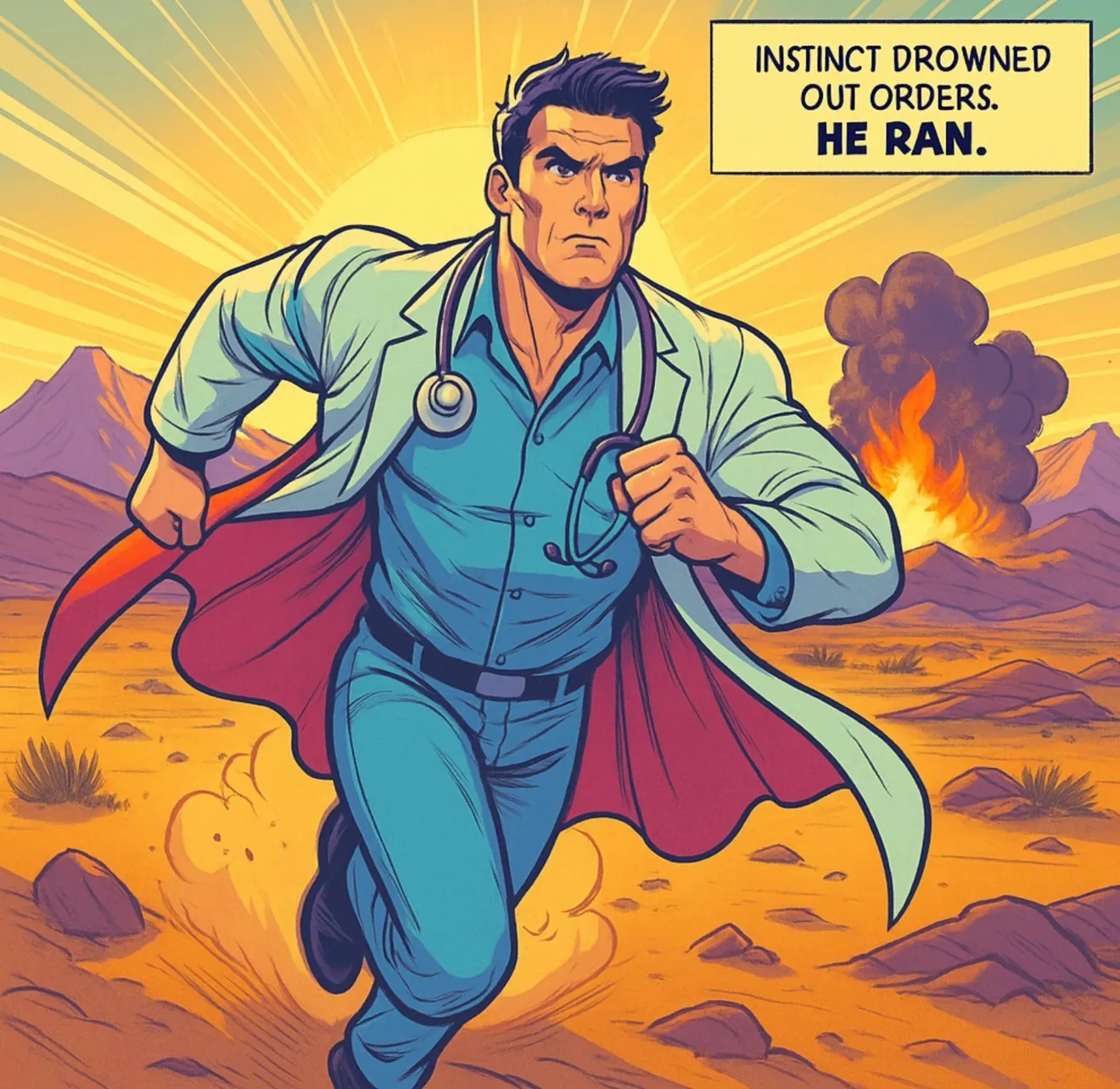

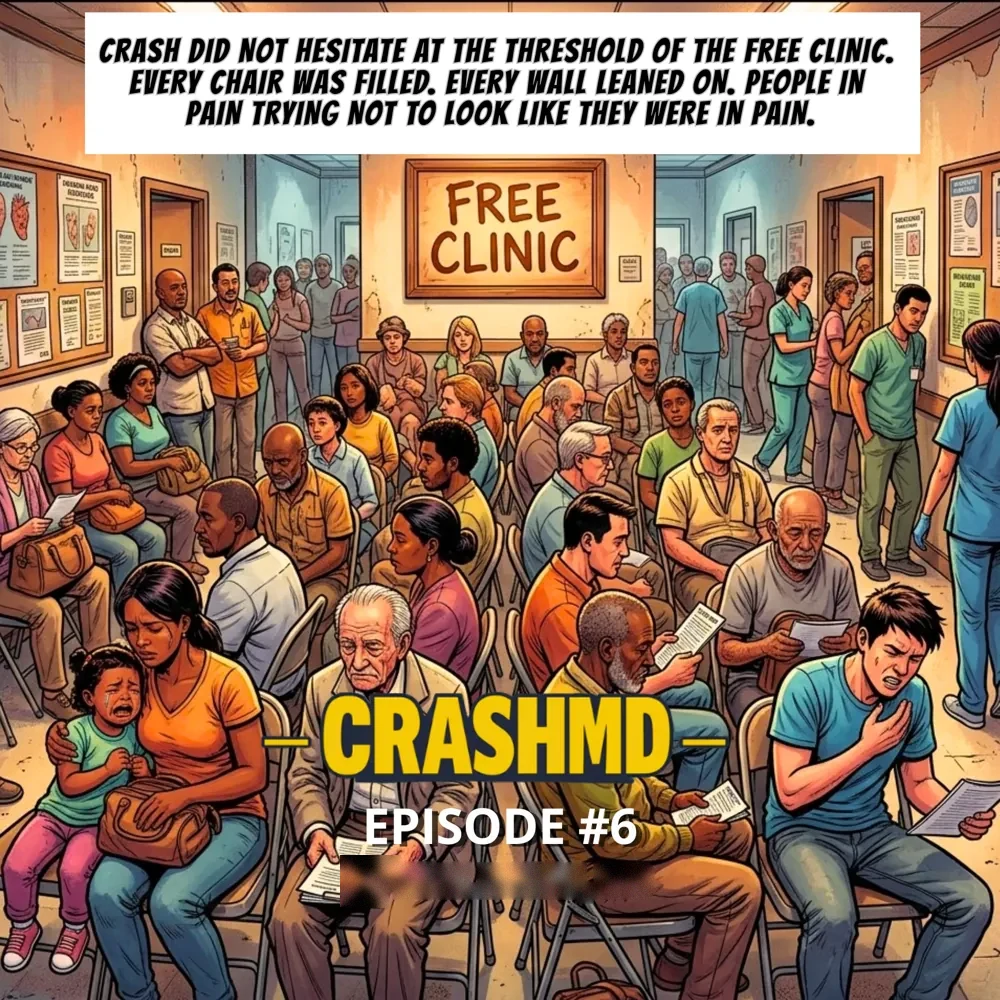
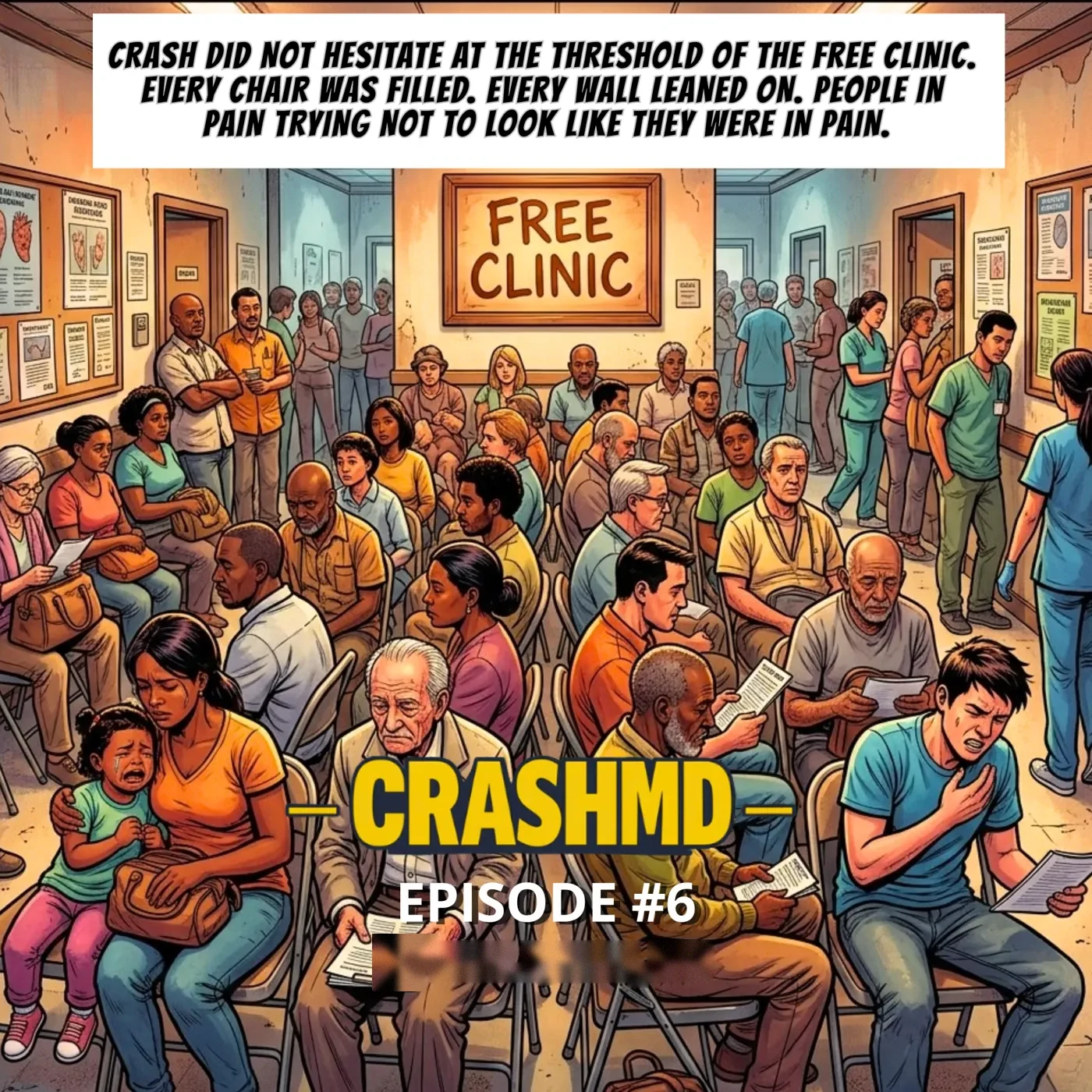
Crash did not hesitate at the threshold of the free clinic.
Patel had warned him it would be busy. He hadn’t warned him it would feel like this.
Every chair was filled. Every wall was leaned on. People sat carefully, as if taking up too much space might cost them something. These were not patients who demanded attention. These were patients who had learned to wait.
Pain patients.
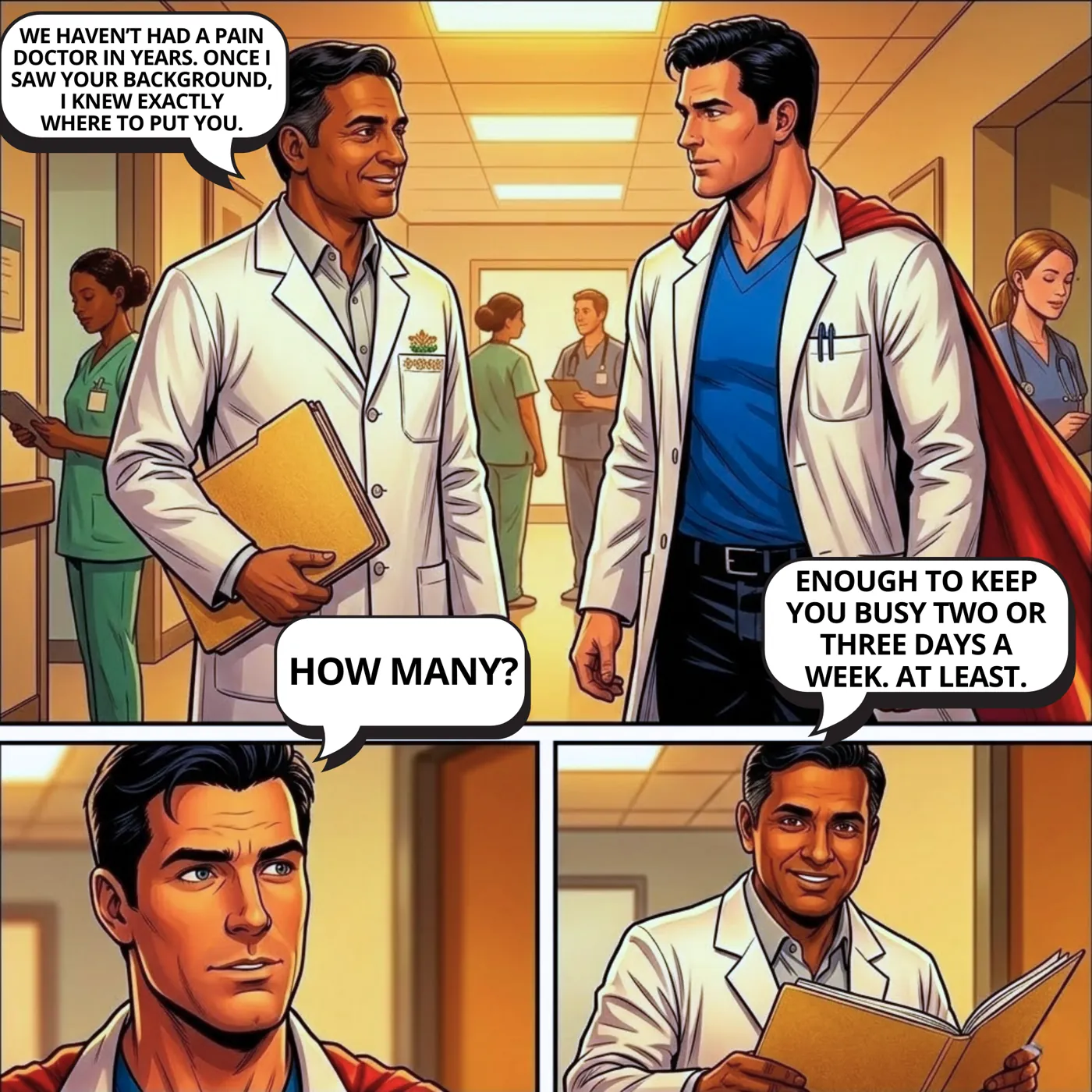
Patel stepped up beside him, a manila folder tucked under his arm.
“We haven’t had a pain doctor here in years,” Patel said. “Once I saw your background, I knew exactly where to put you.”
Crash glanced down the hallway. “How many?”
Patel smiled thinly. “Enough to keep you busy two or three days a week. At least.”
Crash nodded. “A free pain clinic.”
Patel snorted. “Sounds like an oxymoron, doesn’t it?”
He handed Crash a badge. Temporary. Emergency credentials.
“After reviewing your CV,” Patel said, “we decided your skills were too specific to waste. You were a pain doctor before all this.”
Crash clipped the badge to his coat. “Before this, yes.”
“And now?”
Crash looked down the hall again. “Now I’m here.”
Patel leaned closer. “Pain patients don’t get prioritized. Too complicated. Too subjective. Administrators don’t like things they can’t quantify.”
Crash nodded. “Pain can’t be scanned.”
“Behavioral health is the same problem,” Patel said. “Anxiety. Depression. Trauma.”
“So they get pushed aside.”
“Or parked indefinitely.” Patel gestured toward the hallway. “In this clinic, you’ll see a bit of each.”
Crash nodded once.
“I’m your huckleberry.”
Mental Whiplash
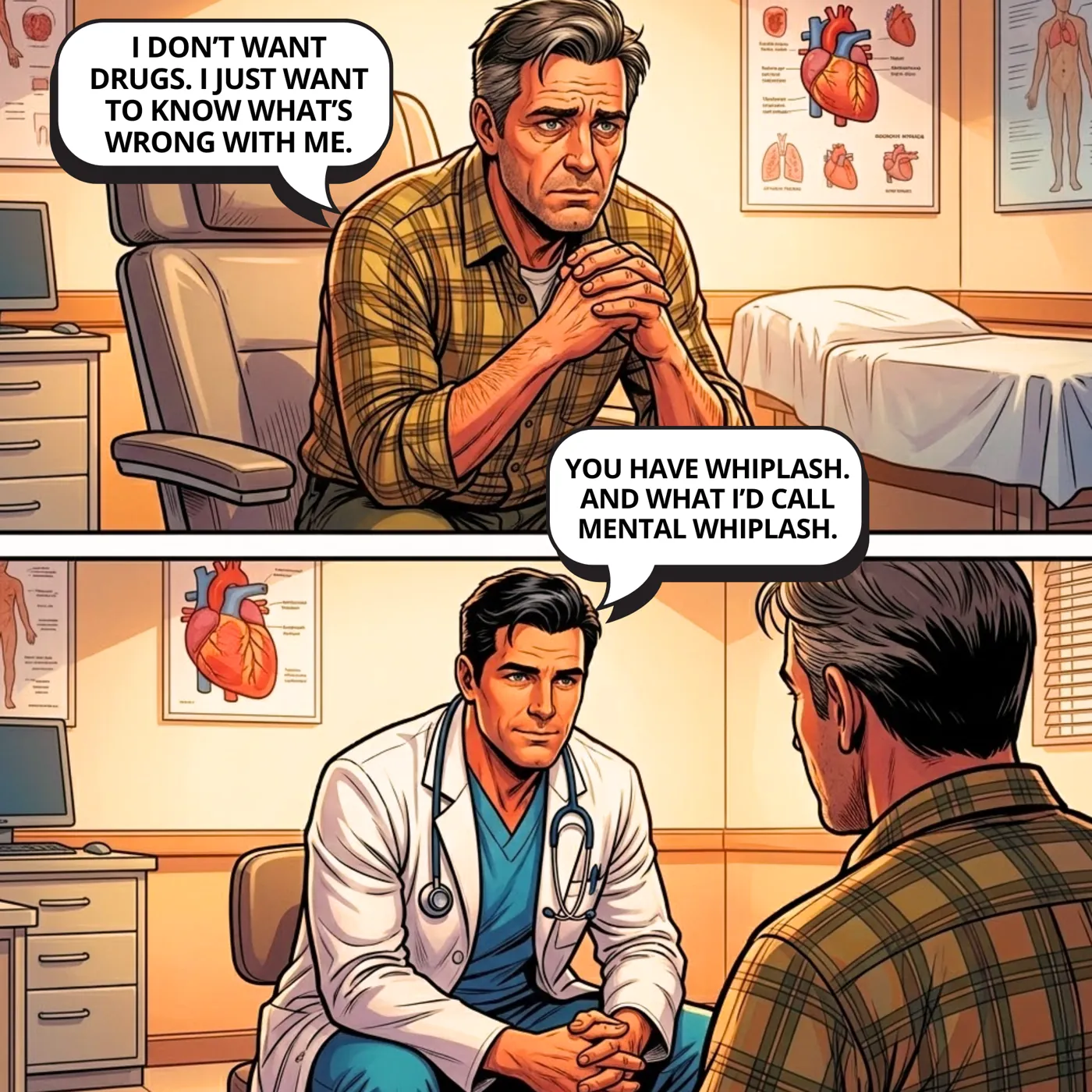
The first patient was a man in his fifties with neck pain that had followed him for decades.
Rear-ended at a stoplight. No fractures. No surgery. Just pain that never left.
“I don’t want drugs,” the man said immediately. “I just want to know what’s wrong with me.”
The defensiveness was automatic. Learned.
“My neck hurts all the time,” he continued. “But that’s not even the worst part.”
Crash waited.
“I can’t drive on the freeway anymore. My chest tightens. I start shaking. I have to pull over.”
Crash leaned forward.
“You have whiplash,” he said. “And what I’d call mental whiplash.”
“That’s a thing?”
“It is when your brain keeps replaying the moment your body learned it wasn’t safe.”
Crash examined him—facet tenderness, guarded rotation.
“Your scans are normal,” Crash said. “That doesn’t mean you’re not hurting.”
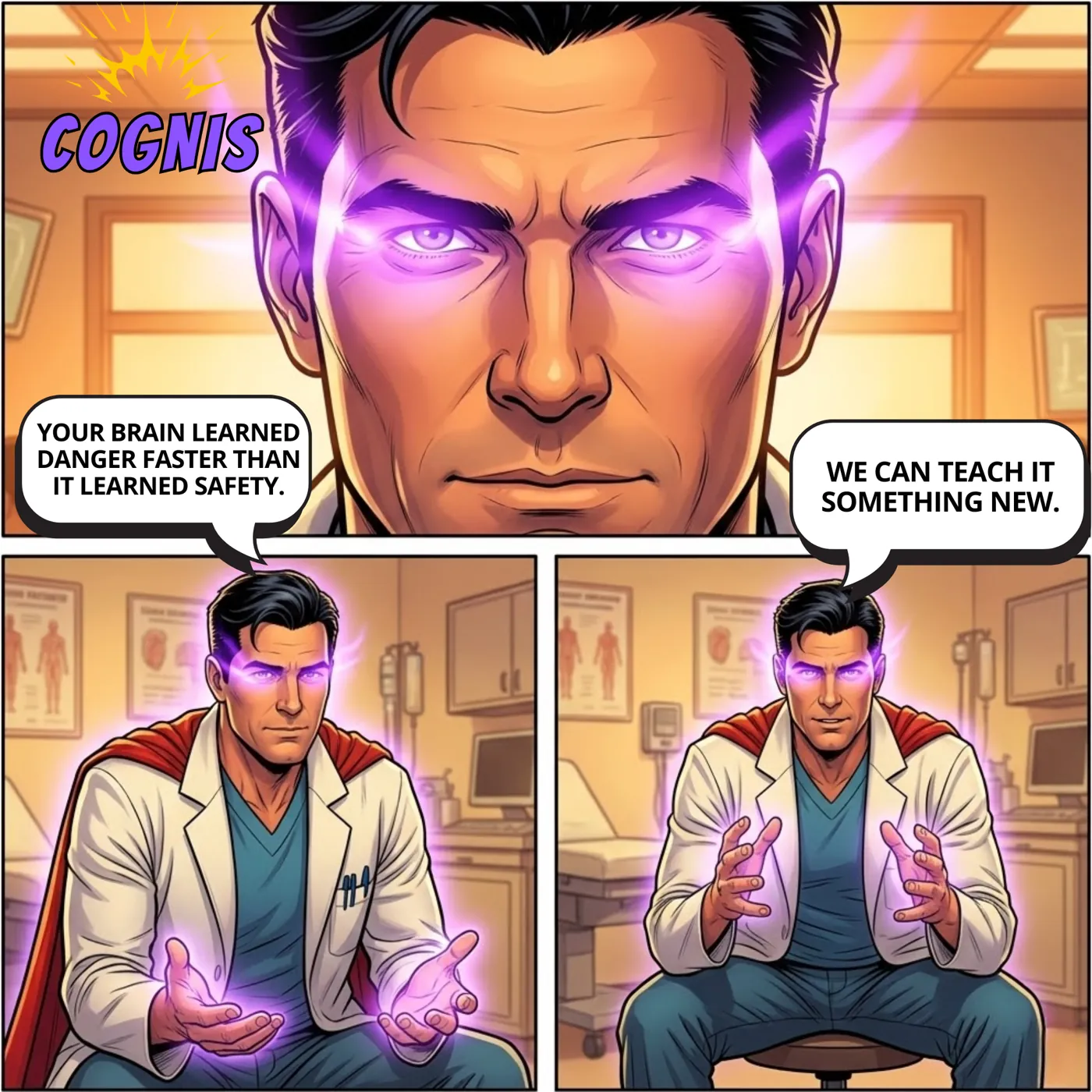
He explained it carefully. The amygdala learns danger faster than the cortex learns safety. Pain and fear share wiring. The nervous system doesn’t care whether the threat is present or remembered.
“This isn’t imaginary,” Crash said. “It’s learned.”
The man swallowed. “Can it be unlearned?”
Crash paused.
This was the moment.
Cognis.
A faint purple glow gathered behind Crash’s eyes—not bright, not dramatic, but unmistakable. As he spoke, the light mirrored itself in the man’s expression, as if something in his own mind had been gently switched on.
A quiet alignment. Two minds looking at the same map.
Crash showed him the pattern: the accident, the neck injury, the panic while driving, the way fear and pain reinforced each other.
“This is what’s happening,” Crash said. “And this is how you start teaching your mind something new.”
The man leaned back slowly.
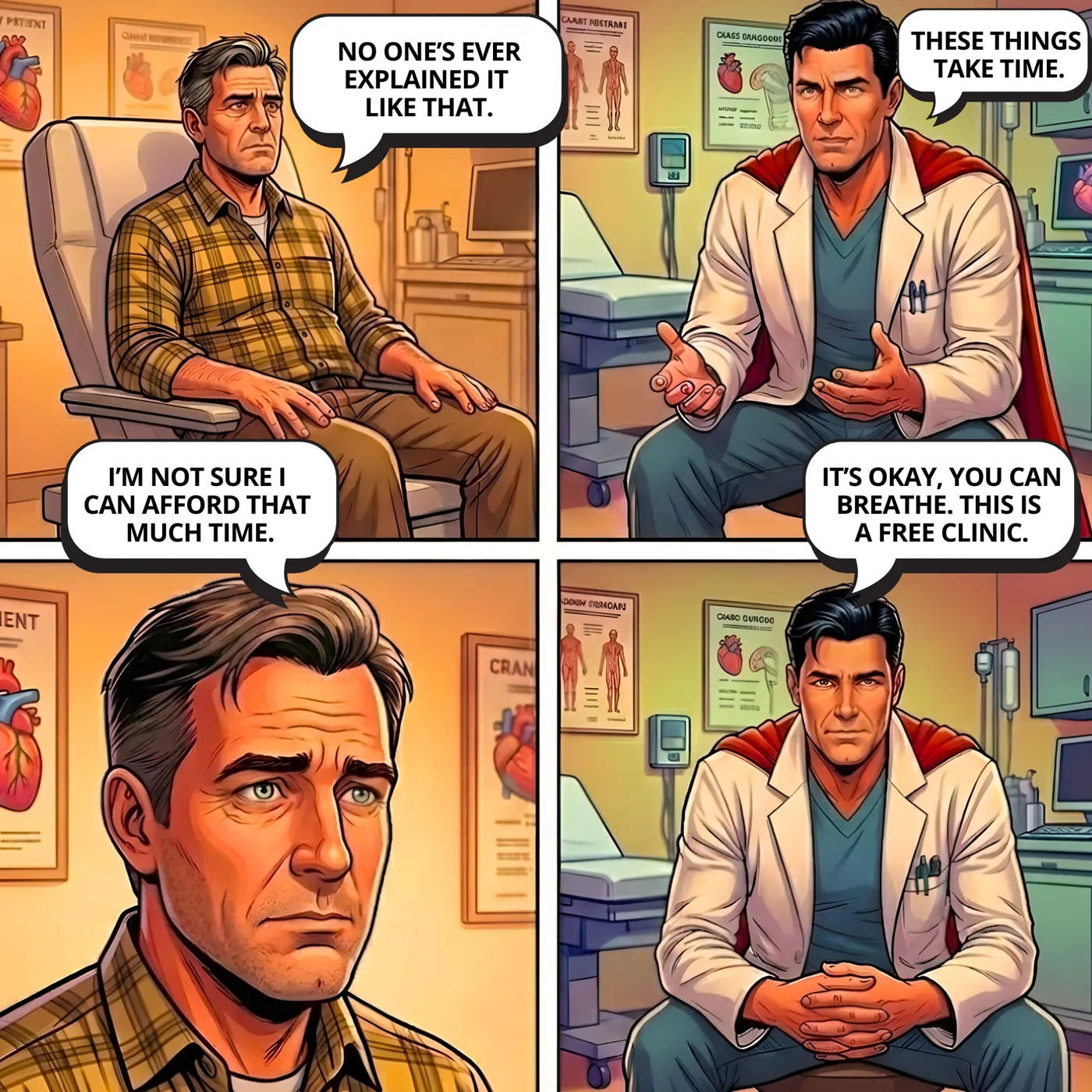
“No one’s ever explained it like that.”
“That takes time,” Crash said.
The man gave a half-smile. “I’m guessing time isn’t covered.”
Crash smiled back.
“It’s okay. This is a free clinic.”
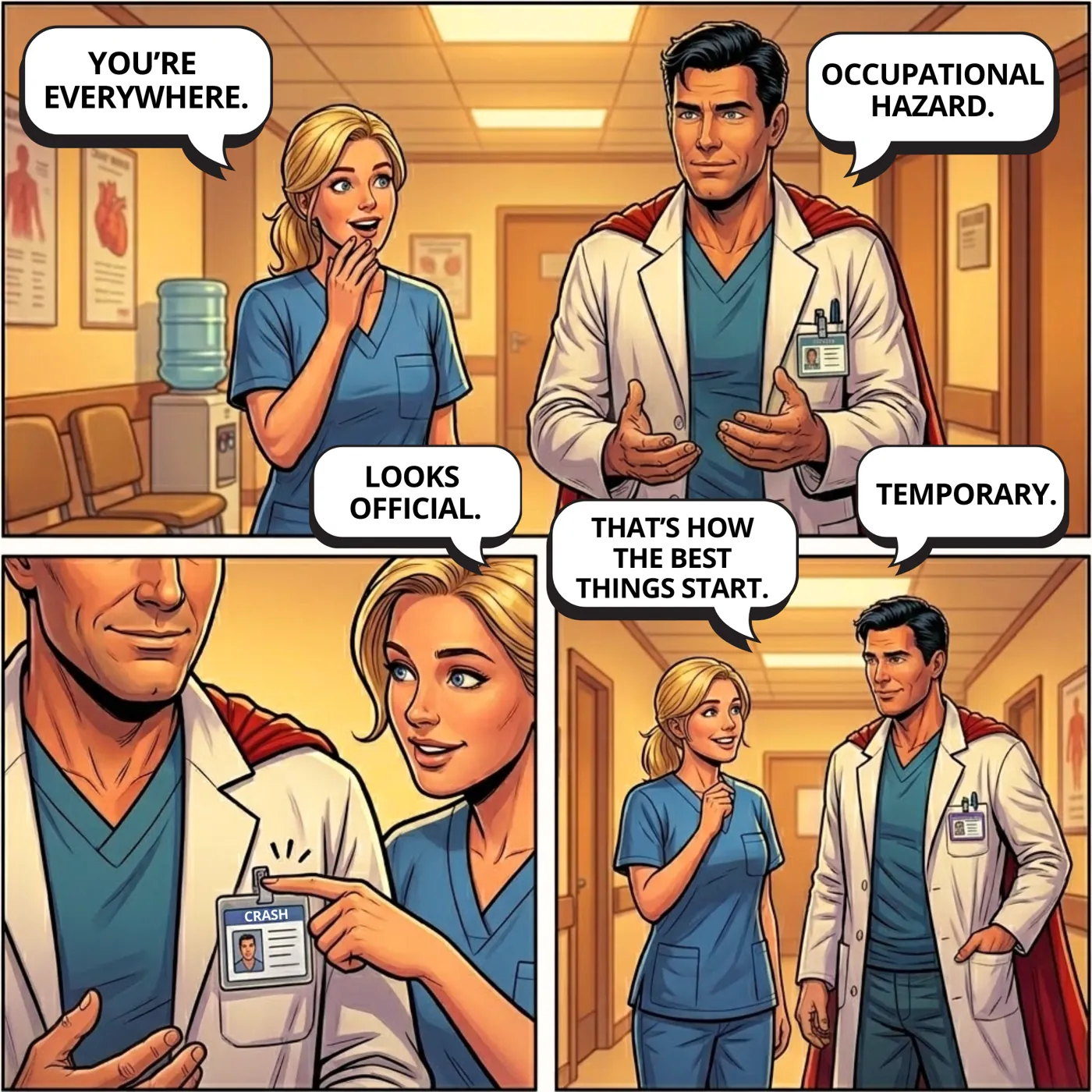
Later, in the hallway, the blonde nurse nearly ran into him.
“Oh,” she said. “You’re everywhere.”
“Occupational hazard,” Crash said.
She tapped his badge lightly. “Looks like you’re official now.”
“Temporary,” Crash said.
She smiled. “That’s how all the best things start.”
Donnie
When Donnie’s name was called, Crash slowed.
He closed the chart in front of him and took a breath before stepping into the room.
Donnie stood carefully when he saw him.
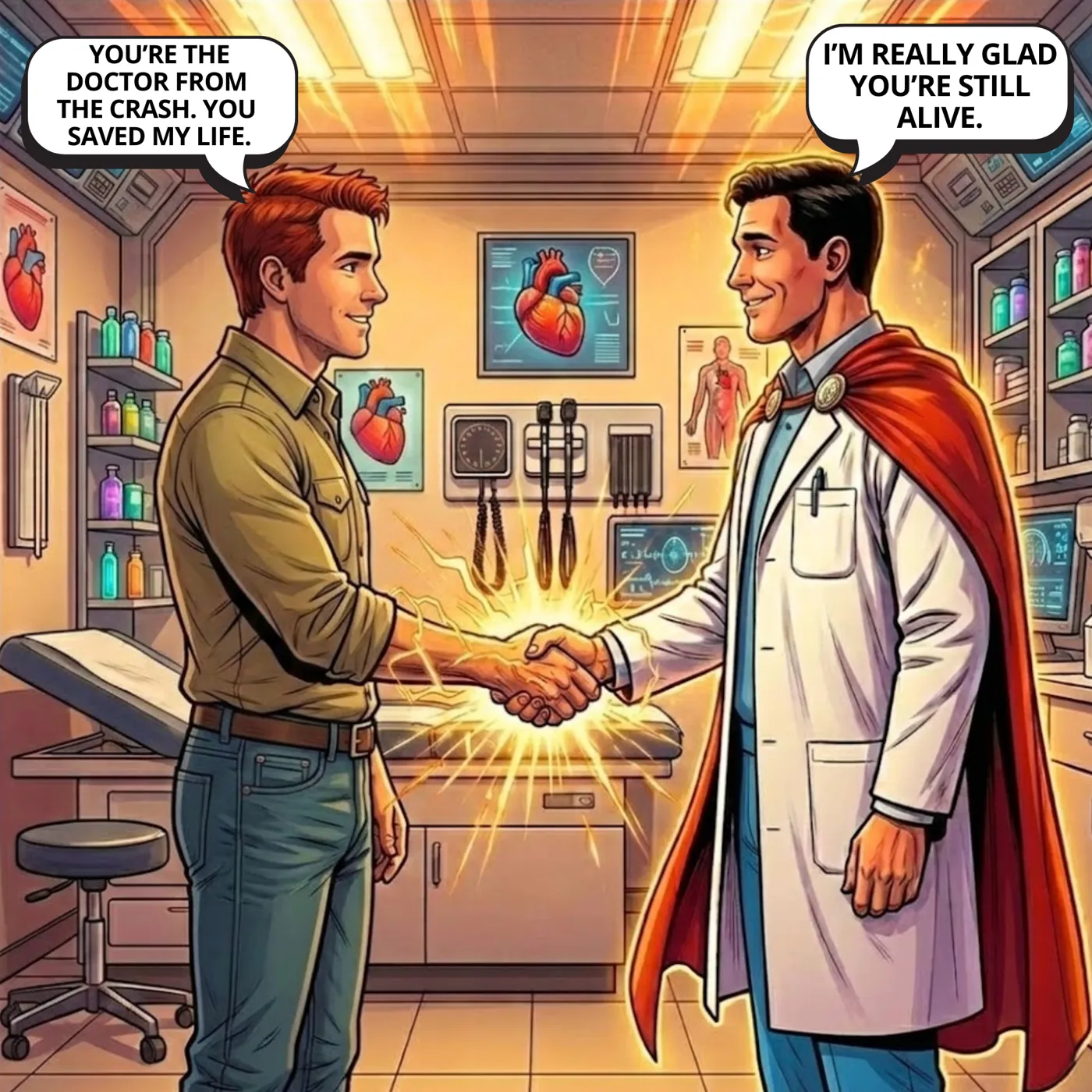
“You’re the doctor from the crash,” Donnie said.
“I remember.”
Donnie stepped forward and extended his hand.
“I’ve meant to find you,” he said. “Thank you. For that day. You saved my life.”
Crash took his hand.
“I’m really glad you’re still alive.”
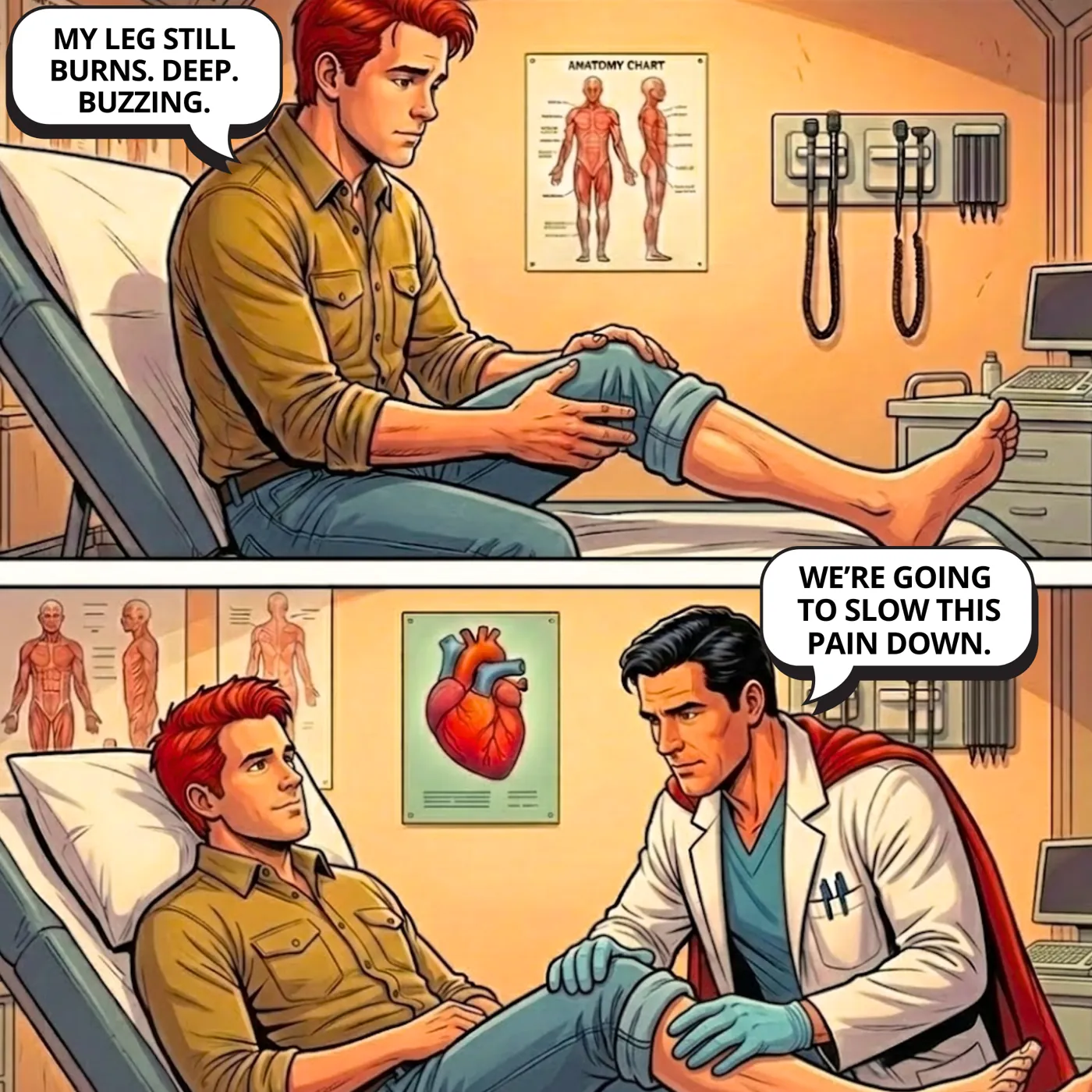
Donnie eased back into the chair, favoring his leg.
“It still burns,” he admitted. “Sometimes deep. Sometimes buzzing. It never really shuts off.”
Crash examined him—hypersensitive tissue, guarded movement, a nervous system still on high alert.
“They gave me pain pills at discharge,” Donnie said. “I’m taking them every day. I don’t know what else to do.”
Crash met his eyes.
“In my experience, the opioids make the pain worse over time.”
Donnie frowned slightly.
“They quiet it at first,” Crash continued. “Then your nervous system adapts. The relief shrinks. The suffering grows.”
Silence.
“So what do we do?” Donnie asked.
“Three things.”
Donnie nodded.
“First—biofeedback.”
Crash dimmed the lights slightly.
“Sit back. Feet flat. Jaw loose.”
Donnie complied.
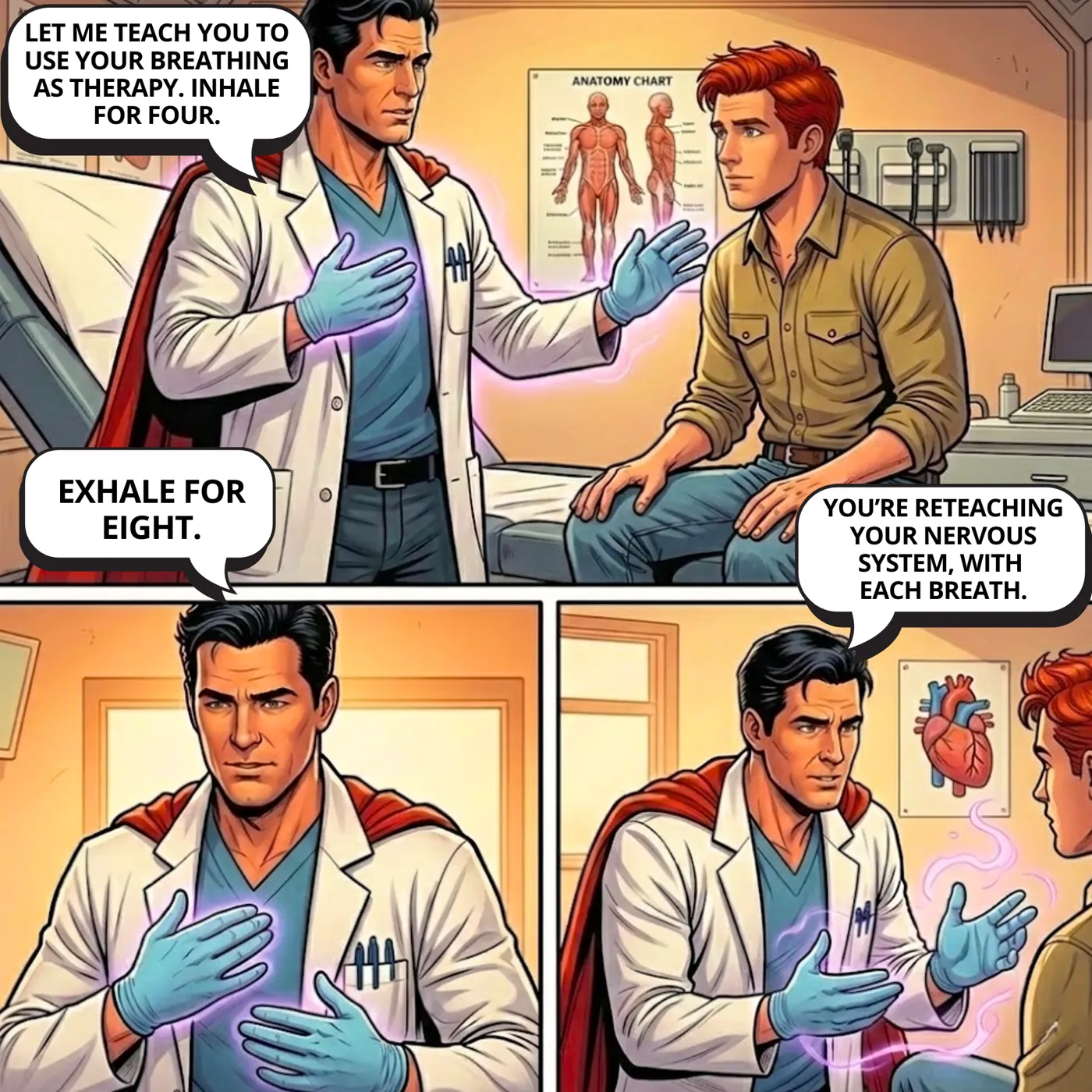
“Inhale for four.”
He did.
“Exhale for eight. Let the exhale be longer than the inhale. That tells your nervous system it’s safe.”
Four in.
Eight out.
Again.
The purple glow of Cognis returned—steady, controlled.
Donnie’s shoulders dropped.
His leg softened against the chair.
“You feel that?” Crash asked.
Donnie nodded. “Yeah.”
“That’s your body standing down.”
Crash continued guiding him—relax the brow, soften the tongue, release the hands.
“We’ll practice this daily,” Crash said. “Because repetition rewires physiology.”
Donnie nodded slowly.
“Second—supplements to support nerve health and inflammation control. Evidence-based.”
“Okay.”
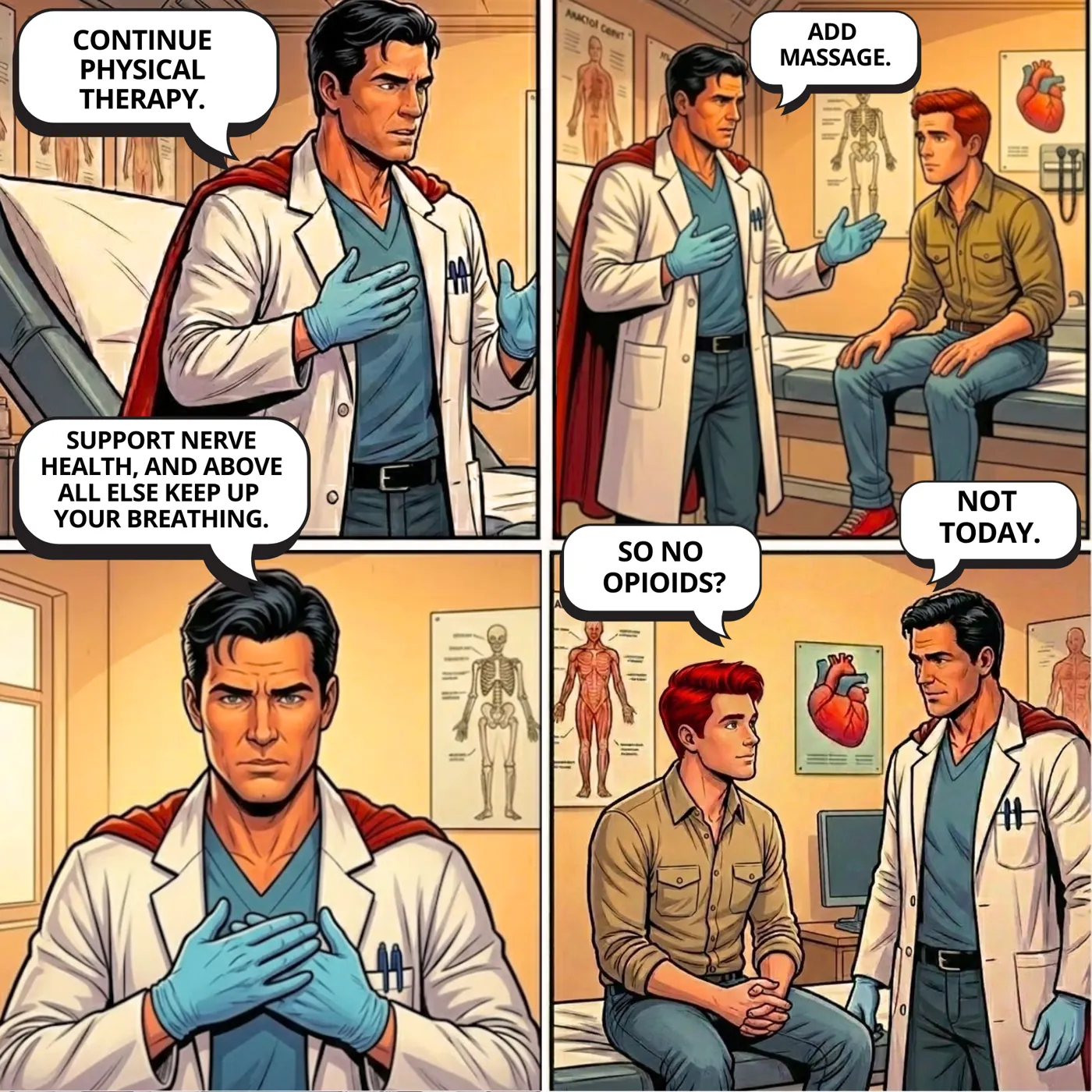
“Third—continue physical therapy.”
A beat.
“Add massage.”
Donnie blinked. “Massage?”
“Yes. Blood flow matters. Circulation matters. Your leg is still healing. Massage increases blood flow. That supports regeneration.” “Don’t forget to eat in a way that supports nerve health, and above all else – Keep up Your Breathing.”
Donnie nodded.
“So no opioids,” he said quietly.
“Not today.”
Silence lingered.
“Thank you,” Donnie said again.
“We’ll move forward from here,” Crash replied.
That Night
The clinic emptied.
Crash sat in the call room.
Vitalis hovered nearby.
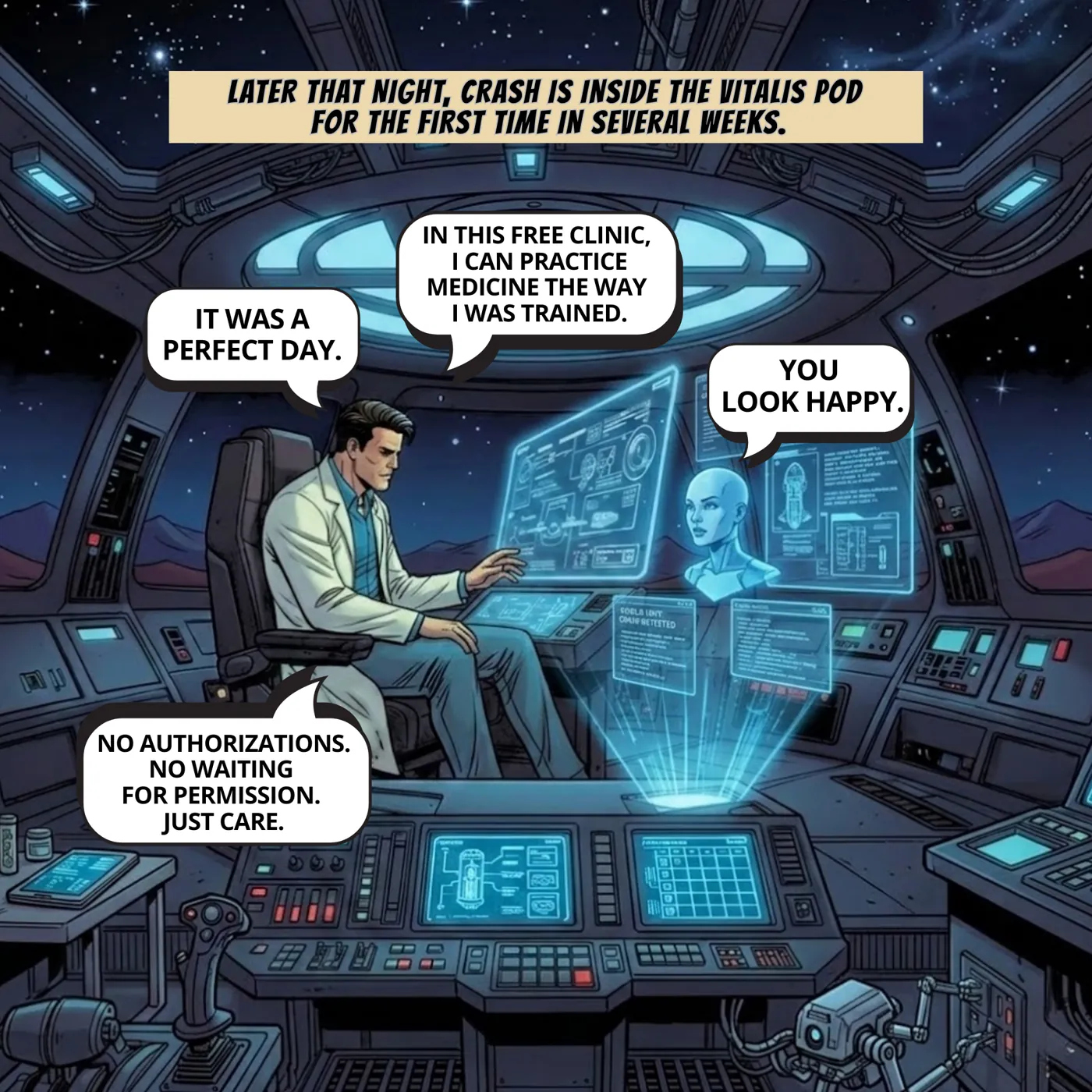
“You look happy,” she said.
“It was a perfect day.”
“Why?”
“This free clinic is exactly what I needed,” Crash said. “I practiced medicine the way I was trained. I didn’t ask permission. I didn’t wait for authorizations. I treated each patient the way I believed was right.”
“That felt familiar.”
“It’s the way Lukacs practiced. Patients traveled from all over Prime Medica to see him. They didn’t worry about insurance. They sought him out. He did what he believed was right.”
“A concierge model.”
“Yes. But today it was wild. It felt like concierge medicine inside a free clinic.”
He paused.
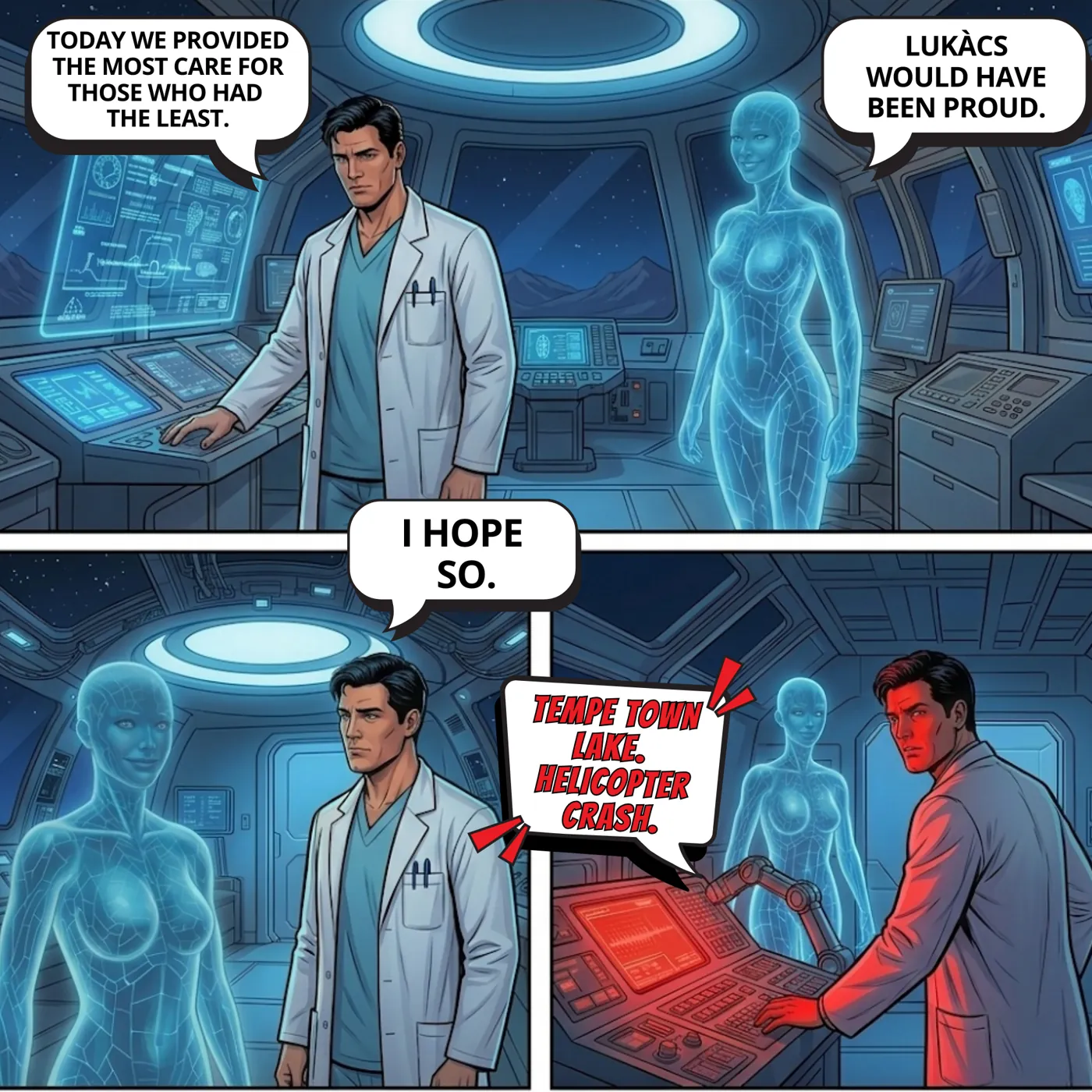
“We provided the most care for those who had the least.”
She regarded him quietly.
“And you used Cognis.”
“Yes.”
“And most importantly – you gave those lovely patients Hope – Lukács would have been proud.”
“I hope so.”
The scanner crackled.
“…helicopter down… Tempe Town Lake…”
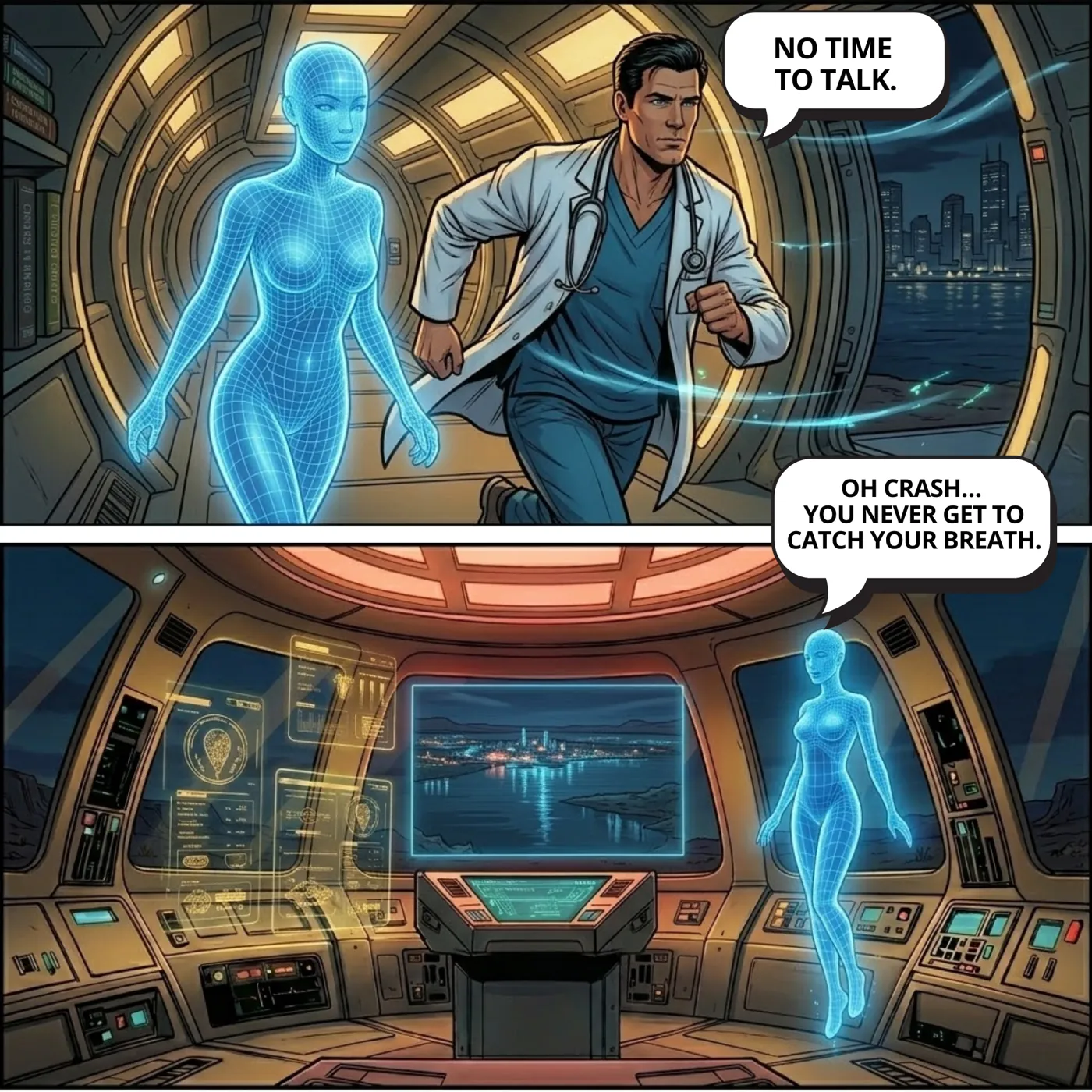
Crash stood immediately.
“No time to talk”
Vitals: “Oh Crash, you never get a chance to catch your breath.”
The Helicopter
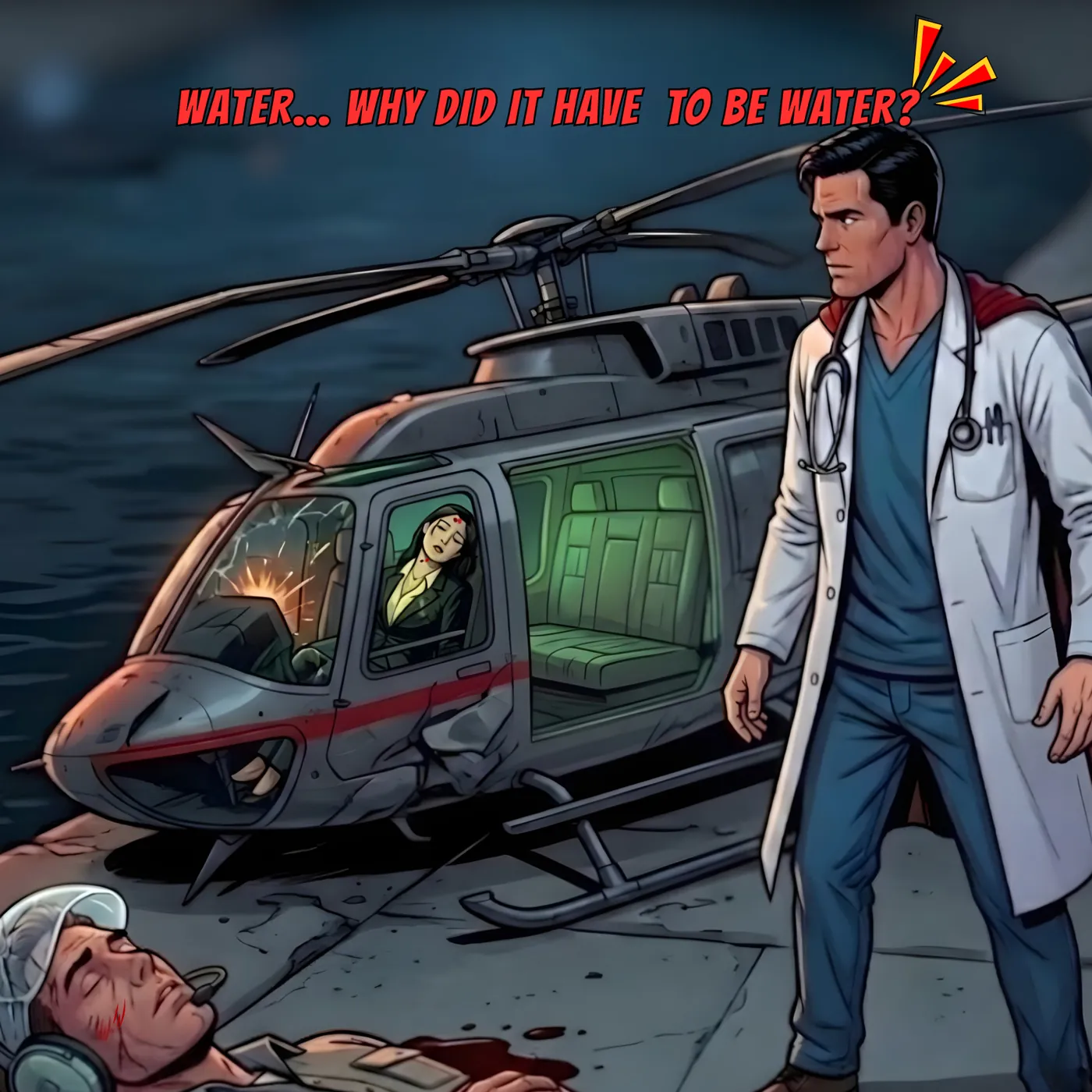
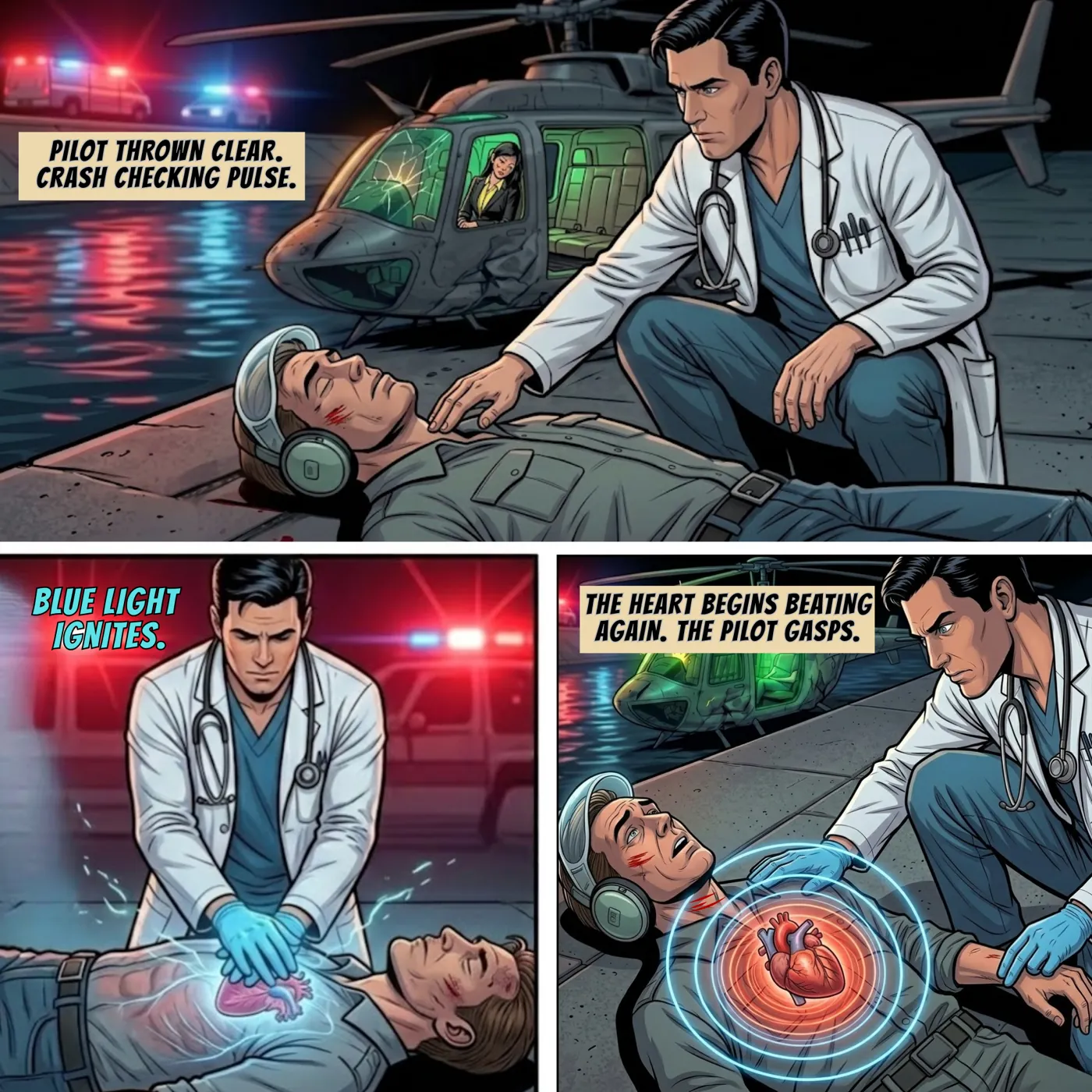
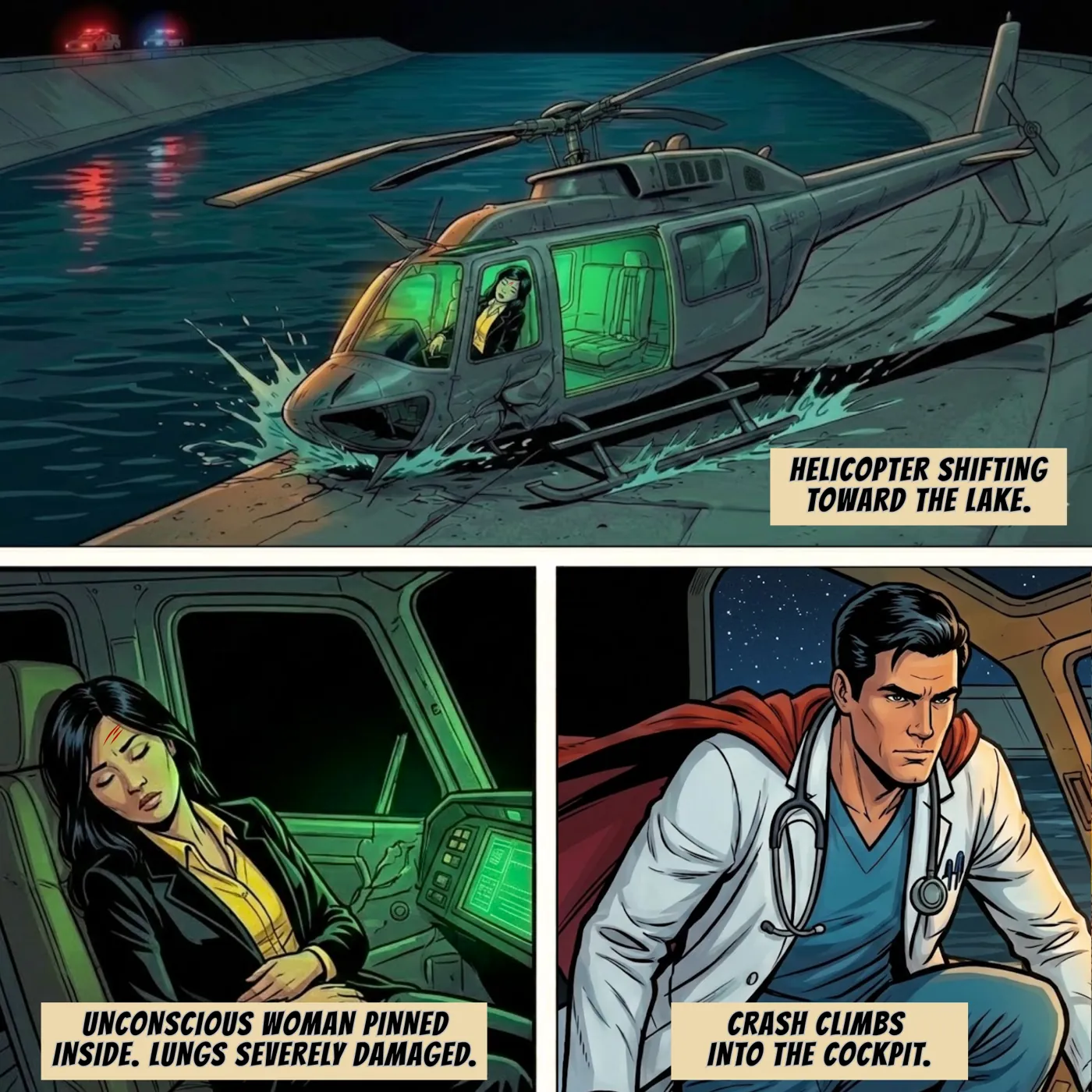
The helicopter lay at an angle near the edge of the lake, rotors twisted, fuselage groaning against concrete.
Crash arrived first.
One victim had been thrown clear of the wreckage.
A man.
No pulse.
Crash dropped beside him.
Blue light ignited across his hands as he began compressions.
The heart hovered at the edge of electrical silence — myocardium poised just below conduction, cells scattered in chaotic potential, waiting for signal.
Crash focused.
NeuroForce threaded through the muscle fibers, drawing them toward synchronization, restoring the electrical cascade the body had lost.
For a suspended second —
Nothing.
Then —
The heart convulsed.
Caught.
This was neuromodulation in its purest form — defibrillation without paddles, the most powerful electrical event, the ability to command the heart itself.
The man gasped and began to breathe again.
Crash held him steady for a moment, watching color
return, feeling his rhythm stabilize.
Alive.
Behind the wreck groaned.
The helicopter teetered at the edge of the embankment.
At the edge of the water.
Why did it have to be water?
Crash pushed the thoughts aside and lunged towards the helicopter before he could change his mind
Inside the wreckage, another victim remained.
A woman.
Unconscious.
Pinned.
Broken ribs. Flail chest. One lung collapsed.
The aircraft shifted slightly, metal protesting against gravity.
Crash climbed into the cockpit.
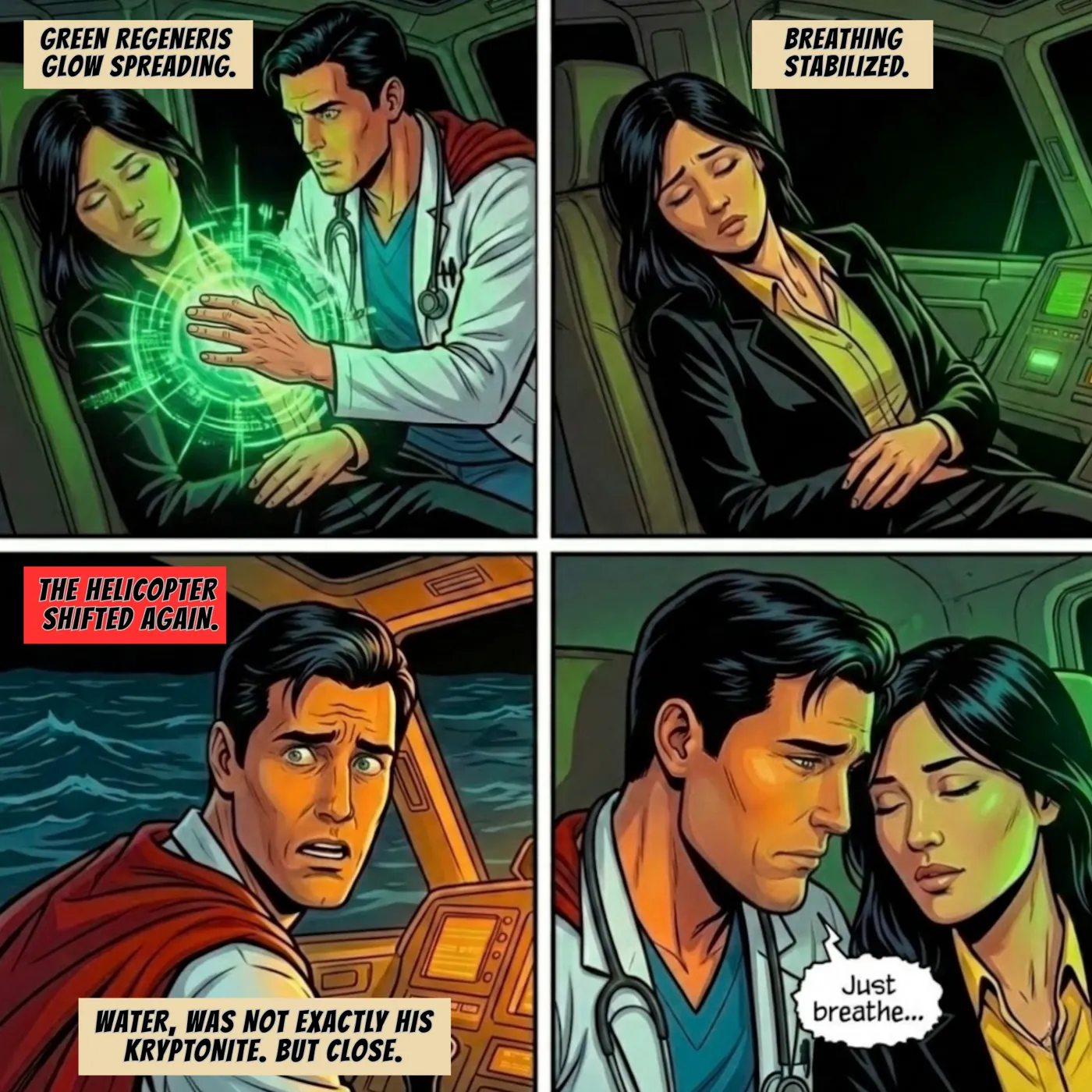
Green light spread from his hands.
Regeneris flowed through torn tissue — stabilizing vessels, reinforcing structures in her lung, supporting life.
Her bleeding slowed.
Her oxygenation improved.
She remained unconscious.
The wreck shifted again.
The lake stretched wide and dark beneath them.
Crash felt the tightening in his chest.
Water.
Not exactly his kryptonite.
But close.
He forced air in.
“Just breathe.”
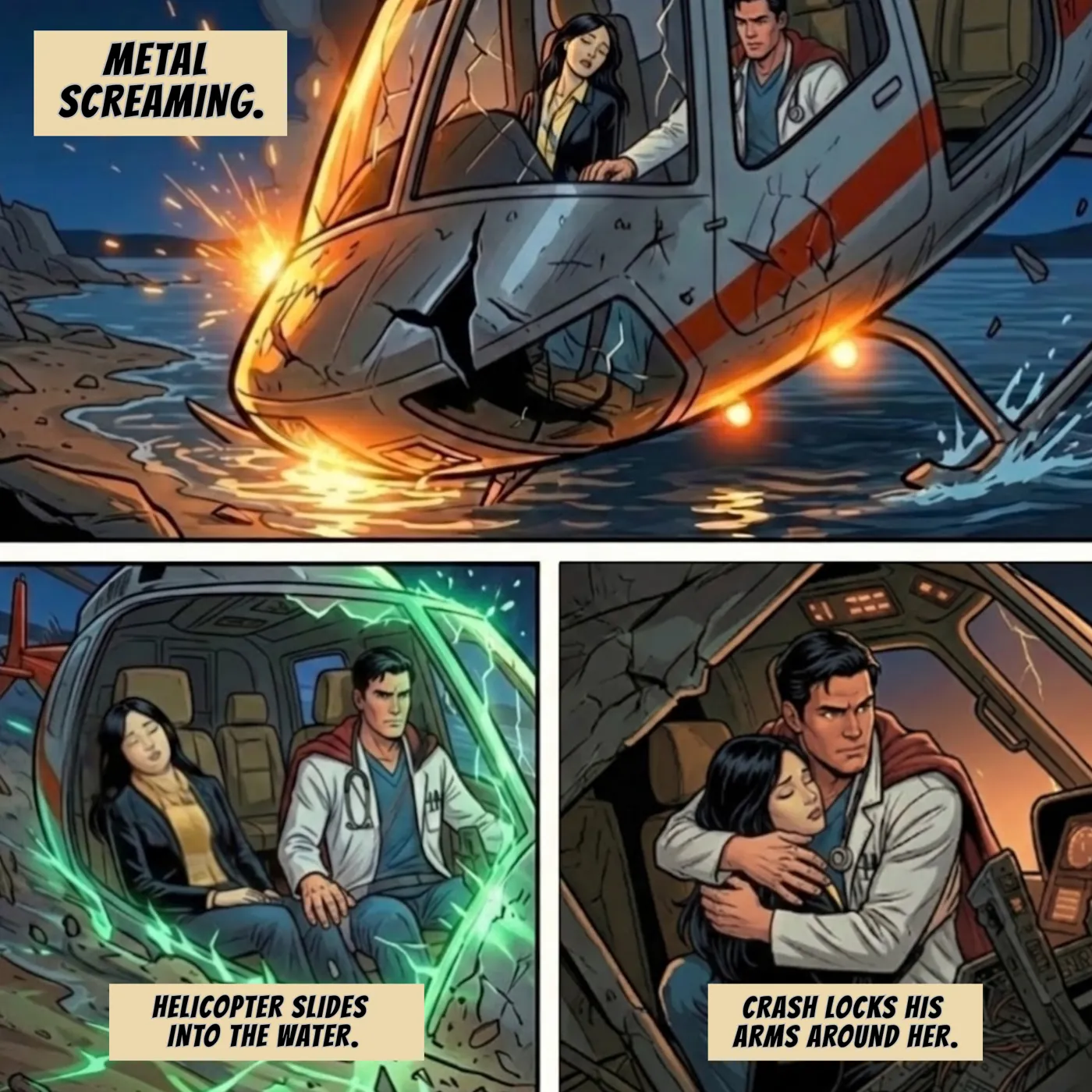
Suddenly, metal screamed as the embankment gave way.
The helicopter slid.
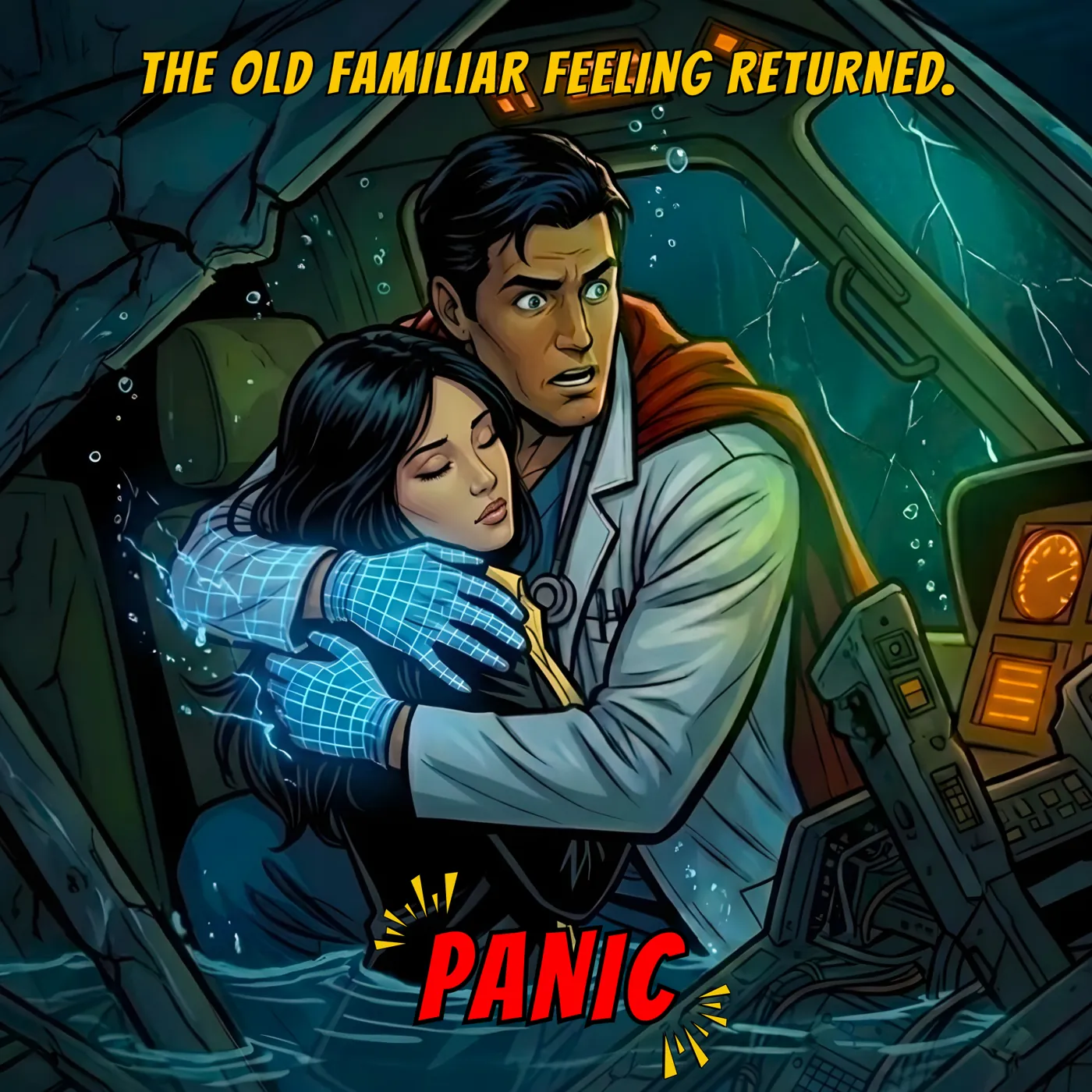
Crash locked his arms around her—
—and the cabin dropped.
Water struck the fuselage.
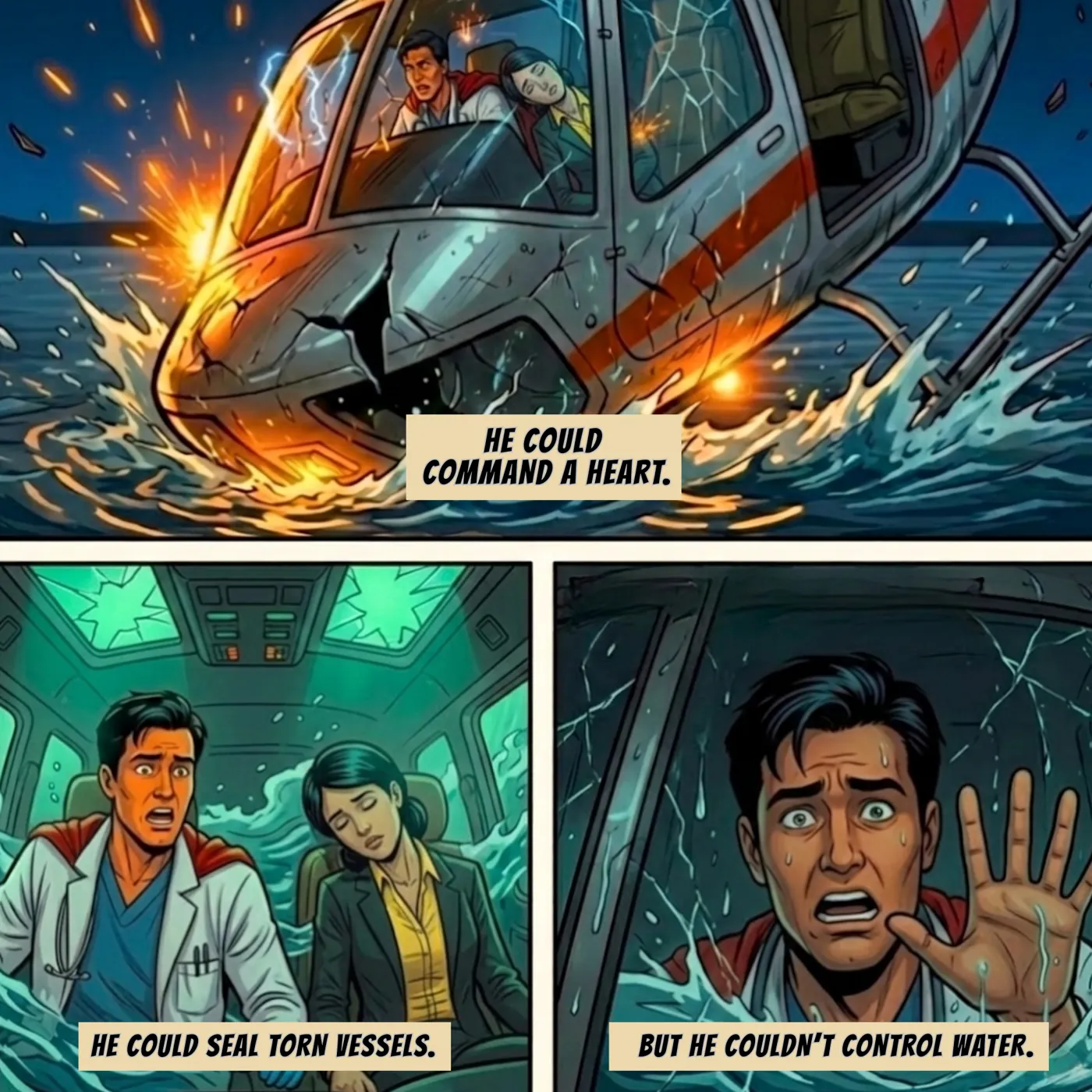
The helicopter plunged beneath the surface.
Inside, the cockpit remained sealed.
For now.
The lake rose around the cracked windows.
Darkness pressed from every side.
The helicopter continued sinking, drifting downward into the black until it settled heavily on the bottom of the lake.
Silence.
Outside the glass, water surrounded them
He could hear his own breathing.
Too fast.
His heart pounded
Too loud.
His breath quickened
He could command a heart.
He could seal torn vessels.
But water—
He couldn’t control water.
His breath shortened.
His vision tightened.
At the bottom of the lake—
The familiar sensation returned
Panic.