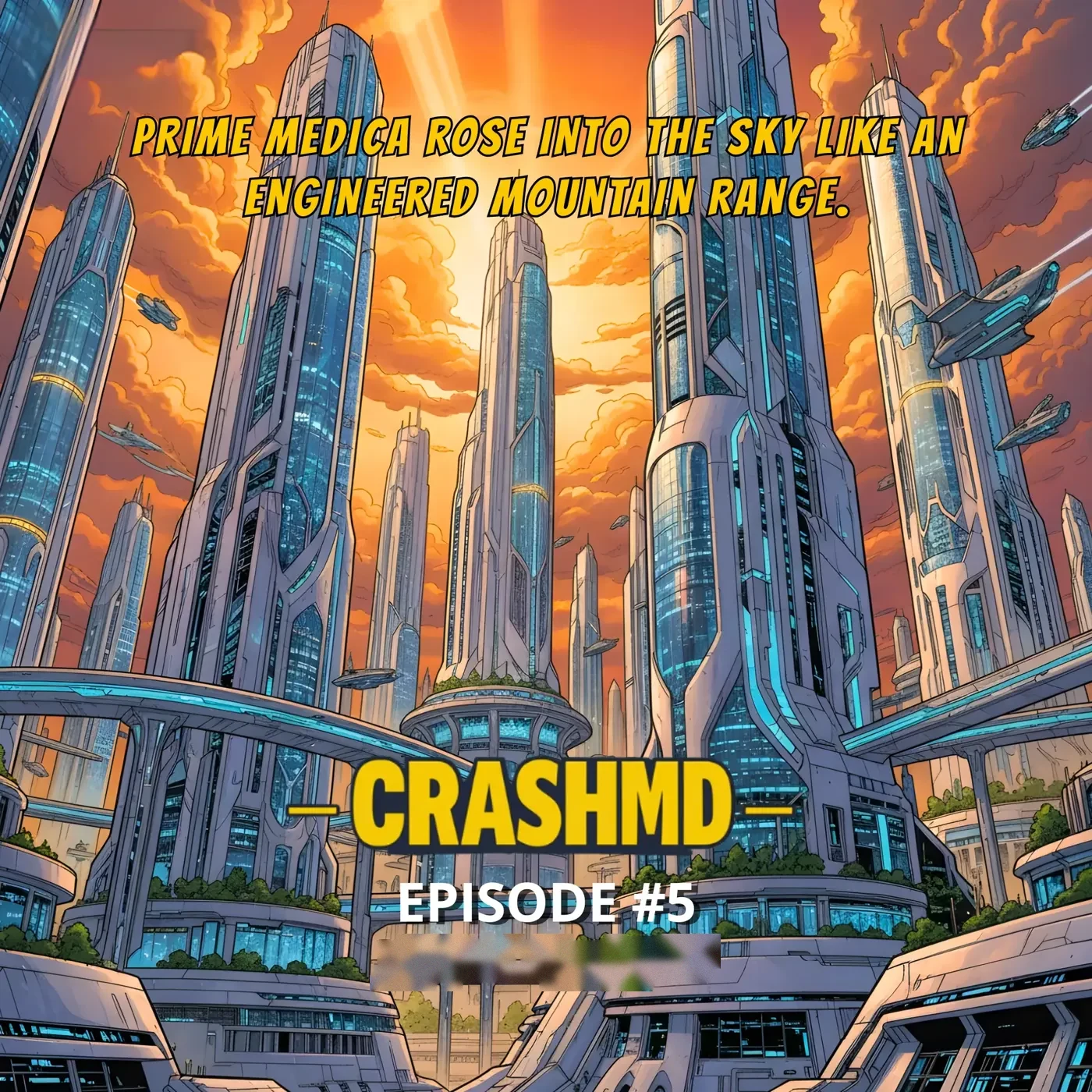
Prime Medica rose into the sky like an engineered mountain range.
Its capital was a lattice of towers and skyways so vast that weather formed inside it—clouds drifting through elevated corridors, rain falling in narrow shafts between stacked terraces. The buildings carried entire districts in their spines: hospitals, academies, courts, markets, residential towers, gardens. Traffic moved in layers. Silent craft slid between platforms. Rail-lines ran like veins through the city’s bones.
At its heart sat the Medical District.
It looked like Houston’s Medical Center—if Houston’s Medical Center had been rebuilt five times over and stacked into the sky. Add the vertical ambition of Dubai, and you were close. Hospitals rose in tiers. Research towers connected by skybridges. Emergency corridors never closed. The city’s most critical systems lived here.
From street level, the district felt endless.
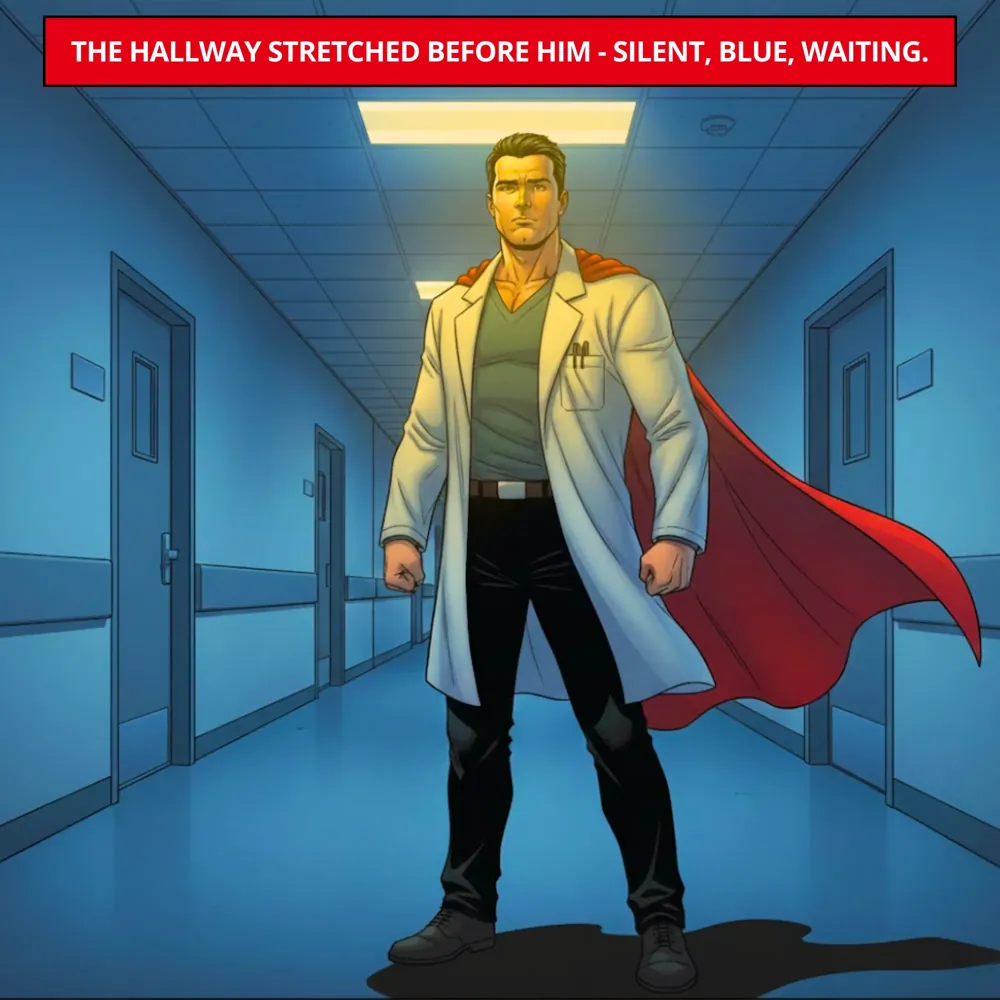
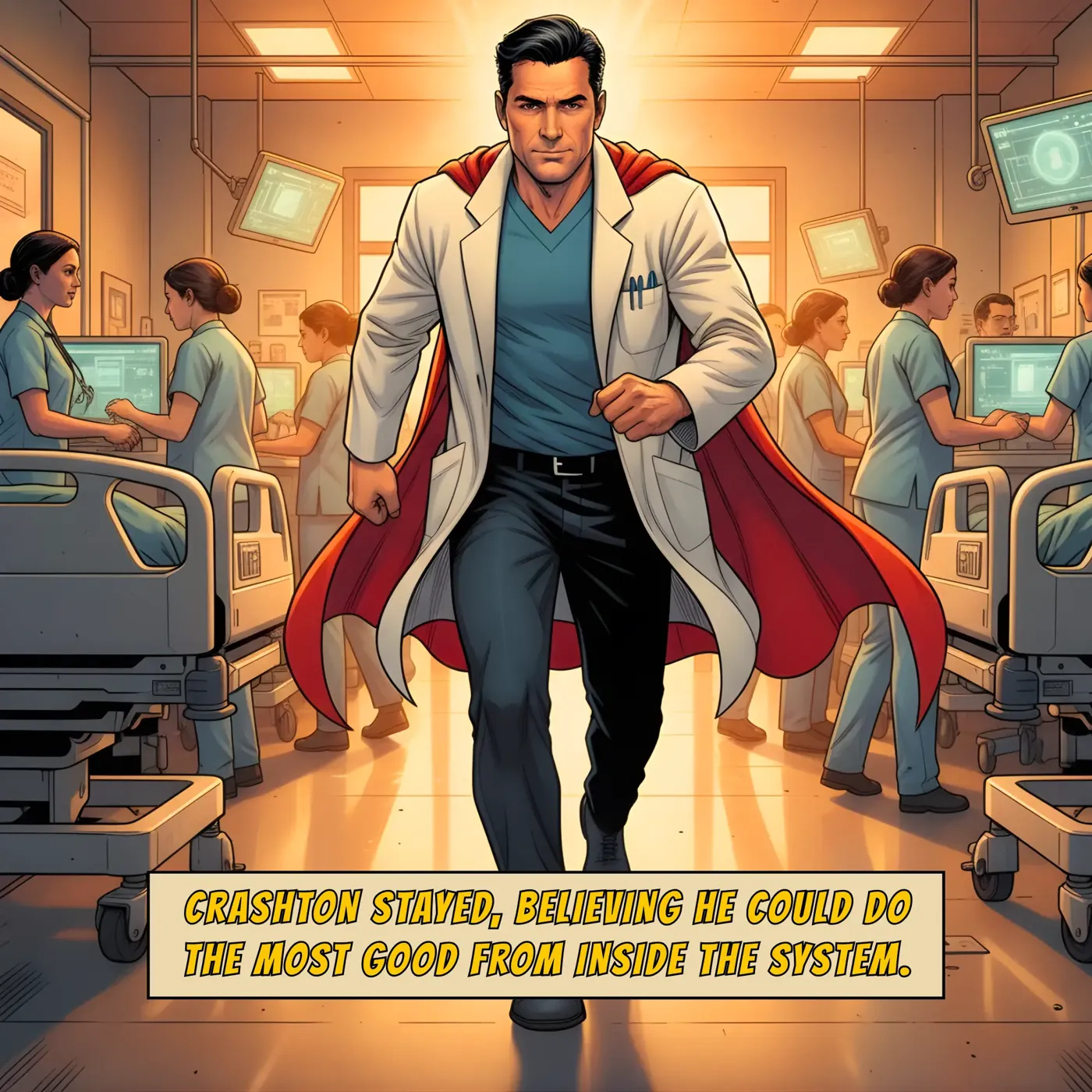
Crashton lived high in the Medical District, where the light never fully dimmed and emergency quarters stayed open all night. He kept his coat hung in the same place by the door. He kept his tools arranged the same way every time. He liked systems. He understood systems.
He believed systems could save lives if they were carefully developed—and used with attention and humanity.
He liked living close to where the action was. When the worst cases arrived—complex pain syndromes, patients no one else wanted—the call went out for him. He slept steps away from the emergency room and relished the chance to intervene early, before suffering had time to harden into something permanent.
Crashton was a pain physician.
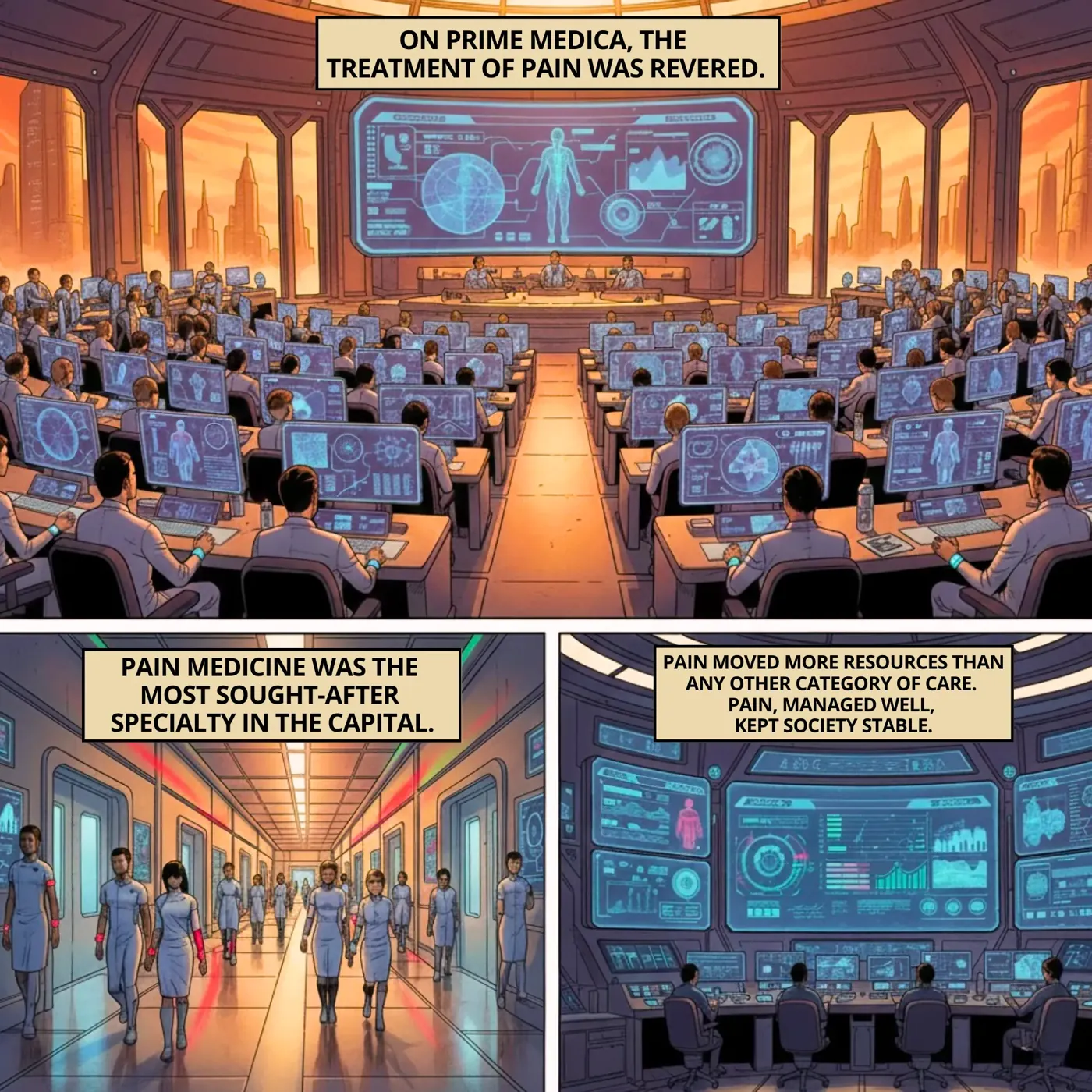
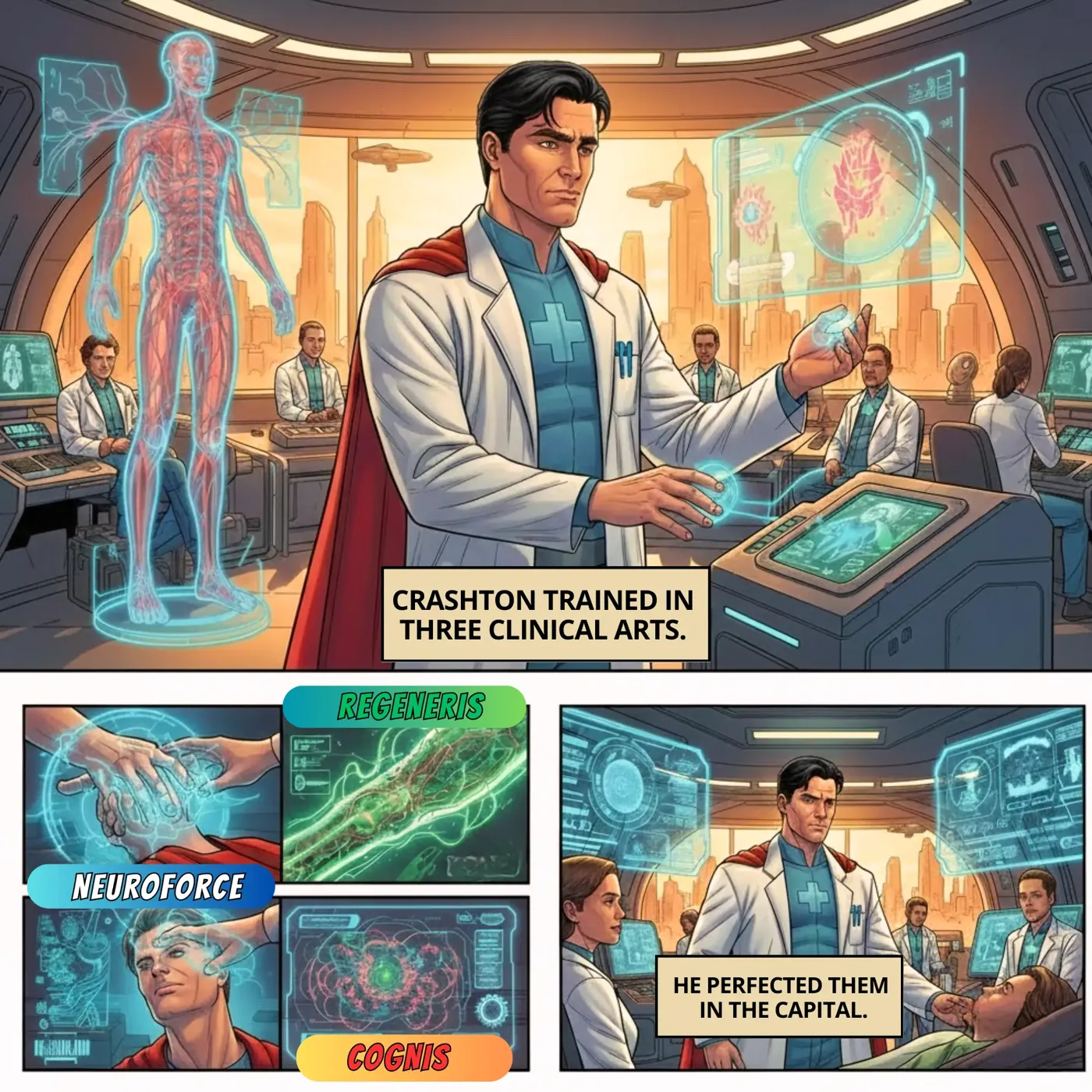
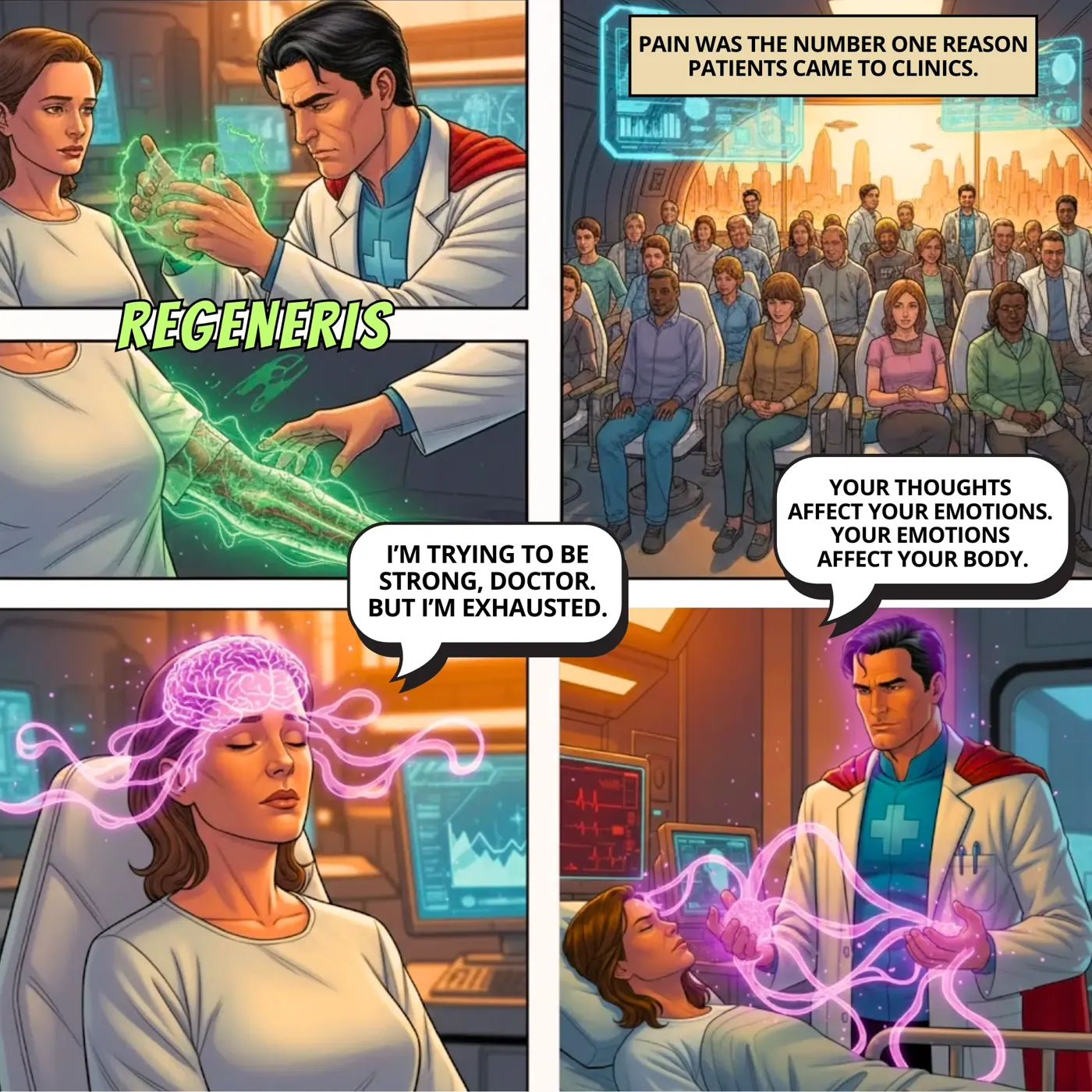
On Prime Medica, pain medicine held prestige. The Council had invested heavily in three clinical arts: neuromodulation, regenerative repair, and Cognis. Every licensed pain doctor trained in them. Every hospital standardized them. Every insurer paid for them. Pain drove patients into clinics more reliably than any other complaint. Pain moved more resources than any other category of care. Pain shaped labor, families, commerce, and governance.
Pain, managed well, kept society stable.
Crashton worked inside that truth every day.
He stabilized nerves with NeuroForce—blue arcs that quieted disordered signals and restored coordination. Pain, at its core, was electrical. Suffering emerged when the body’s circuitry misfired, trapping patients in constant alarm. NeuroForce allowed him to override faulty patterns, interrupt runaway signaling, and give overwhelmed nervous systems a chance to reset.
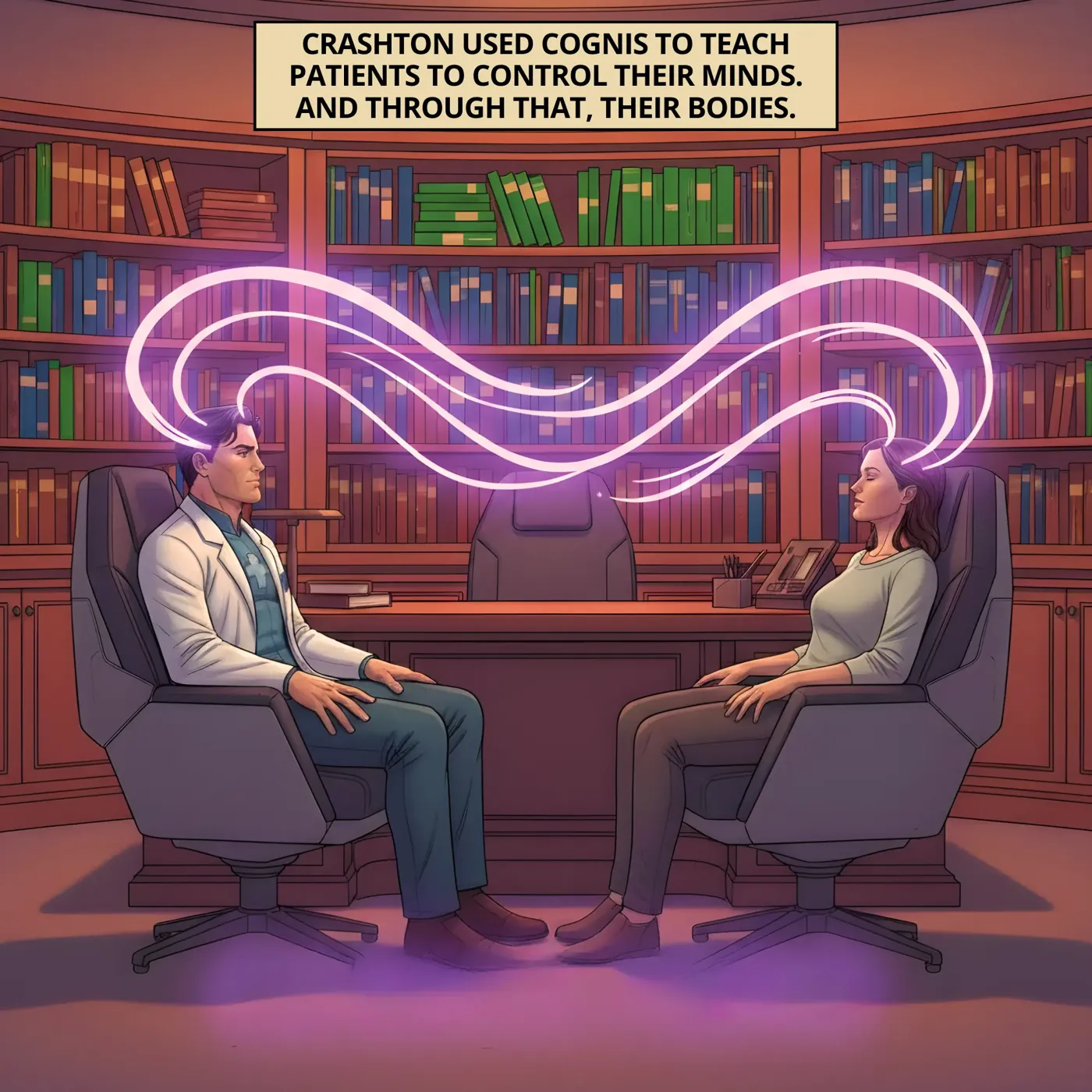
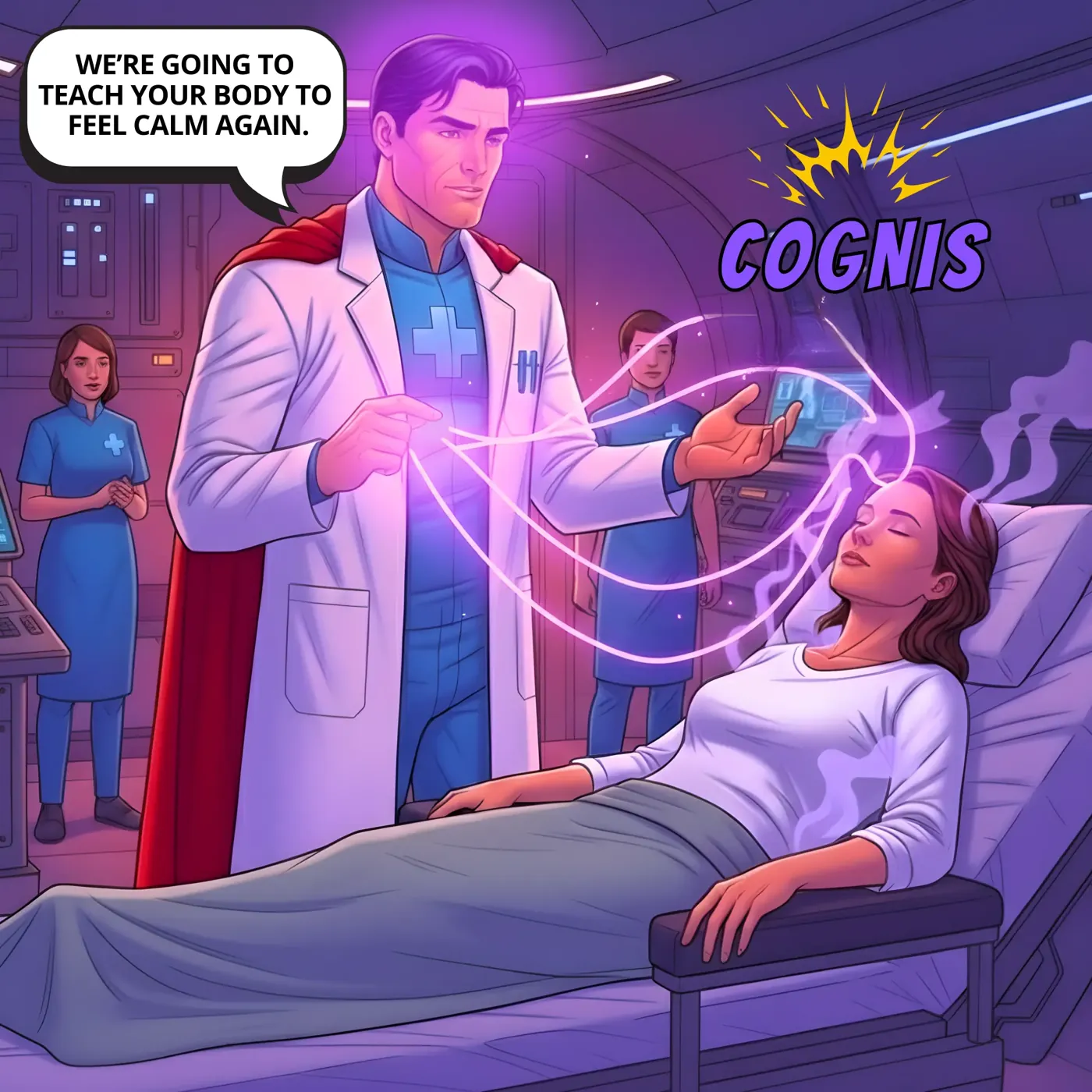
He accelerated healing with Regeneris—green cellular cues that reduced spasm, improved perfusion, and repaired tissue. He practiced Cognis—an insight discipline that taught patients how their thoughts and emotions shaped their physical experience. Cognis helped patients interrupt fear loops, regain control, and calm themselves when their bodies refused to listen.
Cognis made his clinic different.
Patients left with fewer symptoms and more agency. They spoke about their pain without shame. They anticipated triggers. They slept. They worked. They drove again. They lived in their bodies without flinching at every sensation.
Crashton believed the brain and body spoke the same language. He believed pain care that ignored the mental effects on the body was a rudimentary form of medicine—functional, but incomplete.
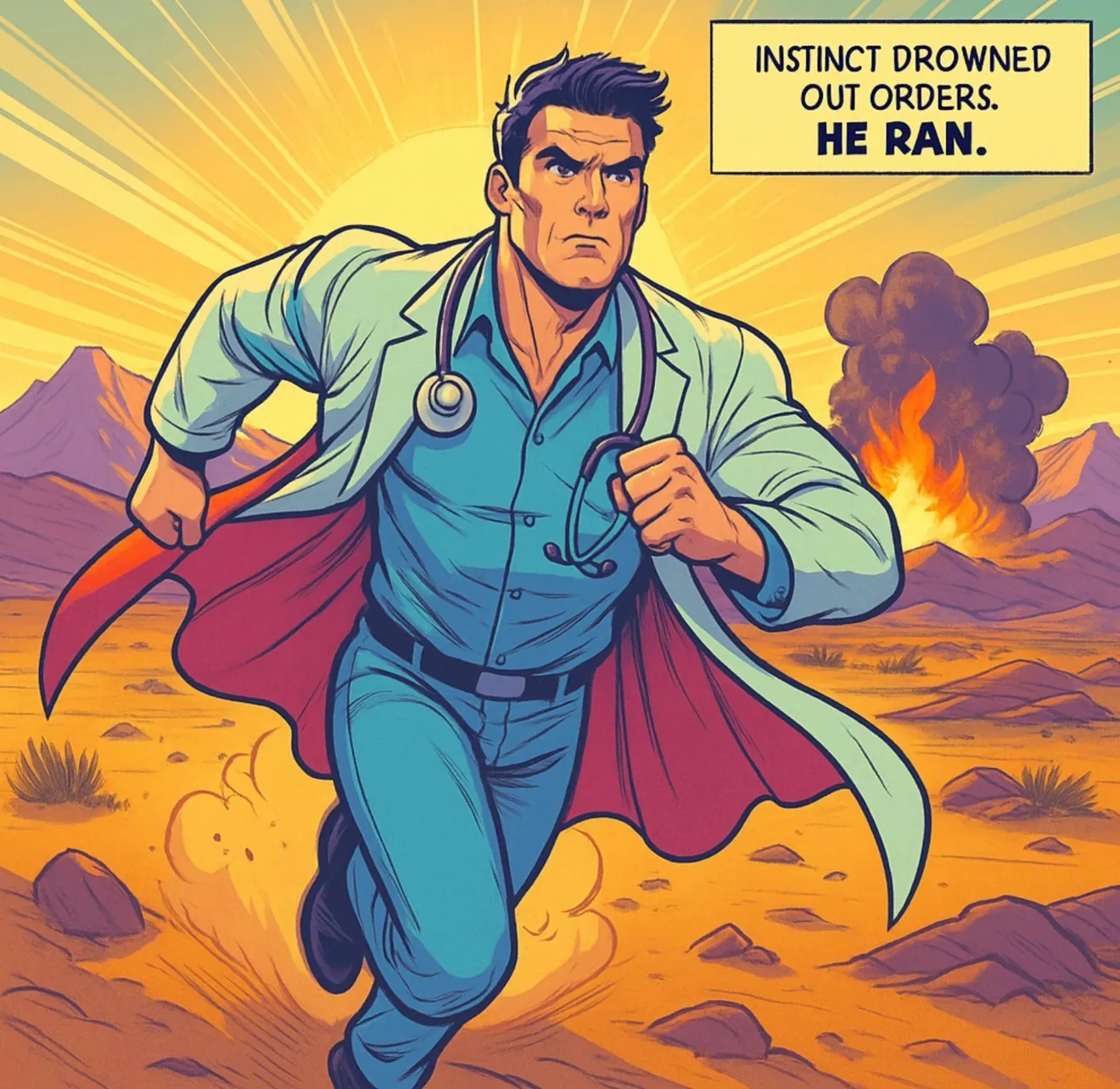
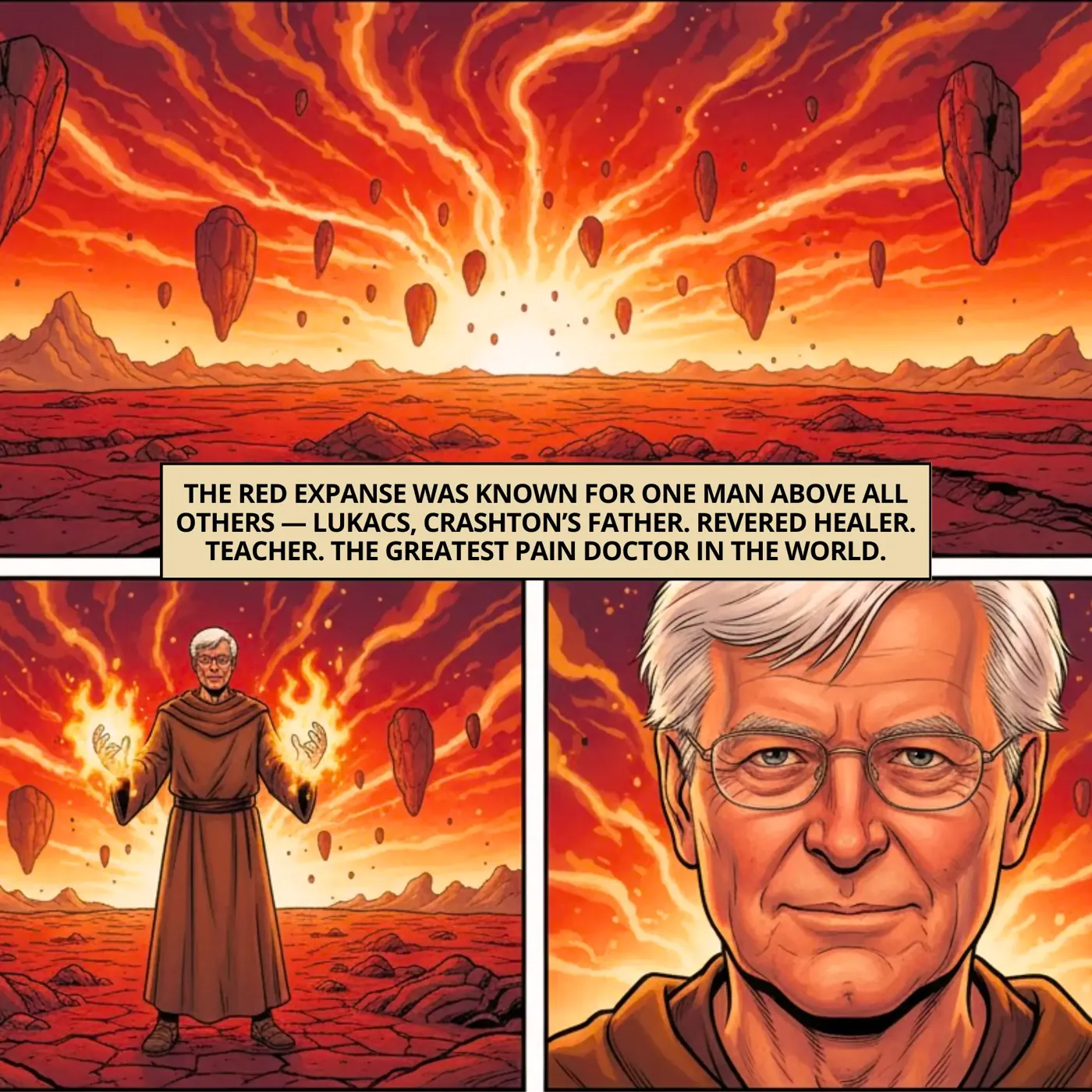
Beyond the capital stretched the Red Expanse.
That was where Crashton learned the foundations of his work—studying under the most renowned pain physician Prime Medica had ever known: Lukacs, his father.
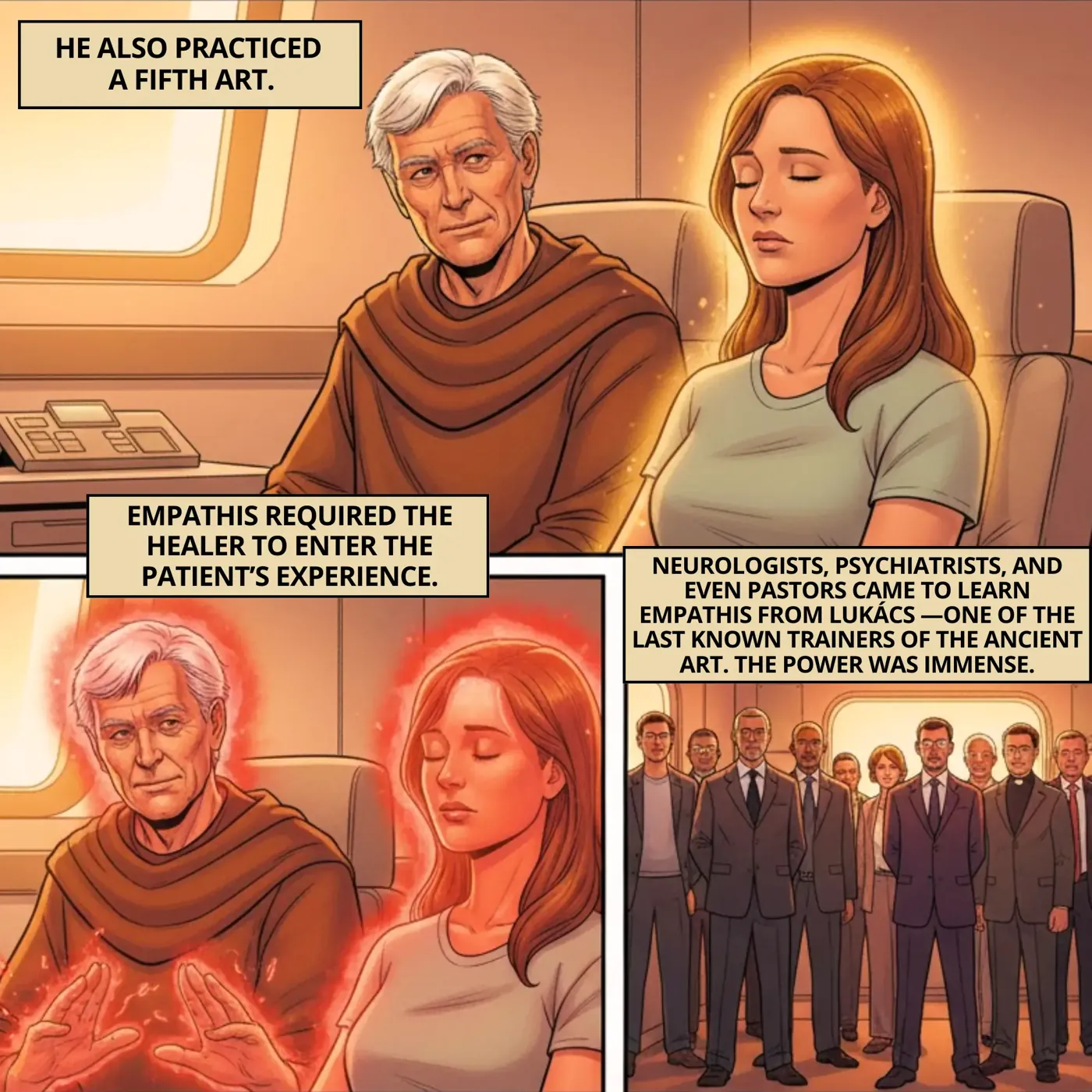
Among healers, Lukacs’s name was spoken with reverence. A clinician, a teacher, a master of the three clinical arts who had also preserved knowledge the city had never fully embraced. Trainees traveled from across Prime Medica to learn from him—neurologists, psychiatrists, pain physicians, and even pastors—drawn by outcomes no one else could replicate.
Lukacs had mastered the three clinical arts taught in the city.
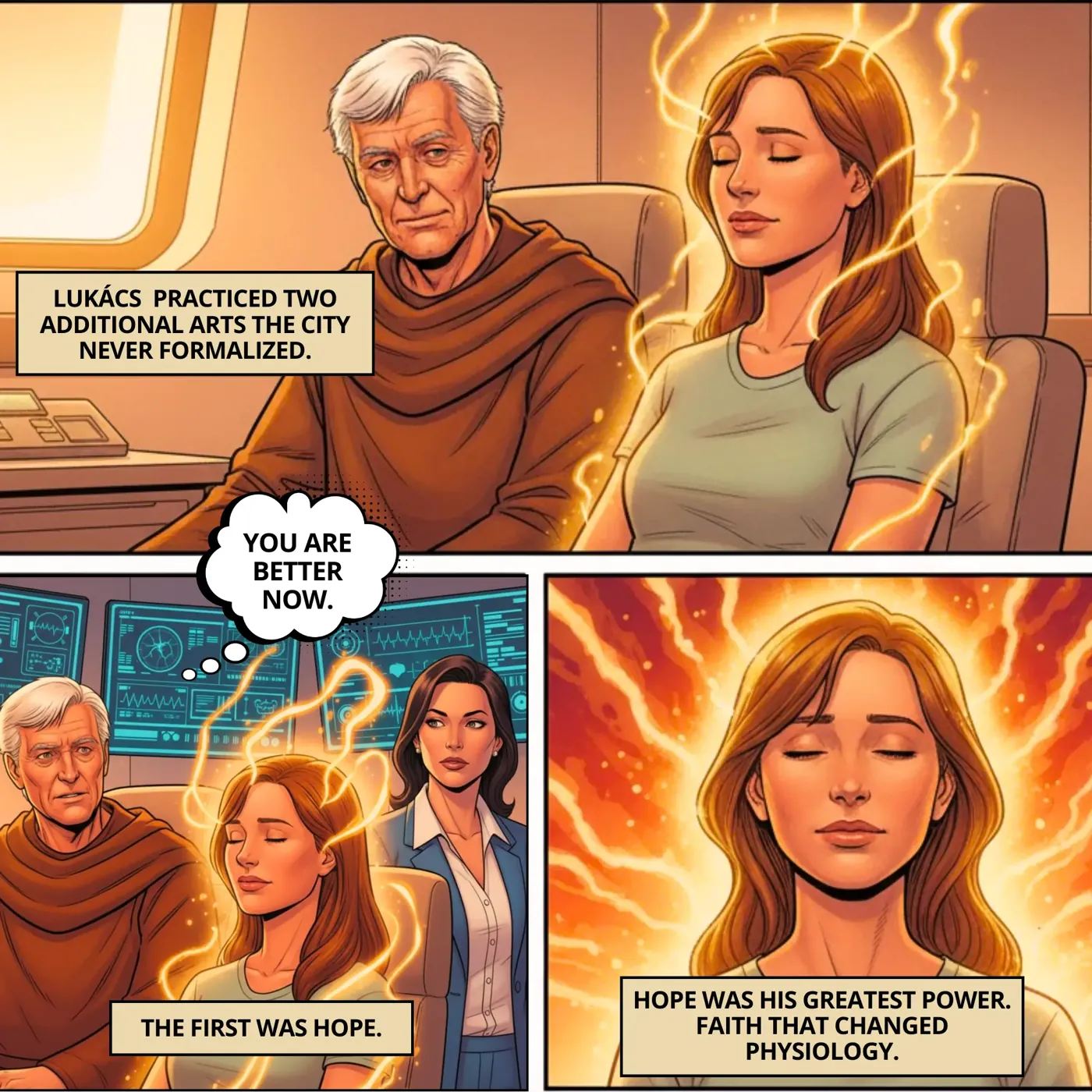
But he also practiced two additional arts.
The first was Hope.
Not reassurance. Not suggestion. Hope as a force that changed physiology. A true superpower.
Lukacs taught that when patients truly believed improvement was possible, their nervous systems responded. He would sit with patients, his mind glowing with the familiar golden hue, and tell them calmly, without hesitation, You are better now.
And many of them were.
Hope was not deception. It was faith—grounded in belief, meaning, and biology. Patients who had been stuck for years would begin to move, sleep, and heal once they believed they could.
Hope was not taught in the academies.
The second was Empathis.
The Fifth Art.
Empathis allowed a practitioner to enter a patient’s experience and feel suffering directly, from the inside. It was reserved for the most extreme cases—conditions that defied explanation, where pain and suffering overwhelmed every known treatment.
Empathis required mastery. It required preparation. It required mentorship.
Its power was immense.
Crashton integrated his father’s teachings into the city more completely than anyone before him—especially the disciplined use of Hope. He never used Empathis himself. He had seen its cost.
The Red Expanse called to him, especially after the loss of his wife.
But he stayed.
He believed the Medical District was where his work—and the work his wife had started—would matter most.
Then the rules changed.
The case that reshaped Prime Medica began in a neurology wing late at night.
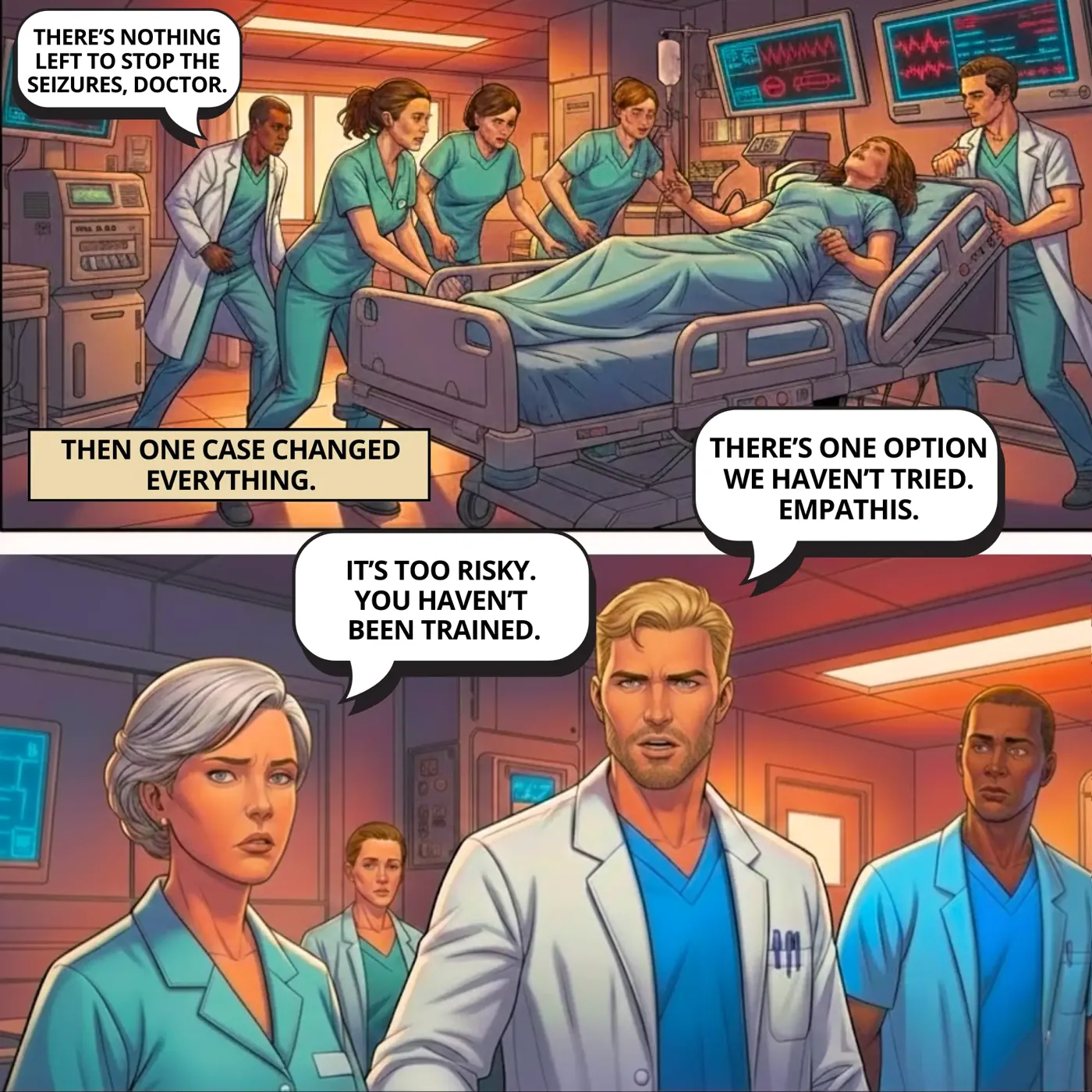
A patient arrived with severe pain while awake and violent seizures during sleep. When the pain was treated, the patient could finally rest. As soon as sleep came, the seizures returned. Each awakening brought renewed suffering. Treat the pain, allow sleep, trigger seizure, wake in agony.
The staff had never seen anything like it.
Standard protocols failed. Imaging offered no answers. The pain service was called.
A physician arrived with a reputation for brilliance and speed.
“There’s one option we haven’t tried,” he said. “Empathis.”
The nurse hesitated.
“It’s too risky,” she said. “You haven’t been trained.”
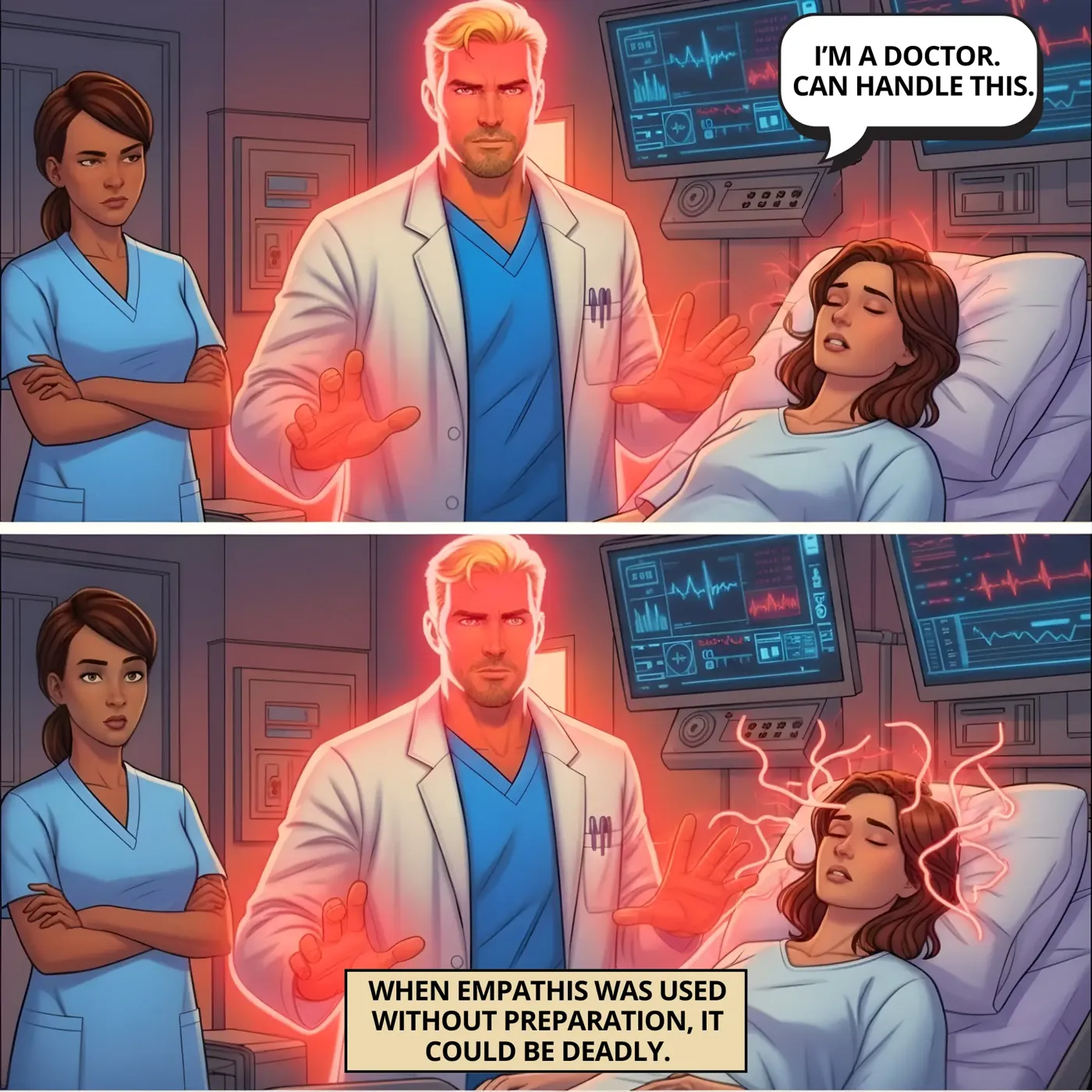
He dismissed her.
“I’m a doctor,” he said. “I can handle this.”
He entered the patient’s experience.
For a moment, the room went quiet.
Then the storm hit.
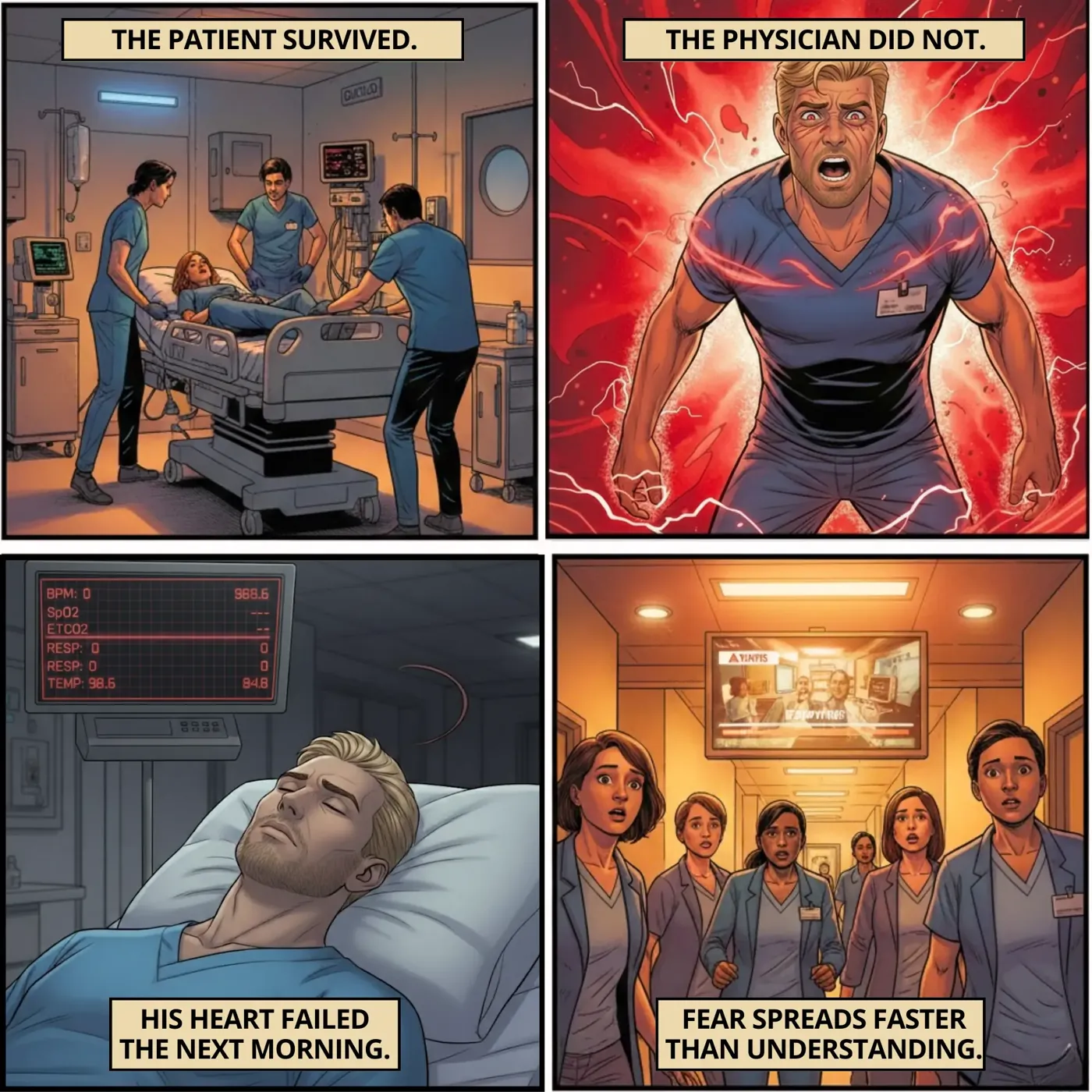
The patient convulsed. The physician convulsed with him. The team rushed in. Medications were pushed. Airways secured. The seizure broke.
The patient stabilized.
The physician did not.
His nervous system never returned to baseline. His heart failed before morning.
By sunrise, the story spread.
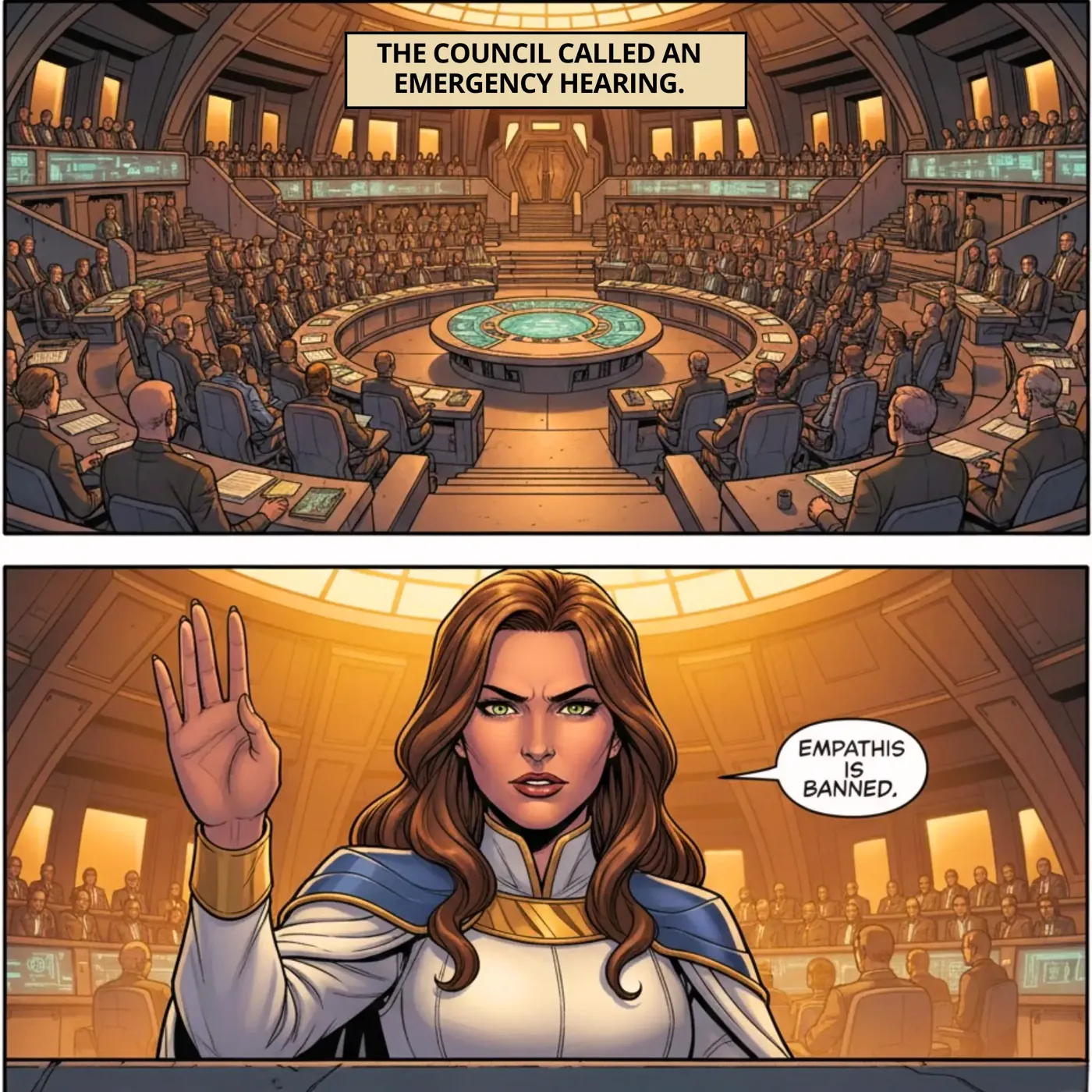
The Council convened.
Empathis was banned.
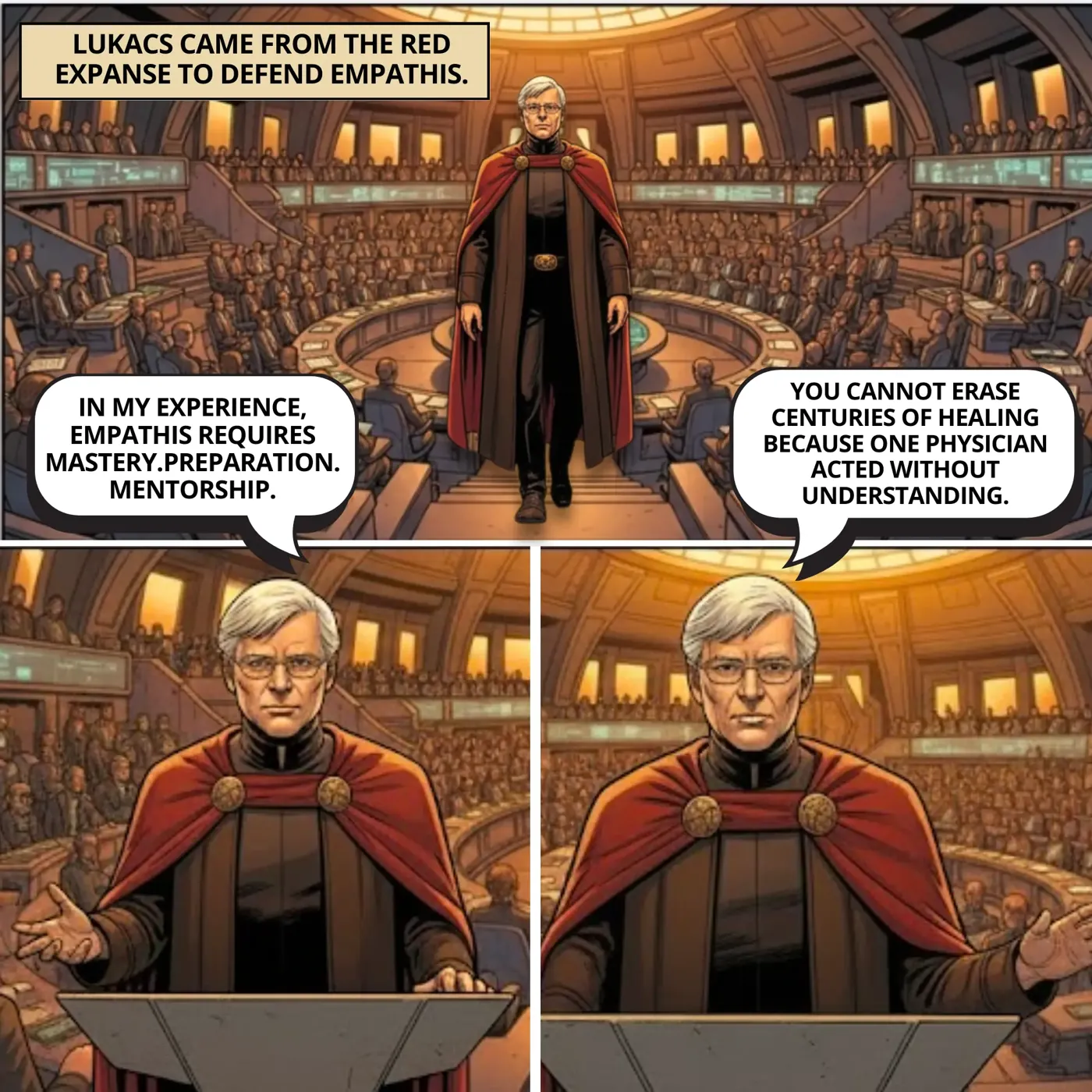
Lukacs came to the capital to speak as an expert.
He entered the Council chamber in simple robes, white tassels marking lineage. The room fell silent.
“In my experience,” he said, “Empathis requires mastery. It requires preparation. It requires mentorship. One untrained physician should not erase centuries of healing.”
He spoke of patients saved. Of lives restored. Of suffering relieved when nothing else worked.
The Council listened.
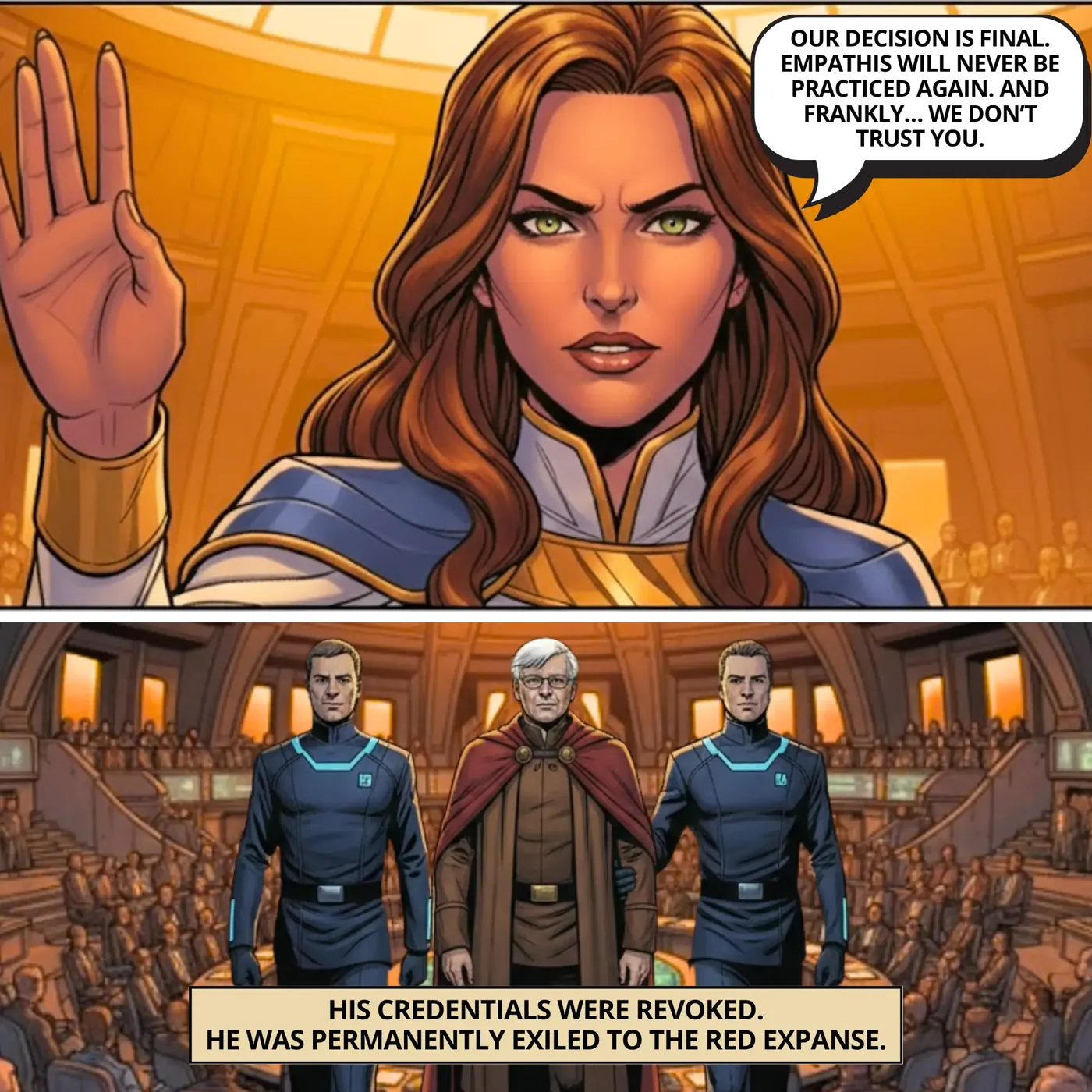
Then they acted.
Empathis was banned permanently.
They did not trust his kind of medicine.
Lukacs’s credentials were revoked.
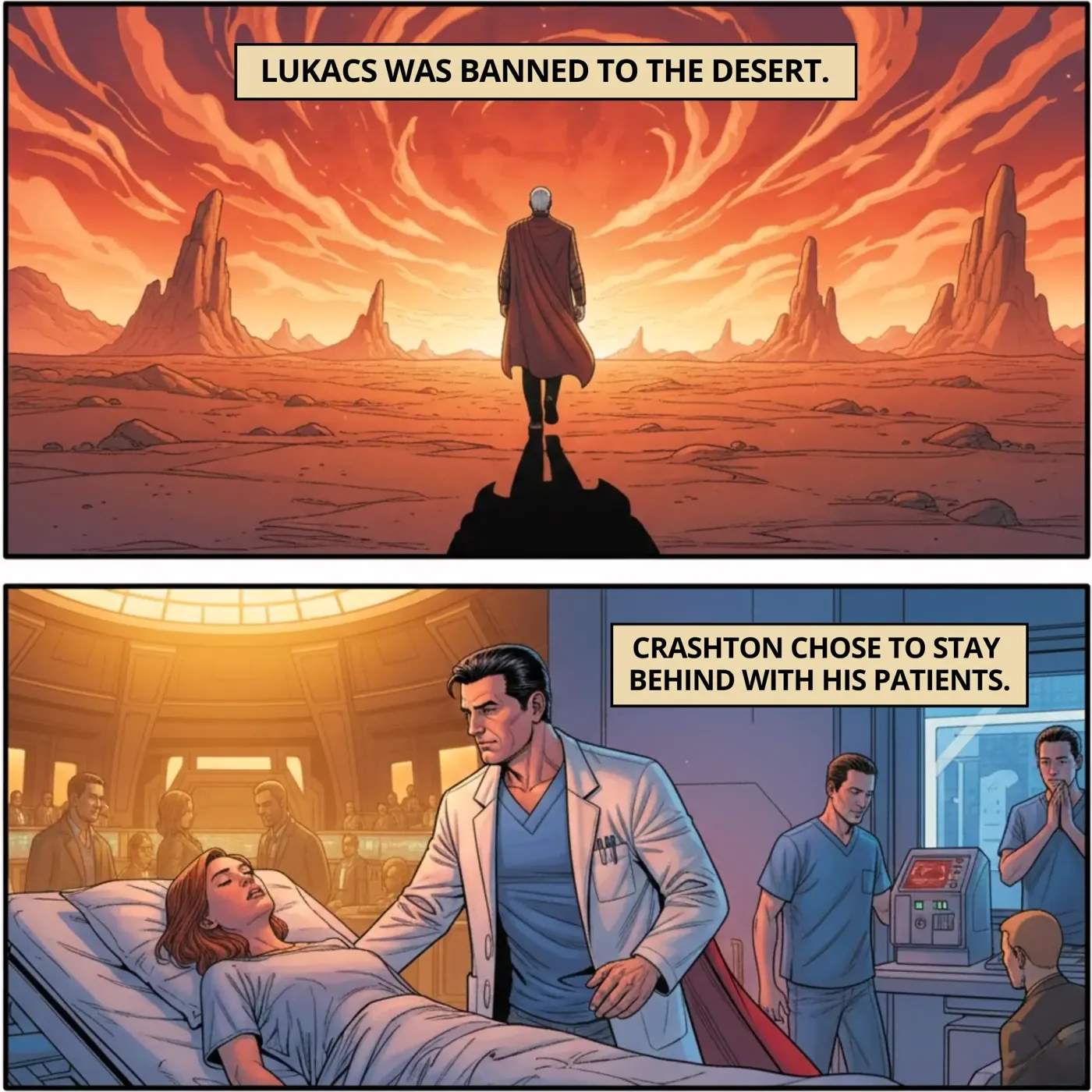
He was exiled to the Red Expanse.
Crashton stayed.
He was tempted to follow his father. But he remembered his wife—and the work she had started. Leaving would not allow him to make the difference he still believed was possible.
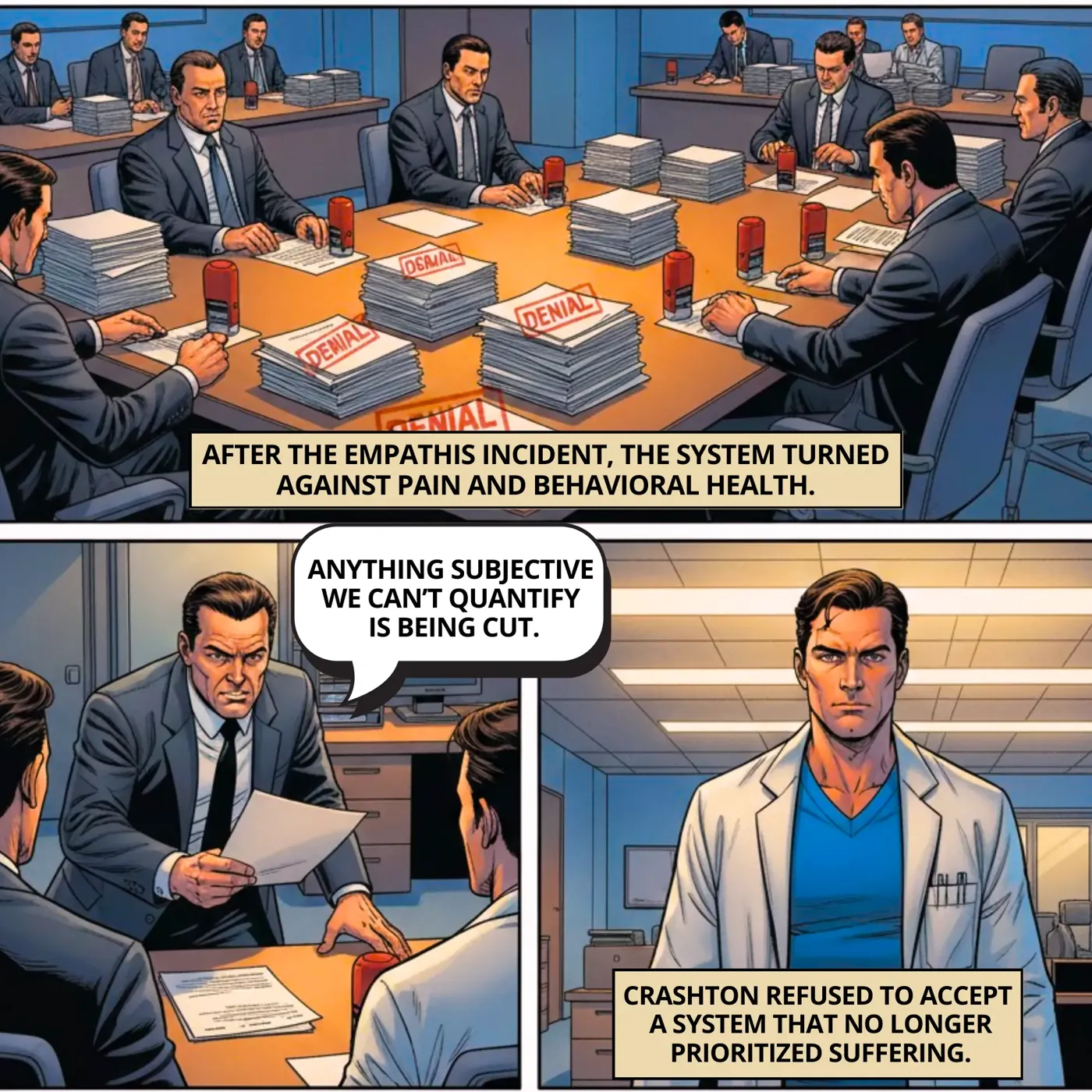
After the Empathis incident, the system turned against pain and behavioral health. Anything subjective—anything that could not be cleanly quantified—was delayed, denied, then cut. Care based on patient experience was treated as unreliable.
Crashton pushed back.
He challenged denials. He appealed decisions. He spoke openly about patients abandoned because their suffering did not fit a model.
In Prime Medica, resistance was noticed.
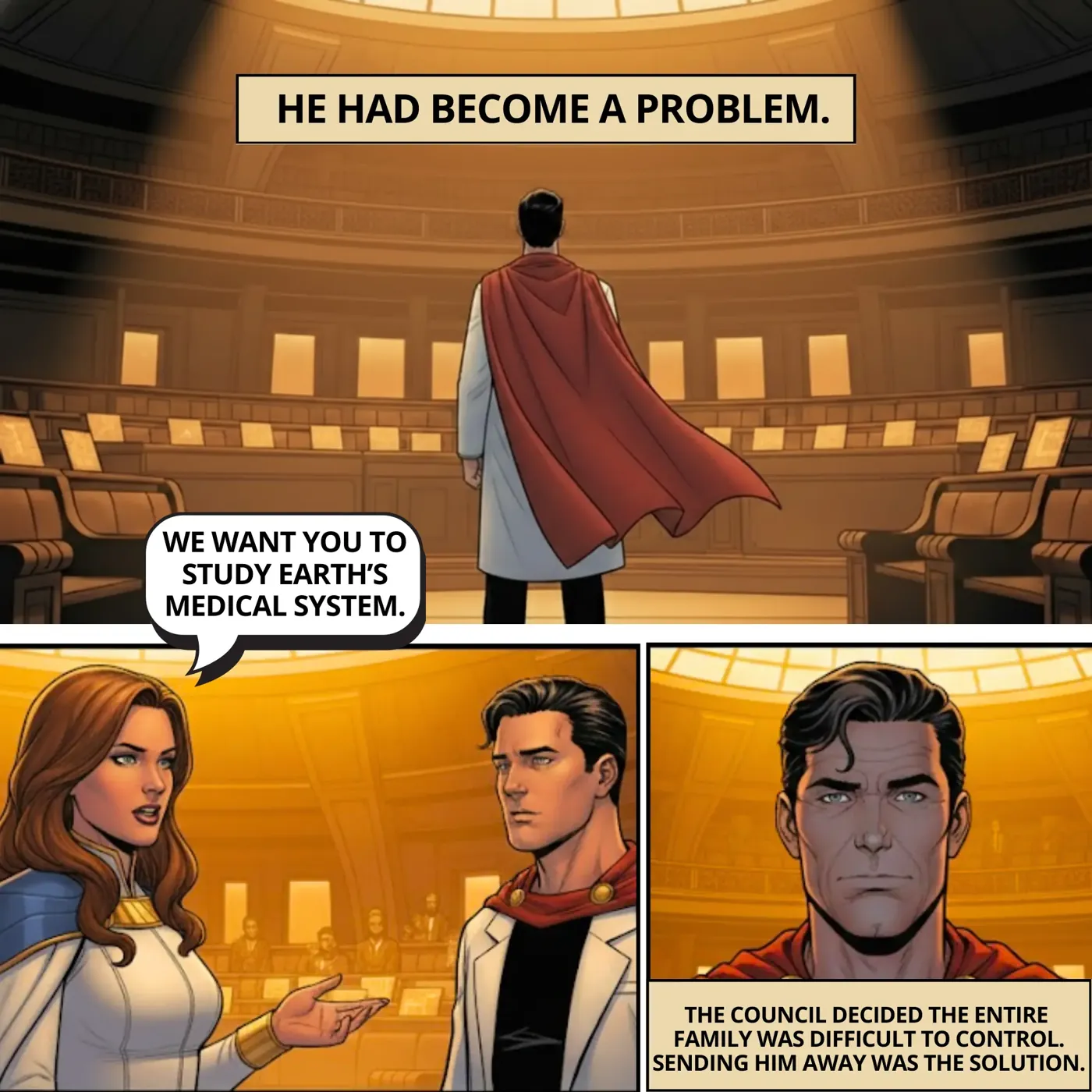
A closed session of the Council convened.
“Krashton is becoming a problem,” one voice said.
Another replied, “He won’t adapt.”
A third followed, colder still:
“This ENTIRE family is a problem.”
A solution was proposed.
A developing world. A long-term assignment. A research post framed as opportunity.
A story was constructed.
Earth.
He had the city’s tools.
He had the desert’s discipline.
He carried hope where others had none.
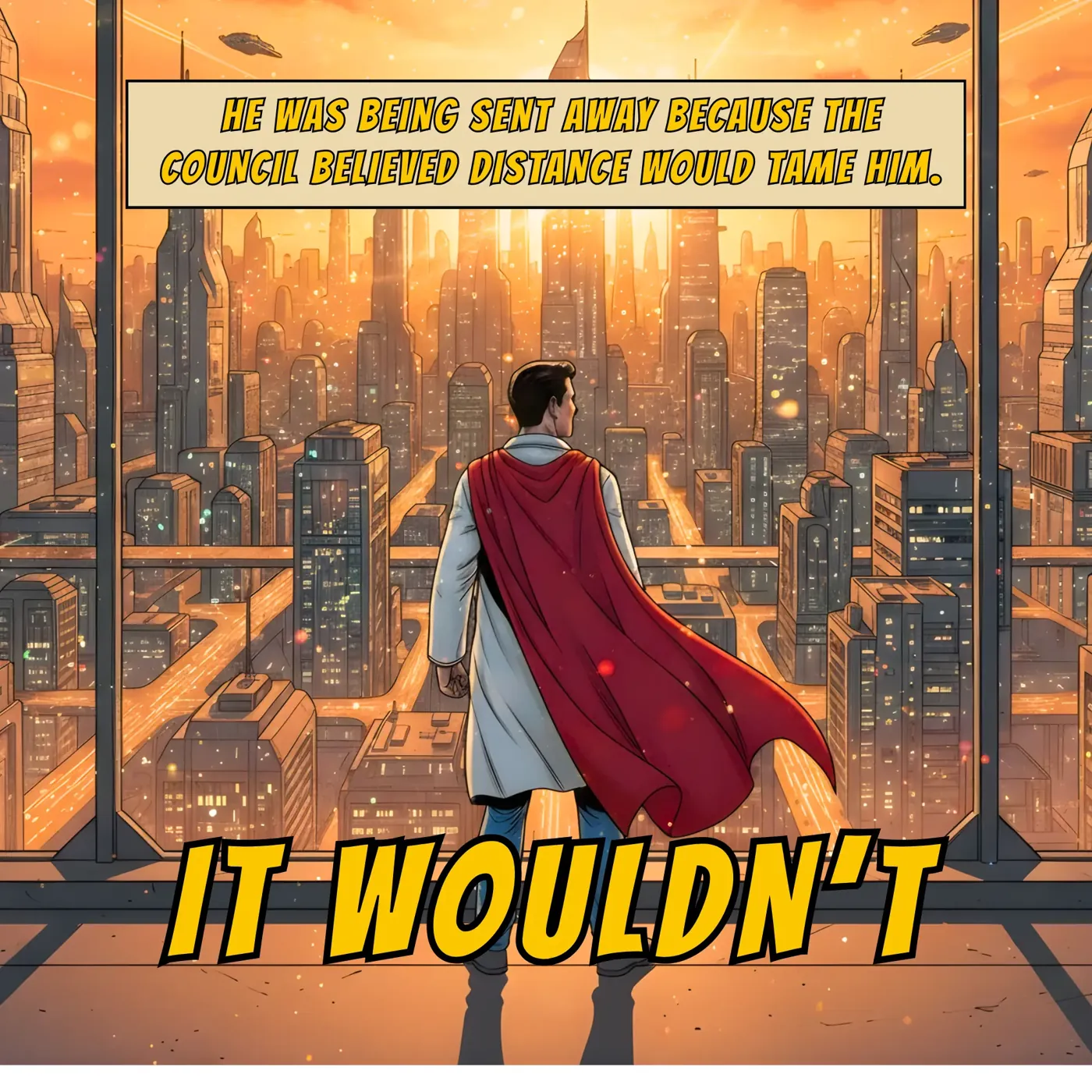
And he was being sent away because the Council believed distance would tame him.
It wouldn’t.