

Why Headaches After a Car Crash Need Medical Attention
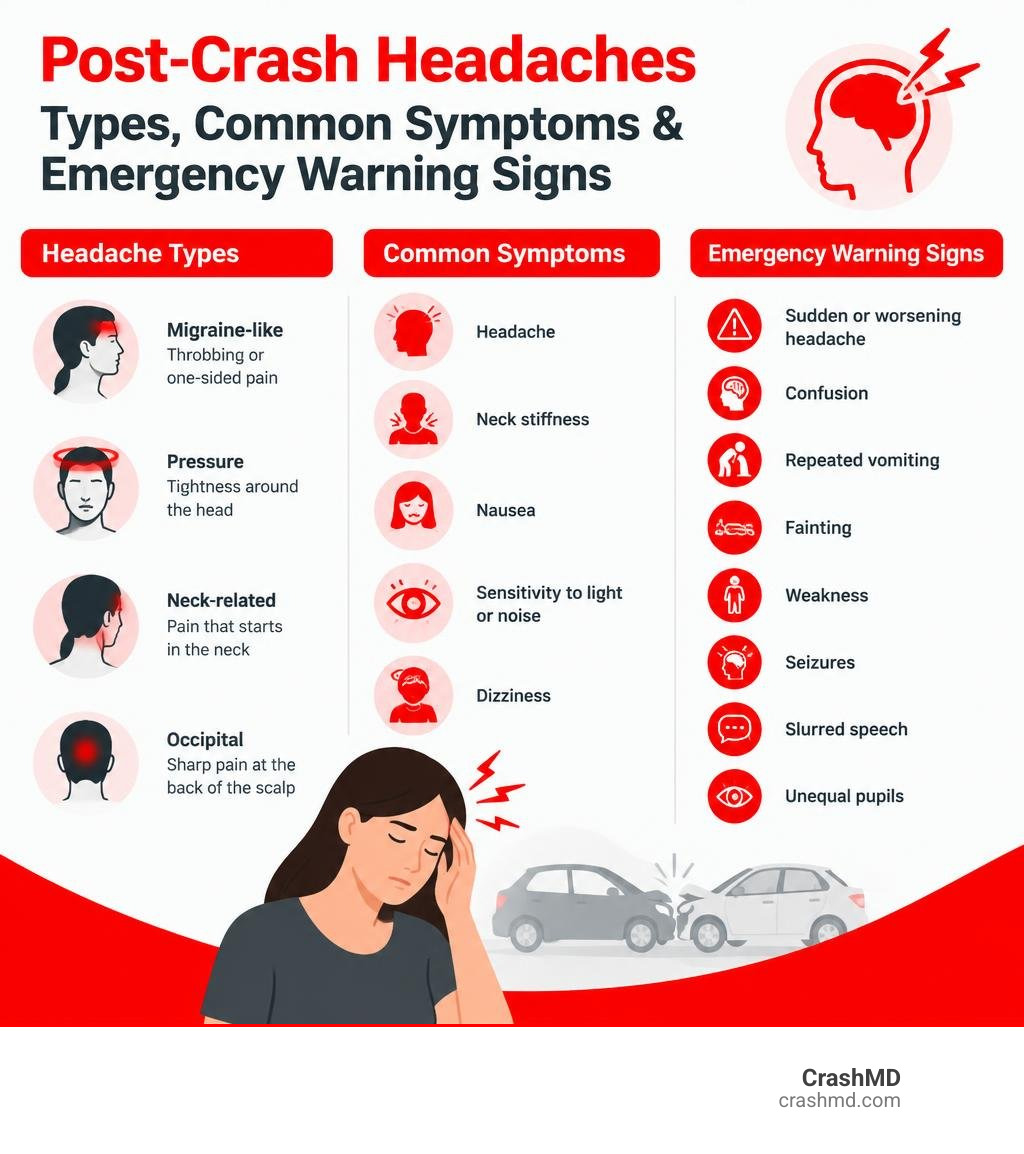
Headaches after a car crash can come from a concussion, whiplash-related neck injury, muscle strain, or less commonly, bleeding or another serious brain injury. Get urgent emergency care now if the headache is sudden or worsening, or comes with confusion, repeated vomiting, fainting, weakness, seizures, slurred speech, or unequal pupils.
Even a mild headache deserves a medical evaluation after a collision. Symptoms may begin right away, but they can also appear days later as adrenaline fades and inflammation, neck stiffness, or concussion symptoms develop. A clinician can check for head, brain, and cervical spine injuries, document your symptoms, and help create a recovery plan before pain becomes persistent.
Post-traumatic headaches are common after traumatic brain injury and may feel like a migraine, pressure around the head, pain starting in the neck, or sharp pain at the back of the scalp. The pattern matters because the right treatment depends on the cause.
I’m Dr. Adam Savage, and this guide explains what your post-crash headache may mean, when to seek care, and how to support long-term recovery.
Headaches after a car crash basics:
Common Types and Root Causes of Headaches After a Car Crash
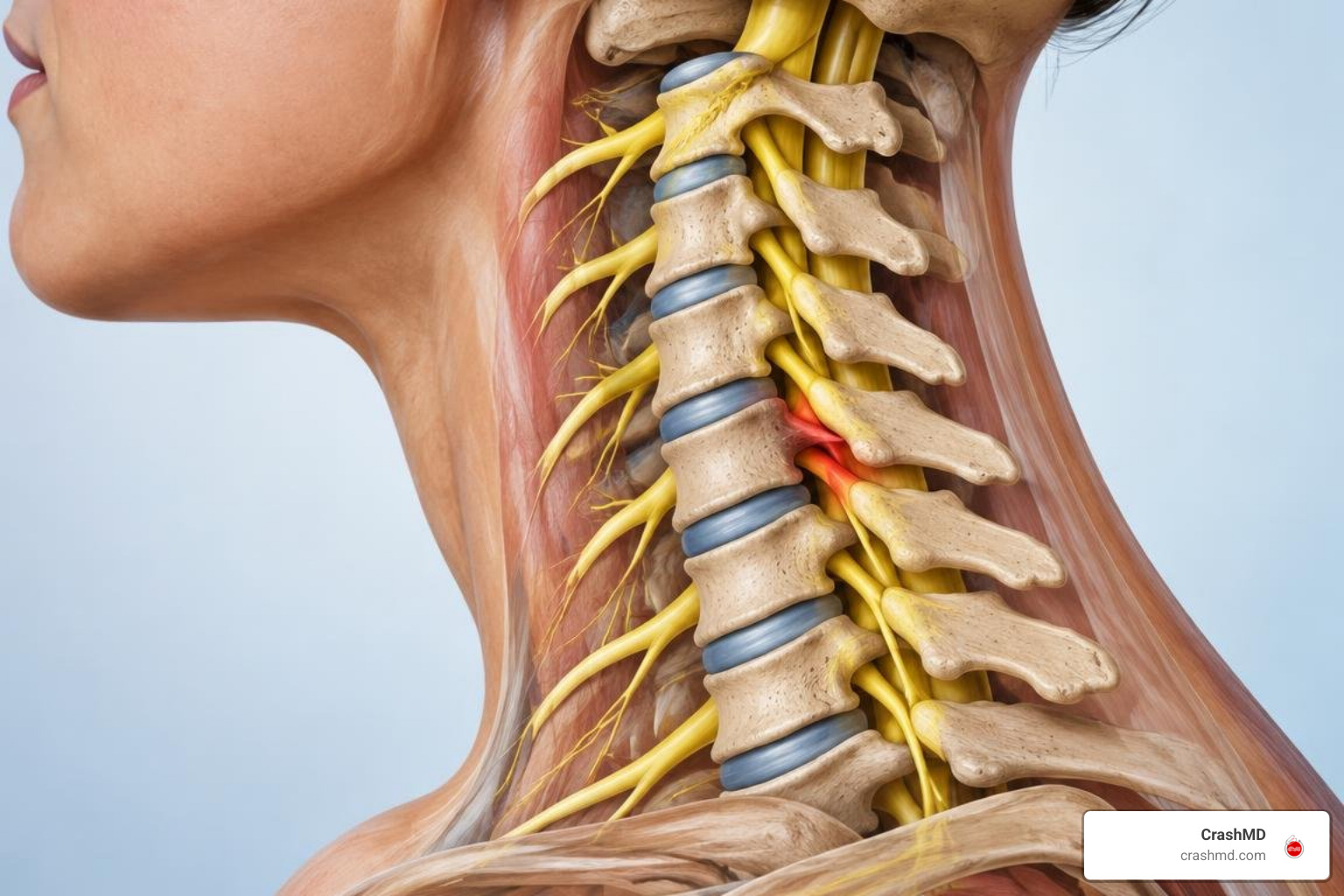
Motor vehicle collisions subject the human body to violent, unnatural acceleration and deceleration forces. Every year, roughly 2 million individuals sustain injuries in motor vehicle crashes across the United States. Following an impact, biomechanical strain stretches tendons, tears microscopic muscle fibers, irritates the delicate meningeal dura surrounding the central nervous system, and pinches peripheral nerves.
According to established clinical guidelines for post-accident headache management, post-traumatic headache occurs in 30% to 90% of traumatic brain injuries (TBIs). Understanding the exact anatomical origin of your head discomfort is the first step toward lasting relief.
| Headache Type | Primary Biological Cause | Distinctive Symptoms |
|---|---|---|
| Cervicogenic | Cervical facet joint sprain, damaged neck ligaments | One-sided throbbing, pain radiating from base of skull to forehead or eye, limited neck rotation |
| Tension-Type | Severe muscle spasms in suboccipital and trapezius muscles | Dull, aching band of tight pressure squeezing both sides of the forehead or temples |
| Occipital Neuralgia | Compression or pinching of greater/lesser occipital nerves | Sharp, electric, burning shocks radiating up the scalp from the base of the skull |
| Concussion / Post-Concussion | Mild traumatic brain injury (TBI) and neuroinflammation | Migraine-like pulsing, nausea, photophobia, brain fog, vertigo, mood disruptions |
| Upper Cervical Subluxation | Rotational misalignment of C1 (Atlas) and C2 (Axis) vertebrae | Persistent chronic skull base pressure, dizziness, secondary postural neck strain |
Cervicogenic, Tension, and Occipital Neuralgia Disruption
When collision forces violently whip your neck, the structural joints and soft tissues absorb tremendous kinetic energy. A cervicogenic headache occurs when the cervical facet joints, discs, or ligaments refer pain upward into the skull. Patients often experience severe neck stiffness that limits their ability to check blind spots or look down.
Tension-type headaches emerge when the surrounding paraspinal and shoulder muscles lock into continuous, protective spasms. These intense trigger points radiate constant ache around the temples. If the suboccipital muscles clamp down around the greater occipital nerve, it can trigger occipital neuralgia. Exploring our detailed guide to head pain after car accident provides deeper insight into how compressed cranial nerves generate stabbing scalp pain.
Concussion Headaches and Post-Concussion Syndrome
Even without directly striking your head on the steering wheel or side window, the sheer momentum of an auto collision can cause your brain to impact the rigid interior walls of the skull. This rapid displacement causes microstructural shearing and neuroinflammation known as a mild traumatic brain injury (mTBI).
The American Headache Society notes that 95% of people with a concussion experience head pain, with two-thirds reporting debilitating migraine-like symptoms. These include pulsating pain, intense sensitivity to light and sound, nausea, balance issues, and cognitive sluggishness. Selecting targeted concussion care finding the right program for your healing journey ensures your neural pathways receive the metabolic rest and specialized therapies required to avoid prolonged post-concussive syndrome.
Upper Cervical Misalignment: How Whiplash Triggers Headaches After a Car Crash
The top two vertebrae of the spine—the Atlas (C1) and Axis (C2)—house and safeguard the delicate lower brainstem while granting the head its wide range of motion. Because this craniocervical junction lacks interlocking bone sockets, it is the most vulnerable segment during high-velocity impacts.
Whiplash forces can shove the Atlas slightly out of its physiological alignment. This displacement creates abnormal tension on the brainstem and upper cervical nerves, restricting normal venous drainage and cerebrovascular flow. You can learn more about how rear impacts alter spinal biomechanics in our beginners guide to whiplash headaches from rear end collision causes. Correcting this upper cervical subluxation requires precise, low-force techniques to restore natural spinal balance without aggressive twisting.
Symptom Onset Timelines: Immediate vs. Delayed Trauma

Head pain does not always present immediately at the accident scene. In the moments following a crash, your sympathetic nervous system floods your bloodstream with adrenaline and cortisol. This fight-or-flight surge numbs sensory pain pathways, allowing motorists to exchange insurance details without feeling initial trauma.
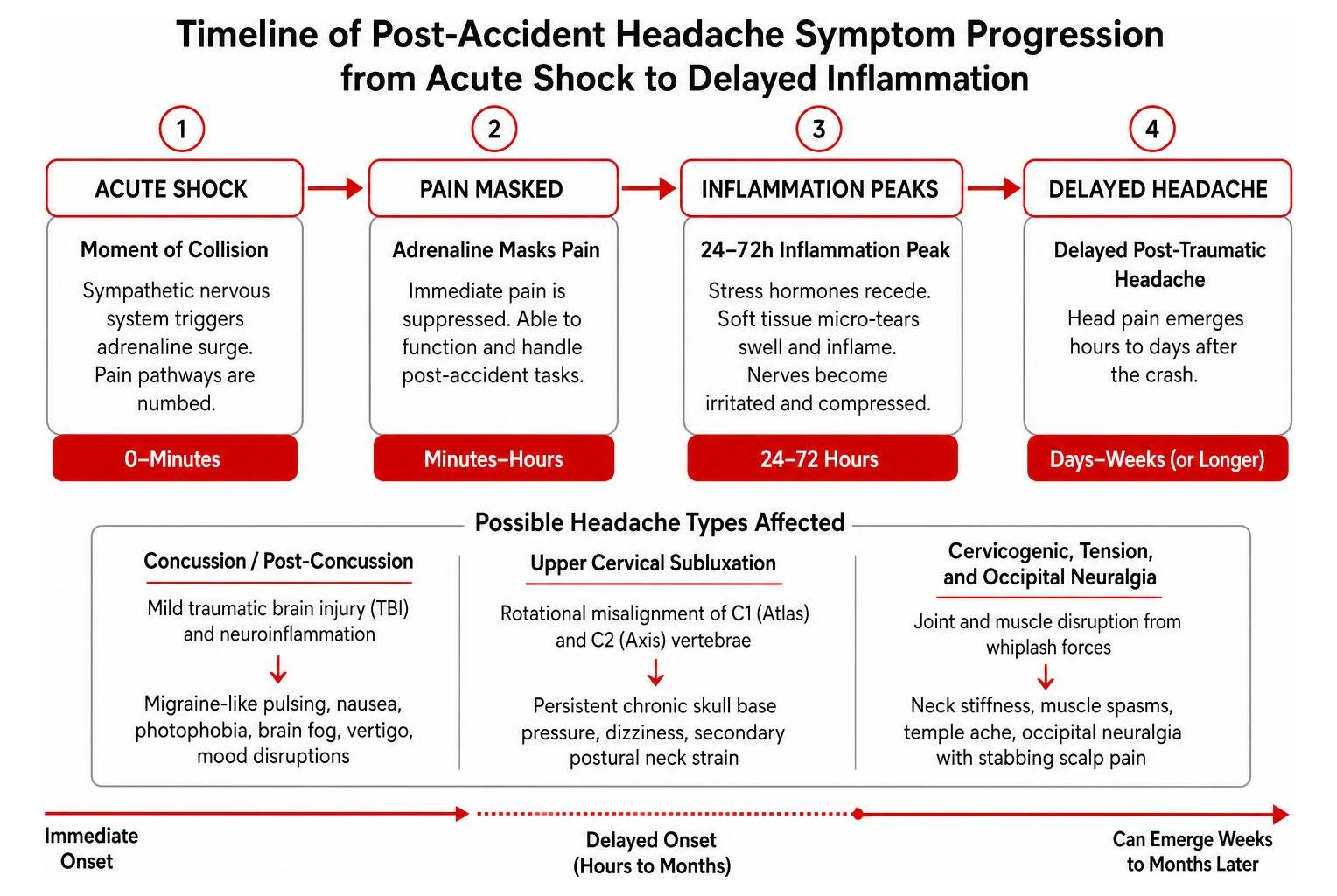
As stress hormones recede over 24 to 72 hours, soft tissue micro-tears swell and impinge surrounding nerves. This subacute phase is why you must not brush off minor discomfort; our clinical team explains why in dont wait why delayed symptoms after a car accident demand your attention. Failing to address early inflammatory processes allows central nervous system sensitization to take root, turning temporary post-crash soreness into chronic daily headaches.
Why Delayed Headaches After a Car Crash Can Emerge Months Later
It is surprisingly common for post-traumatic headaches to develop weeks or months after an auto collision. Groundbreaking medical research on post-traumatic headache mechanisms reveals that post-traumatic headaches typically appear within 7 days, yet clinical trials document cases emerging up to 1 year post-trauma.
When subtle spinal misalignments or ligament laxity go untreated, your body creates secondary muscular compensations to hold the head level. Over months, these uneven loading patterns produce accumulated microtrauma, progressive disc degeneration, and secondary nerve entrapment. If you are struggling with a late-onset flare-up, our guide on why you might feel fine today but hurt tomorrow outlines how delayed neurovascular distress develops behind the scenes.
Red Flag Symptoms Requiring Emergency Neurological Care
While many post-collision headaches stem from musculoskeletal strain, some point to acute life-threatening emergencies such as subdural hematomas, epidural bleeds, or cerebral edema. Seek emergency room care immediately if you experience:
- An explosive “thunderclap” headache reaching peak intensity within seconds
- Progressive weakness, numbness, or tingling on one side of the face or body
- Unequal pupil sizes or profound visual disturbances
- Slurred speech, severe disorientation, or memory blackouts
- Projectile vomiting or persistent nausea without relief
- Fluid or blood leaking from the ears or nose
- Onset of new seizures or unprovoked fainting spells
Review the complete checklist of critical warning signs of post-crash headaches to ensure you protect your health immediately after an impact.
Diagnostic Testing and Comprehensive Medical Evaluations
Arriving at an accurate diagnosis requires going beyond basic emergency room triage. Emergency departments excel at ruling out imminent life threats, but their rapid scans frequently miss soft tissue micro-tears, subtle disc herniations, and delicate Atlas displacements.
A comprehensive evaluation conducted by an auto injury specialist involves:
- Comprehensive Neurological Testing: Assessing cranial nerve function, motor strength, deep tendon reflexes, balance, and sensory response.
- Computed Tomography (CT) Scans: Identifying acute skull fractures, intracranial hemorrhages, and major structural abnormalities.
- Magnetic Resonance Imaging (MRI): Providing high-resolution imaging of soft tissue discs, spinal cord compression, neuroinflammation, and ligament tears.
- Flexion-Extension Radiography: Stress-testing the cervical spine to detect hidden ligamentous instability and vertebral slippage.
- Objective Injury Documentation: Creating detailed medical charts that trace physical impairments directly to the collision for medical and legal purposes.
For a detailed look at clinical protocols, read about the first look how doctors assess traumatic brain injuries.
Effective Treatments, Rehabilitation, and At-Home Care
Restoring your health after a collision requires a multimodal strategy combining medical interventions, physical rehabilitation, and supportive home care. Our clinical approach focuses on customized roadmaps outlined in our post-trauma headache causes treatments guide.
Medical Interventions, Physical Therapy, and Chiropractic Care
Interventional pain management helps break the cycle of acute, debilitating spasms. Targeted treatments include:
- Cervical Nerve and Occipital Blocks: Local anesthetic and anti-inflammatory injections calm inflamed nerves. Discover more in everything you need to know about headache from nerve block crash.
- Specialized Physical Therapy: Active myofascial release, posture correction, and deep cervical flexor retraining gently restore neck mobility. Review our car accident physical therapy guide for details.
- Gentle Chiropractic Mobilization: Low-force alignment techniques reposition displaced cervical segments, relieving structural tension on the brainstem and spinal cord.
- Vestibular Rehabilitation: Targeted sensory and ocular therapies retrain the brain to process balance signals after concussive trauma.
Home Remedies, Sleep Hygiene, and Lifestyle Adjustments
Support your clinical recovery with targeted daily habits:
- Regulate Sleep Schedules: Your brain repairs metabolic waste and reduces neuroinflammation during deep sleep cycles. Keep a consistent sleep schedule and use a supportive cervical pillow.
- Hydration and Nutrition: Drink ample water and focus on an anti-inflammatory diet rich in omega-3 fatty acids and magnesium to decrease vascular inflammation.
- Limit Screen Exposure: Reduce blue light exposure from phones and computers to avoid triggering post-concussive photophobia and ocular strain.
- Contrast Therapy: Apply ice packs to the base of the skull for 15-minute intervals to numb acute nerve pain, followed by moist heat on tight shoulder muscles to improve circulation.
Frequently Asked Questions About Post-Collision Headaches
How long do post-accident headaches typically last?
Most uncomplicated post-traumatic headaches resolve within two to six weeks with early, targeted care. In roughly 90% of mild concussion cases, acute symptoms subside within 14 days. However, when soft tissue damage or spinal instability is left untreated, symptoms can transition into post-concussive syndrome, lasting three months, a year, or longer. Explore our step-by-step guide to how long headaches last after concussion for recovery milestone timelines.
When is a headache after an auto collision considered a medical emergency?
A headache is considered a true medical emergency when accompanied by red-flag symptoms such as sudden onset (“worst headache of your life”), fainting, unequal pupils, seizures, focal numbness, or persistent vomiting. These indicators warrant an immediate visit to the nearest hospital trauma center. If you are debating between care options, read immediate care after an accident your guide to urgent care and er options.
Can an unaligned neck vertebra cause headaches years after a crash?
Yes. An uncorrected subluxation of the Atlas (C1) or Axis (C2) does not simply heal on its own. Over months and years, structural misalignment causes uneven spinal wear, chronic muscle guarding, and constant irritation of the occipital nerves. Specialized biomechanical re-evaluation and low-force spinal correction can still deliver substantial symptom relief years after the original accident.
Conclusion
Lingering head pain after an auto collision is not just an annoying inconvenience—it is your body’s alarm system signaling underlying neurological, muscular, or spinal trauma. Overcoming post-traumatic headaches requires an accurate diagnosis, customized rehabilitation protocols, and thorough clinical injury documentation.
At CrashMD, we guide accident victims across Arizona, Nevada, Texas, Oklahoma, Southern California, and Northern California through every phase of physical recovery. We ensure your injuries are completely evaluated, treated, and documented before you resolve any legal claims. Do not wait for minor aches to turn into chronic limitations; schedule your post-crash check-up why every car accident deserves a medical evaluation today and take control of your long-term health.