

Radius Fracture After a Car Accident
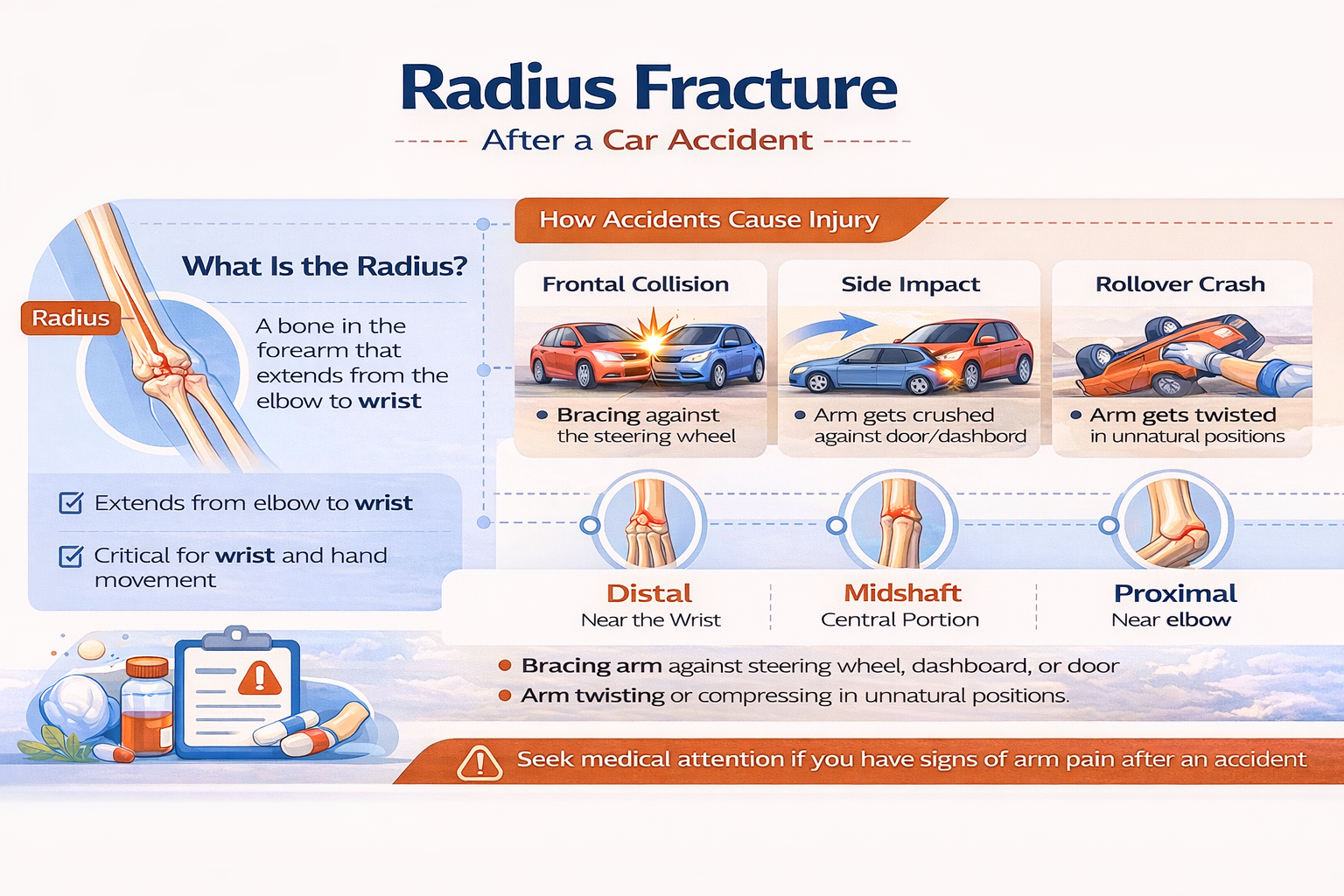
A radius fracture is a common and often painful injury that can occur after a car accident. The radius is one of the two long bones in the forearm, extending from the elbow to the wrist. It plays a critical role in the movement and rotation of the wrist and hand. Because the forearm is frequently used to brace against impact during a collision, the radius is vulnerable to fractures when a person instinctively reaches out or absorbs force with the arm. Even with modern safety features such as airbags and seat belts, car accidents can generate enough force to break this essential bone.
In a collision, the sudden deceleration of the vehicle causes the body to continue moving forward until restrained. Drivers often extend their arms toward the steering wheel, and passengers may brace themselves against the dashboard or door. The forearm can take the brunt of the impact, especially if the hand or wrist strikes a hard surface. Side impact crashes and rollovers increase the risk of radius fractures because the arm can be compressed between the body and the vehicle interior. In some cases, the injury results from a twisting motion when the arm is caught or forced into an unnatural position during the accident.
The radius can fracture in several locations, each with unique implications for treatment and recovery. The distal radius, near the wrist, is one of the most common fracture sites and can occur when a person instinctively puts out a hand to break a fall or brace for impact. Midshaft fractures occur in the central portion of the bone and typically result from direct blows or twisting forces. Proximal fractures, near the elbow, are less common but can be more complicated because they may affect the joint surface or elbow stability. Each type of fracture requires careful assessment to determine the appropriate course of action.
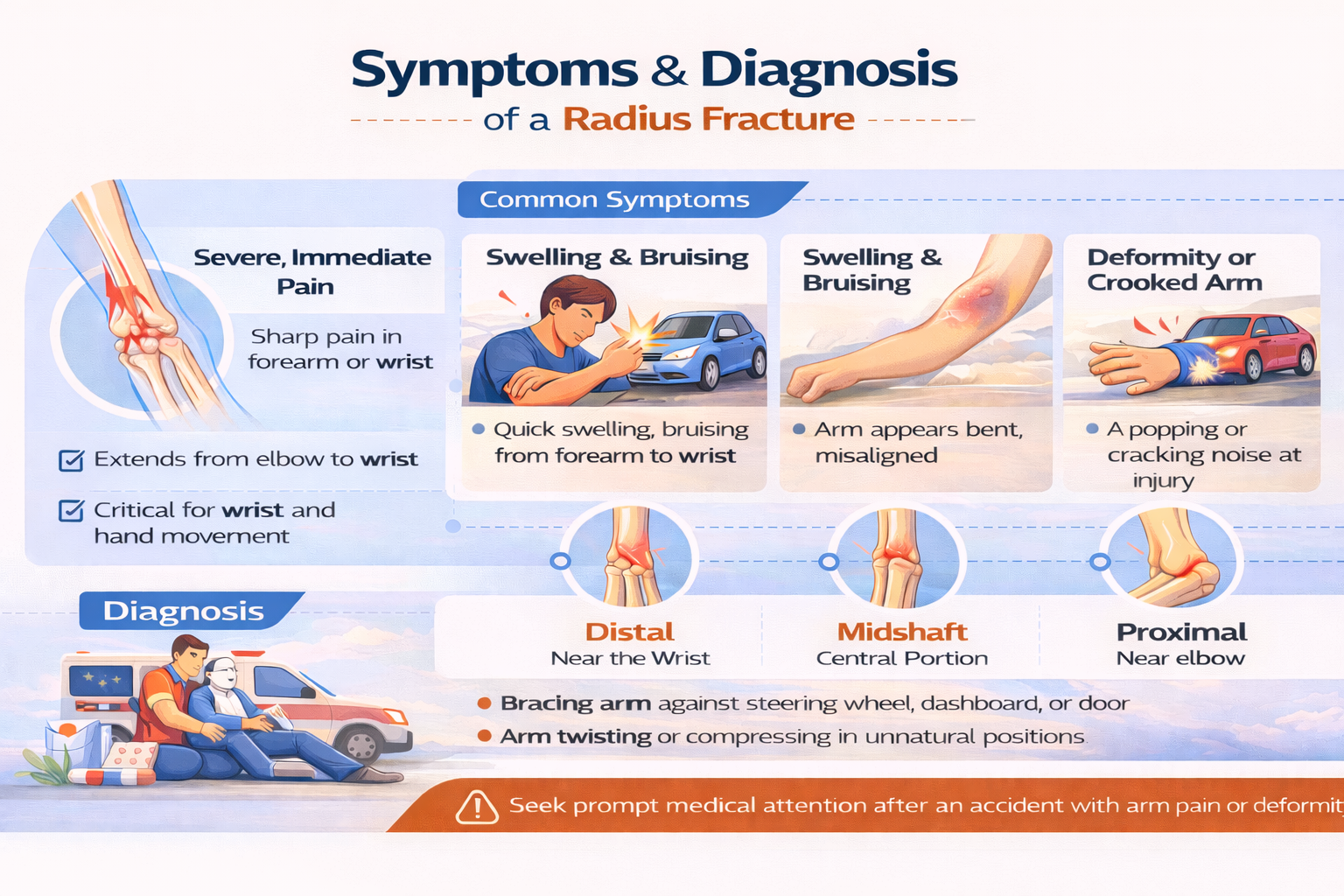
Symptoms of a radius fracture include immediate and severe pain in the forearm or wrist. The pain may be sharp and intensify with movement or pressure. Swelling, bruising, and tenderness develop quickly and can extend from the forearm to the wrist. In some cases, the arm may appear deformed, bent, or misaligned, particularly in displaced fractures. Patients may hear a cracking or popping sound at the time of injury. Numbness, tingling, or weakness in the hand or fingers can indicate nerve involvement and should be evaluated promptly.
Medical evaluation is essential following a car accident, especially if arm pain is significant or accompanied by swelling, bruising, or loss of function. Emergency responders often immobilize the arm to prevent further injury, using splints or slings. In the emergency department, doctors perform a physical examination to assess tenderness, range of motion, and neurological function. Imaging studies such as X rays are used to confirm the fracture and determine its location, severity, and displacement. In complex cases, a CT scan may provide additional detail about bone alignment or joint involvement.
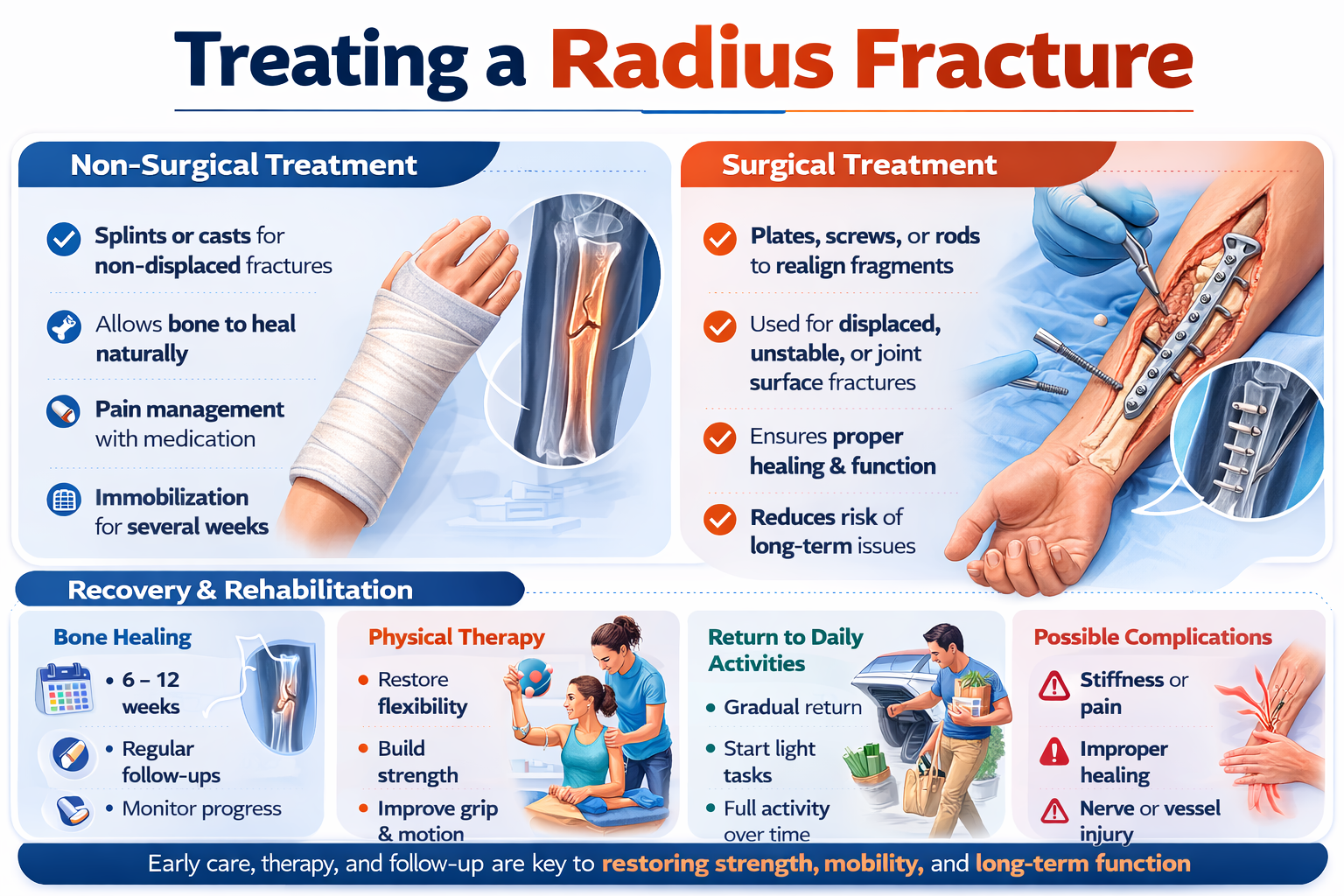
Treatment of a radius fracture depends on the type of fracture, its location, and whether the bone fragments are displaced. Many distal and midshaft fractures that are nondisplaced can be managed conservatively. Treatment typically includes immobilization with a cast or splint to allow the bone to heal naturally. Pain management is crucial during this period, as adequate relief enables patients to rest comfortably and perform gentle movements to prevent stiffness. The duration of immobilization usually lasts several weeks, depending on the severity of the fracture.
Displaced fractures, fractures involving the joint surface, or unstable breaks often require surgical intervention. Orthopedic surgeons may use plates, screws, or rods to realign and stabilize the bone fragments. Internal fixation ensures proper healing and reduces the risk of long term complications such as malunion or impaired range of motion. Surgery is particularly important for fractures near the wrist or elbow, as precise alignment is essential to preserve joint function and strength.
Recovery from a radius fracture is a gradual process. Bone healing typically occurs over six to twelve weeks, though regaining full strength and mobility may take longer. Physical therapy is a key component of rehabilitation. Therapy focuses on restoring wrist and forearm flexibility, rebuilding muscle strength, and improving grip and coordination. Gentle exercises may begin while the cast or splint is still in place, progressing to more active movements as healing allows.
Complications can arise in some cases. Improper healing or malunion may result in deformity, reduced range of motion, or chronic pain. Nerve or blood vessel injuries, while uncommon, may require additional monitoring and intervention. Stiffness in the wrist, elbow, or forearm can persist if rehabilitation is delayed. Patients with severe fractures or associated injuries such as ligament tears may require longer recovery periods. Early follow up appointments and adherence to medical instructions reduce the risk of these complications.
The emotional and practical impact of a radius fracture should not be overlooked. Losing the use of one arm can affect daily activities, work, and personal independence. Tasks such as cooking, dressing, driving, or lifting objects may become challenging. After a car accident, emotional stress is common, including anxiety about future driving or fear of re injury. Support from family, healthcare providers, and physical therapists can help patients navigate both the physical and psychological aspects of recovery.
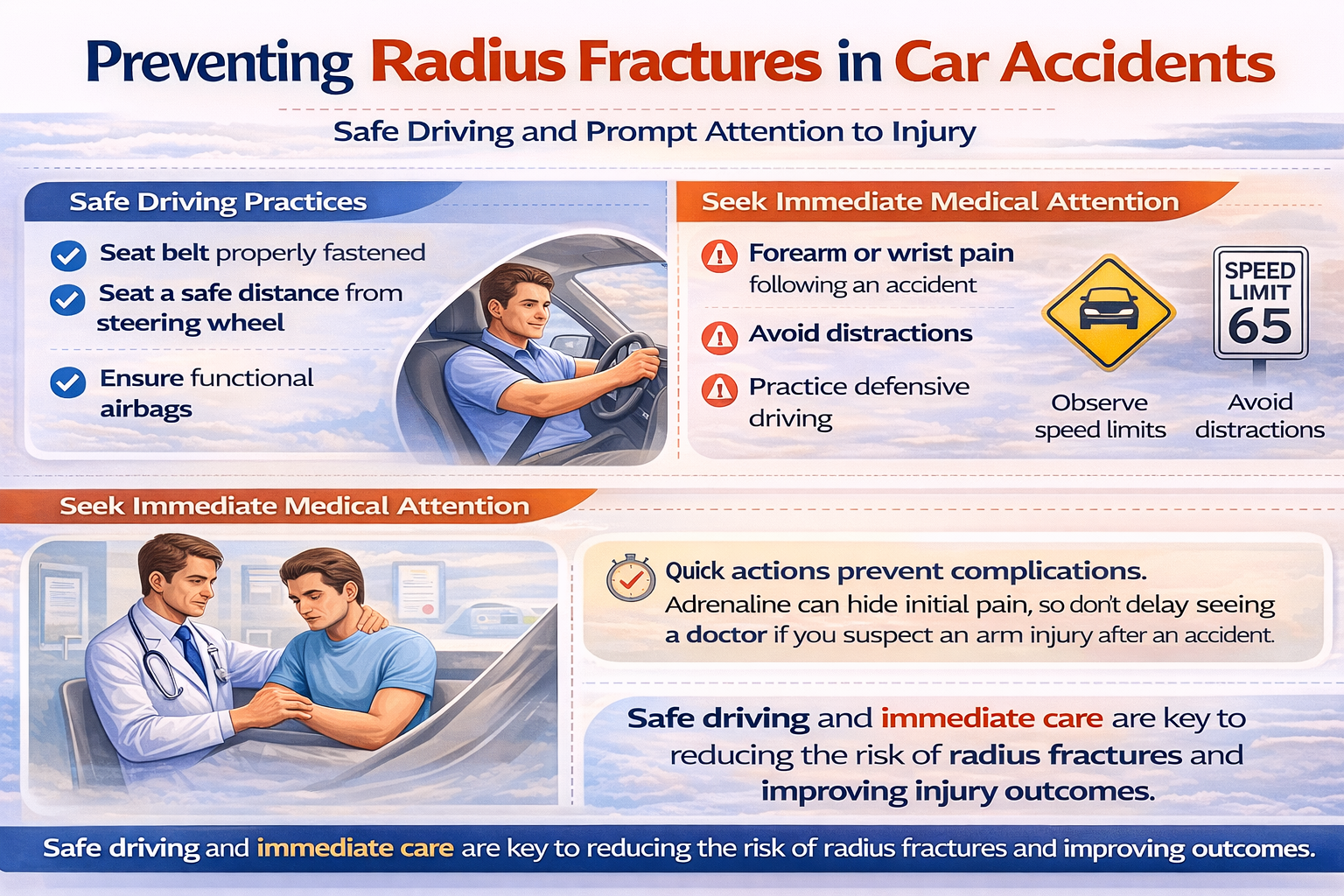
Preventing radius fractures in car accidents largely relies on safe driving practices and proper use of vehicle safety features. Wearing a seat belt correctly, maintaining appropriate distance from the steering wheel, and ensuring airbags are functional can reduce the risk of severe impact to the arms. Defensive driving, obeying speed limits, and avoiding distractions further lower the likelihood of high impact collisions. While no safety measure can eliminate the risk entirely, these precautions significantly improve outcomes in crashes.
It is essential to seek prompt medical evaluation for any forearm or wrist pain following a car accident. Adrenaline can mask initial pain, and swelling may develop over time. Delaying care can result in worsening displacement, nerve damage, or complications during healing. Early diagnosis ensures the appropriate treatment plan, whether conservative or surgical, and improves the chances of full recovery.
Long term outcomes for radius fractures are generally favorable when treated promptly. Most patients regain normal arm function and strength, particularly with dedicated rehabilitation. Older adults may require longer recovery due to decreased bone density, while younger individuals typically heal more quickly but may experience frustration from temporary activity limitations. Maintaining a healthy lifestyle, following medical guidance, and participating in physical therapy are critical to restoring full forearm function.
A radius fracture from a car accident represents more than just a broken bone. It reflects the significant forces involved in vehicle collisions and the vulnerability of the forearm during sudden impact. Timely medical attention, accurate diagnosis, and structured rehabilitation are essential for a successful recovery. If you experience forearm or wrist pain after a crash, do not ignore it. Early evaluation and consistent follow up care can make a meaningful difference in regaining strength, restoring mobility, and returning to everyday activities safely.